Dating profiles might not come to mind when you think of writing, but even a short blurb about yourself is a type of text. In fact, all parts of a profile on a dating app—basic information about your name, age and location, photos, optional questions, and even the decision to link other social media profiles to your account—are all part of a “text” that can be read and analyzed.
Think of your profile as an argumentative piece. The goal of the argument is to convince someone to engage with you. The type of engagement may depend on the specific platform that you are using. In this case, the evidence that supports your argument consists of all the components of a profile that were previously mentioned. In order to craft a successful dating profile, you’ll need to take into consideration the rhetorical elements involved in writing an argument. Hmm…sounds a lot like your first-year English course?
Let’s break down your “argument” by each part of the profile, starting with basic information: name, age and location. Don’t think that these pull as much weight as your photos? Think of it this way: if you are tempted to fictionalize this portion of your profile—if you are lying about the very base facts about yourself, why should anyone believe that any of your profile is real? The basic information of your profile is the start to building credibility (cough cough ethos). Although online dating and app usage has become extremely popular, we live in the age of catfishing and stranger danger.
Trust is a major factor in dating apps, and in relationships. You should be honest about these facts (and to be honest myself, I shouldn’t have to tell you that). When a house is being built, the foundation is laid first. Everything else is built upon this base. When it comes to dating apps, trust (that the person looks like their pictures, that they are the age that they claim, etc.) is the foundation that you are asking someone to build any interaction upon.
Next, there are the photos. Again, these should be photos of you, and they should be recent photos. Seems obvious. The majority of your photos should be solo shots, or pictures in which it is obvious which person you are. When people are swiping through profiles, they don’t want to have to stop to search for you in every picture. Similar to the importance of clarity in writing, a straightforward visual directs your audience to the point quickly and concisely.
The content of the photos is where the major decisions lie. The photos section of your profile is where emotions arise most readily. For example, when you use a travel picture, you are making the claim that you are adventurous, or at the very least have been on a vacation. A photo of you playing a sport suggests that you are active. A picture of you and a dog? Cue the heart-melt! In this case, a picture is worth a thousand immediate affective responses that will sway your audience to see you in a certain light, depending on what kind of photos you include. Choose wisely.
You’ll be tempted to post your highlight reel—the most interesting photos where you look the best. And you should prioritize the pictures in which you are ~ feeling yourself. But your pictures should also be an accurate representation of who you are. Pathos—emotional appeals (think the involuntary aww that puppies elicit)—are weak without a person’s truth to back it up.
Remember, everything that you include in your app is telling those who view your profile what you think is important in a partner. The (sometimes optional) short answer section is the most direct place in which this occurs. By choosing certain things to include above others, like: are you physically active? what’s your horoscope? ideal first date?, you are showcasing what you consider to be characteristics that will attract a partner, and telling that potential partner what they should find desirable about you.
On one hand, you are saying: these are my most important qualities—the qualities that I believe will draw other’s interests. On the other, you are saying: this is what I find important to advertise on this platform—I am likely to be interested in others who prioritize the same characteristics. The type of language in these responses should reflect your personality and your intention.
Lots of slang, emojis, or typical “text talk” will invoke a different assumption about you than one-word responses, which in turn will have different implications than longer, more poetic answers. (What these assumptions are, as well as their accuracy, will reflect certain biases of your audience. This blog post does not aim to address the consequences of such assumptions, but it would be remiss not to mention that dating apps and profiles are as susceptible to bias and assumption as any in-person interaction.) Basically, your choice of words matters.
Has this blog post ruined the casual ease of swiping through strangers in hopes of finding true love? Maybe. Hopefully it has also helped you to think more deeply about how we go about connecting with others, and offered some clarity about the kinds of arguments we make for ourselves. When we claim that we are able to help with any kind of writing at the University Writing Center, we really mean it.
Writing can be related to more things in your daily life than you might expect. Writing looks different for everyone. My writing process is very similar to my training process. I ride horses, barrel horses to be exact. I compete at local shows and occasionally a few rodeos. For those reading this that don’t know what barrel racing is, it’s a timed equine event in which a rider takes their horse through a clover leaf pattern around three 55-gallon barrels as fast as they can. I know what you’re thinking, there is no way this can relate to writing, but it really can.
I have learned many lessons and grown so much as a person from being in the barrel racing world. A few of the key things I’ve learned that have in turn helped me in writing are both humility and confidence.
Humility is something that can be hard for a lot of people. Admitting you are wrong is never fun, but the important thing to remember is when you can accept that you need to ask for help you are always going to come out the better person. A friend of mine has a saying, “if you’re scared say you’re scared” and I think this applies here. If you need help, ask for help! Yes, it sucks saying I’ve tried my way, now I need to hear from someone else. Opening yourself up for critique is hard, but once you learn to take the constructive criticism it will only make you better at what you are trying to accomplish, whether that is win a belt buckle or write an ‘A’ paper.
I’ve consulted many different people just in the last year on how to better myself as a rider just as I have continually asked for feedback from friends and colleagues with my writing throughout the semester. I did not become a better barrel racer by only ever riding my way, I got better by asking my friends and competitors questions. You cannot become a better writer holed up in a dark room holding onto that draft just waiting for the answers to come for you. You have to go find the answers. Writing can be social. Writing is social. So have the humility to venture away from the desk, seek feedback, and ask questions.
Kelby Gibson barrel racing!
Confidence is needed when you’re on the back of a 1200-pound animal that’s running at roughly 40 miles per hour and turning on your command by a few light hand and foot movements. There are certain pressures behind writing that are similar to trying to beat a clock with money on the line. Maybe you’re applying to your dream graduate program, working on your senior thesis, or writing the final paper that determines your grade in class. Stress and pressure do funny things to us and can cause us to under-perform. When I’m at a race I like to try my best to focus on the positives.
While I don’t recall exactly who said it, there is a line from my favorite barrel racing podcast I like to keep in mind with all things in life, “You either win or you learn.” So maybe you try your hardest and your horse gives its all, but you don’t come in the pen and set the pace for the day. Similarly, you might spend hours upon hours on a paper that falls short in the eyes of its main audience. In either situation your initial reaction is to ask, what went wrong? If you pursue that question you will surely get an answer whether it be from yourself or someone else and once you have that answer you can learn how to do better next time.
Not every run is going to be your fastest and not every piece you write will be well received, but as long as you are trying your hardest and putting forth a good faith effort you will succeed or you will learn how to increase your chances of succeeding the next time. Have confidence in yourself. When you’re writing that paper don’t allow the thoughts of what might happen bog you down, clear your head and give it your best shot. As long as you’re trying, what is the worst that could happen?
These two things are just a few of the many ways barrel racing has enriched my life and my willingness to learn. My training process and writing process mirror each other in many aspects and because of that I continue to improve as both a jockey and a writer. What I admire most about this sport is that even the best of the best will tell you that you can never stop learning and finding ways to improve yourself and the same can be said for writing.
I can’t say that writing is always enjoyable for me. Sometimes I even hate it. I’ve spent countless hours sitting in front of a blank word document having no clue what to say – regretting the choices I have made that led me to writing another paper. I know it sounds dramatic (and I don’t by any means actually hate writing) but sometimes I feel so overwhelmed thinking about my audience and if they will find it good enough, that I don’t even want to complete the assignment at all.
In this situation, it helps me when I think about one of my favorite protagonist in literature, Mary Beton, from Virginia Woolf’s A Room of One’s Own. Throughout the book, Mary finds herself denied the opportunity to partake in much of the academic culture of the university. In a search for answers to her experiences, Mary finds that little literature is written with attention to the actual experiences of women, both by male and female writers. Woolf herself concludes the novel by telling women that they need is a room of their own in which to write.
I believe that Mary’s experience highlights something about writing that many of us within the university community take for granted. When given an assignment that we don’t really want to do, we see it as something that is being forced upon us. I am guilty of this as well, but thinking of Mary makes me realize how remarkable each opportunity to write actually is. Not everywhere are we given the chance to write what we think and have an audience that will listen.
Even in our least favorite assignment we have the privilege to evaluate our thoughts and make something our own. We no longer need a room of our own to write. Within the university, we have a unique opportunity where we are expected to share our experiences and insights, be it with a text or with research.
Working in the Writing Center, people sometimes think that words or ideas just come to me naturally, since writing is what I like to do. However, the truth is that rarely do words just come to me. There is always revising, editing, and what seems to be an unending amount of time spent on rewriting just one sentence. Even when I get frustrated with an assignment, I have to remind myself that this is my work and that only I can say what I am thinking – which makes the laborious process of writing worth it to me.
Mary’s experience applies to us all. We all have had the moment when we question our thoughts or experiences. Next time you find yourself in this situation, where you feel frustrated with an assignment, I challenge you to see writing as the unique opportunity that it is. Not everywhere in life will you be asked what you think, so take this opportunity in college to own your writing.
“Carry our stories carefully
Wrap them in soft red cloth
and place them against your
heart.” -Yolanda Chávez Leyva
Here at the Writing Center, we deal in the study of words and stories. Lately, I have been thinking a lot about how to explain why I think that’s so special, how to explain the link I see between words and justice, and how I honored I am to work with writers as they make meaning.
So here goes a humble attempt to begin such an explanation.
I believe that the study of words (e.g. literature, poetry, rhetoric) is critical to the ongoing formation of the whole human person. A bold claim, I know, but let me elaborate. This endeavor has the potential to infuse beauty and feeling and empathy into a world that actively attempts to numb us to our own humanity. And because of that, it has the radical potential to change hearts and minds. I mean radical change in two ways.
First, the etymological term. To change something radically means to change it at its root. The study of words grants us the gift of insight, or the ability to see inside of thing, to see the systems and structures that manifest themselves into parts of our daily lives, which then make their way into the stories that we read. When we know what we’re looking at, we know how to ask questions about it. Studying words and studying writing, then, gives context to social and political conditions that engender joy and suffering in our lives.
Second, I speak of words and radical change in terms of impact. We often use the word radical in order to describe major change, of the shifting of norms. And radical change necessitates action on its behalf. Which brings me to my next point. The study of words allows us to disrupt the laws of physics, to become alchemists, to remove ourselves from the center of our own axes and ask what it might take to imagine life otherwise. Empathy and understanding are byproducts of encountering stories. Empathy and understanding create conditions for change to happen.
But here is what the study of words cannot do: move on its own or by itself. Words alone do not have the arms or legs or beating hearts to use in order to advocate for change. If it is to be involved with any sort of moving, those who study the impact of words and writing must embody its movement. If we are moved by a text, we must move to make a difference. The study of words for me, then, must be paired with the willingness to act, or write, for change.
Writing and reading allow us to cross borders. We transcend from the moved to the mover and enter into a space of our own making when we do it. We are, all of us, in the wilderness. We are, all of us, voices crying out wanting to be heard from the thickets of that wilderness. We are, all of us, beholden and held by the power of words. For me, the study of words necessarily asks of me the courage to speak and write ideas and identities into existence, into being. We carry stories with us. We carry them tenderly, we carry them fiercely, and we tell them purposefully.
I believe that we tell stories, to ourselves and to each other, in order to understand what it means to be human, and it how it is that we can come to be fully human together. I believe that each story that is told is, in some part, an act of revelation. I believe that at every turn, stories are verbalized negotiations of power. I believe that we are all of us telling stories all the time, every day. Each story uncovers, even if just a sliver more, how the human experience is lived and breathed and understood in one moment, in one context, by one storyteller.
What a gift it is to encounter these stories, to study these words, to work with writers as they make sense of the stories inside of them.
You’ve been staring at a blank page for a while now, willing the words to come. You’ve read over the prompt twice, three times, four times.The coffee is helping you stay energized, but all the coffee in the world won’t get this paper written. Neither will procrastinating
You know this; and yet, despite all your concentration and force of will, the words will not come. Before long, that familiar feeling begins to set in: panic.
Many people associate writing with a certain level of anxiety. We usually write for an audience who is going to judge us in one way or another – the paper you’re writing for class; the job application you’re working on; the text to a potential love interest. Writing forces us to put our inner lives out on display, and that can be incredibly intimidating.
As students and as scholars, we use our internal resources on a daily basis. Writing requires us to generate not just thoughts, not just sentences, but full, comprehensive, cohesive ideas. On top of that, we don’t even get to choose what we write about; in the academic world, we are almost always writing according to someone else’s stipulations. Nearly every day, somebody expects something from you, and you must deliver.
But focusing too much on what others are thinking is the most counterproductive thing for someone in an academic setting to do.
If we are obsessing over what is expected of us, it becomes nearly impossible to stay in touch with our own insights. Trying to balance what we really think with what we are “supposed” to think is a losing man’s game.
So, here is my challenge to all the frustrated writers out there: ask yourself, when was the last time you sat down to write without worrying about who was going to read your work? If you can’t remember, do yourself a favor: take a breath, take a seat, and just start writing. Don’t think too much. Don’t judge yourself. Don’t edit; don’t erase. No one else has to see it. There doesn’t have to be a purpose – no assignment, no thesis, no one to impress. Just write until you can’t write any more.
Maybe you wrote about something important; maybe you didn’t. Maybe you just ended up making a to-do list — it doesn’t matter. The point is to acknowledge yourself, to listen to what you have to say. It’s easy to get so wrapped up in listening to others that we forget to listen to ourselves. But if we don’t listen to ourselves, why should anybody else?
Every now and then, allow yourself the courtesy that you show others: don’t think, don’t judge. Just listen.
Sharing writing can be challenging, especially when you’re joining an established community like a writing center or creative writing group.
It can be difficult to navigate the established norms and find just the right niche for your writing. Yet, every writer in the community has gone through those same experiences. It’s also okay to shop around a bit. Each writing community is unique, and some may be more or less accessible than others.
When I was a teenager, I started looking for an online, forum based, play-by-post fantasy role playing game (we’ll just call it an RPG). I wanted a place to create my own characters and explore their lives with the characters of other writers. Much to my dismay, some of the communities had hundreds of members, book-length lore files, and thousand-word posts. You could even be kicked from the community for being inactive for a week or two. Nope! Too scary. I ended up joining a very low-key forum, specifically picked for its small community and short posts.
I didn’t say very much at first. I would sign in, post, and leave for the day. That was about all of the social writing interaction I could handle; I did not, in any way, want to be around when the other members read my post. But guess what: no one complained. The stories continued on their merry way. I did not, in fact, derail the writing community.
Encouraged by this turn of events, I started talking to the other members through the forum’s chat box. The chat box took the stress out of socializing because it was so informal. There was no sense of finality when hitting the submit button like there was with a regular post. It also humanized the other members; they stopped being their characters and became themselves, and gradually they became friends, too.
At this point, the RPG really became fun. The social relationships improved the stories we were writing. We got to discuss where we wanted the stories to go and how we were going to get them there. Or, we complained when our characters refused to cooperate. We also started to recognize each other’s writing styles and got to watch as everyone’s writing naturally improved. We never set out to become better writers, though. It happened naturally, through time, practice, and experimentation.
I’d like to say that this experience made it easy to join new communities later on, but it didn’t. However, that didn’t stop me from going through the process again. I continue to make friends and learn through all of the writing communities I’m part of. There will always be some degree of anxiety when entering a new group, and that’s okay. Just try to keep in mind that writing communities tend to be very open and welcoming; we all have the same anxieties and reservations.
Hello! Welcome to the writing center blog. I’m Ash, and today, I’m going to talk about writing poetry.
I am something of a formalist as a poet. I dislike writing free verse, and all of my poems are meticulously constructed. This is not, however, a commentary on the quality of free verse poetry. I am no Robert Frost to scorn free verse as playing tennis with the net down. No, I dislike writing free verse not because it is bad, but because I am bad at it.
The blank page, to me, is a yawning void that I have no words to fill. There is no muse inspiring me with images to paint with letters, there is no quiet artistic voice in me whispering the secrets of beauty. My poetic inspiration, inexorably, comes from having rules. If I am given none to work within, I will give them to myself, either by requiring rhymes, meters, or syllabic restraints. When I know the rules within which I must work, it engages me to find creative ways to fill those restraints and stretch them out. Working within them, I have been forced to learn subtleties of poetry.
Let us take enjambment. Academically, I knew that enjambment meant ‘the continuation of a sentence beyond the line.’ Perhaps a professor could have explained that it also serves to place special emphasis on the last word in one line or the first word in the next, or to create a doubled meaning. Knowing these things intellectually, however, was nothing to feeling the practice of them in my first sestina.
The sestina form forgoes rhyme or meter. Instead, it is a six (plus one!) stanza poem of six lines each (except that plus one), where the same six words are repeated in each stanza. They always sit at the end of the line, and they change which line they sit at the end of over the course of the poem. It creates a unique and cyclical rhythm to a poem, with words sometimes repeated quickly and other times languidly distant, and a spoken sestina often carries a dreamy way about it from that curious pattern.
To try and write each line as self-contained would require making a poem functionally formed of 36 short sentences, which is at best awkward and at worst comic. Instead, a sestina demands considerable enjambment, and the repetition makes words want for re-interpretation. Words with more than one definition, or that can serve as noun or verb both, make for powerful additions, and weave the lines together.
I’ll admit freely, my first sestina was terrible. It was about a firing squad, and I exploited the six stanza structure to talk about the five men firing and the one being fired at. It was not terribly elegant and it was certainly not beautiful, but by the time I had finished it, I understood the meaning of enjambment. If we end a line on a weak or meaningless word (a ‘the’ or an ‘an’ or a ‘such’) the reader can flow through and only take one reading from it. If we end a line on a word that carries implications (‘blossomed’ or ‘flew’ or ‘saw’), that word is briefly embedded in the reader, and then we can either build-upon or subvert that embedded word with the subsequent line.
Of course, explaining this is an irony. I have already expressed that I learned by doing, and so explaining is not helpful. Instead, I encourage everyone who writes poetry to grind through at least one sestina or two as a challenge to the self. It will be frustrating, but it will also be rewarding. If you’re quite irate at me for making you write one after finishing, you can bring it by the writing center and make me read it as a punishment. If that’s the price I have to pay for spreading a bit more poetry into the world, I pay it gladly.
I don’t write sestinas anymore. Lesson learned and all that. While I have a sprawling list of these strict forms of classic poetry, in truth I rarely use them as they stand. I borrow pieces of their rules and bend them together when I’m facing the blank page, I give myself restraints to make my game exciting. I have the net down, as Frost might say, but on my court I have added an extra ball, a playful dog, and a large rotating fan.
On the Thursday before fall classes begin we always have our our annual orientation and staff meeting for the University Writing Center. Our staff is comprised primarily of graduate student teaching assistants, most of whom are new to our Writing Center and to UofL. There is a lot that our new consultants have to learn that day, from how to use our online scheduling system to the location of the coffee maker and microwave. The best part of the day, however, is when we get past the logistical details of writing center life
University Writing Center Staff, 2019-20
and can move on to talk about how we approach working with writers. We sit down after lunch and begin the crucial conversations about how to help students, faculty, and staff become stronger, more confident writers. The conversations that we start at orientation will continue throughout the fall in the Writing Center Theory and Practice Course they will take with me, as well as in the daily, informal conversations in our offices.
Learning how to teach writing effectively is an never-ending process, as 30 years in the classroom and writing centers have taught me. The new consultants in our University Writing Center will learn a great deal this year about writing pedagogy, from reading writing center scholarship and from reflecting on their own practices. about how to help writers improve their drafts, learn new strategies for addressing future writing challenges, and gain a stronger sense of confidence and agency in their writing. They all come to the University Writing Center staff with a broad range of experiences as writers and professionally that will serve them well in their work. What is also clear from our first conversations at orientation is that, though their experiences and interests are diverse, they all understand and share our core goals and values in working with writers from across the university community.
Learning Through Dialogue
One goal of any writing center consultation is to help a writer to rethink, and revise, a draft through a constructive dialogue that enables the writer to make the decisions about possible revisions. In order to accomplish this, both the writer and the consultant must be willing to listen carefully to each other and consider other perspectives and suggestions. As we always explain, we our not an editing service, but a place were writers and consultants work collaboratively to help writers improve their drafts, learn new strategies for addressing future writing challenges, and gain confidence in their writing. improve. Our approach to teaching writing emphasizes this dialogic exchange of ideas in which consultants need to be able to listen to what writers say during an appointment and offer individualized responses and suggestions. Both the consultant and the writer need to respond to each other honestly and respectfully. We also approach teaching writing from the perspective that we are always open to learning from the writer and the draft, even as we have things to teach in return. In this way we model a stance of response and teaching that is more collaborative and less hierarchical.
Trust and Creativity
In such an environment of trust, writers can feel safe in testing ideas without worrying that the failure of an idea will mean a failing grade. Good writers need to be able to try new approaches, make mistakes, and try again. We pride ourselves as a space in which writers can get honest, constructive responses to their work without worrying about the inherent limitations and risks that grading brings. By focusing on learning, not grading, we offer spaces where writers can experiment and foster habits of creativity. We also remember that students may have previous experiences that make them reluctant to risk failure, and we reassure them that we can try different approaches until we find one that works.
Taking Our Time
What’s more, one of the central benefits and values of the University Writing Center is that we are not bound by the limits of a single semester. We have the opportunity to view our teaching through long timelines, in which writers can come in multiple times, not just during a semester, but over their academic careers. Being able to take the long view allows us to approach learning as an ongoing, always recursive, process. We can emphasize that learning to write is an ongoing process for all of us. Writing well is not an inherent talent, but an achievable ability. We do our best to convey to writers that achieving their goals may be a challenge and require hard work, but that we have confidence in the their abilities to meet the challenge.
It’s exciting for me to hear the enthusiasm and imagination the new consultants bring to their work. In the year ahead these consultants will provide more than 5,500 consultations for UofL writers, grounded in these core values, making an important and substantial contribution to the University community.
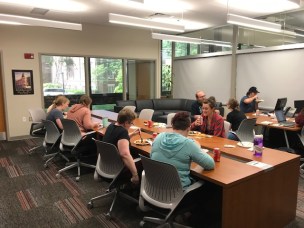
Last week we once again hosted fourteen Ph.D. students who participated in our spring Dissertation Writing Retreat. This is the ninth year we have held a week-long writing retreat in May during which the participants spend their days writing and having daily individual writing consultations with members of the Writing Center staff.
Every day we also have small-group discussions about various issues of dissertation writing (Ways to Structure Chapters, Strategies for Self-Editing, How to Revise Work for Other Purposes, and How to Approach Literature Reviews). We also keep everyone well-fed throughout the week with snacks and lunches.
The writers who participated in this year’s retreat represented ten different disciplines at the University: Biochemistry, Biology, Early Childhood and Elementary Ed., Education, Microbiology, Nursing, Public Health, Rhetoric and Composition, Psychology, and Social Work. The best way to get a sense of the experience of the retreat and its impact on the writers who took part, however, is to hear from the participants and consultants themselves.
Jessica Newman, Consultant (PhD Candidate in Rhetoric and Composition)
This is the third UofL Dissertation Writing Retreat that I’ve helped out with, while working on my own dissertation. For the first two, I was an assistant director at the University Writing Center and so took part in the retreat introduction, breakout groups, etc. This year, though, I participated as consultant only, coming in after lunch and leaving two and a half hours later.
The determination and productivity of the grad students who take part in the retreats were more salient to me than ever this year: rather than arriving each morning as things were getting started, I would instead step from the afternoon heat into a room quiet with reading, typing, scribbling and highlighting, and I would leave before the Writing Center closed for the day, the writers just as focused as when I arrived. I really appreciated working with my two writers as they shared their projects, obstacles and strengths. Talking with them reminded me, as I hope that I and the retreat reminded them, that we are not alone in this.
Rachel Rodriguez, Consultant (PhD Candidate in Rhetoric and Composition)
The Dissertation Writing Retreat serves as a designated space and time for individual drafting and revising, but this year I reflected on the myriad of unexpected benefits of the retreat. There is something magical about working in the presence of others (don’t mind my shameless plug for the Faculty and Graduate Student Writing Group). Many writers flock to libraries or coffee shops to work within that buzz of human activity, but even if silence reins during the retreat, the gravitational force of a group of individuals all working together on different iterations of the same massive, complex task is undeniable. One writer mentioned that when they felt like they couldn’t focus, they’d look around the room at everyone who was still intently writing and say to themselves, “if they can, I can!” before diving back in.
This week, several of us consultants would even arrive early to work on our own writing projects in the staff room, hoping to ride that productivity wave. When the writers surface for breakout workshops and sessions with their consultants, we’re all given the rare opportunity to act as representatives of our disciplines, verbalizing what we know tacitly about how knowledge is made and shared in our fields.
It’s a strange realization that “dissertating” doesn’t look the same in every discipline, and that a dissertation serves different roles and materializes into different products depending on your field. This exposure to interdisciplinarity crafts us all into better and more reflective scholars. As this year’s group of writers look ahead at seemingly disparate careers in university departments, science research labs, hospitals, K-12 classrooms, and even tropical rainforests, the dissertation writing retreat is one avenue through which we all learn about how writing is contextual, adaptive, and always evolving.
Melissa Amraotkar, Writer (PhD Candidate in the School of Nursing)
The social accountability of being in an atmosphere surrounded by other graduate students working on their dissertations kept me on track. Daily one on one meetings with the same writing consultant gave me more confidence in my writing plan, helped me to be more creative in writing, and provided a space outside of my committee to discuss my dissertation topic. Small group discussions with Writing Center staff members were beneficial in exploring aspects of writing that I hadn’t considered. I would recommend this retreat to any graduate student writing a thesis/dissertation.
THANKS FOR ALL WHO MADE THIS POSSIBLE
It is important to acknowledge the people who did the hard work of organizing the Retreat, including Bronwyn Williams, our Director; Cassie Book, our Associate Director; and Amber Yocum, our Administrative Assistant. In addition, Assistant Directors Aubrie Cox, Edward English, Rachel Rodriguez , and Christopher Stuck were instrumental in the planning and execution. Finally, the fantastic consultants, themselves Ph.D. students in English, Megen Boyett, Layne Gordan, Jessie Newman, and Christopher Schiedler helped our writers make progress each day. And thanks to Paul DeMarco, Acting Dean of the School of Interdisciplinary and Graduate Studies, for again sponsoring and supporting the Dissertation Writing Retreat.
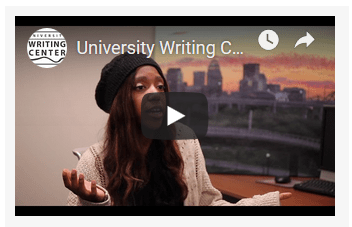
Earlier this year, Edward English, one of the assistant directors in the University Writing Center, suggested that we create a new promotional video drawing on the perspectives of our writing consultants about what they find meaningful in their work teaching writing. I agreed that it was a great idea and, this spring, Edward and consultants Michelle Pena and Jacob DeBrock, created the video you see here, titled, “Our Community”.
University Writing Center: Our Community
What I appreciate, and thoroughly enjoy, about this video is what they captured about the intangible, but essential, role that caring and community play in the work we do at the University Writing Center. On our website and in our presentations we always foreground, and rightly so, the expertise we have in teaching writing that can help students, staff, and faculty become stronger writers. Yet, just as crucial to our approaches to writing pedagogy is the work we do to create a culture of caring and empathy. We do this through a focus on listening, starting where the writer is, and, most of all, always remembering that we are responding to a person, not just a set of pages. You can see this commitment, and the pleasure it brings, in the words of the consultants in this video.
The University Writing Center Staff for 2018-19
Empathy, listening, and caring, are not qualities that will show up in any official end-of-year reports. Emotions and ethics are typically not assessed by university administrators or accrediting agencies, or always considered appropriate ideas for discussion on a university campus. Still, these are the ineffable qualities that make our University Writing Center a distinctive and successful place for learning on campus. Because we focus on working with writers, not just on drafts, we know that we help writers develop a stronger sense of agency and confidence about their work. Because we listen first, and then respond, we also engage in conversations about how writers are shaping their identities, and how those are negotiated in the systems of power in the University and culture.
We did, in fact, work with an impressive number of writers this year – more than 5,000. Out of those visits came stronger drafts and more confident writers. We are grateful for the trust that writers from across the UofL community show in bringing their writing here and letting us work with them to make it stronger. What the numbers can’t show that the video gives a glimpse of is the care, compassion, and that vital sense of community that the consultants build every day with each other and all the writers who walk through our door.
We will be open during the summer, starting May 6, from 9-4 every weekday. You can find out more on our our website. You can also follow us on our blog and on on Twitter, Facebook, and Instagram.
Beyond Tutoring – Workshops, Events, and Community Writing
Our commitment to working with writers and supporting a culture of writing extend beyond our daily consultations. Here is a just a glimpse of what we have been working on this year.
Workshops, Writing Groups, and Dissertation Writing Retreats: Our staff did more than 220 presentations about our University Writing Center services and more than 40 workshops about writing that took place both in and out of classroom settings. Our popular Creative Writing,LGBTQ+ and Faculty and Graduate Student Writing Groups continued to give UofL writers supportive communities through which they could create and talk about writing. We again held a our annual spring Dissertation Writing Retreat in May. We will be continuing all of these groups and workshops, so be sure to check our our website for information and dates.
Writing Events: Once again we hosted or took part in a range of writing-related events,
Kick Back in the Stacks, August 2018
including our Halloween Scary Stories Open Mic Night, the Celebration of Student Writing, Kick Back in the Stacks, and International Mother Language Day. Thanks to our ongoing partnership with the UofL Creative Writing Program, we again hosted a reading in the Axton Creative Writing Reading Series as well as two open-mic nights and one workshop in collaboration with the Miracle Monocle Literary Magazine.
The most important staff news of 2019 was the addition to the University Writing Center staff of Amber Yocum, as our Administrative Associate. Amber is in charge of our front desk, our scheduling system, office management, and supervising our student workers. She is brilliant and innovative and we’re lucky to have her as part of our community.
The new “Our Community” video also shows the community that our staff create among themselves. They do exceptional work as consultants and as full-time graduate students, but they also find time to take care of each other, and to laugh. I’m proud of them for that and think the university and the world can use more of it. It is the inspired and tireless work of all of our staff that, day after day, allows us to support UofL writers and create a culture of writing on campus and off. They also make this a fun place to work. Thanks go to Associate Director Cassandra Book and Assistant Directors, Aubrie Cox, Edward English, Rachel Rodriguez, and Christopher Stuck. Our consultants this year have been Quaid Adams, Brooke Boling, Josh Christian, Jacob DeBrock, Nicole Dugan, Katie Frankel, Anna-Stacia Haley, Rachel Knowles, Catherine Lange, Michelle Pena, Liz Soule, Jon Udelson, Abby Wills, and Adam Yeich. Our student workers were Taylor Cardwell, Wyatt Mills, and Jency Trejo.
Writing Center Staff Achievements
The University Writing Center is also an active site of scholarship about the teaching of writing. Staff from the Writing Center were engaged in a number of scholarly projects during the past year in rhetoric and composition, literature, and creative writing.
Bronwyn Williams, Director I had two Writing Center-related publications this year, co-authored with former University Writing Center associate and assistant directors. One was “Find Something You Can Believe In”: The Effect of Dissertation Writing Retreats on Graduate Students’ Identities as Writers.” with Ashly Bender Smith, Tika Lamsal, and Adam Robinson in Re/Writing the Center: Approaches to Supporting Graduate Students in the Writing Center. (Utah State University Press. 2019). The other publication was “Centering Partnerships: A Case for Writing Centers as Sites of Community Engagement,” with Amy McCleese Nichols, in Community Literacy. 2019. I also presented at the International Writing Centers Association Conference in with Cassie Book, Layne Gordon, and Jessie Newman, from UofL.
Cassandra Book, Associate Director published “Digital Curation as Collaborative Archival Method in Feminist Rhetorics.” with Pamela VanHaitsma. in the journal Peitho, spring 2019. She also gave the keynote address at the Southeastern Writing Center Association Kentucky Statewide Tutor Conference, with Josh Christian and Liz Soule at Asbury University in April 2019. In addition, she presented at the Conference on College Composition and Communication, the Thomas R. Watson Conference on Rhetoric and Composition, and the International Writing Centers Association Conference.
Aubrie Cox, Assistant Director for the Virtual Writing Center published “Final Transmission.” in Little Fiction. 2018 Flash Issue. She gave a reading at “Live at Surface Noise,” in December 2018. She was also awarded the UofL Creative Writing Graduate Student Award for Poetry, 2019
Edward English, Assistant Director of the University Writing Center presented at the Rhetoric & Religion in the Twenty-First Century Conference and Thomas R. Watson Conference on Rhetoric and Composition.
Rachel Rodriguez, Assistant Director of the University Writing Center presented at the Conference on College Composition and Communication.
Christopher Stuck, Assistant Director For Graduate Student Writing presented at the Rhetoric Society of America Conference and served as Graduate Student Coordinator for the Discourse and Semiotics Workshop Series.
Consultants
Quaid Adams presented at the International Society of Contemporary Legend Research Conference, the UofL Graduate Student Regional Research Conference, and served as a Graduate Editor for Issue 12 of Miracle Monocle as well as the forthcoming anthology of Queer and Rural Southern Writers.
Brooke Boling served as a Graduate Editor for Issue 12 of Miracle Monocle as well as the forthcoming anthology of Queer and Rural Southern Writers.
Josh Christian presented the keynote address at the Southeastern Writing Center Association Kentucky Statewide Tutor Conference, with Cassie Book and Liz Soule at Asbury University in April 2019. He also gave a workshop at the same conference, also with Liz Soule. He was awarded a UofL Creative Writing Scholarship and will be a Graduate Program Peer Mentor Coordinator next Year.
Jacob DeBrock presented at the Louisville Conference on Literature and Culture since 1900.
Nicole Dugan completed her M.A. Culminating Project, titled, “Writing the Self: First-Generation Students, Personal Statements and Textual Authority.”
Katie Frankel presented at the Indiana University Interdisciplinary Graduate Conference and had a book review of Sons of Blackbird Mountain published in Interstice. She also received a UofL Creative Writing Scholarship.
Anna-Stacia Haley received a UofL Creative Writing Scholarship.
Rachel Knowles completed her M.A. Culminating Project, titled, “Talking It Out: Towards Interdisciplinarity in Online Organizational Crisis Response”
Catherine Lange presented at the UofL Graduate Student Regional Research Conference.
Michelle Pena presented at the UofL Graduate Student Regional Research Conference
Liz Soule presented the keynote address at the Southeastern Writing Center Association Kentucky Statewide Tutor Conference, with Cassie Book and Josh Christian at Asbury University in April 2019. She also gave a workshop at the same conference, also with Josh Christian.
Jon Udelson published a short story in Juked titled “Out & Elsewhere” and had a A book chapter accepted into the edited collection Style and the Future of Composition Studies. He presented at the Conference on College Composition and Communication, the Thomas R. Watson Conference on Rhetoric and Composition. He was named a board member of the Creative Writing Studies Organization. In the fall he will start a job as an Assistant Professor of English at Shenandoah University.
Abby Wills presented at the Uofl Graduate Student Regional Research Conference and the University of Cincinnati English Department Interdisciplinary Conference.
Adam Yeich was named the Assistant Director of Creative Writing for 2019-20. He presented at the UofL Graduate Student Regional Research Conference and the Louisville Conference on Literature and Culture since 1900. He served as a Graduate Editor for Issue 12 of Miracle Monocle , where he had a book review published, as well as the forthcoming anthology of Queer and Rural Southern Writers.


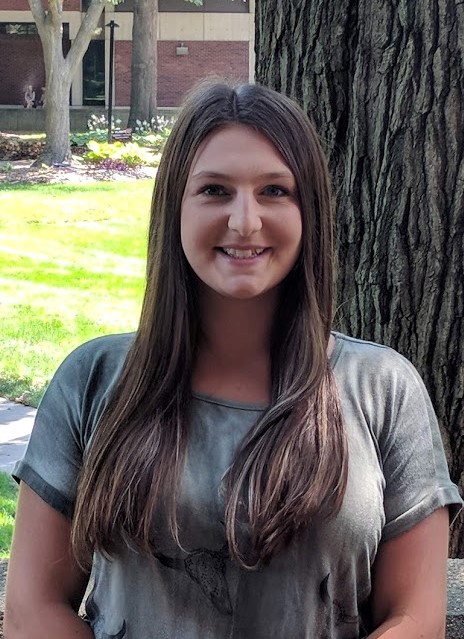 My writing process is very similar to my training process. I ride horses, barrel horses to be exact. I compete at local shows and occasionally a few rodeos. For those reading this that don’t know what barrel racing is, it’s a timed equine event in which a rider takes their horse through a clover leaf pattern around three 55-gallon barrels as fast as they can. I know what you’re thinking, there is no way this can relate to writing, but it really can.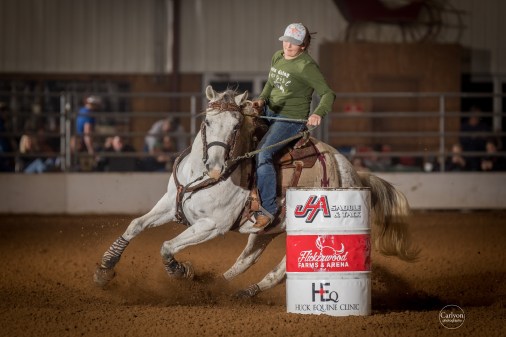
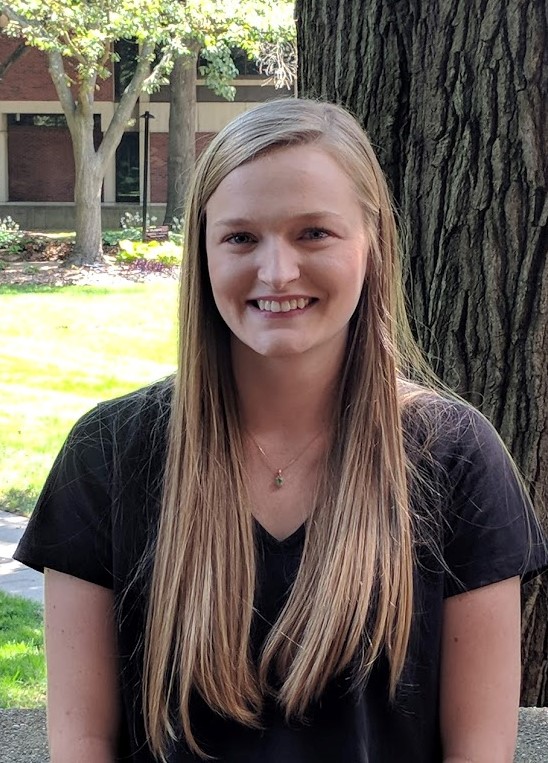 I’ve spent countless hours sitting in front of a blank word document having no clue what to say – regretting the choices I have made that led me to writing another paper. I know it sounds dramatic (and I don’t by any means actually hate writing) but sometimes I feel so overwhelmed thinking about my audience and if they will find it good enough, that I don’t even want to complete the assignment at all.
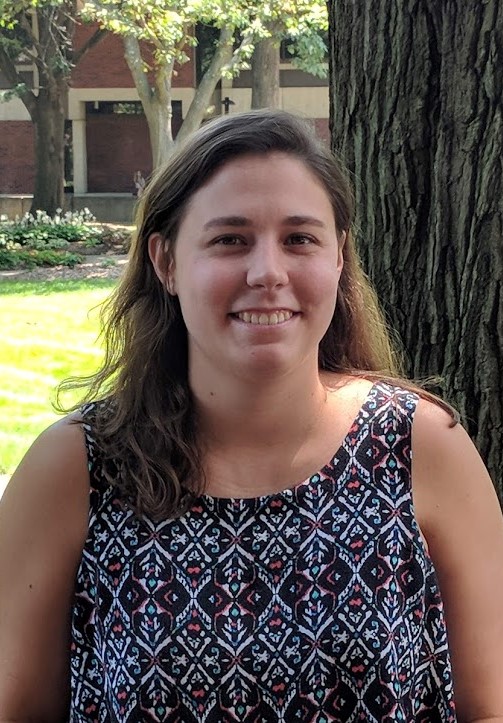 The coffee is helping you stay energized, but all the coffee in the world won’t get this paper written. Neither will procrastinating

 The Dissertation Writing Retreat serves as a designated space and time for individual drafting and revising, but this year I reflected on the myriad of unexpected benefits of the retreat. There is something magical about working in the presence of others (don’t mind my shameless plug for the


 The most important staff news of 2019 was the addition to the University Writing Center staff of Amber Yocum, as our Administrative Associate. Amber is in charge of our front desk, our scheduling system, office management, and supervising our student workers. She is brilliant and innovative and we’re lucky to have her as part of our community.
 University of Louisville Writing Center