
Category: Academic Writing

What’s Left for History?

Kendyl Harmeling, Writing Consultant 

In reflecting on this past semester, my first as an English student and as a graduate student, all I’ve learned, all I’ve taken in and digested, I find myself sorely missing the field of my Bachelor’s degree: I miss History; I miss reading ancient works; I miss talking about Thomas Jefferson and James Madison; I miss it all, the whole lot of it. I changed disciplines between undergrad and grad because of my passion for Writing Center studies, so I left my history studies…in history (cheesy, I know).

My academic voice as a historian was pronounced, articulate, and confident. Being able to synthesize ethics and past events was my favorite part of writing theory for that discipline. But, I often felt out of touch with modernity in writing History. As such, Historical theory is debated around the idea of the present age—do we study history to learn or do we study it to better off ourselves today. I loved this question. It’s one of the unanswerables. I had a professor once tell me that the purpose of research is finding the question you can spend you life trying to answer. At this time last year, I thought I’d be at Yale studying for my PhD in Early American Feminist Rhetoric, and reading Captivity Narratives from 1660 and trying to understand the mechanisms of society which both bolstered and limited female agency in the church. Instead, I’m in a Master’s program in Kentucky, attempting still to learn the mechanisms of English Studies and trying to make myself as a scholar fit into that mold.

I started this reflection in my childhood home. Sitting on my couch, next to my wood burning stove, and thinking about the decisions I’ve made in the past year which have put me in this spot today. I’m writing it now in my studio apartment, sitting in bed, under 14 foot high ceilings and heavy wooden doors hanging off-kilter in their frames. I so miss History, but English is a new language to learn – or to learn better, and confidently.

One question we were repeatedly asked this semester was, “what is English studies?” and I’m not sure I can answer this question yet. Easily, it could be defined as the study of literature. But, History does this too. English could then be the attempting to understand a society through the written texts of a time, including video, art, etc., but… History does this too. I don’t dare suggest these two fields as the same, because that would be an affront to unique scholarship in both, yet both claim Foucault as a founding theorist, both use Frye, Derrida, textual analyses, and conversation.

Perhaps, then, the difference is that History deals in fact and objectivity. English deals in emotion and subjectivity. But even this delineation is too contrite. I once read a work called, The Myth of Religious Violence: The Roots of Modern Secularism by William Cavanaugh. Of course, the work itself doesn’t apply to this consideration, but in the work, Cavanaugh suggests that it’s impossible to define religion. He writes that drawing lines too tightly leaves out non-theistic religions such as Buddhism, but drawing lines too broadly lets in social structures like Capitalism into “religion.” I suggest English studies as the same: un-pin-point-able. Maybe this is because most of my training as a scholar was done by historical method, but c’est la vie.

Where does this leave me? Again, I’m not sure. For a reflective entry, I find myself knowing what I am not more than knowing what I am. In History, we call this an “ethnically differentiated classification,” where knowing your own identify comes through the “I am not’s” and not through the “I am’s.” In regard to my future in the field, I don’t even know what I’m “not.” Outside of the academic, I joke with my friends that if I was ever to leave the academy, I’d proofread restaurant menus. While certainly not a money-producing vocation, it would be fun. But I have a while between now and doing that proofreading job. So for now, I’m in the academic. Where I love being. It took me a long time when I was a bartender to learn how to make certain drinks, and learning this new field will be the same. And luckily, I know how to make a Manhattan to help get me through that process.

The Inclusive Tutor: Addressing and Redressing Diversity in the Writing Center

Shiva Mainaly, Writing Consultant

What are the attributes and traits of an inclusive tutor? Why do we need an inclusive tutor?
How does an inclusive tutor differ from a non-inclusive tutor? Why is the question of inclusion so important to writing centers?

These are the questions that have compelled me to ponder.

We have sufficient records that our writing center has been visited by a large number of students year by year. Among those students who have visited our writing center, a considerable number of them are non-American, non-native speakers of English, resident students, visa students, students belonging to 1.5 generation, students on F1 and J 1 status. Some of these students are enrolled in undergraduate classes whereas others are enrolled in graduate level courses. These students embody different socio-cultural, linguistic, historical, and continent specific experiences.

The number of those students having unique cultural differences is on the rise. To provide care, support and guidelines, the writing center has been widening its scope. Since the writing center has already taken constructive steps to include students regardless of caste, creed, convention, color, disability and gender, it has been hailed as the hub where diversity, the differential, and disability are carefully accepted and constructive counseling is given keeping in mind the unique nuance, agency and concern of student writers.

To address constructively all those voices, expectations, dignity, agency and sensibilities of students, writing center needs inclusive tutors. Only inclusive tutors can handle with dignity the longings, concerns and curiosities of student writers. In the present time in which writing centers have been witnessing the flow of students both native and nonnative speakers of English, what writing centers need is inclusive tutors.

By an inclusive tutor, I mean the sort of tutor who demonstrates tremendous patience and a sense of acceptance when it comes to looking into the student drafts. Only those tutors who have the capacity to say ‘yes’ to their own weaknesses, frailties, flaws, feet of clay, shortcoming and limitations can accept the others as they really are. Here I am reminded of what Francis Fukuyama in his book Identity says “the longing to get recognition from others is the universal longing everyone is endowed with. It is this longing for recognition from others that drives us to forge and foment the question of identity”.

Below I have presented some attributes and traits of an inclusive tutor:

• The inclusive tutor does not get stuck on any identity category rooted in caste, creed, convention, color and gender when he or she starts tutoring in writing center.

 
• An inclusive tutor possesses tremendous power of acceptance. In no way, he or she deviates from the centrality of his or her power of accepting difference in any form.

 
• Language has the power to influence thought and vice versa. So, the inclusive tutor does not believe in the dichotomy of lower order concern and higher order concern.

 
• The inclusive tutor is always ready to address any concern of students be it grammar and punctuation or structural chronology of ideas without compromising with the foundational belief that writing center is not a grammar fixing center.

 
• The inclusive tutor acts in an innovative way. Labels, categories, stereotypes and banal modes of expressions are simply rejected by an inclusive tutor.

 
• The inclusive tutor knows when and how to switch deftly and smartly from non-directive modes of tutoring to directive modes of tutoring.

 
• The inclusive tutor believes and acts on the assumption that every student writer is a world in himself or herself. And the tutor navigates this world with consciousness.

 
• The inclusive tutor is driven by the belief that all forms of literacy are interrelated, supplementary, complementary, correlative, and symbiotically linked. Alphabetic literacy, visual literacy, digital literacy, community literacy, twitteracy etc. are all important in knowledge making process. The inclusive tutor makes use of anything that serves the best goal of tutor and boosts the institutional prestige and standing of writing center.

 
• An inclusive tutor forcibly believes that after each interaction with student writer, a new self is born in the life of inclusive tutor.

 
• The inclusive tutor is a mirror on which student writer finds the reflection of his or her own image, face.

 
• Writing is not a product of solitary endeavor. It is a product of collective efforts. This is the quintessence of inclusive tutoring.

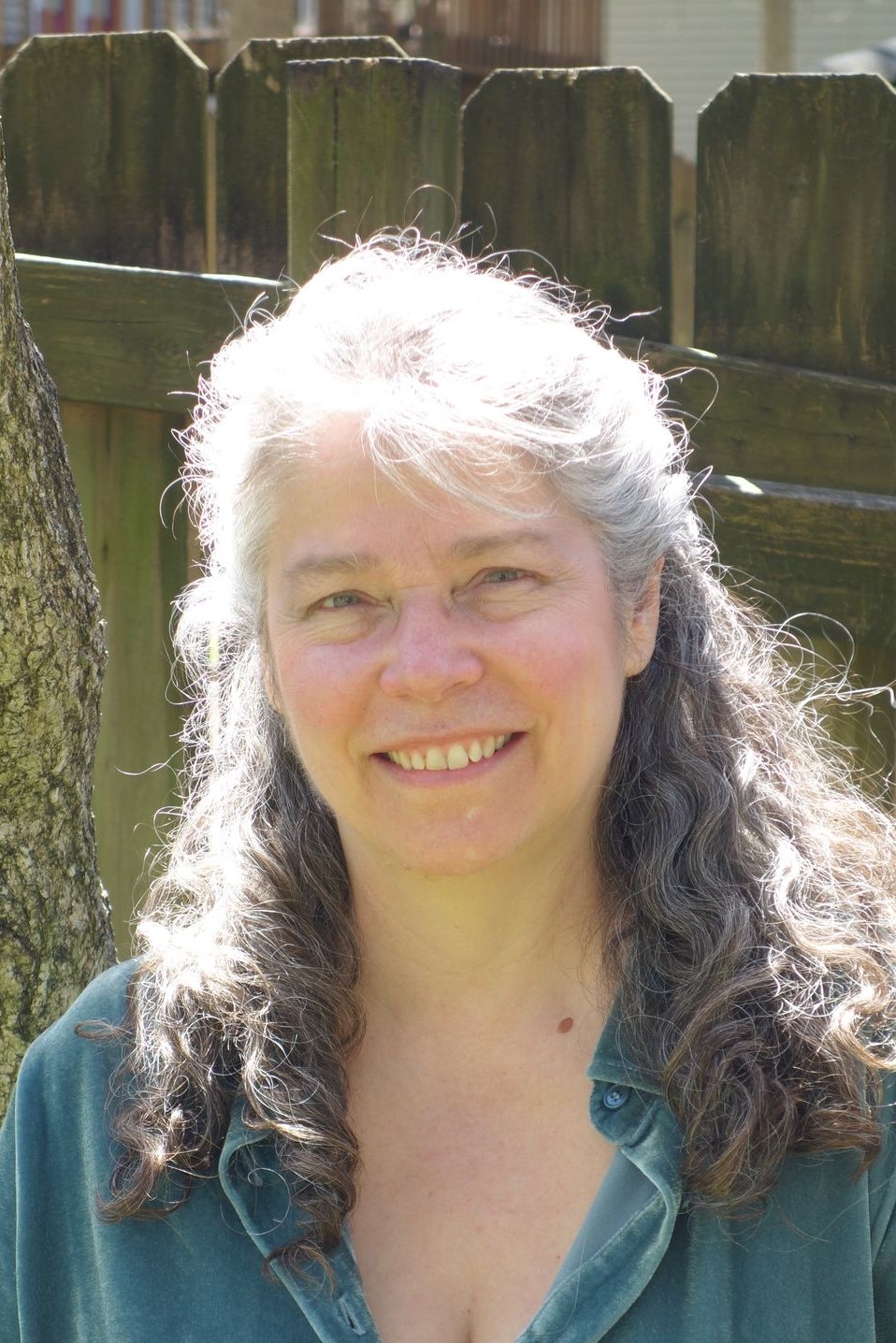
How I Write: Dr. Tracy E. K’Meyer

Our “How I Write” series asks writers from the University of Louisville community and beyond to respond to five questions that provide insight into their writing processes and offer advice to other writers. Through this series, we promote the idea that learning to write is an ongoing, life-long process and that all writers, from first-year students to career professionals, benefit from discussing and collaborating on their work with thoughtful and respectful readers.

Photo

Dr. Tracy E. K’Meyer is a Professor of History at the University of Louisville, specializing in the history of modern U.S. social movements. She earned her PhD at the University of North Carolina at Chapel Hill in 1993 and taught at New Mexico State University for two years before coming to the University of Louisville. She is the author of five books: Interracialism and Christian Community in the Postwar South: The Story of Koinonia Farm(1997); Civil Rights in the Gateway to the South: Louisville, KY, 1945-80 (2009); Freedom on the Border: An Oral History of the Civil Rights Movement in Kentucky (2009), with Catherine Fosl; I Saw it Coming: Worker Narratives of Plant Closings and Job Loss (2010), with Joy Hart; and From Brown to Meredith: The Long Struggle for School Desegregation in Louisville and Jefferson County, KY, 1954-2012 (2013). At the University of Louisville, she has served as Co-Director of the Oral History Center (1995-2017), Chair of the Department of History (2009-2015), and acting director of the Public History Program (2009-2010, 2019-present).

Location: Louisville, KY

Current project: I am completing two book projects in the next couple months: We the People: A Narrative History of the United States, with A. Glenn Crothers; and, To Live Peaceably Together: The American Friends Service Committee and the Open Housing Movement.

Currently reading: Wesley C. Hogan’s brand new On the Freedom Side: How Five Decades of Youth Activists Have Remixed American History from UNC Press.

1. What type(s) of writing do you regularly engage in?

I like to write books. Historians still prioritize the monograph for tenure and promotion, and in the field one’s reputation rests more heavily on books than on articles. But, more than that, I just prefer the long form.

I like the deep immersion and the room to explore rich stories in a narrative as well as persuasive format. Of course, when not working on research, I write lectures, proposals, committee reports, and letters of recommendation.

2. When/where/how do you write?

My best writing is early in the day. I am pretty sure I wrote my entire dissertation before noon. I love writing at home, in my office in the attic, when my kids are at school and I have the place to myself. In a pinch, I can write in my campus office. But, I shut the door to keep distractions and interruptions down.

3. What are your writing necessities—tools, accessories, music, spaces?

Quiet and a big desk. I write on the computer, but I keep a notepad and pen next to me for free writing and “scribbling” down thoughts in preparation for writing. I have my research notes in files on the computer, but I also print out the sections most relevant for what I’m writing that day so I have them for easier reference.

4. What is your best tip for getting started and/or for revision?

I am a big fan of what I call “deep outlining.” I start with the big structure, then the chapter outline, then break that into ever smaller chunks. Often by the time my fingers hit the key pad, I’ve outlined even the individual paragraphs.

This helps me see where I’m going. When I start writing, I’ve already thought through most of what’s going to go on the page. Liberated from having to figure that out, I can have fun with the language and the story.

5. What is the best writing advice you’ve received?

As Professor William Leuchtenberg told me in graduate school, “don’t get it right, get it written.” I’ve taken that to mean many things over the years. First, get something on paper. You are going to rewrite multiple times anyway so just get moving. Don’t worry about making all the sentences pretty. They can be fixed. In fact, fixing them later is half the fun. I think it also means, don’t wait until you think your work is perfect before you show it to someone else. Get it in shape that won’t embarrass you and send it to a friend (or in my case, I’m lucky to have a historian husband who is my first reader for everything).

Finally, I’ve always taken it as an admonition to meet deadlines, even if they are self-imposed ones. When I meet a deadline I feel confident, productive, and energized, and that helps keep the mental juices flowing.


Writing and Riding: More Parallels Than You Might Think

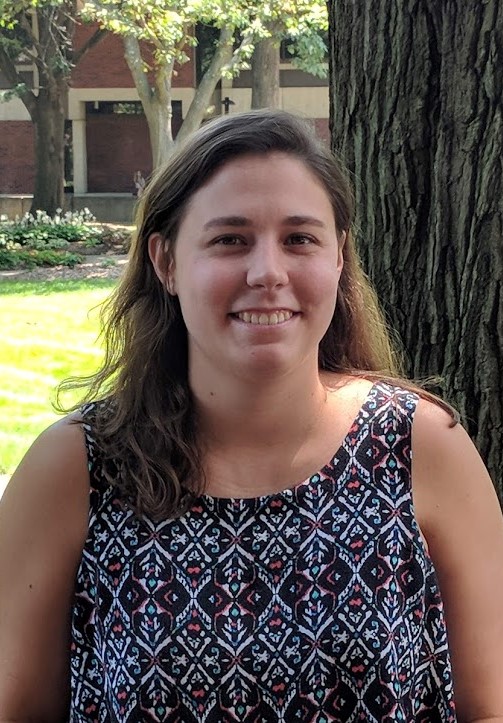
Kelby Gibson, Writing Consultant

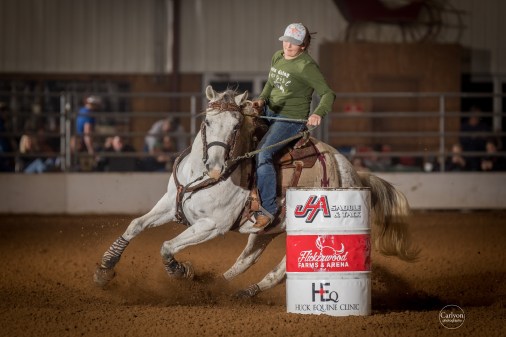
Writing can be related to more things in your daily life than you might expect. Writing looks different for everyone.  My writing process is very similar to my training process. I ride horses, barrel horses to be exact. I compete at local shows and occasionally a few rodeos. For those reading this that don’t know what barrel racing is, it’s a timed equine event in which a rider takes their horse through a clover leaf pattern around three 55-gallon barrels as fast as they can. I know what you’re thinking, there is no way this can relate to writing, but it really can.
I have learned many lessons and grown so much as a person from being in the barrel racing world. A few of the key things I’ve learned that have in turn helped me in writing are both humility and confidence.

Humility is something that can be hard for a lot of people. Admitting you are wrong is never fun, but the important thing to remember is when you can accept that you need to ask for help you are always going to come out the better person. A friend of mine has a saying, “if you’re scared say you’re scared” and I think this applies here. If you need help, ask for help! Yes, it sucks saying I’ve tried my way, now I need to hear from someone else. Opening yourself up for critique is hard, but once you learn to take the constructive criticism it will only make you better at what you are trying to accomplish, whether that is win a belt buckle or write an ‘A’ paper.

I’ve consulted many different people just in the last year on how to better myself as a rider just as I have continually asked for feedback from friends and colleagues with my writing throughout the semester. I did not become a better barrel racer by only ever riding my way, I got better by asking my friends and competitors questions. You cannot become a better writer holed up in a dark room holding onto that draft just waiting for the answers to come for you. You have to go find the answers. Writing can be social. Writing is social. So have the humility to venture away from the desk, seek feedback, and ask questions.

Kelby horse
Kelby Gibson barrel racing!

Confidence is needed when you’re on the back of a 1200-pound animal that’s running at roughly 40 miles per hour and turning on your command by a few light hand and foot movements. There are certain pressures behind writing that are similar to trying to beat a clock with money on the line. Maybe you’re applying to your dream graduate program, working on your senior thesis, or writing the final paper that determines your grade in class. Stress and pressure do funny things to us and can cause us to under-perform. When I’m at a race I like to try my best to focus on the positives.

While I don’t recall exactly who said it, there is a line from my favorite barrel racing podcast I like to keep in mind with all things in life, “You either win or you learn.” So maybe you try your hardest and your horse gives its all, but you don’t come in the pen and set the pace for the day. Similarly, you might spend hours upon hours on a paper that falls short in the eyes of its main audience. In either situation your initial reaction is to ask, what went wrong? If you pursue that question you will surely get an answer whether it be from yourself or someone else and once you have that answer you can learn how to do better next time.

Not every run is going to be your fastest and not every piece you write will be well received, but as long as you are trying your hardest and putting forth a good faith effort you will succeed or you will learn how to increase your chances of succeeding the next time. Have confidence in yourself. When you’re writing that paper don’t allow the thoughts of what might happen bog you down, clear your head and give it your best shot. As long as you’re trying, what is the worst that could happen?

These two things are just a few of the many ways barrel racing has enriched my life and my willingness to learn. My training process and writing process mirror each other in many aspects and because of that I continue to improve as both a jockey and a writer. What I admire most about this sport is that even the best of the best will tell you that you can never stop learning and finding ways to improve yourself and the same can be said for writing.

Writing to Listen

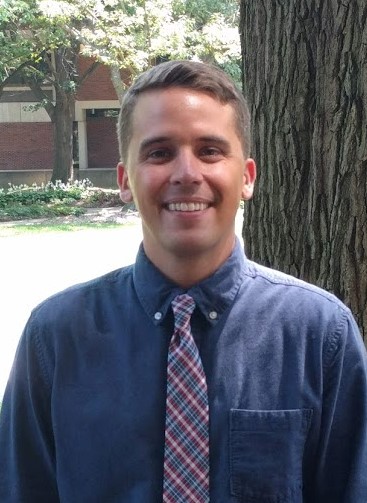
Michelle Buntain, Writing Consultant

You’ve been staring at a blank page for a while now, willing the words to come. You’ve read over the prompt twice, three times, four times. The coffee is helping you stay energized, but all the coffee in the world won’t get this paper written. Neither will procrastinating
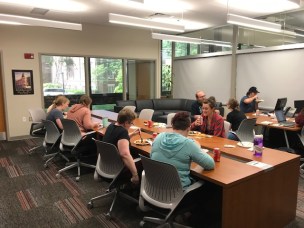
You know this; and yet, despite all your concentration and force of will, the words will not come. Before long, that familiar feeling begins to set in: panic.
Many people associate writing with a certain level of anxiety. We usually write for an audience who is going to judge us in one way or another – the paper you’re writing for class; the job application you’re working on; the text to a potential love interest. Writing forces us to put our inner lives out on display, and that can be incredibly intimidating.

As students and as scholars, we use our internal resources on a daily basis. Writing requires us to generate not just thoughts, not just sentences, but full, comprehensive, cohesive ideas. On top of that, we don’t even get to choose what we write about; in the academic world, we are almost always writing according to someone else’s stipulations. Nearly every day, somebody expects something from you, and you must deliver.

But focusing too much on what others are thinking is the most counterproductive thing for someone in an academic setting to do.

If we are obsessing over what is expected of us, it becomes nearly impossible to stay in touch with our own insights. Trying to balance what we really think with what we are “supposed” to think is a losing man’s game.

So, here is my challenge to all the frustrated writers out there: ask yourself, when was the last time you sat down to write without worrying about who was going to read your work? If you can’t remember, do yourself a favor: take a breath, take a seat, and just start writing. Don’t think too much. Don’t judge yourself. Don’t edit; don’t erase. No one else has to see it. There doesn’t have to be a purpose – no assignment, no thesis, no one to impress. Just write until you can’t write any more.

Maybe you wrote about something important; maybe you didn’t. Maybe you just ended up making a to-do list — it doesn’t matter. The point is to acknowledge yourself, to listen to what you have to say. It’s easy to get so wrapped up in listening to others that we forget to listen to ourselves. But if we don’t listen to ourselves, why should anybody else?

Every now and then, allow yourself the courtesy that you show others: don’t think, don’t judge. Just listen.

Tricks and Traps: Negotiating Procrastination and Productivity

Edward English, Assistant Director to the University Writing Center

Despite spending several years as a writing teacher and consultant, I still take resolve in William Zinsser’s insights and observations that:

“A writer will do anything to avoid the act of writing. I can testify from my newspaper days that the number of trips to the water cooler per reporter-hour far exceeds the body’s need for fluids. What can be done to put the writer out of these miseries? Unfortunately, no cure has been found. I can only offer the consoling thought that you are not alone. Some days will go better than others. Some will go so badly that you’ll despair of ever writing again. We have all had many of those days and will have many more. Still, it would be nice to keep the bad days to a minimum.”

As attractive as it might seem to imagine oneself as a writer who day after day gets lost in a fury of creative inspiration, as Zinsser suggests, such days are typically rare. I’m not exactly sure why the process of writing (including brainstorming, outlining, composing, editing, peer-reviewing) often lends itself to urges of procrastination. Self-consciousness? Feelings of vulnerability? Too many cool things on Hulu, Netflix, or Youtube competing for our attention perhaps?

Either way, for most of us, getting started writing—or following through on the processes that improve an initial piece—can often feel more like a struggle against oneself than an effortless journey into insight and self-discovery. Like Zinsser, I have no answers to solve this dilemma. However, for what it’s worth, over the years I have enjoyed experimenting with techniques/tricks to maximize both enjoyment of writing and productivity. What follows then is hopeful advice as much as it is a reminder to myself:

Be open to discovering new places and ways to write:

While a successful writer is frequently imagined as sitting hunched over a laptop frantically typing away in a sterile office or library, more often than not some of the most successful writers I have met put great effort into figuring out alternative and creative methods that work better for them. In our blog’s series “How I Write”, we invite writers from the University of Louisville community and beyond to describe their writing process. Each time I read a new post, I’m stuck by how differently people go about writing.

That is, where they write, what they use to write with, and what time of the day they write… there’s wild variation. I also have yet to find any common thread among these posts concerning what is helpful beyond a shared experience of writers putting in the time and effort to make sense of what works best for them. Sometimes a person’s process may even seem counterproductive to others. In a recent interview, acclaimed fiction writer Chuck Palahniuk (Invisible Monsters, Choke, Fight Club) detailed how much of his writing process actually revolves around going to the gym—arguing that the physical movement and circulation were conducive to helping him feel creative and organize his thoughts. He also noted that many of the odd conversations he’s shared while lifting weights have served as narrative inspiration for his novels.

Use a timer wisely:

When I’m given a large swath of time and approach writing, it’s easy to find myself believing I’m technically writing, or in the process of writing, but really avoiding the focus and drive to truly push the process forward. Even if I’m at my computer and thinking I’m writing, it’s amazing how fast a few hours can fly by with little to show for it. For me, this is often helped by readjusting my time frame and setting small goals. More useful work tends to be produced though when I put a timer on (usually for at least an hour), commit myself to getting a certain amount done, and refuse to indulge any interruptions. My productivity during these sessions is also best helped when I pair it with the next advice:

Have incentives:

When there is a realistically set goal combined with an incentive to finish (even if it seems insignificant) chances just seem exponentially higher that a task will get done. While it could be an incentive like going to lunch, using the restroom, or, as Zinsser noted, getting a drink of water, this is where creativity can also go a long way. In a post my friend and colleague Rachel Rodriguez humorously detailed how she has used gummy bears to keep her writing going—allotting a single delicious bear each time a paragraph is finished. For myself, I’ve recently given up coffee in the mornings so I can create an incentive for later in the day, telling myself I must write at least for an hour or two before I get my caffeine fix…it’s working.

Be wary of interrupting your writing time with media or other obligations:

Admittedly, I incorporate a lot of media in my writing process and much of it is helpful—especially music. I’ll also occasionally incentivize myself to write by using a video as a reward. I’m particularly fond of shorter nerdy videos from channels like the infographics show and simple history. Still, day by day the internet seems to be increasingly cleaver at grabbing one’s attention and running with it…leaving a writing project quickly behind. Add to this that there are so many other things we could be “productive” at while on the internet (e-mails, online banking, social media), and it seems even more reasonable to approach media cautiously when thinking of incorporating it into your writing process.

The most important suggestion I want to make though is simply to…

Be gracious with yourself:

It’s easy to feel frustrated during the writing process, but it’s helpful to remember that good writing requires effort, and progress is made incrementally. If you didn’t get done what you had hoped for today, there’s always tomorrow to get back on it. Be kind to yourself and also give yourself appropriate credit where credit is due.
What might start as a 15-minute timer could turn into hours of getting lost in a fun and productive flow. You won’t know though unless you start trying.

So good luck and happy writing.

References:

Zinsser, William. On Writing Well : The Classic Guide to Writing Nonfiction. 30th

Anniversary ed., 7th ed., rev. and updated ed., HarperCollins, 2006.


New Ideas, New Progress, and New Friends: Reflections on our 2019 Dissertation Writing Retreat

By Edward English, Assistant Director

Last week we once again hosted fourteen Ph.D. students who participated in our spring Dissertation Writing Retreat. This is the ninth year we have held a week-long writing retreat in May during which the participants spend their days writing and having daily individual writing consultations with members of the Writing Center staff.
Every day we also have small-group discussions about various issues of dissertation writing (Ways to Structure Chapters, Strategies for Self-Editing, How to Revise Work for Other Purposes, and How to Approach Literature Reviews). We also keep everyone well-fed throughout the week with snacks and lunches.IMG_6628

The writers who participated in this year’s retreat represented ten different disciplines at the University: Biochemistry, Biology, Early Childhood and Elementary Ed., Education, Microbiology, Nursing,  Public Health, Rhetoric and Composition, Psychology, and Social Work. The best way to get a sense of the experience of the retreat and its impact on the writers who took part, however, is to hear from the participants and consultants themselves.

Jessica Newman, Consultant (PhD Candidate in Rhetoric and Composition)

This is the third UofL Dissertation Writing Retreat that I’ve helped out with, while working on my own dissertation. For the first two, I was an assistant director at the University Writing Center and so took part in the retreat introduction, breakout groups, etc. This year, though, I participated as consultant only, coming in after lunch and leaving two and a half hours later.

The determination and productivity of the grad students who take part in the retreats were more salient to me than ever this year: rather than arriving each morning as things were getting started, I would instead step from the afternoon heat into a room quiet with reading, typing, scribbling and highlighting, and I would leave before the Writing Center closed for the day, the writers just as focused as when I arrived. I really appreciated working with my two writers as they shared their projects, obstacles and strengths. Talking with them reminded me, as I hope that I and the retreat reminded them, that we are not alone in this.

Rachel Rodriguez, Consultant (PhD Candidate in Rhetoric and Composition)

rachel.jpgThe Dissertation Writing Retreat serves as a designated space and time for individual drafting and revising, but this year I reflected on the myriad of unexpected benefits of the retreat. There is something magical about working in the presence of others (don’t mind my shameless plug for the Faculty and Graduate Student Writing Group). Many writers flock to libraries or coffee shops to work within that buzz of human activity, but even if silence reins during the retreat, the gravitational force of a group of individuals all working together on different iterations of the same massive, complex task is undeniable. One writer mentioned that when they felt like they couldn’t focus, they’d look around the room at everyone who was still intently writing and say to themselves, “if they can, I can!” before diving back in.

This week, several of us consultants would even arrive early to work on our own writing projects in the staff room, hoping to ride that productivity wave. When the writers surface for breakout workshops and sessions with their consultants, we’re all given the rare opportunity to act as representatives of our disciplines, verbalizing what we know tacitly about how knowledge is made and shared in our fields.

It’s a strange realization that “dissertating” doesn’t look the same in every discipline, and that a dissertation serves different roles and materializes into different products depending on your field. This exposure to interdisciplinarity crafts us all into better and more reflective scholars. As this year’s group of writers look ahead at seemingly disparate careers in university departments, science research labs, hospitals, K-12 classrooms, and even tropical rainforests, the dissertation writing retreat is one avenue through which we all learn about how writing is contextual, adaptive, and always evolving.

Melissa Amraotkar, Writer (PhD Candidate in the School of Nursing)

The social accountability of being in an atmosphere surrounded by other graduate students working on their dissertations kept me on track. Daily one on one meetings with the same writing consultant gave me more confidence in my writing plan, helped me to be more creative in writing, and provided a space outside of my committee to discuss my dissertation topic. Small group discussions with Writing Center staff members were beneficial in exploring aspects of writing that I hadn’t considered. I would recommend this retreat to any graduate student writing a thesis/dissertation.

THANKS FOR ALL WHO MADE THIS POSSIBLEcassie.jpg

It is important to acknowledge the people who did the hard work of organizing the Retreat, including Bronwyn Williams, our Director; Cassie Book, our Associate Director; and Amber Yocum, our Administrative Assistant. In addition, Assistant Directors Aubrie Cox, Edward English, Rachel Rodriguez , and Christopher Stuck were instrumental in the planning and execution. Finally, the fantastic consultants, themselves Ph.D. students in English, Megen Boyett, Layne Gordan, Jessie Newman, and Christopher Schiedler helped our writers make progress each day. And thanks to Paul DeMarco, Acting Dean of the School of Interdisciplinary and Graduate Studies, for again sponsoring and supporting the Dissertation Writing Retreat.

Putting the Puzzle Pieces Together: Finding a Starting Point to Write

Jacob DeBrock, Writing Consultant

You’ve been staring at a blank page and a blinking line for the past hour. Jacob DeBrock know what you want to write about, you’ve done your research, and you’re in the perfect environment to let your thoughts turn into words. The problem is you don’t know how to start or where to go after that.

At times like this, you might be wishing “Why didn’t I write an outline ahead of time?” Fortunately, I’m here to show you how to make the outline that will make your paper a breeze to write.

1: Think of it like a puzzle

First, you’ll need to figure out what you want in your essay. To go along with my metaphor, these are the pieces of your puzzle, typically dumped out in a random fashion. You’re not sure how they fit, but you know they’re each important.

At first, your outline will look rough and disjointed, like trying to put together pieces without a greater sense of the picture. It’ll take some time, but eventually some aspects will start to come together. An order forms. You might have an edge or a corner of the puzzle done before you begin to feel confident.

As you get more of your paper outlined, the puzzle will start to look like an actual image; you’ll understand how everything connects. By the end of it, you’ll have hopefully come to an understanding of what you want your paper to be and how you want it to flow. All the pieces matter.

2: Be detailed, but not too detailed

Writing an outline isn’t as simple as having a few ideas and putting them in some order. You’ll want to make sure that you know what you want to talk about in each section of your paper to make it as fleshed out and coherent as possible. Each section of your outline should have several points underneath it that structure the section and elaborate what you are going to do with it.

However, this isn’t saying you should have every little detail in it; this is still an outline right now. Instead, pick the most important items you will need to discuss and then build the section around it. Having a good number of first-level details will provide the skeleton for your outline that your paper will be built around.

3: Give it room to breathe

Just because you have your outline set up doesn’t mean it’s going to go the way you expected. You may start writing your paper only to realize that your pieces have been sown together with cheap thread, leaving them barely hanging together in a disjointed body. One should always expect that some part of the outline will not go the way they expected once they start writing. Your outline should have enough space that your paper doesn’t fall apart if a part needs to be altered, shifted, or removed entirely.

Writing a paper is always difficult, especially when it’s a subject that is not a forte. Creating an outline beforehand, however, can take some of the stress of your back. It’s like drawing a map; it takes a while to figure out the basic outline of the terrain, but once you get squared away, the little details just pop right out.

Taking Research Assignments One Step at a Time

Michelle Peña, Writing Consultant

Research projects can seem daunting to many students new to collegiate style work. This type of writing requires a certain degree of commitment, that many aren’t familiar with yet. Oftentimes, new students finish their work in a hurry, without proper research, and without forming an analysis around their research.Michelle Pena

Why this method for approaching projects has failed in the past is because students feel unprepared to grapple with the work they have set before them. I have seen this occur multiple times as a writing tutor. Students, who have not had experience writing a paper of this style, approach me with a forlorn look in their eyes begging me to help them figure out a way to use outside sources to support their thesis. My answer to them, if they are trying to write an essay that makes sense to an observant professor, is I can’t.

What many people who haven’t written academic work do not realize, until far too late in the writing process, is that the focus of their work needs to come from their accumulated research. Actually doing the research as a way to formulate your ideas is necessary toward completing these types of assignments. I understand that many students feel intimidated by the prospect of acquiring that much data for a single piece of writing.

So, as a way to counteract any feelings of uneasiness, I have listed a few ways you can approach this work without getting overwhelmed.

1. Give yourself time to think about what type of work you want to do and why:
Many rush into deciding what they should focus on. This is usually because it is seemingly the easiest or most interesting option available. What I would suggest would be to take your time looking at all of necessary information. If you are writing a research paper for an ENGL 102 class and are given an assignment that asks you to analyze a text, look at that text from multiple perspectives. Later, cater your research to these perspectives and use them to guide what you read through.

2. Actually read what you find:
This step kind of speaks for itself. But actually try to understand the material you find. You don’t want it to come down to crunch time and find out that none of what you gathered works.

3. Spread out your research time:
Try to avoid doing things last minute. I know we have all been warned about procrastination before but heeding those warnings when approaching research papers is actually pretty helpful. Try allotting a specific amount of time for preparing your work. Instead of trying to do every part of an assignment on one night, give yourself multiple days to do the research. Maybe one day you find two to three sources and another day you find a few a more. This way you don’t feel like you have to do everything at once.

4. If you are assigned an annotated bibliography, utilize it properly:
If you are assigned to do an annotate bibliography, take advantage of it by finding sources that are applicable to one another and your topic. Don’t try to find sources with an applicable word in the title; find sources that actually have material that you can work with. I would even go as far as to say you could write an annotated bibliography even if you aren’t assigned one. An impromptu annotated bib that includes the parts of the article that make it applicable to what you’re working on.

5. Pre-Organize your outline using your sources:
I understand that some people don’t like doing outlines, so if you are of the type that avoids outlining like the plague, this step may not apply to you. (But I would urge you to open your mind for a moment.) Once you have collected all of the necessary pieces of your research and you have decided what points support what you want to say, write them down in the order they will appear throughout your work. After you have done this, write where your sources will be listed underneath them. This process will help with bringing everything together in the end.

Remember, research assignments aren’t designed in the hopes that you will fail; they are designed so that you might learn. So don’t get overwhelmed and take your research one step at a time.

The Blinking Cursor of Doom: How to Begin Writing Academically

Brooke Boling, Writing Consultant

Across the board, writers both new and veteran acknowledge how difficult it is to begin an academic paper.Brooke Boling Do you start with a thesis? Do you write from introduction to conclusion? Should you make an outline? Where do you put your research in the flow of your argument? What is the “best” way to start a paper?

The best-kept secret in academic writing is this: there is no “correct” process to writing or beginning a paper. There’s no way that works better than every other way. Lots of writers who are new to academic writing, returning after a long hiatus, or write academically as a career are daunted by beginning a paper and making an effective argument. You might feel like that blinking cursor on your word processor might as well be a physical wall stopping you from getting started.
A few questions to ask yourself when you’re starting a paper might be: what, to you, is the most important part of your paper? What ideas do you need to get down before they slip away? What is the overall argument you’re aiming to make? What pieces of research and evidence do you think are the most important? These are some great places to begin thinking about your paper overall.

I, personally, write my introduction first, and it is always long and rambling, leading to a thesis that is comprised of keywords rather than a solid claim. This process does, however, enable me to get all of my formulated ideas in one place, and it helps me order the rest of my paper. I can always go back and edit, so I try not to get hung up on grammar or spelling in a first draft (which is also a helpful tip as you’re beginning your paper). Some consultants in the Writing Center outline extensively, plugging in their research and relevant quotes in different parts of the outline, and even spending more time on their outline than their paper when all is said and done.

Other consultants find it helpful to free-write and see where it leads regarding the topic; I find this to be especially helpful in creative writing. Still others write all of their paragraphs out of order before figuring out where each element of their argument belongs, and then write around these paragraphs once they put them in order to make their overall argument. Lots of writers claim that writing their introduction last is what helps them get started on their paper. If parts of these approaches resonate with you, mix and match and see what works!

The bottom line is, feel free to experiment with different writing processes and ways of ordering your writing. There is no correct way to begin to write, and the more ways you experiment with, the more you will find what works for you, and you’ll be well on your way to developing your own personal writing process.