Author: UofL University Writing Center

Writing and Riding: More Parallels Than You Might Think

Kelby Gibson, Writing Consultant

Writing can be related to more things in your daily life than you might expect. Writing looks different for everyone.  My writing process is very similar to my training process. I ride horses, barrel horses to be exact. I compete at local shows and occasionally a few rodeos. For those reading this that don’t know what barrel racing is, it’s a timed equine event in which a rider takes their horse through a clover leaf pattern around three 55-gallon barrels as fast as they can. I know what you’re thinking, there is no way this can relate to writing, but it really can.
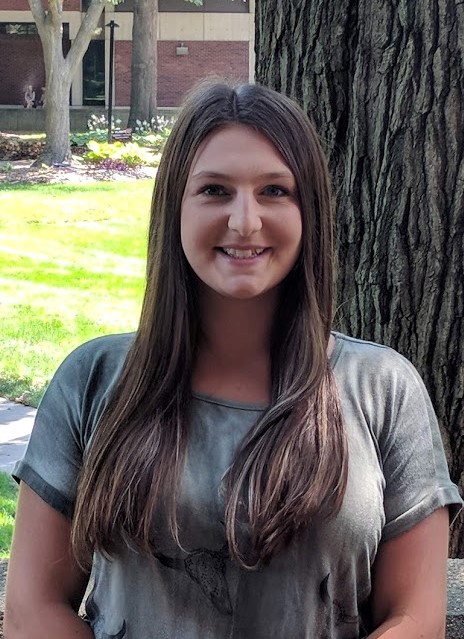
I have learned many lessons and grown so much as a person from being in the barrel racing world. A few of the key things I’ve learned that have in turn helped me in writing are both humility and confidence.

Humility is something that can be hard for a lot of people. Admitting you are wrong is never fun, but the important thing to remember is when you can accept that you need to ask for help you are always going to come out the better person. A friend of mine has a saying, “if you’re scared say you’re scared” and I think this applies here. If you need help, ask for help! Yes, it sucks saying I’ve tried my way, now I need to hear from someone else. Opening yourself up for critique is hard, but once you learn to take the constructive criticism it will only make you better at what you are trying to accomplish, whether that is win a belt buckle or write an ‘A’ paper.

I’ve consulted many different people just in the last year on how to better myself as a rider just as I have continually asked for feedback from friends and colleagues with my writing throughout the semester. I did not become a better barrel racer by only ever riding my way, I got better by asking my friends and competitors questions. You cannot become a better writer holed up in a dark room holding onto that draft just waiting for the answers to come for you. You have to go find the answers. Writing can be social. Writing is social. So have the humility to venture away from the desk, seek feedback, and ask questions.
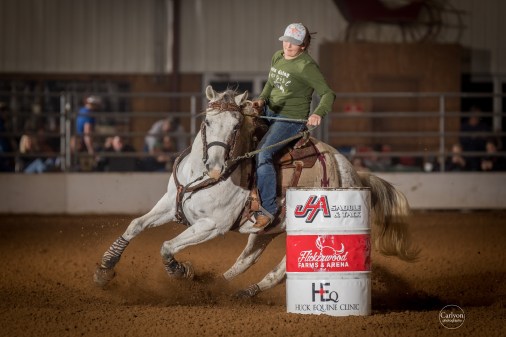
Kelby horse
Kelby Gibson barrel racing!

Confidence is needed when you’re on the back of a 1200-pound animal that’s running at roughly 40 miles per hour and turning on your command by a few light hand and foot movements. There are certain pressures behind writing that are similar to trying to beat a clock with money on the line. Maybe you’re applying to your dream graduate program, working on your senior thesis, or writing the final paper that determines your grade in class. Stress and pressure do funny things to us and can cause us to under-perform. When I’m at a race I like to try my best to focus on the positives.

While I don’t recall exactly who said it, there is a line from my favorite barrel racing podcast I like to keep in mind with all things in life, “You either win or you learn.” So maybe you try your hardest and your horse gives its all, but you don’t come in the pen and set the pace for the day. Similarly, you might spend hours upon hours on a paper that falls short in the eyes of its main audience. In either situation your initial reaction is to ask, what went wrong? If you pursue that question you will surely get an answer whether it be from yourself or someone else and once you have that answer you can learn how to do better next time.

Not every run is going to be your fastest and not every piece you write will be well received, but as long as you are trying your hardest and putting forth a good faith effort you will succeed or you will learn how to increase your chances of succeeding the next time. Have confidence in yourself. When you’re writing that paper don’t allow the thoughts of what might happen bog you down, clear your head and give it your best shot. As long as you’re trying, what is the worst that could happen?

These two things are just a few of the many ways barrel racing has enriched my life and my willingness to learn. My training process and writing process mirror each other in many aspects and because of that I continue to improve as both a jockey and a writer. What I admire most about this sport is that even the best of the best will tell you that you can never stop learning and finding ways to improve yourself and the same can be said for writing.
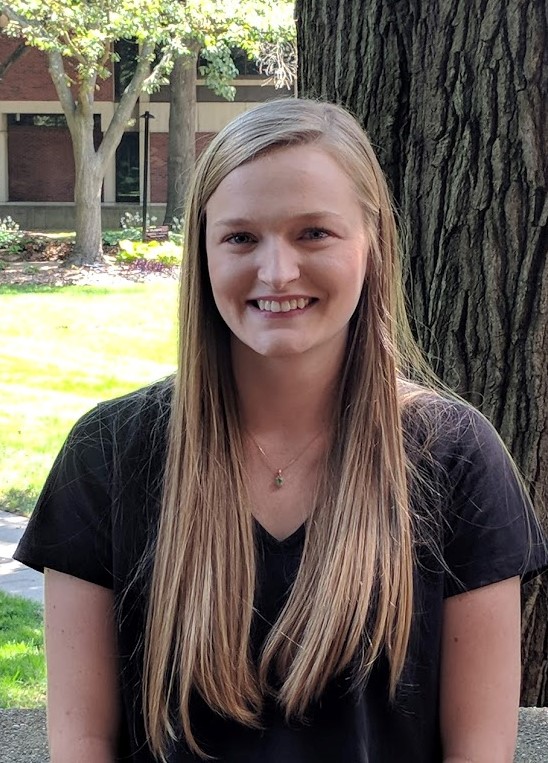
What I Learned About Writing from My Favorite Protagonist

Tristan DeWitt, Writing Consultant

I can’t say that writing is always enjoyable for me. Sometimes I even hate it.  I’ve spent countless hours sitting in front of a blank word document having no clue what to say – regretting the choices I have made that led me to writing another paper. I know it sounds dramatic (and I don’t by any means actually hate writing) but sometimes I feel so overwhelmed thinking about my audience and if they will find it good enough, that I don’t even want to complete the assignment at all.
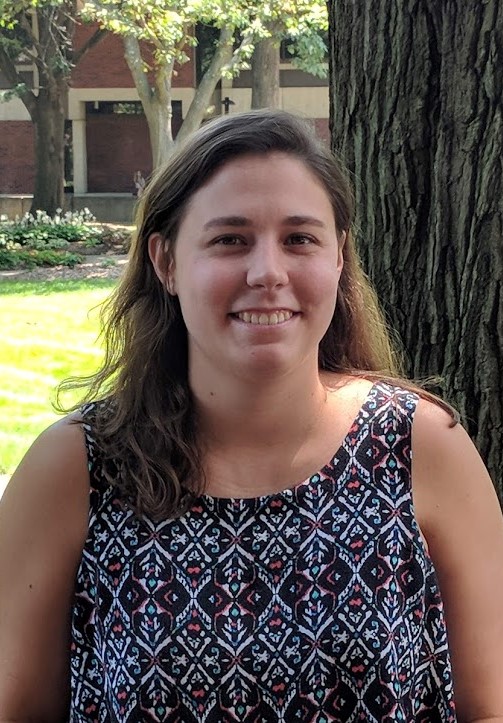
In this situation, it helps me when I think about one of my favorite protagonist in literature, Mary Beton, from Virginia Woolf’s A Room of One’s Own. Throughout the book, Mary finds herself denied the opportunity to partake in much of the academic culture of the university. In a search for answers to her experiences, Mary finds that little literature is written with attention to the actual experiences of women, both by male and female writers. Woolf herself concludes the novel by telling women that they need is a room of their own in which to write.

I believe that Mary’s experience highlights something about writing that many of us within the university community take for granted. When given an assignment that we don’t really want to do, we see it as something that is being forced upon us. I am guilty of this as well, but thinking of Mary makes me realize how remarkable each opportunity to write actually is. Not everywhere are we given the chance to write what we think and have an audience that will listen.

Even in our least favorite assignment we have the privilege to evaluate our thoughts and make something our own. We no longer need a room of our own to write. Within the university, we have a unique opportunity where we are expected to share our experiences and insights, be it with a text or with research.

Working in the Writing Center, people sometimes think that words or ideas just come to me naturally, since writing is what I like to do. However, the truth is that rarely do words just come to me. There is always revising, editing, and what seems to be an unending amount of time spent on rewriting just one sentence. Even when I get frustrated with an assignment, I have to remind myself that this is my work and that only I can say what I am thinking – which makes the laborious process of writing worth it to me.

Mary’s experience applies to us all. We all have had the moment when we question our thoughts or experiences. Next time you find yourself in this situation, where you feel frustrated with an assignment, I challenge you to see writing as the unique opportunity that it is. Not everywhere in life will you be asked what you think, so take this opportunity in college to own your writing.

Beholden and Held By The Power of Words

Rose Dyar, Writing Consultant

“Carry our stories carefully
Wrap them in soft red cloth
and place them against your
heart.” -Yolanda Chávez Leyva

Here at the Writing Center, we deal in the study of words and stories. Lately, I have been thinking a lot about how to explain why I think that’s so special, how to explain the link I see between words and justice, and how I honored I am to work with writers as they make meaning.

So here goes a humble attempt to begin such an explanation.
I believe that the study of words (e.g. literature, poetry, rhetoric) is critical to the ongoing formation of the whole human person. A bold claim, I know, but let me elaborate. This endeavor has the potential to infuse beauty and feeling and empathy into a world that actively attempts to numb us to our own humanity. And because of that, it has the radical potential to change hearts and minds. I mean radical change in two ways.

First, the etymological term. To change something radically means to change it at its root. The study of words grants us the gift of insight, or the ability to see inside of thing, to see the systems and structures that manifest themselves into parts of our daily lives, which then make their way into the stories that we read. When we know what we’re looking at, we know how to ask questions about it. Studying words and studying writing, then, gives context to social and political conditions that engender joy and suffering in our lives.

Second, I speak of words and radical change in terms of impact. We often use the word radical in order to describe major change, of the shifting of norms. And radical change necessitates action on its behalf. Which brings me to my next point. The study of words allows us to disrupt the laws of physics, to become alchemists, to remove ourselves from the center of our own axes and ask what it might take to imagine life otherwise. Empathy and understanding are byproducts of encountering stories. Empathy and understanding create conditions for change to happen.

But here is what the study of words cannot do: move on its own or by itself. Words alone do not have the arms or legs or beating hearts to use in order to advocate for change. If it is to be involved with any sort of moving, those who study the impact of words and writing must embody its movement. If we are moved by a text, we must move to make a difference. The study of words for me, then, must be paired with the willingness to act, or write, for change.

Writing and reading allow us to cross borders. We transcend from the moved to the mover and enter into a space of our own making when we do it. We are, all of us, in the wilderness. We are, all of us, voices crying out wanting to be heard from the thickets of that wilderness. We are, all of us, beholden and held by the power of words. For me, the study of words necessarily asks of me the courage to speak and write ideas and identities into existence, into being. We carry stories with us. We carry them tenderly, we carry them fiercely, and we tell them purposefully.

I believe that we tell stories, to ourselves and to each other, in order to understand what it means to be human, and it how it is that we can come to be fully human together. I believe that each story that is told is, in some part, an act of revelation. I believe that at every turn, stories are verbalized negotiations of power. I believe that we are all of us telling stories all the time, every day. Each story uncovers, even if just a sliver more, how the human experience is lived and breathed and understood in one moment, in one context, by one storyteller.

What a gift it is to encounter these stories, to study these words, to work with writers as they make sense of the stories inside of them.

Writing to Listen

Michelle Buntain, Writing Consultant

You’ve been staring at a blank page for a while now, willing the words to come. You’ve read over the prompt twice, three times, four times. The coffee is helping you stay energized, but all the coffee in the world won’t get this paper written. Neither will procrastinating
You know this; and yet, despite all your concentration and force of will, the words will not come. Before long, that familiar feeling begins to set in: panic.
Many people associate writing with a certain level of anxiety. We usually write for an audience who is going to judge us in one way or another – the paper you’re writing for class; the job application you’re working on; the text to a potential love interest. Writing forces us to put our inner lives out on display, and that can be incredibly intimidating.

As students and as scholars, we use our internal resources on a daily basis. Writing requires us to generate not just thoughts, not just sentences, but full, comprehensive, cohesive ideas. On top of that, we don’t even get to choose what we write about; in the academic world, we are almost always writing according to someone else’s stipulations. Nearly every day, somebody expects something from you, and you must deliver.

But focusing too much on what others are thinking is the most counterproductive thing for someone in an academic setting to do.

If we are obsessing over what is expected of us, it becomes nearly impossible to stay in touch with our own insights. Trying to balance what we really think with what we are “supposed” to think is a losing man’s game.

So, here is my challenge to all the frustrated writers out there: ask yourself, when was the last time you sat down to write without worrying about who was going to read your work? If you can’t remember, do yourself a favor: take a breath, take a seat, and just start writing. Don’t think too much. Don’t judge yourself. Don’t edit; don’t erase. No one else has to see it. There doesn’t have to be a purpose – no assignment, no thesis, no one to impress. Just write until you can’t write any more.

Maybe you wrote about something important; maybe you didn’t. Maybe you just ended up making a to-do list — it doesn’t matter. The point is to acknowledge yourself, to listen to what you have to say. It’s easy to get so wrapped up in listening to others that we forget to listen to ourselves. But if we don’t listen to ourselves, why should anybody else?

Every now and then, allow yourself the courtesy that you show others: don’t think, don’t judge. Just listen.

Writing in Retrograde

Kendyl Harmeling, Writing Consultant

I remember sitting outside my old apartment with my best friend, smoking in the heat wave that broke Connecticut at the end of this past July, and talking about how the world felt like it was topsy-turvy.  We laughed about how Mercury was in retrograde, and how every little detail of being alive felt only slightly off-kilter, how our lives were noticeably ever just different.
Like we were still us, but not the us we had once so recently been. In the week leading up to my move, we sat outside our old apartment-home every night like that. Hazy and confused. We cried. Mostly, we laughed. Sometimes, we yelled at our neighbor for never having baked us the broccoli quiche he promised to. The night before I left, my friends and I went to the dive bar I had worked at that entire year, and sang, badly, our favorite classic rock karaoke songs.

But, “you-know-what-they-say about the young…” I woke up the next afternoon and was alone. My room full of everything I ever owned, packed, and pristinely kept. My dad had already left for work. I left a note on the counter that I was moving 816 miles in a few minutes, and I loved him so much. I drove first to New Haven to pick up my mom for our drive west, and then I left Connecticut. I would like to reach out my hand… I may see-you…and tellllll you to run!

I’ve lived here in Louisville for a month now. Over a month. Spent nights at friends’ houses, found the bars I like, coffee shops, bookstores. I’ve found all the things here that I thought made my life back home a home. A life. I thought it was in the minute, the things I did during the day, that comfort came, but I just feel vacationed.

It’s made me wonder about the qualities of home which transcend distance, the parts of who I am that were just parts of my old environment, and most of all, how uprooting myself from the only place I’ve ever called home has felt like more to me than just a “moving forward” but also feels very really like a “leaving behind.” No one told me that the bore weight of leaving someplace doesn’t lighten, quickly at least.
I read Rilke’s Letters to a Young Poet this summer, in that other life I lead. His writing inspired and terrified. In it, Rilke writes about the importance of observational poetry, how being tragically human and trying to understand the profound are incongruent pursuits. How humans really can’t understand the profound, how we’re sentenced to living only in the momentary, the lovely, and the ugly. It’s in the making poetic these things that poetry can attempt to transform meaning from nothing into profundity.

Since moving here and trying to find that settlement of home in a thin crusted, forced routine, I write a poem every day. I started this practice the third night after my mom left and I was suddenly aware that I was alone, 816 miles from everything I love. The poems aren’t all good. Most of them, actually, are real bad. But they’re little homes, each one. The beginning observation of this new place, where I live and am, in fact, not vacationing. Rilke was right whenever he wrote that, that we can learn how to live just from looking around. Here are some observations that have helped me ground myself in this, a new home:

I sleep next to a street lamp, near the corner of Saint Catherine and Preston where that woman sits on a bench with her cat. It’s a yellow light.
I’m waiting for a crack of thunder again.
I’m waiting for tiredness to set in and put me to sleep.
I’m waiting for my body to stop moving and for that great unknowable to quiet.
It feels like the air here is static with wait, a pause, a moment before exhale.
Out my window is unrushed, cattle traffic and the eager unrest for the arrival of that great big thing…
I had a dream last night that the world would end in one searing-hot, pink instant.
Immediate and satisfying.
Unlike the visible end of the crumbled rock wall across from my apartment.
The one keeping the giant oak tree from cracking through the sidewalk we seldom use.
That end took time.
It’s the sort of decay which weathers into material.
The patient kind.
My someday bright-stop is restless.
Waiting for the oak fall, the sidewalk end, and my momentary to begin.

In my 18th century poetry class, my professor said, “Well… I suppose it never really feels like anything comes to a conclusion.” I know she was talking about Defoe’s lack of chapter division in Moll Flanders, but the fluidity of story reaches me, here, in Louisville, Kentucky. I am the same person, only further from home. But, maybe closer than I think.

Converting Anxiety to Enthusiasm in Community Writing

Haley Salo, Writing Consultant

Sharing writing can be challenging, especially when you’re joining an established community like a writing center or creative writing group.

It can be difficult to navigate the established norms and find just the right niche for your writing. Yet, every writer in the community has gone through those same experiences. It’s also okay to shop around a bit. Each writing community is unique, and some may be more or less accessible than others.

When I was a teenager, I started looking for an online, forum based, play-by-post fantasy role playing game (we’ll just call it an RPG). I wanted a place to create my own characters and explore their lives with the characters of other writers. Much to my dismay, some of the communities had hundreds of members, book-length lore files, and thousand-word posts. You could even be kicked from the community for being inactive for a week or two. Nope! Too scary. I ended up joining a very low-key forum, specifically picked for its small community and short posts.

I didn’t say very much at first. I would sign in, post, and leave for the day. That was about all of the social writing interaction I could handle; I did not, in any way, want to be around when the other members read my post. But guess what: no one complained. The stories continued on their merry way. I did not, in fact, derail the writing community.

Encouraged by this turn of events, I started talking to the other members through the forum’s chat box. The chat box took the stress out of socializing because it was so informal. There was no sense of finality when hitting the submit button like there was with a regular post. It also humanized the other members; they stopped being their characters and became themselves, and gradually they became friends, too.

At this point, the RPG really became fun. The social relationships improved the stories we were writing. We got to discuss where we wanted the stories to go and how we were going to get them there. Or, we complained when our characters refused to cooperate. We also started to recognize each other’s writing styles and got to watch as everyone’s writing naturally improved. We never set out to become better writers, though. It happened naturally, through time, practice, and experimentation.

I’d like to say that this experience made it easy to join new communities later on, but it didn’t. However, that didn’t stop me from going through the process again. I continue to make friends and learn through all of the writing communities I’m part of. There will always be some degree of anxiety when entering a new group, and that’s okay. Just try to keep in mind that writing communities tend to be very open and welcoming; we all have the same anxieties and reservations.

Scribbling Memories and Preserving Through Writing

Kayla Sweeney, Writing Consultant

She has not forgotten my face or name. The corners of her mouth crease the same smile when I enter the room, brown wells becoming warm half-crescents over her nose. I still get a familiar, tight embrace—she hugs just like my mom does—and questions about the small and big details of my life. We sit together in her square, yellow room. She in her recliner by the window. It overlooks the nursing home garden, the purple flowers overlaying the corners of the frame. I sit on her twin bed, the scent of childhood raising from her quilted blanket. To me, it is a smell of cornbread in an iron skillet, her indoor heater, and summer grass. I hold her wrinkled hand and we talk.

She sometimes asks me the same questions three, maybe five times. I answer each time like it is the first, because for her it is.

She is still the same Granny, but knots form in me when I think of the years to come.

Years to come.
I think and dream about them when I am small and walk with my hand in hers. We walk down a gravel road and the brush of overgrown weeds hangs over the jagged edges. Trees canopy the sky. Crickets fill the space around us with their song.

Can you tell it again?

And she does. Maybe three, maybe five times, in our short walk. It is the story of Little Orphan Annie. We sit on the porch of an abandoned house at the end of the street. She whispers and the goblins will get you if you don’t watch out. I giggle at my favorite part of the poem.

She whispers other poems and sings songs, ones embedded in her mind, and when I begin to scrawl my own, she puts me on the phone with her preacher so he can hear them.

I didn’t think too much about it then. But now, I think of poetry as a cord between us. My love for it grew more in her forest-enclosed home.

And now, when my family and I go to the church service at her nursing home, her voice belts out with the rest of the crowd. All voices seem to know the songs. Those that embody the voices have walked longer paths than I can stretch or measure. The same voices have gasped at the sight of war, called to children to come for dinner, spoken with eloquence to a class of students—have felt what I can’t pen. Some, I know, can’t remember the face of father, mother, sister, brother. But hymns, songs, words hide somewhere in them, beyond dementia and nursing home walls.

Words paint memory, hiding it more deeply in us and helping us understand it better. Senses attach us to scenes and pictures of the past. Smell is said to be the strongest one.
But words cross the zones between senses, so we can read the smell of Tennessee taffy in humid summer, or write color, or pen ear-piercing screams in the dark.
And so, sometimes we write not as entertainers, magicians mixing the right turn of phrases to tickle ears; sometimes, we do not write to inform the masses of truths or controversy.

We sometimes write to remember. To cling to that which runs through our mind and in our skin, but might not always be there. To pass on what is dear. We read, write, and declare to preserve.

36 or 37 filled journals sit in a closet in my hometown. They are filled with prayers, and poems, and rants about middle school friendships and college crushes. They are like therapy, or my google-translate for emotions, letting me empty all of the unprocessed mess from my brain, and transforming it into a jumbled representation of. . .something. That which is messy, but easier to understand than before.

But I hope these stacks of scribbles and angst to be more than that. To one day, hold a child in my lap and tell her stories with an old, torn journal, or for that same child to bring one to me when I am graying and my own memory is fading. To look at the scribbles and even for a brief moment, to remember what was.

Poetry with Rules: Finding Creativity in Restraints

Ashley Bittner, Writing Consultant

Hello! Welcome to the writing center blog. I’m Ash, and today, I’m going to talk about writing poetry.

I am something of a formalist as a poet. I dislike writing free verse, and all of my poems are meticulously constructed. This is not, however, a commentary on the quality of free verse poetry. I am no Robert Frost to scorn free verse as playing tennis with the net down. No, I dislike writing free verse not because it is bad, but because I am bad at it.

The blank page, to me, is a yawning void that I have no words to fill. There is no muse inspiring me with images to paint with letters, there is no quiet artistic voice in me whispering the secrets of beauty. My poetic inspiration, inexorably, comes from having rules. If I am given none to work within, I will give them to myself, either by requiring rhymes, meters, or syllabic restraints. When I know the rules within which I must work, it engages me to find creative ways to fill those restraints and stretch them out. Working within them, I have been forced to learn subtleties of poetry.

Let us take enjambment. Academically, I knew that enjambment meant ‘the continuation of a sentence beyond the line.’ Perhaps a professor could have explained that it also serves to place special emphasis on the last word in one line or the first word in the next, or to create a doubled meaning. Knowing these things intellectually, however, was nothing to feeling the practice of them in my first sestina.

The sestina form forgoes rhyme or meter. Instead, it is a six (plus one!) stanza poem of six lines each (except that plus one), where the same six words are repeated in each stanza. They always sit at the end of the line, and they change which line they sit at the end of over the course of the poem. It creates a unique and cyclical rhythm to a poem, with words sometimes repeated quickly and other times languidly distant, and a spoken sestina often carries a dreamy way about it from that curious pattern.

To try and write each line as self-contained would require making a poem functionally formed of 36 short sentences, which is at best awkward and at worst comic. Instead, a sestina demands considerable enjambment, and the repetition makes words want for re-interpretation. Words with more than one definition, or that can serve as noun or verb both, make for powerful additions, and weave the lines together.

I’ll admit freely, my first sestina was terrible. It was about a firing squad, and I exploited the six stanza structure to talk about the five men firing and the one being fired at. It was not terribly elegant and it was certainly not beautiful, but by the time I had finished it, I understood the meaning of enjambment. If we end a line on a weak or meaningless word (a ‘the’ or an ‘an’ or a ‘such’) the reader can flow through and only take one reading from it. If we end a line on a word that carries implications (‘blossomed’ or ‘flew’ or ‘saw’), that word is briefly embedded in the reader, and then we can either build-upon or subvert that embedded word with the subsequent line.

Of course, explaining this is an irony. I have already expressed that I learned by doing, and so explaining is not helpful. Instead, I encourage everyone who writes poetry to grind through at least one sestina or two as a challenge to the self. It will be frustrating, but it will also be rewarding. If you’re quite irate at me for making you write one after finishing, you can bring it by the writing center and make me read it as a punishment. If that’s the price I have to pay for spreading a bit more poetry into the world, I pay it gladly.

I don’t write sestinas anymore. Lesson learned and all that. While I have a sprawling list of these strict forms of classic poetry, in truth I rarely use them as they stand. I borrow pieces of their rules and bend them together when I’m facing the blank page, I give myself restraints to make my game exciting. I have the net down, as Frost might say, but on my court I have added an extra ball, a playful dog, and a large rotating fan.

Serve!

Tricks and Traps: Negotiating Procrastination and Productivity

Edward English, Assistant Director to the University Writing Center

Despite spending several years as a writing teacher and consultant, I still take resolve in William Zinsser’s insights and observations that:

“A writer will do anything to avoid the act of writing. I can testify from my newspaper days that the number of trips to the water cooler per reporter-hour far exceeds the body’s need for fluids. What can be done to put the writer out of these miseries? Unfortunately, no cure has been found. I can only offer the consoling thought that you are not alone. Some days will go better than others. Some will go so badly that you’ll despair of ever writing again. We have all had many of those days and will have many more. Still, it would be nice to keep the bad days to a minimum.”

As attractive as it might seem to imagine oneself as a writer who day after day gets lost in a fury of creative inspiration, as Zinsser suggests, such days are typically rare. I’m not exactly sure why the process of writing (including brainstorming, outlining, composing, editing, peer-reviewing) often lends itself to urges of procrastination. Self-consciousness? Feelings of vulnerability? Too many cool things on Hulu, Netflix, or Youtube competing for our attention perhaps?

Either way, for most of us, getting started writing—or following through on the processes that improve an initial piece—can often feel more like a struggle against oneself than an effortless journey into insight and self-discovery. Like Zinsser, I have no answers to solve this dilemma. However, for what it’s worth, over the years I have enjoyed experimenting with techniques/tricks to maximize both enjoyment of writing and productivity. What follows then is hopeful advice as much as it is a reminder to myself:

Be open to discovering new places and ways to write:

While a successful writer is frequently imagined as sitting hunched over a laptop frantically typing away in a sterile office or library, more often than not some of the most successful writers I have met put great effort into figuring out alternative and creative methods that work better for them. In our blog’s series “How I Write”, we invite writers from the University of Louisville community and beyond to describe their writing process. Each time I read a new post, I’m stuck by how differently people go about writing.

That is, where they write, what they use to write with, and what time of the day they write… there’s wild variation. I also have yet to find any common thread among these posts concerning what is helpful beyond a shared experience of writers putting in the time and effort to make sense of what works best for them. Sometimes a person’s process may even seem counterproductive to others. In a recent interview, acclaimed fiction writer Chuck Palahniuk (Invisible Monsters, Choke, Fight Club) detailed how much of his writing process actually revolves around going to the gym—arguing that the physical movement and circulation were conducive to helping him feel creative and organize his thoughts. He also noted that many of the odd conversations he’s shared while lifting weights have served as narrative inspiration for his novels.

Use a timer wisely:

When I’m given a large swath of time and approach writing, it’s easy to find myself believing I’m technically writing, or in the process of writing, but really avoiding the focus and drive to truly push the process forward. Even if I’m at my computer and thinking I’m writing, it’s amazing how fast a few hours can fly by with little to show for it. For me, this is often helped by readjusting my time frame and setting small goals. More useful work tends to be produced though when I put a timer on (usually for at least an hour), commit myself to getting a certain amount done, and refuse to indulge any interruptions. My productivity during these sessions is also best helped when I pair it with the next advice:

Have incentives:

When there is a realistically set goal combined with an incentive to finish (even if it seems insignificant) chances just seem exponentially higher that a task will get done. While it could be an incentive like going to lunch, using the restroom, or, as Zinsser noted, getting a drink of water, this is where creativity can also go a long way. In a post my friend and colleague Rachel Rodriguez humorously detailed how she has used gummy bears to keep her writing going—allotting a single delicious bear each time a paragraph is finished. For myself, I’ve recently given up coffee in the mornings so I can create an incentive for later in the day, telling myself I must write at least for an hour or two before I get my caffeine fix…it’s working.

Be wary of interrupting your writing time with media or other obligations:

Admittedly, I incorporate a lot of media in my writing process and much of it is helpful—especially music. I’ll also occasionally incentivize myself to write by using a video as a reward. I’m particularly fond of shorter nerdy videos from channels like the infographics show and simple history. Still, day by day the internet seems to be increasingly cleaver at grabbing one’s attention and running with it…leaving a writing project quickly behind. Add to this that there are so many other things we could be “productive” at while on the internet (e-mails, online banking, social media), and it seems even more reasonable to approach media cautiously when thinking of incorporating it into your writing process.

The most important suggestion I want to make though is simply to…

Be gracious with yourself:

It’s easy to feel frustrated during the writing process, but it’s helpful to remember that good writing requires effort, and progress is made incrementally. If you didn’t get done what you had hoped for today, there’s always tomorrow to get back on it. Be kind to yourself and also give yourself appropriate credit where credit is due.
What might start as a 15-minute timer could turn into hours of getting lost in a fun and productive flow. You won’t know though unless you start trying.

So good luck and happy writing.

References:

Zinsser, William. On Writing Well : The Classic Guide to Writing Nonfiction. 30th

Anniversary ed., 7th ed., rev. and updated ed., HarperCollins, 2006.


Dialogue, Trust, and Taking Our Time: The Values that Shape Our Writing Center

Bronwyn T. Williams, Director

On the Thursday before fall classes begin we always have our our annual orientation and staff meeting for the University Writing Center. Our staff is comprised primarily of graduate student teaching assistants, most of whom are new to our Writing Center and to UofL. There is a lot that our new consultants have to learn that day, from how to use our online scheduling system to the location of the coffee maker and microwave. The best part of the day, however, is when we get past the logistical details of writing center life

Staff copy 1
University Writing Center Staff, 2019-20

and can move on to talk about how we approach working with writers. We sit down after lunch and begin the crucial conversations about how to help students, faculty, and staff become stronger, more confident writers. The conversations that we start at orientation will continue throughout the fall in the Writing Center Theory and Practice Course they will take with me, as well as in the daily, informal conversations in our offices.

Learning how to teach writing effectively is an never-ending process, as 30 years in the classroom and writing centers have taught me. The new consultants in our University Writing Center will learn a great deal this year about writing pedagogy, from reading writing center scholarship and from reflecting on their own practices.  about how to help writers improve their drafts, learn new strategies for addressing future writing challenges, and gain a stronger sense of confidence and agency in their writing. They all come to the University Writing Center staff with a broad range of experiences as writers and professionally that will serve them well in their work. What is also clear from our first conversations at orientation is that, though their experiences and interests are diverse, they all understand and share our core goals and values in working with writers from across the university community.

Learning Through Dialogue

One goal of any writing center consultation is to help a writer to rethink, and revise, a draft through a constructive dialogue that enables the writer to make the decisions about possible revisions. In order to accomplish this, both the writer and the consultant must be willing to listen carefully to each other and consider other perspectives and suggestions. As we always explain, we our not an editing service, but a place were writers and consultants work collaboratively to help writers improve their drafts, learn new strategies for addressing future writing challenges, and gain confidence in their writing. improve. Our approach to teaching writing emphasizes this dialogic exchange of ideas in which consultants need to be able to listen to what writers say during an appointment and offer individualized responses and suggestions. Both the consultant and the writer need to respond to each other honestly and respectfully. We also approach teaching writing from the perspective that we are always open to learning from the writer and the draft, even as we have things to teach in return. In this way we model a stance of response and teaching that is more collaborative and less hierarchical.

Trust and Creativity

In such an environment of trust, writers can feel safe in testing ideas without worrying that the failure of an idea will mean a failing grade. Good writers need to be able to try new approaches, make mistakes, and try again. We pride ourselves as a space in which writers can get honest, constructive responses to their work without worrying about the inherent limitations and risks that grading brings. By focusing on learning, not grading, we offer spaces where writers can experiment and foster habits of creativity. We also remember that students may have previous experiences that make them reluctant to risk failure, and we reassure them that we can try different approaches until we find one that works.

Taking Our Time

What’s more, one of the central benefits and values of the University Writing Center is that we are not bound by the limits of a single semester. We have the opportunity to view our teaching through long timelines, in which writers can come in multiple times, not just during a semester, but over their academic careers. Being able to take the long view allows us to approach learning as an ongoing, always recursive, process. We can emphasize that learning to write is an ongoing process for all of us. Writing well is not an inherent talent, but an achievable ability. We do our best to convey to writers that achieving their goals may be a challenge and require hard work, but that we have confidence in the their abilities to meet the challenge.

It’s exciting for me to hear the enthusiasm and imagination the new consultants bring to their work. In the year ahead these consultants will provide more than 5,500 consultations for UofL writers, grounded in these core values, making an important and substantial contribution to the University community.

A Culture of Writing

In addition to our individual consultations, we will continue to offer other ways to support and sustain writing at UofL. We will offer workshops on writing issues for classes and campus organizations.  Once again we will facilitate writing groups for Graduate Students and Faculty, Creative Writers, and LGBTQ+ Writers. For graduate students we will offer workshops on writing issues and our annual Dissertation Writing Retreat. We will sponsor events, from our annual Halloween Scary Stories Open Mic Night, to our celebration of International Mother Language Day. What’s more, we will continue our community partnerships with the Western Branch of the Louisville Free Public Library and Family Scholar House.

It’s a privilege to be trusted with the ideas and writing of others, and it can be fun too. We’re eager to start the year ahead.