Category: Writing Advice

Why We Call Everyone a “Writer”

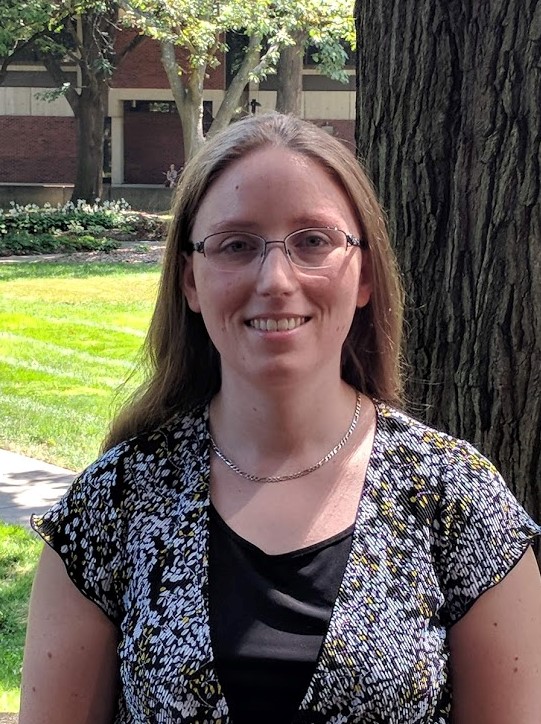
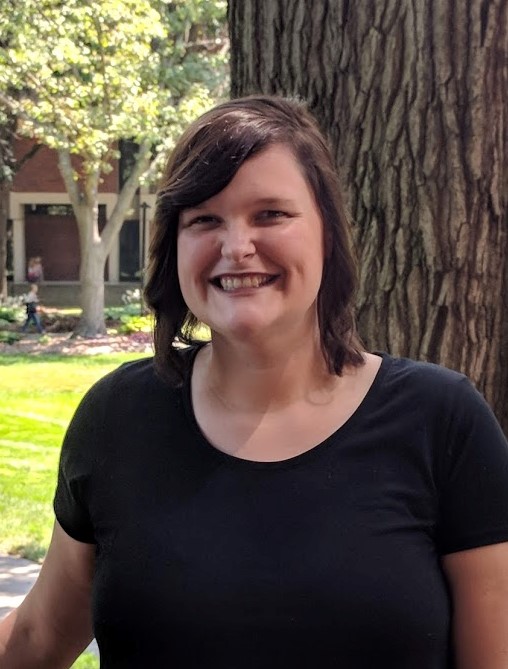
Kelby Gibson, Writing Consultant

Kelby Gibson

“Well, I don’t write.” I’ve heard that sentence about 100 times over the last six months. People come into the Writing Center looking for some help because they think they have no idea what they are doing, when, in fact, they do. In today’s world, we’re surrounded by technology –  which has both advantages and disadvantages. A lot of people, myself included, get sucked into the world of social media and can lose hours of their day watching videos of cute animals, reading about their hometown drama, liking photos of the celebrities they follow, etc. It can be addicting. In having a phone glued to a hand though, people are also doing something else. People are constantly writing. Composing text messages, replying to a tweet, commenting on a post, captioning their photo for Instagram, posting ads on resale apps, typing in delivery directions for DoorDash. The list could go on. People fail to realize that they are writing – in some form – every single day. Just because it isn’t ‘academic’ doesn’t mean it isn’t writing.

When communicating through written text, most people still try to be effective. If they give bad directions to the delivery driver, they may not get their food. If they don’t pay attention to wording, they could upset their friends, or potentially create chaos on social media with family. An ad needs to appropriately represent the product, otherwise it may not sell. These are all reasons people carefully and intentionally use writing in their day to day lives, even they do not realize they are using their own writing processes for these seemingly mundane actions.

I often urge writers to take what they know about all of these types of writing and apply it to the writing they are struggling with. Sometimes this works, sometimes it takes more explanation and practice before the application of it sticks. To be fair, this is way easier said than done. I think we all could take care to be more thoughtful and aware of the writing we are doing on a daily basis. The more we practice both the writing itself and reflecting on the skills and tools we are employing in doing so, the more we can improve ourselves as writers, whether it be seemingly simple social media posts or for a grade at school. Chances are everyone will use writing at some point in their chosen career field. The greater capability they have of being an attentive, thoughtful, and reflective writer, the more likely they are to be able to transition to new types of writing and be more effective writers in general.

When we more carefully approach our everyday writing, we will learn more from it. We will learn more about ourselves as writers, as well. I know a lot of people do not think of writing as vital to their fields. Maybe they want to be nurses, police officers, biologists, zookeepers, engineers, personal trainers, etc. They may not be thinking about how important their writing skills will be in taking down patient information, writing incident reports, note-taking on studies, scheduling routines for employees to follow, applying for grants, personalizing meal plans and workouts, etc. But these things will be important! Being clear in your position, intent, meaning, and more will make all the difference for those the writing is about and those it is meant for. In other words, writing pops up everywhere all the time. It may not involve writing full papers, writing for publications, or other instances where one’s writing will be graded or ‘judged’ for a lack of a better word, but they will still likely have to write, and it matters how understandable that writing is. When we start to think about how we are practicing this writing every day, the better chance we have at making that practice matter.

Commas Rule! Common Comma Rules and Tips

Hayley Salo, Writing Consultant

There are a ton of guides to comma rules, so I won’t spend this entire blog post rewording what those rules are. Instead, I’d like to take the time to go through the most common mistakes and discuss ways to identify, correct, and avoid them. This will require a bit of rule discussion, but bear with me.

Connecting Complete Sentences

There are multiple ways to connect complete sentences, and commas are certainly one of them! However, this is also where most comma mistakes are made, including comma splices and many run-on sentences. So, what’s the deal? Why is this part so hard?

Well, we tend to talk differently than we write; the pauses we make while speaking often do not match the pauses we grammatically require. Although this goes against the age-old advice of “read your work out loud,” it’s true! Reading your work out loud is a great way to catch comma mistakes that you are already familiar with, but it’s less effective at helping you catch the really tricky mistakes, including comma splices.

For instance, if we read the following sentence out loud, it sounds pretty normal:

Sally went to the store, and she bought an apple.

But so does this sentence:

Sally went to the store and she bought an apple.

The comma here is very hard to hear. Since the “and” tells us how the sentences are connected, it’s easy to assume that the “and” implies the pause, too. However, we need both the comma and the “and” for this sentence to be grammatically correct (Sally went to the store, and she bought an apple).

Since it’s hard to spot the missing comma while just reading an essay, it’s helpful to proofread one sentence at a time. Take the time to divide long sentences into two or more shorter sentences. Then, proof the punctuation by referring to the rules and recombining the sentence. The example above can be divided into two completely separate sentences:

Sally went to the store. She bought an apple.

Once we have the sentence divided, we can check the comma rules for how to connect complete sentences. We would see that we need both a comma and a connecting word, so we would know to combine the sentences into the following:

Sally went to the store, and she bought an apple.

This process of dividing sentences will become very important once the sentences get more complex.

Lists

Lists can be surprisingly difficult to proofread, and there are even two correct ways to punctuate the same list! Long, complex lists can be challenging because it’s hard for writers and readers alike to separate all of the ideas. As a result, dividing lists into shorter, simpler sentences is a great way to proofread. Let’s look at a simple first example before getting into a tougher one.

Correct: I like to walk, hike, and swim.

Correct: I like to walk, hike and swim.

Incorrect: I like to walk, hike, swim.

The first correct version uses the “Oxford comma,” which is just the optional comma before the “and.” The second correct version does not use that optional comma. The key here is that “and” is always required between the second to last and last list items, no matter how long or complex the list is.

As I mentioned earlier, we can divide lists into shorter, simpler sentences:

Correct: I like to walk. I like to hike. I like to swim.

This division makes it easier to see that “walk,” “hike,” and “swim” are all things I like to do. As a result, they are all part of the same list. But what happens when lists get more . . . listy?

Correct: I like dogs and cats, cake and cookies, and coffee and tea.

Correct: I like dogs and cats, cake and cookies and coffee and tea.

Incorrect: I like dogs and cats, cake and cookies, coffee and tea.

In the above examples, we have lists within a list. The primary list is things I like. We can see this more easily by dividing the sentence:

I like dogs. I like cats. I like cake. I like cookies. I like coffee. I like tea.

Very few people want to read that many short sentences. However, they are equally unlikely to want to read this long of a list:

I like dogs, cats, cake, cookies, coffee, and tea.

In long lists like these ones, readers are likely to remember only the first or last list items and tune out the middle ones. This is where our original example, with more than one “and,” comes in. We can simplify that list to a lesser extent:

I like dogs and cats. I like cake and cookies. I like coffee and tea.

Now it’s easier to see the categories of things I like: animals, food, and drinks. So, what we really have is a list of three things I like, but within that list, there are two-item lists arranged by category. Sounds pretty abstract, right? But it’s so much easier to see when it’s divided up like we did above. Once we know that we have lists within a list, it’s easier to know that we need an “and” between items in each two-item list, a comma between each category, and a final “and” between the second to last and last two-item list:

Correct: I like dogs and cats, cake and cookies, and coffee and tea.

Correct: I like dogs and cats, cake and cookies and coffee and tea.

Feel free to use or omit the Oxford comma.

Bottom line: lists can feel like a theoretical wormhole. Break them down into their smallest components and then carefully, deliberately, put them back together. We often write over-complicated lists in first drafts, so it’s up to us as later proofreaders to come back and fix them.

Optional Information

Generally speaking, optional information is separated from the rest of the sentence by commas. However, sometimes it’s hard to tell what is optional and what isn’t, which makes proofreading for comma mistakes very difficult. The trick here is to determine if the sentence’s core meaning changes when the information is removed. Let’s look at a few examples:

The dictionary, which is blue, is on the table.

“Which is blue” is grammatically optional; we can take that part of the sentence out and still have a complete sentence with the same meaning:

The book is on the table.

Nothing fundamental about this sentence has changed. We are still talking about the same book and the same table.

However, some writers and readers may not consider that information optional in certain situations. Take the following situation, which takes place in a library with a ton of books scattered around the floor, shelves, and table:

Sally: I need you to look up a word for me.

James: Where do I find the dictionary?

Sally: The dictionary, which is blue, is on the table.

James certainly does need to know that the dictionary is both blue and on the table in order to efficiently find the dictionary. However, it still isn’t the main point of the sentence. James could still find the same dictionary without that specification.

Commas shouldn’t be used when the “that,” “which,” etc. section really does affect the meaning of the sentence:

The dictionary that I own is in bad shape.

This sentence is talking about the physical appearance of my personal dictionary. If we take out “that I own,” we get something very different:

The dictionary is in bad shape.

This sentence implies that someone needs to do some serious editing and save our dictionaries! Not the same as our first sentence at all, so skip the commas.

Summary

When working with commas, try these tips:

  1. Read the sentence out loud to get a general feeling for what it is saying and how it is saying it.
  2. Divide the sentence into shorter, simpler sentences.
  3. Look up the rule for the kind of sentence you’re working on.
  4. Apply the rule and carefully recombine the sentence.
  5. Proofread similar sentences in the paper one after another to practice the rules and methods.

‘Twas The Week Before Finals…

Kayla Sweeney, Writing Consultant 

The December buzz of the UofL Writing Center filled our staff room with platters of cookies, Christmas music, and everyone’s holiday favorite—the crippling anxiety of finals season. While we attempted to cope through serenading one another with showtunes and clearing cookie plates, helping writers with their own final papers was a constant reminder of our own deadlines.

As an undergraduate English student at Western Kentucky University, I regrettably never darkened the doors of our campus writing center. While never claiming absolute knowledge over the art of writing, there was something in me that said, “you are an English student. You’ve got this.” *Insert overconfident hair-flip*

After a semester of working with a diverse population of writers, I was thoroughly humbled by the need for everyone to have others view and comment on their work. High schoolers taking dual-credit courses at UofL, undergraduates, graduate level and doctoral writers, and even an occasional professor came into appointments at the Writing Center last fall, all willing to take a step back from their work for others to give their perspectives. By December, I was asking myself why I was not doing the same thing.

Perhaps this was an epidemical feeling among the staff at the UofL WC because as finals week approached, we began to look to one another (frantically at times) for help. We were no longer just consultants, but writers in need of each other’s eyes, perspectives, and insight. Hour after hour, between our break-time duetting and snacking, we looked out into the main room of the writing center and saw sets of two staff members sitting together, not knowing who were the writers and who were the consultants. We have often talked about this dual-identity we each have at the Writing Center—only writers can be empathetic consultants, understanding the ups and downs, the victories and frustrations of writing. But finals week brought this reality to life.

I word-vomited over more than one fellow consultant about a Shakespeare paper that was 50% of my grade. How do I talk about Macbeth’s madness in a way that has not been done a million times already? How do I make sure I am not rambling? And just as I have hoped for the writers I worked with last semester, a sense of relief poured over me in these sessions. I gained new insights on sentences, paragraphs, and entire arguments. I was able to see issues I hadn’t before.

And as I’ve imagined others probably feel about their writing at times, my own stubborn defensiveness also arose over my writing. This sentence isn’t babbling—it’s part of my creative style! *Insert second over-confident hair-flip* That comma is definitely NOT necessary.

In the end, there were things I took from these sessions and things I left. I kept some of my stubborn stylistic flare; as for some of my babbling and comma issues—they became more obvious to me hours or days after my co-workers pointed them out (with a little bit of a sting).

Now, starting a new semester, I am entering both this workplace and the classroom with the knowledge that I need others to provide insight on my writing, just as we all do—from the high-schooler, to the undergraduate, to the professor who has taught for 10+ years. When you come into the Writing Center, you are not coming to a room of people who have learned to never make mistakes in their work (I’ll wait for your surprised gasp). We are not authoritarian figures who recite rules from your high school English class. Instead, we are fellow writers and thoughtful readers who will sit by your side, listen to your concerns, and give you a new lens by which to see your writing.

So, you should come stop by.


Rethinking Writing in the Digital Age: Implications for Writing Center Tutoring

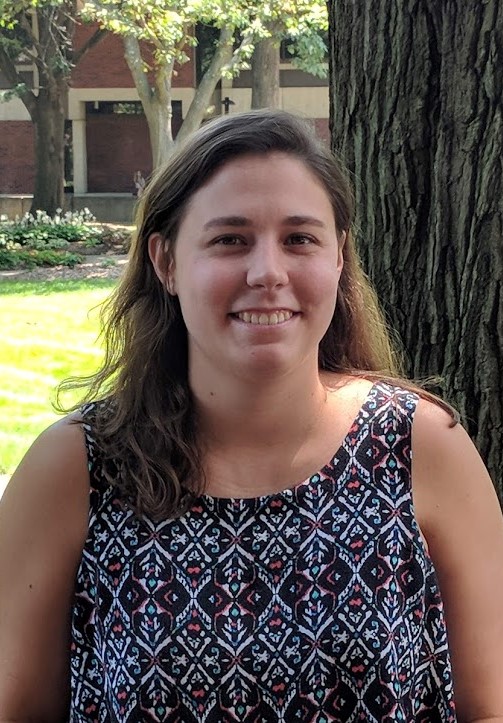
Olalekan Adepoju, Writing Consultant

The boom in digital technologies continues to challenge our basic understanding of writing and literacy practices. Which, for the most part, is a good thing.  This is because these technologies provide genuine platforms for improvement to our information and literacy practices in terms of what is learned, how it is learned, where it is learned and when it is learned. In fact, these available digital devices enable students to learn at their own pace and develop skills needed in a modern society.

It is evident that, nowadays, technological tools are ubiquitous and widely accessible to all categories of people, thereby aiding teaching and learning. This has no doubt contributed to the disruption to literacy practices, especially writing, in that information  used to be conveyed mainly through two modes, namely alphabets and visual elements such as white space, margins and font size.  But this has now been extended to include multiple modes such as visual images, video, color, and sound among others. Social media has also helped a great deal to extend the impact of writing practices beyond pen/pencil and paper to creating a wide space and opportunity for writing to occur beyond the pages of a book.

These forms of writing, thus, necessitate that we, as writing center consultants, re-consider our tutoring strategies to achieve our objective of making a better writer instead of simply making a better text. One of the crucial reasons for rethinking writing in this digital age is because of its implication for knowledge transfer. The proliferation of digital technologies has accentuated the need for creative thinking in all aspects of our lives, and has also provided tools that can help us improve and transfer important skills for knowledge production.

Although writing center consultants’ familiarity with different modes of communication is generally important during tutoring sessions, it is nevertheless not necessary for the tutors to possess expertise in the use of technologies or a genre-specific knowledge of how these modes work in their entirety. However, discussing the thinking and production processes of the digital text constitutes an important aspect of the tutoring; this inevitably helps writers in transferring relevant skills and knowledge garnered through the production stages of the digital texts into other aspects of life.

In addition, since writers, wittingly or unwittingly, approach their writing practices using “all available means of communication” (Takayoshi and Selfe, 2007) at the disposal to express their intentions to the audience, tutoring sessions should also include an examination of the effectiveness of the rhetorical choices and moves made by the writer to achieve this goal.

Rethinking writing practices in this digital age also has an implication for collaboration between the writing center and the digital media centers. Such partnerships, it is believed, will foster efforts on helping students who are struggling with the production of their digital writing practices as well as open a line of communication and exchange of information on the progress and improvements of writers’ digital texts.

To conclude, I would echo Takayoshi and Selfe’s (2007) notion that, if the writing center is to foster the goal of making a better writer, who can both “create meaning in texts and interpret meaning from text within a dynamic and increasingly technological world”, we need to rethink our approaches in order to enable a tutoring session that accommodates the affordances of writing in the digital age.

Source

Takayoshi, Pamela and Cynthia L., Selfe. “Thinking about Multimodality.” Multimodal Composition: Resources for Teachers . Ed. Cynthia L., Selfe, Cresskill: Hampton P, 2007, pp 1-12.

The Rhetoric of Your Dating Profile

Cat Sar, Writing Consultant

Bumble. Tinder. Hinge. Clover. Match. Coffee Meets Bagel

Dating profiles might not come to mind when you think of writing, but even a short blurb about yourself is a type of text. In fact, all parts of a profile on a dating app—basic information about your name, age and location, photos, optional questions, and even the decision to link other social media profiles to your account—are all part of a “text” that can be read and analyzed.

Think of your profile as an argumentative piece. The goal of the argument is to convince someone to engage with you. The type of engagement may depend on the specific platform that you are using. In this case, the evidence that supports your argument consists of all the components of a profile that were previously mentioned. In order to craft a successful dating profile, you’ll need to take into consideration the rhetorical elements involved in writing an argument. Hmm…sounds a lot like your first-year English course?

Let’s break down your “argument” by each part of the profile, starting with basic information: name, age and location. Don’t think that these pull as much weight as your photos? Think of it this way: if you are tempted to fictionalize this portion of your profile—if you are lying about the very base facts about yourself, why should anyone believe that any of your profile is real? The basic information of your profile is the start to building credibility (cough cough ethos). Although online dating and app usage has become extremely popular, we live in the age of catfishing and stranger danger.

Trust is a major factor in dating apps, and in relationships. You should be honest about these facts (and to be honest myself, I shouldn’t have to tell you that). When a house is being built, the foundation is laid first. Everything else is built upon this base. When it comes to dating apps, trust (that the person looks like their pictures, that they are the age that they claim, etc.) is the foundation that you are asking someone to build any interaction upon.

Next, there are the photos. Again, these should be photos of you, and they should be recent photos. Seems obvious. The majority of your photos should be solo shots, or pictures in which it is obvious which person you are. When people are swiping through profiles, they don’t want to have to stop to search for you in every picture. Similar to the importance of clarity in writing, a straightforward visual directs your audience to the point quickly and concisely.

The content of the photos is where the major decisions lie. The photos section of your profile is where emotions arise most readily. For example, when you use a travel picture, you are making the claim that you are adventurous, or at the very least have been on a vacation. A photo of you playing a sport suggests that you are active. A picture of you and a dog? Cue the heart-melt! In this case, a picture is worth a thousand immediate affective responses that will sway your audience to see you in a certain light, depending on what kind of photos you include. Choose wisely.

You’ll be tempted to post your highlight reel—the most interesting photos where you look the best. And you should prioritize the pictures in which you are ~ feeling yourself. But your pictures should also be an accurate representation of who you are. Pathos—emotional appeals (think the involuntary aww that puppies elicit)—are weak without a person’s truth to back it up.

Remember, everything that you include in your app is telling those who view your profile what you think is important in a partner. The (sometimes optional) short answer section is the most direct place in which this occurs. By choosing certain things to include above others, like: are you physically active? what’s your horoscope? ideal first date?, you are showcasing what you consider to be characteristics that will attract a partner, and telling that potential partner what they should find desirable about you.

On one hand, you are saying: these are my most important qualities—the qualities that I believe will draw other’s interests. On the other, you are saying: this is what I find important to advertise on this platform—I am likely to be interested in others who prioritize the same characteristics. The type of language in these responses should reflect your personality and your intention.

Lots of slang, emojis, or typical “text talk” will invoke a different assumption about you than one-word responses, which in turn will have different implications than longer, more poetic answers. (What these assumptions are, as well as their accuracy, will reflect certain biases of your audience. This blog post does not aim to address the consequences of such assumptions, but it would be remiss not to mention that dating apps and profiles are as susceptible to bias and assumption as any in-person interaction.) Basically, your choice of words matters.

Has this blog post ruined the casual ease of swiping through strangers in hopes of finding true love? Maybe. Hopefully it has also helped you to think more deeply about how we go about connecting with others, and offered some clarity about the kinds of arguments we make for ourselves. When we claim that we are able to help with any kind of writing at the University Writing Center, we really mean it.

Beholden and Held By The Power of Words

Rose Dyar, Writing Consultant

“Carry our stories carefully
Wrap them in soft red cloth
and place them against your
heart.” -Yolanda Chávez Leyva

Here at the Writing Center, we deal in the study of words and stories. Lately, I have been thinking a lot about how to explain why I think that’s so special, how to explain the link I see between words and justice, and how I honored I am to work with writers as they make meaning.

So here goes a humble attempt to begin such an explanation.
I believe that the study of words (e.g. literature, poetry, rhetoric) is critical to the ongoing formation of the whole human person. A bold claim, I know, but let me elaborate. This endeavor has the potential to infuse beauty and feeling and empathy into a world that actively attempts to numb us to our own humanity. And because of that, it has the radical potential to change hearts and minds. I mean radical change in two ways.

First, the etymological term. To change something radically means to change it at its root. The study of words grants us the gift of insight, or the ability to see inside of thing, to see the systems and structures that manifest themselves into parts of our daily lives, which then make their way into the stories that we read. When we know what we’re looking at, we know how to ask questions about it. Studying words and studying writing, then, gives context to social and political conditions that engender joy and suffering in our lives.

Second, I speak of words and radical change in terms of impact. We often use the word radical in order to describe major change, of the shifting of norms. And radical change necessitates action on its behalf. Which brings me to my next point. The study of words allows us to disrupt the laws of physics, to become alchemists, to remove ourselves from the center of our own axes and ask what it might take to imagine life otherwise. Empathy and understanding are byproducts of encountering stories. Empathy and understanding create conditions for change to happen.

But here is what the study of words cannot do: move on its own or by itself. Words alone do not have the arms or legs or beating hearts to use in order to advocate for change. If it is to be involved with any sort of moving, those who study the impact of words and writing must embody its movement. If we are moved by a text, we must move to make a difference. The study of words for me, then, must be paired with the willingness to act, or write, for change.

Writing and reading allow us to cross borders. We transcend from the moved to the mover and enter into a space of our own making when we do it. We are, all of us, in the wilderness. We are, all of us, voices crying out wanting to be heard from the thickets of that wilderness. We are, all of us, beholden and held by the power of words. For me, the study of words necessarily asks of me the courage to speak and write ideas and identities into existence, into being. We carry stories with us. We carry them tenderly, we carry them fiercely, and we tell them purposefully.

I believe that we tell stories, to ourselves and to each other, in order to understand what it means to be human, and it how it is that we can come to be fully human together. I believe that each story that is told is, in some part, an act of revelation. I believe that at every turn, stories are verbalized negotiations of power. I believe that we are all of us telling stories all the time, every day. Each story uncovers, even if just a sliver more, how the human experience is lived and breathed and understood in one moment, in one context, by one storyteller.

What a gift it is to encounter these stories, to study these words, to work with writers as they make sense of the stories inside of them.

Writing to Listen

Michelle Buntain, Writing Consultant

You’ve been staring at a blank page for a while now, willing the words to come. You’ve read over the prompt twice, three times, four times. The coffee is helping you stay energized, but all the coffee in the world won’t get this paper written. Neither will procrastinating

You know this; and yet, despite all your concentration and force of will, the words will not come. Before long, that familiar feeling begins to set in: panic.
Many people associate writing with a certain level of anxiety. We usually write for an audience who is going to judge us in one way or another – the paper you’re writing for class; the job application you’re working on; the text to a potential love interest. Writing forces us to put our inner lives out on display, and that can be incredibly intimidating.

As students and as scholars, we use our internal resources on a daily basis. Writing requires us to generate not just thoughts, not just sentences, but full, comprehensive, cohesive ideas. On top of that, we don’t even get to choose what we write about; in the academic world, we are almost always writing according to someone else’s stipulations. Nearly every day, somebody expects something from you, and you must deliver.

But focusing too much on what others are thinking is the most counterproductive thing for someone in an academic setting to do.

If we are obsessing over what is expected of us, it becomes nearly impossible to stay in touch with our own insights. Trying to balance what we really think with what we are “supposed” to think is a losing man’s game.

So, here is my challenge to all the frustrated writers out there: ask yourself, when was the last time you sat down to write without worrying about who was going to read your work? If you can’t remember, do yourself a favor: take a breath, take a seat, and just start writing. Don’t think too much. Don’t judge yourself. Don’t edit; don’t erase. No one else has to see it. There doesn’t have to be a purpose – no assignment, no thesis, no one to impress. Just write until you can’t write any more.

Maybe you wrote about something important; maybe you didn’t. Maybe you just ended up making a to-do list — it doesn’t matter. The point is to acknowledge yourself, to listen to what you have to say. It’s easy to get so wrapped up in listening to others that we forget to listen to ourselves. But if we don’t listen to ourselves, why should anybody else?

Every now and then, allow yourself the courtesy that you show others: don’t think, don’t judge. Just listen.

Writing in Retrograde

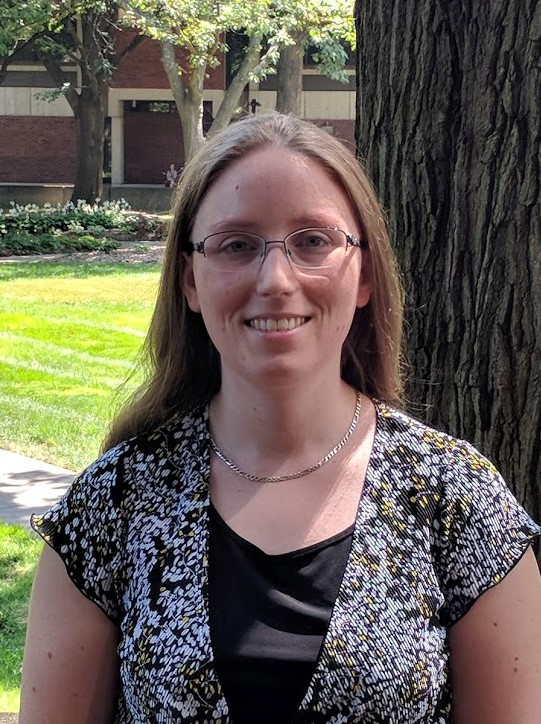
Kendyl Harmeling, Writing Consultant

I remember sitting outside my old apartment with my best friend, smoking in the heat wave that broke Connecticut at the end of this past July, and talking about how the world felt like it was topsy-turvy.  We laughed about how Mercury was in retrograde, and how every little detail of being alive felt only slightly off-kilter, how our lives were noticeably ever just different.
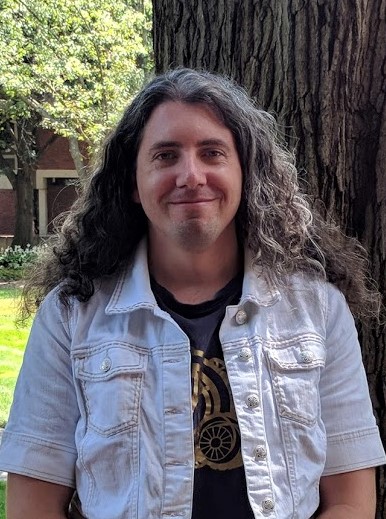
Like we were still us, but not the us we had once so recently been. In the week leading up to my move, we sat outside our old apartment-home every night like that. Hazy and confused. We cried. Mostly, we laughed. Sometimes, we yelled at our neighbor for never having baked us the broccoli quiche he promised to. The night before I left, my friends and I went to the dive bar I had worked at that entire year, and sang, badly, our favorite classic rock karaoke songs.

But, “you-know-what-they-say about the young…” I woke up the next afternoon and was alone. My room full of everything I ever owned, packed, and pristinely kept. My dad had already left for work. I left a note on the counter that I was moving 816 miles in a few minutes, and I loved him so much. I drove first to New Haven to pick up my mom for our drive west, and then I left Connecticut. I would like to reach out my hand… I may see-you…and tellllll you to run!

I’ve lived here in Louisville for a month now. Over a month. Spent nights at friends’ houses, found the bars I like, coffee shops, bookstores. I’ve found all the things here that I thought made my life back home a home. A life. I thought it was in the minute, the things I did during the day, that comfort came, but I just feel vacationed.

It’s made me wonder about the qualities of home which transcend distance, the parts of who I am that were just parts of my old environment, and most of all, how uprooting myself from the only place I’ve ever called home has felt like more to me than just a “moving forward” but also feels very really like a “leaving behind.” No one told me that the bore weight of leaving someplace doesn’t lighten, quickly at least.
I read Rilke’s Letters to a Young Poet this summer, in that other life I lead. His writing inspired and terrified. In it, Rilke writes about the importance of observational poetry, how being tragically human and trying to understand the profound are incongruent pursuits. How humans really can’t understand the profound, how we’re sentenced to living only in the momentary, the lovely, and the ugly. It’s in the making poetic these things that poetry can attempt to transform meaning from nothing into profundity.

Since moving here and trying to find that settlement of home in a thin crusted, forced routine, I write a poem every day. I started this practice the third night after my mom left and I was suddenly aware that I was alone, 816 miles from everything I love. The poems aren’t all good. Most of them, actually, are real bad. But they’re little homes, each one. The beginning observation of this new place, where I live and am, in fact, not vacationing. Rilke was right whenever he wrote that, that we can learn how to live just from looking around. Here are some observations that have helped me ground myself in this, a new home:

I sleep next to a street lamp, near the corner of Saint Catherine and Preston where that woman sits on a bench with her cat. It’s a yellow light.
I’m waiting for a crack of thunder again.
I’m waiting for tiredness to set in and put me to sleep.
I’m waiting for my body to stop moving and for that great unknowable to quiet.
It feels like the air here is static with wait, a pause, a moment before exhale.
Out my window is unrushed, cattle traffic and the eager unrest for the arrival of that great big thing…
I had a dream last night that the world would end in one searing-hot, pink instant.
Immediate and satisfying.
Unlike the visible end of the crumbled rock wall across from my apartment.
The one keeping the giant oak tree from cracking through the sidewalk we seldom use.
That end took time.
It’s the sort of decay which weathers into material.
The patient kind.
My someday bright-stop is restless.
Waiting for the oak fall, the sidewalk end, and my momentary to begin.

In my 18th century poetry class, my professor said, “Well… I suppose it never really feels like anything comes to a conclusion.” I know she was talking about Defoe’s lack of chapter division in Moll Flanders, but the fluidity of story reaches me, here, in Louisville, Kentucky. I am the same person, only further from home. But, maybe closer than I think.

Converting Anxiety to Enthusiasm in Community Writing

Haley Salo, Writing Consultant

Sharing writing can be challenging, especially when you’re joining an established community like a writing center or creative writing group.

It can be difficult to navigate the established norms and find just the right niche for your writing. Yet, every writer in the community has gone through those same experiences. It’s also okay to shop around a bit. Each writing community is unique, and some may be more or less accessible than others.

When I was a teenager, I started looking for an online, forum based, play-by-post fantasy role playing game (we’ll just call it an RPG). I wanted a place to create my own characters and explore their lives with the characters of other writers. Much to my dismay, some of the communities had hundreds of members, book-length lore files, and thousand-word posts. You could even be kicked from the community for being inactive for a week or two. Nope! Too scary. I ended up joining a very low-key forum, specifically picked for its small community and short posts.

I didn’t say very much at first. I would sign in, post, and leave for the day. That was about all of the social writing interaction I could handle; I did not, in any way, want to be around when the other members read my post. But guess what: no one complained. The stories continued on their merry way. I did not, in fact, derail the writing community.

Encouraged by this turn of events, I started talking to the other members through the forum’s chat box. The chat box took the stress out of socializing because it was so informal. There was no sense of finality when hitting the submit button like there was with a regular post. It also humanized the other members; they stopped being their characters and became themselves, and gradually they became friends, too.

At this point, the RPG really became fun. The social relationships improved the stories we were writing. We got to discuss where we wanted the stories to go and how we were going to get them there. Or, we complained when our characters refused to cooperate. We also started to recognize each other’s writing styles and got to watch as everyone’s writing naturally improved. We never set out to become better writers, though. It happened naturally, through time, practice, and experimentation.

I’d like to say that this experience made it easy to join new communities later on, but it didn’t. However, that didn’t stop me from going through the process again. I continue to make friends and learn through all of the writing communities I’m part of. There will always be some degree of anxiety when entering a new group, and that’s okay. Just try to keep in mind that writing communities tend to be very open and welcoming; we all have the same anxieties and reservations.

Poetry with Rules: Finding Creativity in Restraints

Ashley Bittner, Writing Consultant

Hello! Welcome to the writing center blog. I’m Ash, and today, I’m going to talk about writing poetry.

I am something of a formalist as a poet. I dislike writing free verse, and all of my poems are meticulously constructed. This is not, however, a commentary on the quality of free verse poetry. I am no Robert Frost to scorn free verse as playing tennis with the net down. No, I dislike writing free verse not because it is bad, but because I am bad at it.

The blank page, to me, is a yawning void that I have no words to fill. There is no muse inspiring me with images to paint with letters, there is no quiet artistic voice in me whispering the secrets of beauty. My poetic inspiration, inexorably, comes from having rules. If I am given none to work within, I will give them to myself, either by requiring rhymes, meters, or syllabic restraints. When I know the rules within which I must work, it engages me to find creative ways to fill those restraints and stretch them out. Working within them, I have been forced to learn subtleties of poetry.

Let us take enjambment. Academically, I knew that enjambment meant ‘the continuation of a sentence beyond the line.’ Perhaps a professor could have explained that it also serves to place special emphasis on the last word in one line or the first word in the next, or to create a doubled meaning. Knowing these things intellectually, however, was nothing to feeling the practice of them in my first sestina.

The sestina form forgoes rhyme or meter. Instead, it is a six (plus one!) stanza poem of six lines each (except that plus one), where the same six words are repeated in each stanza. They always sit at the end of the line, and they change which line they sit at the end of over the course of the poem. It creates a unique and cyclical rhythm to a poem, with words sometimes repeated quickly and other times languidly distant, and a spoken sestina often carries a dreamy way about it from that curious pattern.

To try and write each line as self-contained would require making a poem functionally formed of 36 short sentences, which is at best awkward and at worst comic. Instead, a sestina demands considerable enjambment, and the repetition makes words want for re-interpretation. Words with more than one definition, or that can serve as noun or verb both, make for powerful additions, and weave the lines together.

I’ll admit freely, my first sestina was terrible. It was about a firing squad, and I exploited the six stanza structure to talk about the five men firing and the one being fired at. It was not terribly elegant and it was certainly not beautiful, but by the time I had finished it, I understood the meaning of enjambment. If we end a line on a weak or meaningless word (a ‘the’ or an ‘an’ or a ‘such’) the reader can flow through and only take one reading from it. If we end a line on a word that carries implications (‘blossomed’ or ‘flew’ or ‘saw’), that word is briefly embedded in the reader, and then we can either build-upon or subvert that embedded word with the subsequent line.

Of course, explaining this is an irony. I have already expressed that I learned by doing, and so explaining is not helpful. Instead, I encourage everyone who writes poetry to grind through at least one sestina or two as a challenge to the self. It will be frustrating, but it will also be rewarding. If you’re quite irate at me for making you write one after finishing, you can bring it by the writing center and make me read it as a punishment. If that’s the price I have to pay for spreading a bit more poetry into the world, I pay it gladly.

I don’t write sestinas anymore. Lesson learned and all that. While I have a sprawling list of these strict forms of classic poetry, in truth I rarely use them as they stand. I borrow pieces of their rules and bend them together when I’m facing the blank page, I give myself restraints to make my game exciting. I have the net down, as Frost might say, but on my court I have added an extra ball, a playful dog, and a large rotating fan.

Serve!