Category: Writing Advice

How I Write: Nicholas Siegel

nicholas-siegel-picNicholas Siegel is a fiction writer and freelance journalist from Louisville, KY who earned his MFA in Creative Writing at Spalding University. His fiction has appeared in Bird’s Thumb, Literally Stories, and Five on the Fifth. He currently works as the full time Content Editor for the Sullivan University System and is a lover of bourbon, coffee, music, and cats. You can see his work on his website:  nicholassiegel.squarespace.com.

What type(s) of writing do you regularly engage in?

I mainly write fiction—usually short stories, but I’m also working on a novel. That’s what I studied during my MFA, and it’s my favorite type of writing to do.

I’m also a freelance journalist for a few different local magazines and currently working as Content Editor at the Sullivan University System. It’s nice having the opportunity to do three types of writing that tap into some similar parts of the mind but are vastly different in execution.

When/where/how do you write?

For my fiction, I like to write at my desk at home. I have a small apartment on the second floor of a fourplex, so it’s nice to have my deck door open as I write. I also spend a lot of time doing work in coffee shops, because I enjoy being around other people, even though I’m not interacting with them. As someone who usually feels torn between introversion and extroversion, it’s the perfect compromise.

There really isn’t a specific writing time—just when I’m not at work or out with friends and family. As for how, I use a word processor called Scrivener on my Macbook. It’s been a big help for organization.

What are your writing necessities—tools, accessories, music, spaces?

I like to write in Moleskine notebooks, probably because I have some deep-rooted pretension or insecurity and want to be validated as a writer. Really, though, if I have a notebook that’s on the pricier-side, I’m more inclined to take care of it.

And as I’ve mentioned, I love Scrivener. I don’t use half of the features, but the ones I do use are a huge help. It’s humbling to remind myself that someone like Vonnegut wrote his novels on a typewriter, or that Nabokov filed away scenes on notecards in shoeboxes, but if the technology exists to make my job more pleasurable, I’m going to use it.

What is your best tip for getting started and/or for revision?

Just start writing. Don’t worry so much about whether your first paragraph is exactly where you want to start. You can change that later. Try not to revise as you write. I’m guilty of this, and it slows me down a lot. Get a draft out, as bad as it is, and then go back through and change it.

I doubt I’m the only person to use this analogy, but I like to think of a story’s first draft as a block of stone. Revision is the process of hacking away at it to make a sculpture. You have to get something down to work with in the first place, and you aren’t going to write a sculpture on your first shot, no matter how good you are.

What is the best writing advice you’ve received?

The best advice I’ve been given about writing has been repeated by many people I admire: just write. We come up with all sorts of excuses not to—time, mood, etc. You can’t wait for the muse to strike, or else you’ll only be cranking out a few short poems a year if you’re lucky. When the muse is there, it helps, but it usually isn’t.

In the end, the only thing that separates a writer from anyone else is that a writer writes…a lot. It’s not about skill, or publications, or financial success. It’s just about practice.

Write About an Experience While in Transit: A Creative Writing Prompt

Ashley TAshley Taylor, Consultant

Transportation scenes are my favorite in any genre or medium. Airplane, train, automobile, boat, ferry, bus, elevators, even bridges and stations. Vehicles can function as devices in liminal spaces, transporting characters and audience between places, worlds, states of being, and can even reflect on social change. They speak volumes when a character is encountering, contemplating, or considering a change on any scale. Because traveling often involves observing or interacting with strangers, using vehicles or stations are common maneuvers for reflecting on the human condition. Transportation scenes augment the symbolism of story, allowing objects and action to serve multiple functions, enhancing the power and meaning of the text.

Think about the function of the Hogwarts Express in JK Rowling’s Harry Potter series or multiple plane rides in Neil Gaiman’s American Gods or even falling down the rabbit hole in Lewis Carrol’s Alice in Wonderland. These vehicles, stations, and modes of transportation serve as links between worlds that play to the larger themes of each work: the tension of being between those two worlds. If we narrow the scale from book series and novels to shorter works like flash fiction and poetry, transportation scenes communicate certain codes about what’s going on beneath the surface and in between the lines.

In Hemingway’s Hills Like White Elephants, two characters are sitting at a bar that lies between two train paths, one side of the tracks with lush and fertile land, the other side dry and barren. Hemingway doesn’t explicitly reveal the direction of either path or even the resolution for the tension. The emphasis is placed on the liminal space and pressure the characters feel while interacting between the two contrasting sides.

I encourage you to imagine or reflect on a time in transit or stuck between two places. Whether departing or arriving, explain the condition of the vehicle and/or station. Explore the sensory details, reveal the two worlds, and exploit the tension between them.

Examples:

Hills Like White Elephants by Ernest Hemingway

Pdf:https://www.massey.ac.nz/massey/fms/Colleges/College%20of%20Humanities%20and%20Social%20Sciences/EMS/Readings/139.105/Additional/Hills%20Like%20White%20Elephants%20-%20Ernest%20Hemingway.pdf

You Tube link that examines an interpretation with visuals:

https://youtu.be/Jc8YDIxwnKQ

The Descent of Alette by Alice Notley

Pdf: https://everydayliferhetoric.files.wordpress.com/2014/09/alice-notley-the-descent-of-alette.pdf

Review: http://www.publishersweekly.com/978-0-14-058764-7

From a Railway Carriage by Robert Louis Stevenson

http://www.bartleby.com/188/138.html

Riding Backwards on a Train by James Hoch

http://anotherhand.livejournal.com/220418.html

The Whitsun Weddings by Philip Larkin

https://www.poetryfoundation.org/resources/learning/core-poems/detail/48411#poem


How I Write: Amy M. Miller

Our “How I Write” series asks writers from the University of Louisville community and beyond to respond to five questions that provide insights into their writing processes and offer advice to other writers. Through this series, we promote the idea that learning to write is an ongoing, life-long process and that all writers, from first-year students to career professionals, benefit from discussing and collaborating on their work with thoughtful and respectful readers.

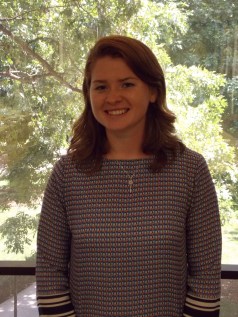
Amy M. Miller is a writer and Administrative Coordinator for the nonprofit organization, Louisville Literary Arts. Amy’s essays have appeared in Salon, Hippocampus Magazine, [PANK], The Louisville Review, MOTIF, and Under The Gum Tree. She is a graduate of the Amy MillerSpalding University MFA in Writing program and holds an M.A. in English from University of Louisville. Currently, Amy is working on her first collection of essays as well as several children’s picture books. Amy lives in Louisville, Kentucky with her husband and two children.

Location: Louisville, KY

Current project:

I am drafting and revising two essays and one picture book, while simultaneously seeking representation for two other picture books. Lots of plates, constantly spinning.

Currently reading:

I’m finishing a guilty summer read, Sue Perkin’s Spectacles, a memoir from the host of The Great British Bake Off (I’m addicted). I also have a toe in Dear Mister Essay Writer Guy, by Dinty Moore, Beyond the Beautiful Forevers, by Katherine Boo, and Small Fires, by Julie Marie Wade. I’m a nonfiction writer and reader. All of the nonfiction I read informs what and how I write. That said, I love a good, engrossing novel and next up for me is Lauren Groff’s Fates and Furies and a kids’ middle grade novel my son is reading for school, Wonder, by R. J. Palacio.

1. What type(s) of writing do you regularly engage in?

Well, I’m a multi-tasker (which is a kind way to say I’m distracted). I love many different genres of literature and that is true for my writing, too. I began my MFA work in creative nonfiction, which is still my first love; however, after four years of writing personal and introspective essays, I needed to explore topics that were not about ME. I have always enjoyed the whimsical and hilarious prose of children’s picture books and have collected picture books even before I had kids of my own, so I joined the Society of Children’s Book Writers and Illustrators and have been writing books for 3-7 year-olds. It’s very freeing to write outside of my first genre, and loads of fun, too. Aside from creative writing, I work on public relations work (web content, press releases, social media campaigns), as well as contract grant writing.

2. When/where/how do you write?

I don’t have a specific time when I write because I have kids who constantly require feeding, chauffeuring, and all manner of attention, plus I work part-time. I write when I can — when my kids are in school, my workload is light, and the house is quiet. My writing spot has moved around the house. I used to make a home at the dining room table, but grew tired of moving my papers and iPad on and off the placemat. Most days, I’m parked at my desk in front of a giant screen in my hard swivel chair. When I’m brainstorming or revising, I might take the iPad or a notebook to the couch, where I sit next to my dogs. Invariably, all of my writing happens in the morning or afternoon. If I write at night, I’ll have too many ideas buzzing around my head to sleep.

3. What are your writing necessities—tools, accessories, music, spaces?

I love accessorizing — at least for writing. You cannot beat a good spiral bound notebook for notes — something that can lie flat or be folded over. For writing implements, I prefer a roller ball pen because the fluidity of ink allows me to continue writing without pause and doesn’t leave imprints in the paper. We writers are weird about our instruments. I also like odd colors of pens: purples, oranges, greens. But to be perfectly honest, I spend most of my writing time perched in front of the desktop computer, mostly because it is the most reliable device I own and I can save my work on the cloud and desktop. I also use Google Drive to share writing with critique partners. Over the years, I have moved away from listening to music while I write and prefer silence, but I always have a hot cuppa coffee and a bottle of water next to me.

4. What is your best tip for getting started and/or for revision?

I begin a piece in a variety of ways. Sometimes I have an idea while walking the dogs or sitting in carpool or taking a shower. I try to keep a small notebook in my purse or in the car, or at the least, a scrap of paper and pen nearby. Other times, I just sit at the computer and start free writing. I almost never write the full draft in one sitting. On complicated essays, in which I play with structure, I often need to break away from the writing and map out the essay as an outline. I highly recommend reverse outlining for revision. Start with your draft and outline what is on the page. Does it flow from one idea to the next? If not, move the pieces around and use the outline to direct how and where you will make changes. It feels less scary to cut and paste an outline and it’s a great way to look at the piece more objectively and holistically. Another invaluable word of advice: Always find an impartial reader who you trust to give you constructive feedback! My critique partners always see connections and glitches that I am unable to because I am too close to the piece. Lastly, read your work aloud. This is a foolproof way to find where a piece needs work.

5. What is the best writing advice you’ve received?

Be concise, cut your modifiers, and don’t hold your readers at arm’s length — invite your readers to see all of the ugly, messy truth. Readers respond to flawed narrators and non-fiction writers have a responsibility to the truth, no matter how uncomfortable that truth might be.

How I Write: Maureen McCoy

How I Write: Maureen McCoy

Our “How I Write” series asks writers from the University of Louisville community and beyond to respond to five questions that provide insight into their writing processes and offer advice to other writers. Through this series, we promote the idea that learning to write is an ongoing, life-long process and that all writers, from first-year students to career professionals, benefit from discussing and collaborating on their work with thoughtful and respectful readers.

Our featured writer is Maureen McCoy. Maureen is the Coordinator of the REACH Learning Resource Center at the University of Louisville. In August 2016 she began a doctoral programMaureen McCoy focused on College Student Personnel in the College of Education and Human Development at the University of Louisville. Maureen’s Bachelor of Arts degree is in Humanities and Art History, and her Master of Arts degree is in Humanities with a focus on art history and medieval/renaissance studies.

Location: REACH, University of Louisville

Current project: Class papers

Currently reading: One More Thing by B.J. Novak

What type(s) of writing do you regularly engage in?

I am enrolled in a doctoral program in Counseling and Personnel Services through UofL.  Much of my writing is based on research or studies of theory and attempts to apply what I have learned to practical contexts.  I also work in the REACH program on campus as the coordinator for the Learning Resource Center, so I write occasional articles for publication.

When/where/how do you write?

I write in different places.  Sometimes I work at home, but I will also go to the library if I really need to make myself focus.  I like to spread out my materials, so no matter where I am I prefer to have a large table ore area to work.  I will jot down an outline or the major points for my paper and which sources I will use to support them.  This gives me a chance to organize my thoughts and make a plan.  Then I start writing.  I usually work on it by section if I have a clear outline, or I will work through it by source, putting them together as needed.  I cannot write everything in one setting usually, and I take breaks throughout the day to stretch or refresh myself.  I will also proofread my work at the beginning of each writing day to get myself in the right mindset, fix errors, and identify holes in or problems with my argument or organization.

What are your writing necessities—tools, accessories, music, spaces?

I mostly need space for my resources and notes and my laptop.  I prefer quiet, but I will put on instrumental music if I am at home and not in a public place.

What is your best tip for getting started and/or for revision?

Gather everything together and try to make a plan before you get started.  This will help you organize your thoughts.  I revise my work every day as I am working.  I will even walk away from it for a day or two and then revisit it to make sure that it all still makes sense.  Getting started early is essential for me because having time away from the work gives me time to reconsider what I am doing and where I am going when I get back to it.

What is the best writing advice you’ve received?

Do your citations and reference pages as you go so that you don’t miss anything!

Do you know someone who would be great for How I Write? Send us your recommendations! 

Essays Need Characters: Imagining Audience

Karley Miller, consultantDSCN3615

Fiction writers often struggle with writing stories that are “too close.” Many things can make a story too close—a protagonist they identify with, an event they’ve experienced and are now writing about—some element of autobiography. When writing about something they feel strongly about, or have experienced, writers often have difficulty removing themselves from their story. The end result is that their audience, oftentimes in workshop, can feel that the story is autobiographical. Stories that are too close to their author fail to do what we expect of a story—build tension, have an arc, et cetera.

But why?

Let’s say my grandmother recently died, and I’m torn up about it, so I decide to write a story about her funeral. I think it’s a great story idea because the death of my grandma certainly moved me, so it will surely move others as well. I write my story, and end it with a scene between my protagonist and her father (because I don’t know where I should end it, and my dad did say something uncommonly nice on that day, which moved me to tears).

My workshop day arrives, and the class fixates on the fact that the story wasn’t as much about the funeral, and my protagonist’s relationship with her grandmother, as it was about my protagonist’s relationship with her father. No one can understand why it takes place entirely in a funeral home, instead of somewhere that the father-daughter issues can be resolved.

This is embarrassing to me because I don’t get along very well with my father but didn’t think it came across in my fiction. I hadn’t considered that other people have experienced funerals in all sorts of ways, and that just because I thought an interaction between the protagonist and her father, at her grandma’s funeral, would be moving (because that had been my experience), it doesn’t mean that my audience will find it so. I was too close to the story to see that the scene didn’t belong.

Oftentimes, fiction writers remedy this issue of closeness by making their protagonist someone who is obviously not them (for example—I once made my female protagonist 5’ 11”; I am not 5’ 11”), which allows for distance. However, the issue is really one of audience—and is applicable to all sorts of writing, particularly analytical essays.

Had I kept the audience of my story in mind, and not just written what I, personally, found cathartic, I may have been able to write a better story—one that moved my audience and didn’t reveal my personal issues. Likewise, when writing an essay in which you are instructed to take a side, or do an analysis, it is best to keep audience in mind. If your essay is fueled by a personal bias, and not by a fair assessment of the material, your audience will know.

So how do you remedy this?

Because you have no protagonist to reimagine, I would suggest inventing a character for yourself—one that might come from a totally different background, and have a different bias toward the material you’re working with. Imagine this person reading your essay; would they see an analysis, or you?

The Narrative Arc: Where Storytelling Meets Professional Writing

DSCN3636Emily Blair, consultant

Consider your favorite book or movie. You have probably been reading and watching TV since you were young. Some stories are more exciting than others; some have adventurers, travelling bands of heroes, or great villains that need conquering. Other stories place you within the mind of a character not so unlike yourself, showing how one person’s life unfolds in a realistic world

Now, think about an email to your professor. You likely don’t think it is as exciting as a blockbuster film; in fact, you probably don’t think about it as a story at all, but rather, a completely utilitarian writing assignment. However, it can be helpful and productive to think of your writing as an exercise in storytelling, with some relation to the narrative arc that you know from years of enjoying books, movies, TV shows, and video games.

Let’s take a professional email as an example. I need to ask a professor for a letter of recommendation, which would be a great favor. I might be tempted, for brevity’s sake, to write something like this:

Dr. Smith,

Can you write me a letter of rec for grad school?

–Emily Blair

This style of email likely will not get the response you hope, not only because of its brief tone but also because there are ways to make this story more compelling in a way that allows my professor to see why their letter of recommendation would help me achieve my goals. Depending on the situation, you can employ different facets of storytelling, such as characterization, exposition, the building of plot, climax, and conclusion:

Dear Dr. Smith,

I am writing to ask if you would be willing to write me a letter of recommendation for the University of Louisville’s Master’s program in English. I felt that your class in Southern Literature in Fall 2015 informed my understanding of current literary research in contemporary regional literature, as well as what my own place could be in the field. You had mentioned that my papers in your class were well thought out, and I consider you a mentor in this vein of literature. I would like to earn my MA at U of L because the work that Dr. Jones and Dr. Lakes are doing in Southern and regional literature before going on to a Ph.D. program with those focuses as well.

If you have any questions, or would like to see my resume, please let me know. Thank you for considering writing me a letter of recommendation for a graduate program.

Sincerely,

Emily Blair

The difference between these emails is not only length but also how I, as a student, could speak to a professor using a narrative. I have walked the professor, my audience, through not only why I am applying to this graduate program, but also why they, in particular, have the ability to help in my application process. I have drawn a direct line between this professor’s class and my future Ph.D. program, allowing the professor to follow the story of my path through a literature education. I have also made myself a unique person, or a “character,” in this narrative by reminding Dr. Smith of my performance in their class and setting myself apart with specific goals to attend U of L.

While most of the things you write in a professional setting won’t be as exciting as Lord of the Rings or as entertaining as Friends, you can use some creative writing techniques to better convey your narrative to others.

How to Get into the “Flow” of Things: Writing a Well-Structured Essay

Lindsey Gilbert, consultantlindseygilbert

Many writers come into the Writing Center with concerns about the “flow” of their ideas in their papers. Occasionally, this concern comes up late in the writing process, allowing for little or no time to review the final piece with a writing consultant. A good way to resolve this issue is by simply examining the organization of the paper on your own. This answer may seem like a no-brainer, but many approaches exist that can help you reexamine and strengthen the structure of your paper, allowing for smooth transitions between ideas.

Outlining

While this is not a new approach by any means, creating an outline before writing can greatly help you structure your paper. Seeing how the ideas shift into each other allows for an easy edit to the structure of your essay if necessary. Even though prewriting strategies such as an outline may seem tedious, they can greatly help and even speed up your overall writing process, meaning you spend less time crafting the structure during or after writing.

Identifying Key Ideas: Reverse Outlining

Structure is a key component to keep in mind while writing an essay, but you may not know how to structure your paper until you begin writing. After completing a draft, you can read through and mark down the main idea in each paragraph. Compiling all of the main ideas will provide you with the groundwork for shifting paragraphs around to illustrate a logical progression throughout your paper.

Thesis Statements and Topic Sentences

If you decide to rearrange your paragraphs, you will want to read through and reorganize your thesis statement. Remember, the thesis statement is the spoiler of your paper and outlines what topics you are covering and in what order. If your thesis statement reads, “Dogs are soft, fluffy, and cute,” the body paragraphs should be in the description order of “soft” first, “fluffy” second, and “cute” third. In turn, the topic sentences of each paragraph should align with the descriptions presented in your thesis statement. This will allow your reader to understand the main topic of each paragraph before reading through it.

Working with Transitions

New topic sentences help to create better organization throughout your paper, but a smooth transition is needed in between paragraphs for the ideas to build on each other. Make sure to develop strong transition sentences between paragraphs by concluding the ideas of a paragraph and finding a link to the next topic that will be covered in the following paragraph. This provides a logical flow of ideas for the reader.

Subheadings

Transition sentences are greatly important for the ideas in your paper to shift efficiently, but some concepts may be too large and drastically different to allow for an easy transition. For example, if you write a position paper, you will need to state the advantages and disadvantages of a specific topic. These two areas are drastically different and could contain much detail and explanation, allowing for multiple paragraphs to develop in the process. In this case, the use of subheadings can be greatly beneficial to make that shift for the reader, allowing him/her to follow along with larger ideas that cover a greater length of pages.

The approaches provided above can greatly strengthen the organization of your paper, providing the “flow” that is so desired by the reader. Organizing your ideas well can ultimately give you more credibility as a writer, a strategy that you should keep in mind before you submit your final essay.

Ready to start writing, but not quite sure how? Read our blog post on non-generic ways to start your paper.

Happy writing!

Valentine’s Day: Thesis Statement Edition

Jessica Good, consultantDSCN3626

Valentine’s Day.

There, I said it.

I mean, as a kid, Valentine’s Day was pretty great: people handed out candy at school, and I got to give my friends totally awesome cards decorated with superheroes, princesses, or Scooby-Doo (my interests were very well-rounded if I do say so myself).

But now?

The personal and cultural associations attached to this possessive noun + noun construction vary across volcanic spectrums of meaning. Is Valentine’s Day something to celebrate? Resist? Ignore? Whatever your stance may be, you probably have pretty good reasons to support it. So let’s say you synthesize your Valentine’s Day opinion into one definitive claim: “all you need is love.” With this move, you’ve created a thesis statement that you can then proclaim to your listening audience.

Now, let’s say you’re chilling at the office, chatting with Dwight near the copy machine, and Valentine’s Day comes up:

Dwight

Dwight isn’t buying the cultural obsession with romance that Valentine’s Day often signifies. Maybe he would agree that love is special, or that certain kinds of love (familial, platonic, or companionate as well as romantic) trigger chemical reactions that cause you to experience things like “happiness” and “emotional fulfillment.” But to convince him, you’ll have to be pretty darn specific with your terms.

If we were going to rewrite this meme (which, granted, would turn it into a regular old piece of writing), our first step would be rethinking our central claim (or thesis), “All you need is love.”

To craft a stronger claim, we would avoid:

Cliches

Cliches are common phrases like “opposites attract” and “all is fair in love and war.” They’ve been used so often that they are no longer very meaningful. When you hear, “opposites attract,” you know it means that people with different personalities fall in love. But the words just kind of sit there, taking up space without presenting a new, strong, or concrete image. As a result, your audience isn’t likely to closely read or engage with your claim. So instead of saying, “All you need is love,” the meme could have said, “Being in love makes me feel like my every physical, emotional, and spiritual need is met.”

Universal Claims

A universal claim is made when words like “all” or “never” are used or implied. It argues that, without exception, something is (or never will be) true. Making a universal claim weakens your argument because if even one case doesn’t conform to your claim, your logic becomes faulty and your conclusion invalid. Dwight was right to point out that, actually, love isn’t the only thing we need. Our implicit argument that “love is the best thing ever in the whole entire world and I don’t need anything else” becomes shaky at best: if love is not even a basic human necessity, how can we claim that love is all we need?

Universal statements can also damage an audience’s perception of your ethos, or reliability, as a writer. Readers may fixate on trying to find exceptions to your claim rather than following the nuances of your argument. They may even perceive you as lazy, uninformed, or careless. So even if your universal claim is true, the effectiveness of your argument may be compromised. Avoiding universal claims by talking in case-specific terms can maintain your ethos and even improve the strength of your argument. In the case of our meme, we could potentially say, “Sometimes, it feels like love is all we need to live a happy life.”

Vague Terms

When I say “vague terms,” I’m referring to cases in which it is unclear how words with broad or multiple meanings are functioning in a statement. Sometimes undefined terms are symptomatic of your need to sharpen the focus of your sentence (or even your argument as a whole). For example, instead of “love” in general, do we want to argue that having our emotional needs met is essential to feeling satisfied in life? Alternatively, we could qualify “need” by differentiating between physical survival and emotional or ‘felt’ needs.

Other times, a vague term might just mean that you need to choose a different word. This doesn’t mean you should right click to access your thesaurus and pick the most interesting word that appears. Rather, think about the specific meaning you want to convey. Would a different word do that? Instead of “love,” what if we wrote, “All I want is to feel accepted by other people”? If a different word or phrase still doesn’t seem fitting, then think about including a statement clarifying the way you’re using your term(s). We could say, “When the Beatles sang ‘All You Need is Love,’ they created an anthem that united listeners around the world by relying on cultural narratives of romantic love.”

The next time you’re writing a paper, imagine that you’re talking to Dwight. He’s one adorably tough cookie, which, honestly, makes him the best imaginary audience you could encounter. By being intentional with our terms, making sure we use specific language to explicitly convey our exact meaning to an audience, we can create claims that are clearly defined. And that, by extension, will help us craft a strong thesis statement every time.

Personal Statements Part 2: Research and Focus

We bring you the second installment in this week’s series on the personal statement.  See part one here.

Stephen Cohen, Assistant Director for Graduate Student Writing20150824_140027

Working with writers at both the Belknap and HSC campuses has taught me that, despite differences in discipline and focus, writers everywhere are working through very similar hurdles and anxieties. Students across both campuses right now are thinking about taking the next step in their academic careers; often this involves applying for residencies, internships, or further graduate study. Though these applications can be stressful, I try to help people think of them as opportunities to present themselves and find the program that is the best fit.

Many of these applications require a version of the “personal statement” essay. For this post, I’ll be thinking through some of the most common stumbling blocks in this process and (hopefully) giving you a few useful tips to help you through writing a statement of your own. Also remember that one of the best ways to develop a personal statement is to make an appointment to discuss it with one of our consultants here in the University Writing Center.

1. Do your homework.

Find out what the requirements are for the statement – and don’t deviate from them. How many words? Does the application ask you to address specific questions? Carefully adhering to guidelines demonstrates to the committee that you’ve taken time to understand their particular application process, and, by extension, their program.

Speaking of which, you’ll want to find out what you can about the school and the program to which you’re applying. Mission statements and program descriptions are great places to look for information that you can use to your advantage – demonstrate to the committee that you understand how their program differs from others and that you are excited about what makes it unique.

If you are applying to multiple programs, try to contain anything that applies to a specific program to one paragraph. That way, you can switch that paragraph out for each program without having to do extensive revision on the rest of your letter.

2. Put your best foot forward.

People often understand “polishing” a personal statement to mean carefully proofreading it and ridding it of errors. While this is important (you don’t want to send a letter addressed to University of Louisville to University of Kentucky because you forgot to change it!), it’s more important to think about polish as careful presentation of the experiences you list on your CV or Resume.

Think carefully about what you list on your CV/Resume and choose the experiences that best demonstrate why you are a great candidate for a given program – you’ll want to use your experiences to show a committee not only how well prepared you are for graduate study, but also what makes you unique – what you can bring to the program that others can’t. Remember, the committee won’t necessarily know how your work (as a student assistant, for example) has prepared you for the demands of grad school – you’ll have to tell them.

If there was ever a time to toot your own horn, this is it. Though you don’t want to seem arrogant, most people I’ve worked with err too far on the side of caution. This is your chance to let the committee know how great you are – take it!

This is also an opportunity to answer any questions you think might be raised while the committee considers your other materials. Is there a gap on your resume? Don’t leave the reason for it up to the committee’s collective imagination – explain it to them, in the most positive terms possible.

3. Be Specific

Be sure you include particular reasons for your proposed path of study, and where possible, who you would like to study with. Remember the part about doing your homework? The more you know about a program, the better positioned you are to explain specifically how that particular program can help you meet your academic and career goals in ways that other programs can’t.

Use appropriate details to support any claims you make about yourself and your preparedness (in my case, an example might be not “I am a good teacher,” instead I would write “I have successfully taught introductory Rhetoric, Literature, and Business Writing courses).

4. Be Yourself

Often, a program will ask for a personal statement because they want a sense of who you are that they just can’t get from scanning a CV. Coordinate the experiences you’ve selected to write about to demonstrate some personal characteristic(s) that you think will appeal to the committee. In other words, rather than writing “I am a hard worker,” choose to detail a few experiences from your CV/Resume that demonstrate how hard you’ve worked.

Use the personal statement as a place to tell the committee what you think are the most important things to know about you – the things that make you different from another candidate. What life events have led you to consider your course of study? What challenges have you faced along the way, and how have you overcome them in order to achieve the accomplishments listed elsewhere in your application materials?

The personal statement is only a small part of your overall application, but a thoughtfully prepared statement can have a big impact on how your whole package is received.