Category: Academic Writing

Writing Tips and Advice: Our Online Resources Can Help You Started, Write a Draft, and Figure Out Citation Styles.

Staying safe this year means that we are all often working away from campus and the classroom. The University Writing Center is open for online appointments this semester, so you can get feedback on your writing wherever you are and you can find out more about that on our website. Even so, we know there are times that you want support for your writing or answers to writing questions, but it may not be convenient to make an appointment (say, it’s midnight and you’d really like some ideas about how to write a stronger introduction to your paper). We have a wide range of resources on our website to help you with writing questions and issues. Are you stuck getting started? Or needing to understand citation styles? Or trying to figure out how to incorporate sources effectively in your writing? Or wanting to sharpen your understanding of active and passive voice? On our website you can choose from more than 75 online resources from Writing FAQs,to Video Workshops to Handouts about writing issues. If you go to our website and explore, you’ll find ideas that will help you whether you’re a first-year student or working on your doctoral dissertation. Here are a few highlights:

Getting Started

Getting started on a writing assignment can be intimidating or frustrating and, consequently, we often put off work on writing because we not sure how or where to begin. Take a look at our Writing FAQs on how to figure our your assignment prompt and brainstorming strategies you can use to get your ideas flowing. It may also be helpful to use our handout on Writing About Reading for some strategies about how to take effective notes about what you’re reading that will help prepare you for starting your draft. We also have an infographic on the Library Research DIY page on Getting Started Drafting. If you’ve been given a digital assignment, such as a video or podcast, take a look at our handout on Getting Started with Digital Assignments.

Using Sources When You Write

Academic writing means being part of a scholarly conversation, which means drawing using sourcesfrom other research for evidence, ideas, as well as to establish your credibility. Our videos on how to use sources in your writing can help you with Quoting, Paraphrasing, and Summarizing, as well as making sure you’re Avoiding Plagiarism. We also having a handout on Using Sources which includes lots of examples. It’s important to connect your ideas to the research you are reading, and for some ideas about how to make those connections in your writing, see our video series on Rewriting: How to Do Things with Texts.
Drafting and Revising

When it’s time to start your draft, we have advice that can help you. If you’re not quite sure what your instructor means when asking for more of an “argument” in your draft, fingerstake a look at our Writing FAQ on creating an argument in your paper. Maybe you’ve been working on a draft, but you’re not meeting the page requirement, here are some idea for how to get more details and ideas into both your research and personal writing. You’ll also find good writing tips in our handouts about how to write stronger, Introductions, Conclusions, and Transitions. Finally, when you’ve received feedback on your writing from either your instructor, friends, or the University Writing Center, we’d suggest our handout on Using Written Feedback When Revising or our Writing FAQ on strategies for doing more substantial revisions of your draft.

Citation Styles and Grammar and Style

If you’re new to using citation styles, or just want to make sure you’re getting things APA videoright, take look at our APA Video Workshops and MLA Video Workshops or our handouts on APA , Chicago, and MLA styles. If you’re unsure about how some of your individual sentences sound, we have a Writing FAQ on how to improve your grammar and punctuation use as well as many handouts on issues of usage and style, including Articles, Commas and Semicolons, Parallel Sentence Structures, and Active and Passive Voice.

Check out all these resources and more. You can also find lots of good writing advice on this blog from the University Writing Center staff. And, of course, we hope you make an appointment and let us help you make your writing as strong as it can be!



Good Writing Response Stays the Same: How We Will Work with UofL Writers This Semester

Bronwyn T. Williams, Director

It would be easy to start this post by talking about all the things that are different this year in the University Writing Center, from online tutoring to adapting to daily lives of masks, disinfectant, and physical distancing. Yet, by this point, we are all familiar with those aspects of daily life. Instead, I want to focus on the continuity of this year in the dscn2185University Writing Center. This past week, our new consultants met for our orientation and began to plan for the year ahead. Just as in years past, this year’s new consultants are a talented, dedicated group of graduate students who are eager to start working with UofL students, faculty, and staff to provide them with feedback and strategies that help them become stronger and more confident writers. Our consultants remain committed to helping writers at every stage of writing – from brainstorming to revising drafts – and with every form of writing, be it academic, professional, or personal. And, as in the past, we plan to work collaboratively with writers, listening carefully to their concerns and working together to create plans for revision to make their writing more effective and engaging.  Some things don’t change.

As you can imagine, however, we are making some changes to adapt to the pandemic. The most significant change is that all our appointments for Fall 2020 will take place online. We have two kinds of appointments from which you can choose – live video chat or written feedback. A live video chat is a real-time video chat with a consultant. Our live chat format, which is part of our online scheduling system, includes a video chat capability and a shareable digital whiteboard where both the writer and consultant can make notes on the draft. Live video chat appointments allow for conversation between the writer and consultant.  Written feedback appointments are asynchronous. Writers upload a draft and receive a  typed, written response by email.  All our appointments are 50 minutes long. Before your first appointment, visit the our website to learn more about the two appointment types to decide which best fits your needs. http://louisville.edu/writingcenter/appointments-1.

Tips to Make the Most of Your Online Appointment

The online appointments we are using this year may be new to you, and so here are a few tips to help you get the most out of the experience.

When you make your appointment: For all appointments, the more you can tell us about the assignment, and your concerns, the more we can help you. It it a huge help to us if you upload a copy of your assignment prompt to your appointment form when you make your appointment. If you don’t have a prompt to upload, please tell us everything you can about the assignment or writing task you are working on. Along those same lines, the more detail you can give us on the appointment form about your top concerns about your draft, the more able we are to respond effectively to those concerns. If, rather than just list a few words, you can write a detailed note about your concerns, we’ll be better able to give you suggestions and advice to address your concerns. It is particularly important to provide detailed information and writing prompts for written feedback appointments, because the asynchronous format means we can’t ask you direct questions.

As you revise your writing: If you’re not sure where to start in using the written comments to revise your draft, we recommend out handout on “Using Written Feedback When Revising.” You may also find our other handouts that cover writing strategies from writing introductions to citation to grammar and usage issues helpful when revising.

Other Online Resources to Help You with Your Writing

In addition to our appointments, do keep in mind that we have a wide range of online resources to help you with your writing that are available to you at any time..

  • We have Video Workshops on issues such as citation styles and formatting and how to use sources effectively.
  • We also have more than 35 handouts online with advice about writing processes, grammar and usage, strategies for approaching different parts of a draft, and more.
  • We also have Writing FAQs that cover the kinds of questions that come up often in our work and offer you suggestions on how to approach common writing situations.
  • We will be using our social media accounts (Twitter, Facebook, Instagram, Our Blog) to post ideas and resources about writing, and some things just to brighten the day.

Writing Groups and Events

Our writing groups will continue this semester to provide a supportive and productive environment for UofL writers. This fall, all our writing groups will be meeting online through Microsoft Teams. Please visit our website if you would like more information about our Graduate Student and Faculty Writing Group, our LGBTQ+ Writing Group, or our Creative Writing Group.

Unfortunately, we have had to suspend our usual fall events, such as open mic nights and panel discussions about writing. We look forward to resuming them when we can so safely.

Flexibility, Patience, and Caring

One other crucial thing that has not changed at he University Writing Center is our commitment to treating all UofL writers with respect and empathy. We are writers, just as you are, and we are living through unnerving and stressful times, just as you are. We know that getting through this difficult time will require flexibility, patience, and caring, on all our parts, and we commit ourselves to those values in working with all writers.

We look forward to working with you in the weeks ahead.


99% Invisible: APA 7th Edition & the Work of Academic Citation Styles

99% Invisible: APA 7th Edition & the Work of Academic Citation Styles

By: Cassie Book, Associate Director

Over the past few months, we’ve been educating ourselves and updating our resources for the latest edition of the American Psychological Association Publication Manual (7th Edition).

two photos, stacked horizontally. Top photo is of a portable screen with a Power Point slide that says "Out with the Old, In with the New." Bottom photo is taken from the back of the room with the screen. A woman stands in front of horse shoe arranged tables with six people watching her
In February, Cassie educated our staff on the major changes from APA 6th to 7th edition. Because we serve the entire University community, switching from one edition of a style guide to another isn’t as simple as throwing away the old and embracing the new. Our consultants are now able to assist writers with both 6th and 7th editions.

This update from APA seemed like a good time to reflect upon the role of citation and academic style in writing. This blog post overviews the major changes introduced by APA 7th edition, while at the same time explaining a bit about the role and purpose of these components. For more details and visuals, watch our video on the changes, which is a great companion to this post.

Title page(s)

A title page is the first part of your paper that your reader will see. Even though the saying goes you “should not judge a book by its cover,” everyone knows that readers will draw conclusions about writing based on a book cover, or a paper’s title page. In essence, formatting is a type of visual rhetoric. Correctly adhering to an academic formatting style demonstrates that your writing is part of a community. You speak the language of the insiders. Not following the formatting guidelines can, unfortunately, flag you as an outsider.

APA 6th edition’s title page included the anger-inducing “Running head” in the page header. The frustrating aspect was that the title page header was different than the rest of the pages. 7th edition actually has two options for a title page, student and professional. In both versions, the running head is the same on every page, including the title page. For students, the only element in the header is the page number!

Level Headings

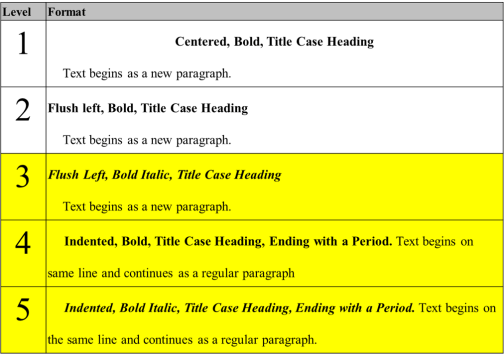
Level headings are another aspect of APA that often gives writers a headache. However, level headings are super useful for transitioning from one part of a paper to another and giving a paper a logical order. And again, they contribute to the visual rhetoric of an APA formatted paper, keeping it looking orderly and standardized. If you want to divide up your paper into sections (e.g. methods, results, discussion), you must follow APA’s formatting guidelines to label the sections. Here is an example of a circumstance in which a writer would employ level one and two headings:  A writer divides the methodology section, a level one heading, into subsections, such as participant recruitment, sample size, and instruments. The subsections would be level two headings. APA has changed the formatting for level headings for levels 3-5. This is the new chart with the changes highlighted:

Level Headings
The formatting for levels 3-5 has changed from APA 6th to 7th edition. Click here to access a screen-reader accessible chart.

However, perhaps the biggest change is that the level one heading format, which looks like this,

Centered, Bold, Title Case 

is now the format for the title on your title page, label for “Abstract” on the abstract page (if you need one), title of your paper on the first body page, and the label for “References” on the References Page.

In-Text Citation

In-text citation is so important because it uniformly gives others’ credit for their words, ideas, and research and allows you, as a writer, to engage actively and ethically with others’ ideas. APA 7th edition has made an important change to in-text citation guidelines. When citing a source that has three or more authors, write use the first author’s name plus “et al.” In 6th edition, APA instructed writers to include all authors, up to five, the first time the source was used. Some journals, like Technical Communication Quarterly, have pushed back against this change because, they argue, it erases important contributions of important authors.

This is probably a good time to remind you to always follow any instructions from your professor or journal that differ from the official style guide. It is quite common for professors and journals to want you to do something different than the style guide.

Reference Entries

Your references page is where you list all the sources you cited in the body of your paper. The purpose is to give your readers the complete information about a source, so they can learn about what kinds of sources you’re using and potentially locate those sources themselves. And, again, it credits those sources for their work.

The reason why the requirements for reference entries seems to be constantly changing is because digital sources and the internet constantly challenge existing templates, which were often based on qualities of print sources. I recommend using our APA 7th edition handout on in-text citation and references to learn exactly how 7th edition affects websites, Digital Object Identifiers (DOIs), publisher location, and multiple authors.

Pronouns

The 2019 Word of the Year from Merriam-Webster was “they!” Why? Although “they” has been used as a singular pronoun for centuries, many individuals and organizations have recently advocated for broader acceptance of “they” as a singular pronoun. APA is officially joining the chorus, which is a big deal. APA points out that using “they” as singular is a question of bias-free language. And, I would add, using it maintains a respectful stance toward any humans referenced in your writing. Here’s exactly how APA puts it:

When referring to individuals whose identified pronouns are not known or when the gender of a generic or hypothetical person is irrelevant within the context, use the singular ‘they’ to avoid making assumptions about an individual’s gender. (APA, 2020, p. 140)

Conclusion

Citation styles, especially APA, can certainly be frustrating because of what seem like endless tedious details. (And then they change on you!) However, knowing the reasons that such guidelines exist, and why they change, may help ease the citation and formatting burden a bit. Plus, you always have friendly writing center consultants and administrators here to guide you.

References

American Psychological Association (2020). Publication manual of the American Psychological Association (7th Ed.). https://doi.org/10.1037/0000165-000

American Psychological Association (2009). Publication manual of the American Psychological Association (6th Ed.).

Writing for Sanity’s Sake: A Quarantine Companion

IMG_3633Edward English, Assistant Director 

When considering strategies for staying emotionally and physically healthy during these times of closed borders, social distancing, and toilet paper depletion, for most people writing would be an unlikely choice. Writing does, after all, carry a reputation for being a solitary enterprise.  I do, however, believe that writing offers great potential to help many navigate these tough times and here’s why.

The importance of having projects. For those with an ample amount of free time, having a project, or projects, can be a fun and rewarding way to learn and stay occupied. My wife, a junior high science teacher now instructing entirely online, has a loom and is in a weaving frenzy.  I’ve started gardening a bit and trying to get better at home repairs.  It seems I’m not alone in taking on these tasks either—yesterday while driving around, I noticed what seemed to be a Louisvillian ghost town suddenly transform into a dense expanse of cars parked in front of Lowe’s.

For many attracted to writing, the biggest obstacles can be a perceived lack of time and difficulty overcoming writer’s block.  Now, however, free-time is no longer in short supply for the bulk of us.  Also, for myself, I feel that writer’s block is often a product of feeling overwhelmed at the enormity of a project.  Perhaps now is the time for you to start that novel you always wanted to write, but something of a more manageable size might be a better strategy: a short story, a screenplay, or a thoughtfully crafted letter or e-mail to connect with loved ones, offer consultation to those in a difficult place, or express appreciation to those who are working so hard and acting bravely—particularly those in the medical field.

Additionally, it’s worth noting that writing can often be an activity that requires slowing down and thoughtfully managing your time, as former writing consultant Abby Wills explains: Slow Writing: 5 Ways to Rebel against the Culture of Urgency

The importance of working through emotions—especially uncomfortable ones.  These are anxious times—especially to someone in tune with the current headlines.  As many people have little communication with others during this unprecedented time, it might be challenging to process through difficult emotions. For some in these and similar situations, writing can serve as an outlet. In my own life, I’ve found that writing, especially journaling and poetry, can be an excellent way to give definition and clarity to fears, questions, and concerns.  And while these steps don’t necessarily eliminate problems, more often than not they help foster much clearer, and more pleasant, headspace.

For fun insight into journaling, check out former writing consultant Rachel Knowles’ piece: The Writing Center Diaries: Dispelling Myths About Journaling

The importance of exercise and creativity.

If you have the ability to responsibly exercise, jog, or take walks, it’s likely a good idea. The benefits are numerous: physical health, increased serotonin levels, vitamin D to name a few.  But also consider that exercise could be a great way to improve your writing quality and overall experience.

In a recent interview, acclaimed fiction writer Chuck Palahniuk (Invisible MonstersChoke, Fight Club) detailed how much of his writing process actually revolves around lifting weights—arguing that the physical movement and circulation were conducive to helping him feel creative and organize his thoughts. While weight lifting might be a limited option for most—particularly with the closure of gyms—the sentiment is clear, and alternative ways of exercising indoors abound with a simple Google search.

Along similar lines, a few years back Psychology Today published “To Become a Better Writer, Be a Frequent Walker” exploring significant benefits walking can give to writers.  As the article explains, avid walkers abound among great literary figures like Virginia Woolf, Charles Dickens, William Wordsworth and Henry David Thoreau.  Furthermore, walking can lead to increased creativity, provide inspiration, and hone one’s observational skills.

The importance of staying connected.

While a successful writer is frequently imagined as sitting hunched over a laptop typing away in a disheveled apartment, sterile office, or library, more often than not some of the most successful writers I have met put great effort into figuring out alternative and creative methods that work better for them, and this often incorporates social connection as a significant part of their writing process.

And, as many are discovering creative ways of connecting online, it might be worth considering that writing could be a useful means to get feedback or just brainstorm ideas with friends or people with similar interests online.  If you happen to be a faculty member or graduate student at the UofL and are interested, we are still our offering writing group online.  For more details, check out: Faculty and Graduate Student Writing Group

For many, these various options and suggestions might not be feasible. But either way, we at the University Writing Center hope you stay safe, healthy, and connected.  So happy writing…or whatever it is you do to help during these strange times.

Works Cited

“To Become a Better Writer, Be a Frequent Walker.” Psychology Today, Sussex Publishers, 28 Mar. 2016, http://www.psychologytoday.com/us/blog/minding-the-body/201603/become-better-writer-be-frequent-walker.

Writing in the Time of Corona

IMG_2993Cat Sar, Writing Consultant 

Since the Writing Center has gone online along with most of UofL, it seems timely to share some tips about virtual writing center appointments, and how to get the most out of them.

  • Be as specific as possible when filling out your client report form. Anything that you want your consultant to know should be included. Remember, virtual appointments do not provide the luxury of real time communication, so the appointment form is even more important than usual.
  • Attach all necessary documents by 12 pm EST the day before your appointment. Similar to #1 on this list, you will not be able to pull up any additional documents in the virtual session. Consider either including the assignment guidelines or rubric either in the text of the appointment form, or as an attachment. This information is also incredibly important because it provides consultants with a sense of what your instructor is looking for and grading you on.
  • Before you make an appointment, take some time to peruse our website, especially the videos and handouts page. These are excellent, easy-to-navigate educational resources. Some questions may be answered without the need for a full appointment. Of course, we are happy to help you in whatever way we can, but we would also like to make best use of the time and attention we have.
  • Take a deep breath. As our fearless director says, “there is no such thing as a composition emergency.” Not even COVID-19. Your friendly neighborhood writing consultants are here to help. This page is intended to help you make the best use of the Writing Center during this time.  I also recommend that you check our Facebook, Instagram (@uoflwritingctr), and Twitter for updates! Our front desk is staffed from 9-5 p.m. and you can either call us at 502-852-2173 (please leave a voicemail) or email us. For any technology issues, you may called UofL’s IT HelpDesk at 502-852-7997.
  • Be patient and be well. We are all in the same boat, figuring out how to navigate in this weird time. Your professors, colleagues, friends and family are all feeling the stress of uncertainty in their personal and professional lives. Make sure to treat yourself with the same compassion you offer them. Wash your hands, clean your keyboards and your workspaces, and check in with your community. We hope to see you soon at the WC!

How We Will Work With You Online During the COVID-19 Campus Closure

Bronwyn T. Williams, Director

During this extraordinary moment when UofL courses have moved online, we, at the University Writing Center, have been working to implement a plan that will continue to offer UofL writers a way to get thoughtful responses to their drafts. All University Writing Center dscn2185consultants and administrative staff will be working from home. Below I will explain our plan to work with writers online and point you to other online resources about writing effectively that we have available for you. I will also offer suggestions for how to make the best use of online writing response. In the weeks to come we will offer more blog posts about how to work effectively from home and tips for completing your assignments successfully. Although the coming weeks will clearly often be a stressful and uncertain time for all of us, we maintain our commitment helping you with your writing in a spirit of collaboration and generosity.

The Details of Our Online Tutoring System

While the University is delivering courses online in the coming weeks, the University Writing Center will be offering only online appointments in which you upload a draft and receive written comments in response. You may use the University Writing Center or Virtual Writing Center schedules to make a written feedback appointment. Both schedules will be available for appointments starting Monday, March 16. For detailed instructions on how to make your appointment, including a how-to video, and what to expect from written feedback, follow this link.

Here are some details about how appointments will work during this time:

  • We will offer only written-response online appointments. There will also be no online live-chat appointments.
  • If you have a face-to-face appointment already scheduled between March 18-April 4 on either the University Writing Center or Health Sciences Writing Center schedules, your appointment will be automatically converted to an online, written feedback appointment. However, you will need to upload a draft to your appointment if you would like feedback. Please cancel your appointment if you do not want written feedback.
  • When you make an online, written response appointment, you must upload your draft by noon the day before your appointment, or your appointment will be cancelled and the time made available to other writers. We do this to make sure that as many writers are able to use appointment slots as possible.
  • Writers will be limited to two appointments per week during this period.
  • We also have online resources on our Handouts, Video workshops, and Writing FAQs to help answer your questions and concerns about writing.
  • If you have questions about how to make an appointment, please email writing@louisville.edu or call 502-852-2173.

Some Tips to Make the Most of Your Written-Feedback Appointment

If you have never made a written-response appointment with us before, here are a few tips to help you get the most out of the experience. In these appointments, because we can’t have a conversation with you during the appointment, there are some things you can do before and after that are helpful

When you make your appointment: In addition to uploading your draft, please upload a copy of your assignment prompt. The prompt is a huge help for your consultant in responding effectively to your draft. If you don’t have a prompt to upload, please tell us everything you can about the assignment or writing task you are working on. Along those same lines, the more detail you can give us on the appointment form about your top concerns about your draft, the more able we are to respond effectively to those concerns. If, rather than just list a few words, you can write a detailed note about your concerns, we’ll be better able to give you suggestions and advice to address your concerns.

When you receive your draft with comments: You will receive your draft with your consultant’s comments as an email attachment within one business day of the appointment’s start time. (You can also access your draft with comments from your appointment in the scheduling system.) Your consultant will write a note at the top of your draft that summarizes the suggestions and insights the consultant has about your draft and how best to approach revising your work. In the margins of your draft you will find more detailed questions about your draft and suggestions for revision. Keep in mind that, as with face-to-face appointments, our online appointments are 50-minutes long. Our consultants will comment on as much as they can within that 50-minutes. If they can’t reach the end of draft, they will note where they had to stop.

As you revise your writing: If you’re not sure where to start in using the written comments to revise your draft, we recommend out handout on “Using Written Feedback When Revising.” You may also find our other handouts that cover writing strategies from writing introductions to citation to grammar and usage issues helpful when revising.

Other Online Resources to Help You with Your Writing

We have a wide range of online resources to help you with your writing.

  • We have Video Workshops on issues such as citation styles and formatting and how to use sources effectively.
  • We also have more than 35 handouts online with advice about writing processes, grammar and usage, strategies for approaching different parts of a draft, and more.
  • We also have Writing FAQs that cover the kinds of questions that come up often in our work and offer you suggestions on how to approach common writing situations.
  • We will be using our social media accounts (Twitter, Facebook, Instagram, Our Blog) to post ideas and resources about writing, and some things just to brighten the day.
  • Finally, over the past eight years, the consultants in the University Writing Center have offered, in their posts in this blog, a wide range of advice about writing issues. You can browse the blog for a lot of good advice and, in the coming weeks, we will highlight some posts we find particularly useful for writing advice.

In the Weeks to Come

We are all in uncharted waters with this current situation. We know that, as writers, you may at times feel stressed, isolated, and unsure how your assignments and courses are going to work now that they are online. Our consultants, who are also graduate students, are going through the same experiences and are both sympathetic to your situation –  and feeling some stress on their own. As always, however, we will respond to your work as thoughtful readers and do our best to offer you helpful suggestions, questions, and encouragement.

We have an special community in the University Writing Center, both among our staff and with the writers who trust us with their writing. The best way to get through this current extraordinary situation is with the support and help and empathy of others. We all need to show patience and generosity to each other. Even if we’re working in different places, we are still a community and still stronger together. We look forward to working with you in the weeks ahead.

How a Writing Center Consultant Prepares for the Next Appointment

Writing centers are one of the few places in a university setting where every single Michelle Buntainstudent can be assisted. Every student has to write, and every kind of writing is welcome at the University Writing Center. But, given all the variables that come with working at a university of over 21,000 students, how does a writing center consultant prepare for their appointments?

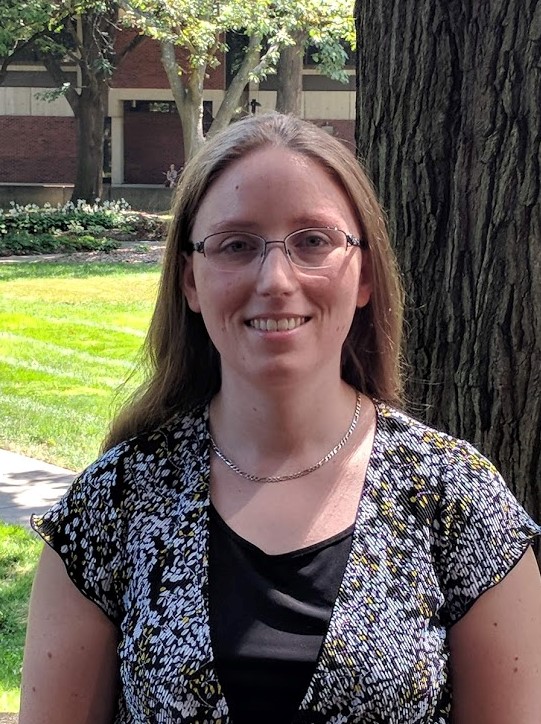
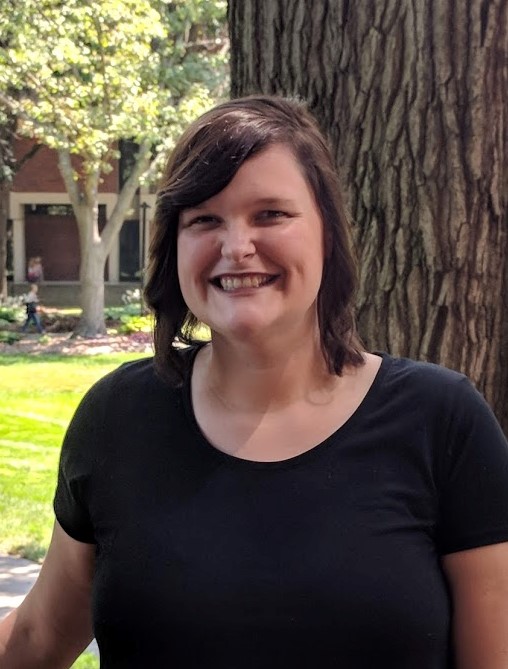
At the University of Louisville Writing Center, we pride ourselves on our accessibility to every writer we encounter. We have trained, studied, and practiced our skills to make sure that your experience in the writing center is the best it can be. This includes:

  1. Taking a class on Writing Center studies: Consultants take a class that teaches us about writing center theory, ethics, and strategies for the teaching of writing.
  2. Reflecting on appointments with our colleagues and our supervisors: We have formal and informal reflections on appointments with our fellow consultants as well as our supervisors, including the Director of the Writing Center.
  3. Discussing new ways to approach the teaching of writing: We are always sharing new ideas about how to approach our sessions with writers. Our best tips and strategies are often the result of what we have learned from each other.
  4. Staying up-to-date on citation methods: Citation methods can be confusing, especially since they are updated every few years. We study the new versions and update our handouts on different citation styles. Just last week our Associate Director gave a lecture on the 7th edition of APA!
  5. Mentally preparing ourselves before each appointment: Before the day begins, we open WC Online and look over the scheduled appointments. Each appointment form tells us what the writer wants to work on, so we make sure that we are comfortable with addressing the writer’s particular concerns before the appointment. If the writer is working on a kind of assignment or genre of writing that is less familiar, we will do research and ask our colleagues for advice. This preparation helps us begin a session with a good sense of what the end product should look like.

When a session is over and we return to the consultants’ office, we like to share our successful strategies and ask each other for advice. No session goes perfectly, but we take our work seriously and we constantly strive to do better. When you come to the University Writing Center, know that we are prepared and excited to help every writer achieve their goals!

Why We Call Everyone a “Writer”

Kelby Gibson, Writing Consultant

Kelby Gibson

“Well, I don’t write.” I’ve heard that sentence about 100 times over the last six months. People come into the Writing Center looking for some help because they think they have no idea what they are doing, when, in fact, they do. In today’s world, we’re surrounded by technology –  which has both advantages and disadvantages. A lot of people, myself included, get sucked into the world of social media and can lose hours of their day watching videos of cute animals, reading about their hometown drama, liking photos of the celebrities they follow, etc. It can be addicting. In having a phone glued to a hand though, people are also doing something else. People are constantly writing. Composing text messages, replying to a tweet, commenting on a post, captioning their photo for Instagram, posting ads on resale apps, typing in delivery directions for DoorDash. The list could go on. People fail to realize that they are writing – in some form – every single day. Just because it isn’t ‘academic’ doesn’t mean it isn’t writing.

When communicating through written text, most people still try to be effective. If they give bad directions to the delivery driver, they may not get their food. If they don’t pay attention to wording, they could upset their friends, or potentially create chaos on social media with family. An ad needs to appropriately represent the product, otherwise it may not sell. These are all reasons people carefully and intentionally use writing in their day to day lives, even they do not realize they are using their own writing processes for these seemingly mundane actions.

I often urge writers to take what they know about all of these types of writing and apply it to the writing they are struggling with. Sometimes this works, sometimes it takes more explanation and practice before the application of it sticks. To be fair, this is way easier said than done. I think we all could take care to be more thoughtful and aware of the writing we are doing on a daily basis. The more we practice both the writing itself and reflecting on the skills and tools we are employing in doing so, the more we can improve ourselves as writers, whether it be seemingly simple social media posts or for a grade at school. Chances are everyone will use writing at some point in their chosen career field. The greater capability they have of being an attentive, thoughtful, and reflective writer, the more likely they are to be able to transition to new types of writing and be more effective writers in general.

When we more carefully approach our everyday writing, we will learn more from it. We will learn more about ourselves as writers, as well. I know a lot of people do not think of writing as vital to their fields. Maybe they want to be nurses, police officers, biologists, zookeepers, engineers, personal trainers, etc. They may not be thinking about how important their writing skills will be in taking down patient information, writing incident reports, note-taking on studies, scheduling routines for employees to follow, applying for grants, personalizing meal plans and workouts, etc. But these things will be important! Being clear in your position, intent, meaning, and more will make all the difference for those the writing is about and those it is meant for. In other words, writing pops up everywhere all the time. It may not involve writing full papers, writing for publications, or other instances where one’s writing will be graded or ‘judged’ for a lack of a better word, but they will still likely have to write, and it matters how understandable that writing is. When we start to think about how we are practicing this writing every day, the better chance we have at making that practice matter.

Commas Rule! Common Comma Rules and Tips

Hayley Salo, Writing Consultant

There are a ton of guides to comma rules, so I won’t spend this entire blog post rewording what those rules are. Instead, I’d like to take the time to go through the most common mistakes and discuss ways to identify, correct, and avoid them. This will require a bit of rule discussion, but bear with me.

Connecting Complete Sentences

There are multiple ways to connect complete sentences, and commas are certainly one of them! However, this is also where most comma mistakes are made, including comma splices and many run-on sentences. So, what’s the deal? Why is this part so hard?

Well, we tend to talk differently than we write; the pauses we make while speaking often do not match the pauses we grammatically require. Although this goes against the age-old advice of “read your work out loud,” it’s true! Reading your work out loud is a great way to catch comma mistakes that you are already familiar with, but it’s less effective at helping you catch the really tricky mistakes, including comma splices.

For instance, if we read the following sentence out loud, it sounds pretty normal:

Sally went to the store, and she bought an apple.

But so does this sentence:

Sally went to the store and she bought an apple.

The comma here is very hard to hear. Since the “and” tells us how the sentences are connected, it’s easy to assume that the “and” implies the pause, too. However, we need both the comma and the “and” for this sentence to be grammatically correct (Sally went to the store, and she bought an apple).

Since it’s hard to spot the missing comma while just reading an essay, it’s helpful to proofread one sentence at a time. Take the time to divide long sentences into two or more shorter sentences. Then, proof the punctuation by referring to the rules and recombining the sentence. The example above can be divided into two completely separate sentences:

Sally went to the store. She bought an apple.

Once we have the sentence divided, we can check the comma rules for how to connect complete sentences. We would see that we need both a comma and a connecting word, so we would know to combine the sentences into the following:

Sally went to the store, and she bought an apple.

This process of dividing sentences will become very important once the sentences get more complex.

Lists

Lists can be surprisingly difficult to proofread, and there are even two correct ways to punctuate the same list! Long, complex lists can be challenging because it’s hard for writers and readers alike to separate all of the ideas. As a result, dividing lists into shorter, simpler sentences is a great way to proofread. Let’s look at a simple first example before getting into a tougher one.

Correct: I like to walk, hike, and swim.

Correct: I like to walk, hike and swim.

Incorrect: I like to walk, hike, swim.

The first correct version uses the “Oxford comma,” which is just the optional comma before the “and.” The second correct version does not use that optional comma. The key here is that “and” is always required between the second to last and last list items, no matter how long or complex the list is.

As I mentioned earlier, we can divide lists into shorter, simpler sentences:

Correct: I like to walk. I like to hike. I like to swim.

This division makes it easier to see that “walk,” “hike,” and “swim” are all things I like to do. As a result, they are all part of the same list. But what happens when lists get more . . . listy?

Correct: I like dogs and cats, cake and cookies, and coffee and tea.

Correct: I like dogs and cats, cake and cookies and coffee and tea.

Incorrect: I like dogs and cats, cake and cookies, coffee and tea.

In the above examples, we have lists within a list. The primary list is things I like. We can see this more easily by dividing the sentence:

I like dogs. I like cats. I like cake. I like cookies. I like coffee. I like tea.

Very few people want to read that many short sentences. However, they are equally unlikely to want to read this long of a list:

I like dogs, cats, cake, cookies, coffee, and tea.

In long lists like these ones, readers are likely to remember only the first or last list items and tune out the middle ones. This is where our original example, with more than one “and,” comes in. We can simplify that list to a lesser extent:

I like dogs and cats. I like cake and cookies. I like coffee and tea.

Now it’s easier to see the categories of things I like: animals, food, and drinks. So, what we really have is a list of three things I like, but within that list, there are two-item lists arranged by category. Sounds pretty abstract, right? But it’s so much easier to see when it’s divided up like we did above. Once we know that we have lists within a list, it’s easier to know that we need an “and” between items in each two-item list, a comma between each category, and a final “and” between the second to last and last two-item list:

Correct: I like dogs and cats, cake and cookies, and coffee and tea.

Correct: I like dogs and cats, cake and cookies and coffee and tea.

Feel free to use or omit the Oxford comma.

Bottom line: lists can feel like a theoretical wormhole. Break them down into their smallest components and then carefully, deliberately, put them back together. We often write over-complicated lists in first drafts, so it’s up to us as later proofreaders to come back and fix them.

Optional Information

Generally speaking, optional information is separated from the rest of the sentence by commas. However, sometimes it’s hard to tell what is optional and what isn’t, which makes proofreading for comma mistakes very difficult. The trick here is to determine if the sentence’s core meaning changes when the information is removed. Let’s look at a few examples:

The dictionary, which is blue, is on the table.

“Which is blue” is grammatically optional; we can take that part of the sentence out and still have a complete sentence with the same meaning:

The book is on the table.

Nothing fundamental about this sentence has changed. We are still talking about the same book and the same table.

However, some writers and readers may not consider that information optional in certain situations. Take the following situation, which takes place in a library with a ton of books scattered around the floor, shelves, and table:

Sally: I need you to look up a word for me.

James: Where do I find the dictionary?

Sally: The dictionary, which is blue, is on the table.

James certainly does need to know that the dictionary is both blue and on the table in order to efficiently find the dictionary. However, it still isn’t the main point of the sentence. James could still find the same dictionary without that specification.

Commas shouldn’t be used when the “that,” “which,” etc. section really does affect the meaning of the sentence:

The dictionary that I own is in bad shape.

This sentence is talking about the physical appearance of my personal dictionary. If we take out “that I own,” we get something very different:

The dictionary is in bad shape.

This sentence implies that someone needs to do some serious editing and save our dictionaries! Not the same as our first sentence at all, so skip the commas.

Summary

When working with commas, try these tips:

  1. Read the sentence out loud to get a general feeling for what it is saying and how it is saying it.
  2. Divide the sentence into shorter, simpler sentences.
  3. Look up the rule for the kind of sentence you’re working on.
  4. Apply the rule and carefully recombine the sentence.
  5. Proofread similar sentences in the paper one after another to practice the rules and methods.

‘Twas The Week Before Finals…

Kayla Sweeney, Writing Consultant 

The December buzz of the UofL Writing Center filled our staff room with platters of cookies, Christmas music, and everyone’s holiday favorite—the crippling anxiety of finals season. While we attempted to cope through serenading one another with showtunes and clearing cookie plates, helping writers with their own final papers was a constant reminder of our own deadlines.

As an undergraduate English student at Western Kentucky University, I regrettably never darkened the doors of our campus writing center. While never claiming absolute knowledge over the art of writing, there was something in me that said, “you are an English student. You’ve got this.” *Insert overconfident hair-flip*

After a semester of working with a diverse population of writers, I was thoroughly humbled by the need for everyone to have others view and comment on their work. High schoolers taking dual-credit courses at UofL, undergraduates, graduate level and doctoral writers, and even an occasional professor came into appointments at the Writing Center last fall, all willing to take a step back from their work for others to give their perspectives. By December, I was asking myself why I was not doing the same thing.

Perhaps this was an epidemical feeling among the staff at the UofL WC because as finals week approached, we began to look to one another (frantically at times) for help. We were no longer just consultants, but writers in need of each other’s eyes, perspectives, and insight. Hour after hour, between our break-time duetting and snacking, we looked out into the main room of the writing center and saw sets of two staff members sitting together, not knowing who were the writers and who were the consultants. We have often talked about this dual-identity we each have at the Writing Center—only writers can be empathetic consultants, understanding the ups and downs, the victories and frustrations of writing. But finals week brought this reality to life.

I word-vomited over more than one fellow consultant about a Shakespeare paper that was 50% of my grade. How do I talk about Macbeth’s madness in a way that has not been done a million times already? How do I make sure I am not rambling? And just as I have hoped for the writers I worked with last semester, a sense of relief poured over me in these sessions. I gained new insights on sentences, paragraphs, and entire arguments. I was able to see issues I hadn’t before.

And as I’ve imagined others probably feel about their writing at times, my own stubborn defensiveness also arose over my writing. This sentence isn’t babbling—it’s part of my creative style! *Insert second over-confident hair-flip* That comma is definitely NOT necessary.

In the end, there were things I took from these sessions and things I left. I kept some of my stubborn stylistic flare; as for some of my babbling and comma issues—they became more obvious to me hours or days after my co-workers pointed them out (with a little bit of a sting).

Now, starting a new semester, I am entering both this workplace and the classroom with the knowledge that I need others to provide insight on my writing, just as we all do—from the high-schooler, to the undergraduate, to the professor who has taught for 10+ years. When you come into the Writing Center, you are not coming to a room of people who have learned to never make mistakes in their work (I’ll wait for your surprised gasp). We are not authoritarian figures who recite rules from your high school English class. Instead, we are fellow writers and thoughtful readers who will sit by your side, listen to your concerns, and give you a new lens by which to see your writing.

So, you should come stop by.