Author: UofL University Writing Center

IWCW Day 2: Reciprocity and Tutoring

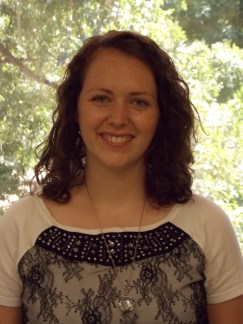
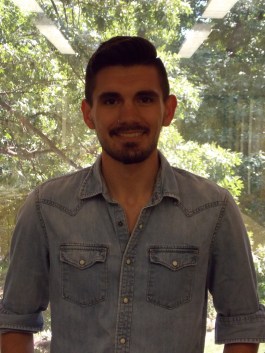
Our consultants continue to share their favorite aspects of the Writing Center to celebrate International Writing Centers Week. Today Anthony Gross, Rhea Crone and Lindsey Gilbert exemplify the reciprocal nature of writing tutoring. The consultant learns and grows alongside the writer.

Rhea
“I suppose my favorite part about working in the Writing Center is being given the opportunity to set aside my own academic stressors and focus my attention on all the different kinds of papers and people that come through our big glass door. It’s pretty rare to be given the chance to so fully engage with dozens of diverse, disparate topics, or the time to understand new and evolving sets of writerly concerns. I also appreciate the insights into my own work that I’ve gained, simply by having candid, open discussions with all the writers I get to consult with during any given week.”
Rhea discusses “academic voice.”

Anthony
“I’d say my favorite part of working at the Writing Center is helping writers understand something they didn’t grasp before, whether it’s how to use a comma, how to write a thesis statement, or how to be sensitive to particular audiences. Likewise, writers are constantly helping me understand things I’d never considered before.”
Anthony’s advice for making significant, but difficult, revisions

Lindsey
“Being able to connect with writers who regularly make appointments with me and seeing their growth throughout the year are by far my favorite parts of working in the Writing Center. Both the writer and I become more comfortable with each other, allowing for our conversations to develop from talking about the weather to ‘How did your friend like your gift?’ or other details that I’ve learned since our first appointment together. I find myself and the writer more at ease in these situations, allowing for personal growth and creative expression to occur during each appointment. These appointments bring me much joy, and I often find myself looking forward to them more each week.”
Lindsey weighs in on those “fierce” English 101 papers.

Picture1

Lindsey meets with a writer.

“Since the Beginning of Time:” Avoiding Generic Opening Sentences

Deanna Babcock, consultantDSCN3612

Throughout history, students have continuously used generic opening sentences in their essays. Teachers continue seeing papers with the same types of openings again and again and, despite any attempts to change students’ habits, they keep cropping up. A likely reason is that students are being told to avoid certain sentences in their introductions (if they are told at all) without being taught what to do instead.

There are a number of phrases that can begin an assigned paper, but are ineffective, too general, or just plain boring. An example of this is, in fact, “throughout history…”

Here are some other phrases you should avoid:

  • “Since the beginning of time/history/mankind…”
  • “Everyone/we all…”
  • “So and so dictionary defines ____ as…”

These phrases are very broad and essentially ‘empty,’ and your instructor will likely see them as having no important value to your paper. They are also very general and start off the topic too broadly. If you are writing about different dog breeds, defining either the term “dog” or “breed” is unnecessary and does nothing for your essay. Telling us that “dogs have existed since the beginning of time” is not necessarily true and is also vague and pointless, and saying “we all love dogs” or “everyone has a favorite dog breed” can isolate readers who are not dog fans and cause them to lose interest.

clicheClichés are best avoided, as their meanings are abstract and likely will not add anything to your ideas, especially at the very beginning of the paper. “All that glitters is not gold” is a common saying, but is so common that it would be too general to start a paper with. Use your own words instead to be original and express your individual ideas. If you’re not sure, check here for more examples of cliches.

So what should you do instead? There are other ways of starting an essay that avoid these general phrases and cut straight to the point while still grabbing your reader’s attention. Here are some other ways to start your paper:

Start straight off with your topic.

Not a general idea, but the specifics. If you are writing about the themes of a novel, your readers do not need to know much, if any, background information on the author or the novel itself. Briefly discuss your specific subject, paving a clear path for your thesis statement and the rest of your paper.

General: “There are many different breeds of dogs.”

Specific: “Knowing the difference between dog breeds can help pet owners and shelter workers do what is best for each dog.”

Figure out the scope of your paper.

What can you realistically address in terms of time, place, and audience? You will likely never write a paper that requires you to address everything about your subject “since the beginning of time.” It would also be simpler to discuss a smaller scope than the entire world (think countries, states, even cities), and to address an audience who might actually be interested in or have reason to read about your topic. If you are writing about a recent issue, your audience likely does not need to understand the entire history of the issue to understand your stance on it.

General: “We should all consider the issue of poverty throughout the world/throughout history.”

Specific: “Legislators should consider the current problems facing those in poverty in the  city of ___ when creating new laws.”

Begin with a rhetorical question.

Keep the question open so it could not be answered with a simple yes or no. Ask something that the audience should not already have the answer to; the question indicates what you plan to answer in your essay. It should also be something that you are able to answer. If you only have 5 pages, you should not tackle a question about how to solve world hunger, but you could address a smaller issue related to hunger problems.

General: “How can we solve world hunger?”

Specific: “What can we do about widespread hunger in so-and-so city/state/country?”

Additionally, these questions could be phrased as statements, where the question is implied rather than directly asked. These create a question in the reader’s mind that can    be assumed to have an answer provided.

General: “There are several ways we could go about solving the problem of world    hunger.”

         Specific: “The hunger problem in ____ can be dealt with, if we…”

There are a number of other ways to begin an introduction; these are certainly not the only ones. Keep in mind that your first sentence should spark the reader’s attention and make him or her want to continue reading, and remain as close to your topic as possible.

For more tips on beginning a paper, check out the University of Louisville Writing Center’s handout on introductions. The UNC Writing Center’s page on introductions is another good resource.

­

­

Happy International Writing Centers Week!

In honor of International Writing Centers Week, we’re highlighting our wonderful staff! Today we feature Assistant Director Stephen Cohen and consultants Alex Wasson and Cheyenne Franklin.

What is your favorite aspect of working in the University Writing Center?

Stephen
“For me, the most rewarding thing about working in the Writing Center is getting to share in what people are working on. I’ve seen some amazing projects in process, from Art History papers to articles on new MRI techniques. Every appointment is a new chance to see what’s going on elsewhere in the University, and it is always so impressive!”
Stephen’s advice for focusing personal statements

Alex
“Collaborations with writers on resumes, personal statements, and cover letters are my favorite moments as a writing center consultant. There are few moments more nerve-wracking in a person’s life than job or program applications, and I aim to do everything I can to soothe nerves and help writers put their best foot forward.”
Alex’s suggestions for overcoming anxiety at the beginning of the writing process

Cheyenne
“My favorite part of our Writing Center is the fun our consultants and writers have together. Just the other day I overheard a writer smiling and joking with his consultant as they worked on his paper. Whether writers come once or they are long time regulars, we welcome them to come grapple with writing and have a little fun doing it.”
Cheyenne’s tips for interpreting and understanding writing assignments

Cheyenne
Cheyenne talking with a writer.

Do you have a good memory from the University Writing Center? Share it in the comments!

Valentine’s Day: Thesis Statement Edition

Jessica Good, consultantDSCN3626

Valentine’s Day.

There, I said it.

I mean, as a kid, Valentine’s Day was pretty great: people handed out candy at school, and I got to give my friends totally awesome cards decorated with superheroes, princesses, or Scooby-Doo (my interests were very well-rounded if I do say so myself).

But now?

The personal and cultural associations attached to this possessive noun + noun construction vary across volcanic spectrums of meaning. Is Valentine’s Day something to celebrate? Resist? Ignore? Whatever your stance may be, you probably have pretty good reasons to support it. So let’s say you synthesize your Valentine’s Day opinion into one definitive claim: “all you need is love.” With this move, you’ve created a thesis statement that you can then proclaim to your listening audience.

Now, let’s say you’re chilling at the office, chatting with Dwight near the copy machine, and Valentine’s Day comes up:

Dwight

Dwight isn’t buying the cultural obsession with romance that Valentine’s Day often signifies. Maybe he would agree that love is special, or that certain kinds of love (familial, platonic, or companionate as well as romantic) trigger chemical reactions that cause you to experience things like “happiness” and “emotional fulfillment.” But to convince him, you’ll have to be pretty darn specific with your terms.

If we were going to rewrite this meme (which, granted, would turn it into a regular old piece of writing), our first step would be rethinking our central claim (or thesis), “All you need is love.”

To craft a stronger claim, we would avoid:

Cliches

Cliches are common phrases like “opposites attract” and “all is fair in love and war.” They’ve been used so often that they are no longer very meaningful. When you hear, “opposites attract,” you know it means that people with different personalities fall in love. But the words just kind of sit there, taking up space without presenting a new, strong, or concrete image. As a result, your audience isn’t likely to closely read or engage with your claim. So instead of saying, “All you need is love,” the meme could have said, “Being in love makes me feel like my every physical, emotional, and spiritual need is met.”

Universal Claims

A universal claim is made when words like “all” or “never” are used or implied. It argues that, without exception, something is (or never will be) true. Making a universal claim weakens your argument because if even one case doesn’t conform to your claim, your logic becomes faulty and your conclusion invalid. Dwight was right to point out that, actually, love isn’t the only thing we need. Our implicit argument that “love is the best thing ever in the whole entire world and I don’t need anything else” becomes shaky at best: if love is not even a basic human necessity, how can we claim that love is all we need?

Universal statements can also damage an audience’s perception of your ethos, or reliability, as a writer. Readers may fixate on trying to find exceptions to your claim rather than following the nuances of your argument. They may even perceive you as lazy, uninformed, or careless. So even if your universal claim is true, the effectiveness of your argument may be compromised. Avoiding universal claims by talking in case-specific terms can maintain your ethos and even improve the strength of your argument. In the case of our meme, we could potentially say, “Sometimes, it feels like love is all we need to live a happy life.”

Vague Terms

When I say “vague terms,” I’m referring to cases in which it is unclear how words with broad or multiple meanings are functioning in a statement. Sometimes undefined terms are symptomatic of your need to sharpen the focus of your sentence (or even your argument as a whole). For example, instead of “love” in general, do we want to argue that having our emotional needs met is essential to feeling satisfied in life? Alternatively, we could qualify “need” by differentiating between physical survival and emotional or ‘felt’ needs.

Other times, a vague term might just mean that you need to choose a different word. This doesn’t mean you should right click to access your thesaurus and pick the most interesting word that appears. Rather, think about the specific meaning you want to convey. Would a different word do that? Instead of “love,” what if we wrote, “All I want is to feel accepted by other people”? If a different word or phrase still doesn’t seem fitting, then think about including a statement clarifying the way you’re using your term(s). We could say, “When the Beatles sang ‘All You Need is Love,’ they created an anthem that united listeners around the world by relying on cultural narratives of romantic love.”

The next time you’re writing a paper, imagine that you’re talking to Dwight. He’s one adorably tough cookie, which, honestly, makes him the best imaginary audience you could encounter. By being intentional with our terms, making sure we use specific language to explicitly convey our exact meaning to an audience, we can create claims that are clearly defined. And that, by extension, will help us craft a strong thesis statement every time.


Make Word Work for You: Four Tips for Navigating Digital Writing Spaces

Alex Wasson, consultantalexwasson

As a graduate student, I often have numerous documents open on my computer for simultaneous editing. These documents are precious, the empty vessels into which I pour my scholarly hopes and dreams. I rarely give credit to the vessel (for me, Microsoft Word) for its ability to do more than just store all of my text. In fact, I pay no attention to the program unless disaster strikes; an unsaved document, a poorly formatted works cited page, or a pesky APA title page heading can derail an entire weekend or even an entire semester. So I thought I would take a moment to thank our digital writing spaces, whether it is Google Docs, Notepad, Microsoft Word, blogs, email, or anything in between, for all the good times we have together. To express my gratitude, here are four tips for navigating digital writing spaces.

1. Microsoft Word’s Brainstorming Feature

Did you know that you can easily create a brainstorming web on Microsoft Word? Double click anywhere on the screen and the cursor will follow you, allowing you to use the screen as if it is a whiteboard (see here for specific instructions). This feature is extremely helpful when mapping out ideas at the beginning of projects.

2. Visual Modes- Read, Print, and Distraction-Free Screens

If you are a visual person like me, switching up the screen presentation for reading and for editing may inspire a mental distinction between the two tasks. Many digital writing spaces offer a variety of different screen views. Microsoft Word, for example, provides read mode, print layout, and web layout screens underneath the view toolbar selection. In addition, if the toolbar itself is a distraction, you may hide it by selecting Ctrl+F1 on older software or the tiny arrow on the right side of the toolbar. An unobstructed view of the screen may just be the trick to jump start your writing assignment.

3. Reference-Keepers

Reference managers such as Mendeley and Endnote are fantastic tools that store all your citations in one place. This storage is extremely helpful when working on large research projects, and it integrates well with writing programs like Microsoft Word.

4. Graph Generator

I am not a numbers person. I am also not a master at Microsoft Excel. Therefore, when I am in need of a graph or chart in my writing project, I turn to the built-in graph feature embedded within Word and other writing programs. The graph feature offers step-by-step help and provides many different chart type options for your specific needs. A graph or chart can be a great asset to a project which compares two or more ideas.

One last note – SAVE whatever you are working on right now. Do it. Email it to yourself, keep a flash drive, upload it to the mysterious iCloud or type it on Google docs. Your future self will thank you.

Attention UofL Artists! Display your work in the Writing Center!

At the University Writing Center we are committed to celebrating communication and to putting student work first. As part of that commitment we have, over the past four years, made space in the Writing Center available for ongoing displays of student artwork. It has been exciting to have the student art in the Writing Center and has given the artists the chance to show their work to a larger university audience. Now

53d2aae1df3900a8b185a80d11435f73
Woman Writer of Pompeii

that we have moved into our new, very visible space on the First Floor of Ekstrom Library, we again have the opportunity to display student artwork. But now we have a central location on campus where the art we display will be seen by thousands of people a year.

That’s why we are calling for UofL student artists interested in displaying their work in our new space to get in touch with us. The work can be in any medium and on any subject – though we are particularly interested in work that connects somehow to writing, reading, words, books, computers, maps, and any other way we communicate to each other. All UofL students – art majors and non-majors alike – are welcome to submit works.

If you think your artwork would be a good fit for the University Writing Center space, email us today (writing@louisville.edu) or stop by the University Writing Center, First Floor, Ekstrom Library. (We reserve the right to choose which work to display).

Personal Statements Part 2: Research and Focus

We bring you the second installment in this week’s series on the personal statement.  See part one here.

Stephen Cohen, Assistant Director for Graduate Student Writing20150824_140027

Working with writers at both the Belknap and HSC campuses has taught me that, despite differences in discipline and focus, writers everywhere are working through very similar hurdles and anxieties. Students across both campuses right now are thinking about taking the next step in their academic careers; often this involves applying for residencies, internships, or further graduate study. Though these applications can be stressful, I try to help people think of them as opportunities to present themselves and find the program that is the best fit.

Many of these applications require a version of the “personal statement” essay. For this post, I’ll be thinking through some of the most common stumbling blocks in this process and (hopefully) giving you a few useful tips to help you through writing a statement of your own. Also remember that one of the best ways to develop a personal statement is to make an appointment to discuss it with one of our consultants here in the University Writing Center.

1. Do your homework.

Find out what the requirements are for the statement – and don’t deviate from them. How many words? Does the application ask you to address specific questions? Carefully adhering to guidelines demonstrates to the committee that you’ve taken time to understand their particular application process, and, by extension, their program.

Speaking of which, you’ll want to find out what you can about the school and the program to which you’re applying. Mission statements and program descriptions are great places to look for information that you can use to your advantage – demonstrate to the committee that you understand how their program differs from others and that you are excited about what makes it unique.

If you are applying to multiple programs, try to contain anything that applies to a specific program to one paragraph. That way, you can switch that paragraph out for each program without having to do extensive revision on the rest of your letter.

2. Put your best foot forward.

People often understand “polishing” a personal statement to mean carefully proofreading it and ridding it of errors. While this is important (you don’t want to send a letter addressed to University of Louisville to University of Kentucky because you forgot to change it!), it’s more important to think about polish as careful presentation of the experiences you list on your CV or Resume.

Think carefully about what you list on your CV/Resume and choose the experiences that best demonstrate why you are a great candidate for a given program – you’ll want to use your experiences to show a committee not only how well prepared you are for graduate study, but also what makes you unique – what you can bring to the program that others can’t. Remember, the committee won’t necessarily know how your work (as a student assistant, for example) has prepared you for the demands of grad school – you’ll have to tell them.

If there was ever a time to toot your own horn, this is it. Though you don’t want to seem arrogant, most people I’ve worked with err too far on the side of caution. This is your chance to let the committee know how great you are – take it!

This is also an opportunity to answer any questions you think might be raised while the committee considers your other materials. Is there a gap on your resume? Don’t leave the reason for it up to the committee’s collective imagination – explain it to them, in the most positive terms possible.

3. Be Specific

Be sure you include particular reasons for your proposed path of study, and where possible, who you would like to study with. Remember the part about doing your homework? The more you know about a program, the better positioned you are to explain specifically how that particular program can help you meet your academic and career goals in ways that other programs can’t.

Use appropriate details to support any claims you make about yourself and your preparedness (in my case, an example might be not “I am a good teacher,” instead I would write “I have successfully taught introductory Rhetoric, Literature, and Business Writing courses).

4. Be Yourself

Often, a program will ask for a personal statement because they want a sense of who you are that they just can’t get from scanning a CV. Coordinate the experiences you’ve selected to write about to demonstrate some personal characteristic(s) that you think will appeal to the committee. In other words, rather than writing “I am a hard worker,” choose to detail a few experiences from your CV/Resume that demonstrate how hard you’ve worked.

Use the personal statement as a place to tell the committee what you think are the most important things to know about you – the things that make you different from another candidate. What life events have led you to consider your course of study? What challenges have you faced along the way, and how have you overcome them in order to achieve the accomplishments listed elsewhere in your application materials?

The personal statement is only a small part of your overall application, but a thoughtfully prepared statement can have a big impact on how your whole package is received.

Kill Your Darlings: Four Steps to Making Difficult Revisions

Anthony Gross, Consultant

anthonygross

“In Writing, you must kill your darlings.” This somewhat morbid advice from the celebrated author William Faulkner is telling of what it feels like for writers to omit—or “kill”—pieces of writing they have grown to love. The phrase “kill your darlings” is often interpreted as the need for fiction writers to kill off major characters, but it is more broadly applicable to entire sections of writing within any genre. Whether you define yourself as a writer and tend to become deeply attached to your writing or as a student hoping simply to finish a paper with a good grade, killing parts of your writing, no matter how much you love them or how much they contribute to your word count, is an essential part of the revision process. To help you manage the brutal task of murdering your compositional babies, I offer the following advice:

Don’t become too attached.

It’s good to get something down on the page, but don’t become too attached to your original writing. When you’re struggling to come up with ideas and you’re struck by a sudden pang of inspiration, what you produce at the beginning of your draft may not coincide with your concluding thoughts. Especially when you’re crunched for time on an assignment, it’s tempting to skip revising and go straight to editing—that is, skip major structural and ideological changes and target lower order concerns. Your goals will vary depending on the type of writing you are doing, but whether you are producing an argumentative essay, a short story, or an application letter, you should aim to make the individual parts of your writing add up to a cohesive whole. In making sure every aspect of your writing conveys your overall purpose for writing, cutting those pieces that don’t, your reader will be better equipped to understand your ideas.

Give yourself time.

Have you ever looked back at a piece of writing you hurriedly composed for a class during a previous semester and thought, “Oh my goodness; why didn’t anyone tell me how bad this is?” As time lapses, we gain perspective, and we’re able to view our past selves, including those constructed through our writing, more objectively. With this in mind, it’s a good idea to let your work sit for a period of time before committing to the self you’ve constructed in your writing. If you find that you’re still pleased with what you’ve produced a few days, weeks, months, or even years ago, great. But if you’re anything like me and countless other writers, I bet you’ll find something that needs to be killed. It’s also good to note that major revisions should come before minor editing because the small things that you’ll find yourself editing— from spelling to grammar—may be axed from the final project.

Eliminate the unnecessary

Killing your darlings is really about eliminating unnecessary sections of your writing despite how much you love them. This isn’t to say that you have to nix your creative voice, but you must balance creativity with utility to ensure that every aspect of what you’ve written contributes to your purpose for writing. You should read for obscurity, redundancy, and argumentative support. If you find that what you’ve written might confuse your readers, even if it makes good sense to you, clarify or cut it. If you find that a section of your writing repeats an already stated idea to no useful effect, cut it. And if you find yourself including superfluous details, whether they are plot points that aren’t meaningful to your story or argumentative details that don’t progress your thesis, cut them. If deleting these sections permanently is too stressful, create a separate word document where you can paste them in case you change your mind. Remember, you may have spent a lot of time producing your draft, but if what you’ve written doesn’t help your readers discover your purpose, you haven’t met your ultimate goal.

Collaborate

Killing aspects of your writing that you’ve become attached to can be really difficult, especially if you’re so blinded by that attachment that you can’t differentiate purposeful from superfluous details. If you find that you can’t revise on your own, get some outside help. This could be as simple as asking a family member or friend for their opinion, but talking to someone familiar with the genre in which you are writing might be more helpful. University writing centers are a great place to work with other writers who can help identify what they, as a reader, see as essential or non-essential to your draft at any point in your composition process.

Killing your darlings can be difficult, but it is an important step in ensuring you produce your best work possible.