Author: UofL University Writing Center

Love, Generosity, and Attention: How Do You Tend to Your Writing?

Sister Sarah Joan: You clearly love Sacramento.Rose Dyar

Christine “Lady Bird” McPherson: I do?

Sister Sarah Joan: You write about Sacramento so affectionately and with such care.

Christine “Lady Bird” McPherson: I was just describing it.

Sister Sarah Joan: Well it comes across as love.

Christine “Lady Bird” McPherson: Sure, I guess I pay attention.

Sister Sarah Joan: Don’t you think maybe they are the same thinglove and attention?


Lady Bird, Greta Gerwig’s 2017 film, centers on the experiences of a young woman as she goes about her senior year of high school. It’s about growing up and coming to terms with where you are from. It is also, at its core, a film about paying attention. The quote at the top of this post comes from a scene in which the titular Lady Bird reviews her college application essay with her advisor, Sister Sarah Joan, who notices the particular care Lady Bird treats her hometown with in her writing. The devotional attention Lady Bird has paid to a place translates into her writing and helps her to recognize a love that she was not able to name before the writing. Writing, love, and attention— these things are linked. Sometimes we just need a companion to help us to see that. Once that link is made clear, though, it is hard, at least for me, to not think of that relationship each time I sit down to write.

It is no secret that writing can be hard work. Sometimes, it is taxing. Sometimes, it is a struggle. Sometimes, it is just confusing. That is why places like the Writing Center exist. But hard work can also be joyful work. A theory of attention, I believe, can help to make the hard work of writing a practice of love.

Deciding to write means to deciding to attend to a topic or an idea. It requires committing to a process of discovery and showing up for the words that come out of it. There are many ways to begin this process. Maybe for you it starts with a daily journal and a singular prompt. Maybe it looks like a free-writing session that concludes by scanning for the sentence that worked and moving forward from there. Or maybe it’s an outline that helps you to see what you are writing toward. All of these rituals help us to turn our attention to our words, and ultimately, to our ideas.

When we turn our attention to an idea, we have the opportunity to devote our entire selves to it. It’s a lot like intentional presence in sitting with another person. When we do these things, we learn and listen. These are activities that make room for the possibility of transformation.

“Attention,” French philosopher and political activist Simone Weil wrote, “is the rarest and purest form of generosity.” I think of this quote often, especially when I am writing or thinking about writing or procrastinating from writing. It strikes a chord with me because of its recognition of the difficulty involved in the desire to pay attention. We try, but it doesn’t always work. So we show up again— a lot like writing. The practice of writing requires attention, so what has captured yours lately? Have you noticed anything special or mundane or strange today? What do you need to say? And, can you write it down?

Why We Call Everyone a “Writer”

Kelby Gibson, Writing Consultant

Kelby Gibson

“Well, I don’t write.” I’ve heard that sentence about 100 times over the last six months. People come into the Writing Center looking for some help because they think they have no idea what they are doing, when, in fact, they do. In today’s world, we’re surrounded by technology –  which has both advantages and disadvantages. A lot of people, myself included, get sucked into the world of social media and can lose hours of their day watching videos of cute animals, reading about their hometown drama, liking photos of the celebrities they follow, etc. It can be addicting. In having a phone glued to a hand though, people are also doing something else. People are constantly writing. Composing text messages, replying to a tweet, commenting on a post, captioning their photo for Instagram, posting ads on resale apps, typing in delivery directions for DoorDash. The list could go on. People fail to realize that they are writing – in some form – every single day. Just because it isn’t ‘academic’ doesn’t mean it isn’t writing.

When communicating through written text, most people still try to be effective. If they give bad directions to the delivery driver, they may not get their food. If they don’t pay attention to wording, they could upset their friends, or potentially create chaos on social media with family. An ad needs to appropriately represent the product, otherwise it may not sell. These are all reasons people carefully and intentionally use writing in their day to day lives, even they do not realize they are using their own writing processes for these seemingly mundane actions.

I often urge writers to take what they know about all of these types of writing and apply it to the writing they are struggling with. Sometimes this works, sometimes it takes more explanation and practice before the application of it sticks. To be fair, this is way easier said than done. I think we all could take care to be more thoughtful and aware of the writing we are doing on a daily basis. The more we practice both the writing itself and reflecting on the skills and tools we are employing in doing so, the more we can improve ourselves as writers, whether it be seemingly simple social media posts or for a grade at school. Chances are everyone will use writing at some point in their chosen career field. The greater capability they have of being an attentive, thoughtful, and reflective writer, the more likely they are to be able to transition to new types of writing and be more effective writers in general.

When we more carefully approach our everyday writing, we will learn more from it. We will learn more about ourselves as writers, as well. I know a lot of people do not think of writing as vital to their fields. Maybe they want to be nurses, police officers, biologists, zookeepers, engineers, personal trainers, etc. They may not be thinking about how important their writing skills will be in taking down patient information, writing incident reports, note-taking on studies, scheduling routines for employees to follow, applying for grants, personalizing meal plans and workouts, etc. But these things will be important! Being clear in your position, intent, meaning, and more will make all the difference for those the writing is about and those it is meant for. In other words, writing pops up everywhere all the time. It may not involve writing full papers, writing for publications, or other instances where one’s writing will be graded or ‘judged’ for a lack of a better word, but they will still likely have to write, and it matters how understandable that writing is. When we start to think about how we are practicing this writing every day, the better chance we have at making that practice matter.

Commas Rule! Common Comma Rules and Tips

Hayley Salo, Writing Consultant

There are a ton of guides to comma rules, so I won’t spend this entire blog post rewording what those rules are. Instead, I’d like to take the time to go through the most common mistakes and discuss ways to identify, correct, and avoid them. This will require a bit of rule discussion, but bear with me.

Connecting Complete Sentences

There are multiple ways to connect complete sentences, and commas are certainly one of them! However, this is also where most comma mistakes are made, including comma splices and many run-on sentences. So, what’s the deal? Why is this part so hard?

Well, we tend to talk differently than we write; the pauses we make while speaking often do not match the pauses we grammatically require. Although this goes against the age-old advice of “read your work out loud,” it’s true! Reading your work out loud is a great way to catch comma mistakes that you are already familiar with, but it’s less effective at helping you catch the really tricky mistakes, including comma splices.

For instance, if we read the following sentence out loud, it sounds pretty normal:

Sally went to the store, and she bought an apple.

But so does this sentence:

Sally went to the store and she bought an apple.

The comma here is very hard to hear. Since the “and” tells us how the sentences are connected, it’s easy to assume that the “and” implies the pause, too. However, we need both the comma and the “and” for this sentence to be grammatically correct (Sally went to the store, and she bought an apple).

Since it’s hard to spot the missing comma while just reading an essay, it’s helpful to proofread one sentence at a time. Take the time to divide long sentences into two or more shorter sentences. Then, proof the punctuation by referring to the rules and recombining the sentence. The example above can be divided into two completely separate sentences:

Sally went to the store. She bought an apple.

Once we have the sentence divided, we can check the comma rules for how to connect complete sentences. We would see that we need both a comma and a connecting word, so we would know to combine the sentences into the following:

Sally went to the store, and she bought an apple.

This process of dividing sentences will become very important once the sentences get more complex.

Lists

Lists can be surprisingly difficult to proofread, and there are even two correct ways to punctuate the same list! Long, complex lists can be challenging because it’s hard for writers and readers alike to separate all of the ideas. As a result, dividing lists into shorter, simpler sentences is a great way to proofread. Let’s look at a simple first example before getting into a tougher one.

Correct: I like to walk, hike, and swim.

Correct: I like to walk, hike and swim.

Incorrect: I like to walk, hike, swim.

The first correct version uses the “Oxford comma,” which is just the optional comma before the “and.” The second correct version does not use that optional comma. The key here is that “and” is always required between the second to last and last list items, no matter how long or complex the list is.

As I mentioned earlier, we can divide lists into shorter, simpler sentences:

Correct: I like to walk. I like to hike. I like to swim.

This division makes it easier to see that “walk,” “hike,” and “swim” are all things I like to do. As a result, they are all part of the same list. But what happens when lists get more . . . listy?

Correct: I like dogs and cats, cake and cookies, and coffee and tea.

Correct: I like dogs and cats, cake and cookies and coffee and tea.

Incorrect: I like dogs and cats, cake and cookies, coffee and tea.

In the above examples, we have lists within a list. The primary list is things I like. We can see this more easily by dividing the sentence:

I like dogs. I like cats. I like cake. I like cookies. I like coffee. I like tea.

Very few people want to read that many short sentences. However, they are equally unlikely to want to read this long of a list:

I like dogs, cats, cake, cookies, coffee, and tea.

In long lists like these ones, readers are likely to remember only the first or last list items and tune out the middle ones. This is where our original example, with more than one “and,” comes in. We can simplify that list to a lesser extent:

I like dogs and cats. I like cake and cookies. I like coffee and tea.

Now it’s easier to see the categories of things I like: animals, food, and drinks. So, what we really have is a list of three things I like, but within that list, there are two-item lists arranged by category. Sounds pretty abstract, right? But it’s so much easier to see when it’s divided up like we did above. Once we know that we have lists within a list, it’s easier to know that we need an “and” between items in each two-item list, a comma between each category, and a final “and” between the second to last and last two-item list:

Correct: I like dogs and cats, cake and cookies, and coffee and tea.

Correct: I like dogs and cats, cake and cookies and coffee and tea.

Feel free to use or omit the Oxford comma.

Bottom line: lists can feel like a theoretical wormhole. Break them down into their smallest components and then carefully, deliberately, put them back together. We often write over-complicated lists in first drafts, so it’s up to us as later proofreaders to come back and fix them.

Optional Information

Generally speaking, optional information is separated from the rest of the sentence by commas. However, sometimes it’s hard to tell what is optional and what isn’t, which makes proofreading for comma mistakes very difficult. The trick here is to determine if the sentence’s core meaning changes when the information is removed. Let’s look at a few examples:

The dictionary, which is blue, is on the table.

“Which is blue” is grammatically optional; we can take that part of the sentence out and still have a complete sentence with the same meaning:

The book is on the table.

Nothing fundamental about this sentence has changed. We are still talking about the same book and the same table.

However, some writers and readers may not consider that information optional in certain situations. Take the following situation, which takes place in a library with a ton of books scattered around the floor, shelves, and table:

Sally: I need you to look up a word for me.

James: Where do I find the dictionary?

Sally: The dictionary, which is blue, is on the table.

James certainly does need to know that the dictionary is both blue and on the table in order to efficiently find the dictionary. However, it still isn’t the main point of the sentence. James could still find the same dictionary without that specification.

Commas shouldn’t be used when the “that,” “which,” etc. section really does affect the meaning of the sentence:

The dictionary that I own is in bad shape.

This sentence is talking about the physical appearance of my personal dictionary. If we take out “that I own,” we get something very different:

The dictionary is in bad shape.

This sentence implies that someone needs to do some serious editing and save our dictionaries! Not the same as our first sentence at all, so skip the commas.

Summary

When working with commas, try these tips:

  1. Read the sentence out loud to get a general feeling for what it is saying and how it is saying it.
  2. Divide the sentence into shorter, simpler sentences.
  3. Look up the rule for the kind of sentence you’re working on.
  4. Apply the rule and carefully recombine the sentence.
  5. Proofread similar sentences in the paper one after another to practice the rules and methods.

‘Twas The Week Before Finals…

Kayla Sweeney, Writing Consultant 

The December buzz of the UofL Writing Center filled our staff room with platters of cookies, Christmas music, and everyone’s holiday favorite—the crippling anxiety of finals season. While we attempted to cope through serenading one another with showtunes and clearing cookie plates, helping writers with their own final papers was a constant reminder of our own deadlines.

As an undergraduate English student at Western Kentucky University, I regrettably never darkened the doors of our campus writing center. While never claiming absolute knowledge over the art of writing, there was something in me that said, “you are an English student. You’ve got this.” *Insert overconfident hair-flip*

After a semester of working with a diverse population of writers, I was thoroughly humbled by the need for everyone to have others view and comment on their work. High schoolers taking dual-credit courses at UofL, undergraduates, graduate level and doctoral writers, and even an occasional professor came into appointments at the Writing Center last fall, all willing to take a step back from their work for others to give their perspectives. By December, I was asking myself why I was not doing the same thing.

Perhaps this was an epidemical feeling among the staff at the UofL WC because as finals week approached, we began to look to one another (frantically at times) for help. We were no longer just consultants, but writers in need of each other’s eyes, perspectives, and insight. Hour after hour, between our break-time duetting and snacking, we looked out into the main room of the writing center and saw sets of two staff members sitting together, not knowing who were the writers and who were the consultants. We have often talked about this dual-identity we each have at the Writing Center—only writers can be empathetic consultants, understanding the ups and downs, the victories and frustrations of writing. But finals week brought this reality to life.

I word-vomited over more than one fellow consultant about a Shakespeare paper that was 50% of my grade. How do I talk about Macbeth’s madness in a way that has not been done a million times already? How do I make sure I am not rambling? And just as I have hoped for the writers I worked with last semester, a sense of relief poured over me in these sessions. I gained new insights on sentences, paragraphs, and entire arguments. I was able to see issues I hadn’t before.

And as I’ve imagined others probably feel about their writing at times, my own stubborn defensiveness also arose over my writing. This sentence isn’t babbling—it’s part of my creative style! *Insert second over-confident hair-flip* That comma is definitely NOT necessary.

In the end, there were things I took from these sessions and things I left. I kept some of my stubborn stylistic flare; as for some of my babbling and comma issues—they became more obvious to me hours or days after my co-workers pointed them out (with a little bit of a sting).

Now, starting a new semester, I am entering both this workplace and the classroom with the knowledge that I need others to provide insight on my writing, just as we all do—from the high-schooler, to the undergraduate, to the professor who has taught for 10+ years. When you come into the Writing Center, you are not coming to a room of people who have learned to never make mistakes in their work (I’ll wait for your surprised gasp). We are not authoritarian figures who recite rules from your high school English class. Instead, we are fellow writers and thoughtful readers who will sit by your side, listen to your concerns, and give you a new lens by which to see your writing.

So, you should come stop by.


What’s Left for History?

Kendyl Harmeling, Writing Consultant 

In reflecting on this past semester, my first as an English student and as a graduate student, all I’ve learned, all I’ve taken in and digested, I find myself sorely missing the field of my Bachelor’s degree: I miss History; I miss reading ancient works; I miss talking about Thomas Jefferson and James Madison; I miss it all, the whole lot of it. I changed disciplines between undergrad and grad because of my passion for Writing Center studies, so I left my history studies…in history (cheesy, I know).

My academic voice as a historian was pronounced, articulate, and confident. Being able to synthesize ethics and past events was my favorite part of writing theory for that discipline. But, I often felt out of touch with modernity in writing History. As such, Historical theory is debated around the idea of the present age—do we study history to learn or do we study it to better off ourselves today. I loved this question. It’s one of the unanswerables. I had a professor once tell me that the purpose of research is finding the question you can spend you life trying to answer. At this time last year, I thought I’d be at Yale studying for my PhD in Early American Feminist Rhetoric, and reading Captivity Narratives from 1660 and trying to understand the mechanisms of society which both bolstered and limited female agency in the church. Instead, I’m in a Master’s program in Kentucky, attempting still to learn the mechanisms of English Studies and trying to make myself as a scholar fit into that mold.

I started this reflection in my childhood home. Sitting on my couch, next to my wood burning stove, and thinking about the decisions I’ve made in the past year which have put me in this spot today. I’m writing it now in my studio apartment, sitting in bed, under 14 foot high ceilings and heavy wooden doors hanging off-kilter in their frames. I so miss History, but English is a new language to learn – or to learn better, and confidently.

One question we were repeatedly asked this semester was, “what is English studies?” and I’m not sure I can answer this question yet. Easily, it could be defined as the study of literature. But, History does this too. English could then be the attempting to understand a society through the written texts of a time, including video, art, etc., but… History does this too. I don’t dare suggest these two fields as the same, because that would be an affront to unique scholarship in both, yet both claim Foucault as a founding theorist, both use Frye, Derrida, textual analyses, and conversation.

Perhaps, then, the difference is that History deals in fact and objectivity. English deals in emotion and subjectivity. But even this delineation is too contrite. I once read a work called, The Myth of Religious Violence: The Roots of Modern Secularism by William Cavanaugh. Of course, the work itself doesn’t apply to this consideration, but in the work, Cavanaugh suggests that it’s impossible to define religion. He writes that drawing lines too tightly leaves out non-theistic religions such as Buddhism, but drawing lines too broadly lets in social structures like Capitalism into “religion.” I suggest English studies as the same: un-pin-point-able. Maybe this is because most of my training as a scholar was done by historical method, but c’est la vie.

Where does this leave me? Again, I’m not sure. For a reflective entry, I find myself knowing what I am not more than knowing what I am. In History, we call this an “ethnically differentiated classification,” where knowing your own identify comes through the “I am not’s” and not through the “I am’s.” In regard to my future in the field, I don’t even know what I’m “not.” Outside of the academic, I joke with my friends that if I was ever to leave the academy, I’d proofread restaurant menus. While certainly not a money-producing vocation, it would be fun. But I have a while between now and doing that proofreading job. So for now, I’m in the academic. Where I love being. It took me a long time when I was a bartender to learn how to make certain drinks, and learning this new field will be the same. And luckily, I know how to make a Manhattan to help get me through that process.

Rethinking Writing in the Digital Age: Implications for Writing Center Tutoring

Olalekan Adepoju, Writing Consultant

The boom in digital technologies continues to challenge our basic understanding of writing and literacy practices. Which, for the most part, is a good thing.  This is because these technologies provide genuine platforms for improvement to our information and literacy practices in terms of what is learned, how it is learned, where it is learned and when it is learned. In fact, these available digital devices enable students to learn at their own pace and develop skills needed in a modern society.

It is evident that, nowadays, technological tools are ubiquitous and widely accessible to all categories of people, thereby aiding teaching and learning. This has no doubt contributed to the disruption to literacy practices, especially writing, in that information  used to be conveyed mainly through two modes, namely alphabets and visual elements such as white space, margins and font size.  But this has now been extended to include multiple modes such as visual images, video, color, and sound among others. Social media has also helped a great deal to extend the impact of writing practices beyond pen/pencil and paper to creating a wide space and opportunity for writing to occur beyond the pages of a book.

These forms of writing, thus, necessitate that we, as writing center consultants, re-consider our tutoring strategies to achieve our objective of making a better writer instead of simply making a better text. One of the crucial reasons for rethinking writing in this digital age is because of its implication for knowledge transfer. The proliferation of digital technologies has accentuated the need for creative thinking in all aspects of our lives, and has also provided tools that can help us improve and transfer important skills for knowledge production.

Although writing center consultants’ familiarity with different modes of communication is generally important during tutoring sessions, it is nevertheless not necessary for the tutors to possess expertise in the use of technologies or a genre-specific knowledge of how these modes work in their entirety. However, discussing the thinking and production processes of the digital text constitutes an important aspect of the tutoring; this inevitably helps writers in transferring relevant skills and knowledge garnered through the production stages of the digital texts into other aspects of life.

In addition, since writers, wittingly or unwittingly, approach their writing practices using “all available means of communication” (Takayoshi and Selfe, 2007) at the disposal to express their intentions to the audience, tutoring sessions should also include an examination of the effectiveness of the rhetorical choices and moves made by the writer to achieve this goal.

Rethinking writing practices in this digital age also has an implication for collaboration between the writing center and the digital media centers. Such partnerships, it is believed, will foster efforts on helping students who are struggling with the production of their digital writing practices as well as open a line of communication and exchange of information on the progress and improvements of writers’ digital texts.

To conclude, I would echo Takayoshi and Selfe’s (2007) notion that, if the writing center is to foster the goal of making a better writer, who can both “create meaning in texts and interpret meaning from text within a dynamic and increasingly technological world”, we need to rethink our approaches in order to enable a tutoring session that accommodates the affordances of writing in the digital age.

Source

Takayoshi, Pamela and Cynthia L., Selfe. “Thinking about Multimodality.” Multimodal Composition: Resources for Teachers . Ed. Cynthia L., Selfe, Cresskill: Hampton P, 2007, pp 1-12.

The Inclusive Tutor: Addressing and Redressing Diversity in the Writing Center

Shiva Mainaly, Writing Consultant

What are the attributes and traits of an inclusive tutor? Why do we need an inclusive tutor?
How does an inclusive tutor differ from a non-inclusive tutor? Why is the question of inclusion so important to writing centers?

These are the questions that have compelled me to ponder.

We have sufficient records that our writing center has been visited by a large number of students year by year. Among those students who have visited our writing center, a considerable number of them are non-American, non-native speakers of English, resident students, visa students, students belonging to 1.5 generation, students on F1 and J 1 status. Some of these students are enrolled in undergraduate classes whereas others are enrolled in graduate level courses. These students embody different socio-cultural, linguistic, historical, and continent specific experiences.

The number of those students having unique cultural differences is on the rise. To provide care, support and guidelines, the writing center has been widening its scope. Since the writing center has already taken constructive steps to include students regardless of caste, creed, convention, color, disability and gender, it has been hailed as the hub where diversity, the differential, and disability are carefully accepted and constructive counseling is given keeping in mind the unique nuance, agency and concern of student writers.

To address constructively all those voices, expectations, dignity, agency and sensibilities of students, writing center needs inclusive tutors. Only inclusive tutors can handle with dignity the longings, concerns and curiosities of student writers. In the present time in which writing centers have been witnessing the flow of students both native and nonnative speakers of English, what writing centers need is inclusive tutors.

By an inclusive tutor, I mean the sort of tutor who demonstrates tremendous patience and a sense of acceptance when it comes to looking into the student drafts. Only those tutors who have the capacity to say ‘yes’ to their own weaknesses, frailties, flaws, feet of clay, shortcoming and limitations can accept the others as they really are. Here I am reminded of what Francis Fukuyama in his book Identity says “the longing to get recognition from others is the universal longing everyone is endowed with. It is this longing for recognition from others that drives us to forge and foment the question of identity”.

Below I have presented some attributes and traits of an inclusive tutor:

• The inclusive tutor does not get stuck on any identity category rooted in caste, creed, convention, color and gender when he or she starts tutoring in writing center.

 
• An inclusive tutor possesses tremendous power of acceptance. In no way, he or she deviates from the centrality of his or her power of accepting difference in any form.

 
• Language has the power to influence thought and vice versa. So, the inclusive tutor does not believe in the dichotomy of lower order concern and higher order concern.

 
• The inclusive tutor is always ready to address any concern of students be it grammar and punctuation or structural chronology of ideas without compromising with the foundational belief that writing center is not a grammar fixing center.

 
• The inclusive tutor acts in an innovative way. Labels, categories, stereotypes and banal modes of expressions are simply rejected by an inclusive tutor.

 
• The inclusive tutor knows when and how to switch deftly and smartly from non-directive modes of tutoring to directive modes of tutoring.

 
• The inclusive tutor believes and acts on the assumption that every student writer is a world in himself or herself. And the tutor navigates this world with consciousness.

 
• The inclusive tutor is driven by the belief that all forms of literacy are interrelated, supplementary, complementary, correlative, and symbiotically linked. Alphabetic literacy, visual literacy, digital literacy, community literacy, twitteracy etc. are all important in knowledge making process. The inclusive tutor makes use of anything that serves the best goal of tutor and boosts the institutional prestige and standing of writing center.

 
• An inclusive tutor forcibly believes that after each interaction with student writer, a new self is born in the life of inclusive tutor.

 
• The inclusive tutor is a mirror on which student writer finds the reflection of his or her own image, face.

 
• Writing is not a product of solitary endeavor. It is a product of collective efforts. This is the quintessence of inclusive tutoring.

Spelling in the Digital Age

Lauren Cline-Plumlee, Writing Consultant

I don’t know about you, but whenever the topic of spelling comes up, I’m immediately taken back to the days of taking weekly spelling and vocabulary tests in elementary school.  My mind always goes to one particular day of fifth grade when my teacher had a mock spelling bee in our class to see which students would actually go on to the real school-wide competition.
I was one of three left standing—one competitor and one alternate would advance—and my word was “ocean.” To this day, I vividly remember the embarrassment I felt when, even though I knew good and well how that word was spelled, the letters “o-s-h-u-n” came out of my mouth. While the two remaining students continued spelling to determine who would be in the spelling bee and who would be the alternate, I sat back down at my desk, stared at my clasped hands, and tried to keep the blood from rushing to my cheeks by sheer force of will.

As I sat there halfway listening to the goings-on around me, I rationalized my mistake by saying to myself, “the way I spelled that word makes logical sense, even more than the correct spelling.” However, traumatized young Lauren became determined to never feel ashamed of incorrect spelling again. Even now, whenever I realize that there is a typo in a tweet or Facebook post, I feel compelled go back and fix it, or I even sometimes delete the comment altogether.

I find myself saying “i before e except after c” to myself multiple times a day, and I’m always THAT person who will correct social media acquaintances on the uses of your/you’re, two/to/too, or their/their/they’re even though I probably shouldn’t. I’ve taken enough grammar and language classes to know that standardized spelling is a relatively recent development in recorded history, but I still can’t seem to get past my so-called spelling anxiety.

I promise I don’t think about this topic obsessively, but I may or may not have been scrolling through Twitter one day in the not-so-distant past to avoid doing my schoolwork when I got lost in a maze of consecutive pages and found Scottish Twitter. Seeing the use of technically incorrect spelling to reflect regional dialects in this forum was extremely thought-provoking, and it ultimately prompted me to reflect on the evolving conventions of the English language.

It is, perhaps, common knowledge that the spelling reform of Noah Webster’s dictionary effectively differentiated American English from its British counterpart in the years following the Revolutionary War. In his attempt to simplify English spelling by removing double or silent letters, words like colour, honour, flavour, and mould became color, honor, flavor and mold; publick and musick became public and music; travelled and cancelled became traveled and canceled; programme became program; defence, offence, and pretence became defense, offense, and pretense; organise became organize; theatre and centre became theater and center; and cheque became check, to name a few.

However, not all of the suggested new spellings ended up sticking. Webster also proposed “masheen” for “machine” and “ake” for “ache.” Benjamin Franklin wanted to change “alphabet” to “alfabet.” Theodore Roosevelt suggested that “kissed” should be spelled “kist.” George Bernard Shaw even advocated for removing apostrophes from contractions—for example, “don’t” would be “dont.”

Although there is technically nothing wrong with any of these spellings, as most people would still be able to understand their meanings, standardized spelling has been argued to make reading comprehension easier. It has even been said that the spelling reform of Noah Webster has made American English easier to read for dyslexic individuals and to learn for those of whom are not native English-speakers. So, if spelling reform makes English easier, then why did it seemingly stop decades ago?

Although the reformation of standardized spelling has apparently been put on the back burner, shortened forms of common words are increasingly being used in a variety of settings. Think about it, have you ever seen a “drive through” sign? No, because “drive thru” is just as effective and even more efficient. Similarly, it’s “Dunkin’ Donuts” not “Dunking Doughnuts.” Even more notably than in advertising, the misspelling of words for brevity’s sake can be seen just about every time you open up your phone. Although I’m a stickler for correct spelling and grammar in media-based communications, I can’t deny ever using “u” for “you,” “ur” for “your” or “you’re,” “k” or “ok” for “okay,” and “2” for “to,” “too,” or “two.”

Maybe this is simply one of those “everyone else is doing it” things, or it could possibly just be to save time, but this new-age strain of spelling reform seems to have been brought on by the necessity of fitting within a character limit. When texting was first introduced, there was a 160-word character limit and phones only had numerical keypads with T9. Once cell phones began to be made with full keyboards, abbreviated phrases like lol, ily, brb, btw, fyi, and tbh were already in popular use.
The character-limit mentality is continually reinforced by popular social media platforms like Instagram and Twitter, as well as online-dating applications, which give users just enough space on their profiles to include short blurbs about themselves. Additionally, Twitter still sets a character limit on users’ tweets, although it was raised from 140 to 280 a few years ago.

A quick Google search revealed that the average tweet only takes up 33 of those 280 characters. Since our use of language is progressively becoming shorter and more straightforward, there aren’t as many complex sentences that need to be littered with commas and such so that they aren’t misunderstood. So, when trying to comply with a set character limit, punctuation is almost always the first to go. Because the question being asked is always inherent in the grammatical structure of an interrogative sentence, question marks are not necessary in limited-character communication.

The use of apostrophes in contractions is also becoming increasingly obsolete in social media settings—it seems as if the aforementioned Mr. Shaw was onto something after all? Furthermore, it’s become so uncommon for a period to appear in a text or tweet that they’ve actually developed a negative connotation. I’ve talked to many people about this development, and it would seem that when we get angry or upset, we tend to revert back to the traditional conventions of spelling and grammar we were taught in school.

Therefore, complex sentences with proper grammar, punctuation, and spelling are almost solely reserved for academic essays and emotional situations.
Growing up in America during this boom of technological advancement, I’m obviously very familiar with the customs that have come to define media platforms. However, we are so transfixed with our own little cultural bubbles that it’s unfortunately all too easy to hit “sensory overload” before we even think to look beyond our own perceptions of normalcy. As I mentioned earlier, I was actively trying to be unproductive when I happened to stumble upon a network of Twitter-users from a culture not entirely like my own.

Although Scotland is still a Western civilization and I definitely could have looked further into the Twitter-sphere, I was very much intrigued by the idea of spelling according one’s own dialect. Being from the Southeast United States, seeing “em” and “ol” rather than “them” and “old” is totally commonplace, and sometimes people will leave the “g” off of a word ending in “ing” to add character, but that’s about the extent of the average Southern American’s use of eye dialect—as far as I know, that is. Also, in my studies of English literature, I’ve seen eye dialects be appropriated to patronize certain cultures, ethnicities, or races all too often.

However, the use of eye dialect by Scottish Twitter-users seemed to be a celebration of their linguistic heritage. This could very well be the next frontier in regard to spelling reform, as people are seemingly becoming more comfortable with spelling variation. Furthermore, the use of eye dialect is possible in this digital age precisely because of the enhanced possibility of communication between different cultures. I knew that “oot” meant “out,” “a” could mean “I” or “of,” “av” meant “I’ve,” “ma” meant “my,” “dinny” could mean “do not” or “don’t,” “tae” meant “to,” and “wi” meant “with” because I know what a Scottish accent generally sounds like.

It could be problematic if everyone just began spelling words how they pronounced them, as the phonetic representation of a word in one dialect may not be phonetic for another, but what I’m proposing here is simply that we try to be more inclusive of speech patterns different than our own.

How I Write: Dr. Tracy E. K’Meyer

Our “How I Write” series asks writers from the University of Louisville community and beyond to respond to five questions that provide insight into their writing processes and offer advice to other writers. Through this series, we promote the idea that learning to write is an ongoing, life-long process and that all writers, from first-year students to career professionals, benefit from discussing and collaborating on their work with thoughtful and respectful readers.

Photo

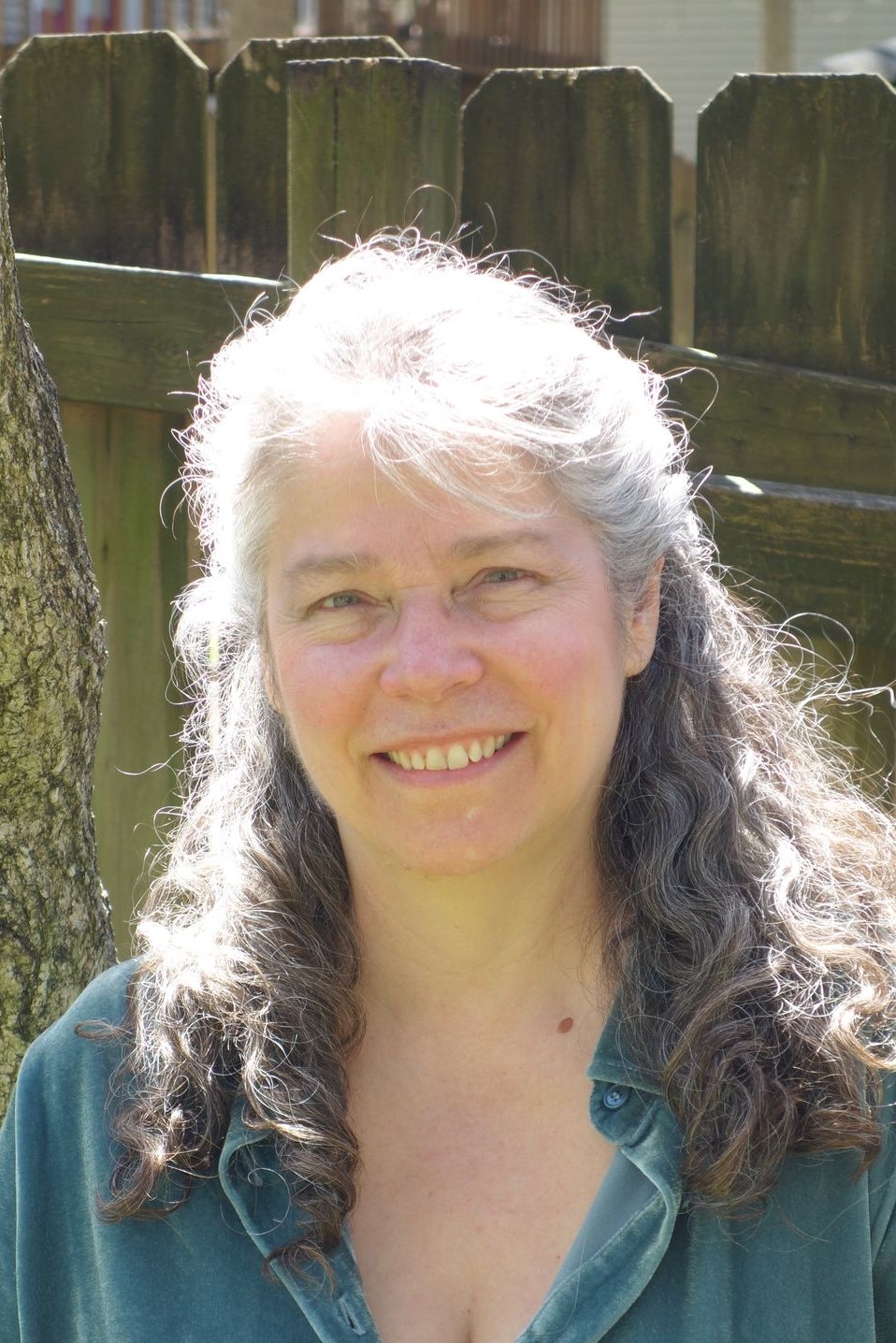
Dr. Tracy E. K’Meyer is a Professor of History at the University of Louisville, specializing in the history of modern U.S. social movements. She earned her PhD at the University of North Carolina at Chapel Hill in 1993 and taught at New Mexico State University for two years before coming to the University of Louisville. She is the author of five books: Interracialism and Christian Community in the Postwar South: The Story of Koinonia Farm(1997); Civil Rights in the Gateway to the South: Louisville, KY, 1945-80 (2009); Freedom on the Border: An Oral History of the Civil Rights Movement in Kentucky (2009), with Catherine Fosl; I Saw it Coming: Worker Narratives of Plant Closings and Job Loss (2010), with Joy Hart; and From Brown to Meredith: The Long Struggle for School Desegregation in Louisville and Jefferson County, KY, 1954-2012 (2013). At the University of Louisville, she has served as Co-Director of the Oral History Center (1995-2017), Chair of the Department of History (2009-2015), and acting director of the Public History Program (2009-2010, 2019-present).

Location: Louisville, KY

Current project: I am completing two book projects in the next couple months: We the People: A Narrative History of the United States, with A. Glenn Crothers; and, To Live Peaceably Together: The American Friends Service Committee and the Open Housing Movement.

Currently reading: Wesley C. Hogan’s brand new On the Freedom Side: How Five Decades of Youth Activists Have Remixed American History from UNC Press.

1. What type(s) of writing do you regularly engage in?

I like to write books. Historians still prioritize the monograph for tenure and promotion, and in the field one’s reputation rests more heavily on books than on articles. But, more than that, I just prefer the long form.

I like the deep immersion and the room to explore rich stories in a narrative as well as persuasive format. Of course, when not working on research, I write lectures, proposals, committee reports, and letters of recommendation.

2. When/where/how do you write?

My best writing is early in the day. I am pretty sure I wrote my entire dissertation before noon. I love writing at home, in my office in the attic, when my kids are at school and I have the place to myself. In a pinch, I can write in my campus office. But, I shut the door to keep distractions and interruptions down.

3. What are your writing necessities—tools, accessories, music, spaces?

Quiet and a big desk. I write on the computer, but I keep a notepad and pen next to me for free writing and “scribbling” down thoughts in preparation for writing. I have my research notes in files on the computer, but I also print out the sections most relevant for what I’m writing that day so I have them for easier reference.

4. What is your best tip for getting started and/or for revision?

I am a big fan of what I call “deep outlining.” I start with the big structure, then the chapter outline, then break that into ever smaller chunks. Often by the time my fingers hit the key pad, I’ve outlined even the individual paragraphs.

This helps me see where I’m going. When I start writing, I’ve already thought through most of what’s going to go on the page. Liberated from having to figure that out, I can have fun with the language and the story.

5. What is the best writing advice you’ve received?

As Professor William Leuchtenberg told me in graduate school, “don’t get it right, get it written.” I’ve taken that to mean many things over the years. First, get something on paper. You are going to rewrite multiple times anyway so just get moving. Don’t worry about making all the sentences pretty. They can be fixed. In fact, fixing them later is half the fun. I think it also means, don’t wait until you think your work is perfect before you show it to someone else. Get it in shape that won’t embarrass you and send it to a friend (or in my case, I’m lucky to have a historian husband who is my first reader for everything).

Finally, I’ve always taken it as an admonition to meet deadlines, even if they are self-imposed ones. When I meet a deadline I feel confident, productive, and energized, and that helps keep the mental juices flowing.


The Rhetoric of Your Dating Profile

Cat Sar, Writing Consultant

Bumble. Tinder. Hinge. Clover. Match. Coffee Meets Bagel

Dating profiles might not come to mind when you think of writing, but even a short blurb about yourself is a type of text. In fact, all parts of a profile on a dating app—basic information about your name, age and location, photos, optional questions, and even the decision to link other social media profiles to your account—are all part of a “text” that can be read and analyzed.

Think of your profile as an argumentative piece. The goal of the argument is to convince someone to engage with you. The type of engagement may depend on the specific platform that you are using. In this case, the evidence that supports your argument consists of all the components of a profile that were previously mentioned. In order to craft a successful dating profile, you’ll need to take into consideration the rhetorical elements involved in writing an argument. Hmm…sounds a lot like your first-year English course?

Let’s break down your “argument” by each part of the profile, starting with basic information: name, age and location. Don’t think that these pull as much weight as your photos? Think of it this way: if you are tempted to fictionalize this portion of your profile—if you are lying about the very base facts about yourself, why should anyone believe that any of your profile is real? The basic information of your profile is the start to building credibility (cough cough ethos). Although online dating and app usage has become extremely popular, we live in the age of catfishing and stranger danger.

Trust is a major factor in dating apps, and in relationships. You should be honest about these facts (and to be honest myself, I shouldn’t have to tell you that). When a house is being built, the foundation is laid first. Everything else is built upon this base. When it comes to dating apps, trust (that the person looks like their pictures, that they are the age that they claim, etc.) is the foundation that you are asking someone to build any interaction upon.

Next, there are the photos. Again, these should be photos of you, and they should be recent photos. Seems obvious. The majority of your photos should be solo shots, or pictures in which it is obvious which person you are. When people are swiping through profiles, they don’t want to have to stop to search for you in every picture. Similar to the importance of clarity in writing, a straightforward visual directs your audience to the point quickly and concisely.

The content of the photos is where the major decisions lie. The photos section of your profile is where emotions arise most readily. For example, when you use a travel picture, you are making the claim that you are adventurous, or at the very least have been on a vacation. A photo of you playing a sport suggests that you are active. A picture of you and a dog? Cue the heart-melt! In this case, a picture is worth a thousand immediate affective responses that will sway your audience to see you in a certain light, depending on what kind of photos you include. Choose wisely.

You’ll be tempted to post your highlight reel—the most interesting photos where you look the best. And you should prioritize the pictures in which you are ~ feeling yourself. But your pictures should also be an accurate representation of who you are. Pathos—emotional appeals (think the involuntary aww that puppies elicit)—are weak without a person’s truth to back it up.

Remember, everything that you include in your app is telling those who view your profile what you think is important in a partner. The (sometimes optional) short answer section is the most direct place in which this occurs. By choosing certain things to include above others, like: are you physically active? what’s your horoscope? ideal first date?, you are showcasing what you consider to be characteristics that will attract a partner, and telling that potential partner what they should find desirable about you.

On one hand, you are saying: these are my most important qualities—the qualities that I believe will draw other’s interests. On the other, you are saying: this is what I find important to advertise on this platform—I am likely to be interested in others who prioritize the same characteristics. The type of language in these responses should reflect your personality and your intention.

Lots of slang, emojis, or typical “text talk” will invoke a different assumption about you than one-word responses, which in turn will have different implications than longer, more poetic answers. (What these assumptions are, as well as their accuracy, will reflect certain biases of your audience. This blog post does not aim to address the consequences of such assumptions, but it would be remiss not to mention that dating apps and profiles are as susceptible to bias and assumption as any in-person interaction.) Basically, your choice of words matters.

Has this blog post ruined the casual ease of swiping through strangers in hopes of finding true love? Maybe. Hopefully it has also helped you to think more deeply about how we go about connecting with others, and offered some clarity about the kinds of arguments we make for ourselves. When we claim that we are able to help with any kind of writing at the University Writing Center, we really mean it.