Tag: writing

Of Course I’m a Writer: How Feedback Helps Shape Writing Identity

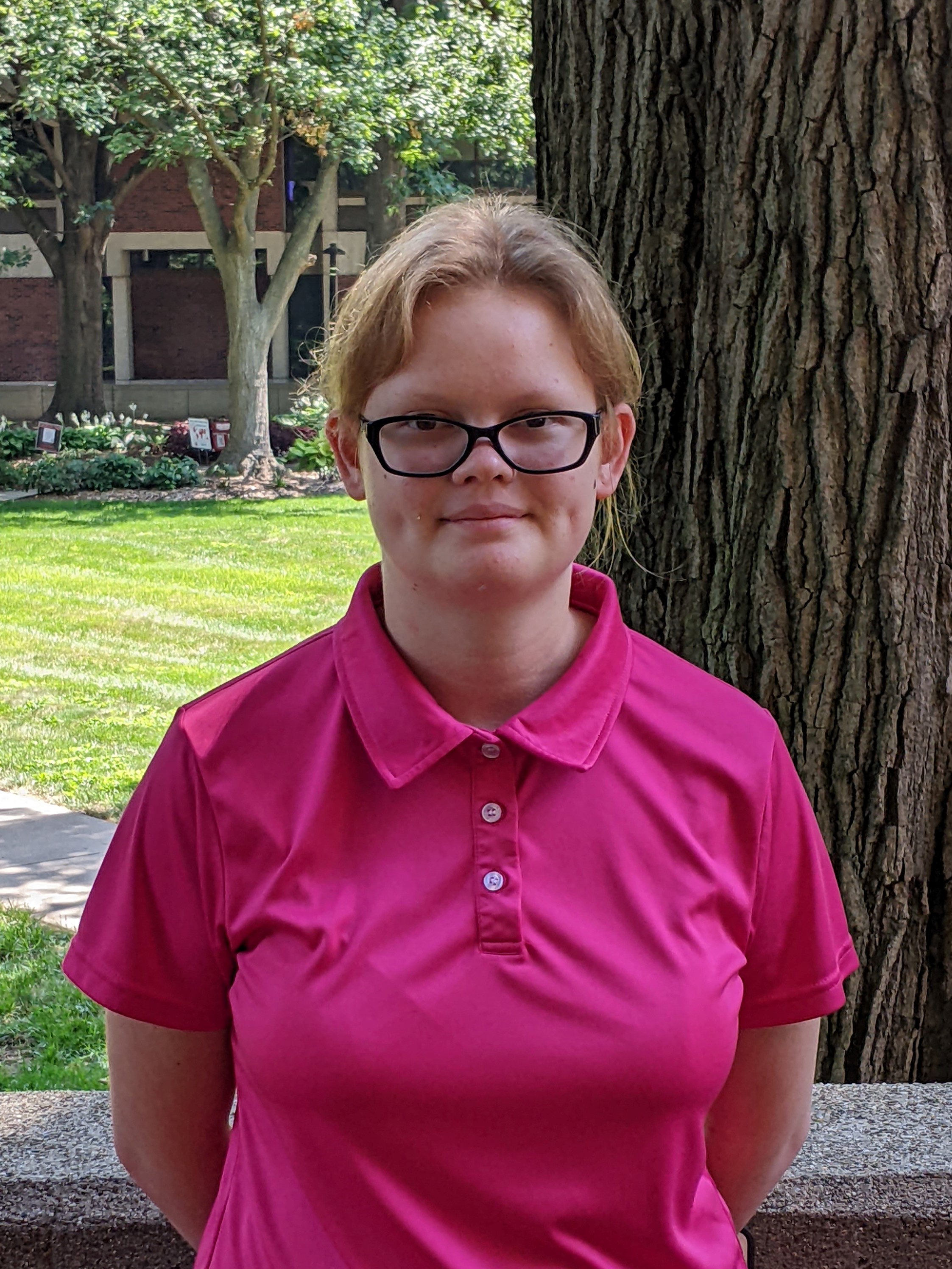
Maddy Decker, Program Assistant, Senior

I always hesitate to call myself a writer despite having wanted to be one since elementary school. It feels like I’m pretending to be something that I’m not, but I am a writer. I write. It’s that simple. Sometimes I just need some help reminding myself of that.

This past summer, I attended a week-long workshop as part of completing the requirements for my Creative Writing MFA. I was excited for the opportunity to get back in a workshop, but a part of me dreaded going. Since my program is low-residency, I was nervous about meeting my classmates and professors face-to-face for the first time. Additionally, the last workshop I had participated in made me a little hesitant about putting my work back out there. I dragged my feet while preparing until I finally speed-wrote two new flash pieces to bring with me, stuffing them into my overcrowded backpack and trying to pretend they didn’t exist.

I arrived at Chateau Lesbian (my friend and her wife refuse to let me call their apartment anything else), rolled my suitcase into the guest room, and then immediately left for my first required event. I was joining the second week of the residency, while most people had also attended the first week. It seemed like everyone already knew each other, and while they were all kind and welcoming, I was still intimidated. How would we work together in class? Would they still seem so nice after we picked apart each other’s stories?

I arrived the next day and tried to stay calm, but my efforts were thwarted when I abruptly remembered that my piece was up first for workshop. I was overwhelmed with concern about how weird and rushed and personal my writing was, but it was time to confront my fears. When prompted, I began reading: “This is called The Salami Kids…”

Workshop. Was. AMAZING! My classmates were generous with their feedback, both praise and criticism, and I loved every minute of it. My pen begged for mercy as I scribbled down notes and ideas for revision. Suddenly, I could see how to take everything a little bit further and tighten up the loose ends. My piece became more than just a page of words I’d thrown together to meet the submission deadline: it had potential, and I wanted to keep working on it. I felt a thousand times better. I felt like a writer.

Working the front desk at the University Writing Center, I often hear from other people who insist that they are not writers. I hear things like “I’m not a writer” or “I’m just doing this for class.” When I hear this, I respond, “Of course you’re a writer. You’re writing in here!” This doesn’t always seem to make a difference, but it’s important to me that I say it anyway.

When you visit the Writing Center, you are a writer, no matter what kind of writing you are working on. This is why you will often hear us refer to you as “writers” rather than clients or students. We want to reinforce the idea that you are someone who writes, and that you are allowed to call yourself a writer. In fact, this is something that we cover at orientation at the beginning of the year, because one of our top priorities is helping you to gain confidence and agency in your writing and your identity as a writer.

I have a BA and an MA in English, and I’m halfway through my Creative Writing MFA. I’ve written countless papers and stories of my own, and I’ve helped with so many more during the three years that I worked as a writing consultant. My work has been published, and I’ve even received awards for a couple of my short stories. When I step back and look at it objectively, it seems obvious to me that I’m a writer, but I still regularly face the fear of using that word for myself.

I share this to show that even someone with years of writing experience is still scared of being a “writer.” This is something that I confront daily, both for myself and with the writers who visit my desk. There is no cure-all, but there are steps you can take to grow your confidence and foster your writing identity. One of the most beneficial things that you can do is share your work with others. This helps you to become more involved with your process, as well as to take ownership of your words. Also, it’s exciting! Thinking out loud in collaboration with feedback from others can be so generative, and you’ll come up with ideas you hadn’t thought of before.

Read your work to your friends, share it with a writing group, or visit one of our consultants at the University Writing Center! We welcome all UofL students, staff, and faculty, and we work with all kinds of writing, at any point in the writing process. I hope that you visit and that when your appointment is over, you leave thinking, Of course I’m a writer!
The Shape of Writing: Halloween and Writing Go Hand-in-Hand

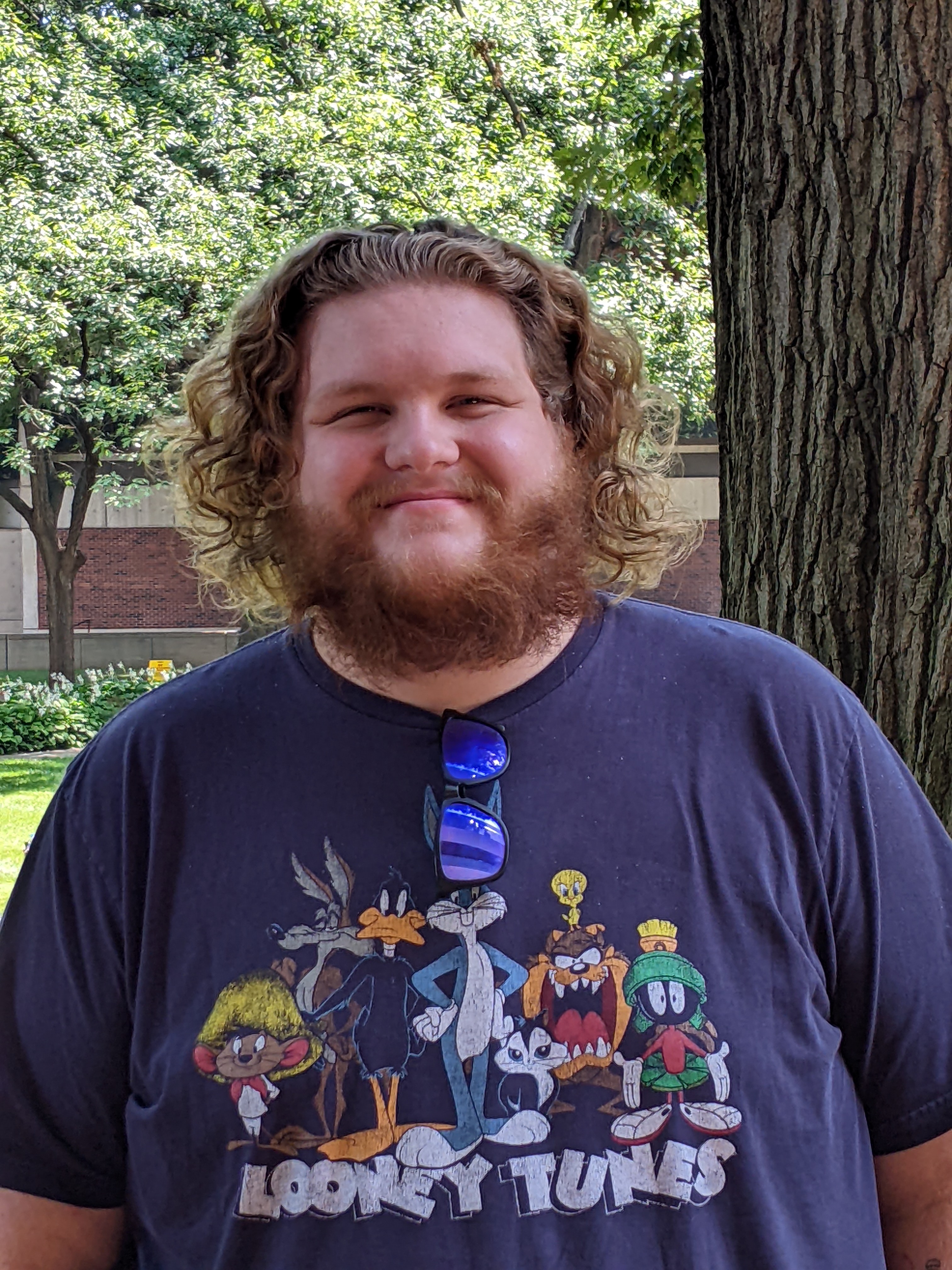
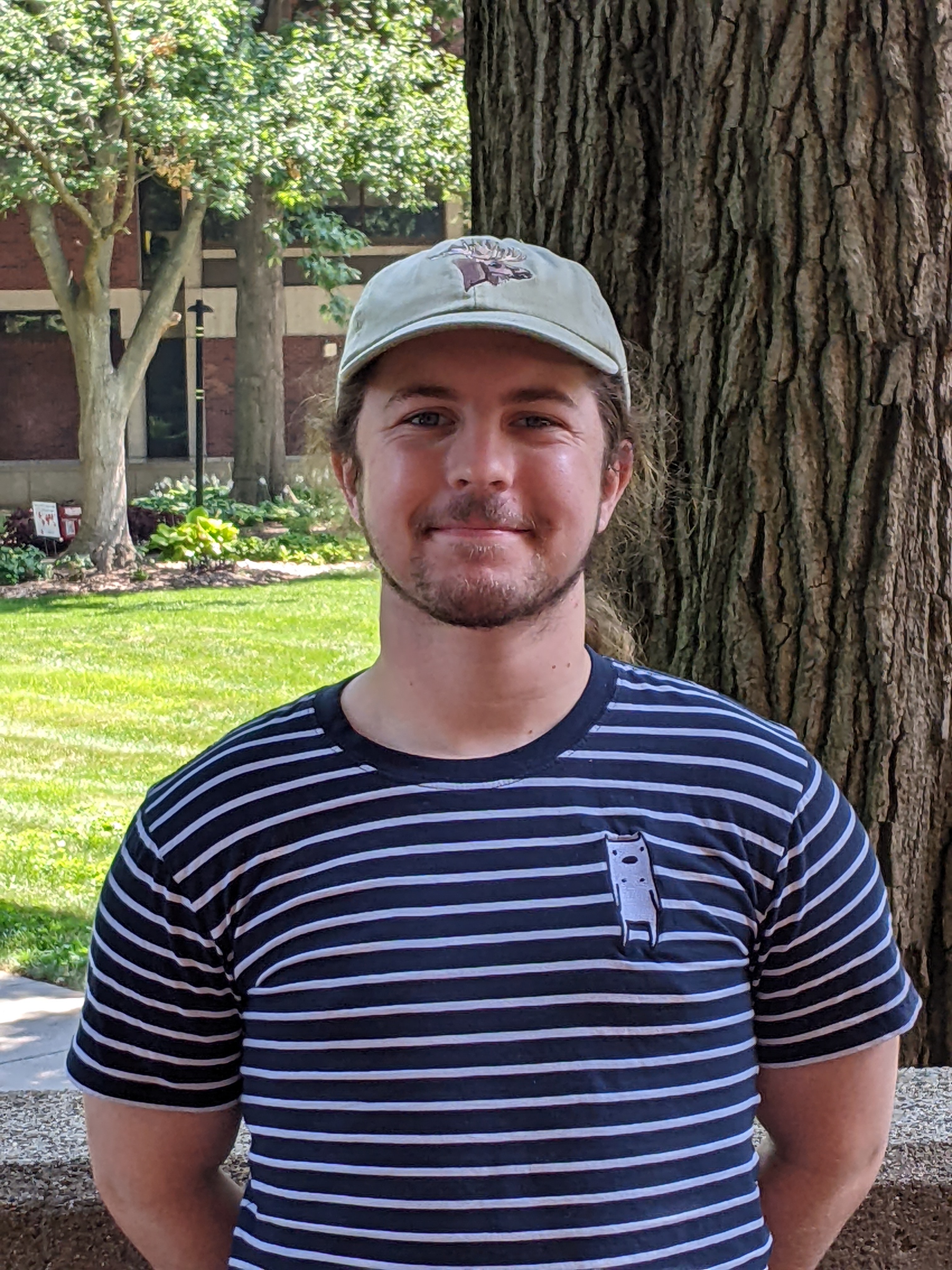
Andrew Messer, Writing Consultant

There was a conversation I had with Dr. Bronwyn Williams, the director of our community of writing consultants, where he told me that all spy movies are literacy narratives. Well, that got me thinking, truly thinking—and this may very well have been the first time I had a truly deep thought in months, coming fresh off of summer break at the time—about what other stories are technically literacy narratives. Some other types of action movies, sure. Superheroes? It’s possible to make that argument. However, fate would grant me a serendipitous revelation just as it was time to write up a blog post of my own. What better day to talk about the literacy of horror movies than today, Halloween? And better yet, is there a more apt movie to talk about than John Carpenter’s Halloween (1978)? I think not.

We find literacy in Carpenter’s film in a variety of ways, most notably in the question of why Michael Myers wears his signature mask. There are a myriad of answers, and one of them is that he is trying to hide. The movie begins with Michael hiding from his sister before he, well… you know what happens. Michael isn’t just hiding his face though: he is hiding his ability to be read. He withholds from both the viewer and the other characters of the film the ability to be read and understood. It takes great effort, strife, horror, as well as some sleuthing for the characters to finally track down Michael from his old home to the killings he gets up to throughout the film. It takes a great deal of intellectual and psychological literacy for the doctor to track Michael across Haddonfield to his showdown with Laurie Strode.

Now, you might be wondering—I know I sure was—what has this to do at all with writing or writing center work. Great question! All of these aspects of literacy shown in Halloween started to remind me of something oddly familiar—the writing process itself. Fellow horror buffs may recall, but in the script for Carpenter’s film, Myers is referred to as the Shape; I think this is an apt metaphor for beginning the writing process, for what is the beginning of a draft but a vague shape? The Shape of drafting can be many things: procrastination, intimidation, a confusing prompt or topic, or even something as scary as a new or unfamiliar genre. The Shape finds a way to haunt all of us when we start the drafting process, and it tries to turn us into Bob if we let it.

Starting a paper is much like the events of this film: scary and disjointed without a lot to keep the threads together. Sometimes the meaning and message remains masked, if you’ll excuse the pun. Sometimes it can be something you feel like running from, avoiding it until the last minute. Sometimes you must be Laurie Strode and—metaphorically, of course—stab at your paper wildly with a knitting needle until something comes out loosely approximating what you are trying to accomplish. Either way, the Shape must be confronted to move forward, and often that is done by looking back on what you have accomplished in the past. Relying on your knowledge and the skills in literacy and writing that you have developed over many years of being a thoughtful and insightful human being.

And insightful you are. You are a writer and a reader all-in-one, and just like Laurie you will figure out what the Shape is. Though you may not always unmask it in the end, and sometimes when you think you have finished a draft the Shape will haunt you still. Yet again, just like Laurie, you are not alone. If need be, let the Writing Center be your Loomis: let us help you uncover the Shape of your writing because there is no need to face it alone. Writing, much like surviving a slasher, is a collaborative process—oftentimes taking much more planning and effort to overcome than previously thought possible. But we are here, and we know the Shape just as you do.

This all makes it seem so horrifying, and perhaps this analogy might scare you away from ever writing again. However, dear reader, if you are anything like me, then you will understand that pit in your stomach when you start to write something new. The Shape looming oppressively near you, watching from the corner and remaining masked and hidden from view. Yet, you must remember to always carry the will of Laurie Strode inside you. Clutch tightly to that knitting needle, cower for a moment if you need to, but in the end we all must face the Shape, and more often than not, we win in the end.

Happy Halloween, and happy writing!

Halloween. Directed by John Carpenter, Compass International Pictures, 1978.

Dr. Strangeword or: How I Learned to Stop Worrying and Love to Write (Allusion)

Wendell Hixson, Writing Consultant

There is no need to be an “expert!” Far too many writers, readers, students, and scholars see writing as requiring the gravest of literary circumstances. Many believe that writing must possess grandiloquence, gravitas, gratitude, grammaticality, and—especially—graftiquilimentiploricissitudinousness (neologism; I trust you’ll look up everything in italics that you don’t know). However, the magical qualities of writing, of your voice lie not in some Ivory Tower, swirling in the minds of some rhetorical warlock or literary lich (alliteration), but at your very fingertips. The unhindered imagination can create entertaining and enjoyable examples of writing without a need for scholarly expertise.

As two francophone thinkers posited, “Literary history seems deliberately to ignore writing as practice, as work, as play” (Thomas and Motte 98). And they’re, frankly, dead on. I live by the mantra that one should have fun with their writing. Fun can be the driving farce (malapropism) behind the most successful research and prose, as fun is usually the best motivator. Sometimes the very essence of rewarding, valuable writing is held not in researched ideas, dense argumentation, or scholarly opinion. Sometimes the very essence of rewarding writing is just having a chuckle at a simple and silly play on words. And sometimes you may end up learning the difference between the endless devices and playful maneuvers found within the English language, and the unique devices within other languages as well.

Perhaps you’ll come across words like (and, yes, these are all real) lipogram, chiasmus, petrosomatoglyph, epizeuxis, bdelygmia, clerihew, butyraceous, syzygy, ekphrasis, bibliobibuli, zeugma, absquatulate, phantasmagoric, lugubriousness, floccinaucinihilipilification, hippopotomonstrosesquipedalian, pneumonoultramicroscopicsilicovolcanoconiosis, and jib. Perhaps you’ll even use them. This is the fun of language: the exploration and wonder of the gift we’ve so luckily evolved. It operates much like a magic, a power with which we can create meaning and reality out of nothingness. Most any sounds, amalgam of letters, and absurd or beautiful stories develop our very understanding of this powerful tool (e.g. The Dictionary of Obscure Sorrows or Gertrude Stein’s Tender Buttons). Language is a boundless, bottomless ocean that we are rarely encouraged to truly navigate. Language can be morphed into humorous contests, such as Monty Python’s Word Association Football or Rosencrantz & Guildenstern’s Questions Game (both of which I recommend watching). Language can be manipulated for the sake of art, such as Edgar Allan Poe’s extended vocabulary or Lewis Carroll’s fantastical prose (read “The Bells” and/or “Jabberwocky”). Language can be invented for the sake of worldbuilding, such as Star Trek’s Klingon or Tolkien’s Middle-earth (which inspired real world uses of these languages). Succinctly, it makes us feel. And that is a power that should be embraced, nurtured, protected, and proliferated.

Now, this is not to advocate for disregarding formal academic writing as a whole. This is not a call to challenge a professor for stifling your creativity. There is a time and a place for pure fun and freedom, and—really—a research paper, a dissertation, or a scientific journal are not always the most appropriate sites for Tolkien’s Elvish or the word “lugubrious.” That’s okay. It can be symbiotic. We language-users still have an obligation and an ability to balance our teaching and communication with our capacity to entertain. Sometimes that means foregoing a pun or poetry (wordplay), but it doesn’t mean foregoing interest in your ideas and how you write them (rhetorical devices). Our world can be a worrisome place that requires our attention, compassion, and power whenever we can lend it. And, hopefully, we can use our voices to mend relationships, to empower those we care about, to stand against and maybe inspire those who feel silenced. To use your voice for good is all one can ask. So, I truly wish that your ongoing adventure through language brings you a greater sense of confidence in yourself, and I hope it also brings an appreciation for how genuinely, innately powerful our voices really are. And that doesn’t mean it’ll ever be perfect. As I said, you don’t need to be an “expert.” You just have to be human.

Thomas, Jean-Jacques and Warren F. Motte join. “Oulipo: A Primer of Potential Literature.” South Atlantic Review 53 (1988): 185.

Indigenous Literatures and Writing Histories

Charlie Ward, Writing Consultant

Land is sacred. It provides us with nourishment and safe keeping: our strongest relationships are born from shared homes, gently rocking us to sleep like a mother and her newborn. We cannot survive without the land; yet, this land has not always been ours.

October 10 is Indigenous Peoples’ Day: an observation and commemoration of Native and Indigenous histories and cultures. This is the second year the United States has officially observed the holiday; however, its creation spans back as far as 1977. The International Conference on Discrimination Against Indigenous Populations in the Americas is attributed with first suggesting its observation to combat the revisionist history presented during Colombus Day celebrations.

Fundamental misunderstandings of Indigenous history permeate the cracks of western academia. Many are unable to identify the cultural nuances of the Indigenous peoples, as well as their influence on writing and literature. Consider your knowledge of Indigenous history: what land is Louisville, Kentucky is on? Are you able to name the tribes of the Anishinaabe? Why do some people use Indigenous versus Native American versus American Indian?

Here are the answers:

1.) Louisville, Kentucky is on Adena, Cherokee, Hopewell, Miami, Osage, Seneca-Iroquois, and Shawnee land.

2.) The Anishinaabeg consist of the Algonquin, Mississaugas, Nipissing, Odawa, Ojibwe, and Potawatomi peoples.

3.) Various names exist for various reasons. American Indian has been reclaimed by many Native and Indigenous peoples. Native American was coined around the 1960s as a response to anti-Indigenous racism. Indigenous considers the origins and the claim to land that Indigenous peoples hold. First Nations, Aboriginal peoples, and Native Canadians may also appear in works regarding discourse around Indigenous peoples of Canada. You may notice that I switch back and forth between my terminology in this piece, but identity is preferential and personal: always ask before you ascribe a label.

How many of these did you all get right—even partially? Western academia has long withheld Indigenous history from us: we are not the first to be required to learn these things in our own time, and we will not be the last.

What does this all have to do with writing? Well, a lot.

As I mentioned previously, Indigenous culture has influenced writing and literature. The oral traditions of many tribes aided in the development of literature as a shared medium. People gathered to share many fictional narratives, characterized by experiences with the metaphysical world and transformative identities; the indulgent details furthered the performance of storytelling. Indigenous myths and legends explored the role of animals, one’s relationship to the earth, and morality. For example, Ababinili And The Humans is a Chickasaw myth about how humans came to be. The first line mentions the “moon, sun, wind, rainbow, thunder, and fire”—they don’t exist as symbolic figures, but instead as characters that propel the plot.

While it was important for generations to pass down oral traditions, colonization hierarchized written works. Settlers found writing to be indicative of a more enlightened people, i.e., a more western-ized people. I think it’s good to note that Indigenous peoples in the United States and Canada experienced colonialism differently; my historical account is simplified, but it’s necessary to understand that tradition was influenced by outside pressures. In addition, settlers imposed barriers to publishing for Indigenous authors—barriers that Indigenous authors broke and continue to combat today.

Looking at the historical development of writing and literature can aid us in our understanding of the current climate. For Indigenous peoples, writing and oral tradition were both a form of resistance. Writing combated settler’s notions of civilization, revealing rich cultural narratives; oral tradition built the foundation of writing, as well as uniting community and family. I think miseducation can prevent us from viewing Indigenous history as something innate to the development of literature—Indigenous cultures have existed longer than we know, therefore it’s right to assume that they have an influence on the way we write.

Colonialism’s desire to view Indigenous culture as anything beyond uncivilized pervades in modern discourses: we turn ourselves away from oral communication and struggle to acknowledge its importance in cultivating ideas and identity. Talking builds communities, unites enemies, and keeps us mentally sound. What’s better than discussing your ideas with a friend before writing them down?

We see imagery from Indigenous literature in contemporary narratives: heroes, villains, and moral quandaries are more popular than ever! Indigenous writing isn’t just mythological tales, but shared discourses. There There by Tommy Orange, The Plague of Doves by Louise Erdrich, and Where the Dead Sit Talking by Brandon Hobson all explore ideas of community and identity; they’re read by audiences world-wide, and well worth a read.

When teaching in the writing center, I think it’s important to keep the historical and cultural identities of our students in mind. The priorities of western academia aren’t always going to be the priorities of writer’s—and that’s fine! We should also be looking at the influences of non-western and non-white people on writing: we owe a lot of respect and recognition.


Bibliography

“Ababinili and the Humans.” Accessed October 7, 2022. https://www.firstpeople.us/FP-Html-Legends/Ababinili_And_The_Humans-Chickasaw.html. “Indigenous Writing since 1867: Once Neglected Now Celebrated.” Indigenous Writing since 1867: Once Neglected Now Celebrated – Indigenous Studies – Simon Fraser University.

Put Your Heart in It: Creative Writing’s Place in an Academic Space

Liz Soule, Assistant director

After a two-year break from creative writing, I stumbled my way back into it through fan fiction this past March. Although I would never judge another writer for finding inspiration in fan works, I confess feeling a bit ashamed by my own admission. Halfway through a 2,000 word story exploring a deeply emotional conflict between two characters that were not my own creation, I started to wonder: shouldn’t my time be taken up by more intellectual pursuits? I could have been reading for a class or starting a paper. Wasn’t this a waste of precious time and mental energy?

Whether you’re writing that crossover fanfic you’ve had percolating in your brain for the past six months or even something more traditional, I am sure that you, too, have wondered where your creative writing endeavors fit in within the grand scheme of your academic journey. In an academic culture that focuses so intently on making the grade, it is hard to see the benefits of any pursuit that does not result in some kind of marked increase in your GPA.

But if writing pedagogy tells us anything, it is that writing processes extend far beyond the context of one assignment, genre, or even discipline. Academic writing and creative writing doubtlessly have a symbiotic relationship. But what does this look like? How can we rationalize our continued pursuit of creative writing?

Hoping to learn more about this, I spoke with two of my colleagues at the University Writing Center, Maddy Decker and Andrew Messer. Maddy serves as the senior program assistant in the University Writing Center, and is pursuing an MFA in creative writing at Eastern Kentucky University. She also leads the creative writing group! Andrew is a writing consultant, and is pursuing an MA in English at the University of Louisville. Both are prolific creative writers! In brief interviews, I asked them how creative writing and academic writing have interacted for them.

For Andrew, writing creatively has revealed new ways to express himself across the board. “Creative writing helped me find a voice,” he explained. That voice carries through to his academic assignments, allowing him room to creatively approach essays and apply his unique style to many different kinds of writing. He intentionally practices this, developing creative ways to complete assignments each time he gets one.

Similarly, Maddy describes creative writing as granting her “a little bit more flexibility.” Like Andrew, she doesn’t feel locked into a particular formula when it comes to academic writing. Rather, the perspective she’s gleaned through creative writing gives her “a different idea of what forms academic writing can take.” She also brings her own stylistic flare to her academic work through the use of heightened figurative language.

Likewise, the two have found that academic writing can influence their creative processes. Andrew’s experiences with writing academically, particularly in composition courses, made him become much more aware of the role of audience in any piece of writing. “I became a lot more aware of the external audience and now try to be cognizant that people are going to read it and they need to understand,” he said. When it comes to creative writing, this means making what is implicit more explicit.

Speaking on the influence of academic courses in her creative writing, Maddy said: “They feed each other a lot.” She has used the material from courses, such as a forensic anthropology course, to create new content. Some of her current projects stem from past courses she took during her undergraduate career.

Andrew and Maddy aren’t alone in feeling this way. For me, I have found that creative writing helps me gain momentum. I put aside my perfectionism to write silly stories about characters, and it remains suspended as I transition into other activities. Starting an assignment is always a struggle for me, but when I begin with creative writing, I feel like the words fly out of my fingers and onto the page. And, perhaps more importantly, my experiences with creative writing have taught me to be open to revision. I know that I can (and should) write, rewrite, and rewrite again.

In closing out our interviews, I asked both Andrew and Maddy to share any words of wisdom they had for maintaining creative writing endeavors while in school. After all, even if you know the benefits of writing creatively, it can be hard to make the space for it.

Andrew recommended taking literature courses, if possible, because “you’ve gotta read for those courses, so you’re still expanding your repertoire.” He also shared a nugget of wisdom from his creative writing professors: “If you wanna write, then read!”

Maddy insisted that writers make time for creative writing, even if it’s in small ways. She advocated for writing whatever comes to you. “Having that interest stay alive is the priority. Just make sure your heart is still in it,” she said.

I hope that you find validation in what we’ve shared here today. Know that if you’re ever in doubt of the place your creative writing has within your process or program, here at the University Writing Center, we are happy to help you build those connections and find your flow.

Interested in writing creatively? Join us at the Creative Writing Group, led by Maddy! Meetings are held in person in the University Writing Center (Ekstrom 132) from 5:30 – 7pm on the following Mondays:

October 10th

November 14th

December 5th

For more information, please email us at writing@louisville.edu or call us at 502-852-2173.

Rewriting How We Think About the Writing Center Experience

Katie Frische, Writing Consultant

Imagine that one English teacher back in your school days that everyone always affectionately called Mrs. Red Pen. I bet this brings you back to some fun moments of dropping your paper on the desk of the teacher and walking out as she starts to work her magic with that red pen, and you can’t help but feel a little bit bitter as that was your hard work. It’s this Mrs. Red Pen that we all seem to have in our memories, be they good or bad, which has led us to think that our college University Writing Center is the same way: full of Mr. And Mrs. Pens.


However, as one who works currently in a writing center, I have to say this stereotype is a little bit silly, and I can promise that you won’t find a red pen in sight of our writing center. In fact, marking with a red pen is often known as editing, which takes away ownership from the writer’s work and puts control into the hand of the editor, which is always frustrating. This frustration isn’t something you will find in the smiling faces of the consultants within a writing center as they help you learn how to become better writers by tossing away the old idea of editing.


Within our writing center, you are the one who gets to take control of where your story goes, of what you think needs changing in your work, and we are always here to help suggest strategies that will turn your first draft into a final draft. While we are not miracle workers, and it’s always best to bring your writing in early, we are always happy to work with anyone who needs help with their writing, be it personal such as poems, creative writing, or an academic paper that is just putting you through the wringer. These are all things a writing center can help you with because ultimately, we are here for you. The true purpose of the writing center is to be there for the campus community as both a guide for writing and as a friendly face to help you take on the college experience.


It’s this idea of a friendly face, one of your peers, that makes the writing center what it is and what it is not: the growling old teacher voice of Mrs. Red Pen back from your school days. I promise you we are not here to relive your old haunts but to share a few of our own stories of Mrs. Red Pens and help you to take your voice to the next level through writing. Your voice is important, and our goal at the University Writing Center is to make that voice heard through your work so that people can better understand what you value. As people begin to understand you through your writing, you will find that this opens up a lot of opportunities for you. Written communication is of the essence, and developing that within a cheerful space is why I encourage everyone to visit a writing center.


And while I know there are many opinions about what goes on in a writing center, I must tell you the “red pen experience” is one that most of us don’t want to relive. We want to see a smiling face greet us upon opening that door on the way to becoming better writers. As such, I encourage you to think positively about the writing center experience and realize that we are always going to be here for you.

Always reflecting,
Consultant Katie Fritsche

That’s All She Wrote

Braydon Dungan, Writing Consultant

We write to forge and connect the thoughts we can’t seem to verbalize aloud. We write to shield ourselves from the stinging winds that exists in our minds. We write to thrive in a world different from ours, a world controlled by the fingers that eagerly smack into the different squares on our keyboard. Yet, possibly most importantly, we write to bring attention to issues we view as unjust and unsatisfactory. Political and social engagement isn’t solely attained through protests and marches; in fact, one of the easiest and most impactful ways a concerned citizen can make their voice heard is through a medium with no audible voice at all: writing.

One area of life I am especially interested in is women’s sports, specifically women’s soccer. The United States Women’s National Soccer Team (USWNT) has consistently been ranked as the number one team in the world for many years now. Not only that, but they’ve also been the winners of the 2015 and 2019 Women’s World Cup. Compared to their male counterparts, who have never won a World Cup, the women have exceeded expectations year after year to continue their reign as the queens of women’s soccer.

However, despite their continued dominance, the women have been severely underpaid compared to the men. Despite support from millions of Americans, including United States President Joe Biden, U.S. Soccer continually denied the women’s claim to equal pay, and even took the women to federal court in an effort to settle the dispute once and for all

One of the most effective ways the U.S. women garnered worldwide support in their fight, aside from their multitude of impressive performances they displayed, was a public letter to the U.S. Soccer Federation in response to a letter from former U.S. Soccer President Carlos Cordeiro. In this response, the USWNT tackled the untrue claims spewed by the federation and publicly announced their support for a new presidential candidate, Cindy Parlow Cone. In this letter, the USWNT utilized language that was firm, confident, and demanding of respect. Although women in our society are expected to be docile, socially submissive, and unaggressive, the letter from the USWNT showed their prowess and their desire to achieve equal pay. By publicly stating their discontent with the U.S. Soccer President, and instead announcing their support for a female candidate, they secured a big boost in morale in the fight for equal pay.

After the votes were tallied for the U.S. Soccer Presidential Election, the results indicated that Cindy Parlow Cone would replace Mr. Cordeiro as the presiding official of soccer in America. Just six months after the letter was released to the public, the USWNT were finally given what they’ve deserved for many years now. After years of mediation and negotiating, the U.S. Soccer Federation and the newly appointed President agreed to sign a collective bargaining agreement (CBA) with the USWNT to ensure equal pay for both American male and female national team players. After the USWNT’s game against Nigeria on September 6TH, the Federation and the women’s team signed the CBA in front of thousands of fans who cheered and chanted along with the players.

The letter the USWNT wrote to publicly take a stance on the issue of equal pay was a defining moment for women’s sports around the world. In response to the USWNT, many European teams also sent letters to their federations demanding equal pay. Following in line with the U.S., nations such as Norway, Germany, the Netherlands, and more demanded in writing that they be paid the same as their male counterparts. Instead of negotiating behind-the-scenes, these women publicly announced their discontent, further gaining support from fans around the world.

By writing these letters in a demanding, assertive tone, the women have been successful in voicing their opinions and forcing responses from their federations. Finally, after many years of fighting, the U.S. Women have finally secured what they’ve deserved since the beginning of the USWNT: equality. The question, now, shifts to something else: why did it take this long to achieve equal pay? We’ve seen the power of writing to force those in power to make important decisions. Writing allows us to take the time to methodically select the words that carry the most power while organizing the structure to best illustrate the issues at hand. Women, specifically, have been expected to remain complacent for centuries; let us all learn from the tenacity of the USWNT and recognize the power behind writing to achieve equality for all.

Morgan, Alex. “USWNT Endorsement of Cindy Parlow Cone.” Twitter, USWNT, 4 Mar. 2022, https://twitter.com/alexmorgan13/status/1499880750224535553.

It’s All About the Conversations in the Writing Center – Looking to the Year Ahead

Bronwyn T. Williams, Director

Those of us in colleges and universities often feel like the energy and anticipation of starting a new year happens every August, rather than in January. We draw up new plans for the year ahead, make hopeful resolutions, and take part in the rituals, both formal and informal, that mark new beginnings. At the University Writing Center one of our important, and always energizing, rituals takes place when the new group of consultants show up for the coming academic year. This past Thursday we all met as a group for the first time at the our orientation. That day we began the conversations, that will continue throughout the year, about how best to support the writing of all members of the UofL community. Central to our values and practices are seeing our work with writers as helping them strengthen the drafts they bring to an appointment, but also to offer strategies and advice to help them be stronger, more confident writers in the future.

University Writing Center Consultants – 2022-23

The best way to support writers and strengthen their drafts, writing processes, and skills, is to engage in collaborative conversations. We’re excited to be able to have our schedule available again for in-person appointments. Both my experience as a writing teacher, and research in writing studies, make it clear that the best way to help a person improve as a writer is through dialogue. In our appointments, writers tell us their concerns about their drafts, we tell them what we see as strengths and areas of concern, and then we have a conversation about different strategies available to improve their drafts. Throughout our appointments there is time for both writers and consultants to to be able to ask questions and explore new ideas. Through listening to writers and asking questions, we can help them discover for themselves how best to improve their writing. These in-person conversations are collaborative and energizing for everyone involved, and they are what make writing center work so rewarding for those of us who do it. The realities of the COVID-19 pandemic have meant that many people in the UofL community have not had the experience of an in-person consultation, but I hope people will give it a try this fall and see what a difference such a conversation can make in terms of their writing, now and in the future.

We are, as always, committed to work with any writing, with any member of the UofL community, at any point in the writing process. People are welcome to come in and brainstorm ideas about how to respond to an assignment, or bring in a draft to develop strategies for revision. For all writers, our work will continue to be grounded in an ethic that draws from principles of hospitality, service, care, empathy, patience, and respect. We are also always committed to be a safe, inclusive, and equitable space for all writers on campus. It’s these principles that help consultants and students work together to create more effective, critical, and creative writing.

We also continue our work to create and support a culture of writing on campus. We will continue to facilitate our writing groups (Graduate Student and Faculty Writing Group, Creative Writing Group, and LGBQ+ Writing Group), hold writing-focused events such as readings and open mic nights, and work with our community partners on our community writing projects. And we will continue to have more ideas about writing in this blog and well as on our social media feeds (Instagram, Twitter, Facebook, and YouTube).

On Monday morning, we will begin to a new year of working with writers to make their writing stronger. Those Monday appointments will be the first of thousands we will hold in the year to come. We’re excited about sharing the journey ahead with all of you as we all work to being a positive focus and force for all the writing, in all its many forms, that takes place in this university community.

Positive Vibrations

Tobias Lee, PhD Candidate and Writing Consultant

One of the things I love about working in the University Writing Center is the exposure I get to so much fascinating and important work.  I’ve read about entrepreneurship among Rohingya refugees, the impact of sexual health on longevity, green building practices in sports venues, what Afrofuturism tells us about our history….  Pardon my childlike gushing, but it’s so cool!  This is why I love academia.  People are creating knowledge here!  Aaaand that leads me to what I’ve been writing about.  Yep, knowledge.

What, really, does it mean to create new knowledge?  What is knowledge?  Wait!  Don’t go away yet!  I promise, it’ll be interesting.  I won’t put you to sleep.  Well I might… but you’ve been needing to catch up on sleep, haven’t you?  Knowledge… well, let’s begin with a bromide: they say “knowledge is power.”  Get the knowledge, then you’ll have power.  Go to school, learn some stuff, and now you’re Captain America.  We all want to feel powerful.  Nobody’s angling to be powerless.  Well yes maybe but…  But let’s think this through a bit.  Power is the ability to do something, it’s potential.  You learn some stuff to empower yourself to do things.  But it won’t mean much if you don’t actually ever do.  So it’s the doing that matters.  You might “know” some things, but it’s what that does, it’s how that shapes your behavior and creates material effects in the world, that has any importance or value.  You might know what the capital of Georgia is or how to juggle five balls, but unless and until that brings you glory at your local pub quiz or impresses everybody at the party including that certain someone, it’s uh, purely academic.  It’s just information, neutral and inert, until its usage has material effects.  And the imperfect predictability of these results and the results of those results and of everything is what elevates knowledge over information.  

So maybe the phrase, “knowledge is power,” while pithy, doesn’t quite get us there.  A focus on material effects, on application, urges us toward a different understanding of knowledge.  I think Wanda Orlikowski (2002, 2006) gets it right when she talks about knowledge as practice.  Ah.  So it’s doing something.  It’s in the doing.  Knowing about car engines versus actually getting that car right there to run again.  Knowing physics versus actually getting someone to the moon.  

Orlikowski elaborates.  “Know-how” is a capability generated through action.  And this requires repeated actions.  These sustain the “know-how” while also, of course, adapting it, improving it, expanding it, in some way changing it.  So the idea that knowledge is some inert, stable thing or repository of things is an illusion.  It looks that way because we keep repeating it.  It’s a bit like how a movie looks real because our mind does that little trick of stitching all those individual images together into a fluid whole.  Except in this case the individual images are events, actions, each very similar yet slightly different from the last.  Or it’s like how an insect wing looks like it’s not moving but is actually flapping a zillion times a second.  Just remember that the wing itself is not stable either.  It’s also changing, growing, aging.  Did you know that trees vibrate?  Knowledge, then, is like a tree, always changing, or okay but really more accurately, knowledge, as practice, is change.  There is nor was there ever no stable thing that then changes slightly.  It’s always changing.  Indeed, this is how we know change, and recognizing change is how we mark time, and for that matter, space.  How you like them apples?  But let’s not bite off more than we can chew in one blog post…

What does this mean for knowing how to write?  That’s what you tuned in for, right?  I thought knowing how to write was, basically, you know, learning some vocabulary and nailing down the grammatical rules.  That would be nice.  Then it’d be a simple matter of collect all twelve!  Buy the Happy Meal, get the toy, put it on your shelf, repeat.  Trade them with your friends.  Trade them for money!  But surely thou didst know that language changeth over time and space.  Aye, ’tis ne’er so stable a thing as me lord thus willeth thou what okay nevermind.  No it doesn’t work that way.  The rules are mere conventions, and dig a little and you’ll find considerable disagreement about and variation even within those conventions.  Word meanings are always changing (read the etymology of your favorite word on the OED or spend five minutes browsing the Urban Dictionary), sustained through practice and but also thereby always changing.  This isn’t a movie, no nice tidy plots.  Knowing how to write, like all knowing, is an “ongoing social accomplishment, constituted and reconstituted in everyday practice” (Orlikowski, 2002, p252).  

So when you’re learning to write (or more accurately, when you’re writing), you’re participating in and contributing to the way things are (more accurately, appear to be) for a given context (or to be fancy, discourse community), such as your discipline.  An interesting little thought exercise, no?  It calls into question all sorts of things that we take for granted, and it’s massively inconvenient.  It gums up the works.  How do we know what’s right any more?  Goodness me.  But on the other hand and at the very least, it also means you should stop berating yourself, if indeed you were.  That whole impostor syndrome.  That anxiety.  That feeling of inferiority.  You can dial that back a bit.  You’re not “bad at writing” and they are not always and everywhere good at it.  You’re joining a community (such a nice-sounding word), and that community has a way of doing things.  They’re a bit anxious to keep it that way ’cause it seems to work, to produce some desirable results.  But it is nevertheless changing, a living thing, and it lives, in part, because of you.  


References

Orlikowski, W. (2002). Knowing in practice: Enacting a collective capability in distributed organizing. Organization Science, 13(3), 249-273.


Orlikowski, W. (2006). Material knowing: The scaffolding of human knowledgeability. European Journal of Information Systems, 15, 460-466.

Listening to Learn: Tutoring Unfamiliar Writing Genres

Olalekan Adepoju, Assistant Director for Graduate Student Writing

“The job of writing centers is to produce better writers, not better writing.” This assertion by Stephen North is, surely, a familiar maxim to most writing center practitioners. But, has anyone also considered how writers can help writing centers produce better tutors? I believe the goal of every tutor is to develop their tutoring skill using every available means; that is why I think, as consultants, by listening to learn from writers, especially those writing in genres we are unfamiliar with, we have the unique opportunity develop our tutoring skills.

Listening is paramount to the tutorial work we do in the writing center. Generally, the tutor tends to listen to several things during tutoring session: you passively listening to your inner thoughts about the draft and, more importantly, listening to the writer’s comments or questions. Moreover, writing center scholars and practitioners admit that listening is essential to achieving an efficient tutoring in the writing center. They submit that listening is not only a means of developing a tutor’s understanding of the current session but also a means for working from, with, and across differences, becoming increasingly aware of those differences rather than flattening or ignoring them. This submission means that listening is a tool for making tutors become better at their tutoring craft. Hence, tutors interested in advancing their craft must be open and willing to listen to learn (from the writers) specific ways to develop their level of awareness.

In listening to learn, we move beyond attempting to adjust our knowledge of the generic needs of writers, especially when dealing with unfamiliar writing genre, to learning to become more aware of this unfamiliar writing genre in efforts to achieve a successful tutoring session. Listening to learn does not entail knowing (or pretending to know) about the subject matter. Rather, listening to learn helps the tutor to achieve meaningful awareness of subject matter necessary for some sense of comfort during the session. Such subject matter awareness would, for instance, help to clear up certain confusions; move past genre-specific jargons and develop interpretive questions, thereby ensuring that the goals of the tutoring session are efficiently met.

In my work with science writers, for example, I continue to practice the ‘listen-to-learn’ approach because I want to be more aware of the means to navigate the seemingly unfamiliar writing genre. From these writers, I have learned ways to not only guide them effectively during their session but also become a better tutor for future work with scientific or related writing genre. For instance, one of the science writers I work with always provides an overview of their essay using visual aids such as diagrams. My sense is that the writer assumes I’m not a specialist in science-related concepts and describing their work in abstract terms might confuse me, and indirectly lead to a tutoring breakdown. So, to make me aware of the subject matter of their writing project, the writer explained concepts to me with the aid of diagrams. While they do not expect me to become knowledgeable of the topic, by listening to the writer’s explanatory context, this subject-matter awareness afforded me a good level of confidence to meaningfully engage the writer and their writing. Additionally, beyond subject-matter awareness, tutors can also become better tutors by being learning to be interculturally aware, especially when working with multilingual writers. Intercultural awareness helps the tutor become more sensitive to processes, situated contexts, and particular situations that influence what and how a writer writes.

Ultimately, while our goal as writing tutors is to utilize every available strategy to help writers hone their writing ability and become better writers, we should not disregard how writers can make us better tutors. As we prioritize listening to learn about the subject matter of the writer’s writing project or non-writing related information the writer willingly shares with us, we generally become more aware of the best means to approach these seemingly unfamiliar genres of writing.