Tag: writing

Growing as Writers through Journaling

Jeremy Dunn, Consultantjeremy-d

Now and then writers I work with in the Writing Center ask me if I know of any tips to help them improve their writing. I find that offering cogent suggestions isn’t always easy. Perhaps part of my difficulty in offering “easy” tips to improve writing lies in the glacial rate at which my own writing seems to progress, and it’s difficult to imagine easy fixes for the challenges we face as growing writers. Still, it’s important to acknowledge the desires of writers (myself included) who earnestly want to know what they can do outside of things like going to the Writing Center to help them develop their craft. So, here goes my attempt at mustering a nugget of writing advice: First, if possible, allow yourself to let go of the anxiety to “improve” your writing. Second, keep a journal. In this post, I’ll try to explain my reasoning for these suggestions.

We seem to live in a goal-oriented age full of sensationalized bullet lists for self-improvement. For example:

  • Seven steps to lose 30 pounds in 30 days
  • 10 habits of highly successful people
  • Three ways to live a longer, healthier life
  • 17.6632173333333 quick tips to becoming a smarter, stronger, better looking, wealthier, more well-liked human being

Jeez.

I resist trying to make writing advice fit this mold. While I think we can take measures to improve our writing, I’m afraid the goal of simply “being better” at writing sometimes eclipses the importance of writing itself.

But in the university, where students often equate writing with assessment, a goal-oriented approach to writing seems nearly unavoidable, perhaps even natural. I often hear things like “I want/need an ‘A’ on this paper” from writers I work with. To be honest, I think the same thing while writing my own papers, even as I tell myself grades aren’t the point of writing. As writers in the university, we are writing in what we perceive as high-stakes environments where, for better or worse, assessments and credential-getting come into play. We value GPAs as means to keep scholarships, advance professionally, and measure our performance. However, I would like to suggest that by writing in situations where we can suspend quantifiable goals, we might give ourselves a better opportunity to grow as writers at a more organic pace.

Give up goals of becoming better to become better? How does this work? While my suggestion is admittedly based on personal experience rather than extensive research, I will venture to defend my suggestion by showing what writing in a journal—a venue divorced from assessment—has done to help me progress as a writer.

I’ve kept a journal, writing with varying degrees of regularity, for years. Outside of required writing for school or the odd freelance job, journaling represents my most consistent writing and has generally been the writing I’ve enjoyed the most. Over the years, keeping a journal has given me the chance to write about whatever I’ve felt like writing about, free from the pressure of formality or worrying about an audience. My entries tend to be pretty mundane, often just recordings of a day’s events, but I think writing routine journal entries has helped me become a better writer over time. To explain my thinking here, I’ll try to draw an analogy between writing in my journal and playing soccer. There’s a connection eventually, I promise.

Growing up, I loved to play soccer. I spent hours each week in the backyard kicking the soccer ball around. These hours were unstructured time spent doing something I liked to do. I had no clear goal and generally was not consciously striving to get better, but as successive soccer seasons rolled by, I began to see that my time spent playing soccer in the backyard was helping me become a fundamentally better player in organized games.

When I think about the journaling I’ve done over the years, it occurs to me that in many ways my journaling parallels my time playing soccer in the backyard. I started writing in my journal simply because I sometimes felt like writing something down. Beyond that, I had no real goal. For instance, I might take an evening walk, and there would be something special about the walk—something in the cool air, the way the sun sank behind a nearby ridge, some memory that came to me as I experienced everything—that would make me want to write about the moment, that would inspire me to try to find the best words I could to describe the experience. I might return home and write a short journal entry about the walk, not as a conscious exercise in writing, but as an attempt to pen down an experience I wanted to remember. Writing would, I hoped, help me find the words to do some glimmer of justice to the experience. Trying to write about various events in my life in short journal entries turned out to be a fair amount of writing practice and helped me become more comfortable with writing in general.

Journaling hasn’t turned me into Shakespeare, but the practice has helped me grow little by little as a writer over time. My journal is a place where I’ve tried on different hats as a writer, a place where I’ve recorded funny episodes, random thoughts, or events from perfectly unremarkable days spent working and running errands. I’ve written through times of happiness, melancholy, frustration, and transition. I’ve written simply to write. Free from the fear of assessment or judgment, I’ve experimented and played with writing for years outside of any formal writing assignments.

As we continue to negotiate new genres, assignments, and challenges in academic settings, perhaps something as simple as journaling at night before bed could go a long way toward making us more practiced writers. Journaling offers us the chance to get to know our own voices a little better and, just maybe, can make us a little savvier in our writing when we meet the next writing project coming down the road.
Finding the Time to Write

Ashley Taylor, ConsultantAshley T

One of my favorite questions to ask writers out in the world is:

“When do you find time to write?”

Out of the various answers, whether creative or academic, ultimately the collective response in the midst of a busy life is to schedule time to write. However, you can’t stop your third shift manual labor job and say “hold on, I have to finish this paragraph real quick” or tell your 5 month old baby “I need this time to myself, sorry.” The world doesn’t stop for writing assignments.

Students live busy lives and learn to balance their schedules between academic, work, and personal life. But writing can be a monster when put under pressure, which can cause writers to put off an assignment, feel overwhelmed by the writing process, or feel as if they have to make sacrifices in the other areas of their life just to tackle the next rhetorical essay, research proposal, or short story.

A polished draft is not required to make an appointment with the us. You can make up to three sessions in the same week and we help through all stages of the writing process. My absolute favorite appointments are when we brainstorm and plan because in those sessions, writing feels approachable, manageable, and a little less scary.

When I hear that the key to finding time to write is to schedule it, it seems as if that means on my own. Schedule alone time, to write alone, to tackle writing alone. But that’s not the case. You are most certainly not alone in having a busy life and even when writing alone, there’s an audience involved as a silent party. Sharing your writing through all the stages of the process helps to foster the idea that writing is most certainly a social act. Reach out. Schedule time with others.

Here are just a few resources that can be helpful in this process:

In the University  Writing Center alone we have consultants who are a parent-to-be, a new parent for the first time, a new parent for the second time, a parent with two children entering grade school, and a parent with three teens. We have consultants who are planning weddings and starting internships. Many of our consultants are graduate students in our first year of the master’s program and PhD candidates taking steps toward building careers. We are students with writing assignments in the midst of busy personal lives and we know the value of reaching out.

Have compassion for yourself.

We are a resource for you.

How I Write: Nancy Gall-Clayton

Our “How I Write” series asks writers from the University of Louisville community and beyond to respond to five questions that provide insight into their writing processes and offer advice to other writers. Through this series, we promote the idea that learning to write is an ongoing, life-long process and that all writers, from first-year students to career professionals, benefit from discussing and collaborating on their work with thoughtful and respectful readers.

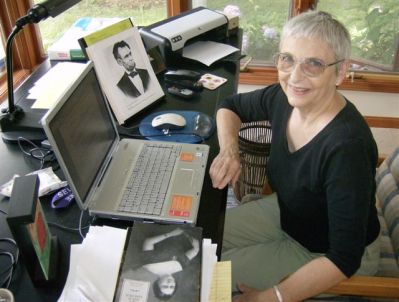
Nancy Gall-Clayton is a local playwright. She has written over 75 plays, and her work has been performed on stages in Louisville and around the world. To see more about her work and interests visit http://www.nancygallclayton.net/    gall-clayton-at-work

Location:
 Just across the Ohio River in Jeffersonville, Indiana (after 40 years in Old Louisville!).

Current project: A full-length play about Dr. Mary Edwards Walker (1832-1919), commissioned by Looking for Lilith Women’s Theatre Company to be produced in July 2017 at the Clifton Center.

Currently reading: The Castle Cross The Magnet Carter, first novel by playwright Kia Corthron; Gilgamesh, A Verse Play by Yusef Komunyakaa, and The Dramatist, bimonthly magazine of the Dramatists Guild.

What type(s) of writing do you regularly engage in?

I write full-length plays as well as 10-minute plays, the latter a form popularized by Jon Jory, former Producing Director of Actors Theatre of Louisville. I write history plays, plays on social justice issues, comedies, and plays that feature complex women.

When/where/how do you write? 


Anywhere and everywhere: on my laptop in my home office, at coffee shops, at the public library, in motels, and on airplanes. I also write on napkins at restaurants, on a pad kept on by bedside table to record thoughts that wake me up, and on a pad in my car (at red lights only!).

What are your writing necessities—tools, accessories, music, spaces? 


Quietness. Either a computer or a pen and pad of any kind.

What is your best tip for getting started and/or for revision?

Just write! Writing itself – even if you start with drivel – generates more writing and better writing. Don’t revise until you have a complete rough draft. You can’t make much progress if you keep revising the first page! Don’t censor yourself; just write!

What is the best writing advice you’ve received? 


Kate Aspengren at the University of Iowa Summer Writing Festival shared this with me long ago: Imagine your protagonist walking across a field toward you through fog and mist. As she comes closer, you hear your character begin “There’s something I really want you to know about me….” What the character says may not make it into your play or story, but it will inform your writing.

Also, here’s an idea from The Playwright’s Process, a book by Buzz McLaughlin: Fill out an imaginary but very detailed job description for your characters. Again, you’ll learn a lot. What you discover (who should we contact in case of emergency, for example) probably won’t be in your final product, but you’ll know your characters so much better than you would have otherwise.

Do you know someone who would be great for How I Write? Send us your recommendations!


The Role of Writing in a Democracy

Kelly Carty, Consultantkelly-c

On Friday we witnessed what Barak Obama called a “hallmark of our democracy:” the peaceful transition of power from one leader to another. Donald J. Trump, to the horror of some and the delight of others, is now the 45th President of the United States. He will occupy the White House for at least four years as our Commander in Chief.

But you already know this. The details of the day have probably trickled down to you much better than the benefits of the wealthy. I’m not going to reiterate what you’ve seen on your Facebook newsfeed, Google News, or SNL. Instead, I would like to explore the role of writing in a democracy. I want to explore the ways in which we can write to resist, dissent, and call for change. I want to explore the relationship between writing and active citizenship.

Writing, as a political expression of our freedom of speech, is central to the functioning of our democracy. Even with its legal limitations (e.g. libel, slander, obscenity), the freedom to express ideas ensures that democracy, a system of government in which rule emanates from the common people, remains a democracy and does not morph into an aristocracy, an oligarchy, or a totalitarian state.

You may be thinking that writing can’t do much. That writing can be an expression of freedom of speech, but no one listens. I certainly felt discouraged when I wrote to Rand Paul about gun control and received a slightly off topic, pre-crafted reply in the mail.  But writing is powerful. It has led to drastic social and political changes. If you are skeptical, Google any of the following:

  • Foundational Religious Texts (like the Sutras, the Vedas, the Tanakh, the Bible, and the Qur’an)
  • Martin Luther’s 95 Theses
  • The Communist Manifesto
  • Letter from Birmingham Jail
  • J’accuse…!
  • WikiLeaks
  • Social media posts in the Arab Spring
  • (and because I also think literature changes the world)
  • Shakespeare’s plays
  • Uncle Tom’s Cabin
  • The Jungle
  • (and because science can change the world)
  • Copernicus’ On the Revolutions of the Celestial Spheres
  • Newton’s Principia
  • Darwin’s On the Origin of Species
  • Einstein’s Annus Mirabilis papers

While I don’t want to discourage you from attempting to write such dramatic pieces, I recognize it is difficult (and often situation-dependent) to write something so influential.  So how can we still write politically effective pieces?

We can write to engage in civil discourse.

You may already do some of this. Writing a political Facebook status or commenting on someone else’s is a way of engaging in discourse. In order to do this effectively, however, you must be willing to engage with those who disagree with you. You must be willing to attempt to understand other views. You must be willing to practice rhetorical devices. (And we have a handout on this! Lucky you! Unfortunately, Facebook’s algorithms tend to isolate us in agreeable newfeeds.

You could try other avenues of online discourse, such as Twitter. Our new prez loves to tweet. Matt Bevin, our Kentucky governor, likes to tweet and block.

If you want to work outside the bounds of social media, you can write letters or responses to your local newspaper. Here are links to the contact information for a few of our local newspapers:

We can write to our representatives.

If you want to supplement your civil discourse with direct interactions with the government, you may want to consider contacting your representatives. Before you do that, however, it’s useful to know a bit about our system of government. The United States is a representative democracy. This means that elected representatives, not the common people as is the case with a direct democracy, run the government. If citizens want something to happen, they have to go through their representatives.

Complicating this a bit further, the United States is also a federal republic. This means that we have representatives on multiple levels (the state government and the federal government). Thus, depending on what you want to be done, you may need to talk to representatives from one or both levels.

There are a couple of ways you can find your representatives. On the federal level, both the U.S. House of Representatives and the U.S. Senate have searchable databases. Each state will have it’s own website, but for Kentucky, you can find your legislators here. The website Common Cause is useful as well, as it provides more information on the specific actions of your representatives.

Hopefully, your representatives will be responsive. Some of them send letters. Some of them send emails. For example, I received this from Mitch McConnell:

mcconnell-email1

We can write to supplement other political acts.

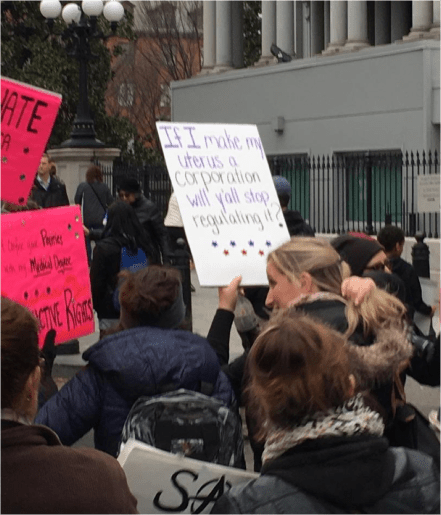
Maybe you want to do more than write. That’s great! Keep in mind that writing can supplement your other political actions. For example, if you want to march or protest, you can create a witty sign:

img_2898

If you want to join a politically active group, such as Showing Up for Racial Justice or Black Lives Matter, you may need to write to support the goals of the group. If you want to create your own, you may want to write a mission statement or a list of objectives.

Whatever you choose to do, remember that writing can augment your voice.

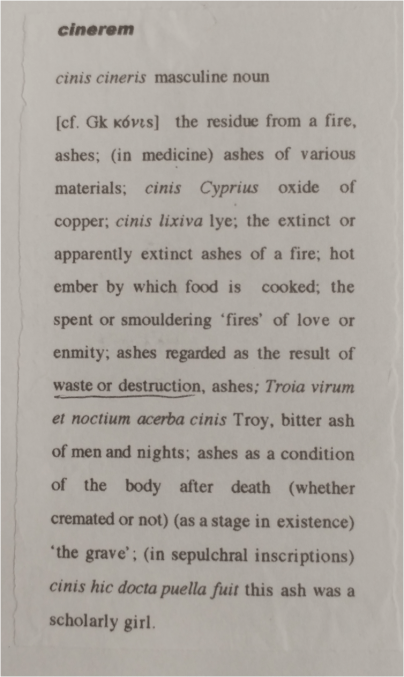
I will leave you with something a friend showed me on the day of Trump’s inauguration. It’s an arrangement by Anne Carson in her book Nox:

cinerem1


Accessibility and Accommodations in the Writing Center

Layne Gordon, Assistant Directorlayne-g

At the end of last semester, the Writing Center debuted a new page on our website for Accessibility and Accommodations. We are excited to be among the relatively small group of writing centers who have public statements along these lines, and we’d like to take a moment at the beginning of this new semester to account for some of the decisions we made and to address why we think accessibility is an important philosophy for writing centers to adopt.

Although I was responsible for the specific content of the page, the decision-making process was a team effort. As we started brainstorming, we quickly realized that there were a few things that would be central to our approach to accessibility. First, we wanted to communicate the ways in which accessibility is already part of how we think about tutoring writing and the design of our space and resources. For example, we emphasize in our statement that we work with writers at any stage in the writing process. We already work regularly with writers on brainstorming and understanding assignments, and writers with disabilities might find this particularly helpful. I go on to note that our consultants spend time discussing identity and disability in our Writing Center Theory and Practice Course. And, in terms of space and resources, we offer transcripts of our videos, our consultants are currently working on making our handouts screen reader-friendly, and we have a long-standing history of welcoming additional visitors to tutoring sessions such as American Sign Language interpreters and service animals. These are just a few ways that our existing efforts and approaches can be beneficial to writers with disabilities.

Second, we wanted to convey that we are committed to accessibility as a disposition as well as a policy. We know that students often encounter accessibility policies on syllabi and in other official documents from the University, but we wanted to offer a slightly different take on what accessibility could mean for all writers who visit the Writing Center. Accessibility as a disposition means that we are not only willing to adjust our space and our tutoring approaches when requested, but more importantly that we are committed to being inclusive of writers with a range of abilities, experiences, and identities. In other words, it means that we strive to be proactive about accessibility rather than reactive. Understanding accessibility in this way is part of our broader commitment to an ethic of service and hospitality, and this is one reason why accessibility and accommodations policies are particularly important for writing centers to consider. If we are going to claim to serve all writers in a particular community, it is essential that we try to anticipate the range of abilities and identities that those writers will bring with them to their Writing Center experiences.

Finally, we wanted this page to communicate that we are receptive to any and all accommodations requests that writers may have. One way we work towards this goal is by explaining that, in most cases, we do not require official documentation to make accommodations. Rather, we are open to dialogue with all writers who have ideas about how we can accommodate their needs, including writers with undocumented disabilities or those who may simply have learning styles and preferences that don’t match up perfectly with our typical approaches to tutoring writing. For example, we can conduct tutoring sessions in one of our side rooms and we can use a variety of media to communicate with writers about what they’re working on. Rather than a narrow approach to accommodations that would place a kind of burden of proof on the writer, we hope that this conveys a broader and more inclusive attitude toward accommodations.

As we mention on our Accessibility and Accommodations page, we welcome feedback and suggestions for how we can improve our efforts at accessibility, and we hope that this initial work offers others the opportunity to think about accessibility as a philosophy.

How I Write: Dr. Jose M. Fernandez

Our “How I Write” series asks writers from the University of Louisville community and beyond to respond to five questions that provide insight into their writing processes and offer advice to other writers. Through this series, we promote the idea that learning to write is an ongoing, life-long process and that all writers, from first-year students to career professionals, benefit from discussing and collaborating on their work with thoughtful and respectful readers.

jose-fernandez-pic

Dr. Jose M. Fernandez is an Associate Professor of Economics in the College of Business. His research is in the areas of crime, health, and industrial organization.

Current project: “Less Alcohol, Less Service: Do local alcohol bans affect the number and mixture of full and limited service restaurants?”

Currently reading: Dollars and Sex, Naked Money, and Harry Potter & the Cursed Child.


What type(s) of writing do you regularly engage in?

I primarily write for scholarly journals in economics and health policy. These articles tend to be technically dense filled with economics jargon, tables, and equations.

When/where/how do you write?

I need a fairly quiet place to write with few interruptions. The few interruptions is key for me. This usually means I am writing in my office after hours when my colleagues and students have gone home or at my house while my wife is at work and my children are at school.

The interesting part to being an academic researcher is to find the answer to a research question. You do all this work with data collection and analysis just to be the first person to better understand this little corner of our world. It is a thrilling high that comes with the job, but all this effort goes to waste if we do not share it with everyone else. Therefore, we write afterwards. When I write my papers I actual start in the center. Since I am a data head, I first write the data description and analysis sections of the paper first.

Next, I write the literature review. There is an old saying that goes, “if it is good it isn’t new and if it is new it probably isn’t good.” This quote always reminds me to look into the scholarly literature for the works of others that inspired or contributed to the question and answer that I am presenting.

Lastly, I write the introduction and the conclusion. I write these pieces last because they are the most important. We live in a world with information overload, you need to grip the reader’s attention in that opening paragraph. You need to convince them that their time is worth reading the next 30 pages. If you can’t achieve that, then you want to at least explain the question and tell them the punchline by the time they have reached the end of the introduction even if they skimp on the details.

What are your writing necessities—tools, accessory, music, spaces?

I mainly need my computer with a word processor or Latex editor, my statistical program, and google scholar. I do not really play music unless I am cleaning data.

What is your best tip for getting started and/or for revision?

My best advice for revisions is to read your paper out loud. Your brain tends to fill in missing words for you when you read silently, but out loud it is easier to catch. Secondly, I recommend printout your paper or using MS Words track changes, get some coffee, and a red pen. Much of my revisions are taking sentences and first making them into the active voice. In the second pass my goal is to make the sentences shorter and remove grammatical/spelling errors.

For writing scholarly papers in general I like these two resources: Economical Writing by Deirdre McCloskey and, for students, an Economics sample paper.

What is the best writing advice you ever received?

I received two pieces of advice that have helped me with my writing. First, THERE IS NO SUCH THING AS A PERFECT PAPER. This phrase will help you get over the anxiety of writing in the first place. Your first draft should be rough. It should be a brain dump where you get everything you wanted to say about the topic down on paper. This will get you started and revisions will take care of the rest.  The second piece of advice is for when you are stuck. I tend to write in bulk, but if I am not feeling creative or inspired that day I force myself to write at least one page. This single page serves several purposes. I have something concrete to show I have worked today. Next, it has started me to think more about the topic. The best part is that even if you do this every day for a month you will have a paper done by the end of the month.

Do you know someone who would be great for How I Write? Send us your recommendations! 


Writing Places and Spaces

Jeremy Dunn, Consultantjeremy-d

You’ve picked a paper topic, done some research, and now you’re ready to begin writing that term paper. Or maybe you’ve just struck on a bit of inspiration for a new poem, or a short story—maybe even the next great American novel. There’s only one question left: Where do you go to write?

The question seems simple, but sometimes the answer isn’t. Over the years, I’ve had to do a lot of writing, and one factor that has turned out to be crucial for any writing project I’ve undertaken has been my writing environment, the physical places and spaces I inhabit while writing.

Researchers have taken an interest in how material environments and writing tools can aid or inhibit writing. In a study of how college students’ “composing unfolds materially through space and time in a mobile culture,” Stacey Pigg observes, “While the materiality of academic writing easily slips under the radar, how students access and incorporate places and technologies in composing habits outside classrooms may be one of the most important determinants of their success within them” (271). In other words, the places where we write, and the technologies we employ in our writing (i.e. pen and paper, laptops, desktops, typewriters, stone and chisel, etcetera) constitute foundational elements of the composing process.

Indeed, as examples of famous writers illustrate, writing is often a ritualistic, idiosyncratic process deeply rooted in particular environments and surroundings. Mark Twain reportedly wrote while lying in bed. Dylan Thomas had his writing shed where, legend has it, his wife would lock him up each day to ensure he got some writing done. Similarly, Virginia Woolf sometimes wrote in a toolshed she had converted into a “writing lodge.” Sir Walter Scott apparently liked to compose poetry on horseback.

I find other writers’ writing places and spaces interesting and inspiring, but not all of us have access to a cozy writing shed overlooking rolling English hills—or a horse to sit astride, if you’re interested in that sort of thing—while we write. So where do we turn to carve out writing spaces for ourselves?

Perhaps the local coffee shop. As Pigg suggests, “Informal public spaces such as cafés, coffeehouses, and commons areas serve as commonplace productive locations for many writers” (261). Pigg further explains that such environments often provide Wi-Fi to support mobile laptops, or in-house desktops in commons areas. These spaces thus offer technological access in addition to “clean space” where writers can concentrate on their projects (261).

Public spaces help many writers write, but they are not ideal for everyone. A quiet-seeking introvert at heart, I’ve learned that coffee shops—even library study areas—are not great writing spaces for me. I’ve tried to write in such places, only to realize I don’t really feel comfortable in them, or there’s too much going on for me to focus. Consequently, I’m unable to do much writing in those environments. Though the café or common area are good work areas for many, I’ve discovered that I do better by writing in my bedroom at home. There, I have a small, worn desk and lamp that help me settle into writing. The environment is a quiet one where I feel comfortable and able to focus (most of the time). In addition, writing at home better accommodates my idiosyncrasies. For example, while I write, I like to take breaks to stand up and pace around a bit, a practice I’m not exactly comfortable trying in a coffee shop. I also like the convenience of being down the hall from the kitchen if I want a snack or a drink of water, or in case I feel like brewing some coffee or tea. In short, at home in my room I simply feel a greater sense of quiet and am consequently able to get more writing done.

All of this rambling is simply to say that if the coffee shop helps facilitate your writing, or the park bench, or the library, or maybe a room at home, go there and write. If you find you’re stuck in a rut, consider seeking out a different writing space for a while and observe whether or not the new environment helps you break through your writer’s block. We all have to write somewhere. Learning which environments are most conducive to our writing practices can help us demystify writing and develop our composing processes in productive ways.

Works Cited

Pigg, Stacey. “Emplacing Mobile Composing Habits: A Study of Academic Writing in Networked Social Spaces.” CCC 66.2 (2014): 250-75.


Pulling Together a Portfolio

Ashleigh Scarpinato, Consultantashleigh-s

There are so many help systems and articles designed to help you write a research paper, but what about all us Creative Writers out there? Who is going to guide us through the chaos that is a printed rough draft with a coffee stain in the center or a Cheetos smudge on page seven? If you have taken any Creative Writing classes, chances are you have had a chance to workshop your pieces in class, but where do we go from there? What pieces make it into our portfolios, and how do we make all the peer reviews when they are often telling us differing or conflicting suggestions?

Here are some notes about my method for pulling together a portfolio:

Phase 1: What to Include

Drafting a poetry portfolio is going to be different from drafting a short story portfolio, but the method can be the same. Start small, go through and pull out your best pieces. Look at your feedback, what did you peers identify as your strongest work? When deciding which pieces I want to include, I always look back at the speaker’s voice. I start by identifying which speakers are the most honest or believable. I had a peer in undergrad that would say, “I am not buying this line,” and it became my goal in writing and revising to ask myself: is this believable, will my reader buy this? And I challenge you, reader, to do the same.

Phase 2: Making Revisions

After pulling together the pieces you (and your peers) identify as your strongest pieces, collect all your peer reviews on each of them (hopefully, you still have them hanging around somewhere). I put all the peer revisions and notes in one pile and have a freshly printed copy in the other. Now, begin reading more thoroughly through those comments, noting which ones you like and find most effective. As you identify which changes you would like to make, write them onto your clean copy. This helps give yourself a base while also eliminating some of the chaos.

Phase 3: More Revisions (they never truly stop)

What if some of your peers recommended you change something in your piece? Do you have to listen to them? Although this might depend on their suggestion, please do not feel the need to change something that you do not feel comfortable with. As the writer, if you feel as though you are not doing the writing justice, that might be a sign to leave that detail, image, or word. Most importantly, if you do not change something, make sure that you can justify that choice.

Phase 4: What Time is it?

Get some sleep. I promise you will make more errors and have more typos on a lack of sleep than you will well rested. Along with lack of sleep may come lack of motivation, and you might find it difficult to convince yourself to read back over your revisions. I repeat, get some sleep. Your work will still be there in the morning—provided you didn’t forget to save it while surviving on coffee and Cheetos. When you come back to it in the morning, try reading your work aloud. This can help you hear how something sounds and allows you an opportunity to locate the typos you may have glanced over while skimming the piece.

Phase 5: Come to the Writing Center

We love Creative Writing pieces, and we do not get enough in here! Creative Writing work can be more personal, but as writers ourselves, we understand that the speaker’s voice does not necessarily coincide with the author’s voice. As tutors, we do not need to know if a piece is non-fiction or fiction, and we can help you through whatever part of the writing process you need help with.

I hope you found these notes helpful as you go forth into the world of revising and editing. Stand strong; you can do this.

Finals Stress: You’re Not in This Alone

Carrie Mason, Consultant carrie-m

It’s about this time when you’re starting to freak out. Deadlines and commitments and all that heavy, heavy, jazz. Caffeine consumption is at an all-time high, sleep at an all-time low, and you’re not even sure if you took time for lunch. There. Is. Too. Much. To. Do. The four (or ten) page essay starts to feel like a full length novel, and the book you desperately needed isn’t at the library and you thought you had time for an inter library loan but it turns out you don’t and now you’re hoping Google Books has it as a preview and then you realized that you forgot about the one page reflection piece over some book you skimmed and then the professor talks about the in class exam you also forgot about and your mom called to say that your grandma misses you and you should call her.

Stop. Breathe. Relax. You can’t do anything if you’re thinking about everything. And that’s a lesson I’m still trying to learn.

It’s almost impossible for me to multitask when it comes to research and writing or any kind of homework, really. In the past, I’ve been able to obsess about a single project, conquer, and move on. It doesn’t seem like that strategy will work particularly well this go around. There are too many assignments due at the same time. Perhaps you’re finding yourself in the same boat. Whatever battle plan you’ve used before, it isn’t working now. Maybe you found that out at midterms and now these last assignments are even more daunting. Regardless of how it happened, you realize the boat has sprung a leak. Man overboard. But you can’t abandon ship. And neither can I. We have invested too much to give up now. We are actively working toward our dreams, to better ourselves, and the pursuit of something much greater than an in-class exam. So, knowing the journey has its rough parts, I offer some tips that might help keep us all afloat until we hit the winter break shoreline.

  1. Coffee is not water and you should drink less of the bean juice and more of the h20.
  2. Don’t let school work take away your sleep. Not only do we turn into incorrigible creatures when we don’t sleep; we don’t do better on our assignments either.
  3. Energy drinks are also not water.
  4. Breaks are good for your mind and soul and sanity.
  5. Focus on a task for half a day, take a substantial break, and then switch tasks. This can help you gain progress on multiple projects (this is my current method).
  6. Eat real food.

I wish I had more things to say that would be encouraging and provide step by step instructions for end of semester success. But this is all I got. I could say start earlier, but I think we all already know about that. In fact, we probably already know most of the things I’ve suggested. I certainly didn’t learn them all on my own. And I think that’s the greater lesson here. You–whoever you are–are not the only one who is drinking way too much caffeine. You are not the only one who didn’t get a book in time. You are not the only one who forgot to eat lunch. You are not alone. Finish Strong.

Reading, Thinking, and Writing Outside Your Discipline

Kelly Carty, Consultantkelly-c

It’s midterm season. Hurrah! The past couple of weeks and many weeks to come seem like an endless stream of dense readings, papers, problem sets, oral examinations, and/or death by multiple choice tests.

Take a moment. Step inside my blog post. Let me transport you back to a long lost time when you could read what you wanted and write incomplete sentences dotted with emojis. Let me tell you about reading, thinking, and writing outside your field of study.

Surprise! This time isn’t so long lost. If you are like me, you probably do quite a bit of reading and writing unrelated or tangentially related to your discipline even when you are busy.

What am I talking about? Well, regardless of how busy I am or how stressed I feel, I spend quite a lot of time reading, thinking, and writing on Facebook as I browse my newsfeed and write statues or comments in response. Also, as I am guessing is the case with many of you (and by you, I mean faculty, staff and students), I rarely read or write about my current fields of study (English literature and Writing Center pedagogy) on Facebook. Instead, I read and write about current events, music, my home life, and other seemingly random things. For example, the last things I read or wrote about on social media concerned:

The location of free food on UofL’s campus

Bob Dylan winning the Nobel Prize in Literature

The most recent presidential debate

Urban foraging

My cat

Beck’s Debra (this is actually related to one of my classes, but it has a convoluted explanation)

Moreover, in addition to reading and writing on Facebook, I spend time reading and writing on topics tangentially related to my fields of study in the non-social media cyber world. Actually, I often do more of this type of reading and writing when I am busy with school or work because it seems like a useful break. For example, when I was reading the Canterbury Tales as an undergraduate, I found this gem of a revision to the Wife of Bath’s Prologue. Recently, when my younger brother was tasked with reading the Canterbury Tales, I sent him a link to this revision along with a little review. Over the past three weeks, as I wrote papers and read new plays for my Shakespeare class, I read Wikipedia pages on patriarchy, Aufheben, Gaius Marius, Husserl, Writing and Difference, Cleopatra, and the largest monoliths that have been found on Earth. I also wrote many exasperated notes to my boyfriend about how I didn’t (and still don’t) understand Hegel.

How are these adventures in reading and writing different than the reading and writing I do for my field of study?

I can choose what I want to read

Until I am fortunate enough to design my own courses, most of my academic readings will be carefully outlined on my professors’ syllabi. In my own world of social media and Internet wanderings, I can read whatever strikes my fancy. I can read about radical leftist organizations after watching a documentary on the Weathermen, 1,000 tweets classified under #debates when I want to know how the Twittersphere feels about Trump’s comments, or news articles about cutting edge science when I feel like I’m losing my knowledge of biology.

I can use unconventional punctuation and grammar

When I write for the world of academia, I am hyperaware of grammar and usage conventions. When I write on social media, I often intentionally break these conventions. For example, during the last presidential debate, I posted:

WHY IS LOCKER ROOM TALK AN EXCUSE

I realize this question should end with question mark and that only the first letter needs to be capitalized, but I wanted to convey an emotion and an opinion that a single capital letter and a question mark would dampen.

Moreover, I had the following conversation on Facebook chat with my brother:

Me:       Im gonna write about hegel

Eek

Bro:      “Dialectic, but now exactly in the Marxian sense

Just keep repeating that

Should be fine

Me:       Hahahahahah

Bro:      Works for trumps

There are many grammatical and usage errors in these messages. However, both my brother and I were able to convey our thoughts effectively and humorously to one another. Although it is likely that I would be able to convey the same ideas within the bounds of academic conventions, it is unlikely that I (or my brother) would be able to do it as quickly.

I can use slang and images to describe my thoughts

Furthermore, writing outside of my discipline allows me to use slang and images to convey my thoughts. When conveying my frustration over writing papers, I sent a message to my colleagues that read “Papers fj&2#8,@)@;/8 ugh.” When I was on a short road trip with lots of traffic and my dad asked me how the ride was going, I sent him this image of my cat:

kelly-carty-blog-pic-1

(I realize this isn’t writing, but it might as well be.)

How are these activities similar to the reading and writing I do for my field of study?

I process information through text and images

This point is both obvious and important. Whether I’m reading Shakespeare’s Antony and Cleopatra, a theoretical paper on semiotic squares, my mom’s Facebook posts, or text messages from a friend, I am asked to make meaning of text and images.

I emphasize main ideas

When I read articles for class or for my own academic research, my foremost concerns are the main ideas. I ask constantly ask myself, what is this author trying to say? How does the main idea of this article relate to what I am doing in class or what I am researching?

When I read tweets, Facebook posts, and news articles, I have the same concerns. What is this article’s main point about the most recent WikiLeaks update? How does #WomenWhoVoteTrump relate to electoral politics?

I am ultimately concerned about conveying meaning

When I write for the academic world, I want my readers to understand the ideas I am presenting. It would be useless if I turned in a paper that was utterly meaningless. In fact, when I write papers, I often read them to other people to make sure they correctly convey the thoughts I intend to convey.

When I write Facebook posts, tweets, and text messages, I focus on conveying meaning as well. As I have alluded to above, I often eschew conventional grammar and usage in non-academic writing to enhance my meaning.

My challenge to you is to think about the writing and reading you do outside of your field of study. How do those activities compare to the reading and writing you do within your field of study?