Writing centers are one of the few places in a university setting where every single student can be assisted. Every student has to write, and every kind of writing is welcome at the University Writing Center. But, given all the variables that come with working at a university of over 21,000 students, how does a writing center consultant prepare for their appointments?
At the University of Louisville Writing Center, we pride ourselves on our accessibility to every writer we encounter. We have trained, studied, and practiced our skills to make sure that your experience in the writing center is the best it can be. This includes:
Taking a class on Writing Center studies: Consultants take a class that teaches us about writing center theory, ethics, and strategies for the teaching of writing.
Reflecting on appointments with our colleagues and our supervisors: We have formal and informal reflections on appointments with our fellow consultants as well as our supervisors, including the Director of the Writing Center.
Discussing new ways to approach the teaching of writing: We are always sharing new ideas about how to approach our sessions with writers. Our best tips and strategies are often the result of what we have learned from each other.
Staying up-to-date on citation methods: Citation methods can be confusing, especially since they are updated every few years. We study the new versions and update our handouts on different citation styles. Just last week our Associate Director gave a lecture on the 7th edition of APA!
Mentally preparing ourselves before each appointment: Before the day begins, we open WC Online and look over the scheduled appointments. Each appointment form tells us what the writer wants to work on, so we make sure that we are comfortable with addressing the writer’s particular concerns before the appointment. If the writer is working on a kind of assignment or genre of writing that is less familiar, we will do research and ask our colleagues for advice. This preparation helps us begin a session with a good sense of what the end product should look like.
When a session is over and we return to the consultants’ office, we like to share our successful strategies and ask each other for advice. No session goes perfectly, but we take our work seriously and we constantly strive to do better. When you come to the University Writing Center, know that we are prepared and excited to help every writer achieve their goals!
The boom in digital technologies continues to challenge our basic understanding of writing and literacy practices. Which, for the most part, is a good thing. This is because these technologies provide genuine platforms for improvement to our information and literacy practices in terms of what is learned, how it is learned, where it is learned and when it is learned. In fact, these available digital devices enable students to learn at their own pace and develop skills needed in a modern society.
It is evident that, nowadays, technological tools are ubiquitous and widely accessible to all categories of people, thereby aiding teaching and learning. This has no doubt contributed to the disruption to literacy practices, especially writing, in that information used to be conveyed mainly through two modes, namely alphabets and visual elements such as white space, margins and font size. But this has now been extended to include multiple modes such as visual images, video, color, and sound among others. Social media has also helped a great deal to extend the impact of writing practices beyond pen/pencil and paper to creating a wide space and opportunity for writing to occur beyond the pages of a book.
These forms of writing, thus, necessitate that we, as writing center consultants, re-consider our tutoring strategies to achieve our objective of making a better writer instead of simply making a better text. One of the crucial reasons for rethinking writing in this digital age is because of its implication for knowledge transfer. The proliferation of digital technologies has accentuated the need for creative thinking in all aspects of our lives, and has also provided tools that can help us improve and transfer important skills for knowledge production.
Although writing center consultants’ familiarity with different modes of communication is generally important during tutoring sessions, it is nevertheless not necessary for the tutors to possess expertise in the use of technologies or a genre-specific knowledge of how these modes work in their entirety. However, discussing the thinking and production processes of the digital text constitutes an important aspect of the tutoring; this inevitably helps writers in transferring relevant skills and knowledge garnered through the production stages of the digital texts into other aspects of life.
In addition, since writers, wittingly or unwittingly, approach their writing practices using “all available means of communication” (Takayoshi and Selfe, 2007) at the disposal to express their intentions to the audience, tutoring sessions should also include an examination of the effectiveness of the rhetorical choices and moves made by the writer to achieve this goal.
Rethinking writing practices in this digital age also has an implication for collaboration between the writing center and the digital media centers. Such partnerships, it is believed, will foster efforts on helping students who are struggling with the production of their digital writing practices as well as open a line of communication and exchange of information on the progress and improvements of writers’ digital texts.
To conclude, I would echo Takayoshi and Selfe’s (2007) notion that, if the writing center is to foster the goal of making a better writer, who can both “create meaning in texts and interpret meaning from text within a dynamic and increasingly technological world”, we need to rethink our approaches in order to enable a tutoring session that accommodates the affordances of writing in the digital age.
Source
Takayoshi, Pamela and Cynthia L., Selfe. “Thinking about Multimodality.” Multimodal Composition: Resources for Teachers . Ed. Cynthia L., Selfe, Cresskill: Hampton P, 2007, pp 1-12.
What are the attributes and traits of an inclusive tutor? Why do we need an inclusive tutor?
How does an inclusive tutor differ from a non-inclusive tutor? Why is the question of inclusion so important to writing centers?
These are the questions that have compelled me to ponder.
We have sufficient records that our writing center has been visited by a large number of students year by year. Among those students who have visited our writing center, a considerable number of them are non-American, non-native speakers of English, resident students, visa students, students belonging to 1.5 generation, students on F1 and J 1 status. Some of these students are enrolled in undergraduate classes whereas others are enrolled in graduate level courses. These students embody different socio-cultural, linguistic, historical, and continent specific experiences.
The number of those students having unique cultural differences is on the rise. To provide care, support and guidelines, the writing center has been widening its scope. Since the writing center has already taken constructive steps to include students regardless of caste, creed, convention, color, disability and gender, it has been hailed as the hub where diversity, the differential, and disability are carefully accepted and constructive counseling is given keeping in mind the unique nuance, agency and concern of student writers.
To address constructively all those voices, expectations, dignity, agency and sensibilities of students, writing center needs inclusive tutors. Only inclusive tutors can handle with dignity the longings, concerns and curiosities of student writers. In the present time in which writing centers have been witnessing the flow of students both native and nonnative speakers of English, what writing centers need is inclusive tutors.
By an inclusive tutor, I mean the sort of tutor who demonstrates tremendous patience and a sense of acceptance when it comes to looking into the student drafts. Only those tutors who have the capacity to say ‘yes’ to their own weaknesses, frailties, flaws, feet of clay, shortcoming and limitations can accept the others as they really are. Here I am reminded of what Francis Fukuyama in his book Identity says “the longing to get recognition from others is the universal longing everyone is endowed with. It is this longing for recognition from others that drives us to forge and foment the question of identity”.
Below I have presented some attributes and traits of an inclusive tutor:
• The inclusive tutor does not get stuck on any identity category rooted in caste, creed, convention, color and gender when he or she starts tutoring in writing center.
• An inclusive tutor possesses tremendous power of acceptance. In no way, he or she deviates from the centrality of his or her power of accepting difference in any form.
• Language has the power to influence thought and vice versa. So, the inclusive tutor does not believe in the dichotomy of lower order concern and higher order concern.
• The inclusive tutor is always ready to address any concern of students be it grammar and punctuation or structural chronology of ideas without compromising with the foundational belief that writing center is not a grammar fixing center.
• The inclusive tutor acts in an innovative way. Labels, categories, stereotypes and banal modes of expressions are simply rejected by an inclusive tutor.
• The inclusive tutor knows when and how to switch deftly and smartly from non-directive modes of tutoring to directive modes of tutoring.
• The inclusive tutor believes and acts on the assumption that every student writer is a world in himself or herself. And the tutor navigates this world with consciousness.
• The inclusive tutor is driven by the belief that all forms of literacy are interrelated, supplementary, complementary, correlative, and symbiotically linked. Alphabetic literacy, visual literacy, digital literacy, community literacy, twitteracy etc. are all important in knowledge making process. The inclusive tutor makes use of anything that serves the best goal of tutor and boosts the institutional prestige and standing of writing center.
• An inclusive tutor forcibly believes that after each interaction with student writer, a new self is born in the life of inclusive tutor.
• The inclusive tutor is a mirror on which student writer finds the reflection of his or her own image, face.
• Writing is not a product of solitary endeavor. It is a product of collective efforts. This is the quintessence of inclusive tutoring.
On the Thursday before fall classes begin we always have our our annual orientation and staff meeting for the University Writing Center. Our staff is comprised primarily of graduate student teaching assistants, most of whom are new to our Writing Center and to UofL. There is a lot that our new consultants have to learn that day, from how to use our online scheduling system to the location of the coffee maker and microwave. The best part of the day, however, is when we get past the logistical details of writing center life
University Writing Center Staff, 2019-20
and can move on to talk about how we approach working with writers. We sit down after lunch and begin the crucial conversations about how to help students, faculty, and staff become stronger, more confident writers. The conversations that we start at orientation will continue throughout the fall in the Writing Center Theory and Practice Course they will take with me, as well as in the daily, informal conversations in our offices.
Learning how to teach writing effectively is an never-ending process, as 30 years in the classroom and writing centers have taught me. The new consultants in our University Writing Center will learn a great deal this year about writing pedagogy, from reading writing center scholarship and from reflecting on their own practices. about how to help writers improve their drafts, learn new strategies for addressing future writing challenges, and gain a stronger sense of confidence and agency in their writing. They all come to the University Writing Center staff with a broad range of experiences as writers and professionally that will serve them well in their work. What is also clear from our first conversations at orientation is that, though their experiences and interests are diverse, they all understand and share our core goals and values in working with writers from across the university community.
Learning Through Dialogue
One goal of any writing center consultation is to help a writer to rethink, and revise, a draft through a constructive dialogue that enables the writer to make the decisions about possible revisions. In order to accomplish this, both the writer and the consultant must be willing to listen carefully to each other and consider other perspectives and suggestions. As we always explain, we our not an editing service, but a place were writers and consultants work collaboratively to help writers improve their drafts, learn new strategies for addressing future writing challenges, and gain confidence in their writing. improve. Our approach to teaching writing emphasizes this dialogic exchange of ideas in which consultants need to be able to listen to what writers say during an appointment and offer individualized responses and suggestions. Both the consultant and the writer need to respond to each other honestly and respectfully. We also approach teaching writing from the perspective that we are always open to learning from the writer and the draft, even as we have things to teach in return. In this way we model a stance of response and teaching that is more collaborative and less hierarchical.
Trust and Creativity
In such an environment of trust, writers can feel safe in testing ideas without worrying that the failure of an idea will mean a failing grade. Good writers need to be able to try new approaches, make mistakes, and try again. We pride ourselves as a space in which writers can get honest, constructive responses to their work without worrying about the inherent limitations and risks that grading brings. By focusing on learning, not grading, we offer spaces where writers can experiment and foster habits of creativity. We also remember that students may have previous experiences that make them reluctant to risk failure, and we reassure them that we can try different approaches until we find one that works.
Taking Our Time
What’s more, one of the central benefits and values of the University Writing Center is that we are not bound by the limits of a single semester. We have the opportunity to view our teaching through long timelines, in which writers can come in multiple times, not just during a semester, but over their academic careers. Being able to take the long view allows us to approach learning as an ongoing, always recursive, process. We can emphasize that learning to write is an ongoing process for all of us. Writing well is not an inherent talent, but an achievable ability. We do our best to convey to writers that achieving their goals may be a challenge and require hard work, but that we have confidence in the their abilities to meet the challenge.
It’s exciting for me to hear the enthusiasm and imagination the new consultants bring to their work. In the year ahead these consultants will provide more than 5,500 consultations for UofL writers, grounded in these core values, making an important and substantial contribution to the University community.
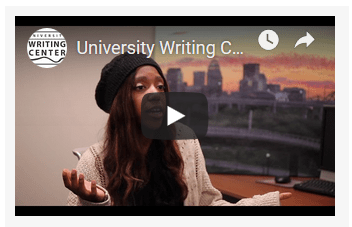
Earlier this year, Edward English, one of the assistant directors in the University Writing Center, suggested that we create a new promotional video drawing on the perspectives of our writing consultants about what they find meaningful in their work teaching writing. I agreed that it was a great idea and, this spring, Edward and consultants Michelle Pena and Jacob DeBrock, created the video you see here, titled, “Our Community”.
University Writing Center: Our Community
What I appreciate, and thoroughly enjoy, about this video is what they captured about the intangible, but essential, role that caring and community play in the work we do at the University Writing Center. On our website and in our presentations we always foreground, and rightly so, the expertise we have in teaching writing that can help students, staff, and faculty become stronger writers. Yet, just as crucial to our approaches to writing pedagogy is the work we do to create a culture of caring and empathy. We do this through a focus on listening, starting where the writer is, and, most of all, always remembering that we are responding to a person, not just a set of pages. You can see this commitment, and the pleasure it brings, in the words of the consultants in this video.
The University Writing Center Staff for 2018-19
Empathy, listening, and caring, are not qualities that will show up in any official end-of-year reports. Emotions and ethics are typically not assessed by university administrators or accrediting agencies, or always considered appropriate ideas for discussion on a university campus. Still, these are the ineffable qualities that make our University Writing Center a distinctive and successful place for learning on campus. Because we focus on working with writers, not just on drafts, we know that we help writers develop a stronger sense of agency and confidence about their work. Because we listen first, and then respond, we also engage in conversations about how writers are shaping their identities, and how those are negotiated in the systems of power in the University and culture.
We did, in fact, work with an impressive number of writers this year – more than 5,000. Out of those visits came stronger drafts and more confident writers. We are grateful for the trust that writers from across the UofL community show in bringing their writing here and letting us work with them to make it stronger. What the numbers can’t show that the video gives a glimpse of is the care, compassion, and that vital sense of community that the consultants build every day with each other and all the writers who walk through our door.
We will be open during the summer, starting May 6, from 9-4 every weekday. You can find out more on our our website. You can also follow us on our blog and on on Twitter, Facebook, and Instagram.
Beyond Tutoring – Workshops, Events, and Community Writing
Our commitment to working with writers and supporting a culture of writing extend beyond our daily consultations. Here is a just a glimpse of what we have been working on this year.
Workshops, Writing Groups, and Dissertation Writing Retreats: Our staff did more than 220 presentations about our University Writing Center services and more than 40 workshops about writing that took place both in and out of classroom settings. Our popular Creative Writing,LGBTQ+ and Faculty and Graduate Student Writing Groups continued to give UofL writers supportive communities through which they could create and talk about writing. We again held a our annual spring Dissertation Writing Retreat in May. We will be continuing all of these groups and workshops, so be sure to check our our website for information and dates.
Writing Events: Once again we hosted or took part in a range of writing-related events,
Kick Back in the Stacks, August 2018
including our Halloween Scary Stories Open Mic Night, the Celebration of Student Writing, Kick Back in the Stacks, and International Mother Language Day. Thanks to our ongoing partnership with the UofL Creative Writing Program, we again hosted a reading in the Axton Creative Writing Reading Series as well as two open-mic nights and one workshop in collaboration with the Miracle Monocle Literary Magazine.
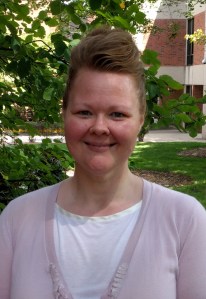
The most important staff news of 2019 was the addition to the University Writing Center staff of Amber Yocum, as our Administrative Associate. Amber is in charge of our front desk, our scheduling system, office management, and supervising our student workers. She is brilliant and innovative and we’re lucky to have her as part of our community.
The new “Our Community” video also shows the community that our staff create among themselves. They do exceptional work as consultants and as full-time graduate students, but they also find time to take care of each other, and to laugh. I’m proud of them for that and think the university and the world can use more of it. It is the inspired and tireless work of all of our staff that, day after day, allows us to support UofL writers and create a culture of writing on campus and off. They also make this a fun place to work. Thanks go to Associate Director Cassandra Book and Assistant Directors, Aubrie Cox, Edward English, Rachel Rodriguez, and Christopher Stuck. Our consultants this year have been Quaid Adams, Brooke Boling, Josh Christian, Jacob DeBrock, Nicole Dugan, Katie Frankel, Anna-Stacia Haley, Rachel Knowles, Catherine Lange, Michelle Pena, Liz Soule, Jon Udelson, Abby Wills, and Adam Yeich. Our student workers were Taylor Cardwell, Wyatt Mills, and Jency Trejo.
Writing Center Staff Achievements
The University Writing Center is also an active site of scholarship about the teaching of writing. Staff from the Writing Center were engaged in a number of scholarly projects during the past year in rhetoric and composition, literature, and creative writing.
Bronwyn Williams, Director I had two Writing Center-related publications this year, co-authored with former University Writing Center associate and assistant directors. One was “Find Something You Can Believe In”: The Effect of Dissertation Writing Retreats on Graduate Students’ Identities as Writers.” with Ashly Bender Smith, Tika Lamsal, and Adam Robinson in Re/Writing the Center: Approaches to Supporting Graduate Students in the Writing Center. (Utah State University Press. 2019). The other publication was “Centering Partnerships: A Case for Writing Centers as Sites of Community Engagement,” with Amy McCleese Nichols, in Community Literacy. 2019. I also presented at the International Writing Centers Association Conference in with Cassie Book, Layne Gordon, and Jessie Newman, from UofL.
Cassandra Book, Associate Director published “Digital Curation as Collaborative Archival Method in Feminist Rhetorics.” with Pamela VanHaitsma. in the journal Peitho, spring 2019. She also gave the keynote address at the Southeastern Writing Center Association Kentucky Statewide Tutor Conference, with Josh Christian and Liz Soule at Asbury University in April 2019. In addition, she presented at the Conference on College Composition and Communication, the Thomas R. Watson Conference on Rhetoric and Composition, and the International Writing Centers Association Conference.
Aubrie Cox, Assistant Director for the Virtual Writing Center published “Final Transmission.” in Little Fiction. 2018 Flash Issue. She gave a reading at “Live at Surface Noise,” in December 2018. She was also awarded the UofL Creative Writing Graduate Student Award for Poetry, 2019
Edward English, Assistant Director of the University Writing Center presented at the Rhetoric & Religion in the Twenty-First Century Conference and Thomas R. Watson Conference on Rhetoric and Composition.
Rachel Rodriguez, Assistant Director of the University Writing Center presented at the Conference on College Composition and Communication.
Christopher Stuck, Assistant Director For Graduate Student Writing presented at the Rhetoric Society of America Conference and served as Graduate Student Coordinator for the Discourse and Semiotics Workshop Series.
Consultants
Quaid Adams presented at the International Society of Contemporary Legend Research Conference, the UofL Graduate Student Regional Research Conference, and served as a Graduate Editor for Issue 12 of Miracle Monocle as well as the forthcoming anthology of Queer and Rural Southern Writers.
Brooke Boling served as a Graduate Editor for Issue 12 of Miracle Monocle as well as the forthcoming anthology of Queer and Rural Southern Writers.
Josh Christian presented the keynote address at the Southeastern Writing Center Association Kentucky Statewide Tutor Conference, with Cassie Book and Liz Soule at Asbury University in April 2019. He also gave a workshop at the same conference, also with Liz Soule. He was awarded a UofL Creative Writing Scholarship and will be a Graduate Program Peer Mentor Coordinator next Year.
Jacob DeBrock presented at the Louisville Conference on Literature and Culture since 1900.
Nicole Dugan completed her M.A. Culminating Project, titled, “Writing the Self: First-Generation Students, Personal Statements and Textual Authority.”
Katie Frankel presented at the Indiana University Interdisciplinary Graduate Conference and had a book review of Sons of Blackbird Mountain published in Interstice. She also received a UofL Creative Writing Scholarship.
Anna-Stacia Haley received a UofL Creative Writing Scholarship.
Rachel Knowles completed her M.A. Culminating Project, titled, “Talking It Out: Towards Interdisciplinarity in Online Organizational Crisis Response”
Catherine Lange presented at the UofL Graduate Student Regional Research Conference.
Michelle Pena presented at the UofL Graduate Student Regional Research Conference
Liz Soule presented the keynote address at the Southeastern Writing Center Association Kentucky Statewide Tutor Conference, with Cassie Book and Josh Christian at Asbury University in April 2019. She also gave a workshop at the same conference, also with Josh Christian.
Jon Udelson published a short story in Juked titled “Out & Elsewhere” and had a A book chapter accepted into the edited collection Style and the Future of Composition Studies. He presented at the Conference on College Composition and Communication, the Thomas R. Watson Conference on Rhetoric and Composition. He was named a board member of the Creative Writing Studies Organization. In the fall he will start a job as an Assistant Professor of English at Shenandoah University.
Abby Wills presented at the Uofl Graduate Student Regional Research Conference and the University of Cincinnati English Department Interdisciplinary Conference.
Adam Yeich was named the Assistant Director of Creative Writing for 2019-20. He presented at the UofL Graduate Student Regional Research Conference and the Louisville Conference on Literature and Culture since 1900. He served as a Graduate Editor for Issue 12 of Miracle Monocle , where he had a book review published, as well as the forthcoming anthology of Queer and Rural Southern Writers.
Is it the way those freshly baked sentences melt in your mouth?
Is it the long, hair-frizzling hours it takes to make it?
Is it the satisfied, sleepy feeling after it’s gone?
I’m not sure either. But I do know that the act of writing is rarely done in isolation. When you write, you are almost always writing for someone. In a way, as the writer you are the host, and your reader is the guest, whom you must welcome into your home of paragraphs and feed with your long slaved-over words.
How does one host well? The practice of hosting is difficult enough when your guest is sitting face-to-face with you at your table, but what about when you don’t get to see your guest in person? What about when your guest is not coming to your house, but coming to your writing? How can your essay welcome, feed, and make conversation with your guest so that they feel like they have been hosted well and would be happy to come back?
This may seem an odd way to think about writing, but seeing your reader as your guest actually has practical implications. Here are four ways to host your reader well.
1. Know your reader.
It is embarrassing both for you and for your guest if you greet them at the door but can’t remember their name. On the other hand, if you ask your guest about their sick family member they mentioned to you once several days ago, then they will know you care since you remember such small details. Just as hosting well depends on your familiarity with your guest, writing well depends on your familiarity with your reader. Your reader—and therefore what they know, what they want to hear, what they are interested in, and what references they will get—will be different depending on whether you are writing a rhetorical analysis for class, an article for a medical journal, a personal statement for an application, or a short story for children. Knowing who you are writing for is the beginning of hosting them well with your words.
2. Know what your reader needs.
A good host is attentive to a guest’s needs. If the guest says, “I’m thirsty,” or “I’m cold,” or “I have a headache,” and the host doesn’t think to bring water, or a blanket, or medicine, the host has arguably failed in their host-ly duties. Although we can’t hear our readers speak as we are writing, a good writer/host will start to hear the needy reader’s voice in between sentences: “I need more information here,” “I want to know why this is important,” “I don’t understand the context of your argument,” “I don’t know where you’re going with this.” If you know your reader (see #1), you will know when they need more from their writer-ly host. And if you are an attentive host, then you will eagerly fetch that extra information your reader was missing–along with a blanket and some tea.
3. Give your reader clear directions.
Just as a guest will feel uncomfortable if they can’t find their host’s house—or the bathroom, or the kitchen, or the coat closet—your reader will also feel uncomfortable if you do not give them the directions they need to get smoothly through your paper. The kind of directions you give depends on knowing your reader (again, see #1). If your guest has been to your house several times already, you don’t need to tell them where to hang their coat. Likewise, if your reader is already in your field of study, you won’t need to define terms they already know. However, if your reader is unfamiliar with your field, your topic, or your argument, they will need clear signs in order to follow where you want them to go. The considerate writer—like the considerate host—points the reader in the right direction.
4. Be interested in your subject.
What does that have to do with hospitality? Why would my reader care if I’m interested in what I’m writing or not? I’m glad you asked.
You are a guest at a dinner with family friends. Someone brings up your host’s favorite hobby. Suddenly your host’s eyes light up. She smiles. She starts telling a story. She gestures excitedly. She raises her eyebrows. She laughs. The other guests laugh. They listen attentively. They ask for the rest of the story.
When your friend really loves something, you can tell. When they are fascinated by something, you can tell. And if they are really, really interested in something—often you can’t help but be interested in it too. Just as the above host tells a story that excites her (and thus excites her guests), the hospitable writer ought to write about what truly fascinates him—because the reader will know if the writer was bored with his subject, and the reader will be bored too. For the sake of his guests, the thoughtful host will not prepare a dinner he thinks is bland; for the sake of his reader, the thoughtful writer will not write an essay he thinks is boring.
Why does this matter?
It depends. If you want your guests to be glad they came, to want to come back, to exclaim, “This meal is so good!”—then you will make the effort to know them, pay attention to their needs, give them good directions, and foster interesting conversation. If you want your reader to enjoy your writing, to read easily, and to understand your argument, then you will practice thoughtful writing as you practice thoughtful hosting—with your guest in mind. When a guest is hospitably welcomed into someone’s home, they remember.
Have you experienced getting into your car, and while driving to a familiar destination you start thinking about all the things you need to do, or even just start daydreaming? Suddenly, you snap back to the present and realize you are at your intended location but have no recollection of the actual drive. It’s amazing how we can become so familiar with the way we do something that we can actually can execute the activity on autopilot. Our brains are amazing objects that can run millions of processes at once. While one “system” is working through our schedule, another is thinking about summer vacation, and yet another is executing turns down familiar streets (hopefully one is watching for pedestrians). When the path we are navigating is so familiar to us, we can easily “switch off” and let the brain make all the decisions in default mode. But, if we are checked out of the process, are we really getting the best experience?
I gave the above example as a way to talk about the process of writing. By the time you have reached the level in academia where you would be interested in reading this blogpost, you have most likely been asked to do a lot of writing. Often, we are given a writing task and, just like driving, we set our brain to autopilot, or “writing mode,” and let come what may. We see our end destination (our “completed writing task”), hop in our mental smart cars, activate cruise control, and are on our way. The problem with this is that we only have one way of getting to the destination programmed into our mental maps. When we only allow for only one way of doing things, we ultimately produce the same type of writing, just with different topics. This doesn’t only apply to class papers–we can fall into the same rut with our creative writing as well.
To be completely honest, in the busy world of academia, writing on autopilot is convenient. It always gets us safely to our destination and conserves our valuable brain energy for the thousands of other demands that come on a daily basis. However, it does not help us develop into better writers. To produce better work, we have to mentally show up for the process. We have to switch off the autopilot and challenge ourselves to consider that there are valuable alternative routes to getting to our final destinations. Understand, however, that the goal in switching off autopilot and taking control of the wheel is not necessarily to get to the destination more quickly, although that may happen, but rather to truly immerse yourself in the writing process and gain insight to tools that you may be missing out on.
If you are like me, my cruise control looks like this: I get an idea for a paper, lock on to it with a death grip, think about it until the night before its due, word vomit on the paper, and then spend the wee hours of the morning its due making revisions. This process works for me and I am comfortable with it; however, I have realized that I am cheating myself out of being a better writer by not exploring other processes. Recently I have been trying to add practices that other writers use into my repertoire. I started with reverse outlining, now I’m committing myself to writing down my favorite thesis and then writing two more possible theses that either invert or challenge the original as a way to enhance my critical thinking of the topic. This has been immensely beneficial and has positively affected my writing skills.
If you feel like your writing has become stale, or that you are not meeting your full potential as a writer, I challenge you to see if you are still in the driver’s seat. Consider pulling out your old writing guidebooks and going back to the basics. Look to other writers for inspiration. Take time to go through the process. You’ll be amazed at how much of the beautiful scenery you have been missing.
If your situation is anything like mine at this point in the semester, you are struggling to keep up with class readings as you begin drafting your final papers, and of course, this has you dreaming about summer. Summer when, yes, you still have to work (we are all adults here, after all), but when you also have time to dedicate to fun activities that you don’t get to do during the semester – like actually sleeping!
While doing “nothing” can seem like an enticing way to spend your three-month vacation from academia, this time can be much better spent on improving yourself in some way – and the best part is that YOU get to choose what this looks like. For some, it’s finding time to be active, and for others, it’s getting through a reading wish list. But for most of my peers studying English at UofL, summer is a time for writing.
As I have gotten older, I have struggled increasingly to find time to free write and, as a consequence, I sometimes feel out of practice when writing outside of academic genres. Summer gives me the chance to really stretch and work those creative muscles that, if we’re being honest, are often bound up by the constraints of higher education. In the summer, I get to write about what I want, how I want to: no prompts, no criteria, and no deadlines.
Like anything else, writing takes on a different tone, a new pleasure, when it is done out of inspiration and free will, rather than in answer to requirement and obligation. Yes, it can be a lot of work, but it doesn’t have to be. All it takes is finding something you’re passionate about. And thanks to digital and new media, it’s easier than ever for you to share your passions. The greatest thing about this technological age is that people now have the power to connect to one another from across the globe, but most people don’t realize that this link is often forged through (you guessed it!) writing.
Even if you don’t plan on sharing your personal thoughts with the world, there are still plenty of benefits to writing. I for one sometimes need a private place to vent, and journaling (which I wrote about in my last blog post) is a convenient and safe place for me to get any stresses off my chest. And the best part is that paper can’t grade (or judge) you!
So, while it may seem too early to start thinking about it and perhaps even exhausting considering current circumstances, I would encourage you to find excuses to write this summer: take note when an intriguing thought strikes you, record your dreams (or nightmares), write a drinking chant, compose a goofy poem, or describe the feeling of the sun on your skin, lest you forget it when the cold snow returns.
Most importantly, have fun while you write and have a great summer!
Reading and writing are always intertwined. When asked about how they write, authors almost always mention how much they read and how it’s crucial to their process. They read for enjoyment, inspiration, and, most importantly, a purpose. In academia, it’s easy to spend our reading time searching for understanding and utility, speeding through the text with little to no enjoyment in the process. Even those of us who have histories of devouring books in single sittings can come to dread the reading part of the writing process. I currently have 36 library books sitting on my desk, and they definitely aren’t radiating enjoyment. Instead, I’ve been sneaking chapters of the books I keep buying on Amazon (even though I have no more room on my bookshelves). I spent the first few days of my spring break trying to build momentum and jump into my various research projects with very little success. Sometimes the absence of motivation is the main issue, but reading for research can also be alienating and stressful. So, as the numerous stacks of books about working-class literacy and monsters in medieval literature stare at me, I’m going to write about reading instead. Hopefully it helps me and anyone else facing the spring semester procrastination virus.
During the last few weeks, writers have been coming into the University Writing Center with assignments focused on reading and annotating sources. This is a foundational and crucial skill in academic writing as we work to weave our own ideas and voices into conversation with existing scholarship. Learning how to read is often relegated to primary school, where we learn the alphabet, spend time working through pronunciation, and take reading quizzes to assess our comprehension. When we move to college, it is understood that we know how to do all of this, even if the ways we’re expected to read are changing. The current push for teaching reading in writing courses is a necessary one, as evidenced in recent publications like Deep Reading: Teaching Reading in the Writing Classroom. This is a renewal of previous attention given to the importance of teaching reading strategies in first-year composition classes.
In 2009, Julian Hermida published a study on reading practices in legal studies; however, the findings and suggestions put forth are applicable across disciplines. Most of us don’t turn to academic texts for some fun, leisurely reading; we’re reading it for a purpose, to accomplish some kind of goal for our future projects. Knowing this purpose and remaining conscious of it is the first step Hermida outlines for “expert” reading: “(i) reading purpose; (ii) context; (iii) author’s thesis; (iv) deconstruction of assumptions; (v) evaluation of author’s arguments; and (vi) consequences of author’s arguments” (23). In the face of intimidating scholarship, those new or uncomfortable in academia often “adopt a surface approach to reading and learning” (Hermida 28). It is easy to underestimate the time and effort that reading to write requires; however, developing and using strategies that work for your needs is important and can help you to streamline your research and general reading process.
Hermida suggests several practices that can help to increase comprehension, especially in relation to employing research in writing as they encourage critical thinking and engagement. Some of these include double entry journals, concept mapping, and keeping a structured reading journal for projects. In 2015, University Writing Center consultant Taylor Gathof wrote about some of these strategies and more options in her blog post. The UWC also has a handout on writing about reading as well.
Knowing your purpose in reading and having strategies on hand to efficiently and successfully approach texts are super helpful, but even with all of this in your toolbox, you may not be very enthused about the process. If you have the opportunity to choose projects about topics you’re already excited about, this could help immensely. However, this is, of course, not always the case. One part of reading academic texts is assessing the argument and methodology. This means you have the flexibility of agreeing or disagreeing based on the rest of the research you’ve done. Who doesn’t enjoy critiquing other people’s arguments? You fit the sources into a conversation with each other, and you enter this conversation as well. It can be a little nerve-wracking to find your footing in the realm of academic writing, but practicing reading strategies helps to build familiarity and confidence within your discipline.
Something that isn’t often suggested, at least not in my experience, is the value of reading outside of academia as a way to improve academic reading skills. Make time for reading stuff you care about, whether it’s graphic novels, young adult fiction, a news article, or some think piece. Applying academic strategies, like identifying the main thesis and critiquing the author’s methodology, to these things can help you flex your reading muscles in a community in which you are already a comfortable inhabitant. While I’m stuck in the world of monsters and medieval literature, I still managed to read half of Text Me When You Get Home (my current nonfiction obsession). The semester is winding down, meaning the big research projects are imminent. As I face final projects that will bring my second semester of grad school to a close, I’m feeling overwhelmed and uneasy about it all. I’ve had quite a bit of practice in this field at this point, but I still get nervous and feel unprepared. The first step to conquering the mountains of reading is finding what strategies work best for you and giving yourself the time to do it. Everyone navigates the research process differently. Talking to friends and meeting with consultants at the University Writing Center can introduce you to new techniques to make it a little easier.
I have sticky notes in six different colors, fresh coffee, looming deadlines, and a gaggle of helpful, encouraging writing center friends to propel me forward. Honestly though, I’m probably going to finish my “fun reading” book first. I spent too much of spring break stressing about all of the things I have to do after spring break ends, which of course didn’t help much. Spend some time taking Buzzfeed quizzes or watching the new season of Jessica Jones on Netflix (it’s pretty great by the way). Above all, maintaining your sanity and coping with stress is crucial as you approach the end of this semester. Whatever you have to do to accomplish that should be first priority, and it’ll make the reading and writing easier.
Works Cited
Hermida, Julian. “The Importance of Teaching Academic Reading Skills in First-Year University Courses.” The International Journal of Research and Review, vol 3, 2009, pp. 20-30, https://www.mansfield.edu/fye/upload/Academic-Reading-Skills.pdf. Accessed 15 Mar. 2018.
As a consultant at the University Writing Center, I have noticed a trend among many writers, including myself. The trend is that writers tend to struggle more with writing when there is a lack of connection between the individual and the content.
Allow me to explain. We have all had moments when we are writing an essay for a class where the interest level is nearly nonexistent. Perhaps this has happened to you when you were a member of the class because it fulfilled a requirement, the class isn’t what you thought it was going to be, or you just simply lost interest about halfway through. This is a dangerous place to be when midterm essays quickly approach.
My own experiences with writing have been very gratifying. I have always practiced the philosophy that you have to understand your identity as a writer. For example, I know that I am argumentative by nature and I enjoy exposing the weirdness of a text. Also, if you trudge through boring topics long enough, you’re bound to stumble upon something interesting; but you have to keep your eyes open.
When a writer finds out how to make a topic interesting, that’s when the writing becomes much easier. It’s always easier to write about the things we enjoy or that interests us. For me, I enjoy exploring the abstract or grotesque in a text.
The best thing that I found to do in these situations is to make a connection, no matter how vague it may be, and channel your writing through that commonality. For instance, if you happen to find yourself dreading an essay for a Shakespeare class, try to find the one thing that is most interesting to you about the content that you’re working with. If you realize that a man wearing tights with a ruffled shirt is the most interesting facet of a Shakespeare play, then find a way to channel your thoughts through that frame of reference. Perhaps this will inspire you to write about Victorian fashion, gender roles at the Globe Theatre, or costume design and functionality during the theatrical fight scenes of Hamlet. This is just one example of how you can usually find some way to bend a boring topic into an interesting one.
The first step that I take when examining a text is to find contradictions and paradoxes. Once I have found the weak spot in the armor, I know where to attack. The next step is to figure out how to confront the text/author respectfully. Attacking a weakness makes writing easier and more exciting, but you must do so with class. Also, finding a good amount of sources will help in figuring out the right approach. Next, highlighting key passages of a secondary source, and annotating it, will make the writing much easier because you can essentially use your summary of the source in your paper. Once you have all of these things ready to go, it’s time to outline. I like to state the contradiction at the top of my outline and make a list of different ways to approach my target. Finally, I expand on all these points and find ways to link them together into a cohesive essay.
To sum it all up, find something weirdly fascinating about the text, relate it to your own interest, and explore the obscure. Don’t forget to create an outline with all of the odd topics you want to explore.
“When the going gets weird, the weird turn pro” (Hunter S. Thompson).

 student can be assisted. Every student has to write, and every kind of writing is welcome at the University Writing Center. But, given all the variables that come with working at a university of over 21,000 students, how does a writing center consultant prepare for their appointments?
 This is because these technologies provide genuine platforms for improvement to our information and literacy practices in terms of what is learned, how it is learned, where it is learned and when it is learned. In fact, these available digital devices enable students to learn at their own pace and develop skills needed in a modern society.



 The most important staff news of 2019 was the addition to the University Writing Center staff of Amber Yocum, as our Administrative Associate. Amber is in charge of our front desk, our scheduling system, office management, and supervising our student workers. She is brilliant and innovative and we’re lucky to have her as part of our community.
 have no recollection of the actual drive. It’s amazing how we can become so familiar with the way we do something that we can actually can execute the activity on autopilot. Our brains are amazing objects that can run millions of processes at once. While one “system” is working through our schedule, another is thinking about summer vacation, and yet another is executing turns down familiar streets (hopefully one is watching for pedestrians). When the path we are navigating is so familiar to us, we can easily “switch off” and let the brain make all the decisions in default mode. But, if we are checked out of the process, are we really getting the best experience?
 don’t get to do during the semester – like actually sleeping!
 text with little to no enjoyment in the process. Even those of us who have histories of devouring books in single sittings can come to dread the reading part of the writing process. I currently have 36 library books sitting on my desk, and they definitely aren’t radiating enjoyment. Instead, I’ve been sneaking chapters of the books I keep buying on Amazon (even though I have no more room on my bookshelves). I spent the first few days of my spring break trying to build momentum and jump into my various research projects with very little success. Sometimes the absence of motivation is the main issue, but reading for research can also be alienating and stressful. So, as the numerous stacks of books about working-class literacy and monsters in medieval literature stare at me, I’m going to write about reading instead. Hopefully it helps me and anyone else facing the spring semester procrastination virus.
 University of Louisville Writing Center