Category: Working in the Writing Center

Tutoring Online

Adam Robinson, Associate Director

I was reading back through our blog, thinking about what to write, and I realized that we haven’t talked about our Virtual Writing Center (VWC). Established in 2004 by Carol Mattingly, Chris Ervin, and Chris Carter, the VWC has undergone many changes over the years. But the basic structure has stayed the same. Writers visit our website, fill out an electronic request form, and either ask to meet with a consultant in a live chat or receive feedback via e-mail. Just like in our physical WC, our VWC consultants work with any U of L writer, and like our physical WC, our VWC stays busy.

When I first began consulting for U of L’s Writing Center in 2006, I worked in both the physical WC and VWC. To be honest, I didn’t like Virtual consulting at first. I’d say the time constraint was my biggest source of frustration. I was restricted to working with a paper for 50 minutes, the same appointment time length as our physical sessions. However, unlike a face-to-face session where the writer and tutor negotiate a reasonable agenda for the session, I didn’t have a writer by my side to help me prioritize how I might approach a long document or a document in its early, rougher stages. And given that my advice could only be communicated through what I typed and given that the writer wasn’t present to confirm that he or she understood my feedback, I had to take a great deal of time to type out my comments—even the simplest of concepts sometimes required a lengthy explanation.

But once I got enough Virtual consultations under my belt, I really started to like Virtual tutoring. From a consultant’s perspective, it’s a job with flexible hours and a flexible work location. The work can be done basically anytime and anywhere. And while I found it difficult at first to have to spend so much time being certain that I was being clear with my written advice, I felt more confident in some ways in the advice I was giving in my Virtual consultations as I was able to prioritize and think through the ideas I was relaying to the writer. I felt in control of my response, contrary to some face-to-face sessions, where the fast paced dialogue between me and the writer sometimes led to me saying things in ways that I didn’t mean to say them. And over time, I began collecting my Virtual responses, sharing some of my favorite pieces of advice with multiple writers—I guess I was working smarter not harder in that case. And my VWC work improved how I responded to writing in the composition classes that I occasionally taught as my VWC experience helped me learn how to be thorough as well as selective with my comments.

The writers submitting to the VWC like the service too. For many of them, a Virtual appointment is the most convenient option given their busy schedules. And for other writers, using the VWC is the only option—students taking U of L courses in Panama aren’t exactly in a position to visit our main library for a face-to-face appointment. Others like that they can save our written comments and return to them when writing future papers. If a writer feels that a consultant has made a muddy concept clearer, that writer can save that feedback and return to it whenever that concept starts to feel muddy again. And I know from talking with writers who use the VWC that they also like the opportunity to privately reflect on the feedback their consultants have given them.

Virtual consulting is an exciting part of writing center work because new, improving and simply changing technologies may allow for different types of Virtual tutoring. And for our specific Writing Center, I find Virtual work interesting because there are questions that we still need to answer and there are improvements that we can still make. For example, we want to give effective, thoughtful response. What constitutes good feedback in an e-mailed response?—a question that Becky Hallman, a former U of L consultant, effectively addresses in her recently defended MA Thesis. Or we always encourage students visiting the physical Writing Center to work with a consultant multiple times for any given assignment, taking time to work through the entire writing process, from prewriting to drafting to revising to editing—not necessarily in that order. How can we get students to work in a similar fashion in the Virtual realm, especially regarding prewriting? What about the dialogue that happens in the face-to-face setting that to me is the bread and butter of WC work? And what about the flip side of things? What can a Virtual session do that a face-to-face session can’t? What unique features of VWC sessions can we identify and improve upon? I’d be curious to hear your thoughts about Virtual consulting. What experiences have you had either as a consultant or user of virtual services?

Opening Doors: Another Year Begins in the Writing Center

Bronwyn T. Williams, Director

My New Year’s resolutions always take place in late August. Like many of us in on university campuses, my yearly cycle begins with the new academic year. It is in August that the annual campus rituals, of new students arriving and new announcements going up on bulletin boards, signal the chance to begin again, to have a new set of experiences. It’s a time that I find myself reflecting on the year just completed and thinking about what I want to accomplish in the year ahead. Sometimes these are explicit promises to myself – such as making sure I get that article revised by the end of September. Sometimes my resolutions are more implicitly contained in the revising of course syllabi or the rethinking of policies for the new year. Either way, the resolutions and rituals that mark the start of the academic year are always restorative and energizing to me.

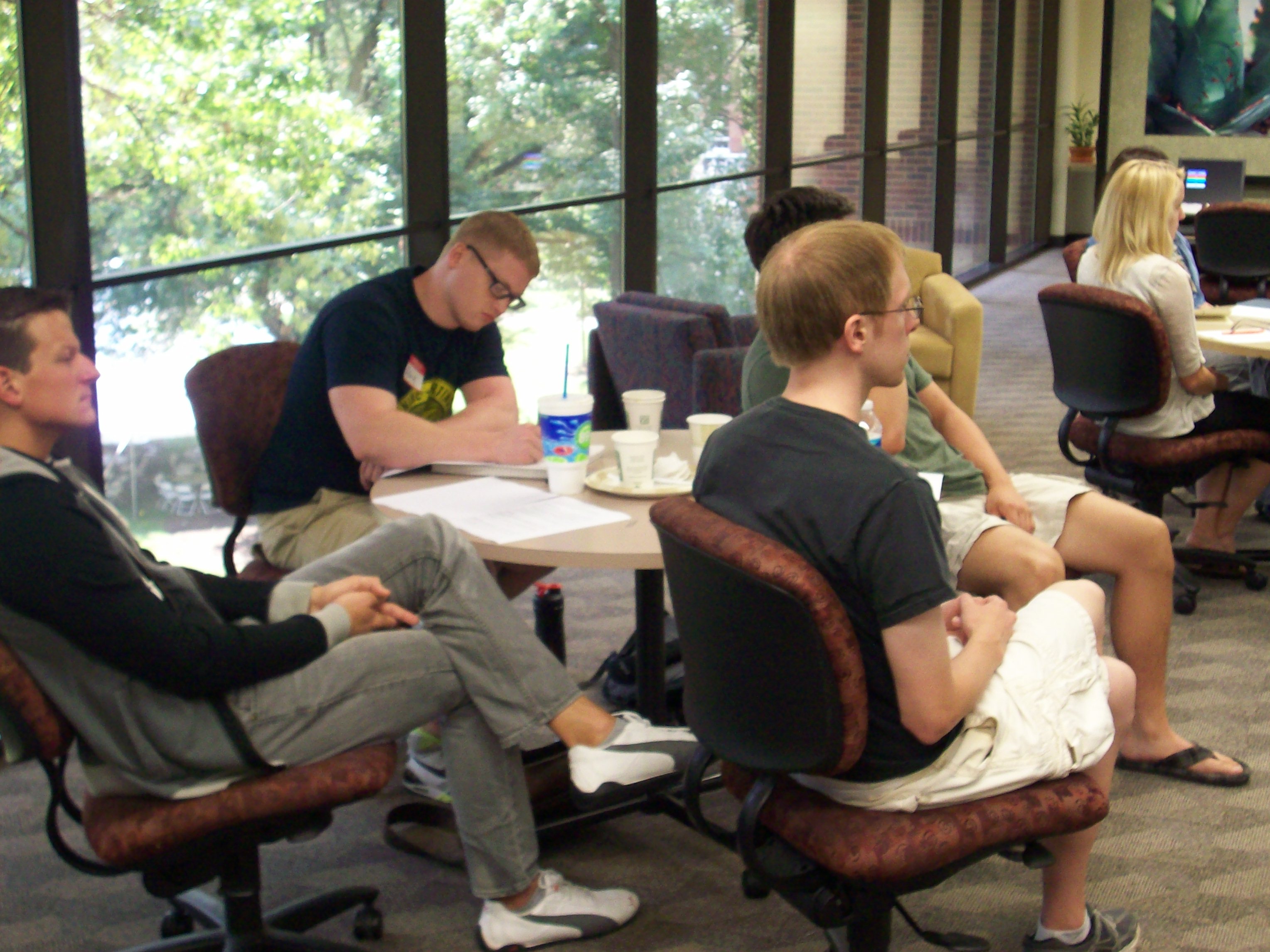
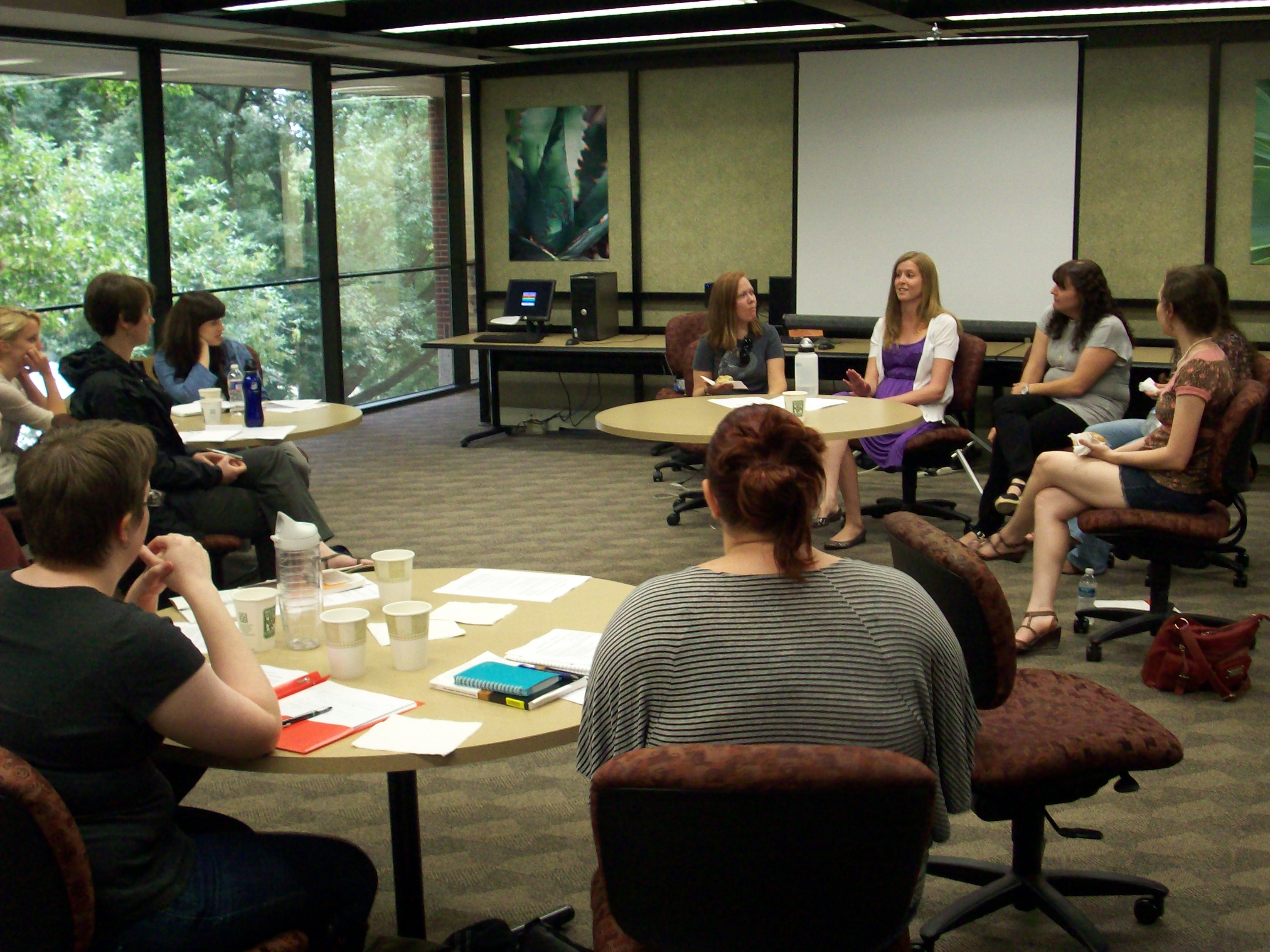
In the Writing Center one of our important rituals takes place when the new group of consultants show up for the coming academic year. On Thursday we all met as a group for the first time at the Writing Center Orientation to get to know each other and to plan for the year ahead. Eleven new graduate students will be working in the Writing Center this year.

Writing Center Orientation 1
Writing Center Orientation

They are a diverse group of people – from cooking enthusiasts to dancers to sports fans to rock climbers to world travelers to musicians. Some grew up in Louisville, while others grew up on the other side of the globe. Yet while their backgrounds and interests distinguish them from each other, their love of writing and their desire to teach others to be stronger writers is what brings them all to the Writing Center. Work in a Writing Center, to be successful, must be grounded in an ethic that draws from principles of service, care, empathy, patience, and respect. Only when consultants approach working with students from these principles, can the consultants and students work together to create more effective, critical, and creative writing. I told the new Writing Center consultants the other day that a Writing Center works best when it functions for both the staff and student writers as a site of inquiry, collaboration, and respect. From the conversations with the new consultants at Orientation it is clear that these are people who will be able to help student writers build on their strengths, and learn not just how to write a better paper, but to be better writers overall.

The commitment of these new consultants to helping others with their writing is impressive and makes it clear that we should have yet another successful – and fun – year in the Writing Center. It is a year that I hope will build on the successes of 2011-12. Among the highlights of the past year for the Writing Center were the following:

  1. We had 4866 visits to the Writing Center in the most recent academic year, including visits to our Virtual Writing Center and to our new office downtown at the Health Sciences Campus
  2. Writing Center staff conducted 70 presentations about our services and 26 in-class workshops on writing issues.
  3. We held our first Dissertation Writing Retreat. Ten Ph.D. students representing four different colleges and six different disciplines spent a week in the Writing Center working on their dissertations and receiving individual consultations with Writing Center tutors,
  4. We have a new Assistant Director position to focus on working with graduate student writers, paying particular attention to the needs of international students. Tika Lamsal will staff the position and split his hours between the main Writing Center and the office on the Health Sciences Campus. In addition the Writing Center, in collaboration with the Graduate School conducted a series of writing workshops for graduate students on both the Belknap and Health Sciences Campuses.
  5. Writing Center staff worked with a number of University programs, giving presentations and conducting workshops, including the Porter Scholars, A&S Advising, UofL Athletics, the Career Center, the Post-Baccalaureate Pre-Medical Program, Family Scholar House, the Delphi Center, and the International Center. The presentations given by the Writing Center staff resulted in many students then visiting the Writing Center for the first time.
  6. During the 2011-12 academic year a number of Writing Center consultants presented their scholarship at conferences including the Conference on College Composition and Communication, the Southeast Writing Centers Conference, the Kentucky Philological Association Conference, and the National Conference on Peer Tutoring in Writing. In addition, Assistant Director Barrie Olson had a piece accepted for the Writing Lab Newsletter.
  7. Our exit survey indicated a high level of satisfaction with the Writing Center, by both quantitative and qualitative measures. Highlights included:
  • In answer to the statement: “My Writing Center consultation addressed my concerns about my writing project,” more than 96% of respondents selected “Strongly Agree” (74%) or “Agree” (22%).
  • In answer to the statement: “What I learned during my Writing Center consultation will help me with future writing projects,” more than 92% of respondents selected “Strongly Agree” (65%) or “Agree” (27%).
  • In answer to the statement: “I plan to use the Writing Center again,” more than 93% of respondents selected “Strongly Agree” (81%) or “Agree” (12%).
  • In answer to the statement: “The Writing Center staff were welcoming and helpful,” more than 97% of respondents selected “Strongly Agree” (80%) or “Agree” (17%).
Writing Center Orientation

On Monday morning, at 9 a.m., we will open our doors at the University Writing Center to begin another academic year. When we open those physical doors, we are also opening other kinds of doors. For the students, faculty, and staff who visit the Writing Center we hope to provide the kinds of response and suggestions that will open the doors to realizing the full potential of a piece of writing. For the consultants in the Writing Center we want to open doors to becoming effective teachers of writing. For the University community we hope to open the doors to being a positive focus and force for all the writing, in all its many forms, that takes place on campus.

In the weeks to come you will see more blog posts from other members about the Writing Center staff. People will be writing about their experiences in the Writing Center, but also about their experiences as writers and their thoughts about writing in general. So stop back by and join the conversation about writing and writers.

We’ve had a good year, but I expect to have an even better year to come.

How the Dissertation Writing Retreat Helped Me to See Writing Center Work in a New Light

Barrie Olson

I’ve been thinking about Writing Center work a lot lately. I attribute this reflection to two events. First, this past week marked my last week working in the University Writing Center at the University of Louisville. It is hard to believe that my two years as Assistant Director (along with Laura Detmering) have come to an end. For both of us, the Writing Center has been a second home. More importantly, our work in the Writing Center has significantly impacted the work we do as both teachers and researchers of writing. There is, however, a second reason for all this reflecting. After two years of Writing Center work, it wasn’t until this past week that I saw, really, truly saw, just how powerful the work we do in the Writing Center can be.

I should, of course, back up briefly and say that I have always felt that Writing Center work is both important and effective. In fact, I even wrote a blog post about it. Rarely, however, are we as consultants given the opportunity to see Writing Center work in its most idealized form. If consultants are lucky, they may work with the same student several times on the same paper. Really lucky consultants might see the same student throughout an entire semester working on multiple projects. What’s great about either of these scenarios is that they let us see the effects of our work. How do students implement the feedback we give them? How do ideas that manifested themselves during writing center consultations then appear in reiterations of the student’s writing? What might we do to better serve this student in the future? When you see the same client multiple times, you can begin to answer these questions and reflect on not only the work you do as a consultant, but also on the effectiveness of that work. Unfortunately, more often than not, writing consultations don’t extend past a single visit. Students might seek feedback for only one draft or come to the Writing Center to discuss writing in only one of their disciplines. While these sessions are no doubt fruitful, as consultants, we can only imagine what the students did when they got home and returned to their writing.

I have been a consultant for both kinds of sessions. I have been left to wonder whether I had been helpful to a student. And I have been able to see just how helpful I’ve been to students. But it wasn’t until last week, during University Writing Center’s first ever Dissertation Writing Retreat, that I was able to see just how powerful Writing Center work, in its most idealized form, can be. The Dissertation Writing Retreat was a week-long intensive writing experience for ten doctoral candidates representing five different disciplines on campus. Participants came in at 8:00 AM each day and would write for approximately 2.5 hours. They would also engage in workshops covering relevant topics such as writing a literature review or overcoming writing obstacles. Then, after a break for lunch, participants would return to writing for about another 1.5 hours before meeting with a writing consultant (like me). Consultations lasted an hour and participants met with the same consultant each day. You can begin to see here how this experience represented ideal writing center work.

First, we had time. An hour is a lot of time to discuss someone’s writing. More time is always great, but an hour gives you time to read the writing, discuss the writing, and, if the participant so desires, begin rewriting. But this is just a logistical advantage. The other advantages spoke to some of the theories of Writing Center work that I never necessarily got to see in action. For example, a common conversation in writing center scholarship revolves around discipline-specific tutors versus general tutors. While discipline-specific tutors are able, often, to speak to the content of a student’s writing, general tutors may be more limited in that area. General tutors offer the advantage, however, of needing the student writer to explain his or her content to a reader unfamiliar with the discipline. In an ideal world, the process of explaining content makes the content more clear not only to the tutor but to the student herself. In explaining the information to someone not already familiar with the content, the student might be forced to think about her content in new ways. If nothing else, she will likely have to make connections within her content far more explicit than she might with someone who is already familiar with it. And, while this all sounded good in theory, for me as a consultant, it was sometimes hard to know if it was true.

Enter the retreat. On the final day of the retreat, participants shared with one another some of the benefits from participating in the retreat. One benefit that came up repeatedly regarded just how helpful it was for them to have to talk about their projects to people outside their fields. Each participant remarked on how such conversations clarified their understanding of their projects and, by association, how they wrote about those projects.

Gaining a stronger testimony in the power of the general tutor was only the beginning. I also was able to see just what can happen when someone gets feedback on their writing not only the same day they wrote it but also on a consistent basis (in this case, daily). I had the privilege of working with two doctoral candidates from the Kent School of Social Work. Each day, we were able to meet and discuss the progress they had made. After each session, we would set goals for the following session. They would then be able to spend time writing knowing that they had goals in mind and that we would be discussing these goals. This isn’t to say that the sessions were prescriptive. At the end of the day, my job was to help these participants in whatever capacity they needed me in. However, setting goals like these meant that each day, we could start the conversation by reviewing what we had done the day before and by seeing how they had progressed based on that previous work. For the participants, this proved to be an important aspect of the retreat. Many commented on the fact that these daily sessions helped them stay on task and motivated. They were also able to discuss their writing when it was still fresh. If a consultant asked them why they made a specific choice in their writing, for instance, they probably could remember why.

But for me as a consultant, the experience was equally as valuable as it was for participants. I was able to see almost immediately which strategies I used as a consultant were working and which ones needed to be adjusted or abandoned altogether. Moreover, these strategies shifted from one participant to the next. In other words, the reflection I did as a writing consultant, while often generalizable, was also specific to the individual participant. By seeing these participants every day, I know that by the end of the week, I was a better consultant than when I started. I would like to think that during my tenure as a Writing Center tutor, I have always improved but it is hard to know for sure. Only with daily reflection in relation to a returning participant was I able to feel certain about the ways I was being either effective or ineffective.

There are certainly other ways that being a consultant during the retreat affected my views on Writing Center work but many have been, or will be, expressed by others. For example, Dr. Bronwyn Williams, Director of the University Writing Center, has already discussed some of the great things we saw come out of the retreat. Likewise, it is my hope that both participants and consultants from the retreat will be motivated to comment or write blog posts of their own. For now, let me simply end by saying this: Writing Center work works. If you don’t believe me, ask Naouel Baili, Tanvir Bhuiyan, Brynn Dombroski, LeAnn Bruce, Alex Cambron, Anis Hamdi, James Leary, Mohammadreza Negahdar, Zdravko Salipur, or Charlos Thompson—our retreat participants. Or, talk to one of the consultants: Ashly, Bender, Robin Blackett, Laura Detmering, Becky Hallman, or Jennifer Marciniak. While I am sure we all had different experiences, I am also certain that we each took something positive away from this week. While my time in the Writing Center is now up, I look forward to seeing what the future brings to the University Writing Center. My hope is that the kind of work that happened there this past week will continue and that both new clients and new consultants will have the opportunity, like I did, to see writing center work in its idealized form. It’s empowering.

Writing Center Talk

Adam Robinson, Associate Director

I’ve been connected to the U of L Writing Center since 2002 when I made my first visit as a student looking for help on my writing.  I was sold after one consultation and continued to come to the Writing Center until I graduated in 2006.  Later that year, I became a consultant myself when I was accepted into the M.A. in English program and was granted a GTA, which required me to spend my first year working in the Writing Center before moving into the classroom to teach first-year composition.  I did a year in the Writing Center, taught composition the next two years, returned as an adjunct tutor for a semester, left again to work full-time as an academic advisor, and returned a year later in 2010 to replace Ruth Miller as the Associate Director.  Needless to say…I’ve had the opportunity to see our Writing Center from a range of perspectives—client, consultant, teacher, advisor, administrator.

Even though it’s been almost 10 years since I first walked through our doors, I can still remember quite a bit about what happened.  I try to remind myself of that every once in a while.  And this time of year—end of the semester—usually causes me to reflect on that experience as the final rush often brings in first-time visitors.  I wonder what those writers think and feel when they come through our doors—what they expect will happen in the session—how nervous they may be about sharing their thoughts and words with another person they don’t know.

In 2002, I was a sophomore, and I chose to enroll in a Creative Writing class.  I still can’t remember what compelled me to sign up for that class as I had never written anything creative in my life.  In fact, I hadn’t read much fiction or poetry.  Prior to college, I had done what was necessary to avoid having to read for classes, and I generally succeeded at that goal.  But in my freshman year at U of L, I took an Intro to World Literature course and me passing that class was contingent on me thoroughly reading the assigned texts.  We read The Death of Ivan Illyich, All Quiet on the Western Front, The School of Wives—all of a sudden I wanted to study literature.

Taking this creative writing course was me stepping way out of my comfort zone to say the least.  I was just starting to pay attention to fiction writing.  What made me think that I could write some of my own?  I was not only going to be sharing my writing with a bunch of people I didn’t know, but I was also going to be sharing writing that I was pretty sure stunk.  My first workshop date was fast approaching and the words weren’t coming—I had to write a 10 page-fictional piece.  So I went to the Writing Center—I can’t remember how I found about the Writing Center, how I knew where it was located, or anything.  But I got there.

The place looked pretty much like it looks now (take a look at previous blog entries for pictures)…same tables, same arrangement of tables.  My consultant (Jeremy) greeted me at the entrance, led me to the consulting area, and initiated a conversation about my project.  Like I said, I hadn’t written a line—I had no angle—no concrete idea.  But I did envision a story centered on a guy sitting at a bar watching other people.  What was going to happen in this bar?—I wasn’t sure.  Had I even been in a bar?  Not exactly, given that I was 19.  Why a bar?  Beats me.  Maybe I was trying to form some picture of a future self.  Sophisticated.  Drinking.  Observing.  Waiting for the action to happen.

Jeremy, in a non-challenging but certainly curious manner, asked me what kinds of bars I had been to.  (I didn’t even look old enough to be in college.)  “None.”  I remember feeling embarrassed.  But I also remember that he wasn’t dismissive of my idea at all—he never made a suggestion that I pick a different locale, never shot me a puzzled or condescending look—instead, we talked about what my idea of a bar was, how I might find out more about bars, how I might paint that picture, where I envisioned the story taking off and concluding.  It turned out that I had more of story in mind than I realized.  I just needed someone to ask the right questions that could bring out the ideas that were floating around in my head—to ask the questions that I wouldn’t have thought to ask myself.  And thinking back now, I needed someone to actually care about my answers to those questions—someone I could confide in and share my ideas with.  His enthusiasm in the session was contagious—as I answered each question, he became more excited about the possibilities.  In a subtle way, his enthusiasm must have implied to me that the writing ahead of me didn’t have to be a chore.

By end of our Q & A, I had a story.  The guy in the bar—a crime reporter!—strikes up a conversation with a woman next to him.  They immediately connect, have a good chat, and eventually decide to play a game of pool.  The woman is an excellent pool player; the man…well, he’s just okay.  Two other men (a bit older), playing at another table, notice the couple and ask them to play doubles.  The man and woman make a good run; then, the two men convince them to play for money.  Turns out the woman and the two older men are a team, and the young man loses all of his money, including a watch that the “one who got away” had given him.  I told a familiar story for sure, but it felt good to tell a story.

I remember feeling strangely empowered.  I promise you that this was the first time that I had ever talked through a paper before actually writing it.  I had never really brainstormed—I never thought that kind of work was worth my time.  Why plan, strategize, map out, and so on if the end result was still going to be a piece of writing that I wasn’t proud of?

My teachers had given me a host of great invention strategies—some had even required me to employ those strategies.  But nothing they told me really stuck.  Ultimately, my “failure” could probably be attributed to my commitment level to making those strategies work for me, but part of me also thinks that I needed that interested person sitting across from me to talk to me about how to brainstorm and to model for me what brainstorming involved.

This is definitely what I like about Writing Center work.  I like the talk.  Two people talking about ideas, sharing stories, developing those ideas, shaping those stories.  Ultimately, Jeremy slowed me down.  Through his questioning and listening, he got me to think a little bit harder about what I was writing than I would have otherwise.  And he gave me some approaches to how I could use those thoughts in my head in a way that would help me craft a story.

Why is our talk so effective?  Perhaps, first and foremost, our consultants are trained, interested, and experienced.  They know what questions to ask, when to ask them, when to not ask anything, when to give direct advice, etc.  And they believe in what they’re doing.  But one other thing I like to talk about when I’m trying to explain the effectiveness of our methods to others is that our talk slows people down.  When writers come in for a session, they are choosing to spend at least one more hour than they might have otherwise on their writing.  And it’s a productive, focused hour.  They have someone to listen to them, to talk to them, to appreciate the effort they are putting in, to show interest in the approach they are taking.  Writers have the chance to think more directly and deliberately about the choices they are making in their writing, which ultimately helps them exercise more control over their writing projects.

I’m not saying that after that first session with Jeremy that I was completely transformed as a writer.  But my attitude toward the projects that came later in my undergraduate career definitely changed after that session.  I honestly came to what were at the time shocking realizations to me—that I had control over the words that I put on the page and that I had control over how I arranged those words.

As I said, the semester is nearly over.  I want to thank all of the consultants in the Writing Center; they are a great bunch of people—a great bunch of friends.  And I want to congratulate Erin, Becky, Sean, Jennifer, Lauren, and Nia for finishing their MAs.  You six have made these last two years a lot of fun.  Thanks.


Writing Center Myths

Ellen Snell

Throughout the past months that I have spent working as a consultant in the Writing Center at UofL, I have noticed that there are many misconceptions of and apprehensions surrounding writing centers in general. Some clients feel that in visiting the Writing Center, they are acknowledging their status as “bad” writers; others are worried that the details of their sessions will be forwarded to their professors. Both of these writing center “myths,” are, of course, false, but there is another misconception upon which I wish to focus: the myth of an English-as-a-first-language-only Writing Center.

In a given week at the UofL Writing Center, we see clients from many backgrounds who study many disciplines – first-year students studying History, PhD. students polishing up their doctoral work, and even faculty members wanting an extra hand in looking over articles before submitting them for publication, just to name a few. What many people may not know, however, is that at the Writing Center we also work with clients whose first language may not be English.

As a student who studied English Literature and Spanish at my undergraduate institution, I was excited to learn that I would be working with ESL students/non-native speakers at the UofL Writing Center. There are some different perspectives that working with an ESL client brings to the table, and I wanted to reflect on a few of those perspectives here.

1. PICTIONARY (WITHOUT THE GUESSWORK). Sometimes when going over an idea or a concept that may be a little ambiguous (imagine that, the English language being ambiguous!), I like to draw a picture or a diagram on a piece of scrap paper to help illustrate the concept. This can be as simple as a few boxes labeled PA, P, and F to indicate the change in grammar from past, present and future tense. I’ve found that sometimes just being able to see an idea drawn out on paper can make things easier for the client to understand and for the consultant to explain.

2. SLOW DOWN!!! Especially when a client or a consultant is nervous (or they’re both nervous!), he or she may tend to talk fast – really fast. While this may not present too much of a challenge to a native English speaker listening to a speed-talking consultant, such a situation may be more difficult when the student is a non-native speaker trying to keep up with the motor-mouth consultant. So, slow down everybody! Just taking a moment to stop, think and inhale deeply can help everyone keep pace and have a successful session.

3. READ ALOUD (YES, YOU). I’m a big fan of the ol’ “I can read it aloud or you can read it aloud” scenario in writing center sessions. I think that the act of reading aloud, as well as the act of hearing a paper read aloud, can work wonders in bringing possible revisions to light and generally clarifying things all around. Some clients, however, may not feel comfortable reading their own work aloud, especially students who may just be getting the hang of the English language. Here’s where the consultant offering to read comes in handy: the client may feel more at ease listening to the paper rather than reading it aloud, and the consultant gets a different perspective by doing the reading him or herself.

I hope these few tips help to dispel more “writing center myths” and make potential clients feel more welcome, no matter their language background!

What I’ll Miss the Most

Nia Boyd

As I move towards a transition out of UofL’s MA program in English, I find myself reflecting on my two-year experience as a tutor in the University Writing Center. It has been fun, fulfilling, and frustrating at times. It has been fun to work with such dynamic colleagues and to be so closely connected to our mutual development as intellectuals, writers, tutors, and instructors. It has been fun to work with the wonderful population of bright young undergraduate students who often have one of those intellectual “Ah -Ha” moments while working in one our tutoring sessions.

However, it is the students who come again and again to work on their writing skills over the course of a semester, or even two or three, which really makes this gig a fulfilling one. They just keep showing up and sometimes they even ask for you by name, and you run into them in the library and they stop and tell you about  their grades, or their latest most hated writing project and how they’re “really gonna need help with this one”, and they come in and they get it. Need I go on? I think not . . . I’m sure my tutoring peers know exactly what I’m talking about and I hope the students know how proud we are of their commitment to their own writing processes! This is probably the most fulfilling aspect of a job that most often does not seem like work at all.

As for the frustrating part, I always wish I could do more. I wish students could ask for longer sessions and get them. I wish instructors would hang out in the WC once in a while to see what we are accomplishing there.  I wish the WC body was more diverse and could work more effectively with multiple languages, including Englishes, and that it could become more proficient at working with special needs students.  I wish that we had extended Saturday hours and I wish our students would express more explicitly what they need most from an entity that exists just to serve them. These are all ideas that may become realities over time; our Director is approachable, he listens, and he cares.

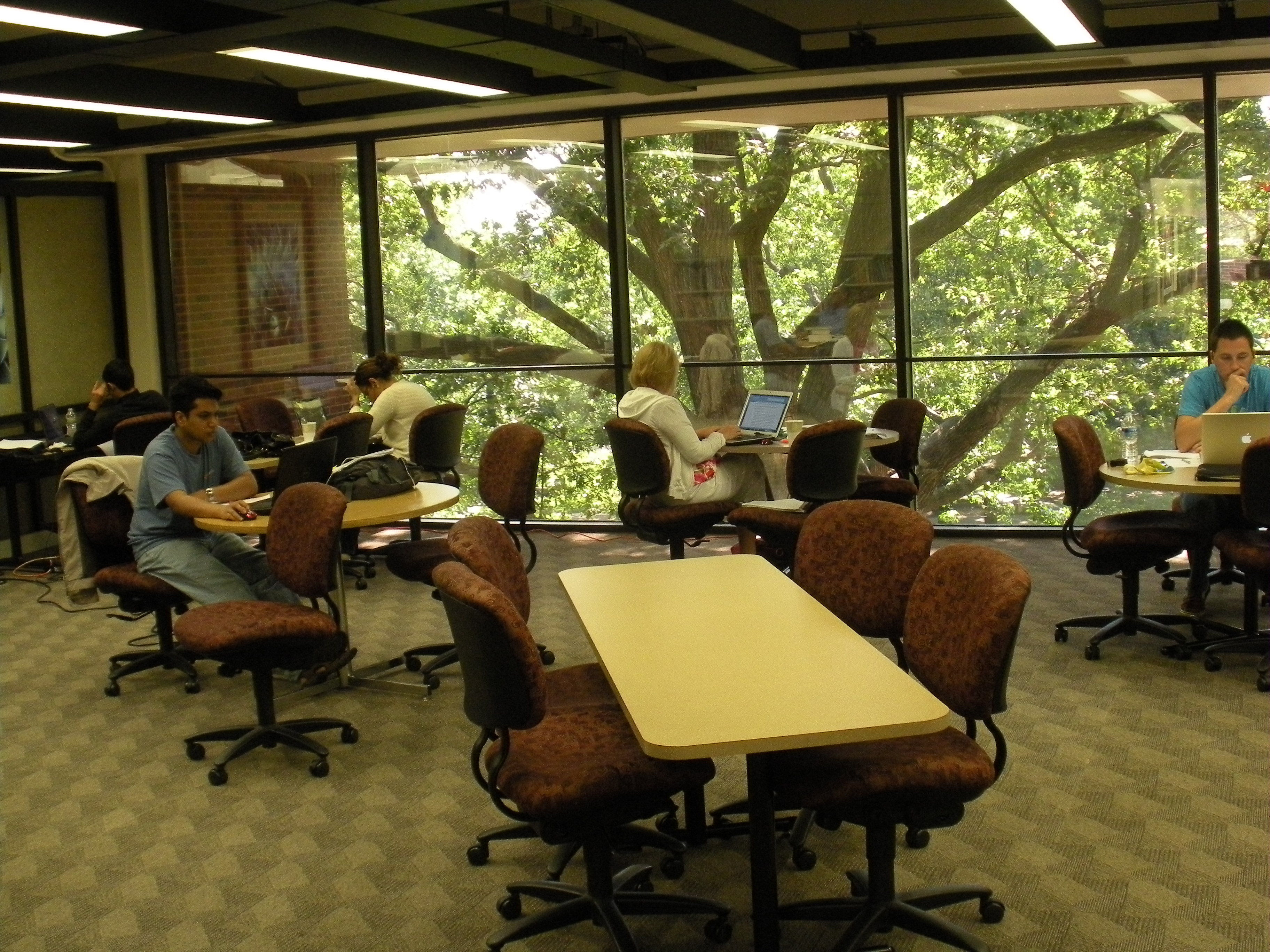
Mid- terms are just around the corner; I will have papers to grade and final projects to complete, and many new students to meet and work with in the Writing Center. Most likely, I will be found at my favorite round table by the window. I like to look at the trees.  The view of campus from that spot is awesome  . . .  almost as awesome as the view of university life we get from our unique position on the 3rd floor of the Ekstrom Library.  As I move, in May, towards either a professional career as an instructor or towards another stint as a student in a PhD program, my experience in the UofL W.C. is what I will savor and miss the most.

Possibilities in the Writing Center

Megan Bardolph

Last semester in the Writing Center, I worked with a student from Nigeria who wanted help with his honors composition class assignments. He set up appointments to meet with me once a week for two or three months. Together we worked on revising two of his essays to prepare for his portfolio. The experience was wonderful on many levels, as I was also teaching a section of honors composition that semester. Oddly, I felt that our sessions gave me the opportunity to really listen to the students I was teaching in my own class. Our conversations were also productive for me as a scholar and thinker. They made me realize and appreciate the complexities of identifying as an instructor, a graduate student, and a writing center consultant.

During our last session of the semester, the student thanked me for my help. I asked if I would see him again in the Writing Center, to which he sadly replied “probably not.” As a pre-medicine biology major, he most likely would not need to write another paper for quite some time.

So I was surprised to see the other day that he had made multiple appointments to meet with me over the next few weeks. On Friday, we had our first session. He announced that he had submitted one of the papers we had worked on to a conference and it had been accepted for presentation. We now have a new project to work on. He told me that one of his goals for the spring semester is to continue working on his writing, as he sees the analytical and critical thinking skills he acquired in first-year English as useful to his studies in the natural sciences. We began to talk about research opportunities afforded by Writing Center work, and discussed potential areas of inquiry that both of us would like to pursue based on our sessions. Our relationship has moved beyond just consultant-client; it’s now closer to mentor-mentee. At some point I may even consider him a colleague. I am continually astonished by how much I learn from him (and from all of my clients, really).

There are a few different implications that I want to draw out based on this experience. Firstly, if you are a student who actually enjoys or enjoyed your first year writing course, know that you are not alone, and that there are opportunities to continue the types of writing and thinking you performed in that course without changing your major to English. It may be useful to seek out a mentor through the writing center, or through a faculty member or graduate student in the English department.

Secondly, if you are a writing center consultant or graduate student, I cannot highlight enough how important I think it is to view the Writing Center as a site of potential research – and this absolutely includes collaborative research with clients. In my experience, the conversations I have had with clients sometimes lead to greater moments of insight into writing, teaching, collaborating, and mentorship than the conversations I have with others in my same position.

Finally, if you are an instructor of writing, or of any subject for that matter, there is great value in listening to what the students want out of their education. The student I have been working with wants to find a way to balance his enthusiasm for writing with a major that does not provide many opportunities for the kinds of composing he would like to pursue. I think this shows there may be a need for providing additional spaces for students to take up this interest. The Writing Center is an excellent place for such work to continue.

Make an Appointment and Keep It

Erin Pinkerton

Many clients make appointments with the Writing Center and then cancel at the last minute. This practice is perfectly fine, and we tutors are happy that clients call the Writing Center to let us know when they cannot make an appointment. We understand that things come up. Life in the academy is hectic for all of us. And sometimes we do not accomplish what we think that we should because we shoulder the “baggage about writers.”

But I would like to challenge everyone to make an appointment ahead of time and keep it. Writing center tutors can help with all kinds of writing at all stages of the writing process, but we can also serve as a self-imposed deadline, a way to hold you accountable for having some part of an assignment or writing project completed. I have heard of some Writing Center clients who already do this: make an appointment ahead of time, so that they know they have to start working on their writing sooner rather than later.

Currently, I am working on writing a prospectus for a project that I intend to complete this semester, and the deadline for the prospectus is next Friday. Yet, I finished a draft of my prospectus just a few minutes ago. I have an appointment to meet with my project director on Tuesday, but I already finished the draft because I said I would e-mail it to him before the weekend. Because someone was expecting me to have some writing done, I had to do it. If it were left up to me, I am sure I would have not worked on the prospectus until next week sometime.

Time management is crucial during the college years, and it is a skill that very few have mastered. (I still haven’t found the perfect balance, if such a thing really exists.) I am certain that if given 40 hours in a day, I would complete all of my work well ahead of time, but until then, I keep trying to make some deadlines for myself—deadlines that allow me to finish writing ahead of my professors’ or bosses’ deadlines so that I have plenty of time to reread and revise.

So don’t depend on your professors. Make your own deadlines. Hold yourself accountable. Let the Writing Center help. Make an appointment.

Writing Centers Could Always Be More Helpful…

Becky Hallman

Over the past several days, I have been watching responses to an article published about the writing center in the school newspaper at the University of Kentucky. In the 48 responses since the article’s publication six days ago, I’ve been impressed by the range of respondents- from students, tutors, and faculty, and also by the range of emotions- anger, frustration, excitement. While Powell’s article, published Wednesday, November 30 has definitely received a fair share of criticism, some readers seem encouraged by such strong interest in both the writing center itself and also the center’s reputation.

Junior journalism major Amanda Powell begins her article with a description of her own experience in the University of Kentucky writing center. Powell’s frustration with the lack of appointment availability, appointment-length, and progress made in her single 30 minute session is not too far from what most of us tutors experience on a daily basis. We are constantly feeling our schedules slammed with back to back appointments, the time ticking furiously away while we work with students on half-written essays due within hours, and the self-reflective worry that we just didn’t get enough done and we just weren’t helpful enough. Not only do I feel these pressures as a tutor, but I feel them as a graduate student writer myself and as a composition instructor as well.

In perhaps the most problematic of her complaints, Powell asks, “How can students consider the Writing Center a proper program when we can’t even have our six page papers edited?”

To me, this sounds like a valid question. If we think about Amanda as a student-writer facing the same kinds of pressure and time constraints we ourselves as writers face, then her frustration when she finds out that writing centers are not places that “perfect” student papers, but instead work closely with students to make some progress, usually a little at a time, seems valid…even if a little unfair. By voicing her experience and admitting to her perception of the UK writing center, Amanda was, in a sense, asking for feedback and ended up generating a lively online discussion about the role writing centers play in student writing.

I think when we receive feedback about our work in writing centers (both the good and the bad), we should take it. Of course Amanda did not have a good experience in the writing center if she expected someone to work with her the second she walked in for an unlimited amount of time “editing” a six page paper. What seems most problematic to me about Amanda’s response has little to do with what she says and more to do with how those ideas about the writing center got into her head.

It’s important for us to remember that many students and faculty do not really understand the work we do in writing centers. When I think about what exactly it is that I am doing as a tutor and why I approach tutoring the way I do, I find my mind jumping in all sorts of directions. How often do we as writing centers really take the time to develop goals? What do we value most about working one-on-one with students, and what do we want those who work with us on their writing to get out of their time in the WC? Perhaps some of us would find that changing student attitudes not only about the work we do in writing centers, but also about the time, patience, and frustration involved in the writing process could be one of the most valuable and important learning experiences we offer.

I encourage you to check the conversation out for yourself: “UK’s Writing Center Could Be More Helpful.”

Why I Love Writing Center Work

Barrie Meadows

I have been involved in writing center work for the past seven years. It all started when I was a sophomore in college in need of a part-time job. The university I was attending at the time had a student worker position available in the writing center. I had no idea what a writing center was but, as an English major, it at least seemed in line with my future career goals (not that I was entirely sure what those were yet). My job was simple: answer phones, make appointments, and be personable. The job really wasn’t all that hard. In fact, more than anything, it was fun. The writing center seemed like a locus of interaction for all the members of the campus community. On any given day I would be involved in conversations with college freshman barely younger than myself, upper-graduates getting ready to graduate, graduate students powering through theses and dissertations, faculty members publishing scholarly articles or taking their classes on writing center tours, foreign exchange students from Japan. And the list goes on. It seemed as though everyone used the writing center. Everyone, that is, except me.

I admit, I was guilty of the cardinal sin of writing centers. I was an English major. As an English major I certainly didn’t need help with my writing. Yes, despite the fact that I saw plenty of English majors, graduate students (including those in the English department), and faculty members come through our doors for a writing consultation, I couldn’t seem to understand that I too might benefit from some time spent working with a writing consultant. The thought of making an appointment didn’t even dawn on me until the day when a regular client of ours (a graduate student working on her dissertation) came in to show the consultant she’d worked with for the last two years the finished product, all bound in leather. She was so excited and, more than anything, thankful for the time the consultant had spent with her over the last sixteen months. Her enthusiasm for the work this consultant had done was contagious. If this consultant could help a graduate student in chemical engineering, what might she do for me?

And so, my first appointment was made. I was nervous (as so many first-time attendees are). Would the consultant judge me? Would she secretly think I was a terrible writer and had no right to be an English major? Would she talk about me with the other consultants when I wasn’t around? I had been in the writing center for long enough at this point that I should have known better. But, for me at least, emotion usually trumps reason and so I went into the consultation nervous. The nervousness didn’t last long however. The consultant quickly put me at ease and I walked away from the session a better writer with better writing.

I have spent the last five years as a writing center consultant myself and I love writing center work as a consultant for the same reasons I loved it as a student. For me, the writing center is one of the few places on campus where you can get help with your writing in a completely non-evaluative space. Writing center consultants aren’t there to judge your work or to assign it a grade. In fact, I can speak for myself and, I imagine, most of the consultants out there in saying that we never think of your work in terms of a grade. We think of it in terms of potential. How can your ideas be clearer, more powerful, more persuasive? How can we help you be the writer you envision being?

I also love writing center work because, more than anything, it is a conversation about your writing. As a writer, I know how much time and effort can go into completing a writing task, even a task you aren’t that interested or invested in (and yes, we all have tasks like that). Any writing task is a product of our labors and, after spending all that time and energy on writing, how nice it is to be able to talk about it. To be able to talk about it and have someone interested in and listening to what we have to say. A writing center consultation isn’t spent with the consultant offering the client a set of skills or rules to make him or her a better writer. It is spent with the writer talking to the consultant about his or her writing.

And this brings me to the final reason (at least for this post) on why I love writing center work. It’s all about the writer talking to the consultant and not the other way around. The writer, not the consultant, sets the agenda for the conference. Don’t worry. This isn’t nearly as hard as you might think. If you don’t know what you want to talk about, or where to start with your paper, that’s fine. But what I found as both a student using the writing center and as a consultant working with other writers, is that we know more about our own writing than we might think. We just don’t get very many opportunities to practice articulating and showing what we know with others.

I’ll get off my soapbox now. I hope that, if you’ve been to the writing center before, what I’ve said here rings true. If it doesn’t, I hope you’ll give us another shot to show you what it is we do. And, if you’ve never stopped by before, how about checking us out? Whatever your situation, I hope you feel motivated to leave us some comments. What was your first consultation like? Is there anything unique or special about the writing center that I didn’t mention (I’m sure there is!)?

Hope to see you soon!