Category: Space

Writing Centers and Twitter: How We Use this ‘Weird’ Space and How Students Perceive It

Jennifer Marciniak, Assistant Director, University of Louisville Virtual Writing Center

When I use Twitter, I use it for a wide variety of information. My interests are varied, and, therefore, my Twitter feed bounces from what’s going on in higher education to the latest trade rumors in Major League Baseball.  I get the Groupons and other “slick deals” of the day, as well as headlines from oil and gas industry newspapers and blogs that commiserate with one another on the newest objections to hydraulic “fracking.”  You’ll even find Usain Bolt tweeting photos of himself at post-Olympic parties alongside updates regarding The Walking Dead and Grimm.  Yes, my Twitter feed is eclectic, to say the least.

However, interspersed among all these posts are those from writing centers at other universities. My position in the Virtual Writing Center at U of L demands I keep up with what’s being discussed in terms of online writing and writing centers as a whole, and for someone who is a perpetual headline-skimmer like me, Twitter is hard to beat. In terms of writing centers, there are the regular business-oriented tweets like University of Wisconsin –Madison’s call for students: “New badgers: stop by the UW-Madison Writing Center for individual writing instruction, group workshops & more!” Then there are “emergency tweets,” like University of Central Missouri Writing Center’s last minute change in plans that was cross-posted to UCM’s main Twitter feed for maximum effectiveness: “@UCentralMO writing center has temporarily been moved to Humph 119 Conference Room. Hopefully we will be back in #humph116 later today.”  These types of Tweets are basic bits of information that students need to know in order to find and understand the Writing Center’s “place” at the University.

While most writing centers use Twitter to get the word out, there seems to be only so much a Writing Center can do to get people to follow their feed, or in terms of Facebook, “like” their page. Even when considering how the Uof L Writing Center could benefit from Twitter, I really couldn’t think of anything past the above UW-Madison and UCM examples. But further research shows that some writing centers are starting to push against the business-oriented Twitter post, and are starting to get more creative with what they tweet.  West Virginia University uses Twitter to post helpful blogs and videos like this one for students to refer to once they leave the writing center: “New blog post about interpreting instructor feedback.” Others are using more visual forms of marketing to promote their services. The University of Kansas sometimes uses internet memes to market their center, such as this most recent one with a viral photograph of a marathon runner: “Even Ridiculously Photogenic Guy knows the power of the Writing Center.”  The meshing of academic and social discourse arguably shows the writing center’s willingness to reach into dimensions utilized and accepted by the demographic toward which the center needs to market.  Writing centers can also do more than just report available tutor times and promote writing workshops. Memes are visual and often shared and/or retweeted across the social media genres. Because the University of Kansas meme was also cross-posted to Facebook, the University of Kentucky Writing Center, a “friend” of the University of Kansas Writing Center, shared the meme with social media friends and followers, who will most likely share as well.  I just retweeted it myself.

Some of the most remarkable writing center tweets are not even by the writing centers, but instead the students themselves. Student voices are by far the most heard on twitter when searching the key term writing center, out-tweeting writing centers 2-to-1.  Many are positive, giving props to what the center has to offer. One student, Michelle W, tweeted of her writing center experience: “Coming to the writing center and there’s candy, play dough, and markers on the tables #lovecollege.”  Another said, “The writing Center about to be My bff today.” Sometimes, though, student tweets show us that as Writing Center personnel we need to be aware of our actions and comments. Chelby KC tweeted about her not-so-hot experience in her writing center: “I love how there are a ton of people on the walk-in waiting list for the writing center and there are 5 staff members standing around.”  Others, like this tweet by Scuba Steve, are just a bit more in need of interpretation: “Idk why my Professor wants us to get our papers checked by the Writing Center…we’re in college for a reason #smh.” There’s no such thing as bad publicity, right? Okay, well, publicity that displays a multi-faceted response to the Writing Center’s necessity to student learning, anyway.  And while you would never hear me advocate Team_Marti’s choice to my students, the value of one-on-one assistance sometimes warrants some balancing of priorities: “I shoulda skipped this class x went to the writing center. Tuh !”

This is just a sample of how writing centers use Twitter and what people are saying about writing centers on Twitter. While it does give us an idea of how we can use this particular social networking site to market our writing center services, it is important to consider questions of oversaturation and too-much cross-posting, as well bordering on “creepy treehouse” syndrome. Another question to ask is do we even need it? Will it be another social networking tool that fades into the ether? Some writing centers have not updated their Twitter feeds in months, begging the question of whether or not it was deemed effective or possibly not used as effectively as it could have been, and therefore abandoned.

I know what I use Twitter for. If you use Twitter, I would like to know your thoughts on how your university programs, office and services (like the writing center) use Twitter. Do you think it is effective or intruding on your personal space? What do you wish the University would use it for? If you do not use Twitter, I would really like to know about your aversion to it. The Chronicle of Higher Education (March 2010) describes Twitter as a “weird space” – that people either do not use it, or they go “all in.” That’s a pretty spot-on description, in my opinion. On my Twitter feed today actor Neil Patrick Harris was tweeting pictures of his dinner while mere seconds prior a digital media scholar posted an expletive-filled retweet about hating Blackboard. And that was about five minutes after Olympic swimmer Michael Phelps tweeted yet another picture of him holding a huge fish on some island in the Indian Ocean. “Weird” is right.

Jennifer Marciniak is a 3rd year PhD student in Rhetoric and Composition at U of L. She is the Assistant Director of the U of L Virtual Writing Center. You can follower her on Twitter at @tululoo.
Inhabiting a Liminal Space

Laura Detmering, Assistant Director

In “Power and Authority in Peer Tutoring” (2003), Peter Carino argues that “to pretend that there is not a hierarchical relationship between tutor and student is a fallacy, and to engineer peer tutoring techniques that divest the tutor of power and authority is at times foolish and can even be unethical” (98). Carino is speaking here of undergraduate peer tutors specifically within a writing center; however, I contend that his argument extends even more compellingly to graduate student relationships within writing centers, particularly those relationships between graduate-student assistant directors and graduate-student tutors. As Michael Mattison points out in “Just between Me and Me” (2008), “When you become assistant director, you take on an authority role that asks you to supervise tutors, some of whom are other graduate students” (16). Mattison raises important ethical questions about the role of the graduate-student assistant director. I am interested in this dual role graduate-student assistant directors play as not-quite students and not-quite administrators. Specifically, I argue that graduate students are placed in a difficult and often underexamined role as assistant directors in writing centers, inhabiting a sort of  liminal space within the university as well as the writing center.

My work in writing centers began during the fall semester of my second year of college. A successful student, I was invited to apply to work at the university’s writing center, and I nervously accepted the opportunity. The new position was anxiety-inducing not just because I was painfully shy and uncomfortable in social situations but also because I lacked confidence in my own writing. Years later, reading Donald Murray’s A Writer Teaches Writing and Lad Tobin’s “Teaching with a Fake ID” in a pedagogy course, I felt for the first time that someone else understood what I felt at my first writing center consultation, that I was a fraud, someone who was on the verge of being caught, someone who lacked the skills to really help others with their writing because I didn’t know what I was doing in my own. What a relief it was to learn that I was not alone in feeling this way. At the same time, I continue to find it troubling how much this anxiety persists and factors into all my professional experiences. And the academy does little to assuage this anxiety, as it continues to place graduate students into positions of authority which are always unsteady, always at question, especially for those of us who are or at least appear very young.

Melissa Nicolas argues in the introduction to “(E)merging Identities,” a collection of essays about graduate students’ roles in the college or university Writing Center, that “Regardless of the role(s) graduate students play in the center—client, tutor, or administrator—their situation is one of constant negotiation” (2). Indeed, graduate students hold a tenuous position within the writing center, as well as within the academy in general. We are not quite students, not quite faculty. Throw in administrative positions, and our status becomes even more confused. Like Nicolas and Michael Mattison, I often wonder how I am supposed to position myself both in relationship to the Director and Associate Director of my writing center, as well as other faculty and administrators on my campus, and the consultants who work in the Writing Center, all of whom are fellow graduate students. For me, the position is always tenuous because of the fact that I am neither a full-time faculty member and administrator nor a full-time student. I inhabit the liminal space, flitting back-and-forth between the positions, both teacher and student, both administrator and writing consultant.

As assistant directors, we are occasionally asked to lead workshops with our consultants. This raises important questions about our authority. For instance, how do I lead a workshop about good writing center practices when several of the consultants I am leading in the workshop actually have more experience working in writing centers than I do? Why should those consultants trust in my authority on the subject when most of my pedagogical knowledge comes from the classroom, not the writing center, and the two spheres are so very different in many ways? Of course, these questions raise other questions like does it ultimately matter if the consultants have more writing center experience than the Assistant Directors.

I would argue that it does because our status is very shaky to begin with, and when you add to that tenuousness the fact that we are being placed in positions of authority over people who sometimes actually have more experience than us, that has an impact on our confidence and our ability to mentor others in the ways that our job demands of us. Granted, experienced teachers and tutors can always learn how to be better teachers and tutors, even from those who are less experienced, and I personally have learned a great deal from teachers and tutors who are less experienced than me, but there will still always remain these questions of or concerns about authority when we place people into Assistant Director positions without a significant amount of experience or institutional authority. At the same time, it is completely understandable why departments continue to follow these practices because when we graduate and apply for positions as professors, we are expected to have such experience, and the current system allows us to gain such experience. And so the cycle continues.

Art and Writing in the Writing Center

Bronwyn T. Williams, Director

The core concern of the University Writing Center is right in the middle of our name – Writing. We work with anyone on campus, with any piece of writing, at any point in the writing process from getting started to final editing. So it shouldn’t come as a surprise to know that we’re focused on, obsessed with, and even more than a little in love with, words.

Art and Text in the Writing Center

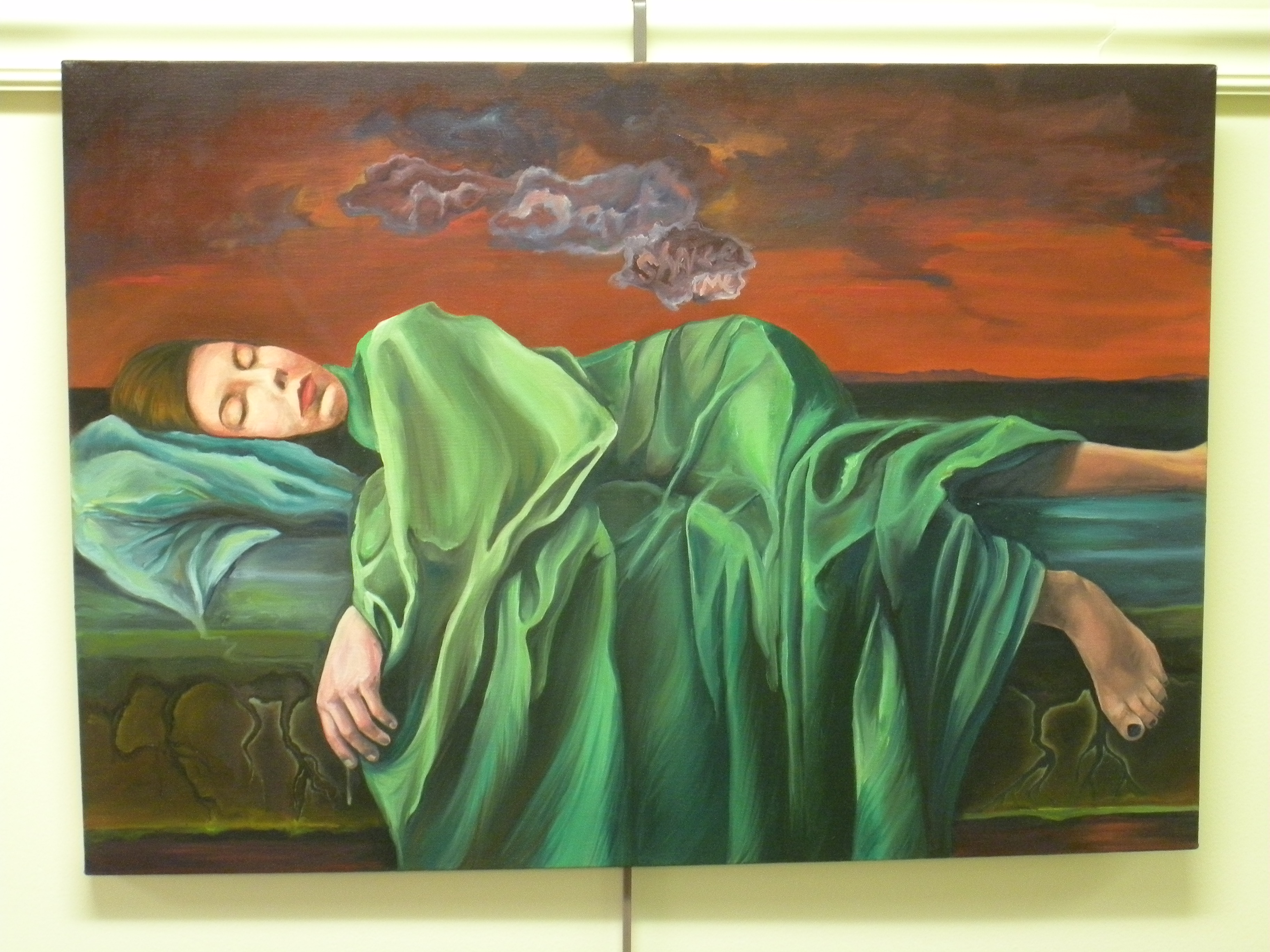
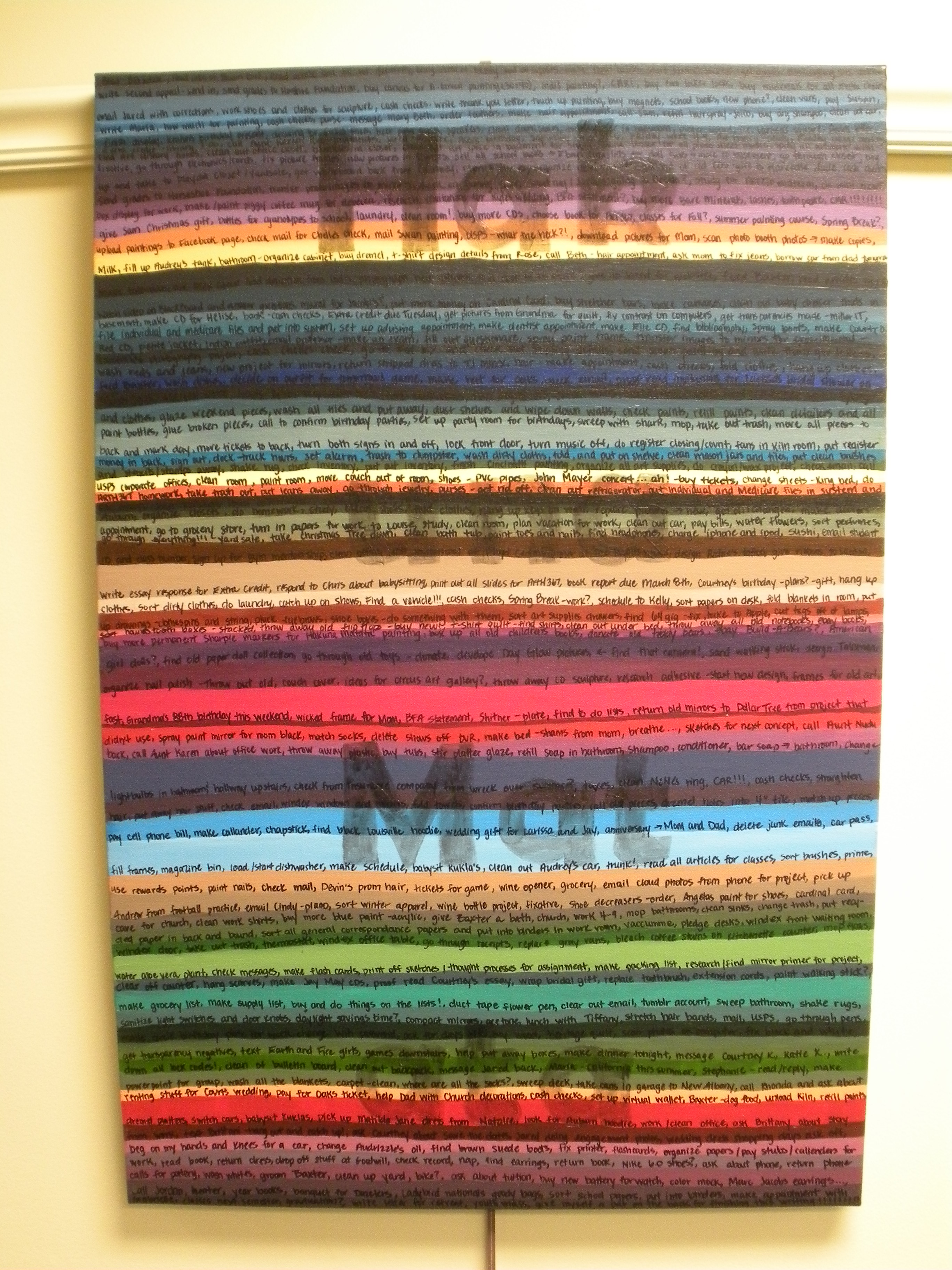
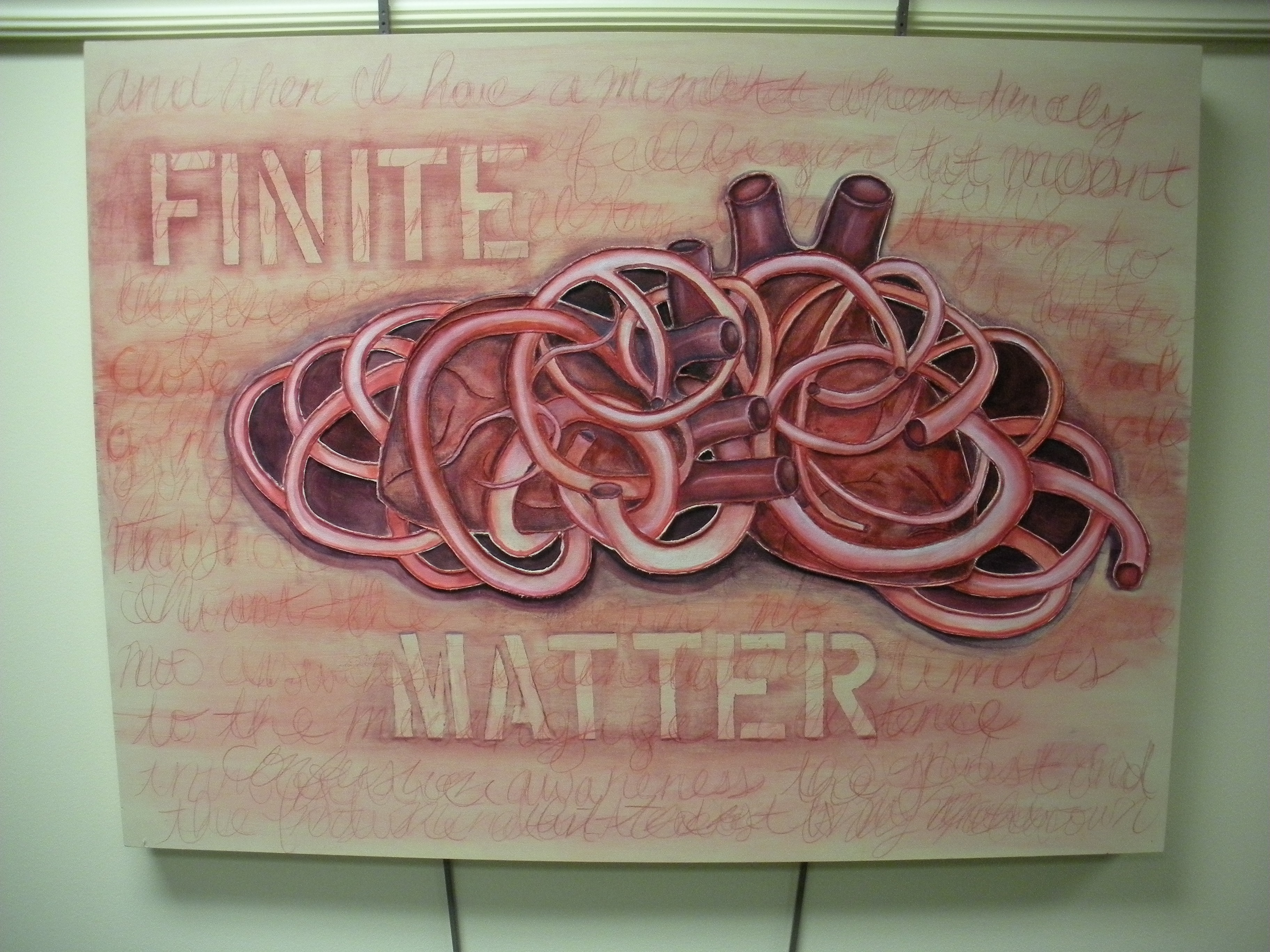
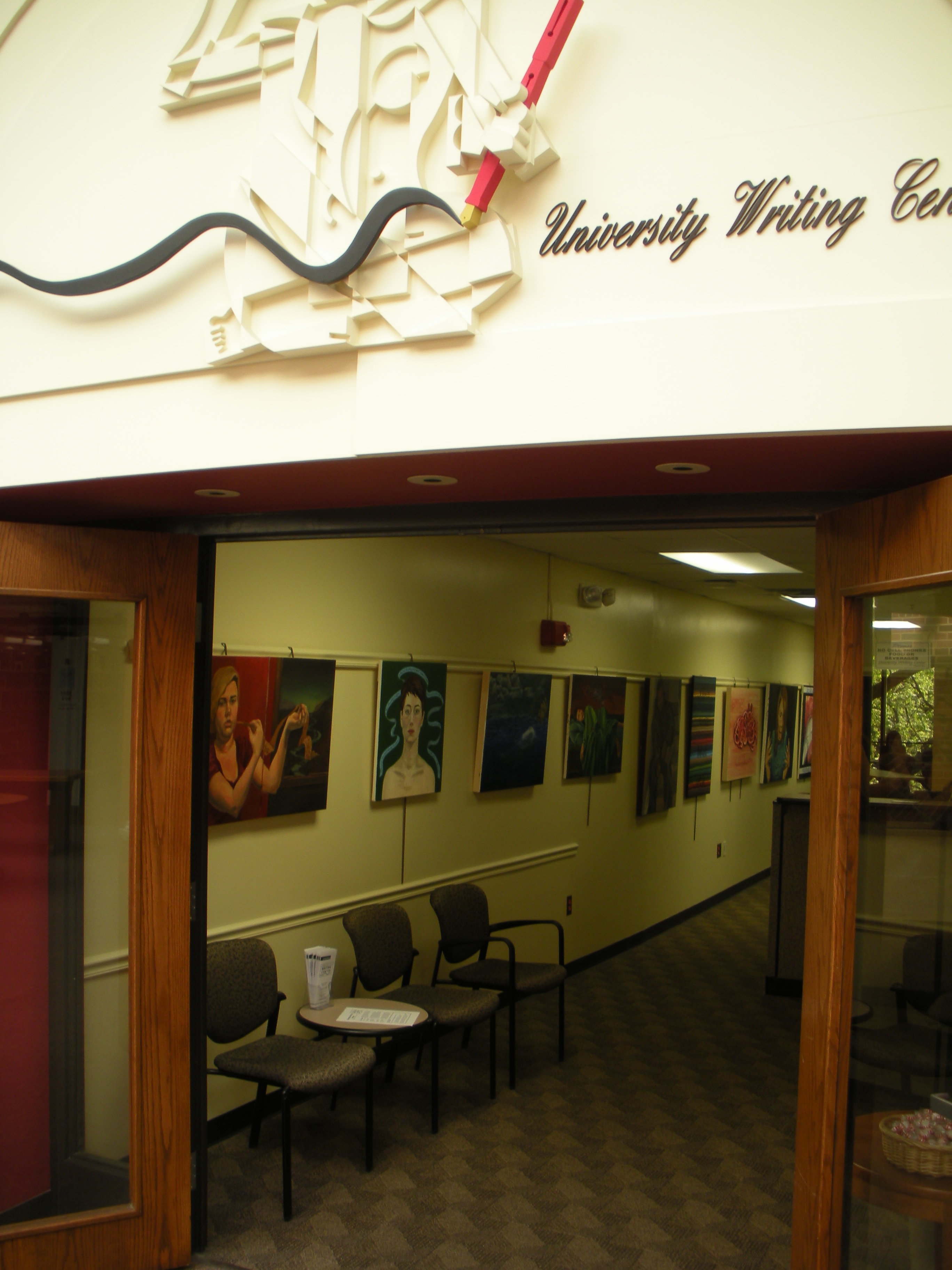
It’s hard to describe how excited everyone here was, then, when Professor Gabrielle Meyer showed up last week with paintings from her Art 501 – Concepts in Painting students. Professor Meyer, who has been coordinating the student artwork on display in the Writing Center this year, assigned her students in the class to create works of art that contained printed words. She created the assignment with display of the works in the Writing Center in mind.

As Professor Meyer described the assignment:

The idea for this concept comes directly from the professional art world.  Galleries and art centers often send out a “call to submit artwork” by concept or theme.   Our concept is inspired by a recent juried international opportunity to submit artwork to Manifest Gallery in Cincinnati, Ohio.

 Not long after humanity began drawing, drawings evolved into writing. Pictures became symbols, abstraction blossomed, and language became visual. Two branches, sharing one root, carried forward people’s ideas, feelings, and plans. The visual and the verbal arts shared the role of encapsulating civilization’s data.

Art and Text in the Writing Center

The students in class responded to the assignment with inventive and thought-provoking combinations of creativity and craft. The paintings are stunning individually, and, hung together, they create a fascinating range of representations of about how words work both as concepts and as aesthetic objects themselves. For our consultants and clients coming to the Writing Center each day, the paintings are points of conversation, objects of contemplation, and a wonderful reminder of how writing permeates our lives and our identities.

I want to offer my thanks to the artists, for their generosity in allowing us to display their work: Alex Kenitzer, Ashley Triplett, Sarah Reasor, Olivia Perkins, Sandra Charles, Brittni Pullen, Audrey Marberry, Miriam Nienhuis, and Amber Schultz.

Please come up to the Writing Center to see this intelligent and creative work!

By Miriam Nienhuis
By Amber Schultz
By Brittni Pullen
By Audrey Marberry
By Sandra Charles
By Olivia Perkins
By Sarah Reasor
By Ashley Triplett
By Alex Kenitzer

Perch

Jennifer Marciniak

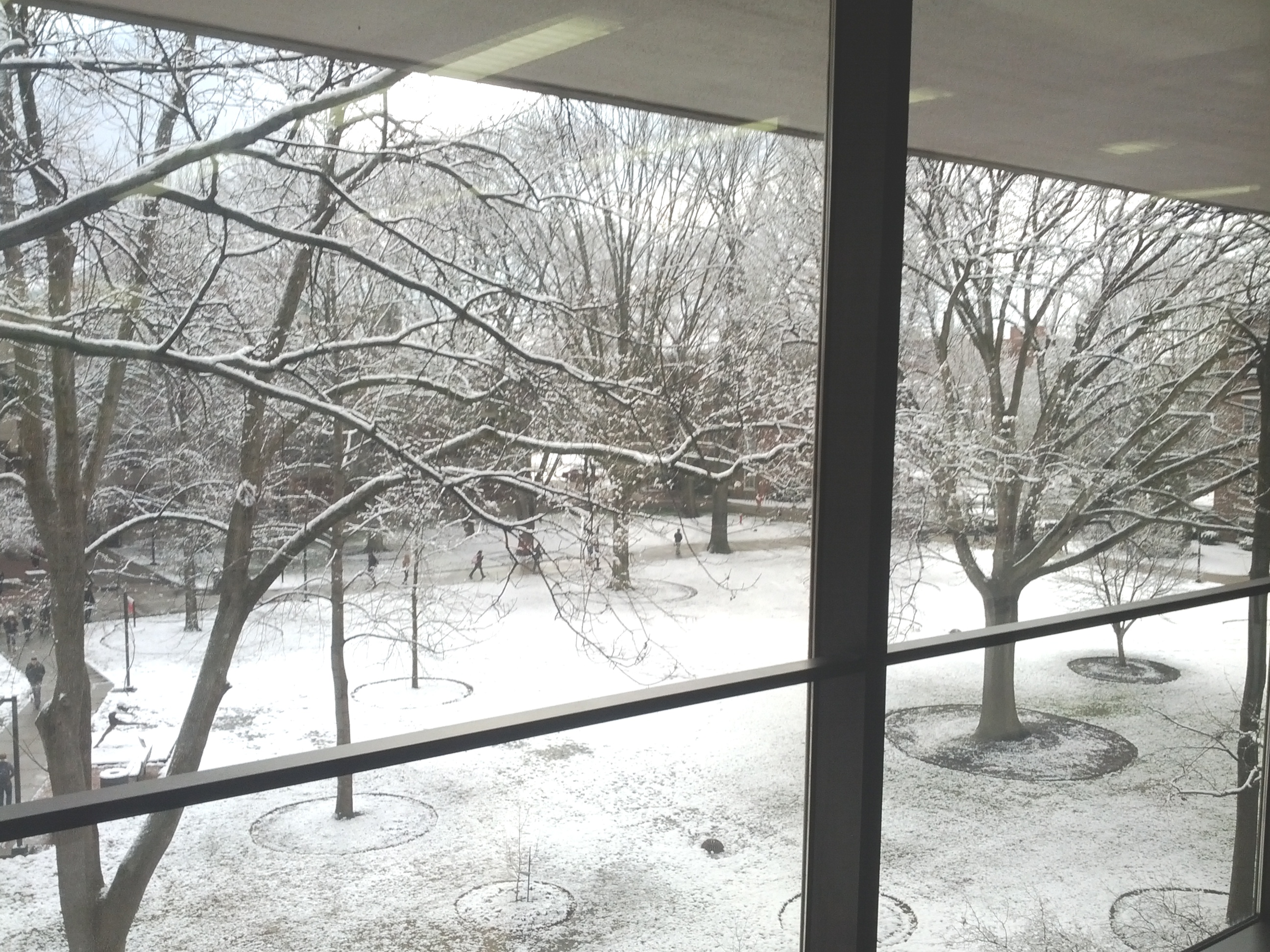
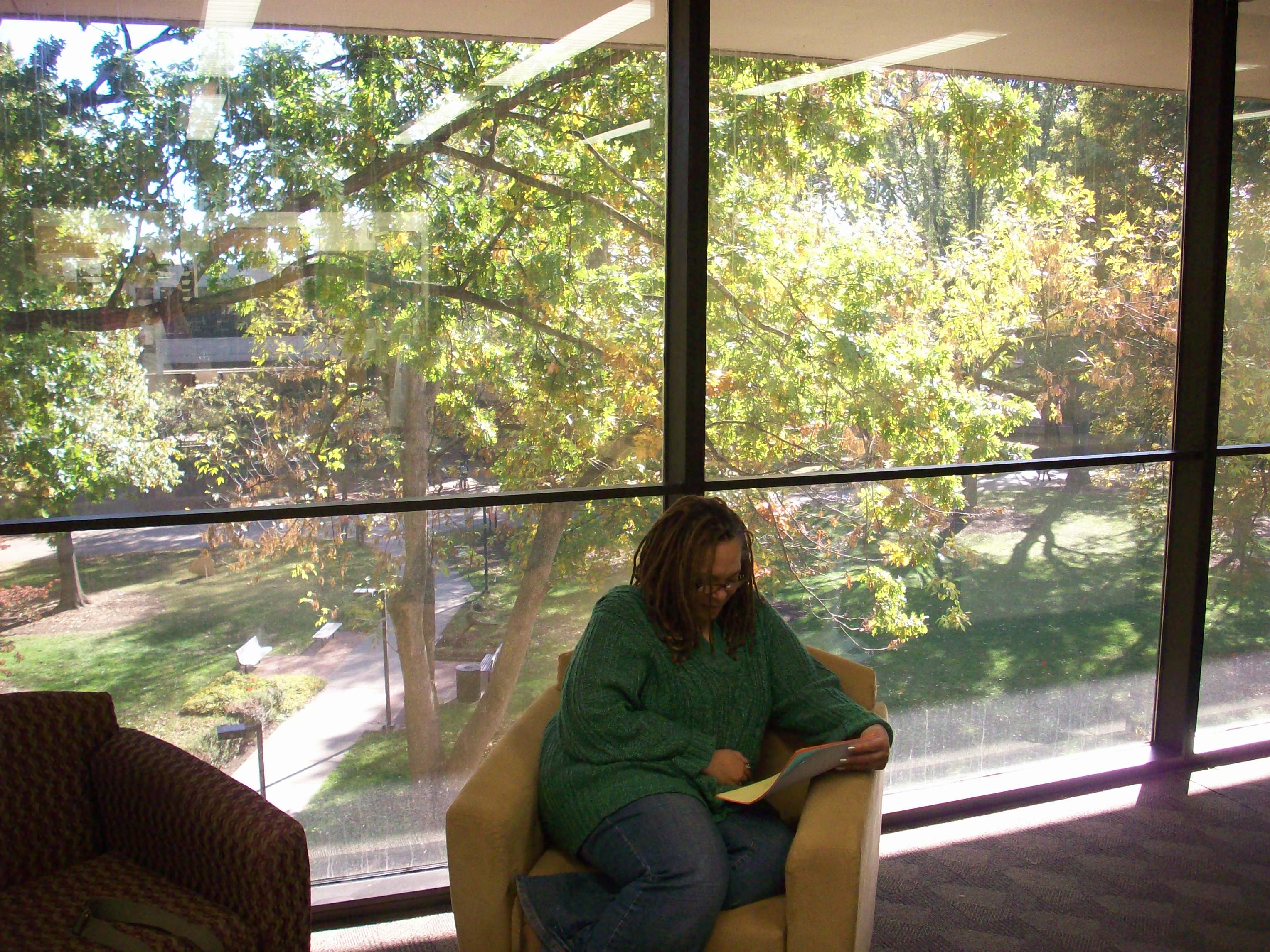
Usually at the writing center I stare out the window during my 15 minute break between sessions. Our window takes up an entire wall of the center, looking out over the central part of campus where students walk between buildings and classes. It is “winter” now, and I think back to when the campus was pretty – all brown and yellow and orange from the fall leaves of a Kentucky November. Not a vast courtyard of skeletal trees like it is now.

Even though it is now winter, activities below are still the same. The students walking along the grid of sidewalks bustle along, talking on their cell phones, backpacks loaded down with laptops and books. I see all of this from my perch — a window three stories up where I can see them, but they cannot see me. The window is full, from floor to ceiling, and it makes the entire wall look like a mural of fall foliage. Sometimes I just watch one person walk from Bingham Humanities all the way to the library. I see them shuffle their backpack on the shoulder. Watch them reach into the pocket for the phone to text as they walk. Sometimes they have to sidestep another student as they swerve into their path, far too engrossed in updating their Facebook status than paying attention. Sometimes they gaze up into the branches, squinting in the mid-day sun as if to find some hope or answer. They do not look up at me, the one behind the curtain. If they do, their gaze is quickly diverted by something far more important.

You see, I am not of power. I am one of one million. From the outside, my window is a sheet of dull, opaque glass. In some ways it reflects Michel Foucault’s panopticon, an all-seeing eye over the student’s movements. However, it is one of many black, opaque windows staring out from buildings into the sea of education. Students walk from building to building under the gaze of professors and staff, looking out from their own veiled watchtowers. But, because there are so many watching eyes, their sheer numbers allow them to fade into the building proper — nothing foreboding, nothing overtly power-hungry, and for the most part, ignored.

Fall in the Writing Center

Hannah Harrison

One of my favorite things about the Writing Center—the physical space itself, I mean—are the giant windows that look out over the quad. The view makes me feel like the Writing Center is not really contained inside Ekstrom Library; it’s actually suspended in a tree house.

We’re nearing the last week of October, but—for the most part—the leaves out there are still green. Last week one of the trees’ leaves got wise and turned brilliant yellow. I’ll miss the full foliage of summer, but I’m looking forward to the earthy, warm colors as the season changes to winter.

Of course, autumn leaves also remind me how much time we’ll all soon be spending inside (a sad thing for this wannabe gardener). With the gray, chilly rain we’ve had this week, I’ve already noticed how much more difficult it is to find a quiet study nook in the library. I might be giving away Ekstrom’s best kept secret, but I guess that’s part of my job: If you’ve gotta be cooped up inside with the books, U of L’s Writing Center is by far the best place to be on campus.

Nia, one of the Writing Center tutors, enjoying some quiet time by the windows.