
Our “How I Write” series asks writers from the University of Louisville community and beyond to respond to five questions that provide insight into their writing processes and offer advice to other writers. Through this series, we promote the idea that learning to write is an ongoing, life-long process and that all writers, from first-year students to career professionals, benefit from discussing and collaborating on their work with thoughtful and respectful readers.
Katherine Massoth is an Assistant Professor in the Department of History. She received her PhD and Master’s from the University of Iowa and Bachelor’s degrees from the  University of California at Irvine. Her research specialty is the history of women and gender in the U.S.-Mexico borderlands. As a historian of the Americas, she teaches history courses on women and gender, borderlands, the American West, and chicanx/latinx studies. Her most recent publication analyzes how women’s cookbooks became a borderland for defining the appropriate type of “Mexican” food that could be incorporated into U.S. appetite – “‘Mexican Cookery that belongs to the United States’: Evolving Boundaries of Whiteness in New Mexican Kitchens,” in the edited volume Food Across Borders, Rutgers University Press, 2017.
Location: Louisville, Kentucky
Current project: I am currently revising my doctoral dissertation into a book manuscript. I am writing a history of women’s domestic and private lives in the U.S.-Mexico borderlands, specifically Arizona and New Mexico. The project reconstructs how women, across ethnic groups, reacted to the transition from Mexican to U.S. control after the U.S. colonized the region in 1848. I am trying to retell the larger political history of the transition of power by focusing on women’s lives, such as their cooking, housekeeping and childrearing. I argue that these daily activities tell us more about the larger political process because we see how women were (or were not) affected.
Currently reading: Karen Roybal’s Archives of Dispossession: Recovering the Testimonios of Mexican American Herederas, 1848–1960 and Helen Sword’s Stylish Academic Writing. I am also reading Julian Lim’s Porous Borders: Multiracial Migrations and the Law in the U.S.-Mexico Borderlands to review for an academic journal.
1. What type(s) of writing do you regularly engage in?
I write non-fiction/history. I am currently focusing on revising, which I am slowly learning is a completely different type of writing than putting words down. It is more than proofreading or reorganizing. Revising a dissertation to a book manuscript is a process they do not teach in graduate school and is completely daunting because there are no advisers hovering or demanding words. It also means taking a piece of work that I thought was complete and reworking the piece not from a blank slate but from 350 pages. I spend most of my writing time on thinking and less on writing. Right now, I am focusing on how to restructure my narrative, condense sections, cut dissertation jargon, and tell a cohesive and engaging history. I am also trying to find my voice. While writing my dissertation, my voice got lost because I had to follow the strict dissertation guidelines and provide background and theory to establish my study. Now that I have defended the value of this history, I can focus on telling it in my own style.
2. When/where/how do you write?
My writing location depends on where I am in the process. If I am revising or brainstorming, I tend I write in coffee shops with the ambient noise of people shuffling about. If I am putting fresh words down, I typically need to be alone in the library or my office. Most of my writing takes place in the afternoon, evening, or even late at night. I have never been a morning writer. I have to get all my tasks done before I can write. Otherwise, I am distracted. I write on my computer but I outline in a spiral notebook and take notes on hardcopies of my writing. I typically print out what I have written and make notes on the paper then I take it to the computer.
3. What are your writing necessities—tools, accessories, music, spaces?
I need my writing uniform – leggings and a baggy sweater and shawl. My headphones are an absolute necessity because I listen to my “writing music” playlist of some tunes that I am so familiar with that they become ambient noise in the background. I wrote my entire dissertation listening to Sylvan Esso and Bon Iver on a loop. I also need my water  bottle, coffee, computer, research and archival files, and notes. I have a set of erasable colored pens, one black pen, and a pencil that I always have. Each writing implement has a different purpose in my process. I also need time. I never developed the ability to write in short intervals. If I do not have at least 2 hours for writing, then I cannot sit down and do it. I like to dedicate large chunks of time to the process so I do not feel harried.
4. What is your best tip for getting started and/or for revision?
I am a tactile person – I have to touch things to process fully everything. When I find it difficult to revise, cut words or repetition, or reorder sections, I print out the document or paragraph. Then I cut each sentence apart or cut each paragraph apart. I lay out the pieces on the floor and just start piecing everything together like a puzzle. This works for cutting sentences because if when I am done I find one sentence lying to the side, then I know it was not necessary. This is especially useful for finding where I repeat myself. If I am reworking a larger section, I often find that once I take the paragraphs out of the full document the structure completely changes. I often suggest this to students who have a difficult time revising because it takes the pressure of a word document off. It also works because it does not feel permanent.
5. What is the best writing advice you’ve received?
Make writing an appointment in your calendar just like a doctor’s appointment or meeting, and stick to it. Do not schedule anything during that time and if people ask for that time, say you have an appointment. During that appointment, set a maximum of three goals to achieve. If you achieve all three, then great, and if you achieve only one, then you know what you are working on next time. Then when your appointment is done, make your three goals for the next session so you know where you are starting.
Do you know someone who would be great for How I Write? Send us your recommendations!

 many papers, presentations, bibliographies, and so forth. Psychologically speaking, this kind of nonstop stress can be almost unbearable. So, I deal with it the same way everyone else does: just trying not to think about it. And for some reason, nothing feels as good to put off as writing. I may not be in the majority here, but I never really minded studying a bit for tests, or practicing presentations. But writing, satisfying as it may be, is a different kind of mentally exhausting. It requires all of this creativity and self-awareness, so I can never just auto-pilot my way through it. So, I procrastinate.
 Kristi Maxwell is an Assistant Professor of English and a mentor in the Association of Writers and Writing Programs Writer-to-Writer Mentorship Program. She’s the author of six books of poetry, including Realm Sixty-four, Hush Sessions, and Bright and Hurtless, forthcoming from Ahsahta Press in Sept.
 with Britney Spears, and “Everytime,” Spears’ response to Timberlake, were all over the air waves. Timberlake’s “Cry Me A River” appeared prominently in Greta Gerwig’s 2017 film Lady Bird, a film very much about the love between a mother and her daughter, creating this circle of overlapping Items-of-Popular-Culture-About-Love. Love (or lost love) figures so prominently in our day-to-day intake of pop culture that, when you really sit and think about it, it’s a little odd that we dedicate an entire holiday to it like it’s some kind of prominent mythical deity. Valentine’s Day, which falls in 2018 on a Wednesday—this Wednesday!—is so ubiquitous to American culture that it isn’t surprising to us when parades of red and pink, often accompanied with an uncomfortable amount of hearts, invade our department store aisles pretty much the day after Christmas. This year, I’ve taken some time to reflect about the pervasive nature of love and I ask myself the question: what do we talk about when we talk about love? (A shameless reference, sorry.)
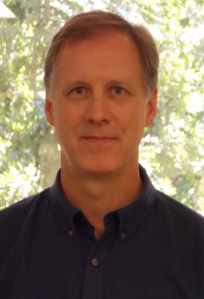 suggestions about organization or revision or grammar and usage. Yet we also believe that writing well involves more than just mastering a set of skills. The writing processes we use, as well as how confident and motivated we feel to work on a piece of writing, can be crucial to how successfully any writer navigates new writing challenges.
 Practices and Perceptions of Agency: Composing Identities
 naturally feature their tumultuous love lives and frequent brushes with death.
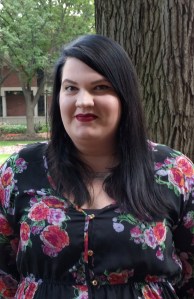 worth researching and writing about? Am I qualified to make such an argument? Am I bringing anything new to the academic conversation?
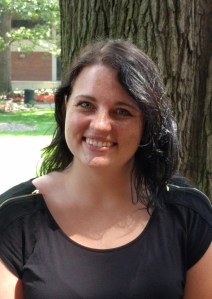 brain likes to periodically revisit this moment. This seems to be the sort of mental dwelling most of us do, and we are usually trying to escape that memory rather than relive it a hundred times. Embarrassing memories from 7th grade are not the most pleasant places to dwell, and we don’t think of them as useful. However, dwelling can be productive if placed in the right context.
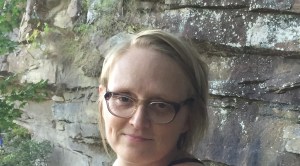 history, public history practices, and digital history methods.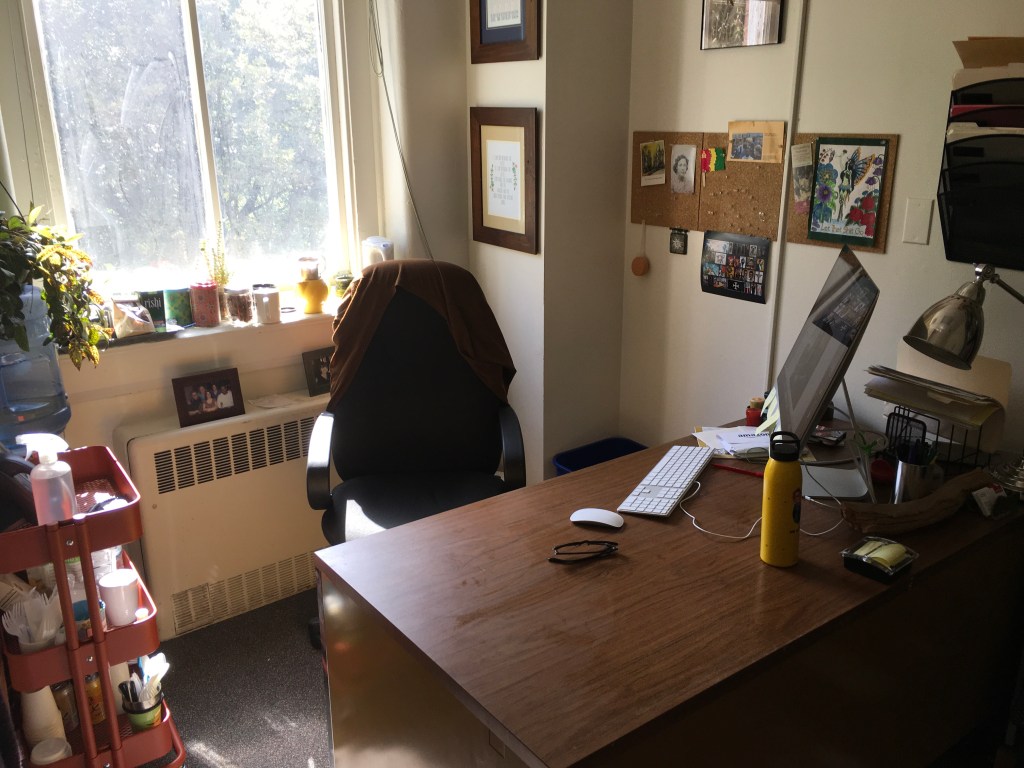
 University of Louisville Writing Center