Category: Academic Writing

The Writer’s Notebook: Building Your Toolkit

Quaid Adams, Consultant

Writing is hard and can be daunting. Let’s get that out of the way first and foremost. Just like with math or science, some people excel at writing and can pump out dissertation length pieces with ease.Quaid Adams  While there are others who find themselves barely being able to string words together to make what they think is a “good” sentence, let alone, a longer piece of writing. I get it. Truly, I do.

Even though I am a graduate student in English, there are days that I struggle to write. Whether that is due to me not really having a direction to go in a new piece or hitting the dreaded wall of writer’s block in the middle of something I have already started. Or even not really feeling like writing that day because there is so many other things going on in my life that I cannot focus long enough to write something well.
Everyone’s story with writing is different and there can be real beauty in that. However, there is one thing I am sure of, there is no such thing as a bad writer.

Regardless of what former teachers, family, or friends have said in the past, you are a writer, neither good nor bad, but a writer who is ever changing and learning. We all are. We can all bring different things to the table and can share amazing stories given the opportunity, some of us are just a bit more reserved about it than others. Writing, whether academic or creative can be an outlet for so many things and can not only serve as a form of expression, but also as a form of therapy and a way to bring clarity to this crazy world. One tool that I have found that incorporates all of this is by beginning to keep a writer’s notebook.

What is a writer’s notebook? The answer to that is simple; it can be whatever you want. However, you may think this freedom makes it sound like a journal or a diary in its makeup. While it does share similarities, the writer’s notebook functions as more of a reactionary platform versus one of description. In his book, A Writer’s Notebook, author Ralph Fletcher describes the writer as someone who reacts to their world and differentiates them from ordinary people who notice things but do nothing about it. He goes on to describe the writer’s notebook as, “a place to write down what makes you angry or sad or amazed, to write down what you noticed and don’t want to forget, to record exactly what your grandmother whispered in your ear before she said good-bye for the last time” (4).

The writer’s notebook is a sanctuary for the writer and its pages are there for them to explore and express themselves through. Writing a paper for class and having too many ideas? Make a list or a web to get your thoughts organized. Lost in a daydream about some far-off fantastical place? Write it down in detail as a starting point for a larger piece of writing. Walk up on one of those campus protest about something you are feeling strongly about but can’t express yourself out loud, write about those feelings. It is your notebook to do with as you please. You can write pages on a single topic or just scribble an idea or something you overheard in the margins of the page to come back to later. Make it look professional with hard-leather backing or make it bright and colorful. Whatever reflects you as a person and whatever is going to make you use it.

I know, I know. It sounds kind of hokey and like just another piece of writing you have to keep up with in your already busy schedule, but hear me out. Writers get better at writing by doing it. Using the writer’s notebook to do this in an environment where you are not being graded or judged allows you to write without fear of repercussions or without an impending deadline looming. It also allows you to have complete creative control of whatever goes into your notebook. Not unlike a tradition journal in this sense, it also allows to you observe and react to the world around you, and as a way to channel your emotions into your writing.

However, the difference here is that while you may be using it as a means of therapy, these feelings and thought are also neatly tucked away into your writer’s notebook, ready for you to pull inspiration from someday down the line. So while you are benefiting from it now by relieving stress or the emotional trauma of Qdoba being out of steak for the burrito you’ve been craving since noon, you may also benefit from it in the future when you need inspiration for another project. The notebook can utilized in terms of academic and creative writing as well. Say an idea pops into your head about a story you might like to write or a topic for a research paper miraculously appears, write it down. Even if you don’t return to it anytime soon, its still written down and ready for you to pull from whenever you need it.

This brings up another important use for the writer’s notebook; reflection and editing. Your notebook is a glimpse inside your mind, spilled out onto a piece of paper. The only difference is that while thoughts are fleeting and can be easily forgotten, what your write in your journal is a tangible representation of your feelings and thoughts which can be visited whenever necessary. Reflection and editing is a vital step in any writer’s journey through a piece. It allows us to better understand ourselves and the work we have done to actually sit back and reflect on its importance to us and to whatever it is we are working on at the time. Through your writer’s notebook you can do just that, without constantly worrying about grammar or spelling errors. You can write what you are experiencing or whatever jumbled thought flits through your mind. Just write it, let it stew, and come back to it on a rainy day, or never again if you don’t want to. Sometimes it is good to get things out of our head and it is ok to never look back at it again. However, it is there should you want to.

The writer’s notebook is a multi-faceted tool for any and all writers, be they from academia, or just the poets and writers that wander the world making it a little better with each written word. It has something for everyone to benefit from regardless if you think you are a good writer or a bad one. Through the use of this resource, we as writers can have safe place to store our ideas, our feelings, and musings, if for no one else but ourselves. So pick up an empty notebook today and just start writing, it doesn’t matter about what, just write. You may be amazed at what actually comes out on the page.

                                                                           Works Cited

          Fletcher, Ralph. A Writer’s Notebook. HarperTrophy, 2006

If interested in further reading on the topic, I highly suggest picking up a copy of the work cited above, Ralph Fletcher’s, A Writer’s Notebook. Below is the link from Amazon:

Write Like You Mean It

Josh Christian, Consultant

            Advanced Composition appeared as an elective course in my student handbook at Campbellsville University, where I was an undergraduate. I enrolled my junior year, to try to get it out of the way for a freer, more calm senior year.Josh Christian (We all know about senioritis) But it was the only class on my schedule that semester I was concerned about, as I didn’t know what to expect. “Advanced Composition” read as if I was going to be plunged into the icy academic waters, left to sink or swim. So, sitting in the lecture hall on the first day of class, I was surprised when the syllabus listed a narrative as the class’s first formal assignment. First, I wondered about its elementary nature, how it seemed trivial for English majors. Then I began to panic. What was I going to write? How was I going to structure it? What ways could I approach such a broad topic? How would I know if I was writing it correctly?

If you are wondering, I didn’t die. I got through the assignment, and it was much easier than I thought it would be. But I do not believe I am alone in my panic, as in universities across the country, students are faced with such writing assignments in composition classes. And because of their lack of experience with writing narratives in an academic setting, they don’t know what to do.  The anxiety they are feeling is more than one writing assignment. No, it is evidence of something larger at play.

Throughout my high school and early academic experience, I was taught to write for the academy. I was to take myself out of the equation, permitted from using “I”. Instead I was told to be objective and to state my opinion but through an unbiased language. I was taught to not make a claim unless I could back it up. And if I did attempt to back up my claims, I needed to cite the material in-text and on a reference page of some sort. This was academic writing. The other kinds of writing, creative writing (stories, poems, plays, etc.) and journaling or messages sent to a friend, had their place but it just wasn’t in the academy.

You see, there had been a binary established, one in the making for generations before me. Academic writing sat on one side, while creative writing sat on the other. And like all binaries, there was a strict wall between them, especially early on, when all narrative or poetic elements were driven from a student’s paper until it became nothing more than thesis statements and transitional phrases. Don’t get me wrong, these elements of academic writing also have their place. But to drive the use of these elements out of any writing completely, is to take away a writer’s desire or ability to be creative, leaving stacks and stacks of student papers which otherwise could have been more thoughtful.

So, what do we do with such a binary? How do we, as students or faculty deal with it? How can we be excited about academic writing, if we can’t be creative? And how can we approach creative projects, like literacy narratives, if we haven’t historically been given permission to be creative before? Well, like any binary, we begin to defeat it when we question it. And when we begin to question the binary, it only helps if we are ready, as students and professors alike, to take back the mantle of “writer,” a title left for the literary authors who often mold the work we, as an academy, talk about.

            When we begin to identify as writers, we begin to take responsibility for our words. We begin to be more thoughtful about what we write because we have agency over our words, them becoming our own. So, make the choice that all writers have to make. When you read the assignment sheet, ask yourself where you can stand to be creative. How can you begin with an anecdote, using narrative elements? How can you push the limits of a rubric by thinking differently about a topic? How can you make what you are writing fun to write or read? Before you know it, your creativity will inform your academic work, and your academic writing will show you the necessity of research and argument. Dare to be a writer in your own right. And whatever you write, write like you mean it.Image result for bob dylan think different                                                                     (Apple, 1997)

So You’re Looking to Get Published?: A Quick-Guide Reference to a Few Publishing Opportunities

Adam Yeich, Consultant     

So there is a rather large and close literary community here is Louisville, especially within the university, and this is something I was very happy to find here when I moved from rural Northeast Ohio. There are a whole bunch of things I could postAdam Yeich in this blog concerning writing, but I wanted to focus on something that would be especially useful to the future endeavors of the writing community here and at large. It’s a topic I didn’t have access to or knowledge about accessing until well into my own academic and creative writing career: submission and publication.

Publishing is the aspect of creative writing that is perhaps most daunting, especially for newer writers and/or writers trying to get their work out into the world for the first time. The Internet is HUGE, so how do you go about finding places looking for submissions? How do you go about finding an agent for your novel? I’m going to provide the links to a few resources to help you find the right home for your short story/poem/personal essay or whatever writing form you call your own.

First, we have Newpages.com, which is a news, information, and guide to calls for submission from contests to literary magazines, and all kinds of publishing options in between. You can set the filter parameters to whatever genre the piece of writing you’re looking to publish fits (fiction, nonfiction, poetry, drama, art, photography, cross-genre, comics, reviews, interviews, and more), and then you can set the kind of publication you would like to publish in (book, chap book, magazine, anthology, literary website). This resource is a free guide to and compilation of calls for submission, including deadlines and costs for submission.

Link: https://www.newpages.com/classifieds/calls-for-submissions

A second resource is Duotrope. This is another guide to publication for writers and artists. This resource, according to their website, offers “submission trackers, custom searches, deadline calendars, statistical reports, and extensive interviews.” Duotrope is a more detailed and more user specific resource, so if that is of interest to any writers or artists out there, it is more than worth checking out. However, because of their status and reality as a more detailed and interactive resource, this one is not free. There is a free trial for users, but after that, anyone who finds it useful and wishes to continue using it will have two options for subscription. There is the $5/month subscription option or there is the $50/year option for those who know they plan to utilize the resource long-term.

Link: https://duotrope.com/

A third option I want to let you all know about is less directly about publishing and more directly about writing, though there are publishing opportunities that can extend out of this resource. The resource I am talking about is National Novel Writing Month, also known as NaNoWriMo. This annual event is best summed up by there website which describes the event as such: “National Novel Writing Month (NaNoWriMo) is a fun, seat-of-your-pants approach to creative writing. On November 1, participants begin working towards the goal of writing a 50,000-word novel by 11:59 PM on November 30. Valuing enthusiasm, determination, and a deadline, NaNoWriMo is for anyone who has ever thought about writing a novel.” I have a friend who participated in this event a couple of years ago, and she told me it was the single most productive month she ever had in the three years (at that point) she’d been working on her novel. It is definitely worth checking out, and the writing you’ll get done…well nothing else compares. The event sets you up to crank out words and pages like you never thought you could.

Link: https://nanowrimo.org/

Some last minute advice on seeking publication: Always read VERY carefully the guidelines the publisher has set for their submissions. Check their word count, page count, line count (for poetry), check whether they want blind submissions, check how they want the manuscript formatted if they specify, and make sure to include a proper cover letter if they request it. These publishers likely receive thousands of submissions when their call goes out. They have a limited budget for paying staff to read pieces and will take any reason to have a few less to read. Not following their specified guidelines could get you thrown into that “not getting read” pile.

I hope you find this helpful toward getting your work out into the world, because you have a voice and the world should hear what you have to say with it.

You Get What You Give: Making Success Happen in the Writing Center

Liz Soule, Consultant

Hey Writer,

So, you’re about to head into the writing center. You’re going to your first appointment (or maybe it’s your fifth) and you’re wondering: what can I do to ensure that I leave my appointment feeling empowered, confident and ready to tackle my writing? In other words, how can you make the most of your writing center consultation? Liz Soule

By committing to these three things, you can make certain your next writing center session is your best yet:

  1. Invest in the session: When you enter your consultation, try to center both your focus and your positive energy on it. Devote the entire 50-minute block to your writing. It might be challenging, but put distractions aside, and do your best to disengage from unrelated troubles for the time being. If you’re feeling frustrated with your writing, or uncomfortable with the session, attempt to embrace a positive mindset. You will make progress in these fifty minutes, even if you’re not sure how yet.
  1. Communicate your needs: Communication is absolutely vital in a writing center consultation. When you express your needs to your consultant, you offer us an opportunity to help you. Throughout your appointment, do your best to voice how you are feeling. If you’re not comfortable, or you think you may be hitting a wall, say so! Likewise, if something is working very well, it helps to mention that.
  1. Be prepared to take initiative: In a writing center consultation, you will ideally play the lead role: your concerns, needs and desires dictate what we work on. As consultants, we aspire to act as guides. Depending on your needs, we may offer you our perspectives, but for the most part, we will dedicate our time to understanding your intentions as a writer. This may require some give and take in our conversation. Although you should be prepared to take the wheel, know you’re not going at it alone: we’ll work together until we find the balance that works for us.

This consultation is a partnership. Just as you commit to taking initiative and communicating, we commit to seeking out and listening to your perspective. Likewise, we will invest, just as you will, in the productivity and power of your consultation.

I hope that these steps succeed in offering you a feeling of agency when you enter the University Writing Center. I’ll be there, in the back, excited to sit down beside you and get to work.

Liz Soule

Education is an Optimist’s Racket – Starting the Academic Year by Remembering What Matters

Education is an Optimist’s Racket – Starting the Academic Year by Remembering What Matters

Bronwyn T. Williams, Director

My father, who spent his working life in schools, used to say, “Education is an optimist’s racket.” Certainly there has been news on every level around us that could lead people to feel exhausted and disheartened – and I have felt that as well. Yet a new academic year never fails to bring out the optimist in me. I find meaning and hope in all the new students on campus and the anticipation, by both those students and their instructors, in the learning that can happen in the weeks ahead. Looking around the University of

wc staff 2018
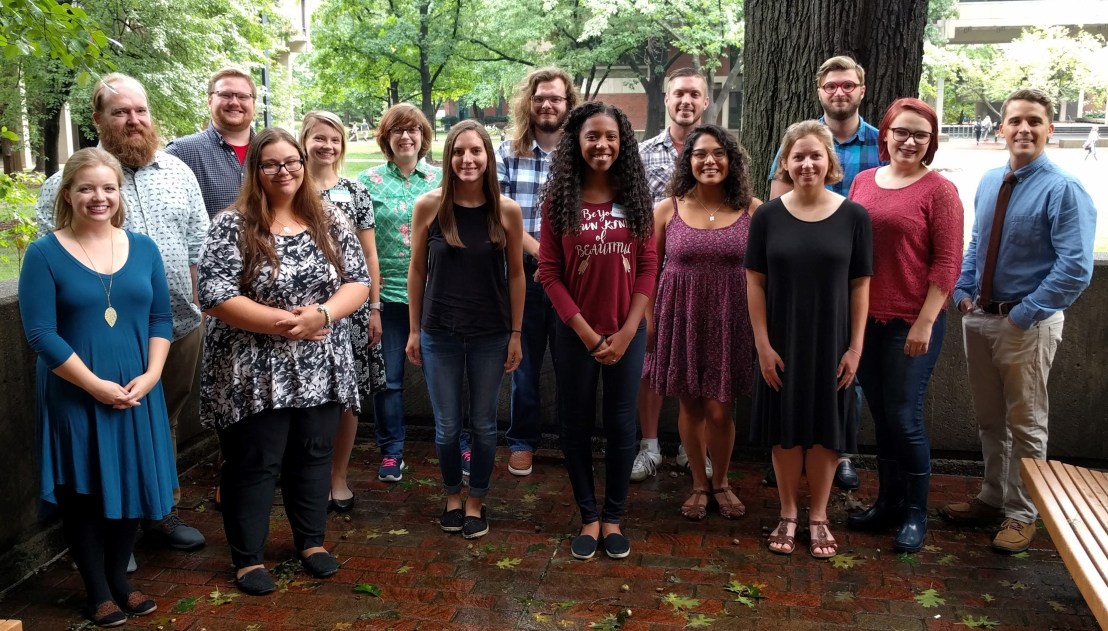
The University Writing Center Staff for 2018-19

Louisville campus, as the academic year begins, there is a lot that is notably new. It is heartening to hear new UofL President Neeli Bendapudi talk of her commitment to student learning and engagement, and, at the same time, see the opening of a new, modern building on campus that is also dedicated solely to student learning.

This year, like every year, University Writing Center  welcomed a new group of consultants who will spend the next year working with writers from across the UofL community. They have moved to UofL from across the country with a varied range of interests and backgrounds. Every group of consultants brings a new set of personalities, insights, and experiences to the University Writing Center. Every year the consultants form their own distinctive community of teacher/tutors here. Yet, this year, as in the years before, I am also confident that they will demonstrate a dedication to student learning that is equal to any on campus. What will not change is their eagerness to work with any writer on campus – student, faculty, or staff – on any kind of writing, at any point in the writing process. They will accomplish this in the same way as those that have preceded them, through collaborative conversations with writers. They will respond to the writers’ concerns, offer their own insights into how writers’ drafts could be made stronger, and help the writers formulate plans for revision. In doing so they will not only help the writers with individual drafts, but will offer insights to help them to navigate more confidently the writing challenges they will face in the future. I have no doubt the new consultants will find individual and distinctive ways to do this, but it will happen again in the University Writing Center.

Our commitment, to working with students ongoing dialogue, is central to what we do and will not change. We will continue also to teach without grading, to work with students as often as they want our help, to treat every writer with respect, and to base our pedagogical approaches on the most recent research in Writing and Literacy Studies.

Our approach to working with individual writers is not all that will stay the same this year. We will also continue to foster a culture of writing on campus in as many ways as we can. We will offer workshops on writing issues for classes and campus organizations.  Once again we will facilitate writing groups for Graduate Students and Faculty, Creative Writers, and LGBTQ+ Writers. For graduate students we will offer workshops on writing issues and our annual Dissertation Writing Retreat. We will sponsor events, from our annual Halloween Scary Stories Open Mic Night, to our celebration of International Mother Language Day. What’s more, we will continue our community partnerships with the Western Branch of the Louisville Free Public Library and Family Scholar House.

Education is not a panacea, but it matters now more than ever, in every way. I’m grateful to have another crack it this year. I wish everyone a year of resolute and passionate teaching and learning.


“Camaraderie and Great Ideas”: Reflections on the 2018 Dissertation Writing Retreat

Bronwyn T. Williams, Director

Last week I attended the University of Louisville’s commencement ceremony for doctoral students. As I looked through the program I noted the names of eleven of the graduates who had previously attended one of our University Writing Center Dissertation Writing Retreats. Several of them came up to me afterward to tell me again how valuable they found the experience of the writing retreat and the significant difference it made to them in their progress toward their degrees. As we talked about the jobs they were moving on to and their plans for future scholarship, it was gratifying to think that we had played some useful role in their graduate education.

This past week we once again were host to 14 Ph.D. students who participated in our spring Dissertation Writing Retreat. This is the seventh year we have held a week-long writing retreat in May during which the participants spending their days writing and having daily individual writing consultations with members of the Writing Center staff. Writing at the 2018 Dissertation Writing RetreatEvery day we also have small-group discussions about various issues of dissertation writing (Ways to Structure Chapters, Strategies for Self-Editing, How to Revise Work for Other Purposes, and How to Approach Literature Reviews). We also keep everyone well-fed throughout the week with snacks and lunch.

The writers who participated in this year’s retreat represented eight different disciplines at the University: Education, Engineering, Nursing, Rhetoric and Composition, Pan-African Studies, Pharmacology, Psychology, and Social Work. The best way to get a sense of the experience of the retreat and its impact on the writers who took part, however, is to hear from the participants and consultants themselves.

WRITERS

2018 Dissertation Writing Retreat: LunchTammi Alvey Thomas, Social Work. By far a fantastic experience! I would recommend this for anyone writing their dissertation. The staff at the Writing Center are extremely helpful and great to work with. Don’t miss out on this opportunity!  I left the retreat much more organized, focused and energized.
Imelda Wright, Nursing. I had the privilege of attending the Dissertation Writing Retreat in May 2018. It was well structured with plenty of space for the occupants to write at their own pace without interruption. There was adequate support and structure throughout the day to help with specific questions. In addition, a personal writing consultant was assigned to each participant daily to assist with content, technique, and overall structure of writing.

Overall, the retreat was terrific. It was enriching and productive to be in a space surrounded by like-minded people with similar goals to each other. There was a cohesive sense of camaraderie and great ideas were shared. In addition, I loved that lunch and snacks were provided; this allowed and encouraged participants to remain in the general vicinity during the day.

CONSULTANTS

Edward English, Ph.D. Student in Rhetoric and Composition and Incoming Assistant Director of the University Writing Center. This year’s dissertation writing retreat was energizing and helpful for me on a number of levels. I’ve just finished the first year of my PhD in English Composition and Rhetoric and when the Spring semester ended, my mind and body craved anything unrelated to school. I immediately took solace in long naps and hours of Netflix, in addition to enjoying trips like visiting the Red River Gorge and having one too many mint juleps at a very odd rainy Derby.

After a couple weeks of this leisure, however, I needed something manageable to get me back into the momentum of productivity. The dissertation writing retreat ended up being a wonderful balance of summer fun meets academic growth.

Interestingly, though I was the consultant, offering assistance to two awesome Experimental Psych. PhDs, I felt like I was the one who learned so much. Not having even started my own dissertation, reading through others’ work helped familiarize me with the types of challenges and rewards I can likely expect when I start running this academic marathon. What’s more, my two consultees were eager to absorb whatever questions or constructive criticism I had to offer—giving this Comp. 1 & 2 writing instructor a powerful (and much needed) inflation to his teacher ego and the satisfaction of feeling like he was truly helpful. I’m looking forward to being a consultant again next year, and am thankful that I’ll have this dissertation writing retreat available to me when I’ll need guidance and instruction on how to work through my own piece.

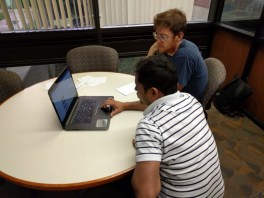
Dissertation Writing Retreat 2018 - Consultation 2018 Dissertation Writing Retreat - Consultation

Layne Gordon, Assistant Director of the University Writing Center and Ph.D. Candidate in Rhetoric and Composition. Having helped facilitate the Dissertation Writing Retreat in 2016 and 2017, I came into this week knowing that I could look forward to the excitement and energy that’s created when a group of writers come together. Each year, it’s so motivating to see people enjoy the shared experience of using writing to work through their ideas and scholarly identities. What starts on Monday as a gathering of individuals, each immersed in their own projects and challenges, ends on Friday as an interdisciplinary community of writers. What I noticed this time around, though, was how productive this interdisciplinarity can be–and, selfishly, how helpful it was for me as someone who is also working on my dissertation. Both of the writers I worked with this week were genuinely interested in hearing about my dissertation progress and offered feedback and resources that were so helpful. I walked away from each consultation feeling supported and valued by the writers I was working with, even though we were in different disciplines with different methods, theories, and goals. I was really reminded this week of what reciprocity looks and feels like, and how much we (writers) all have in common when we are approaching challenging–and rewarding–writing projects.

Jessica Newman, Assistant Director of the University Writing Center and Ph.D. Candidate in Rhetoric and Composition. I’ve had the pleasure of helping to facilitate the Dissertation Writing Retreat both this year and last year. This year, as before, I was impressed with the writers as individuals (their commitment to sit down at 8 am each morning and write, and then continue to write) and as a community (supporting and learning from each other). But now that I am further in my own dissertation, the Retreat took on an even deeper resonance, and I appreciated the opportunity to myself take part—during group discussions, lunch and consultations—in the exchange of suggestions, ideas, commiseration and support. This sharing ranged from reviews of data analysis2018 Dissertation Writing Retreat - Consultation software to tips on how to use the vocabulary of your field to the often strong emotions evoked by writing those pesky lit reviews. I look forward to seeing the support, accountability and productivity from the Dissertation Writing Retreat continue in the Writing Center weekly Faculty and Graduate Student Writing Groups this summer and this fall.
Caitlin Ray, Assistant Director for Graduate Student Writing and Ph.D. Candidate in Rhetoric and Composition. As a consultant for the Dissertation Writing Retreat, I found that, in addition to helping writers, I personally got a lot out of the week. I was reminded of the power of talking about writing, working as a community of writers, and the importance of sharing research in an interdisciplinary context. My favorite parts of the week were the moments at lunch, or during workshops, when we got to chat about our research. Even when we were tired (or hungry) I still saw our eyes light up when talking about our research, and how often we found commonalities between research interests or methodology questions even when our fields were quite different from one another. I think that sometimes the frustration and daily grind of dissertation writing makes us forget that our research projects are really cool, and have the potential to make real impact on the world.

Rachel Rodriguez, Ph.D. Student in Rhetoric and Composition and Incoming Assistant Director of the University Writing Center. This week I had the opportunity to work with two writers from my own program, and our shared base of disciplinary knowledge helped us fast-forward into conversations about how knowledge is made and who “counts” as knowledge producers in the contexts of their research. Since both writers were focusing on the organization of their data chapters, we spent time playing with various options, envisioning how each schema might impact their overall message. I found myself getting really absorbed in the work they are doing, and our collective excitement made for a fun atmosphere where ideas could build off of each other as the week progressed. Getting a glimpse into both of their writing processes as well as strategies for goal-setting was personally rewarding, reminding me how attuned we are to our own way of writing, but how much we can learn by talking about how we write with others.

THANKS FOR ALL WHO MADE THIS POSSIBLE

It is important to acknowledge the people who did the hard work of organizing the Retreat – Cassie Book, our Associate Director, and Robin Blackett, our Administrative Assistant, and Assistant Directors Layne Gordon, Jessica Newman, Caitlin Ray, and Christopher Stuck as well as the other fantastic consultants (themselves Ph.D. students) who worked with the writers: Edward English, Rachel Rodriguez, and Rick Wysocki. And thanks to Dean Beth Boehm, of the School of Interdisciplinary and Graduate Studies, for again sponsoring and supporting the Dissertation Writing Retreat.

Writing Genres that Are New to You

Caitlin Ray, Assistant Director for Graduate Student Writing

As the Assistant Director for Graduate Student Writing, I work with a lot of graduate students on a variety of writing projects. Many of the writers who see me are writing a new genre, whether that be a personal statement, a long-form seminar paper, or a grant proposal. Despite the wide array of genres I see, I often give very similar advice to Caitlin Raywriters. I also think that these strategies would be effective for writers of all experience levels—from a first year undergraduate in their first college class, to a PhD student working on their dissertation.
The genres I am talking about, though, are not just the weird ones that we might only come across if we are in higher education (literature reviews, for example, are not a genre common outside the walls of the university). This could also be something as simple as an email. For example, we may take it for granted that everyone can write an effective email. However, we all know that some emails are more successful than others. To move our own email writing practices to those exemplary ones, we may look at what others are doing (What do I look for when I receive an email? What do I respond to?) and then we emulate that. We also have a ton of practice writing emails, so we can learn quickly in the variety of drafts we create what is effective and what isn’t. The same principles can be applied to all writing.

The following strategies are ones I encourage writers to use when they are unfamiliar with a genre they are bringing to me. These are strategies I would encourage everyone to employ to master any genre that comes your way:

  1. Examine the assignment. This may seem like a given, but many people read assignment descriptions uncritically. Additionally, assignment prompts or questions can be extremely detailed or very vague. Let’s take a look at an example I see quite often. The Association of American Medical Colleges (AAMC) asks for a personal statement when applicants submit materials for medical residency. This prompt is simply, “Use the space provided to explain why you want to go to medical school,” and allows 5,300 characters. This is as vague as it gets. However, you can still tell several things. The readers clearly value brevity (you are limited to about a page and a half), and you are crafting an argument (why do you want to go to medical school?) Embedded in this question is the need for evidence. How does the reader believe what you are telling them? The context is also specific: why do you want to go to medical school? What is medical school to you, and what will you get out of it? How does it meet your goals? Suddenly, you can see lots of questions to answer that were simply implied in the prompt itself.
  2. Find examples. This is something I recommend to all levels of writers. It is very difficult to write an abstract, a literature review, or a personal statement, without knowing what successful ones look like. Once you get in the habit, you will automatically begin reading like a writer and will notice successful examples of writing everywhere you go. One piece of advice I have gotten as I move into writing my own dissertation, for example, is to seek out other dissertations (they are usually publically available). Further, find dissertations that were chaired by the same chair of your own committee. Finding examples can help you figure out what the unwritten expectations of certain genres may be.
  3. Ask an expert. “Expert” could mean an expert in the content area you are writing in, or an expert in writing itself. I often suggest that people writing very discipline-specific writing (like, maybe a review article for a journal) talk with their advisor or other trusted professors and get feedback. Those folks are great resources to talk about methods and field-specific questions that the University Writing Center may not have knowledge about. Then, you can also seek out a writing expert (like the consultants in the University Writing Center) so that you clarify your ideas and translate them into an effective piece of writing.
  4. Ask a peer. This is something I wish I had learned much earlier in college. You are surrounded by great resources in your classes and your major, or even down the hall in the dorms. The people in your classes are future professionals, and may even be your colleagues later on. Get together with someone, or a few people, and exchange writing! One of the best things I have found in graduate school myself is finding a few trusted people that I can send my “shitty first drafts” to without judgment (see Ann Lamott’s excellent essay “Shitty First Drafts”).
  5. Often, when faced with a daunting writing task that we don’t quite know how to tackle, we can easily get in our heads. That “editor” voice (which I imagine as my 7th grade English teacher for some reason) is one of the biggest reasons we get writer’s block. The biggest antidote to being stuck before even beginning the writing task is to simply freewrite everything that you know or think you know about a topic. Just write, and worry about the genre conventions later. Many times we figure out how to do something by doing it (See Reid’s “Getting Going” blog for more useful tips to get started!).
  6. The best way to learn a new genre is to simply keep writing in that genre until you are comfortable. Back to my original example of email writing, the more emails we send, the faster and more comfortable we are in composing them. While perhaps obvious, the reason for this is because we spend so much time writing emails and thus get a ton of practice. This is true for any piece of writing. You might take a really long time writing your first abstract, for example, but a few years later of practicing that skill and you will be able to write effective abstracts more quickly. See more strategies for practicing and developing writing habits in Isaac’s “Getting Started with Genre” or Michael’s “Can Someone Hold My Hair While I Word Vomit?”

Lastly, I think the biggest hurdle when faced with new genres is the uncertainty it causes in us. We think “I don’t know this…should I know this? Does everyone know this but me?” This connects to the most insidious experience of higher education—imposter syndrome. Imposter syndrome is the idea that everyone knows what they are doing and are very successful at that work, and that you are merely “faking” it. However, everyone experiences imposter syndrome, and one of the biggest ways to combat this feeling is talking about your experiences and the writing process more. Tackling a new genre can be intimidating and stressful, but hopefully these strategies can help you be successful, no matter the writing task before you!

On the Road to Writing, It’s Okay to Stop and Ask for Directions

Mitzi Phelan, consultant

Have you experienced getting into your car, and while driving to a familiar destination you start thinking about all the things you need to do, or even just start daydreaming? Suddenly, you snap back to the present and realize you are at your intended location but Mitzihave no recollection of the actual drive. It’s amazing how we can become so familiar with the way we do something that we can actually can execute the activity on autopilot. Our brains are amazing objects that can run millions of processes at once. While one “system” is working through our schedule, another is thinking about summer vacation, and yet another is executing turns down familiar streets (hopefully one is watching for pedestrians). When the path we are navigating is so familiar to us, we can easily “switch off” and let the brain make all the decisions in default mode. But, if we are checked out of the process, are we really getting the best experience?

I gave the above example as a way to talk about the process of writing. By the time you have reached the level in academia where you would be interested in reading this blogpost, you have most likely been asked to do a lot of writing. Often, we are given a writing task and, just like driving, we set our brain to autopilot, or “writing mode,” and let come what may. We see our end destination (our “completed writing task”), hop in our mental smart cars, activate cruise control, and are on our way. The problem with this is that we only have one way of getting to the destination programmed into our mental maps. When we only allow for only one way of doing things, we ultimately produce the same type of writing, just with different topics. This doesn’t only apply to class papers–we can fall into the same rut with our creative writing as well.

To be completely honest, in the busy world of academia, writing on autopilot is convenient. It always gets us safely to our destination and conserves our valuable brain energy for the thousands of other demands that come on a daily basis. However, it does not help us develop into better writers. To produce better work, we have to mentally show up for the process. We have to switch off the autopilot and challenge ourselves to consider that there are valuable alternative routes to getting to our final destinations. Understand, however, that the goal in switching off autopilot and taking control of the wheel is not necessarily to get to the destination more quickly, although that may happen, but rather to truly immerse yourself in the writing process and gain insight to tools that you may be missing out on.

If you are like me, my cruise control looks like this: I get an idea for a paper, lock on to it with a death grip, think about it until the night before its due, word vomit on the paper, and then spend the wee hours of the morning its due making revisions. This process works for me and I am comfortable with it; however, I have realized that I am cheating myself out of being a better writer by not exploring other processes. Recently I have been trying to add practices that other writers use into my repertoire. I started with reverse outlining, now I’m committing myself to writing down my favorite thesis and then writing two more possible theses that either invert or challenge the original as a way to enhance my critical thinking of the topic. This has been immensely beneficial and has positively affected my writing skills.

If you feel like your writing has become stale, or that you are not meeting your full potential as a writer, I challenge you to see if you are still in the driver’s seat. Consider pulling out your old writing guidebooks and going back to the basics. Look to other writers for inspiration. Take time to go through the process. You’ll be amazed at how much of the beautiful scenery you have been missing.

Giving Voice to Dirty Words

Tim Phelps, Consultant

In 1991, an era still rampant with fears and misinformation about HIV and AIDS, the hip-hop group Salt-n-Pepa released a song called “Let’s Talk About Sex,” which celebratedTim Phelps safe and responsible sex through healthy and honest communication.  The song found success, not only for its catchy beat, but for its unashamed use of the word “sex” itself—the message being that the only useful way of handling the subject was to talk about it clearly and openly.  “Let’s Talk About Sex” argued that the first step in tackling a difficult subject was to not be afraid to say its name.

In that frame of mind, we should consider another word that can also bring up difficult conversation, one that is sometimes considered a dirty word.  It’s a word that really deserves a fair chance, and one that we can’t ignore if we are going to improve our writing.

Let’s talk about manipulation.

Yes, I’m about to argue that manipulation can be a good thing.  I know, I know.  The word has a pretty tough connotation to overcome from the start—it automatically brings about all the negative experiences we’ve had with bosses, parents, friends, and significant others.  If we hear a description of someone being called “manipulative,” we automatically know we don’t want to be around that person.

But if we can distance the word from its negative associations for a moment, we’ll see that almost everything we do is manipulation.  Looking at the professor while you’re really thinking about what to have for lunch?  Using certain words around your friends that you wouldn’t use around your grandma?  Wearing nice clothes, or putting on makeup, or fixing your hair before you go out in public (even though your three-days-dirty pajama pants would be super comfortable while sitting in class)?  These are all manipulative, and we are doing this all the time.  What I hope you’re beginning to understand is that manipulation is not automatically negative.  Plenty of our day-to-day lives are filled with us manipulating each other, and most of the time, we wouldn’t be able to say it’s exactly bad.  While there are certainly nefarious and selfish uses of manipulation, it all boils down to how it’s used.

Manipulation is crucial for quality writing.  If we can’t find ways of manipulating our various audiences, then we simply won’t be effective with our arguments.  We usually talk about manipulation in high school or college English classes using nicer words such as ethos, pathos, logos, and kairos, but rarely recognize these persuasive appeals for what they really are.  Writers who can expertly deliver what the reader needs to hear at that certain moment can convince others of almost anything.  To write well is to have control over your message, and to have power over your audience.

As I’ve said before, this shouldn’t imply an automatic negative connotation.  Sure, I could potentially use that power and control for my own selfish needs.  Or, consider the alternative: I could use that power and control to fight for what’s right in the world, to help people up when they are down, to support the emotional, physical, and financial goals of those I care for.

In order to do that, in order to have even a chance at that positive power, we have to be willing to consider our writing from our audience’s viewpoint—ideally, a viewpoint that does not agree with us.  By taking this approach, we can start to see where our efficiency breaks down, where changing the organization of logic makes it easier to follow, where adding an emotional appeal might make it easier for that audience to agree.  As you practice more and more, you’ll find individual words that could make all the difference between success and failure.  This becomes just as true for writing that isn’t even (technically) an argument.  If I’m reading fiction or a poem, I still need convincing that what I’m reading is worth my time.

None of these skills are easy as a writer, but we can begin by not being afraid to admit that effective writing is really just effective manipulation.  Salt-n-Pepa manipulated a new generation positively by giving voice to a word that plenty of households considered a dirty topic at the time.  Once we reach the same step of awareness with manipulation, we can experiment with ways of making our manipulation stronger, and by extension, our writing more powerful.

Idea Journaling

Mary-Kate Smith, Consultant

In the book Boy: Tales of Childhood, author Roald Dahl describes his practice of jotting down thoughts in a small idea journal. When looking for a new narrative, Dahl would consult his own undeveloped musings. From these brief notes taken years earlier, Dahl Mary-Kate Smithdeveloped a number of beloved stories including Fantastic Mr. Fox and Charlie and the Chocolate Factory.

Since reading Boy, I have kept an idea journal similar to Dahl’s. Though my notes focus on coursework rather than on creative writing, Dahl’s practice has been very useful to me. Whenever I am asked to writing an essay, a conference paper, a proposal, or even I blog post, I consult my idea notes hoping for a spark of inspiration. Looking at previous, spontaneously incepted ideas often helps me to eliminate writer’s block in a way forcing new ideas does not. Thus far, I have chosen all of my graduate school seminar paper topics in this manner. Often, brainstorming with others helps writers to develop ideas. When outside insight is not available, however, an idea journal can offer the needed intellectual spark.

Not every journal needs to follow a paper and pen method, though fancy stationary probably can’t hurt. I often write thoughts into the “Ideas” note on my MacBook. Post-it notes, smart phone self-texts, newspaper marginalia, and napkin memos are all viable options. Notes can be as short as a single word and as long as a paragraph, though mine tend to stay closer to the one-word end of the spectrum. Overall, if writers make an effort to collect and record ideas, no mater how seemingly ridiculous, they prepare themselves to develop these ideas and others in the future.