Author: UofL University Writing Center

Opening Doors: Another Year Begins in the Writing Center

Bronwyn T. Williams, Director

My New Year’s resolutions always take place in late August. Like many of us in on university campuses, my yearly cycle begins with the new academic year. It is in August that the annual campus rituals, of new students arriving and new announcements going up on bulletin boards, signal the chance to begin again, to have a new set of experiences. It’s a time that I find myself reflecting on the year just completed and thinking about what I want to accomplish in the year ahead. Sometimes these are explicit promises to myself – such as making sure I get that article revised by the end of September. Sometimes my resolutions are more implicitly contained in the revising of course syllabi or the rethinking of policies for the new year. Either way, the resolutions and rituals that mark the start of the academic year are always restorative and energizing to me.
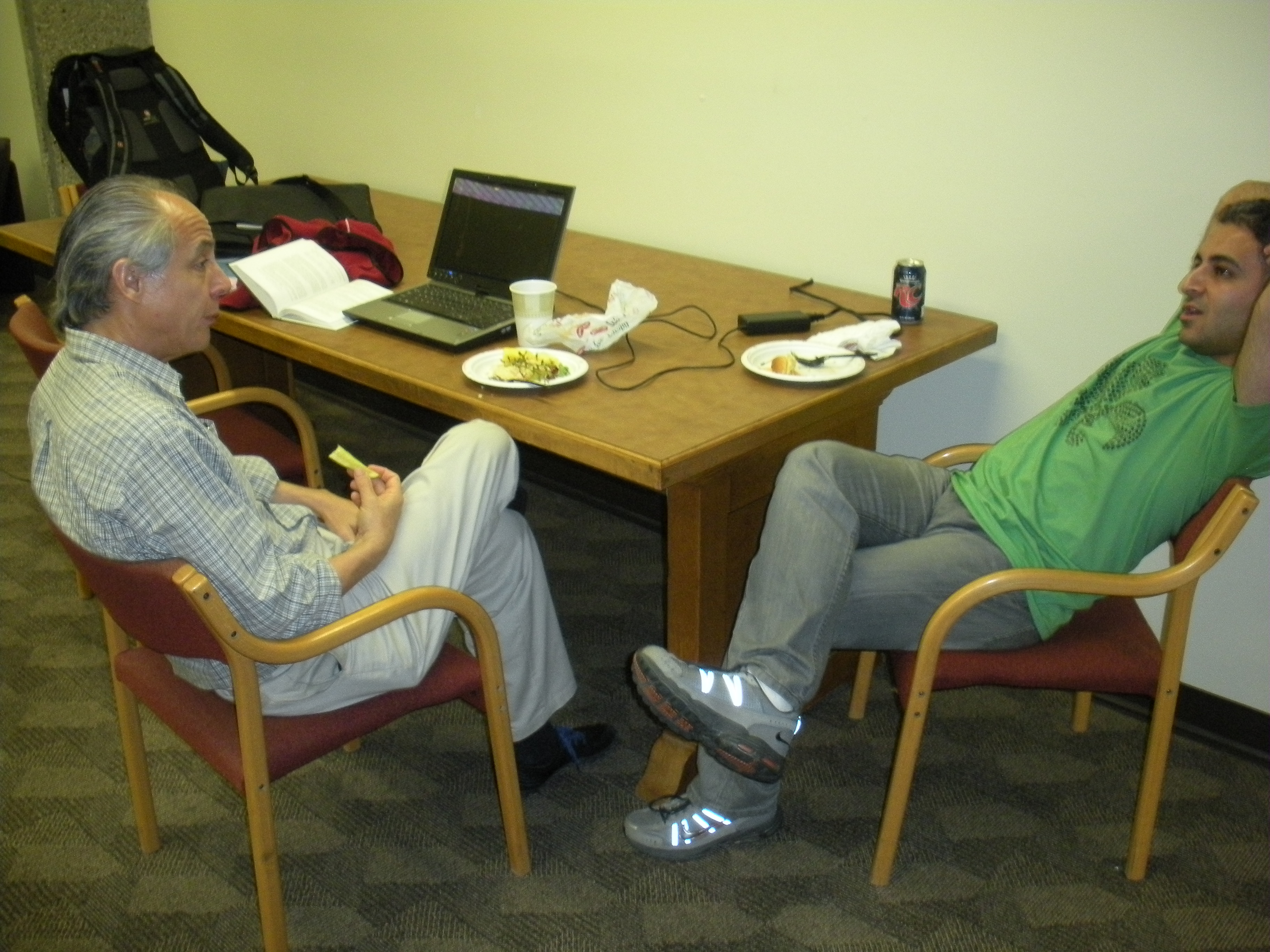
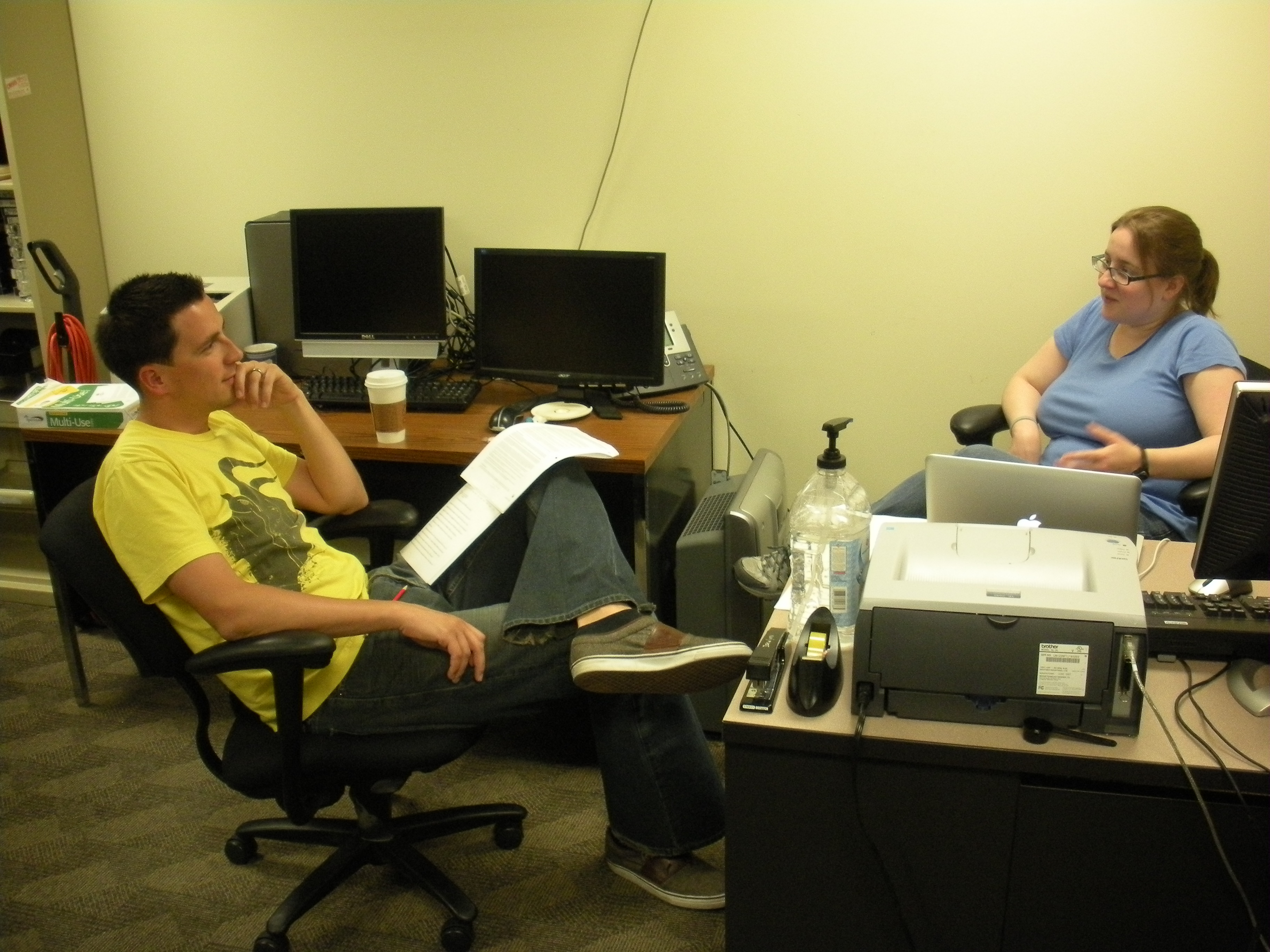
In the Writing Center one of our important rituals takes place when the new group of consultants show up for the coming academic year. On Thursday we all met as a group for the first time at the Writing Center Orientation to get to know each other and to plan for the year ahead. Eleven new graduate students will be working in the Writing Center this year.
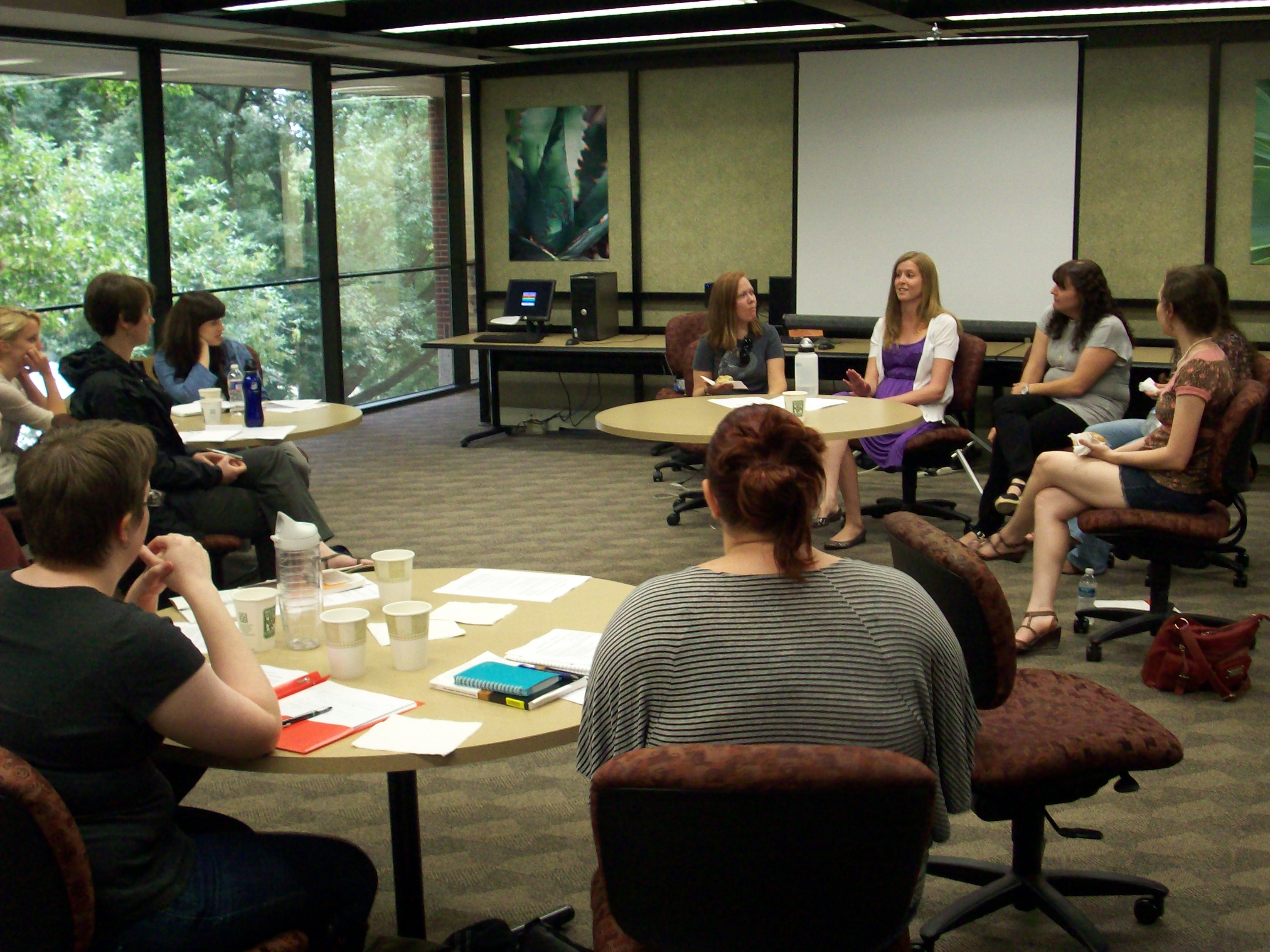
Writing Center Orientation 1
Writing Center Orientation

They are a diverse group of people – from cooking enthusiasts to dancers to sports fans to rock climbers to world travelers to musicians. Some grew up in Louisville, while others grew up on the other side of the globe. Yet while their backgrounds and interests distinguish them from each other, their love of writing and their desire to teach others to be stronger writers is what brings them all to the Writing Center. Work in a Writing Center, to be successful, must be grounded in an ethic that draws from principles of service, care, empathy, patience, and respect. Only when consultants approach working with students from these principles, can the consultants and students work together to create more effective, critical, and creative writing. I told the new Writing Center consultants the other day that a Writing Center works best when it functions for both the staff and student writers as a site of inquiry, collaboration, and respect. From the conversations with the new consultants at Orientation it is clear that these are people who will be able to help student writers build on their strengths, and learn not just how to write a better paper, but to be better writers overall.

The commitment of these new consultants to helping others with their writing is impressive and makes it clear that we should have yet another successful – and fun – year in the Writing Center. It is a year that I hope will build on the successes of 2011-12. Among the highlights of the past year for the Writing Center were the following:

  1. We had 4866 visits to the Writing Center in the most recent academic year, including visits to our Virtual Writing Center and to our new office downtown at the Health Sciences Campus
  2. Writing Center staff conducted 70 presentations about our services and 26 in-class workshops on writing issues.
  3. We held our first Dissertation Writing Retreat. Ten Ph.D. students representing four different colleges and six different disciplines spent a week in the Writing Center working on their dissertations and receiving individual consultations with Writing Center tutors,
  4. We have a new Assistant Director position to focus on working with graduate student writers, paying particular attention to the needs of international students. Tika Lamsal will staff the position and split his hours between the main Writing Center and the office on the Health Sciences Campus. In addition the Writing Center, in collaboration with the Graduate School conducted a series of writing workshops for graduate students on both the Belknap and Health Sciences Campuses.
  5. Writing Center staff worked with a number of University programs, giving presentations and conducting workshops, including the Porter Scholars, A&S Advising, UofL Athletics, the Career Center, the Post-Baccalaureate Pre-Medical Program, Family Scholar House, the Delphi Center, and the International Center. The presentations given by the Writing Center staff resulted in many students then visiting the Writing Center for the first time.
  6. During the 2011-12 academic year a number of Writing Center consultants presented their scholarship at conferences including the Conference on College Composition and Communication, the Southeast Writing Centers Conference, the Kentucky Philological Association Conference, and the National Conference on Peer Tutoring in Writing. In addition, Assistant Director Barrie Olson had a piece accepted for the Writing Lab Newsletter.
  7. Our exit survey indicated a high level of satisfaction with the Writing Center, by both quantitative and qualitative measures. Highlights included:
  • In answer to the statement: “My Writing Center consultation addressed my concerns about my writing project,” more than 96% of respondents selected “Strongly Agree” (74%) or “Agree” (22%).
  • In answer to the statement: “What I learned during my Writing Center consultation will help me with future writing projects,” more than 92% of respondents selected “Strongly Agree” (65%) or “Agree” (27%).
  • In answer to the statement: “I plan to use the Writing Center again,” more than 93% of respondents selected “Strongly Agree” (81%) or “Agree” (12%).
  • In answer to the statement: “The Writing Center staff were welcoming and helpful,” more than 97% of respondents selected “Strongly Agree” (80%) or “Agree” (17%).
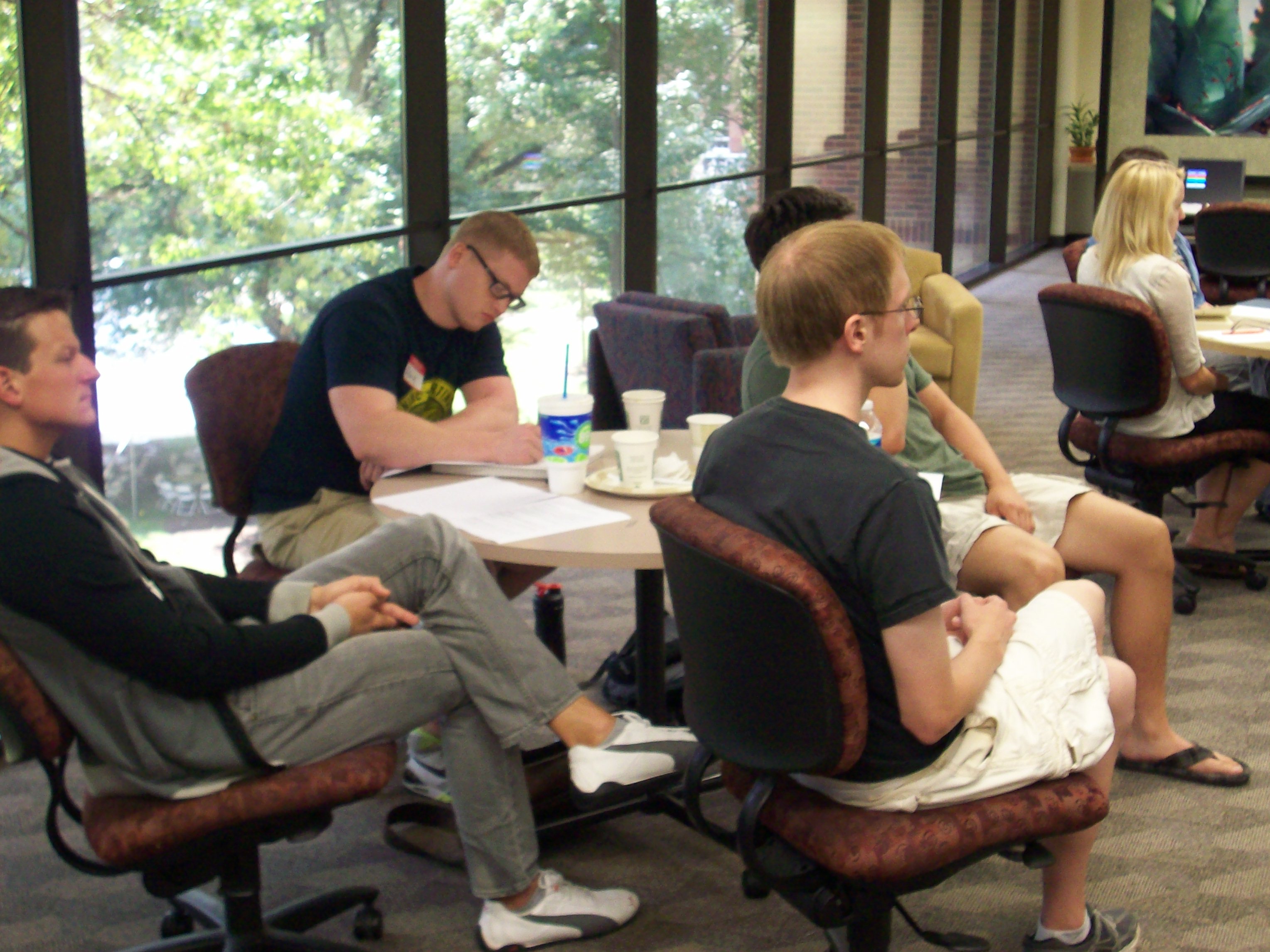
Writing Center Orientation

On Monday morning, at 9 a.m., we will open our doors at the University Writing Center to begin another academic year. When we open those physical doors, we are also opening other kinds of doors. For the students, faculty, and staff who visit the Writing Center we hope to provide the kinds of response and suggestions that will open the doors to realizing the full potential of a piece of writing. For the consultants in the Writing Center we want to open doors to becoming effective teachers of writing. For the University community we hope to open the doors to being a positive focus and force for all the writing, in all its many forms, that takes place on campus.

In the weeks to come you will see more blog posts from other members about the Writing Center staff. People will be writing about their experiences in the Writing Center, but also about their experiences as writers and their thoughts about writing in general. So stop back by and join the conversation about writing and writers.

We’ve had a good year, but I expect to have an even better year to come.

What I Learned about Writing a Dissertation through the Retreat

Laura Detmering

I would like to begin this post by echoing what Barrie says in her post. Like Barrie, I have worked as an Assistant Director in U of L’s Writing Center since the fall of 2010, and I am sad to leave this space for many reasons, most of which is the community of people who have supported me as I work on my own dissertation. This community includes not only the incredible staff of the Writing Center, but also the various individuals I have worked with as a consultant, all of whom have taught me a great deal about writing. It has been a pleasure to be a part of this Writing Center, and I could not choose a better way to end my experience as an Assistant Director than by working at the Dissertation Writing Retreat.

Every day last week, I watched a group of ten dedicated Ph.D. candidates enter the Writing Center, select a table or other writing space and write for several hours, taking few breaks and simply committing to the process. Participating in this retreat taught me a lot about writing a dissertation, and it also reinforced much of what I already knew. First, and probably most obvious, the retreat reminded me that no two people approach the process in the same way, so it is important to measure your success only against yourself and not others. For one person, success might be drafting a solid paragraph in a day, whereas for another, success might mean drafting four to six pages in a day. Of course, no one can write an entire dissertation in a week, and, fortunately, no one tried. Instead, each individual participating in the retreat set realistic, achievable goals, and I think most people met them (and I met my own goals, sitting in my office, writing while the participants were writing).

Probably the most important thing I learned during the retreat, though, is the importance of having a community of people to write your dissertation alongside. This community can be fairly diverse. For instance, I consulted with a Ph.D. candidate in Mechanical Engineering and a Ph.D. candidate in the Humanities. Because both of these individuals are in different fields from one another and from me, much of our time was spent discussing their individual projects, with each of them explaining to one another and to me what kind of research they are doing, how dissertations are constructed in their fields, and how they as writers were approaching the process. On Thursday, I led a workshop on overcoming obstacles to writing a dissertation, and as a group, everyone participating in the retreat discussed some obstacles that were arising and how to approach them. One of the suggestions I made at that time, which I personally have found beneficial in writing my own dissertation, is to try to explain your project to a person outside your field of study. By doing this, we are forced to think very carefully about what we are trying to do and how best to articulate our ideas to others. Thus, this community of people to write your dissertation alongside does not necessarily have to be just other Ph.D. candidates, but it can include anyone in your life—a parent, a child, a spouse, a sibling, a friend, etc.

For me, personally, watching a group of ten people sit and write or discuss their dissertations for eight hours a day pushed me to work on my own dissertation. Having a community of people who are also writing dissertations to meet with and discuss your work is also beneficial, then. I would encourage anyone who is writing a dissertation or a thesis or really any piece of writing to develop a similar community, a group of people who make you feel accountable to them, as well as to yourself. Seeing other people writing (and struggling) along with you is powerful and motivating in a way that writing in isolation cannot be. Certainly, there are times when we have to find space by ourselves to write, and doing so has a value of its own, but having a community of people to engage with, even if that engagement is silent, while writing a dissertation, is important.

How the Dissertation Writing Retreat Helped Me to See Writing Center Work in a New Light

Barrie Olson

I’ve been thinking about Writing Center work a lot lately. I attribute this reflection to two events. First, this past week marked my last week working in the University Writing Center at the University of Louisville. It is hard to believe that my two years as Assistant Director (along with Laura Detmering) have come to an end. For both of us, the Writing Center has been a second home. More importantly, our work in the Writing Center has significantly impacted the work we do as both teachers and researchers of writing. There is, however, a second reason for all this reflecting. After two years of Writing Center work, it wasn’t until this past week that I saw, really, truly saw, just how powerful the work we do in the Writing Center can be.

I should, of course, back up briefly and say that I have always felt that Writing Center work is both important and effective. In fact, I even wrote a blog post about it. Rarely, however, are we as consultants given the opportunity to see Writing Center work in its most idealized form. If consultants are lucky, they may work with the same student several times on the same paper. Really lucky consultants might see the same student throughout an entire semester working on multiple projects. What’s great about either of these scenarios is that they let us see the effects of our work. How do students implement the feedback we give them? How do ideas that manifested themselves during writing center consultations then appear in reiterations of the student’s writing? What might we do to better serve this student in the future? When you see the same client multiple times, you can begin to answer these questions and reflect on not only the work you do as a consultant, but also on the effectiveness of that work. Unfortunately, more often than not, writing consultations don’t extend past a single visit. Students might seek feedback for only one draft or come to the Writing Center to discuss writing in only one of their disciplines. While these sessions are no doubt fruitful, as consultants, we can only imagine what the students did when they got home and returned to their writing.

I have been a consultant for both kinds of sessions. I have been left to wonder whether I had been helpful to a student. And I have been able to see just how helpful I’ve been to students. But it wasn’t until last week, during University Writing Center’s first ever Dissertation Writing Retreat, that I was able to see just how powerful Writing Center work, in its most idealized form, can be. The Dissertation Writing Retreat was a week-long intensive writing experience for ten doctoral candidates representing five different disciplines on campus. Participants came in at 8:00 AM each day and would write for approximately 2.5 hours. They would also engage in workshops covering relevant topics such as writing a literature review or overcoming writing obstacles. Then, after a break for lunch, participants would return to writing for about another 1.5 hours before meeting with a writing consultant (like me). Consultations lasted an hour and participants met with the same consultant each day. You can begin to see here how this experience represented ideal writing center work.

First, we had time. An hour is a lot of time to discuss someone’s writing. More time is always great, but an hour gives you time to read the writing, discuss the writing, and, if the participant so desires, begin rewriting. But this is just a logistical advantage. The other advantages spoke to some of the theories of Writing Center work that I never necessarily got to see in action. For example, a common conversation in writing center scholarship revolves around discipline-specific tutors versus general tutors. While discipline-specific tutors are able, often, to speak to the content of a student’s writing, general tutors may be more limited in that area. General tutors offer the advantage, however, of needing the student writer to explain his or her content to a reader unfamiliar with the discipline. In an ideal world, the process of explaining content makes the content more clear not only to the tutor but to the student herself. In explaining the information to someone not already familiar with the content, the student might be forced to think about her content in new ways. If nothing else, she will likely have to make connections within her content far more explicit than she might with someone who is already familiar with it. And, while this all sounded good in theory, for me as a consultant, it was sometimes hard to know if it was true.

Enter the retreat. On the final day of the retreat, participants shared with one another some of the benefits from participating in the retreat. One benefit that came up repeatedly regarded just how helpful it was for them to have to talk about their projects to people outside their fields. Each participant remarked on how such conversations clarified their understanding of their projects and, by association, how they wrote about those projects.

Gaining a stronger testimony in the power of the general tutor was only the beginning. I also was able to see just what can happen when someone gets feedback on their writing not only the same day they wrote it but also on a consistent basis (in this case, daily). I had the privilege of working with two doctoral candidates from the Kent School of Social Work. Each day, we were able to meet and discuss the progress they had made. After each session, we would set goals for the following session. They would then be able to spend time writing knowing that they had goals in mind and that we would be discussing these goals. This isn’t to say that the sessions were prescriptive. At the end of the day, my job was to help these participants in whatever capacity they needed me in. However, setting goals like these meant that each day, we could start the conversation by reviewing what we had done the day before and by seeing how they had progressed based on that previous work. For the participants, this proved to be an important aspect of the retreat. Many commented on the fact that these daily sessions helped them stay on task and motivated. They were also able to discuss their writing when it was still fresh. If a consultant asked them why they made a specific choice in their writing, for instance, they probably could remember why.

But for me as a consultant, the experience was equally as valuable as it was for participants. I was able to see almost immediately which strategies I used as a consultant were working and which ones needed to be adjusted or abandoned altogether. Moreover, these strategies shifted from one participant to the next. In other words, the reflection I did as a writing consultant, while often generalizable, was also specific to the individual participant. By seeing these participants every day, I know that by the end of the week, I was a better consultant than when I started. I would like to think that during my tenure as a Writing Center tutor, I have always improved but it is hard to know for sure. Only with daily reflection in relation to a returning participant was I able to feel certain about the ways I was being either effective or ineffective.

There are certainly other ways that being a consultant during the retreat affected my views on Writing Center work but many have been, or will be, expressed by others. For example, Dr. Bronwyn Williams, Director of the University Writing Center, has already discussed some of the great things we saw come out of the retreat. Likewise, it is my hope that both participants and consultants from the retreat will be motivated to comment or write blog posts of their own. For now, let me simply end by saying this: Writing Center work works. If you don’t believe me, ask Naouel Baili, Tanvir Bhuiyan, Brynn Dombroski, LeAnn Bruce, Alex Cambron, Anis Hamdi, James Leary, Mohammadreza Negahdar, Zdravko Salipur, or Charlos Thompson—our retreat participants. Or, talk to one of the consultants: Ashly, Bender, Robin Blackett, Laura Detmering, Becky Hallman, or Jennifer Marciniak. While I am sure we all had different experiences, I am also certain that we each took something positive away from this week. While my time in the Writing Center is now up, I look forward to seeing what the future brings to the University Writing Center. My hope is that the kind of work that happened there this past week will continue and that both new clients and new consultants will have the opportunity, like I did, to see writing center work in its idealized form. It’s empowering.

Writing Center Talk

Adam Robinson, Associate Director

I’ve been connected to the U of L Writing Center since 2002 when I made my first visit as a student looking for help on my writing.  I was sold after one consultation and continued to come to the Writing Center until I graduated in 2006.  Later that year, I became a consultant myself when I was accepted into the M.A. in English program and was granted a GTA, which required me to spend my first year working in the Writing Center before moving into the classroom to teach first-year composition.  I did a year in the Writing Center, taught composition the next two years, returned as an adjunct tutor for a semester, left again to work full-time as an academic advisor, and returned a year later in 2010 to replace Ruth Miller as the Associate Director.  Needless to say…I’ve had the opportunity to see our Writing Center from a range of perspectives—client, consultant, teacher, advisor, administrator.

Even though it’s been almost 10 years since I first walked through our doors, I can still remember quite a bit about what happened.  I try to remind myself of that every once in a while.  And this time of year—end of the semester—usually causes me to reflect on that experience as the final rush often brings in first-time visitors.  I wonder what those writers think and feel when they come through our doors—what they expect will happen in the session—how nervous they may be about sharing their thoughts and words with another person they don’t know.

In 2002, I was a sophomore, and I chose to enroll in a Creative Writing class.  I still can’t remember what compelled me to sign up for that class as I had never written anything creative in my life.  In fact, I hadn’t read much fiction or poetry.  Prior to college, I had done what was necessary to avoid having to read for classes, and I generally succeeded at that goal.  But in my freshman year at U of L, I took an Intro to World Literature course and me passing that class was contingent on me thoroughly reading the assigned texts.  We read The Death of Ivan Illyich, All Quiet on the Western Front, The School of Wives—all of a sudden I wanted to study literature.

Taking this creative writing course was me stepping way out of my comfort zone to say the least.  I was just starting to pay attention to fiction writing.  What made me think that I could write some of my own?  I was not only going to be sharing my writing with a bunch of people I didn’t know, but I was also going to be sharing writing that I was pretty sure stunk.  My first workshop date was fast approaching and the words weren’t coming—I had to write a 10 page-fictional piece.  So I went to the Writing Center—I can’t remember how I found about the Writing Center, how I knew where it was located, or anything.  But I got there.

The place looked pretty much like it looks now (take a look at previous blog entries for pictures)…same tables, same arrangement of tables.  My consultant (Jeremy) greeted me at the entrance, led me to the consulting area, and initiated a conversation about my project.  Like I said, I hadn’t written a line—I had no angle—no concrete idea.  But I did envision a story centered on a guy sitting at a bar watching other people.  What was going to happen in this bar?—I wasn’t sure.  Had I even been in a bar?  Not exactly, given that I was 19.  Why a bar?  Beats me.  Maybe I was trying to form some picture of a future self.  Sophisticated.  Drinking.  Observing.  Waiting for the action to happen.

Jeremy, in a non-challenging but certainly curious manner, asked me what kinds of bars I had been to.  (I didn’t even look old enough to be in college.)  “None.”  I remember feeling embarrassed.  But I also remember that he wasn’t dismissive of my idea at all—he never made a suggestion that I pick a different locale, never shot me a puzzled or condescending look—instead, we talked about what my idea of a bar was, how I might find out more about bars, how I might paint that picture, where I envisioned the story taking off and concluding.  It turned out that I had more of story in mind than I realized.  I just needed someone to ask the right questions that could bring out the ideas that were floating around in my head—to ask the questions that I wouldn’t have thought to ask myself.  And thinking back now, I needed someone to actually care about my answers to those questions—someone I could confide in and share my ideas with.  His enthusiasm in the session was contagious—as I answered each question, he became more excited about the possibilities.  In a subtle way, his enthusiasm must have implied to me that the writing ahead of me didn’t have to be a chore.

By end of our Q & A, I had a story.  The guy in the bar—a crime reporter!—strikes up a conversation with a woman next to him.  They immediately connect, have a good chat, and eventually decide to play a game of pool.  The woman is an excellent pool player; the man…well, he’s just okay.  Two other men (a bit older), playing at another table, notice the couple and ask them to play doubles.  The man and woman make a good run; then, the two men convince them to play for money.  Turns out the woman and the two older men are a team, and the young man loses all of his money, including a watch that the “one who got away” had given him.  I told a familiar story for sure, but it felt good to tell a story.

I remember feeling strangely empowered.  I promise you that this was the first time that I had ever talked through a paper before actually writing it.  I had never really brainstormed—I never thought that kind of work was worth my time.  Why plan, strategize, map out, and so on if the end result was still going to be a piece of writing that I wasn’t proud of?

My teachers had given me a host of great invention strategies—some had even required me to employ those strategies.  But nothing they told me really stuck.  Ultimately, my “failure” could probably be attributed to my commitment level to making those strategies work for me, but part of me also thinks that I needed that interested person sitting across from me to talk to me about how to brainstorm and to model for me what brainstorming involved.

This is definitely what I like about Writing Center work.  I like the talk.  Two people talking about ideas, sharing stories, developing those ideas, shaping those stories.  Ultimately, Jeremy slowed me down.  Through his questioning and listening, he got me to think a little bit harder about what I was writing than I would have otherwise.  And he gave me some approaches to how I could use those thoughts in my head in a way that would help me craft a story.

Why is our talk so effective?  Perhaps, first and foremost, our consultants are trained, interested, and experienced.  They know what questions to ask, when to ask them, when to not ask anything, when to give direct advice, etc.  And they believe in what they’re doing.  But one other thing I like to talk about when I’m trying to explain the effectiveness of our methods to others is that our talk slows people down.  When writers come in for a session, they are choosing to spend at least one more hour than they might have otherwise on their writing.  And it’s a productive, focused hour.  They have someone to listen to them, to talk to them, to appreciate the effort they are putting in, to show interest in the approach they are taking.  Writers have the chance to think more directly and deliberately about the choices they are making in their writing, which ultimately helps them exercise more control over their writing projects.

I’m not saying that after that first session with Jeremy that I was completely transformed as a writer.  But my attitude toward the projects that came later in my undergraduate career definitely changed after that session.  I honestly came to what were at the time shocking realizations to me—that I had control over the words that I put on the page and that I had control over how I arranged those words.

As I said, the semester is nearly over.  I want to thank all of the consultants in the Writing Center; they are a great bunch of people—a great bunch of friends.  And I want to congratulate Erin, Becky, Sean, Jennifer, Lauren, and Nia for finishing their MAs.  You six have made these last two years a lot of fun.  Thanks.


Inhabiting a Liminal Space

Laura Detmering, Assistant Director

In “Power and Authority in Peer Tutoring” (2003), Peter Carino argues that “to pretend that there is not a hierarchical relationship between tutor and student is a fallacy, and to engineer peer tutoring techniques that divest the tutor of power and authority is at times foolish and can even be unethical” (98). Carino is speaking here of undergraduate peer tutors specifically within a writing center; however, I contend that his argument extends even more compellingly to graduate student relationships within writing centers, particularly those relationships between graduate-student assistant directors and graduate-student tutors. As Michael Mattison points out in “Just between Me and Me” (2008), “When you become assistant director, you take on an authority role that asks you to supervise tutors, some of whom are other graduate students” (16). Mattison raises important ethical questions about the role of the graduate-student assistant director. I am interested in this dual role graduate-student assistant directors play as not-quite students and not-quite administrators. Specifically, I argue that graduate students are placed in a difficult and often underexamined role as assistant directors in writing centers, inhabiting a sort of  liminal space within the university as well as the writing center.

My work in writing centers began during the fall semester of my second year of college. A successful student, I was invited to apply to work at the university’s writing center, and I nervously accepted the opportunity. The new position was anxiety-inducing not just because I was painfully shy and uncomfortable in social situations but also because I lacked confidence in my own writing. Years later, reading Donald Murray’s A Writer Teaches Writing and Lad Tobin’s “Teaching with a Fake ID” in a pedagogy course, I felt for the first time that someone else understood what I felt at my first writing center consultation, that I was a fraud, someone who was on the verge of being caught, someone who lacked the skills to really help others with their writing because I didn’t know what I was doing in my own. What a relief it was to learn that I was not alone in feeling this way. At the same time, I continue to find it troubling how much this anxiety persists and factors into all my professional experiences. And the academy does little to assuage this anxiety, as it continues to place graduate students into positions of authority which are always unsteady, always at question, especially for those of us who are or at least appear very young.

Melissa Nicolas argues in the introduction to “(E)merging Identities,” a collection of essays about graduate students’ roles in the college or university Writing Center, that “Regardless of the role(s) graduate students play in the center—client, tutor, or administrator—their situation is one of constant negotiation” (2). Indeed, graduate students hold a tenuous position within the writing center, as well as within the academy in general. We are not quite students, not quite faculty. Throw in administrative positions, and our status becomes even more confused. Like Nicolas and Michael Mattison, I often wonder how I am supposed to position myself both in relationship to the Director and Associate Director of my writing center, as well as other faculty and administrators on my campus, and the consultants who work in the Writing Center, all of whom are fellow graduate students. For me, the position is always tenuous because of the fact that I am neither a full-time faculty member and administrator nor a full-time student. I inhabit the liminal space, flitting back-and-forth between the positions, both teacher and student, both administrator and writing consultant.

As assistant directors, we are occasionally asked to lead workshops with our consultants. This raises important questions about our authority. For instance, how do I lead a workshop about good writing center practices when several of the consultants I am leading in the workshop actually have more experience working in writing centers than I do? Why should those consultants trust in my authority on the subject when most of my pedagogical knowledge comes from the classroom, not the writing center, and the two spheres are so very different in many ways? Of course, these questions raise other questions like does it ultimately matter if the consultants have more writing center experience than the Assistant Directors.

I would argue that it does because our status is very shaky to begin with, and when you add to that tenuousness the fact that we are being placed in positions of authority over people who sometimes actually have more experience than us, that has an impact on our confidence and our ability to mentor others in the ways that our job demands of us. Granted, experienced teachers and tutors can always learn how to be better teachers and tutors, even from those who are less experienced, and I personally have learned a great deal from teachers and tutors who are less experienced than me, but there will still always remain these questions of or concerns about authority when we place people into Assistant Director positions without a significant amount of experience or institutional authority. At the same time, it is completely understandable why departments continue to follow these practices because when we graduate and apply for positions as professors, we are expected to have such experience, and the current system allows us to gain such experience. And so the cycle continues.

The Process

Lizzy Carraway

We all have different methods for producing writing. I use the word “producing” because writing involves many tasks, roles, phases, and, arguably, people. I used to consider my writing to be a solitary endeavor. I would torture myself trying to find inspiration and, after finding it, obsess over producing something “good”. I had this vision of the genius writer, alone in a dark study laboring away until the piece of writing is finished and handed over to the world as a golden nugget of truth. Here I will hazard to say that for most writers, the writing process is nothing like this. The majority of us thrive on feedback, to shape our work and to allow it to reach its highest potential. I’ve found this to be true for myself, for the clients I work with at the writing center, and for fellow graduate students and teachers. While we all have various approaches to the writing process itself, the one constant I’ve found is this: writing is a social act.

Most of us start with a brainstorming or prewriting phase, in which we take on a creative role and generate ideas. My prewriting phase can last anywhere from a few days to a few weeks and involves many conversations with friends, professors, fellow students and writing center consultants. Usually it begins with, “Is this idea crazy?” and I’m consistently amazed when I’m told that it’s not. I find that many of my clients at the writing center similarly question the validity of their ideas. We need people around us to engage with our thoughts and give us their input. Sometimes, we simply need people to listen while we voice a new idea for the first time to see how it sounds. Occasionally, after a session at the writing center, I realize that most of what I’ve done is listen. Yet these sessions are very valuable, because the writer can actually see the imaginary reader who is always present as we write. By actually speaking to our reader, we can learn immensely about the way our ideas are received.

For some, the next phase of the writing process is some sort of outlining or note-taking. This is when a writer decides which moves to make in a piece of writing. Generally, for me, this is the phase when I like to mark up my books and scribble furiously as my ideas take form on the page. Others are more methodical and organized. I have one client who uses a complicated color coding system to organize her notes. On the other side of the spectrum, a fellow consultant of mine free-writes to allow her ideas to progress, a process she jokingly calls “word vomit”. This can be very useful because it allows the writer to think on paper without concerns over organization or style. In any case, involving another person in this planning phase can really help a writer prevent major revisions later.

Finally, there is the drafting, revising, and editing of a paper. These acts seem to exist on a continuum at the end of the writing process. After all, many of us edit and revise as we write and, likewise, add new material during revision and editing. What makes drafting, revising, and editing inherently social is the basic fact that no one can completely intuit how their writing will be received. I might think that something I’ve written makes perfect sense, but my reader’s furrowed brow tells me a different story. This is why every piece of writing that I’m proud of has gone through at least one rough draft that I’ve revised after receiving feedback. Similarly, my clients at the writing center report significant improvement in their grades and in their own perceptions of their writing after bringing a draft to the writing center. Whether the person reading through a draft is a writing center consultant, a professor, or a friend, the feedback seems to greatly improve the clarity and often the persuasiveness of a piece of writing.

The bottom line is that without the response of a reader, writers are at the mercy of their own imaginations. While some experienced writers may be very good at intuiting their invisible audience, no one can claim total clairvoyance. At the root of the writing process is something deeply collaborative because, ultimately, we write to communicate. I’ve found in my experience as a consultant at the writing center—and as a writer myself—that the only real cure for writer’s block is simply to find another human being.

Art and Writing in the Writing Center

Bronwyn T. Williams, Director

The core concern of the University Writing Center is right in the middle of our name – Writing. We work with anyone on campus, with any piece of writing, at any point in the writing process from getting started to final editing. So it shouldn’t come as a surprise to know that we’re focused on, obsessed with, and even more than a little in love with, words.

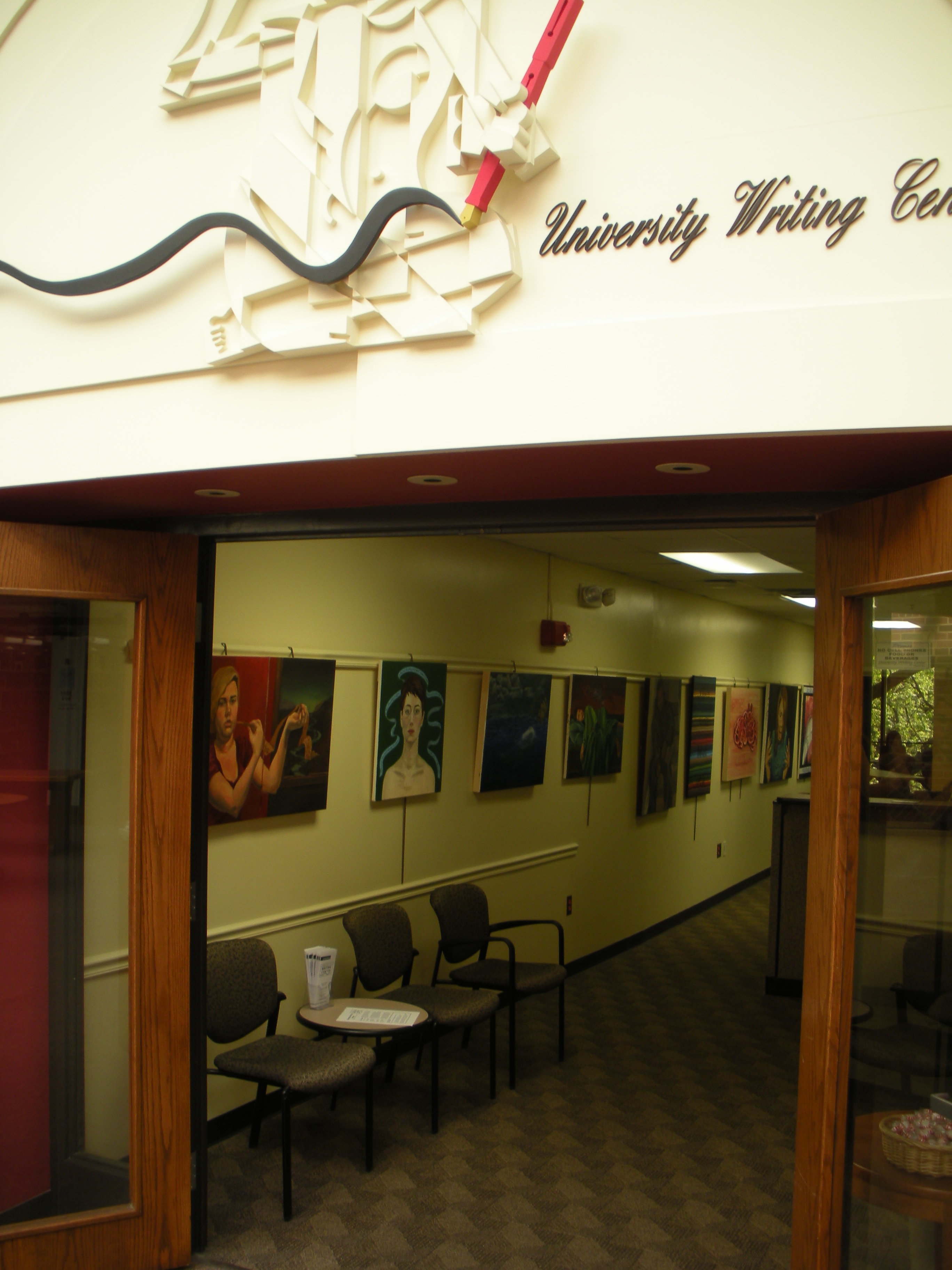
Art and Text in the Writing Center

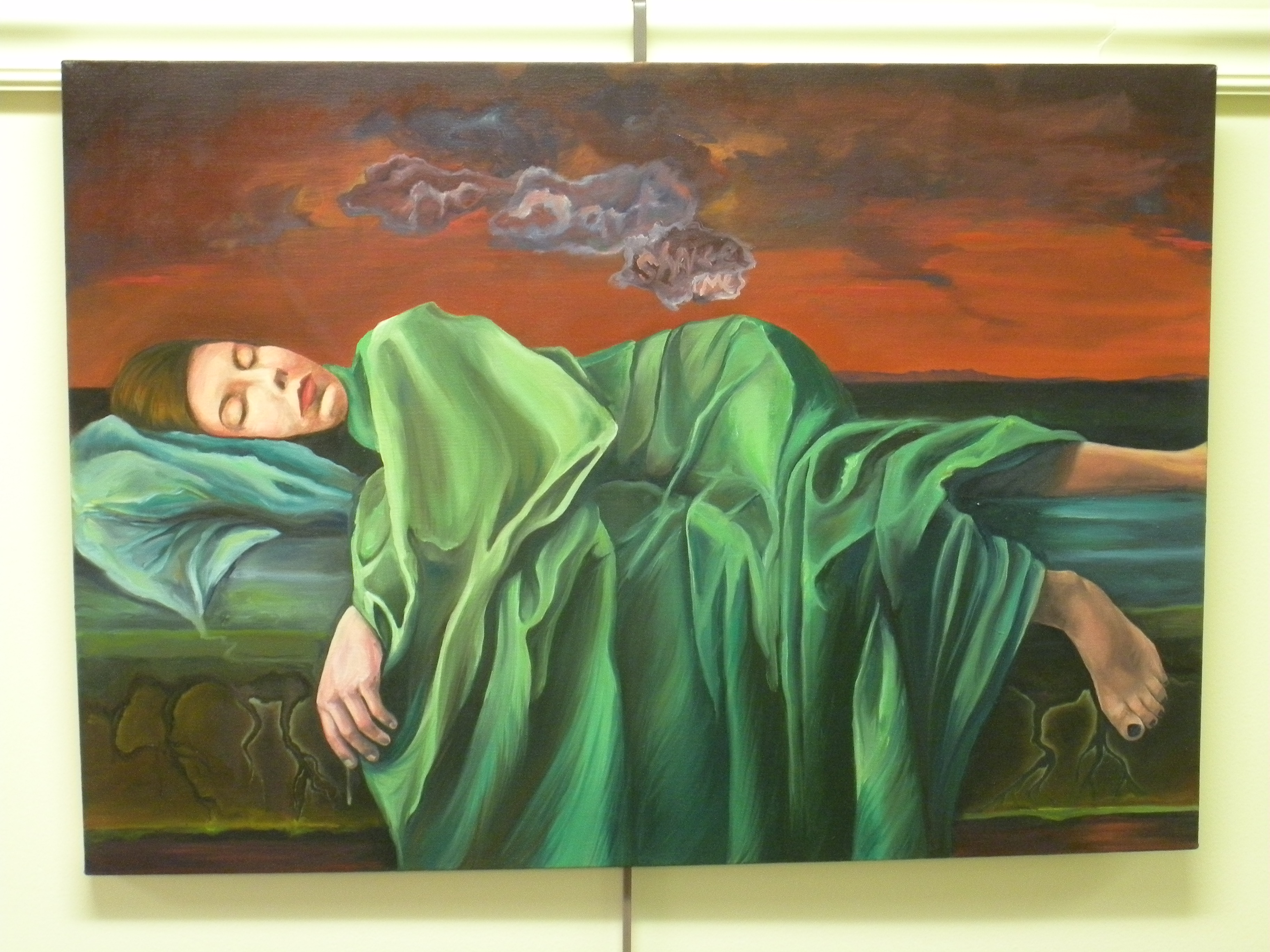
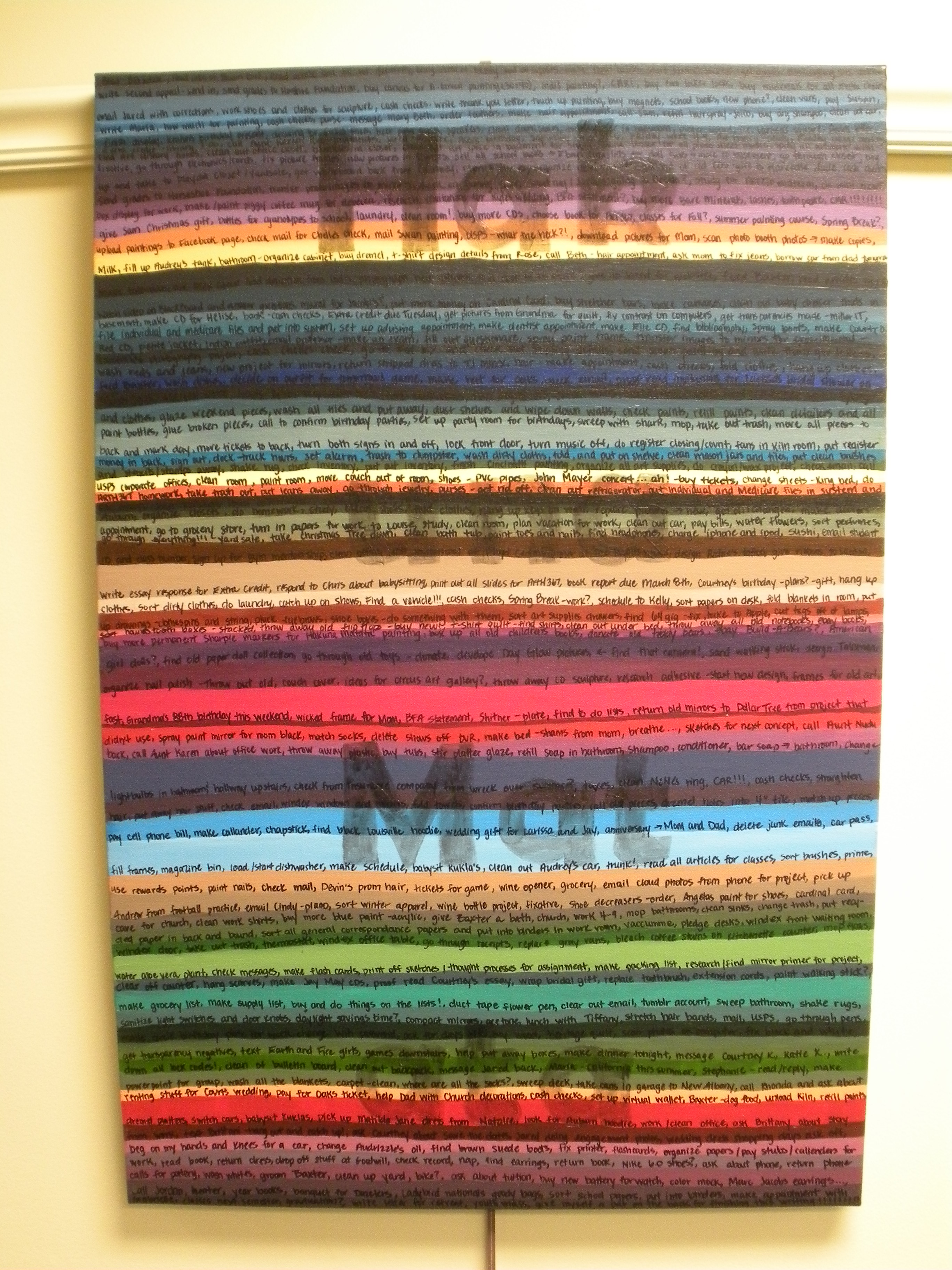
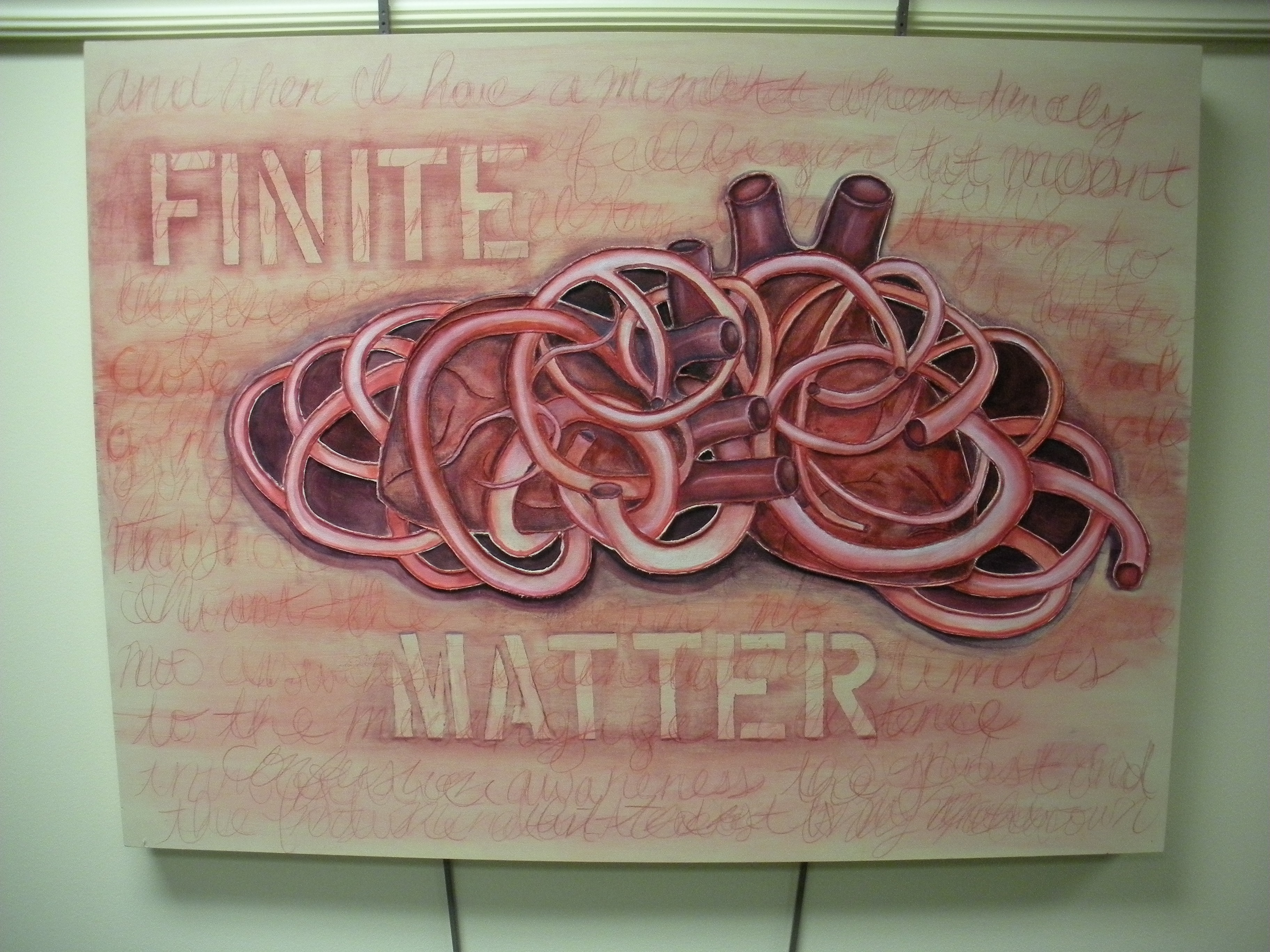
It’s hard to describe how excited everyone here was, then, when Professor Gabrielle Meyer showed up last week with paintings from her Art 501 – Concepts in Painting students. Professor Meyer, who has been coordinating the student artwork on display in the Writing Center this year, assigned her students in the class to create works of art that contained printed words. She created the assignment with display of the works in the Writing Center in mind.

As Professor Meyer described the assignment:

The idea for this concept comes directly from the professional art world.  Galleries and art centers often send out a “call to submit artwork” by concept or theme.   Our concept is inspired by a recent juried international opportunity to submit artwork to Manifest Gallery in Cincinnati, Ohio.

 Not long after humanity began drawing, drawings evolved into writing. Pictures became symbols, abstraction blossomed, and language became visual. Two branches, sharing one root, carried forward people’s ideas, feelings, and plans. The visual and the verbal arts shared the role of encapsulating civilization’s data.

Art and Text in the Writing Center

The students in class responded to the assignment with inventive and thought-provoking combinations of creativity and craft. The paintings are stunning individually, and, hung together, they create a fascinating range of representations of about how words work both as concepts and as aesthetic objects themselves. For our consultants and clients coming to the Writing Center each day, the paintings are points of conversation, objects of contemplation, and a wonderful reminder of how writing permeates our lives and our identities.

I want to offer my thanks to the artists, for their generosity in allowing us to display their work: Alex Kenitzer, Ashley Triplett, Sarah Reasor, Olivia Perkins, Sandra Charles, Brittni Pullen, Audrey Marberry, Miriam Nienhuis, and Amber Schultz.

Please come up to the Writing Center to see this intelligent and creative work!

By Miriam Nienhuis
By Amber Schultz
By Brittni Pullen
By Audrey Marberry
By Sandra Charles
By Olivia Perkins
By Sarah Reasor
By Ashley Triplett
By Alex Kenitzer

Writing Center Myths

Ellen Snell

Throughout the past months that I have spent working as a consultant in the Writing Center at UofL, I have noticed that there are many misconceptions of and apprehensions surrounding writing centers in general. Some clients feel that in visiting the Writing Center, they are acknowledging their status as “bad” writers; others are worried that the details of their sessions will be forwarded to their professors. Both of these writing center “myths,” are, of course, false, but there is another misconception upon which I wish to focus: the myth of an English-as-a-first-language-only Writing Center.

In a given week at the UofL Writing Center, we see clients from many backgrounds who study many disciplines – first-year students studying History, PhD. students polishing up their doctoral work, and even faculty members wanting an extra hand in looking over articles before submitting them for publication, just to name a few. What many people may not know, however, is that at the Writing Center we also work with clients whose first language may not be English.

As a student who studied English Literature and Spanish at my undergraduate institution, I was excited to learn that I would be working with ESL students/non-native speakers at the UofL Writing Center. There are some different perspectives that working with an ESL client brings to the table, and I wanted to reflect on a few of those perspectives here.

1. PICTIONARY (WITHOUT THE GUESSWORK). Sometimes when going over an idea or a concept that may be a little ambiguous (imagine that, the English language being ambiguous!), I like to draw a picture or a diagram on a piece of scrap paper to help illustrate the concept. This can be as simple as a few boxes labeled PA, P, and F to indicate the change in grammar from past, present and future tense. I’ve found that sometimes just being able to see an idea drawn out on paper can make things easier for the client to understand and for the consultant to explain.

2. SLOW DOWN!!! Especially when a client or a consultant is nervous (or they’re both nervous!), he or she may tend to talk fast – really fast. While this may not present too much of a challenge to a native English speaker listening to a speed-talking consultant, such a situation may be more difficult when the student is a non-native speaker trying to keep up with the motor-mouth consultant. So, slow down everybody! Just taking a moment to stop, think and inhale deeply can help everyone keep pace and have a successful session.

3. READ ALOUD (YES, YOU). I’m a big fan of the ol’ “I can read it aloud or you can read it aloud” scenario in writing center sessions. I think that the act of reading aloud, as well as the act of hearing a paper read aloud, can work wonders in bringing possible revisions to light and generally clarifying things all around. Some clients, however, may not feel comfortable reading their own work aloud, especially students who may just be getting the hang of the English language. Here’s where the consultant offering to read comes in handy: the client may feel more at ease listening to the paper rather than reading it aloud, and the consultant gets a different perspective by doing the reading him or herself.

I hope these few tips help to dispel more “writing center myths” and make potential clients feel more welcome, no matter their language background!

What I’ll Miss the Most

Nia Boyd

As I move towards a transition out of UofL’s MA program in English, I find myself reflecting on my two-year experience as a tutor in the University Writing Center. It has been fun, fulfilling, and frustrating at times. It has been fun to work with such dynamic colleagues and to be so closely connected to our mutual development as intellectuals, writers, tutors, and instructors. It has been fun to work with the wonderful population of bright young undergraduate students who often have one of those intellectual “Ah -Ha” moments while working in one our tutoring sessions.

However, it is the students who come again and again to work on their writing skills over the course of a semester, or even two or three, which really makes this gig a fulfilling one. They just keep showing up and sometimes they even ask for you by name, and you run into them in the library and they stop and tell you about  their grades, or their latest most hated writing project and how they’re “really gonna need help with this one”, and they come in and they get it. Need I go on? I think not . . . I’m sure my tutoring peers know exactly what I’m talking about and I hope the students know how proud we are of their commitment to their own writing processes! This is probably the most fulfilling aspect of a job that most often does not seem like work at all.

As for the frustrating part, I always wish I could do more. I wish students could ask for longer sessions and get them. I wish instructors would hang out in the WC once in a while to see what we are accomplishing there.  I wish the WC body was more diverse and could work more effectively with multiple languages, including Englishes, and that it could become more proficient at working with special needs students.  I wish that we had extended Saturday hours and I wish our students would express more explicitly what they need most from an entity that exists just to serve them. These are all ideas that may become realities over time; our Director is approachable, he listens, and he cares.

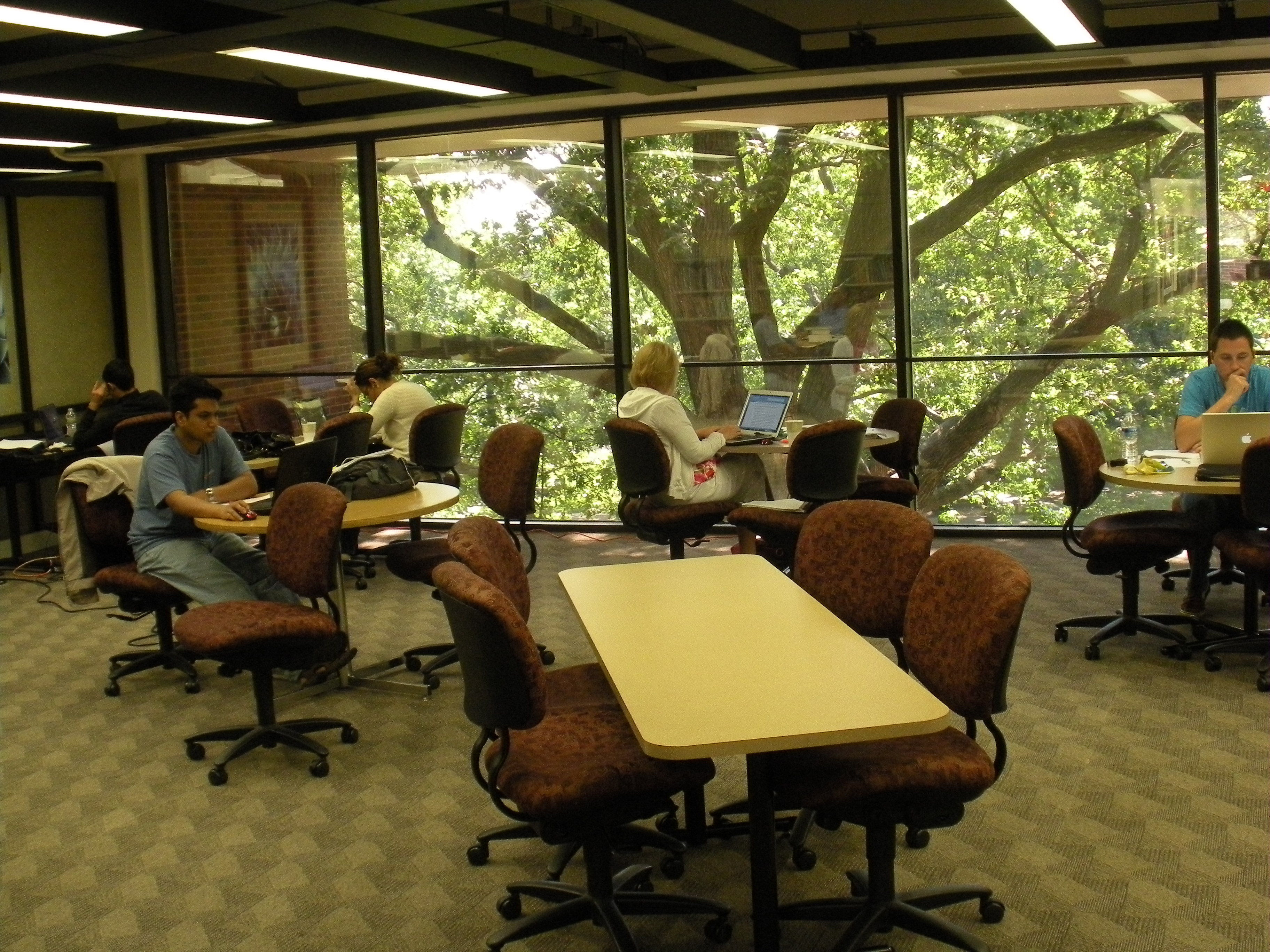
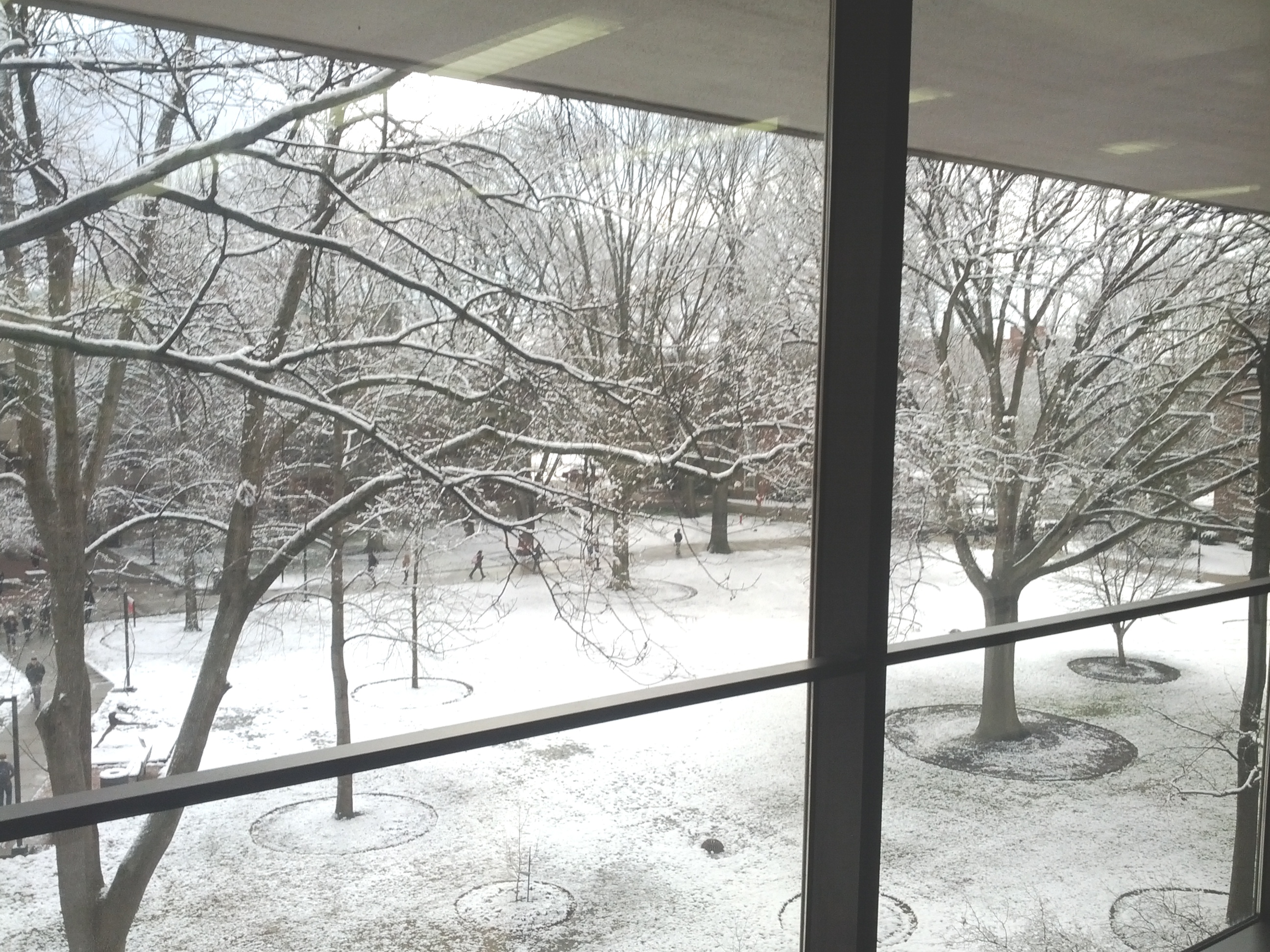
Mid- terms are just around the corner; I will have papers to grade and final projects to complete, and many new students to meet and work with in the Writing Center. Most likely, I will be found at my favorite round table by the window. I like to look at the trees.  The view of campus from that spot is awesome  . . .  almost as awesome as the view of university life we get from our unique position on the 3rd floor of the Ekstrom Library.  As I move, in May, towards either a professional career as an instructor or towards another stint as a student in a PhD program, my experience in the UofL W.C. is what I will savor and miss the most.