
By: Amber Yocum
Today marks the third week of the semester and so much of how we operate – as a university, as a writing center, as faculty, staff, students, and humans – has changed and continues to change as everyone adapts to different teaching and resource modalities.
This semester, along with many other university resources like REACH, the Career Center, and the Counseling Center, we decided to offer virtual appointments in order to keep you and our staff safe. Admittedly, it’s been difficult for us because seeing you as individuals and writers and getting to interact and collaborate with you in-person is one of the aspects of writing center culture we value so much.
Our goal this fall is to ensure that you, as writers and members of the university community, do not lose that connection. And to continue to assist you with your writing and writing processes in ways that reflect our consultants’ commitment to provide individualized feedback.
Whether you visit the Writing Center one time or multiple times over the course of your academic and professional careers, our consultants are here to learn about you as writers and people, as well as to help you with your writing. So much of their own academic and professional experiences, as well as interests, contribute to that process. As you navigate how to adjust to a more virtual environment, we hope that you take the time to get to know our consultants whose aims are the same as if we were meeting you in-person: to listen and to help you become a better writer.

Writing Tip: “Write with the mindset of telling a story, even if you’re working on something like a research paper. Finding the story you are telling is often an approachable way to work through your own thinking, and it can help you make sure that your reader will follow the argument and reasoning in your writing.”
Madelaine “Maddy’ Decker is interested in producing fiction as well as researching topics related to 18th century literature and African American literature. She earned her BA in English and Anthropology from the University of Kentucky. Her favorite book is The Thief Lord, and her outside interests include knitting, Irish archaeology, 2010’s pop punk, and the Muppets.
Writing Tip: “Try not to make unreasonable rules about what your process should look like or how long a piece of writing should take you to finish.”
Amanda Dolan
Amanda Dolan is a second year MA student whose research interests include memory, literature and other art forms, and the syncretization of myth. Prior to her return to academia, she worked in education research.

Writing Tip: “Just start writing. you can always improve it later, but if you spend all of your energy worrying that it will be bad, you’re cheating yourself.”
Chuck Glover completed her BA in English at the University of Louisville. Her academic interests include creative writing, screenwriting, and the study of feminist, socialist, and LGBT literature. Her favorite TV shows are King of the Hill and It’s Always Sunny in Philadelphia, and her favorite movies are Parasite and Gone Girl.

Ian views language as the practical analogue to conceptual expression, and, while working toward his degree, hopes to expand his understanding of the relationship between rhetoric and world view. His interests include low-fiction, creative non-fiction, and identity as defined in a media saturated age. Outside of university, Ian enjoys biking, hiking, and writing essays on contemporary culture; as well conversations with everyday people throughout whichever community he finds himself in.

Writing Tip: ‘Write every day. Even if it is just a few lines, the practice will pay dividends.”
Andrew received his BA in English from the University of Louisville. His critical research focuses on 17th-century British literature as well as René Girard’s theory of mimetic desire. Presently he serves on the Pine Row Press editorial board. His poetry appears in Thrush Poetry Journal, Cathexis Northwest Press, Math Magazine, Poet Lore, High-Shelf Press, Twyckenham Notes, and elsewhere.
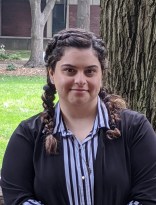
Writing Tip: “After getting the assignment and starting your writing process (whatever that might be) jot down all the thoughts you have forming in your head on to the paper. I say this because it is astonishing how many of those quick ideas will become improved concepts later in your paper.”
Ayaat received her BA in English from the University of Louisville. Her interests are in sociolinguistics and British Literature with a focus in feminism and social class. Her love of language was developed at a young age having been raised in a bilingual household. She is from Chicago, Illinois and loves watching baseball as an avid Cubs fan, and spends the rest of her free time reading and writing.

Writing Tip: “Your best friend in the writing process is time. There are a few exceptions, but in general more time you spend on a project (and the sooner you start it!), the less stressful it is to work on it and the better your work ends up. Sometimes I procrastinate because I don’t know where to start; that’s where talking with a friend or visiting the writing center to flesh out your ideas is a great use of time!”
Zoë, a San Diego native, is joining the Writing Center with a background in Humanities and Creative Writing. A true enthusiast for all facets of academia, Zoë loves how the writing process can empower and embolden any student of any discipline to be more effective in their field. Right now, her research interests include children’s literature, the pedagogy of leadership, the writing theory for the student-athlete. When not in the Writing Center, Zoë is probably working out, dancing, watching movies, laughing, or doing all of four at the same time.

Demetrius hales from Atlanta, GA and received his undergraduate degree from Boyce College. He loves reading the literature classics and played college basketball. Friendships are really important to him. His favorite event in Louisville is attending summer-time Shakespeare in the Park plays. His favorite books are the Chronicles of Narnia by C. S. Lewis. His favorite line in poetry is from George Herbert: “Love Bade Me Welcome/ Yet guilty of dust and sin I drew back.”

Writing Tip: “Do not doubt yourself, as even the best writers need to edit and revise their works.”
Spenser is from Lancaster, PA and received a BA in English with a history minor from McDaniel College in 2019. While at McDaniel, he served as an editor for both the college’s newspaper and literary magazine. His areas of interest include modernism, 20th Century American literature, and Marxism, with an emphasis on cultural hegemony. Outside of the classroom he enjoys reading, creative writing, hiking, and binge watching movies on Netflix.

Writing Tip: “Try to invest yourself in whatever you are writing about. Whether you love or hate the topic, find a way to connect to it so it’s more than just an assignment.”
Emma received her BA in English and Women’s and Gender Studies from Lindsey Wilson College in May 2020. From 2018-2020, Emma served as a peer Writing Center Consultant in the Writing Center at her undergraduate institution and began to develop an ever-growing writing pedagogy. During this same time, Emma published several papers in undergraduate research journals on topics ranging from Greek literature, Wuthering Heights, “The Yellow Wallpaper,” and Dolly Parton. Her research interests have continually been a mixed bag; however, she always loves what she is studying.
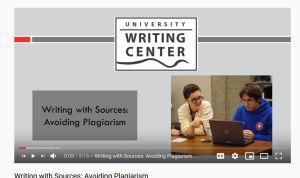 from other research for evidence, ideas, as well as to establish your credibility. Our videos on how to use sources in your writing can help you with
  take a look at our Writing FAQ on
  right, take look at our
 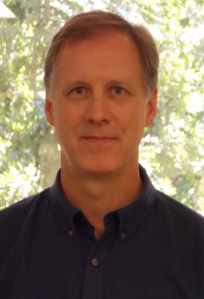 University Writing Center. This past week, our new consultants met for our orientation and began to plan for the year ahead. Just as in years past, this year’s new consultants are a talented, dedicated group of graduate students who are eager to start working with UofL students, faculty, and staff to provide them with feedback and strategies that help them become stronger and more confident writers. Our consultants remain committed to helping writers at every stage of writing – from brainstorming to revising drafts – and with every form of writing, be it academic, professional, or personal. And, as in the past, we plan to work collaboratively with writers, listening carefully to their concerns and working together to create plans for revision to make their writing more effective and engaging. Some things don’t change.
 University of Louisville Writing Center