Month: October 2019

How I Write: Dr. Tracy E. K’Meyer

Our “How I Write” series asks writers from the University of Louisville community and beyond to respond to five questions that provide insight into their writing processes and offer advice to other writers. Through this series, we promote the idea that learning to write is an ongoing, life-long process and that all writers, from first-year students to career professionals, benefit from discussing and collaborating on their work with thoughtful and respectful readers.
Photo

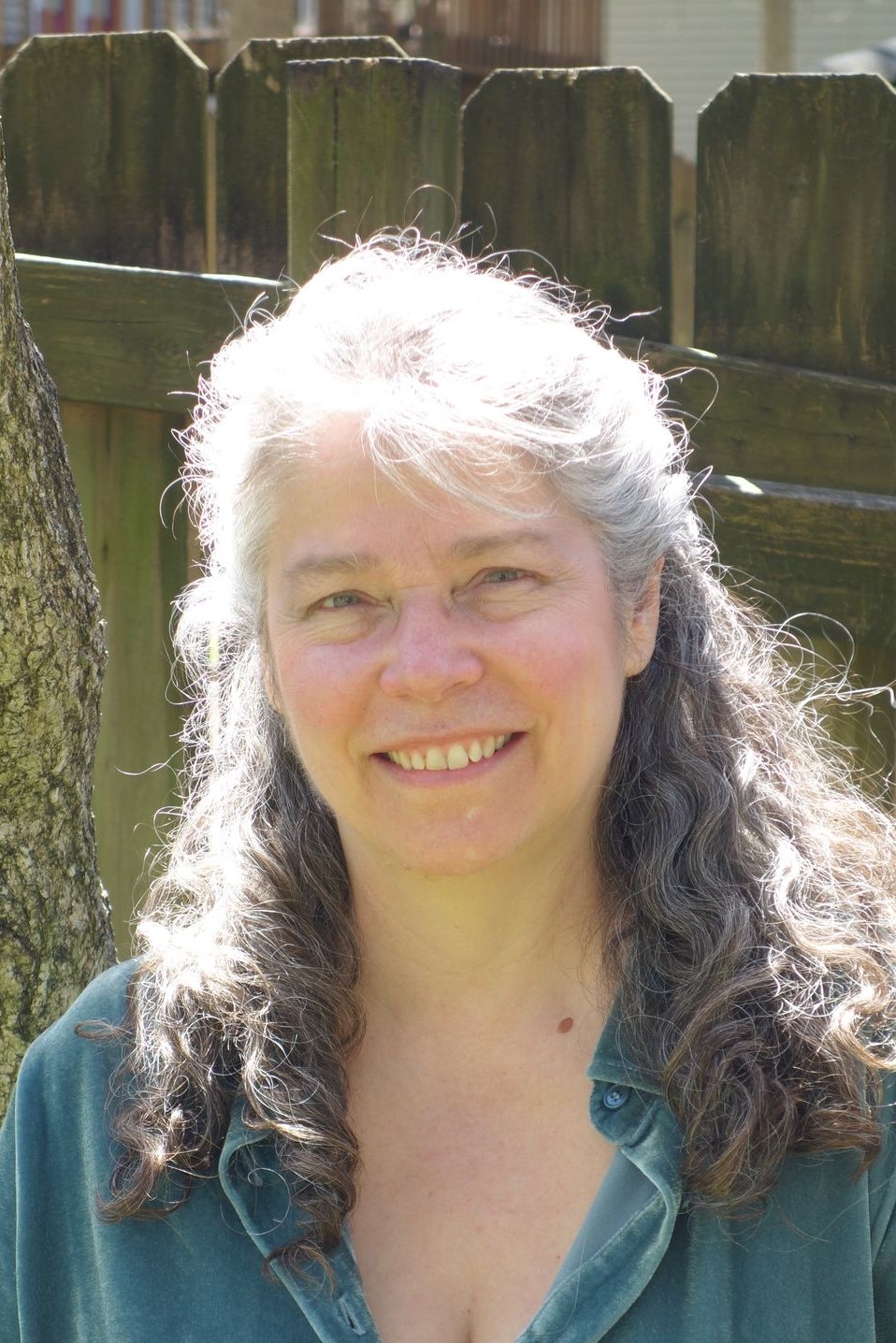
Dr. Tracy E. K’Meyer is a Professor of History at the University of Louisville, specializing in the history of modern U.S. social movements. She earned her PhD at the University of North Carolina at Chapel Hill in 1993 and taught at New Mexico State University for two years before coming to the University of Louisville. She is the author of five books: Interracialism and Christian Community in the Postwar South: The Story of Koinonia Farm(1997); Civil Rights in the Gateway to the South: Louisville, KY, 1945-80 (2009); Freedom on the Border: An Oral History of the Civil Rights Movement in Kentucky (2009), with Catherine Fosl; I Saw it Coming: Worker Narratives of Plant Closings and Job Loss (2010), with Joy Hart; and From Brown to Meredith: The Long Struggle for School Desegregation in Louisville and Jefferson County, KY, 1954-2012 (2013). At the University of Louisville, she has served as Co-Director of the Oral History Center (1995-2017), Chair of the Department of History (2009-2015), and acting director of the Public History Program (2009-2010, 2019-present).

Location: Louisville, KY

Current project: I am completing two book projects in the next couple months: We the People: A Narrative History of the United States, with A. Glenn Crothers; and, To Live Peaceably Together: The American Friends Service Committee and the Open Housing Movement.

Currently reading: Wesley C. Hogan’s brand new On the Freedom Side: How Five Decades of Youth Activists Have Remixed American History from UNC Press.

1. What type(s) of writing do you regularly engage in?

I like to write books. Historians still prioritize the monograph for tenure and promotion, and in the field one’s reputation rests more heavily on books than on articles. But, more than that, I just prefer the long form.

I like the deep immersion and the room to explore rich stories in a narrative as well as persuasive format. Of course, when not working on research, I write lectures, proposals, committee reports, and letters of recommendation.

2. When/where/how do you write?

My best writing is early in the day. I am pretty sure I wrote my entire dissertation before noon. I love writing at home, in my office in the attic, when my kids are at school and I have the place to myself. In a pinch, I can write in my campus office. But, I shut the door to keep distractions and interruptions down.

3. What are your writing necessities—tools, accessories, music, spaces?

Quiet and a big desk. I write on the computer, but I keep a notepad and pen next to me for free writing and “scribbling” down thoughts in preparation for writing. I have my research notes in files on the computer, but I also print out the sections most relevant for what I’m writing that day so I have them for easier reference.

4. What is your best tip for getting started and/or for revision?

I am a big fan of what I call “deep outlining.” I start with the big structure, then the chapter outline, then break that into ever smaller chunks. Often by the time my fingers hit the key pad, I’ve outlined even the individual paragraphs.

This helps me see where I’m going. When I start writing, I’ve already thought through most of what’s going to go on the page. Liberated from having to figure that out, I can have fun with the language and the story.

5. What is the best writing advice you’ve received?

As Professor William Leuchtenberg told me in graduate school, “don’t get it right, get it written.” I’ve taken that to mean many things over the years. First, get something on paper. You are going to rewrite multiple times anyway so just get moving. Don’t worry about making all the sentences pretty. They can be fixed. In fact, fixing them later is half the fun. I think it also means, don’t wait until you think your work is perfect before you show it to someone else. Get it in shape that won’t embarrass you and send it to a friend (or in my case, I’m lucky to have a historian husband who is my first reader for everything).

Finally, I’ve always taken it as an admonition to meet deadlines, even if they are self-imposed ones. When I meet a deadline I feel confident, productive, and energized, and that helps keep the mental juices flowing.

 

The Rhetoric of Your Dating Profile

Cat Sar, Writing Consultant

Bumble. Tinder. Hinge. Clover. Match. Coffee Meets Bagel

Dating profiles might not come to mind when you think of writing, but even a short blurb about yourself is a type of text. In fact, all parts of a profile on a dating app—basic information about your name, age and location, photos, optional questions, and even the decision to link other social media profiles to your account—are all part of a “text” that can be read and analyzed.

Think of your profile as an argumentative piece. The goal of the argument is to convince someone to engage with you. The type of engagement may depend on the specific platform that you are using. In this case, the evidence that supports your argument consists of all the components of a profile that were previously mentioned. In order to craft a successful dating profile, you’ll need to take into consideration the rhetorical elements involved in writing an argument. Hmm…sounds a lot like your first-year English course?

Let’s break down your “argument” by each part of the profile, starting with basic information: name, age and location. Don’t think that these pull as much weight as your photos? Think of it this way: if you are tempted to fictionalize this portion of your profile—if you are lying about the very base facts about yourself, why should anyone believe that any of your profile is real? The basic information of your profile is the start to building credibility (cough cough ethos). Although online dating and app usage has become extremely popular, we live in the age of catfishing and stranger danger.

Trust is a major factor in dating apps, and in relationships. You should be honest about these facts (and to be honest myself, I shouldn’t have to tell you that). When a house is being built, the foundation is laid first. Everything else is built upon this base. When it comes to dating apps, trust (that the person looks like their pictures, that they are the age that they claim, etc.) is the foundation that you are asking someone to build any interaction upon.

Next, there are the photos. Again, these should be photos of you, and they should be recent photos. Seems obvious. The majority of your photos should be solo shots, or pictures in which it is obvious which person you are. When people are swiping through profiles, they don’t want to have to stop to search for you in every picture. Similar to the importance of clarity in writing, a straightforward visual directs your audience to the point quickly and concisely.

The content of the photos is where the major decisions lie. The photos section of your profile is where emotions arise most readily. For example, when you use a travel picture, you are making the claim that you are adventurous, or at the very least have been on a vacation. A photo of you playing a sport suggests that you are active. A picture of you and a dog? Cue the heart-melt! In this case, a picture is worth a thousand immediate affective responses that will sway your audience to see you in a certain light, depending on what kind of photos you include. Choose wisely.

You’ll be tempted to post your highlight reel—the most interesting photos where you look the best. And you should prioritize the pictures in which you are ~ feeling yourself. But your pictures should also be an accurate representation of who you are. Pathos—emotional appeals (think the involuntary aww that puppies elicit)—are weak without a person’s truth to back it up.

Remember, everything that you include in your app is telling those who view your profile what you think is important in a partner. The (sometimes optional) short answer section is the most direct place in which this occurs. By choosing certain things to include above others, like: are you physically active? what’s your horoscope? ideal first date?, you are showcasing what you consider to be characteristics that will attract a partner, and telling that potential partner what they should find desirable about you.

On one hand, you are saying: these are my most important qualities—the qualities that I believe will draw other’s interests. On the other, you are saying: this is what I find important to advertise on this platform—I am likely to be interested in others who prioritize the same characteristics. The type of language in these responses should reflect your personality and your intention.

Lots of slang, emojis, or typical “text talk” will invoke a different assumption about you than one-word responses, which in turn will have different implications than longer, more poetic answers. (What these assumptions are, as well as their accuracy, will reflect certain biases of your audience. This blog post does not aim to address the consequences of such assumptions, but it would be remiss not to mention that dating apps and profiles are as susceptible to bias and assumption as any in-person interaction.) Basically, your choice of words matters.

Has this blog post ruined the casual ease of swiping through strangers in hopes of finding true love? Maybe. Hopefully it has also helped you to think more deeply about how we go about connecting with others, and offered some clarity about the kinds of arguments we make for ourselves. When we claim that we are able to help with any kind of writing at the University Writing Center, we really mean it.

Writing and Riding: More Parallels Than You Might Think

Kelby Gibson, Writing Consultant

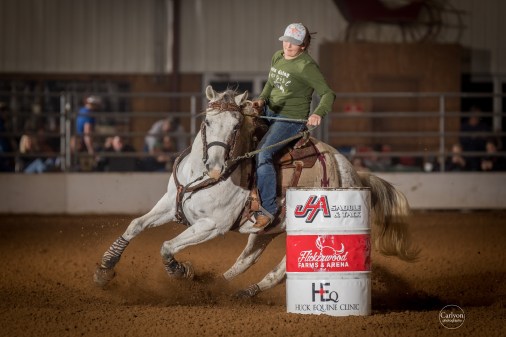
Writing can be related to more things in your daily life than you might expect. Writing looks different for everyone.  My writing process is very similar to my training process. I ride horses, barrel horses to be exact. I compete at local shows and occasionally a few rodeos. For those reading this that don’t know what barrel racing is, it’s a timed equine event in which a rider takes their horse through a clover leaf pattern around three 55-gallon barrels as fast as they can. I know what you’re thinking, there is no way this can relate to writing, but it really can.
I have learned many lessons and grown so much as a person from being in the barrel racing world. A few of the key things I’ve learned that have in turn helped me in writing are both humility and confidence.

Humility is something that can be hard for a lot of people. Admitting you are wrong is never fun, but the important thing to remember is when you can accept that you need to ask for help you are always going to come out the better person. A friend of mine has a saying, “if you’re scared say you’re scared” and I think this applies here. If you need help, ask for help! Yes, it sucks saying I’ve tried my way, now I need to hear from someone else. Opening yourself up for critique is hard, but once you learn to take the constructive criticism it will only make you better at what you are trying to accomplish, whether that is win a belt buckle or write an ‘A’ paper.

I’ve consulted many different people just in the last year on how to better myself as a rider just as I have continually asked for feedback from friends and colleagues with my writing throughout the semester. I did not become a better barrel racer by only ever riding my way, I got better by asking my friends and competitors questions. You cannot become a better writer holed up in a dark room holding onto that draft just waiting for the answers to come for you. You have to go find the answers. Writing can be social. Writing is social. So have the humility to venture away from the desk, seek feedback, and ask questions.

Kelby horse
Kelby Gibson barrel racing!

Confidence is needed when you’re on the back of a 1200-pound animal that’s running at roughly 40 miles per hour and turning on your command by a few light hand and foot movements. There are certain pressures behind writing that are similar to trying to beat a clock with money on the line. Maybe you’re applying to your dream graduate program, working on your senior thesis, or writing the final paper that determines your grade in class. Stress and pressure do funny things to us and can cause us to under-perform. When I’m at a race I like to try my best to focus on the positives.

While I don’t recall exactly who said it, there is a line from my favorite barrel racing podcast I like to keep in mind with all things in life, “You either win or you learn.” So maybe you try your hardest and your horse gives its all, but you don’t come in the pen and set the pace for the day. Similarly, you might spend hours upon hours on a paper that falls short in the eyes of its main audience. In either situation your initial reaction is to ask, what went wrong? If you pursue that question you will surely get an answer whether it be from yourself or someone else and once you have that answer you can learn how to do better next time.

Not every run is going to be your fastest and not every piece you write will be well received, but as long as you are trying your hardest and putting forth a good faith effort you will succeed or you will learn how to increase your chances of succeeding the next time. Have confidence in yourself. When you’re writing that paper don’t allow the thoughts of what might happen bog you down, clear your head and give it your best shot. As long as you’re trying, what is the worst that could happen?

These two things are just a few of the many ways barrel racing has enriched my life and my willingness to learn. My training process and writing process mirror each other in many aspects and because of that I continue to improve as both a jockey and a writer. What I admire most about this sport is that even the best of the best will tell you that you can never stop learning and finding ways to improve yourself and the same can be said for writing.

What I Learned About Writing from My Favorite Protagonist

Tristan DeWitt, Writing Consultant

I can’t say that writing is always enjoyable for me. Sometimes I even hate it.  I’ve spent countless hours sitting in front of a blank word document having no clue what to say – regretting the choices I have made that led me to writing another paper. I know it sounds dramatic (and I don’t by any means actually hate writing) but sometimes I feel so overwhelmed thinking about my audience and if they will find it good enough, that I don’t even want to complete the assignment at all.

In this situation, it helps me when I think about one of my favorite protagonist in literature, Mary Beton, from Virginia Woolf’s A Room of One’s Own. Throughout the book, Mary finds herself denied the opportunity to partake in much of the academic culture of the university. In a search for answers to her experiences, Mary finds that little literature is written with attention to the actual experiences of women, both by male and female writers. Woolf herself concludes the novel by telling women that they need is a room of their own in which to write.

I believe that Mary’s experience highlights something about writing that many of us within the university community take for granted. When given an assignment that we don’t really want to do, we see it as something that is being forced upon us. I am guilty of this as well, but thinking of Mary makes me realize how remarkable each opportunity to write actually is. Not everywhere are we given the chance to write what we think and have an audience that will listen.

Even in our least favorite assignment we have the privilege to evaluate our thoughts and make something our own. We no longer need a room of our own to write. Within the university, we have a unique opportunity where we are expected to share our experiences and insights, be it with a text or with research.

Working in the Writing Center, people sometimes think that words or ideas just come to me naturally, since writing is what I like to do. However, the truth is that rarely do words just come to me. There is always revising, editing, and what seems to be an unending amount of time spent on rewriting just one sentence. Even when I get frustrated with an assignment, I have to remind myself that this is my work and that only I can say what I am thinking – which makes the laborious process of writing worth it to me.

Mary’s experience applies to us all. We all have had the moment when we question our thoughts or experiences. Next time you find yourself in this situation, where you feel frustrated with an assignment, I challenge you to see writing as the unique opportunity that it is. Not everywhere in life will you be asked what you think, so take this opportunity in college to own your writing.

Beholden and Held By The Power of Words

Rose Dyar, Writing Consultant

“Carry our stories carefully
Wrap them in soft red cloth
and place them against your
heart.” -Yolanda Chávez Leyva

Here at the Writing Center, we deal in the study of words and stories. Lately, I have been thinking a lot about how to explain why I think that’s so special, how to explain the link I see between words and justice, and how I honored I am to work with writers as they make meaning.

So here goes a humble attempt to begin such an explanation.
I believe that the study of words (e.g. literature, poetry, rhetoric) is critical to the ongoing formation of the whole human person. A bold claim, I know, but let me elaborate. This endeavor has the potential to infuse beauty and feeling and empathy into a world that actively attempts to numb us to our own humanity. And because of that, it has the radical potential to change hearts and minds. I mean radical change in two ways.

First, the etymological term. To change something radically means to change it at its root. The study of words grants us the gift of insight, or the ability to see inside of thing, to see the systems and structures that manifest themselves into parts of our daily lives, which then make their way into the stories that we read. When we know what we’re looking at, we know how to ask questions about it. Studying words and studying writing, then, gives context to social and political conditions that engender joy and suffering in our lives.

Second, I speak of words and radical change in terms of impact. We often use the word radical in order to describe major change, of the shifting of norms. And radical change necessitates action on its behalf. Which brings me to my next point. The study of words allows us to disrupt the laws of physics, to become alchemists, to remove ourselves from the center of our own axes and ask what it might take to imagine life otherwise. Empathy and understanding are byproducts of encountering stories. Empathy and understanding create conditions for change to happen.

But here is what the study of words cannot do: move on its own or by itself. Words alone do not have the arms or legs or beating hearts to use in order to advocate for change. If it is to be involved with any sort of moving, those who study the impact of words and writing must embody its movement. If we are moved by a text, we must move to make a difference. The study of words for me, then, must be paired with the willingness to act, or write, for change.

Writing and reading allow us to cross borders. We transcend from the moved to the mover and enter into a space of our own making when we do it. We are, all of us, in the wilderness. We are, all of us, voices crying out wanting to be heard from the thickets of that wilderness. We are, all of us, beholden and held by the power of words. For me, the study of words necessarily asks of me the courage to speak and write ideas and identities into existence, into being. We carry stories with us. We carry them tenderly, we carry them fiercely, and we tell them purposefully.

I believe that we tell stories, to ourselves and to each other, in order to understand what it means to be human, and it how it is that we can come to be fully human together. I believe that each story that is told is, in some part, an act of revelation. I believe that at every turn, stories are verbalized negotiations of power. I believe that we are all of us telling stories all the time, every day. Each story uncovers, even if just a sliver more, how the human experience is lived and breathed and understood in one moment, in one context, by one storyteller.

What a gift it is to encounter these stories, to study these words, to work with writers as they make sense of the stories inside of them.