Tag: #writingprocess

Love, Generosity, and Attention: How Do You Tend to Your Writing?

Sister Sarah Joan: You clearly love Sacramento.Rose Dyar

Christine “Lady Bird” McPherson: I do?

Sister Sarah Joan: You write about Sacramento so affectionately and with such care.

Christine “Lady Bird” McPherson: I was just describing it.

Sister Sarah Joan: Well it comes across as love.

Christine “Lady Bird” McPherson: Sure, I guess I pay attention.

Sister Sarah Joan: Don’t you think maybe they are the same thinglove and attention?


Lady Bird, Greta Gerwig’s 2017 film, centers on the experiences of a young woman as she goes about her senior year of high school. It’s about growing up and coming to terms with where you are from. It is also, at its core, a film about paying attention. The quote at the top of this post comes from a scene in which the titular Lady Bird reviews her college application essay with her advisor, Sister Sarah Joan, who notices the particular care Lady Bird treats her hometown with in her writing. The devotional attention Lady Bird has paid to a place translates into her writing and helps her to recognize a love that she was not able to name before the writing. Writing, love, and attention— these things are linked. Sometimes we just need a companion to help us to see that. Once that link is made clear, though, it is hard, at least for me, to not think of that relationship each time I sit down to write.

It is no secret that writing can be hard work. Sometimes, it is taxing. Sometimes, it is a struggle. Sometimes, it is just confusing. That is why places like the Writing Center exist. But hard work can also be joyful work. A theory of attention, I believe, can help to make the hard work of writing a practice of love.

Deciding to write means to deciding to attend to a topic or an idea. It requires committing to a process of discovery and showing up for the words that come out of it. There are many ways to begin this process. Maybe for you it starts with a daily journal and a singular prompt. Maybe it looks like a free-writing session that concludes by scanning for the sentence that worked and moving forward from there. Or maybe it’s an outline that helps you to see what you are writing toward. All of these rituals help us to turn our attention to our words, and ultimately, to our ideas.

When we turn our attention to an idea, we have the opportunity to devote our entire selves to it. It’s a lot like intentional presence in sitting with another person. When we do these things, we learn and listen. These are activities that make room for the possibility of transformation.

“Attention,” French philosopher and political activist Simone Weil wrote, “is the rarest and purest form of generosity.” I think of this quote often, especially when I am writing or thinking about writing or procrastinating from writing. It strikes a chord with me because of its recognition of the difficulty involved in the desire to pay attention. We try, but it doesn’t always work. So we show up again— a lot like writing. The practice of writing requires attention, so what has captured yours lately? Have you noticed anything special or mundane or strange today? What do you need to say? And, can you write it down?
‘Twas The Week Before Finals…

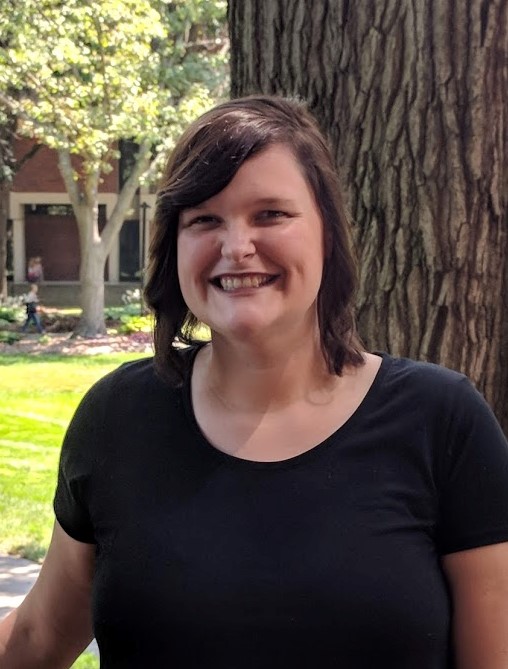
Kayla Sweeney, Writing Consultant 

The December buzz of the UofL Writing Center filled our staff room with platters of cookies, Christmas music, and everyone’s holiday favorite—the crippling anxiety of finals season. While we attempted to cope through serenading one another with showtunes and clearing cookie plates, helping writers with their own final papers was a constant reminder of our own deadlines.

As an undergraduate English student at Western Kentucky University, I regrettably never darkened the doors of our campus writing center. While never claiming absolute knowledge over the art of writing, there was something in me that said, “you are an English student. You’ve got this.” *Insert overconfident hair-flip*

After a semester of working with a diverse population of writers, I was thoroughly humbled by the need for everyone to have others view and comment on their work. High schoolers taking dual-credit courses at UofL, undergraduates, graduate level and doctoral writers, and even an occasional professor came into appointments at the Writing Center last fall, all willing to take a step back from their work for others to give their perspectives. By December, I was asking myself why I was not doing the same thing.

Perhaps this was an epidemical feeling among the staff at the UofL WC because as finals week approached, we began to look to one another (frantically at times) for help. We were no longer just consultants, but writers in need of each other’s eyes, perspectives, and insight. Hour after hour, between our break-time duetting and snacking, we looked out into the main room of the writing center and saw sets of two staff members sitting together, not knowing who were the writers and who were the consultants. We have often talked about this dual-identity we each have at the Writing Center—only writers can be empathetic consultants, understanding the ups and downs, the victories and frustrations of writing. But finals week brought this reality to life.

I word-vomited over more than one fellow consultant about a Shakespeare paper that was 50% of my grade. How do I talk about Macbeth’s madness in a way that has not been done a million times already? How do I make sure I am not rambling? And just as I have hoped for the writers I worked with last semester, a sense of relief poured over me in these sessions. I gained new insights on sentences, paragraphs, and entire arguments. I was able to see issues I hadn’t before.

And as I’ve imagined others probably feel about their writing at times, my own stubborn defensiveness also arose over my writing. This sentence isn’t babbling—it’s part of my creative style! *Insert second over-confident hair-flip* That comma is definitely NOT necessary.

In the end, there were things I took from these sessions and things I left. I kept some of my stubborn stylistic flare; as for some of my babbling and comma issues—they became more obvious to me hours or days after my co-workers pointed them out (with a little bit of a sting).

Now, starting a new semester, I am entering both this workplace and the classroom with the knowledge that I need others to provide insight on my writing, just as we all do—from the high-schooler, to the undergraduate, to the professor who has taught for 10+ years. When you come into the Writing Center, you are not coming to a room of people who have learned to never make mistakes in their work (I’ll wait for your surprised gasp). We are not authoritarian figures who recite rules from your high school English class. Instead, we are fellow writers and thoughtful readers who will sit by your side, listen to your concerns, and give you a new lens by which to see your writing.

So, you should come stop by.