Tag: writing tips

How I Write: Siobhan E. Smith — Media Scholar

Our “How I Write” series asks writers from the University of Louisville community and beyond to respond to five questions that provide insight into their writing processes and offer advice to other writers. Through this series, we promote the idea that learning to write is an ongoing, life-long process and that all writers, from first-year students to career professionals, benefit from discussing and collaborating on their work with thoughtful and respectful readers. The series will be featured every other Wednesday.

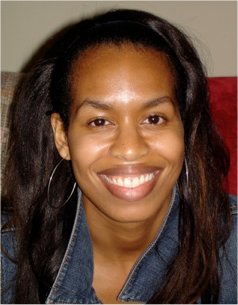
Dr. Siobhan E. Smith is an Assistant Professor in the Department of Communication at the University of Louisville. Her research interests involve minority matters in the media, and her single-authored projects explore portrayals of race and gender in reality television. She teaches Introduction to Mass Communication, African Americans in the Media, Television Criticism, and Reality TV. She is a proud graduate of Xavier University of Louisiana, Louisiana State University, and the University of Missouri. Siobhan enjoys watching trashy reality TV and reading.

How I Write: Siobhan E. Smithsmith
Location: Now? At my sister and brother-in-law’s house in Collierville, Tennessee.  For my writing? Usually, on my couch, with trashy talk/reality/court TV on in the background. I have found Snapped marathons on Oxygen and Law and Order: SVU marathons on USA to be very stimulating background fodder.

Current project: Here’s just a few (!): I am very blessed to collaborate with several of my colleagues on very intriguing research. I am still working with my friends in Communication, Pan African Studies, Sociology, and Anthropology on our NIH-funded project, which explores healthy food habits in Louisville and Hopkinsville. I’m also revising a manuscript with my mentee that is an analysis of MTV’s The Shop, revising another with two awesome colleagues from Social Work and Sociology that explores Black men’s use of popular culture to make sense of their romantic relationships, and putting the finishing touches on yet another with my Communication colleagues which will hopefully go out before school starts. In my head, I’m kicking around some individual projects, but they are in their beginning stages and I’m too shy to share those just yet. 😉

Currently reading: Club Monstrosity by Jesse Petersen. It’s a funny and quirky read about modern day monsters (e.g., The Mummy, Dracula, Frankenstein’s Monster) who have a support group, and then they start being murdered. Whodunnit?!

  1. What type(s) of writing do you regularly engage in?

    As you can see from above, usually collaborative research projects. I will do my homework when I work with my friends because I don’t want to let them down. UofL is an AWESOME place for building relationships and friendships. I’m working on being as diligent for myself.

  2. When/where/how do you write*?

    I try to write a little bit every day. But I’ve gotten away from the idea of filling up a blank space with words every single day. Although, if you want to publish, that is a necessity sooner than later. I count meetings, discussions, etc. as time toward my writing. Anything that helps me get closer to that pub counts. Revising a manuscript, looking for literature, etc. When I answered “Location” above, I mentioned my love of my TV and my couch. While not good for my neck or my back, I’m too lazy to drive 20 minutes to campus to work in my office, and apparently too lazy to clean up the “office” in my apartment.

    On a good day, if I don’t have any distractions (the TV doesn’t count b/c it’s my friend), I can literally write for hours (eight or more), from early afternoon to early in the morning. I’ve read that this “binge” writing isn’t good, but I feel a supreme sense of satisfaction when I can see what I have accomplished – whether it’s several new pages of manuscript, many freshly read articles, etc. I admit to being frustrated when I get hungry or need a bathroom break, b/c I get into a groove and don’t want to stop until I get to a good stopping place.

  3. What are your writing necessities—tools, accessories, music, spaces?

    My TV, my laptop, articles annotated and ready to go, and excitement for where a project might take me!!! Sometimes, if I get frustrated w/ a particular section or idea, I’ll write it out and then type it up.

  4. What is your best tip for getting started and/or for revision?

    As one of my professors at Mizzou told me about getting started: Just start! Write a paragraph of the intro, do an outline, start reading the literature. Do it! Then you just have to finish it.

    For revision: Work on one section at a time and give yourself rewards before you go to the next. You can cat-nap, check your e-mail, call your friends, etc. Don’t get beside yourself w/ those rewards, however. Time them (15 minutes is probably enough).

    Give your manuscript to someone you trust. I have a few people I can do this with. It’s great to have another pair of eyes help you see things you couldn’t and help you think through things that were driving you insane.In general, set reasonable goals.

    And remember, whatever you’re doing ALWAYS takes longer than what you originally planned.

  5. What is the best writing advice you’ve received?

    HA- I think ALL of these things I’ve mentioned came from someone else. For those needing to publish research, Belcher’s book (Writing Your Journal Article in Twelve Weeks) is a dream. But I would say, figure out what works best for YOU, and do that. If you like to work in a coffee shop every day, great. If you have to work quietly in a locked room, fine. Do you! Schedule time for your writing, and be good to yourself when you accomplish your goals.

    Best of luck to you in your writing endeavors! Don’t forget the little people when you strike writing gold…

5 Tips for Productivity: The Secret to Success

Arielle Ulrich, Consultant

DSCN1639Now that we’re nearly a month into the semester, you’re hopefully starting to get the hang of your classes. You’ve gone to a few classes, you’ve turned in some assignments, and you’ve probably just taken your first exam or written your first paper. This is the point in the semester where I typically lose steam because, after all, the end of the semester seems so far away. It’s not until later in the semester, when I’m struggling to write three papers at the same time, that I realize how much time I wasted at the beginning of the semester and wish I could go back in time and slap myself.

However, instead of starting to work on that time machine, I recommend something a little more practical (and doable): invest some thought into raising your productivity level. As a graduate student, I can’t emphasize enough the importance of utilizing your time in an efficient way. If you’re struggling to get all your school work done, it’s not enough to simply work harder, you also need to work smarter. Hence, I’ve put together some tips that should get you started and hopefully serve you well throughout the semester as you plan for success.

  1. Be honest with how you’re spending your time. Take a few days to track how you spend every hour of the day. By finding these gaps in your day and filling them instead with productive activities, you’ll get more done in the day without changing anything else in your schedule. I recommend using this sheet to track your time throughout the day:  http://getbuttonedup.com/tools2/free_printable_time_management_sheet_template.pdf
  2. To-do lists are a must. However, sometimes to-do lists can be easy to ignore if you add too many tasks onto it. I recommend a to-do list that separates your tasks into quadrants based on importance or necessity. Throughout the day, you work through the quadrants, starting with tasks that are urgent and important, and eventually move down to tasks that are neither. Using this method, you are sure to complete the most important tasks of your day without wasting time on busywork.tumblr_mz6f66jtzF1qdjs4ao1_500
  3. Use a scheduling tool like Google Calendar to remind yourself of exams, due dates, and meetings. By adding these events to your phone immediately, you’ll be able to schedule reminders so that you’re sure to remember the important deadlines for the semester.
  4. Don’t forget to take breaks! I often try to work for 30-60 minutes at a time, and then I take a 10 minute break to let the information settle in. Breaks not only give your brain a chance to rest, but they also increase productivity by ensuring that you don’t overwork yourself. If you don’t have a timer, you can use software to remind yourself to take breaks. Try a website like http://www.pomodoro.me/ that can give you desktop notifications.
  5. Lastly, seek help when necessary. If doing your homework takes hours and you’re still failing, seek out a tutor who will be able to give you study tips. REACH offers a range of tutoring opportunities as well as workshops on other college survival techniques. If you never seem to be able to start a paper, schedule a Writing Center appointment for brainstorming tips or to go over a draft. Never forget to ask other people how they stay productive!

I hope you find these tips helpful as you go into the rest of the semester. Happy writing!

How I Write: Greg Wrenn — Poet

Our “How I Write” series asks writers from the University of Louisville community and beyond to respond to five questions that provide insight into their writing processes and offer advice to other writers. Through this series, we promote the idea that learning to write is an ongoing, life-long process and that all writers, from first-year students to career professionals, benefit from discussing and collaborating on their work with thoughtful and respectful readers. The series will be featured every other Wednesday.

Greg Wrenn, photo by Pak Han

This week we feature poet Greg Wrenn. His first book of poems, Centaur, was awarded the 2013 Brittingham Prize and was published by the University of Wisconsin Press in Spring 2013.  His work has appeared or is forthcoming in New England Review, The American Poetry Review, The Southern Review, The Yale Review, and elsewhere.  A former Wallace Stegner Fellow and a recipient of the Lyric Poetry Award from the Poetry Society of America, he was born and raised in Jacksonville, Florida, and received a BA from Harvard University and an MFA from Washington University in St. Louis.

How I Write: Greg Wrenn

Location: Oakland, California

Current project: An untitled essay on artistic vision

Currently reading: Annie Dillard’s The Writing Life and the Book of Revelation

  1.  What type(s) of writing do you regularly engage in?

    I’ve been writing poetry for over twenty years, and my first book of poems, Centaur, came out in early 2013.  But now I’m hungering to be more direct in my writing, to make arguments and bold statements that feel unsuited to the genre of poetry as I understand it.  And to be much more autobiographical.  I suppose, too, that writing an essay on artistic vision is a way for me to step back from my usual lineated lyrics and ask myself why I write at all.

  2. When/where/how do you write?

    I write in a white leather chair that resembles Captain Picard’s on the Enterprise.  I face a large statue of the Buddha in the corner; a wooden windowsill lined with plantswrenn_writing studio and a ceramic snail, which reminds me to slow down; and a framed poster from the 1915 Panama-Pacific Expo of Hercules using his brute strength to create the Panama Canal, reminding me to exert effort.  I usually write in the late morning to the late afternoon, though I have been known to compose poems in my head while tipsy at a bar.

  3. What are your writing necessities—tools, accessories, music, spaces?

    I almost always begin by handwriting the draft with a mechanical pencil – I like that I can erase what I write, sharpening isn’t necessary, and the graphite marks are so thin and controllable.  I write on a piece of blank computer paper placed on a large art book.  I usually need to write in silence, at home.

  4. What is your best tip for getting started and/or for revision?

    To get started, write with your non-dominant hand.  Have it dialogue with your dominant hand.
    Revise in the bathtub.  It works.

  5. What is the best writing advice you’ve received?

    freedom is daily, prose-bound, routine
    remembering. Putting together, inch by inch
    the starry worlds. From all the lost collections.
    —Adrienne Rich, from “For Memory”

Five Tips for Writing a Killer Personal Statement

Megen Boyett, Consultant

DSCN1655More than any other month, January seems to be the time to write personal statements. You’re thinking about summer internships, fall graduate programs, and real world jobs, and application deadlines are just around the corner. You don’t want to brag, but you do want to stand out from the crowd. You want to showcase how hard you work, but you aren’t quite sure what committees look for. You have so much to say, but only 1000 words to say it in!

Sound familiar? You’re in good company. Plenty of other students are expressing the same concerns every week in the writing center. Here are five tips for writing an interesting, clear personal statement in 1000 words or less!

1. Don’t take it personally; it’s just business.

“Personal” is really the wrong word for this kind of writing. Acceptance committees want to know about your interest in the program or position you’re applying for as well as any experience you already have. Thus, you want to leave out childhood anecdotes, high school jobs, or stories about overcoming fears. Those say a lot about your work ethic, passion and character, but they don’t necessarily explain why you’re a good fit for your chosen profession or program.  Instead, think about your experiences in or related to the field that you’re hoping to get a position in. What interesting experiences have you already had working or volunteering in this field? Focus on one or two significant experiences that have shaped your views of the field or helped develop a particular interest. Instances that exemplify your interests or strengths in the field help a committee see who you are as a potential employee or program member.

2. Talk about your plan.

Where do you see yourself in a year? Five years? Ten? How will this position or program help you reach those goals? You don’t have to have all the details figured out yet, and you can certainly change directions later, but being able to clearly articulate what you want from the program or position will help an acceptance committee know what you hope to get from the program as well as what interests and skills you’re bringing in with you. This kind of detailed, practical planning may also help you think about why you want to be part of the program or company you’re applying for.

3. Do your research.

What do you know about the program or position you’re applying for? What do they value or put emphasis on? How do your goals or values fit with that of the company or school? Again, this will help you narrow your focus and think critically about your plans for the future. Talking about your values or goals in a way that reflects those of the program also show that you care enough about the job to do your homework and that your interests are in line with what the program or company see as their own goals. You might also talk about specific professors or researchers you want to work with. A personal statement is a good time to mention how your interests intersect with theirs. If you’ve been able to work with them already, you might mention that work as particularly influential or shaping.

4. Don’t think of it as bragging.

Obviously you have a lot to learn still about the field you’re going into. Obviously you want to appear humble and eager to learn. Instead of thinking of a personal statement as bragging, think of it as telling a potential employer or program director what you have to offer the team you’d be joining. What needs might you fulfill within the program? What has your unique background and set of experiences prepared you for? What research are you interested in or already working on? When you couple this with discussion of your goals and what you hope to learn from the program, a committee can start to visualize your place within their program or team.

5. Put it away and come back later.

Once you’ve finished drafting and you think you’ve got a pretty solid personal statement, close the document. If you have time, take a day or two before you go back to it. Then, read it aloud, looking for typos. You might print it out and mark changes you want to make in pen if you’re having trouble focusing on a computer screen. Looking at your writing in a different environment can help you catch typos or think about your word choice in a new way.

Of course, we at the writing center will be happy to help at any stage of the process, from brainstorming to drafting to helping you revise before you send it off. Make an appointment to bring by your personal statement. Having someone to talk about your writing with not only relieves some stress, it’s also pretty fun.

Happy Writing! And if you need more tips before you come see us, check out our earlier post!

5 Strategies for Picking a Paper Topic

Alex Clifton, Consultant

It’s never too early in the semester to start thinking about paper topics. Trust me, it’s much easier to write your essays in March or April when you’ve already thought about and researched a topic over the course of weeks, rather than deciding to write about something three days before it’s due. I’ve done the latter, and it’s produced some sleepless nights and shoddy writing—something you definitely want to avoid! However, it can be difficult to determine what exactly you want to write about. The following strategies will, hopefully, jumpstart some thought and give you ideas for any classes you’re struggling in!

Make a list. If you look over the syllabus of a course and realize that nothing quite “speaks” to you immediately, make a list of subject areas you know you’re interested in. Are you into feminist theory? Do you enjoy researching murders in South America? Are you more interested in the political or economic aspects of the Russian Revolution? These questions sound silly, but if you think about things you’re interested in, a paper topic might spark from that. I once took a course on the Civil War and did not find myself enamoured with the books on the syllabus. However, I knew I liked writing about gender and children’s literature, and ended up writing a fun paper on children’s stories during the Civil War! Reminding yourself what your interests are will also help you come up with a topic that you will be far more invested in—which will make your final paper a lot more fun to write.

Preliminary research. It might sound boring, but typing in keywords into the library’s database (WorldCat, located here) can provide a wealth of information and ideas. Not only is it a good way to find scholarly and reliable sources, but those books can also give you an idea of the scholarship out there! WorldCat has a really handy feature where you can click on a book and it will tell you the chapter/essay titles within the book. If you’re trying to do a paper on Arctic exploration, you might end up finding an essay on John Rae, a Scottish doctor who discovered the grisly fate of the doomed Franklin expedition from 1848, that focuses on his skills with snowshoeing, which might spark some interest in nineteenth-century Inuit methods of snow travel. Yeah, it’s an extreme example, but WorldCat is such a great resource and you don’t even need to have a defined paper topic to use it!

Talk it out. If you’re really struggling to come up with a paper topic, it might help to brainstorm verbally with some friends. If you talk to a friend or two from your course, you might discover new ways of looking at the subject material that may trigger some interest. Maybe one of your friends is writing on Bosnian familial structures, and somehow their own thoughts inspire you to look up Bosnian recipes for a paper in a course on Bosnian culture. Sometimes, it also helps to talk to a friend from outside your course, as they may act as an impartial observer to your thoughts and can ask probing questions. If you don’t want to ask your friends for help, try talking to your professor. I have yet to have a professor at UofL who has been totally unwilling to help students, especially when it’s clear that the student is making an effort. (If you’re asking for help about brainstorming a paper topic way before it’s due, that shows you’re making an effort!) Some professors may seem scary and unapproachable in class, but I’ve found that they are less likely to bite during office hours. Your professor might also be able to look at your academic interests and help guide you towards a topic that they deem suitable and you’ll find interesting, a win-win for all!

Freewrite. Yeah, nobody wants to think about writing when they’re working on finding a topic to write on. It’s a dirty secret of research that you’re going to have to do a lot more writing than you ever planned on in order to come up with that glorious final paper. It sometimes helps to just write down things you’ve considered researching and listing ways you could flesh out each topic. Sometimes, seeing your own ideas out on paper can help make paper topics more concrete, rather than just thinking about what you might write about—it makes your ideas far more concrete, and puts you down the road for academic success!

DSCN1650Come in to the writing center. Last, but not least, if you’re really struggling with starting on a paper, come in to the writing center and talk to one of our consultants. Everyone has different strategies for working on papers, and they’ll be able to give you some useful tips. Talking to someone who works with writing might be beneficial in ways that talking to your friends aren’t: if you can talk to one of our tutors about your writing style and methods, then they might be able to find a way to help you figure out how to pick and start working on a paper topic.

I hope some of these tips help you find whatever it is you want to write about this semester! And, as always, feel free to stop by the Writing Center with whatever you’ve got of your paper. Whether it’s just ideas floating up in your head or a full-on draft, we’ll help you work with it. Happy brainstorming!

How I Write: Brian Leung — Novelist

Welcome back for the Spring 2014 semester! Our “How I Write” series asks writers from the University of Louisville community and beyond to respond to five questions that provide insight into their writing processes and offer advice to other writers. Through this series, we promote the idea that learning to write is an ongoing, life-long process and that all writers, from first-year students to career professionals, benefit from discussing and collaborating on their work with thoughtful and respectful readers. The series will be featured every other Wednesday.

To kick off the new semester, brianleung1local novelist Brian Leung offers us a little bit of insight into his writing process. Brian Leung is the author of the short story collection,  World Famous Love Acts (Sarabande), winner of the Mary McCarthy Award for short  fiction and The Asian American Literary Award for Fiction.  His novels are Lost  Men (Random House) and Take Me Home (Harper/Collins) which won the 2011 Willa  Award for Historical Fiction. You can read more about each of these here. His fiction, poetry, and creative nonfiction  appear in numerous magazines and journals. Leung is currently the Director of  Creative Writing at UofL and is a board member of the nonprofit organization,  Louisville Literary Arts.

How I Write: Brian Leung

Location: outdoors or next to a window (shame on me)

Current project: Novel and a short story collection

Currently reading: Zealot by Reza Aslan

  1.  What type(s) of writing do you regularly engage in?

    I confess to having a bias in responding to this question because, as a personal definition, I think of writing as the activity I engage in when I’m working on fiction, poetry, creative nonfiction, and the various small creative projects I’m invited to contribute to.  These categories get my attention on a daily basis, though it varies by deadline which I’ll be working on in a given moment.  For example, earlier this year I was asked write a brief review/essay, so I set aside my novel project to work on that.  In the past couple of weeks I’ve been working on poetry and hand editing my novel manuscript.  These activities generally take place in the morning.

    Now, back to the confession.  On any given day I probably write more words on emails, social media and on text messaging than I do in my creative work.  I call this part of my typing life, communicating, but not writing.  I don’t mean to disparage these activities, but they rarely capture my sustained attention in a way that makes me reflect deeply on the language being employed.  This may be a casualty of thinking of electronic communication as being fleeting and not permanent. We’ll find out if that’s true when the lights go out.

  2. When/where/how do you write?

    I recall Annie Dillard writing that she had to close the blinds and tape up a drawing of the view from her window just so she could concentrate  on writing.  I require the distraction of the occasional cardinal, of a rocking, late blooming yellow iris. It’s a refreshing tableau to watch a squirrel hop through snow and pause when she spies me spying her.  Because of this, most of my writing in the last seven or eight years has taken place outdoors or next to a window.

    I write in the mornings three to five times a week, and I write slowly. I read every sentence aloud.  Because of this, I get to keep a healthy percentage of my sentences.

  3. What are your writing necessities—tools, accessories, music, spaces*?

    Poetry I compose on paper, and I confess now to being entirely laptop dependent for prose.  I rarely listen to music, and I certainly can’t listen to music with lyrics leung_yardwhile I’m writing.  So, when I say that I have to write with nobody but myself and my cat in the house, I mean both without my boyfriend and without Lady Gaga or One Direction.

  4. What is your best tip for getting started and/or for revision?

    Getting started when? There’s the getting started after you’ve started, and there’s starting with a blank page.  In the case of the former, I think it’s wise to leave off at an incomplete thought or image so that when you return you have a definite piece of the puzzle to begin with.  “Cornfelder stopped at the door, then turned because he forgot. . . .”  I don’t have a character named Cornfelder, but I’d have fun tomorrow morning figuring out what he forgot and then I’d be off to the races. It’s the same for essay writing, I think.  In an essay about James Baldwin, one might come to a point where Mr. Baldwin might weigh in. But wait until tomorrow and pick that up.   This process only works if you’re not a procrastinator, and if you are, G(g)od(s) help you.

    Starting with a blank page? See the writing advice I got below. Why bother writing at all unless. . . .

  5. What is the best writing advice you’ve received?

    The best writing advice I ever received was unspoken.  A creative writing teacher had cut me off at the knees in one of my first undergraduate workshops when my fiction came up. I was so livid, I went home and spent the week reading her work and producing an angry imitation.  The next class I stomped into class and read it aloud uninvited, asking at the end, and angrily, “Is that what you want?” She looked at me calmly and said, “Yes.”  I understood instantly.  Her expression and tone told me not that she wanted me to imitate her writing, but that she wanted me to be passionate about my own.

How I Write: Jeffery Carter — Podcaster

Our “How I Write” series asks writers from the University of Louisville community and beyond to respond to five questions that provide insight into their writing processes and offer advice to other writers. Through this series, we promote the idea that learning to write is an ongoing, life-long process and that all writers, from first-year students to career professionals, benefit from discussing and collaborating on their work with thoughtful and respectful readers. The series will be featured every other Wednesday.

This week we feature our first writer from beyond the university community. Jeffery Carter lives and works in Louisville, KY. His hobbies include boxing, video gaming, reviewing video games and movies, and hosting his own podcast. In his podcast, Nerds Socialize, Carter discusses a range of topics from changing social contracts, to addictive tendencies, to the latest pop culture. With his podcast, he aims to spread the message that “interacting with others is a great thing, and can help you overcome great obstacles in life.”

How I Write: Jeffery Carter

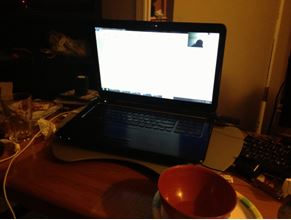
carter_workspaceLocation: Just about anywhere, but on the floor in my room is best (see the bowl? Yeah, I’m on the “poor bowl ‘o noodle” diet)

Current project: Unsung Knightmares (various short stories and eventually, and hopefully, a novel), and Game Reviews

Currently reading: This blog

  1. What type(s) of writing do you regularly engage in?

    I write a lot of short stories and create characters. I also like writing reviews for various types of media like video games and tv shows.

  2. When/where/how do you write?

    When Do I write? I write when I feel the mood. I usually write a little bit during most days, and if I’m not writing, I’m usually thinking up ideas or concepts for other stories, or existing ones. The best time for me to write is when I get a really good idea or concept that just makes me excited, cause then the words just seem to flow from me. I also write after I review games or shows, when they’re still fresh in my head.

    Where do I write? well… I’ll write just about anywhere. One of my recent writing habits is writing on my iphone using the “notes” app just about anywhere, espeically when I get cool ideas on the spot.

    How do I write? Well, in a review, I write heavily in my own voice and opinion. I tend to right my own voice as a bit hyper and eccentric at times. The reason for this is mainly due to the fact that when I review, I’m usually very very excited and hyper in general after wathcing or doing whatever is that I’m reviewing at that time. When I write for a story, I try my best to get into the character as much as I can, so I can think more like that character, and think up actions that said character would do in the situation they are in.

  3. What are your writing necessities—tools, accessories, music, spaces?

    A computer or an iphone. Thanks to technology, writing can be done pretty much anywhere at anytime. A perfect example of this is social media, and how often people tweet or post on twitter and facebook when they’re away from their houses… where all their stuff is… that everyone now knows is unguarded. So all I need is some kind of technology that has a word processor on it. now as for music, it is usually one or two songs on repeat. what those songs are just depend on my mood, or the “vibe” of what I’m writing. For intense fight scenes in my stories, I’ll listen to a lot of loud metal, or intense techno. The most frequent song is the Mortal Kombat theme music. And as for space, well, just about anywhere, BUT my preferred space is on my floor, computer on my coffee table, TV on (but on mute), music blaring with a drink of some sort near by.

  4. What is your best tip for getting started and/or for revision?

    If you’re writing a story, then just let it play out. Don’t second guess yourself, else your wrting becomes forced and un-natural. If you write a story that plays out how real life would, people can relate more to what’s going on.

  5. carterWhat is the best writing advice you’ve received?

    Be you. When you try to write how you think people want you to, then you’re not writing what you want anymore.

The Etiquette of Thankfulness: What (Not) Sending a Thank You Note After a Job Interview Tells a Potential Employer

Jennifer Marciniak, Assistant Director of the Virtual Writing Center

JenniferMWhile Thanksgiving reminds us to show appreciation for those around us, it’s also a good time to consider how we communicate this appreciation. From my own experience, I can tell you that just saying Thank You means a lot. I have Thank You notes from students pinned up on my corkboard in my office. The colorful, handwritten cards are from students who I helped in the writing center when I worked as a face-to-face consultant as opposed to my now cyber existence in the Virtual Writing Center. One card, from a student I worked with on a few different projects all semester says, “You have really helped me write well and reduce stress. I appreciate your enthusiasm and enjoy working with you.” Another, from a student whom I helped with her personal statement for a graduate program, says: “You helped me rediscover my voice . . . for that I will be forever grateful.” The meaning behind these notes is personal. It tells me that what we have done together mattered, that I have affected their life somehow, and, in turn, theirs mine. Sometimes we need these little tokens to remind us of our value.

Thank you notes are nice to get, but they can also be essential to give. It is important to remember what saying Thank You can do for you professionally. In the fast-paced world of online job applications and telephone/Skype interviews, sometimes remembering to send that traditional note of appreciation after meeting the hiring manager and/or job committee gets lost in the shuffle. Thank You notes resonate with potential employers. And if there is any doubt about that statement, consider recent results from job search firm surveys. According to a CareerBuilder 2011 survey of hiring managers, about 22 percent are less likely to hire a candidate if a Thank You note is not sent, even if that candidate is one of their top contenders. The survey also found that 88 percent of hiring managers say that the lack of a Thank You note shows a “lack of follow through,” and 56 percent say that not sending a Thank You Note suggests the applicant is “not serious about the opportunity.”

Who would have thought those two words – Thank You – would pull so much weight in an already overly competitive job market? Apparently most employers, according to Amanda Augustine, a job search consultant for The Ladders, a job match service for career professionals. In an interview with Forbes Magazine about after-interview etiquette, Augustine maintains that it is a mistake to think the job interview is over once you step out the door: “Based on my decade-long experience in conducting interviews, I can attest first-hand that failure to follow-up can be the deciding factor in rejecting a candidate who is otherwise a great fit.”

With the knowledge that Thank You notes may make or break your chances for a job, there are many decisions to make about content, as well as whether to send them via email or through the mail. A survey of hiring managers by Accountemps, a staffing company for accounting and financial professionals, revealed that 87 percent believe an e-mailed Thank You note is considered appropriate. However, this also depends on the culture of the company, according to Forbes contributor and career coach Lisa Quast. If the company is a bit more traditional, a hand-written note, usually sent within 24 hours of the interview, is best. Heibling and Associates, an executive consultant staffing firm for engineering, real estate, and construction companies, says it is in the candidate’s best interest to send an email and a hand-written note. This is advised because a handwritten note “gets more attention” than an email note, but if the hiring process is moving quickly, “you will want to expedite your Thank You and send an email.”

Some more interpersonal forms of appreciation are warned against. A telephone call is an option, but not recommended. According to the Accountemps survey, only 10 percent of hiring managers find it suitable to send a text message as a Thank You note. Quast says that while texting is convenient, it is just not professional etiquette: “Thankfully, I’ve only had this happen once, when a candidate texted, ‘Thx for the intrvw!’”

In terms of content, most staffing firms agree on one major component — make it personal. Address the hiring manager by name. Also, if the hiring committee is more than one person, write a Thank You note to each individual member. Include in the note the position you interviewed for and the date you applied. Also, personalize the note to the position and the company. This jogs their memory, according to HCareers.com, a search firm for hospitality professionals, especially if the same committee is hiring for multiple positions. These tips are taken directly from HCareers.com:

Show Gratitude Basically, you want to thank the employer for his or her time at the job interview. This will grab the interviewer’s attention and make the person realize that you are a warm and considerate person—this goes a long way in the hospitality industry.

Confirm Your Interest Mention something specific that you are excited about (i.e. “I really love the idea of working at a four-star hotel and am confident my skill and expertise would help maintain the hotel’s excellent reputation.”).

Show You Were Listening You don’t want to recount the entire conversation, but it’s great to mention one or two specific things that came up in the interview, especially things that are relevant to the position for which you interviewed.

Point out Some of Your Strengths Don’t be afraid to add in a little self-promotion! Employers want their prospective hires to be confident and assertive. This is a great place to explain a few of your skills and share how your background and relevant experience will help you succeed in the job. You don’t want to go into too much detail here, but reminding the interviewer of why you are a strong and qualified candidate can go a long way.

Suggest a Follow Up End on a positive note by saying thank you again, and then, depending on how you left it in the interview, mention that you are available to talk again in person or over the phone in order to answer any questions the interviewer might have.

In addition to the many tips for what to write in Thank You notes, there are also many warnings against what not to write. Some of these may be common sense, but search firms feel they need to be asserted. Some of the most common “don’ts” for Thank You notes are mentioning salary or waiting too long to send the note. Some other big ones include:

Penmanship and Errors Typos and misspellings tell your potential employer that you wrote the note in haste, which may cause the manager to doubt your interest in the job, according to Miriam Salpeter, job search and social media consultant for USNews. Write out your note on a separate piece of paper first. If you are sending an email, write it out on a Word or Pages document first. Make sure to check for all spelling and grammar errors.

Don’t Be Generic “If you can’t sound invested in the position and take the time necessary to write an interesting note, you may be wasting your time,” says Salpeter. While you may think you are saving time and energy by sending the same Thank You note to 10 different employers, you aren’t. Employers can tell if you are being generic. Salpeter advises candidates to read their note before sending it and ask “Could someone who didn’t even participate in the interview have written this?” She says if the answer is yes, “it’s back to the drawing board, or you’ll risk leaving the interviewer unimpressed.”

Sending a Gift Sending flowers, food, or gift cards can be seen as a “desperate, inappropriate candidate,” and can possibly make the employer uncomfortable, says Salpeter. Diane Gottsman, founder of The Protocol School of Texas, says in an interview with Forbes that it can be seen as a bribe. “Sending, or receiving, a big box of steaks on ice is not the right way to secure a job position.”

Researching the etiquette of thankfulness for this blog reminded me of my past life as a job search consultant. Before my journey into academia I recruited, interviewed and hired (or not) for two different large companies. I can attest that the ones that actually took the time to send Thank You notes made an impression. To me, taking the time to hand-write a Thank You card showed thoughtfulness and practicality – two skills that most employers find very valuable. Thank You emails are also thoughtful, but hand-written cards, because of their personal nature (picking out the card, taking a pen to paper, sealing the envelope, stamping and sending), demonstrate that the candidate delegates time and energy to the little things. And a lot of the times those little things are the ones that really matter.

Below are links to templates and tips for writing solid post-interview Thank You notes:

Job Seekers: No, the Interview Thank You Note is Not Dead

Making Post-Interview Thank You Notes Worth Your Time

Write a Post-Interview Thank You that Actually Boosts Your Changes to Get the Job

How I Write: Jeffery L. Hieb — Engineering Professor

Our “How I Write” series asks writers from the University of Louisville community and beyond to respond to five questions that provide insight into their writing processes and offer advice to other writers. Through this series, we promote the idea that learning to write is an ongoing, life-long process and that all writers, from first-year students to career professionals, benefit from discussing and collaborating on their work with thoughtful and respectful readers. The series will be featured every other Wednesday.

hiebOur featured writer this week is Professor Jeffery L. Hieb. Dr. Hieb teaches in the Engineering Fundamentals and Computer Engineering and Computer Science departments in the J. B. Speed School of Engineering at the University of Louisville. Although he has a range of research interests, one area of specialty for Dr. Hieb is information assurance and security.

How I Write: Jeffery L. Hieb

Location: In my office or my office at home

Current project: A technical report on the availability and effectiveness of currently available industrial control system cyber-security technology for the Dams Sector.

Currently reading: What the Best College Professors Do, Collaborative Learning Techniques: A Handbook for College Faculty, and The Immortal Life of Henrietta Lacks

  1. What type(s) of writing do you regularly engage in?

    a. Conference and journal papers
    b. Technical reports
    c. Letters of recommendation
    d. Grant and research proposals

  2. When/where/how do you write?

    a. In my office or in my office at home.
    b. Almost any chance I get

  3. What are your writing necessities—tools, accessories, music, spaces?

    a. I write on my notebook computer, and since I have it with me most of the time I can write almost anywhere.  I usually like to have a cup of coffee next to me when I write.

  4. What is your best tip for getting started and/or for revision?

    a. When I have trouble getting started I like to stand up and talk about the subject matter to an imaginary audience.  Usually after 10 to 15 minutes I want to start writing down something I have said.

  5. What is the best writing advice you’ve received?

    a. The best advice I ever received was from Dr. David Shaner, my philosophy professor when I was an undergraduate.  He once told me: “Just throw up on the page, you can clean it up later”.  I have always found that helpful when starting to write something, it takes away the pressure of getting it right at the beginning, and acknowledges that rewriting/revising is part of the writing process, not what you do to fix or correct something you got wrong initially.

How I Write: Jeffery Skinner — Poet

This semester we are beginning a new series for our blog called “How I Write.” This series asks writers to respond to five questions that provide insight into their writing processes and offer advice to other writers. We’ll be featuring writers from the University of Louisville community, but also those from beyond the university who compose in a variety of personal and professional contexts. Through this series, we promote the idea that learning to write is an ongoing, life-long process and that all writers, from first-year students to career professionals, benefit from discussing and collaborating on their work with thoughtful and respectful readers. The series will be featured every other Wednesday.skinner

We begin our series with University of Louisville’s own Jeffery Skinner who describes himself on his website (jeffreyskinner.net/) as a “poet. playwright. professor.” His most recent collection of poems Glaciology, which won the 2012 Crab Orchard Open Poetry Competition, was just published by Southern Illinois Press. You can hear Jeffery Skinner read with Kiki Petrosino on November 7th at 4:30 pm in the Chao Auditorium in UofL’s Ekstrom Library.

How I Write: Jeffery Skinner

Location: Anywhere fairly quiet

Current project: New book of poems

Currently reading: Mark Richard’s memoir, David Jones poems

  1.  What type(s) of writing do you regularly engage in?
    Poetry, and prose of various types: recommendation letters, essays, prose poems, memos, grant applications, etc.
  2. When/where/how do you write?
    During summers I bear down heavily; during teaching time I snatch whatever odd moment that becomes available.
  3. What are your writing necessities—tools, accessories, music, spaces?
    Pen and paper for poems; laptop for prose. I’m fond of parking myself in a coffee shop, and plugging into postclassical, techno, electronica (no human voices).
  4. What is your best tip for getting started and/or for revision?
    a. decide to write with your own voice b. lower your expectations c. don’t stop till you’ve written a predetermined amount (which doesn’t have to be “good”–just done)
  5. What is the best writing advice you’ve received?
    “Writing is easy: you just sit there until drops of blood appear on your forehead.”

Again, we want to thank Professor Skinner for his insightful responses and encourage our readers to attend his upcoming reading. On November 6th, we will post our next entry featuring University of Louisville Law professor Judith Fischer.