Tag: writing tips

Resumes, Part II: Continuing to Set Yourself Apart

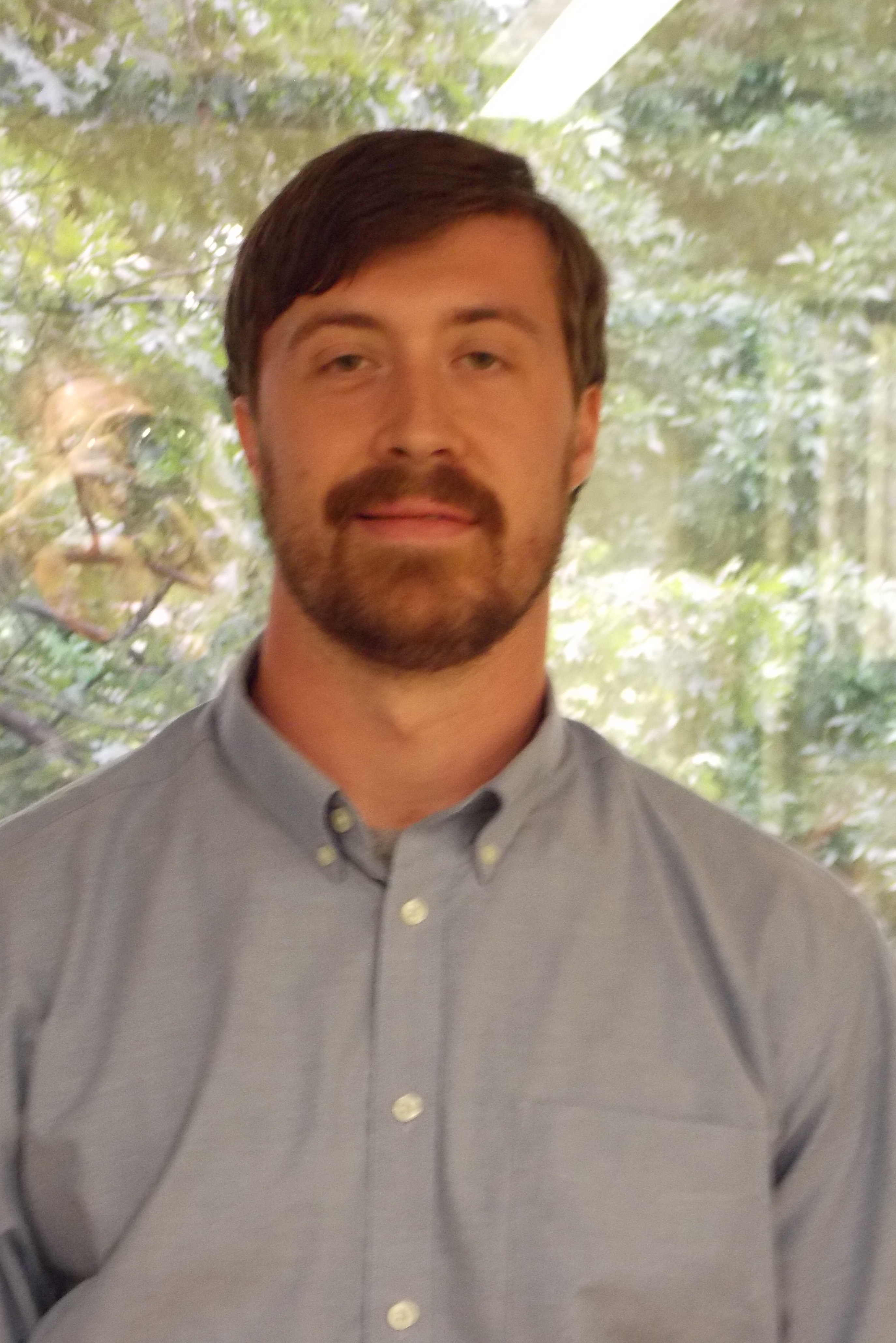
Mariah Douglas, Consultant

We did it, UofL! We’ve hit the double digits for the number of weeks we’ve been hard at work this fall semester. Unfortunately that means, if it hasn’t already started for you, crunch time is right around the corner (and sadly, I’m not referring to the leaves crunching underfoot, either). Assignments galore. Tests for days. Pages of papers (which the University Writing Center would love to help you with!). But before we start to coffee-guzzle, let’s take a happy minute to reflect on what we’ve already accomplished this fall. Better yet, let’s translate those accomplishments to our resumes!

Last year, Meagan Ray did an excellent piece on uncommon resume tips, which explained a few different tactics to give your resume an edge in the job market. Definitely give that a look-see, as those are some excellent ways to distinguish your resume. But make sure to come back here for Part II–just a few more suggestions that will take yours to the next level:

DSCN2233

1. Bullet points say whaaaat?—There are several layers to a resume: main headings of sections, individual items within each section, qualifiers for each item to further explain them (dates, location, what Meagan referred to in her short explanation of “Player” in her blog post, etc.), and I suggest adding one more layer–further expanding upon each item with bullet points.

But what to include in said bullet points, you ask? At the bare minimum, include your responsibility associated with that item (i.e., the responsibilities of that job position). However, to really make your resume stand out, include this responsibility and tack on what skill you gained/were able to demonstrate by carrying out that responsibility. For example, I worked as a sales associate at Gymboree, where my main responsibility was to sell children’s clothing, but my bullet point read like this: “sold children’s clothing, in order to perfect customer service skills and fund my study abroad experience.”

These bullet points are where your audience has the opportunity to really get to know you and how you have applied certain skills in a professional environment. Which leads me to my next point…

2. Now about that Skills section…— Unless you have a skill that is specifically beneficial to your field or really makes you stand out, like “CPR certified for the past 4 years,” employers may be likely to just skim this Skills section, as they see it time and time again. That’s some valuable space on your resume that could be used to really capture your audience!

My advice is to include these overused skills that are usually in that separate section in the bullet point explanations (explained above in Suggestion #1). It’s important to be aware of which skills are overused and to steer away from being a cliché applicant. For example, unless you’re looking to be congratulated for being born after 1985, don’t include “Microsoft Office proficiency.” It is a general skill that most people have acquired during our tech-savvy age, and unless your employer specifically wants this noted, it’s best to not include this skill and instead use this space to highlight a better aspect of you!

BUT, again, if you do have a skill that really distinguishes you in that field, keeping it in its own “Skills” section may benefit you by showcasing how unique and qualified you are as an applicant.

3. Gotta getcha some of that Skimmability—What are employers going to see first if they just skim over your resume (which unfortunately happens all the time)? Usually, the answer is whatever is closest to the top and furthest to the left. So with this knowledge, you can make your resume even more tailored to your audience.

Applying to a new school? Putting education as your first section may be a smart move. A managerial position? If you were a manager before, including that job title at the top of that specific item and closest to the left side of the page may be enough to catch that boss-person’s eye.

4. BOLD, italics, underlined, oh my!—These emphasizing typography methods are your friends. They can draw your reader to whichever part of your resume you choose to be most important.

For example, if you are applying to graduate school and are trying to focus your entire resume around what you have done as a student/responsible person, you may want to prioritize each item under your “Professional Experience” section by the title of the position you held, rather than the company it was under; by presenting your title first, perhaps in bold, with the company underneath in italics, it draws the reader to this block of emphasized text, while differentiating the two and still giving the bigger emphasis to your position within that company.

5. Consistency, consistency, consistency—Employers love when everything on your resume is clean-cut. Your resume is usually the company’s first impression of you, so by trimming everything up and making it all consistent, you show that you have an eye for detail and really care about putting your best foot forward, which translates to being able to positively represent their company, too!

For this step, you should come at your resume with fresh eyes. Set it down. Pick it back up. Go.

If you end your bullet points with periods, make sure to do this throughout. Are all of your bullet points lined up? Are all of your dates aligned on the page? Did you use an Oxford comma in one list but not another? Does your resume look succinct at first glance? Make notes and apply these changes.

6. Save every resume. Just do it. F’real.—If you haven’t done this yet, it’s okay. Just start now. As you gain more experience and participate in more things, the items you include on your resume are going to fluctuate. I can’t tell you the number of times I’ve needed to go back and look at a position I held in an organization or at a job I had that is now more applicable to the position I’m currently applying for. The safest thing to do is save everything. And it’s really quite easy!

All you need to do is open your most recent resume and make the necessary changes, then select “Save As,” and rename this edited resume with the current date, such as “Resume 2014.10.26,” to be saved in the same folder as the other resumes. This will ensure that both your last resume and this most recent one are saved on your computer, and writing the date as year-month-day will prompt the folder to group these resumes first by year, then by month.

7. Brand-spankin’-new job? Awesome! Tell your resume all about it ASAP—That really is great! Just make sure to “Save As” that new file (see Suggestion #6) and add it all in. It’ll be easier now than trying to remember each position you held or volunteer work you did throughout the past semester.

But most importantly, just keep on keepin’ on. It’s go time.

The 5-Step Process for Writing a To-Do List

Kristin Hatten, Consultant

Alongside the crisp autumn air and the leaf mosaics covering the ground come final projects, long research papers, and tests galore. In short, it’s crunch time, y’all. So, you may ask, how do we manage our time so we can get our work done and maybe have a little itty bitty bit of fun, too? The answer is a to-do list! Some people may argue that writing a to-do list seems like an activity that only requires halfway conscious thought; I beg to differ. To-do lists not only keep you accountable, but they can actually do wonders for the confidence you have in the work you do.

??????????

If you’re struggling to figure out where to begin, follow these 5 easy steps and you’ll be a to-do list making, reading, writing, studying machine!

1. Include Tasks You Have Already Completed

If you are feeling particularly overwhelmed, write down tasks you have already completed and go ahead and cross them off. Now, I know this may sound a little ridiculous—okay, maybe a lot ridiculous—but it will allow you the feeling of continuing rather than starting a list. Starting is often the hardest part of any project or goal. (Let’s be real, why would you start being productive when you can watch an entire season of Parks and Rec on Netflix in one sitting?) But alas! The future you calls and begs you to do your work, do it well, and do it without pulling all your hair out. If you frame your to-do list in a way that shows that you have already taken the first step towards being productive (even if it is hanging up all your clean laundry or scooping the kitty litter), continuing on to the next task will be just that…a continuation rather than a dreaded beginning. Also, when you’re stressed and you feel like you’re barely staying afloat, marking a task off your (seemingly never-ending) to-do list can be a serious cathartic experience.

2. Write Down the Items in the Order You Intend to Do Them

So, I know this seems like work before starting on the actual work, but you will thank yourself later. Assigning a logical order to your list gives you the opportunity to ease yourself into the work. There are many ways you can organize: start small and build from there, begin with your least favorite subject so you can get it out of the way first, or start with the larger project if you feel like you’ll be productive earlier in the day. Obviously, the way you tailor your to-do list is entirely up to you, but take the time to actually organize it into a logical set of tasks so you’ll be more likely to get into—and stay in—the groove of things.

3. Keep A Logical Scope in Mind

This is absolutely, entirely, so, so important. As a new grad student, I am quickly realizing that making a to-do list is a lot like designing a large research project in that you have to be realistic about what you—as a human being without superpowers or seventeen arms—can accomplish in the amount of time you have. Even if you are making a to-do list for the weekend—which seems like a lot of time—it is still important to think about what you can realistically get done. One, this will help you plan for and prioritize the following week (let’s be honest, chances are that every single thing will not get done on the weekend), and, two, this will keep you from getting discouraged when you check off three or four items, feel great about your progress, and then still have an unending list staring you in the face. Time management, stress management, and keeping yourself sane in the midst of the end of semester madness has a lot to do with being honest with yourself, setting realistic expectations, and feeling like you’ve accomplished something.

4. Be Detailed and Specific

I know this is another moment where you’re thinking, “how much work do I have to do before actually doing the work?”, but again, you will thank yourself later. By “detailed and specific,” I mean, instead of writing down “read for English class,” write down what the individual articles are so you don’t have to go back to your syllabus a hundred times to remind yourself what article from Blackboard applies to what day in class. Also, actually looking at the upcoming assignment will help you know how much you can logically get done in that day (re: step #3).

5. Indicate When the Task is Complete, and Do It Like You Mean It!

The final step is my favorite step. Once you have made your detailed, logical to-do list, get out a colorful pen and go to town marking off, checking off, scratching out, or x-ing through the tasks you have completed. Like I said earlier—for me at least—this is such a cathartic experience. As students, who happen to also do things in regular life, it is easy to feel that we are completely sacrificing one thing in order to pay attention to another. While this demand is part of being a student, creating a to-do list that is manageable and well organized, and scratching through the completed tasks with a vengeance, allows you a well-earned feeling of productivity and accomplishment. Plus, when you can look at all the aweseome things you accomplished that day, you can feel better about entering into a little bit of personal time. So, when you get to crossing off that last task, go treat yourself and celebrate a job well done!

Words on Cooking with Words

Chris Scheidler, Consultant

??????????

Plato infamously likened rhetoric to cookery. Rhetoric is a tricky word to define, but for the sake of this blog post (which originates from a university writing center), I’ll posit: rhetoric is goal-directed writing; rhetorical techniques are strategies we employ that help to achieve our goal. Whew.

Plato meant to undermine writing when he called it cookery, but (value judgments on the worth of writing aside) composition and gastronomy have many useful similarities. Both require preparation. Both have a process. Both can be social. Both have misconceptions regarding style. So, I ask you, blog reader – humor this composing cook as I expand on the kitchen comparisons of writing and gastronomy.

Mise en Place

Mise en place” is a French term that means “putting in place.” When used in a kitchen, mise en place is a noun that roughly means: all the prep work you’ve done ahead of time. Good gastronomes don’t want to be stuck cutting their produce and measuring their spices while the meat is burning on the grill. Having your mise en place simplifies cooking. Writing has a mise en place, too. We can get our mise en place for writing by outlining our papers, doing our research, and preparing our citations ahead of time. When I don’t have my writing mise en place, just like an underprepared cook, I get anxious and I struggle to dish out a decent paper. For me, the end results are similar to the cook’s results: an underwhelming and difficult to swallow piece. In the words of Gordon Ramsey, “Not good enough.”

What’ s for dinner

Writing, like cooking, can be an experiment, exploration, or creative endeavor. Sometimes we keep the same ingredients and alter only the order (as in: “like cooking, writing can be…”). Other times we experiment with completely different ideas and change the dish entirely. Nevertheless, much of the writing we do in a university is ordered from a menu. If your professor orders up a 2-page analysis, then a 5-page summary won’t do. This doesn’t mean that every paper should be the same: you can deglaze a pan with brandy or broth – you can analyze with juxtaposition or deconstruction. Regardless, there are expectations to meet; I usually expect my burger to be on a bun. Unfamiliar with the type of writing you’re being asked to do? Thankfully, there are places like university writing centers that can help you navigate the recipes and techniques.

I’ll have what she’s having

You can eat alone or you can eat with company. What you’ve written can be shared – passed around the Burkean Parlor as an hors d’oeuvre, or as something more substantial. Even the act of writing can be a shared and social process. I often seek out peer reviewers to taste-test my writing. It can be a bit scary, I’m always afraid they’ll gag, but my peers have helpful advice and have yet to gag on anything I’ve written.

Gourmets

I suppose it would be easy to get wrapped up in the misconception that haute cuisine is in someway intrinsically better than everyday cooking. I believe the appeal to stylistic and “fanciness” of elevated grammars and gourmets is wrong. There is a place for the well-plated gourmet meals, but a well-executed burger is equally commendable.

So whether you’re looking for a taste-tester, a recipe translator, or a little help getting your mise en place – consider stopping by your University Writing Center.

How I Write: Tim Johnson – Professor of English

Our “How I Write” series asks writers from the University of Louisville community and beyond to respond to five questions that provide insight into their writing processes and offer advice to other writers. Through this series, we promote the idea that learning to write is an ongoing, life-long process and that all writers, from first-year students to career professionals, benefit from discussing and collaborating on their work with thoughtful and respectful readers. The series will be featured every other Wednesday.

Our featured writer this week is Professor Tim Johnson. Dr. Johnson is new to the University of Louisville’s English Department, having just finished his Doctorate in English-Rhetoric and Composition at the University of Wisconsin-Madison. He teaches rhetoric and writing courses and researches the intersections of rhetoric, writing, and the economy.

OLYMPUS DIGITAL CAMERA

Location: Bingham Hall, Louisville, Kentucky

Current project: An article for the journal Rhetoric and Public Affairs concerned with Ford Motor Company’s films during and after World War II

Currently reading: Empire by Michael Hardt and Antonio Negri, March by Geraldine Brooks

1. What type(s) of writing do you regularly engage in?

I’ve been doing a lot of proposal writing lately: an abstract for an edited collection on technical writing, a presentation proposal for an upcoming conference. I like writing these brief statements because they force me to be brief and figure out the gist of what I’m working on. Beyond that, I work on a pretty steady queue of journal articles, potential book chapters, emails, and classroom materials.

Generally, I like to be in a few different “stages” of the writing process on a handful of projects all at one time—planning one, compiling research for another, doing the actual writing for a third, and revising a fourth. While this isn’t always the most efficient practice (I start more than I finish), I have found that it keeps me from getting so fixated on any one piece of writing that I become unproductive. This rotation also makes working on one project feel like taking a break from another and that mental shift can make all the difference; plus, I have found there is a certain degree of serendipity in having multiple projects (I’ll find a great source for one while researching for another, or the phrasing I spent an afternoon trying to get right comes to me when revising another project).

2. When/where/how do you write?

Right now my work consists of writing, teaching writing, and teaching the teaching of writing—so, essentially, most of my day is filled up with writing-related activity. I very much enjoy this…though it doesn’t make me much fun at dinner parties. When really getting down to the business of writing, though, I try to have at least an hour on my hands to devote to the project without an interruption.

In terms of place, I’ve been writing at my home desk or in my office on campus. Now that it has cooled off a bit, I take to my porch as well. I like to have a window to look out of and the occasional excuse to get up and take a stroll. I’m constantly trying to update and change my process, but lately it has been pretty uniform: I begin by reading something (usually from the same genre that I will be writing). I find that it helps to see another writer in action as this can spark ideas and cause my own writerly voice to come out. Once comfortable, I will start reading my work from the top. On a good day, I’ll get to the part of the work that I was planning to expand and proceed writing. More often than I’d like, though, somewhere along the way I’ll decide the order is wrong, change the organization, realize this wasn’t the problem, and then finally get to the writing I meant to start with.

3. What are your writing necessities—tools, accessories, music, spaces?

A computer and a pair of headphones. If I’m in the revision process, I rely a lot on my computer’s text-to-speech function. There’s something about a pseudo-mechanical voice reading my writing aloud that makes me more aware of what needs adjusting. At this point, it has become an essential part of my process.

4. What is your best tip for getting started and/or for revision?

Seek feedback, or just someone to talk to about what you’re up to. Do this during the process of writing, not just once the work is finished. I find that, when left to my own devices, getting a piece of writing to come out right can involve going around in circles. However, if I can get someone to read and talk with me about my work, something magical happens and I can suddenly write again. Apparently, there is some kind of Center that will do this for free on campus.

5. What is the best writing advice you’ve received?

Think in sections. Trying to wrestle with the entirety of a piece in any one sitting is not only exhausting, but largely inefficient. Learning to break a project into a set of shorter, more manageable tasks made both writing and revision easier.

“Let it go.” This came from a mentor who noticed my refusal to send anything to them unless it was just right. Again, sharing my work was a real breakthrough and sometimes my biggest challenge as a writer has been good, old-fashioned self-doubt.

The ePortfolio: Shaping Your Online Presence Through a Professional Medium

Haley Petcher, Consultant 

The weather is still pretty warm, but somehow it’s already October. October means that graduate school applications are beginning to be due, and for those of you graduating in December, the “real world” of jobs is right around the corner. You want to get into grad school and to get a job, but how will the committees and employers know the real you? How will the people writing your rec letters know details about what you did during your undergraduate career? The answer is what you would expect from a University Writing Center employee: by writing.

These days, though, everything is digital. With Twitter, Facebook, Instagram, Tumblr, etc., we have a large digital footprint with details about ourselves, but none of those footprints are professional. At my undergraduate institution, Auburn University, I learned about ePortfolios, which are basically personal websites that showcase your experiences and skills by contextualizing pictures, papers, and projects. I created one for an English class, but I have a confession: I didn’t finish one in time for applications. Guys, I regret that. However, I recently completed one that represents my experiences in undergrad, and I hope to complete another ePortfolio by the end of my MA program.

Before you say, “I don’t have papers to share,” I promise that ePortfolios aren’t just for English majors. I’ve seen examples of ePortfolios by by engineers, pharmacy studentsbusiness students, artists, nurses, and vet students. They pick some of their best projects and presentations to showcase and contextualize.

Creating an ePortfolio is like writing a paper with pictures. Here are a few quick tips to get you started:

  • First, think about your audience. Often it’s professionals, like a professor who is writing your rec letter or a graduate or hiring committee.
  • Next, write a “thesis” for your ePortfolio. That is, what do you want to prove to your audience? One of my friends, for example, majored in English and minored in business. He wanted to prove that his experiences in English, tutoring, hiring committees, and leadership meshed with his love for books. After getting his MBA, he hopes to find a job at a publishing company.
  • Consider how you want to organize your ePortfolio. Should each page have to do with a verb, like “research” or “teach,” or should each page relate to words like “teamwork” or “service”?
  • Pick the most important things you did that are connected to your “thesis” and organize them according to your pages. When you write about them, try to explain the project and to explain what you learned from it.
  • Pick an online venue, like wix.com or weebly.com. (They’re free!)
  • Start creating your ePortfolio! (Remember to use appropriate pictures. Pictures of you outside – by yourself – are often good.)

When you complete your ePortfolio, you can put the link on your resume or email signature. (If there’s something to click, people will probably click it. Take advantage of other people’s curiosity!)

You’re probably wondering what happens if your future employer or grad school doesn’t review your ePortfolio. The great thing is about creating an ePortfolio is that by analyzing and writing about your work, you will begin to better understand what you enjoy about your studies and experiences and how your time in undergrad will help you reach your goals. The ePortfolio shows that you can think critically about your interests and allows you to explain how volunteering at the animal shelter or starting a club for students who enjoy tap dancing makes you an attractive and unique candidate for the job.

If you want some more examples, try checking these out! Also, since an ePortfolio involves writing and is like a paper, you can always bring it to the University Writing Center for a writing consultation.

Note: I received most of this information from presentations I attended while working with Auburn University’s Office of University Writing (OUW). You can learn more about ePortfolios by reviewing the OUW’s website.

Stating the Obvious

Bobby Rich, Consultant

??????????

When it comes to writing, clarity is king. If what you’re writing isn’t clear, the reader will not be able to follow it, and the point you wished to make could be lost in misunderstanding. A big element of developing clarity in writing, and something which every writer will sometimes gloss over, is simply a matter of stating the obvious; that is to say, what is obvious to you as the writer, but not to the reader. Below are five questions that you can ask yourself when writing and revising in order to make sure that your writing is clear, and that you haven’t left out key, sometimes obvious, information.

Who is the audience you are writing to?

With any piece of writing, you have to consider your audience. Let’s say you have been assigned a writing assignment, with specific guidelines for what the paper should include and what questions you need to address. It is pretty simple to assume that the audience you are writing to will be your professor, and realistically it will be; but let’s consider a hypothetical audience. The hypothetical audience doesn’t know what sort of prompt or questions you are responding to, so you should give them context by restating the key points that you are addressing. Write as if the reader knows nothing about what you are presenting to them, but is reasonably intelligent and able to understand once you clearly explain the information to them. In short: don’t make any unwarranted assumptions about who will be reading your writing. But, that doesn’t mean you can’t make some assumptions, which leads to the next point to consider….

What background knowledge does your reader need?

Again, let’s assume the hypothetical audience is reasonably intelligent, but they don’t know anything specific about what you are writing about. If you just dig right in and get down to business in your writing, will the reader be able to follow, or do you need to slow down a bit and make sure your reader is grounded in the “basics” first? It will almost always be the latter. Think about how you should present the background info. Obviously you don’t want to spend the whole paper talking about it (the key is in the name “background”); but it is important that you establish for the reader what is foundational for them to fully understand what you are writing about, whether it be your life experiences or a lengthy research paper. However, in considering your audience, you can make some assumptions about what background knowledge they may already have. For example, a mathematics audience will have general knowledge of mathematics. Depending on your audience, some knowledge will be obvious, but…

If it is obvious to you, is it obvious to them?

There are some problems that all writers, no matter how advanced they may be, even if they have publications under their belt, will, time and again, encounter. One of the most frequently occurring problems is that of “glossing over” what the writer feels is obvious. Maybe you’re a freshman writing a personal narrative, drawing on your life experiences, or maybe you’re a PhD student writing about the intricacies of the works of a notoriously difficult 20th century philosopher, whom you just happen to be an expert on. Either way, you know a great deal about your topic, and so, when you’re writing, you skip over stating anything that seems particularly obvious to you. However, what is obvious to the writer is not always obvious to the reader, especially if you are writing about your own life. Sometimes we go from point A to point C without ever showing point B, and this can be lost on the reader. So, just because something seems obvious to you, that doesn’t mean that you shouldn’t include it; often, that is precisely the statement you need to make your point clear, and speaking of which…

Is the point you’re trying to make implied, or is it explicit?

Another issue that develops from glossing over the obvious is relying too much on implied information or implied conclusions. Some things really do need to be made explicit to ensure that the reader understands what you are writing about. Consider this: if you were to speak to your friend, who knows nothing about what you have written about, and you were to simply explain to them a key point in your writing, how would you go about explaining it? Could you paraphrase what you mean? That is often what you need to include in your writing. A simple, but clear and explicit explanation can go a long way, which brings me to my final point…

Are you worried that what you want to write won’t sound “academic” enough?

Don’t be, seriously. There is a great myth that to succeed in college, your writing needs to be dense, complicated, and to appear very “academic.” It is a myth that has been impressed on so many of us for so long that we believe it is true. However, it’s just that: a myth. College writing doesn’t need to be complicated for the sake of being complicated, and you don’t need to exhibit a massive vocabulary or expansive knowledge of writing structures in order to write a successful paper. Don’t worry about trying to impress anyone. What really sounds “academic” is this: clear writing that gets all of the key points across in an effective way. This, more often than not, requires what many writers frequently either avoid because they don’t think they are “allowed” to write that way, or don’t think to do: stating the obvious.

If you’re concerned that maybe you’ve glossed over the obvious in your writing, and that your audience might not totally understand what you’ve written, one really effective solution is to let someone else read your paper and offer suggestions for revision; and if you come to the Writing Center, we will be happy to help you out.

5 Tips for Avoiding Last-Minute Writing

Taylor Gathof, Consultant

Right now, it’s only the fourth week of the semester, but, before we know it, midterms and finals will soon be upon us. For now, we happily go to class, read our textbooks, and complete our short assignments, yet a large, dark cloud lingers on the horizon…the research paper and/or project.

??????????

You’ve seen it on the syllabus. You know you have to eventually do the assignment, but it’s just too painful to even start thinking about. So you tell yourself, “No worries, I’ll think about it later.” Next thing you know, it’s midterms or finals week, 2 AM, and you have less than 12 hours to write this paper.

Is there any end to this madness? Of course there is! Mental anguish is not a class requirement; pulling all-nighters is not a course goal!  It took until the end of my junior year as an undergraduate for me to realize that my problem began in waiting to start on a large assignment, paper, or research project until it appeared within my line of sight on the class schedule, which was usually about a week or so before the assignment was due. This would happen in all of my classes, so I’d have this two week period at the end of a semester where I would work furiously and sleeplessly for two days, turn in an assignment, take a breath, work furiously and sleeplessly for two more days, turn in an assignment, take a breath. Sound familiar? After quite a few semesters of this exhausting pattern, I’ve come across some strategies that currently help me avoid letting all of my papers and projects rain down on me at the end of the semester.

So here are 5 tips for avoiding last-minute research paper and project writing:

  • Get information about an assignment as soon as possible. This will at least put the assignment on your radar. Also, getting assignment information early can help you use class materials to start thinking about potential paper or project topics. For example, let’s say you’re taking a class on the Victorian period in England. You meet with your professor and discover that you have a research paper due at the end of the semester and it should be on a topic covered in class. Since you know this information about the assignment, you can take notice of any topics that arise in class that interest you and may serve as an interesting paper topic.
  • Brainstorm ideas. Once you find a topic or two, sit down and brainstorm ideas. Make a list of specific aspects of a topic that you are interested in researching and writing about. For example, if you are interested in the topic of insanity in Victorian England, your list of potential research aspects might include: the popularity of insane asylums, the rise in the number of females in insane asylums after 1845, minorities and insanity, etc.
  • Break up the task of writing a paper over the course of several days or weeks. Writing a research paper often sounds like an incredibly difficult and daunting task. If you break up the tasks of researching and writing over the course of several days or even weeks, the task doesn’t feel so overwhelming. Plan out which day(s) you will: conduct research, formulate a thesis, craft your argument, write an introduction, write a conclusion, create a bibliography or works cited, revise your draft, etc. If you dislike or struggle with writing specific portions of a paper at a time, try simply breaking up the task of writing your paper by planning to write a certain amount of words or pages per day.
  • Set goals for yourself. Write it in your calendar; set an alarm on your phone. Make a plan and, more importantly, hold yourself to it! Some great ways to hold yourself to your plan of having a certain amount of work done by a certain day is to 1) make an appointment with your professor to talk about your paper and/or 2) make an appointment with the University Writing Center! Making appointments such as these will hold you to your commitment to work on your paper in advance and is an opportunity to receive helpful feedback on your work.
  • Think about how awesome you’re going to feel when you finish a paper or project. In the past, I’ve found myself avoiding working on a research paper because I continuously think about how terrible and difficult the task will be. Having a more positive attitude helps me stay motivated to get an early start. Rather than dwelling on the difficulty of the task, try thinking about how accomplished you will feel when you complete the assignment or how relieved you will feel to no longer have the task hanging over you!

Hopefully these strategies will help you sleep better and breathe easier when the end of the semester rolls around!

Responding to Student Writing to Encourage Revision

Meghan Hancock, Assistant Director for Graduate Student Writing

The University of Louisville Writing Center’s website isn’t only meant for students to make appointments and browse for writing resources. It’s also there for faculty to utilize when teaching writing in their courses. Our Resources for Faculty page provides helpful information from what to expect when your students make appointments at the Writing Center, to how to schedule consultants to come to your class to talk about what the Writing Center does.

We also recently dedicated a section of our website to Resources for Teaching Writing. In this section, we provide some strategies for faculty to think about using when teaching writing in their courses. These strategies grow from topics we have thought a lot about as writing instructors ourselves, and also from common topics we hear our colleagues discussing when it comes to teaching writing in their classrooms.

DSCN2223

Below, you will find what we have provided for strategies to help you when you are thinking of ways to respond to student writing in your classroom.

Instructor comments on students’ writing is an important part of helping students become effective academic writers, and can provide the productive feedback a student writer needs to revise a particular assignment. Responding to student writing can be a challenging task, however, particularly when deciding what feedback to include in a response. Too much feedback can be overwhelming for students, while too little feedback can leave students feeling they don’t have a clear direction for revision.

At the University Writing Center, our consultants work with students to help them understand instructors’ responses as well as come up with plans for revision based on instructors’ responses. Here are some strategies, though, that may help when structuring and formatting commentary on student writing, as well as in prioritizing types of feedback.

Some forms of comment have proved to be more effective than others.

Research on student writing has demonstrated that a draft covered in corrections and cryptic comments such as “vague” or “needs more detail” is not as effective as fewer, more detailed comments. Explaining what kind of detail is needed, for example, is more helpful to students. Also, students report that the comments they find most helpful to their writing are those that point them forward to how best to revise the next draft (or complete the next assignment) by suggesting new ideas, strategies, or questions, rather than only making criticisms on the current draft. Finally, pointing out to student how and why a piece of a draft or paper is effective also helps the student learn to recognize and potentially replicate the writing in future assignments.

Different comments can serve different functions in response.

End comments commonly take the form of a letter written to the student about overall or more holistic strengths and weaknesses of the writer’s paper, as well as what productive directions for revision the responder would recommend. Marginal comments are your chance to point to specific places in the paper. These places could be anything from a thesis statement that needs work, to an unclear sentence or paragraph, to a quotation that needs more explanation. End comments can also be a chance to explain how marginal comments play into the bigger picture of the response. In other words, try to refer to some specific marginal comments in your end comments as examples for what the student can work on in a revision.

It helps to distinguish in comments between higher- and lower-order concerns.

Higher order concerns, like overall organization, whether a paper has a clear argument, what kinds of examples the writer is using for evidence, etc., are the most effective places to begin in responding to student writing, as these conceptual issues are much more challenging for writers to address in a revision. Although problems with grammar and style can be frustrating to read, correcting those errors for students is not an effective approach to either revision or teaching grammar and style. Instead, respond to these issues by telling the writer what patterns of error you are noticing in their writing (for example, run-on sentences, subject/verb agreement, or comma use) so they can be more conscious of them in the future.

Explain to students your approach to response.

Different instructors can use very different approaches to responding to student writing. Comments can vary in emphasis, length, and detail. It can be helpful to students to explain how you approach reading their work and what you will emphasize in your comments. Such explanations can be included in the assignment if you wish. In addition, it can be helpful to have students respond to your comments, both to ensure they have read them and to engage in a more dialogic process. For example, if you have commented on student drafts, you might ask students to send you an email in which they explain their plan for revision based on your comments. You can check such email quickly and see if the students plan to address your concerns.

Use other forms of response such as conferences or audio comments.

If time allows, try conferencing individually with students to discuss your written comments with them as well as give them the opportunity to ask you questions if any of your comments are unclear to them. If this isn’t possible, try to dedicate the last ten or fifteen minutes of a class meeting for your students to read your written comments and ask you questions or raise concerns. Some instructors also find success using audio comments that can be recorded digitally and even attached to student texts. For an example of how to use audio comments, see this link.

Try responding at different points in the writing process.

Responding at different stages in the writing process can both save time and offer students clearer direction as they work on the writing. For example, asking for a brief proposal for a paper, or responding to the first two pages, can help catch issues of focus and analysis early in the process and takes less time than reading longer papers.

Read the paper first, before commenting.

Jot down some notes on a separate piece of paper instead, focusing on common themes you notice that you might want to address in your response. This will keep you from commenting too much and will allow you to prioritize what you comment on when you read through the paper the second time. Also, if you are handwriting your comments, try not to use a red pen if you can help it. Many students associate this color with past negative responses to their writing in school and it may cause anxiety for them.

Encourage students to visit the University Writing Center.

We often work with students to help them plan how to revise assignments based on instructor comments and would be happy to work with your students.

Here are some links that might also be helpful when thinking through how to respond to student writing:

Responding to Higher Order Concerns and Lower Order Concerns – The Purdue OWL

“Beyond the Red Ink: Teachers’ Comments Through Students’ Eyes” (Video) – Nancy Sommers

“Responding to Student Writing” – University of Delaware Writing Center

“Using Audio Comments to Respond to Student Writing” – University of Wisconsin- Madison Writing Center

“Responding to Writing of Non-Native Speakers of English” – University of Minnesota Center for Writing

The Week-Long Dissertation Writing Retreat: Notes from the Consultants

We just finished our spring Dissertation Writing Retreat at the University Writing Center. During the week of May 19-23, 14 writers from nine different disciplines took part, meeting every day to write and talk about writing. While some writers were in the early stages of their project and others were close to finishing, they were all provided with time to write and feedback on their writing. Each day the participants had several hours set aside for writing and then time for a one-hour consultation about their writing with a member of the Writing Center staff. In addition there were daily writing workshops on topics such as organizing a large writing project, writing a literature review, and working with committee comments.

Writing Time
Writing Time

The consultants who work during the Dissertation Writing Retreat are experienced writing teachers who are also PhD students currently working on their dissertations. Here are some of their thoughts about the work that took place during the week.

On developing writing strategies, aside from just making time to write:

While the dedicated writing time is often the benefit participants say is most helpful, another important benefit that I think often goes unnoticed until after the retreat is the development of writing strategies. Aside from developing dedicated writing time, it is important to have a plan, and more often multiple plans, for approaching writing and approaching the different tasks of a dissertation. The writing consultants work with retreat participants to practice and develop different techniques and strategies and for thinking about others that might work. For example, this year I worked with one participant on creating outlines both before and after writing. Starting with an outline can help you identifying which pieces fit into a chapter, but sometimes when we’re writing we get stuck thinking about what fits or not and end up not writing anything. In that case, it’s a good idea to just write what you have and then see what needs to stay, what needs developed more, and what belongs in another chapter or maybe even a different publication. So, while the retreat’s immediate reward may be time and more words produced, we hope–or I hope, at least–that the more beneficial reward is the writing strategies that can be applied to the dissertation and future writing projects.  ~Ashly Bender

On remembering to take care of yourself while dissertation:

Last week, I worked as a consultant at the Dissertation Writing Retreat. We were all at different stages of dissertation, but, by and large, we all started to see that the biggest challenge we faced was to remember that we needed, first and foremost, to care for ourselves as we dissertated. That we needed to give ourselves moments of rest. We needed to acknowledge even small victories. We had to remember to ask for what we need.

In other words, we all realized that there could be no dissertation without self-care and self-advocacy.

It seems to me that this is true of all writing situations. s important to remember self-care actions, such as:

  • Set small goals (100 words per day), and then provide small rewards when you meet them (one episode of a favorite TV show; one hour to do absolutely nothing school-related, etc.).
  • Always schedule in time for real rest. Schedule at least one, free weekend day per week. Or one full week during the summer. Take time away from the project. Allow yourself to recharge and incubate ideas.
  • Take time to visit your notes, and “throw-away” pages. Show yourself how much work you really have done.

~Brittany Kelley

On how academics really manage to complete projects:

During a late morning workshop on Thursday, I talked with participants about ways to maintain the habit of writing after the retreat. What they said reminded me of several important principles around completing academic writing projects. Many of the participants appreciated how the DWR structured a set time and place for writing. Committing to this routine meant that writing would not be an irregular event, but rather a habit. Participants also mentioned how they appreciated the group dynamic of the retreat as a form of accountability. Surrounded by other academic writers who were similarly working toward a set of goals provided motivation to continue – and at least one small group in the retreat committed to maintaining regular writing together in the weeks to come. And finally, several participants noted the value of talking to others about their writing. In reference to the daily afternoon meetings with writing consultants, the participants said that talking one-to-one about their projects became an important strategy for addressing challenges and setting goals. This rewarding discussion reminded me that completing academic projects has much less to do with how “smart” we are as academics, and much more with committing to working on a regular basis, developing and using strategies when we get stuck, and making sure to build in time for regular discussions with others about our work.

~Jessica Winck

Consultants and Participants Talking about Writing
Jessica discussing writing with one of the retreat’s participants

On project planning and the early stages of dissertation work:

I worked with two math education dissertation writers. Both were working on their proposals, which are due in August. I liked working with them at this stage as they are still making their way through the literature and methodologies. This was different than past retreats which participation stipulated a defended proposal. I liked this earlier stage in the process because I could help talk them through the lit review as well as scheduling out short and long term goals. The proposal stage is all about getting your bearings and this is what they needed help with most. As someone who is in the same boat as them, the beginning stages of writing this document, I learned a lot just from talking with them about their writing fears and challenges. And I think that talking helped them get writing.

~Jennifer Marciniak

On writing in a collaborative atmosphere:

This past week at the Dissertation Writing Retreat has taught me a surprising amount about the collaborative side of dissertation writing—a concept which I think contradicts what many of us think about writing, and especially in this rather peculiar genre. As a consultant, I began the week with few assumptions about the work ahead of me, but was pleasantly surprised to find myself paired with two students who had remarkably clear ideas about what their projects entailed, and what thoughts would need to go into the writing to get their arguments across. These students, it seemed to me, didn’t need a lot of coaching to get the work written, or even a lot of effort to make their writing read easily. Both brought that to the table on the first day. What they did need was just someone to receive those ideas as an uninitiated reader (uninitiated, at least, to their specific fields and projects), who could then bounce back the most salient ideas to them. I’m fond of automobile analogies, and to me this process felt very much like taking these projects for a “test drive” every day—I would take up whatever new ideas they had presented for the day, do a spin around the block in them, and then report back to their authors what was working and what might need more tweaking.

As a student currently working on my own dissertation, this test drive process was both enjoyable and informative. I was always happy to take a break from my own project for a few hours; to get out of my car and try a new one for a bit. I also learned quite a bit from seeing the process play out in someone else’s shoes. When,–after a day that saw a lot of suggestions on re-organization of points with both of my clients–I met with my own director and was given the same feedback, I realized pretty quickly how necessary it is to have a “test driver” on your team, who can exist outside of your project until you bring them in for specific testing.

“Test-driving” the dissertation with colleagues and consultants

We often think of writing as a solitary practice, and I feel like the drafting of a thesis or dissertation often feels even more so. But this week has made it abundantly clear to me that we all need a team to help us out from time to time; that we are, in fact, engineers who are designing a kind of textual machine that needs to work on the road, or in the field. I was happy to serve on two such teams this past week, and going forward with my own project, I feel more certainty about how to use my own.

~Benjamin Bogart

On the joys of the retreat:

One of the best things I saw this year at the Retreat was how much the graduate students enjoy interacting with each other.  I loved to see them share their advice about how they handled certain steps in the writing process, from organizing all of their research to how to structure certain chapters.  We do a lot as consultants, but I think a lot of the benefits of the Retreat for graduate students is how much they can learn from each other’s experiences as well.

~Meghan Hancock

How I Write: Austin Bunn — Creative Writer

Our “How I Write” series asks writers from the University of Louisville community and beyond to respond to five questions that provide insight into their writing processes and offer advice to other writers. Through this series, we promote the idea that learning to write is an ongoing, life-long process and that all writers, from first-year students to career professionals, benefit from discussing and collaborating on their work with thoughtful and respectful readers. The series will be featured every other Wednesday.

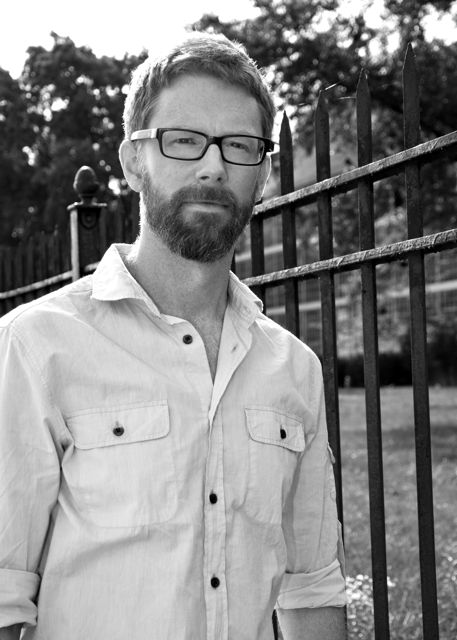
Austin Bunn’s writing has appeared in The Atlantic, The New York Times Magazine, The Best American Science and Nature Writing, The Pushcart Prize anthology, and elsewhere. His collection of short stories, The Brink, is forthcoming from Harper Perennial (2015). He wrote the screenplay to the film Kill Your Darlings (Sony Pictures Classics), with the film’s director John Krokidas, about the origins of the Beat generation writers, staring Daniel Radcliffe, Dane DeHaan, and Michael C. Hall. The film premiered at Sundance 2013, and screened at the Venice, Toronto, London, and Hampton’s Film Festivals. He teaches at Cornell University.Austin-Bunn_BW

How I Write: Austin Bunn

Location: Ithaca, NY

Current project: Original screenplay, short documentary, devised play, and more fiction!

Currently reading: The Trip to Echo Spring by Olivia Laing and The Song Is You by Arthur Phillips.

  1. What type(s) of writing do you regularly engage in?

    These days, I find myself drawn to writing screenplays — I love the collaborative experience of making film, the most powerful art form of our time. Also, frankly, screenwriting is, for me, much much easier to produce than fiction. Great fiction demands close attention to the filigree of sentences, original perceptions rendered in fresh language, and consciousness on the page. When done well, there’s nothing like it, and the satisfaction of moving a reader through prose is a deep reward. But man, it’s work!

  2. When/where/how do you write?

    I have an office, with a good desk, nice classic chair, and a view of my front lawn. And I never use it. I end up going to a coffeeshop and parking myself for hours there – it keeps the distractions (email, phone calls, news) at bay. I tend to write for about 3-4 hours and then I’m done and I need other people.bunn_TheShop

  3. What are your writing necessities—tools, accessories, music, spaces?

    Foremost: music. If I forget my headphones when I head to the coffeeshop, I know I’m in for a difficult morning. When I start a new project, I start by shopping for a soundtrack: something to inspire, provoke, contextualize what I’m doing. For Kill Your Darlings, it included bebop jazz, period love songs (“You Only Hurt the One You Love”), and a lot of Sigor Ros and Jonsi. Then we were lucky enough to get all of them on the soundtrack!

  4. What is your best tip for getting started and/or for revision?

    Getting started has never been hard for me. The blank page is my friend, and I think you need to make friends with it. I give myself total permission to write poorly but I try to find the “voice” of the piece: is it edgy and dense? Funny? Searching and quiet? Those first days are exploratory. Revision is another matter entirely: I don’t love it. It requires the part of my brain that is a close-reader, that inches the bar higher and higher, that expects more from me than I thought I had. I also feel like I can revise sentences forever. Sam Lipsyte told me that if you find yourself revising a sentence once and then revising it BACK to the way you had it, you’re done. Move on.

  5. What is the best writing advice you’ve received?

    “Deeply imagine.” Ethan Canin.
    “There is no good part. It should all be the good part.” Sam Lipsyte.
    “Writing is about the inner experience of life; that is what writing can do that no other art form can.” Marilyn Robinson.
    “All actual life is encounter.” Martin Buber.
    “You are allowed shitty first drafts.” Anne Lamott