Tag: creativity

Creating Art: A Painter’s Journey Into the World of Writing

Mary Sherafati, Writing Consultant

Our staff often engage in other creative processes as part of their learning and writing. In this week’s blog post, Mary Sherafati discusses how she finds practicing her painting skills similar to the process of becoming a stronger writer. Check out her journey and her paintings below!

Before beginning my academic journey into the world of writing, I tried to improve my painting as I have always dreamed of being a good painter. I therefore took my first painting classes in 2015. First, I was in a hurry to make a name for myself as a good painter; however, gradually I reckoned that in order to become a good painter not only do I need to be more and more patient but also I need time. I need time to learn, to practice, and to make mistakes several times. I also learned that to be a good painter, I should not be afraid of receiving feedback, either positive or negative.

One of the most important processes in creating a picture is brainstorming. At first, I could not do it alone. For example, I looked at a flower, and wanted to draw it, but I did not know how to start, I felt stressed out and started to blame myself thinking that I’m the least talented person in painting. Since I loved painting and felt enthusiastic to progress, I talked to my painting teacher. She helped me, then, with brainstorming. For example, she taught me a technique through which I first see the pictures in geometric shapes including circles, squares, triangles as well as rectangles. Through this technique, my fear was removed gradually. She continued teaching this way to assist me in making an outline before the main step of painting. She wanted me to draw all the geometric shapes that I saw in the picture on my paper without being worried about the result. It was awesome, as through this way of outlining, I learned how to paint.

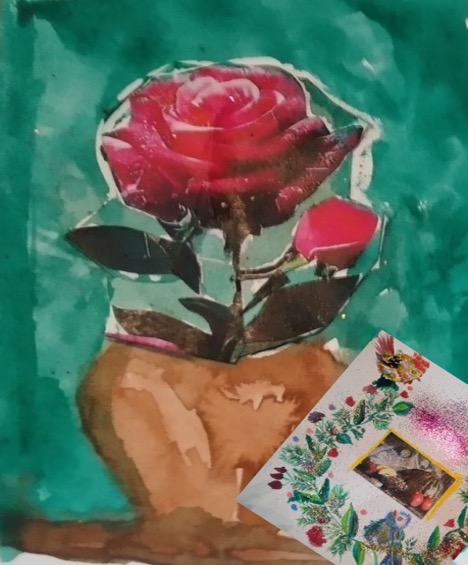
I learned that brainstorming and outlining are so important. For example, if I wanted to paint a bird, I draw its head as a circle, its body as a triangle, and its tail as a rectangle. Then, I learned that to make a good picture, I need to receive feedback and I need to draw the same picture several times to make one of the best pictures. I learned that I need to be patient and trust time to improve my painting by experiencing it. I also learned that I should know the genres as well as the techniques for painting and follow specific strategies. For example, for painting with collage technique, you have the combination of reality with painting, or combine a real picture with your painting. In the following picture, the flowers are real, the bird is the amalgamation of my painting and a real picture, and the context and the small pictures on the corners are my own painting:

 For cubism and imperialism, on the other hand, I learned that the combination of colors make the picture. It needs lots of practice to recognize how to create art just by mixing the colors. Sometimes, when you look at the picture close by, you might not understand the power of the colors and the painting might look strange, but when you step back, and look at the picture from a little bit far distance, you feel how amazing the picture is. Like the following picture:
When I started my academic journey in writing, my experience of painting helped me a lot. To me, writing and painting follow the same processes. For example, I learned that like painting, I need to brainstorm and create a picture of what I am going to write about. I, moreover, was in the habit of making an outline for my writing. At first, I could not make my outline alone, so I asked for help from my writing teacher. I learned that for making my outline, I should know the genre as well as the context of my writing, and follow a specific technique based on that. These were all tasks I practiced before through my painting classes.

For example, I learned that for some tests like IELTS, I need to write my writing based on the types of questions, and depending upon the types of questions, my writing style should be different, my body paragraphs should be different, and more. For direct questions in IELTS writing tests, I need four paragraphs, whereas for argumentative questions for the IELTS test, I need to have five paragraphs. Gradually, I also learned how to write for class assignments, how to write an article, a book review, or a conference paper. Additionally, what has made my writing and painting experience similar was the process of receiving feedback from more experienced writers and painters, and having several drafts. I learned that to be a good writer, I need to revise my paper several times based on the feedback that I receive. I learned that feedbacks might be positive or negative, but both have been constructive for me so far.

Parallels between painting and writing:

In order to show you how good writing as well as a good painting will be created by being patient and  by practicing a lot, I will give you some examples through which I discuss and analyze one of my paintings as well as my writings from my first draft to the final one. During my drafts, I received feedback from my instructors and peer colleagues as well as fellow students.

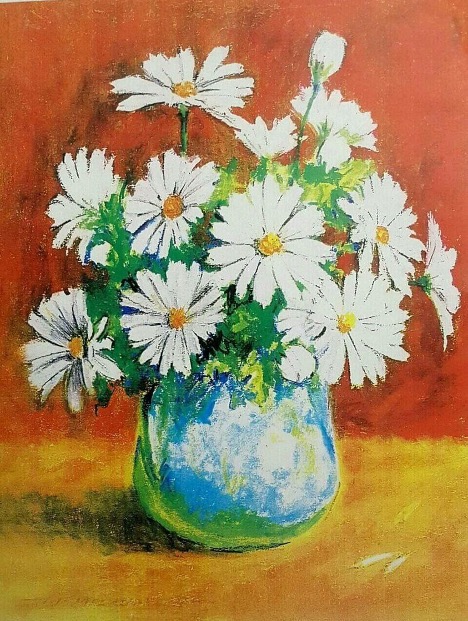
Here is my first draft of painting in which I tried to paint some flowers in a vase:
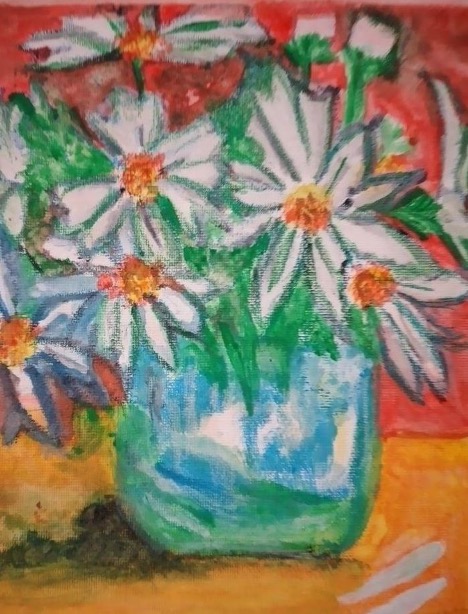
This draft made my painting teacher frustrated, and she wanted me to paint again. At first, I got frustrated and stopped painting for three weeks; however, I love painting, so I tried to listen to my teacher and go for my second draft:

In my second draft, the vase looks good, but the flowers were not still acceptable. This time, both my teacher and I wanted to see what my third draft would be like:
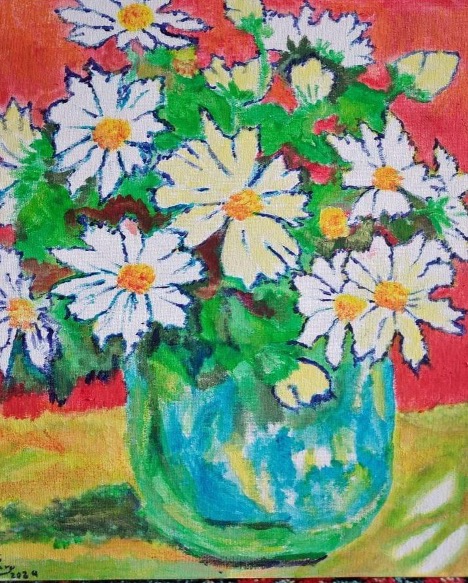
In my third draft, the flowers were seemed better, but the vase was not my favorite. I went for two more drafts as well . Although my teacher could see my progress, she encouraged me to practice more and more and trust time. I started painting the vase and flowers in January, and here is the result of my practice, and being patient and trusting time in March:

As you see, the final version looks much better.

The same also occurred for my writing assignment. I had to write a conference paper. It was about a proper type of feedback in writing in a translingual context. This process of drafting, getting feedback, and revising happened three times before I finally landed on an innovative approach, and I reckoned that I have been the first person to discuss the approach I wrote about in my paper.

As a result, these types of practicing, and having several drafts for my writing and revising my papers based on the feedback I received and my further studying not only helped me achieve an A in my course subject but also made me creative and helped me create something totally new and beneficial. The same is also true for my painting. In the following painting, my teacher only asked me to draw the banana, but I like birds, so I tried to be creative and paint it on top of the banana. I also love the flowers, so I tried to have them all in one picture:

Isn’t my painting interesting?

Conclusion:

In my opinion, and based on my experience as a writer and a painter, in order to be great artists and writers, we need to practice a lot. We should learn that we need to trust the process. We should start with brainstorming, continue with outlining, and then try to cover some drafts. Also, in order to become a good writer, we need to be self-confident and trust time, as my experience shows that if we gradually practice and not give up, we will improve. During our journey, we should not feel ourselves alone and take the role of receiving feedback a lot more seriously. In my opinion, great artists and writers are the ones that share their work with others and ask for feedback. This is why we have art exhibits.  This is why we have the Writing Center!

Come see us and share your writing as well as writing concerns with us! I’m sure you will enjoy your meeting with us and see your improvement in writing via the feedback you receive from us.

Enjoy some of my other paintings please:
Dr. Strangeword or: How I Learned to Stop Worrying and Love to Write (Allusion)

Wendell Hixson, Writing Consultant

There is no need to be an “expert!” Far too many writers, readers, students, and scholars see writing as requiring the gravest of literary circumstances. Many believe that writing must possess grandiloquence, gravitas, gratitude, grammaticality, and—especially—graftiquilimentiploricissitudinousness (neologism; I trust you’ll look up everything in italics that you don’t know). However, the magical qualities of writing, of your voice lie not in some Ivory Tower, swirling in the minds of some rhetorical warlock or literary lich (alliteration), but at your very fingertips. The unhindered imagination can create entertaining and enjoyable examples of writing without a need for scholarly expertise.

As two francophone thinkers posited, “Literary history seems deliberately to ignore writing as practice, as work, as play” (Thomas and Motte 98). And they’re, frankly, dead on. I live by the mantra that one should have fun with their writing. Fun can be the driving farce (malapropism) behind the most successful research and prose, as fun is usually the best motivator. Sometimes the very essence of rewarding, valuable writing is held not in researched ideas, dense argumentation, or scholarly opinion. Sometimes the very essence of rewarding writing is just having a chuckle at a simple and silly play on words. And sometimes you may end up learning the difference between the endless devices and playful maneuvers found within the English language, and the unique devices within other languages as well.

Perhaps you’ll come across words like (and, yes, these are all real) lipogram, chiasmus, petrosomatoglyph, epizeuxis, bdelygmia, clerihew, butyraceous, syzygy, ekphrasis, bibliobibuli, zeugma, absquatulate, phantasmagoric, lugubriousness, floccinaucinihilipilification, hippopotomonstrosesquipedalian, pneumonoultramicroscopicsilicovolcanoconiosis, and jib. Perhaps you’ll even use them. This is the fun of language: the exploration and wonder of the gift we’ve so luckily evolved. It operates much like a magic, a power with which we can create meaning and reality out of nothingness. Most any sounds, amalgam of letters, and absurd or beautiful stories develop our very understanding of this powerful tool (e.g. The Dictionary of Obscure Sorrows or Gertrude Stein’s Tender Buttons). Language is a boundless, bottomless ocean that we are rarely encouraged to truly navigate. Language can be morphed into humorous contests, such as Monty Python’s Word Association Football or Rosencrantz & Guildenstern’s Questions Game (both of which I recommend watching). Language can be manipulated for the sake of art, such as Edgar Allan Poe’s extended vocabulary or Lewis Carroll’s fantastical prose (read “The Bells” and/or “Jabberwocky”). Language can be invented for the sake of worldbuilding, such as Star Trek’s Klingon or Tolkien’s Middle-earth (which inspired real world uses of these languages). Succinctly, it makes us feel. And that is a power that should be embraced, nurtured, protected, and proliferated.

Now, this is not to advocate for disregarding formal academic writing as a whole. This is not a call to challenge a professor for stifling your creativity. There is a time and a place for pure fun and freedom, and—really—a research paper, a dissertation, or a scientific journal are not always the most appropriate sites for Tolkien’s Elvish or the word “lugubrious.” That’s okay. It can be symbiotic. We language-users still have an obligation and an ability to balance our teaching and communication with our capacity to entertain. Sometimes that means foregoing a pun or poetry (wordplay), but it doesn’t mean foregoing interest in your ideas and how you write them (rhetorical devices). Our world can be a worrisome place that requires our attention, compassion, and power whenever we can lend it. And, hopefully, we can use our voices to mend relationships, to empower those we care about, to stand against and maybe inspire those who feel silenced. To use your voice for good is all one can ask. So, I truly wish that your ongoing adventure through language brings you a greater sense of confidence in yourself, and I hope it also brings an appreciation for how genuinely, innately powerful our voices really are. And that doesn’t mean it’ll ever be perfect. As I said, you don’t need to be an “expert.” You just have to be human.

Thomas, Jean-Jacques and Warren F. Motte join. “Oulipo: A Primer of Potential Literature.” South Atlantic Review 53 (1988): 185.

Put Your Heart in It: Creative Writing’s Place in an Academic Space

Liz Soule, Assistant director

After a two-year break from creative writing, I stumbled my way back into it through fan fiction this past March. Although I would never judge another writer for finding inspiration in fan works, I confess feeling a bit ashamed by my own admission. Halfway through a 2,000 word story exploring a deeply emotional conflict between two characters that were not my own creation, I started to wonder: shouldn’t my time be taken up by more intellectual pursuits? I could have been reading for a class or starting a paper. Wasn’t this a waste of precious time and mental energy?

Whether you’re writing that crossover fanfic you’ve had percolating in your brain for the past six months or even something more traditional, I am sure that you, too, have wondered where your creative writing endeavors fit in within the grand scheme of your academic journey. In an academic culture that focuses so intently on making the grade, it is hard to see the benefits of any pursuit that does not result in some kind of marked increase in your GPA.

But if writing pedagogy tells us anything, it is that writing processes extend far beyond the context of one assignment, genre, or even discipline. Academic writing and creative writing doubtlessly have a symbiotic relationship. But what does this look like? How can we rationalize our continued pursuit of creative writing?

Hoping to learn more about this, I spoke with two of my colleagues at the University Writing Center, Maddy Decker and Andrew Messer. Maddy serves as the senior program assistant in the University Writing Center, and is pursuing an MFA in creative writing at Eastern Kentucky University. She also leads the creative writing group! Andrew is a writing consultant, and is pursuing an MA in English at the University of Louisville. Both are prolific creative writers! In brief interviews, I asked them how creative writing and academic writing have interacted for them.

For Andrew, writing creatively has revealed new ways to express himself across the board. “Creative writing helped me find a voice,” he explained. That voice carries through to his academic assignments, allowing him room to creatively approach essays and apply his unique style to many different kinds of writing. He intentionally practices this, developing creative ways to complete assignments each time he gets one.

Similarly, Maddy describes creative writing as granting her “a little bit more flexibility.” Like Andrew, she doesn’t feel locked into a particular formula when it comes to academic writing. Rather, the perspective she’s gleaned through creative writing gives her “a different idea of what forms academic writing can take.” She also brings her own stylistic flare to her academic work through the use of heightened figurative language.

Likewise, the two have found that academic writing can influence their creative processes. Andrew’s experiences with writing academically, particularly in composition courses, made him become much more aware of the role of audience in any piece of writing. “I became a lot more aware of the external audience and now try to be cognizant that people are going to read it and they need to understand,” he said. When it comes to creative writing, this means making what is implicit more explicit.

Speaking on the influence of academic courses in her creative writing, Maddy said: “They feed each other a lot.” She has used the material from courses, such as a forensic anthropology course, to create new content. Some of her current projects stem from past courses she took during her undergraduate career.

Andrew and Maddy aren’t alone in feeling this way. For me, I have found that creative writing helps me gain momentum. I put aside my perfectionism to write silly stories about characters, and it remains suspended as I transition into other activities. Starting an assignment is always a struggle for me, but when I begin with creative writing, I feel like the words fly out of my fingers and onto the page. And, perhaps more importantly, my experiences with creative writing have taught me to be open to revision. I know that I can (and should) write, rewrite, and rewrite again.

In closing out our interviews, I asked both Andrew and Maddy to share any words of wisdom they had for maintaining creative writing endeavors while in school. After all, even if you know the benefits of writing creatively, it can be hard to make the space for it.

Andrew recommended taking literature courses, if possible, because “you’ve gotta read for those courses, so you’re still expanding your repertoire.” He also shared a nugget of wisdom from his creative writing professors: “If you wanna write, then read!”

Maddy insisted that writers make time for creative writing, even if it’s in small ways. She advocated for writing whatever comes to you. “Having that interest stay alive is the priority. Just make sure your heart is still in it,” she said.

I hope that you find validation in what we’ve shared here today. Know that if you’re ever in doubt of the place your creative writing has within your process or program, here at the University Writing Center, we are happy to help you build those connections and find your flow.

Interested in writing creatively? Join us at the Creative Writing Group, led by Maddy! Meetings are held in person in the University Writing Center (Ekstrom 132) from 5:30 – 7pm on the following Mondays:

October 10th

November 14th

December 5th

For more information, please email us at writing@louisville.edu or call us at 502-852-2173.

Titles: Topics and Subjects at the Top of the Page

Curtis Ehrich, Writing Consultant

If you couldn’t already tell, this blog post is all about titles. How to make ‘em, what to do with ‘em, and what they are for. Ever since high school, titles have been one of the most effective ways I get myself to care about my writing. In undergrad, I would come up with all sorts of fun titles, usually a pun or pop culture reference, just to get my creative juices going, and to get myself thinking critically about the material. It was one of the ways I made academic writing—which I hate—more interesting and (frankly) more bearable. Some of my favorite’s included references to Star Wars’ terrible dialogue writing (“Now this is podracing”) when I wrote a paper for a film study course analyzing the podracing scene from The Phantom Menace, and a reference to The Princess Bride’s RUSes in a paper for my Linguistics course all about agglutinative languages (languages that make new words by tacking on more and more suffixes and prefixes), that I cleverly titled “Words of Unusual Size.” While making fun titles is a great way to get the gears turning creatively, it doesn’t always do much to describe your paper to your reader, especially if you are like me and are in grad school and don’t get to have fun anymore.

The University of Michigan has a great resource for how to create compelling academic paper titles. The academic title consists of three parts: the hook, key terms, and a location. The hook is the part of your title that will give you the most creative freedom. It is the element of your title that draws in your reader, what makes them want to read your paper in the first place. Try to pick out the most interesting part of your paper or try to distill your paper down into one or two words to help guide your hook. I wrote a paper last semester about Moll Cutpurse, a fascinating character from Renaissance England. The paper was all about how Cutpurse represented gender presentation that was inherently transgressive in just about every way imaginable. For my hook I chose “Transgressive Sexuality.” Key terms are helpful for describing what your paper is about to your reader. They are usually terms essential to the topic of your paper, and if you are looking to publish, using key terms in your title will make your paper easier to find in a database. Think of your title as a sort of logline of your paper, the briefest of elevator pitches. They should give your reader an immediate understanding of what the purpose of your essay is, and the concepts you will be discussing in your paper. These are very rarely interesting, and typically very literal describers of the contents of your paper. For example, returning to my Moll Cutpurse example, for my key terms, I chose “Cross-dressing and Transvestitism.” The location gives context for the concepts being discussed and the scope of the paper all at once. What you use as your location will vary depending on what you are writing about, the genre you are writing in, and the discipline you are writing from. For an English paper, this might look like the time period in which a text was written, or if you’re taking a New Critical approach, it might just be a character’s name and the title of the text in which they appear. If you are writing a more scientific paper, it will probably look more like the data sample you are studying. For my Moll Cutpurse paper, my location was “Jacobean London”

As an example, a full title might look something like “The Imperialist Adventure of a Lifetime: Robinson Crusoe and Postcolonialism in the Context of Defoe’s Puritanism.” Something like that, if you were to write a paper on Robinson Crusoe. Of course, my full Moll Cutpurse title was “Transgressive Sexuality: Cross Dressing and Transvestitism in Jacobean London.” Or, if I were to draft a scientific paper, it might look something like “AI Doctors: Cancer Screening and Machine Learning in Patients 65 and Up.” In the first example, “The Imperialist Adventure of a Lifetime” acts as our hook, describing the basic premise of the paper in an interesting way. “Robinson Crusoe and Postcolonialism” are obviously our key terms, and “Defoe’s Puritanism” is the location, giving us all the context, the reader needs to understand exactly what this paper is going to be talking about. In the second example, the locations of the hook, key terms, and location are in the same place, performing all the same jobs.

This method of academic title creation is clearly a versatile and useful tool to keep in your back pocket if you ever get stuck. I’ll be using it myself on my final papers this semester. But don’t let this method stifle your creativity! This method is just one of the many ways to create a title, and it is by no means the “best” way. There’s an adage in writing pedagogy that says, “the best way to learn to write is to read.” That be made even more specific for titles: “the best way to write titles is to read titles.”  But sometimes, if you just need to get yourself interested in writing, just coming up with a creative, fun title does the trick.


Works Cited

Writing, Sweetland Center of. “How Do I Write a Great Title.” University of Michigan https://lsa.umich.edu/sweetland/undergraduates/writing-guides/how-do-i-write-a-great-title-.html. Accessed 10 March 2022.

Blooms of Agency: What a Middle-School Writer Learned from KPREP On-demand Writing

By Justin Sturgeon, Writing Consultant

Several years ago, I had a peer in middle school who became frustrated with a number of recent school policy changes. One week, cafeteria lunches had to begin abiding by new nutrition regulations—burying many of her favorite and familiar dishes. That following week, dress code policies began to be enforced more thoroughly—indubitably ushering in discipline against female students much more directly than their male counterparts. Both changes felt like additional hurdles to my peer in her learning. At this time, she, along with many of our friends became frustrated with these and other changes in school rules that left them feeling unable to express any feeling other than that of submission. They were angry with an entity that had no face, an imagined enemy that could not be named or assigned to a single person.  It also happened to be not long after these experiences that yearly K-PREP testing was about to commence.

This test measures student performance against codified Kentucky academic standards in the major subject areas taught in public schools. Accompanying this test is the usual essay exam question that often champions the standard five paragraph essay that is ingrained into the hearts and minds of public education attendees. One of the hallmarks of the writing section is its plea for crafting an argumentative response to a neatly defined opinion scenario depending on the grade level taking the test. From the time we entered testable grades, we were conditioned to see how important the yearly exam was not only for ourselves but also for our school district. Each year teachers poured their enthusiasm into wishing us well on the test as they laid their trust in our ability to apply what we had learned through the year to those booklets that contained our penciled in answers.

It was on this exam that my peer decided to work out the anger and frustration of navigating middle school as a response to an essay question. Something in the prompt related to a school procedure and my peer leaned into their experience and drafted an argument to lambast the system that garnered the rule changes and heavy thumb this student felt was pressing on her emotions. In making her response, she wrote in a way that directly addressed the reader or grader of this examination and in some ways ignored the goal of the exam—which seeks to measure student writing against a state determined standard. My peer’s writing took on an entirely different form that burnt away the edges of the exam’s intractable parameters. In her best attempt to maintain an academic voice, she pointed her finger at the test grader and gave blame for all the problems that were interfering with her inability to find a voice.

Looking back, I wonder now if only I could hold the clock on that exam and have conversations with my peer about genre, audience, and instruction guidelines—subjects that didn’t matter when pegged with her focus of expressing her frustrations on her own terms. The grader of that exam essay likely glossed over the essay and checked each box when she tried to adhere to the guidelines or address the prompt, ultimately missing her fervor and intent. Perhaps the grader of that exam toted a distinction of incomplete or failing to meet the standard. But, how can one assess bringing awareness of nonnative, invasive plants in a proposed community when the dread of one’s home life looms over waiting until the exam is over and the school day has finished?

My peer in that moment—although failing to meet the On-demand writing standards of the exam—found her voice and did so in a way that forced her to reckon with ideas of audience, tone, and genre. She could have just submitted a myriad, itemized list of concerns or even a stream of consciousness rant that would jump from one thought to the next with hardly any connection. Instead, she knew that she had to make some choices. She kept to the model of the five-paragraph essay and organized her thoughts in a way that would leave no question in the reader’s mind about what issues were occurring and causing her contention. Whether her convictions were rooted in rebellious middle school angst, taking the pulse of the public-school education system, or a mixture of the two—her very real emotional impasse of setting a no.2 pencil to paper had reached its epiphany. In choosing to write about her frustrations and anxieties in a way to address a potential culprit to her issues, she found her agency. In finding her agency she was confronted with the task of taking those frustrations and annoyances and turning them into a portrayable plane for an imagined reader.

Though I would scarcely suggest to students to deviate from their assignment prompts in such a seemingly anarchistic fashion, we (as writing center consultants) do teach them to undertake the journey of funneling those ideas and feelings into a form that a reader can access and engage with. Sometimes students are hesitant to write about a subject in which they hold contentions or reservations about in terms of portraying opposing arguments. These reservations can reach a more abrupt stalemate when students cannot find their agency within the prompt. The challenge of interacting with these prompts is further abstracted by the specificity of state standard which assess student performance in a vacuum. Indeed, much more could be said about the just debate in propping standardized on-demand writing up as the supreme measurement of student performance when schools with higher levels of poverty uniformly score lower on these exams that measure a single notion of writing.

At times, writers face a similar dilemma of channeling their emotions and feelings into their writing to address their audience. We at the writing center are jubilant to work with students whether they are beginning to engage with finding agency or are already in tune with their agency as they develop and become more aware of themselves and how they communicate with others in meaningful ways.

Writing for Sanity’s Sake: A Quarantine Companion

IMG_3633Edward English, Assistant Director 

When considering strategies for staying emotionally and physically healthy during these times of closed borders, social distancing, and toilet paper depletion, for most people writing would be an unlikely choice. Writing does, after all, carry a reputation for being a solitary enterprise.  I do, however, believe that writing offers great potential to help many navigate these tough times and here’s why.

The importance of having projects. For those with an ample amount of free time, having a project, or projects, can be a fun and rewarding way to learn and stay occupied. My wife, a junior high science teacher now instructing entirely online, has a loom and is in a weaving frenzy.  I’ve started gardening a bit and trying to get better at home repairs.  It seems I’m not alone in taking on these tasks either—yesterday while driving around, I noticed what seemed to be a Louisvillian ghost town suddenly transform into a dense expanse of cars parked in front of Lowe’s.

For many attracted to writing, the biggest obstacles can be a perceived lack of time and difficulty overcoming writer’s block.  Now, however, free-time is no longer in short supply for the bulk of us.  Also, for myself, I feel that writer’s block is often a product of feeling overwhelmed at the enormity of a project.  Perhaps now is the time for you to start that novel you always wanted to write, but something of a more manageable size might be a better strategy: a short story, a screenplay, or a thoughtfully crafted letter or e-mail to connect with loved ones, offer consultation to those in a difficult place, or express appreciation to those who are working so hard and acting bravely—particularly those in the medical field.

Additionally, it’s worth noting that writing can often be an activity that requires slowing down and thoughtfully managing your time, as former writing consultant Abby Wills explains: Slow Writing: 5 Ways to Rebel against the Culture of Urgency

The importance of working through emotions—especially uncomfortable ones.  These are anxious times—especially to someone in tune with the current headlines.  As many people have little communication with others during this unprecedented time, it might be challenging to process through difficult emotions. For some in these and similar situations, writing can serve as an outlet. In my own life, I’ve found that writing, especially journaling and poetry, can be an excellent way to give definition and clarity to fears, questions, and concerns.  And while these steps don’t necessarily eliminate problems, more often than not they help foster much clearer, and more pleasant, headspace.

For fun insight into journaling, check out former writing consultant Rachel Knowles’ piece: The Writing Center Diaries: Dispelling Myths About Journaling

The importance of exercise and creativity.

If you have the ability to responsibly exercise, jog, or take walks, it’s likely a good idea. The benefits are numerous: physical health, increased serotonin levels, vitamin D to name a few.  But also consider that exercise could be a great way to improve your writing quality and overall experience.

In a recent interview, acclaimed fiction writer Chuck Palahniuk (Invisible MonstersChoke, Fight Club) detailed how much of his writing process actually revolves around lifting weights—arguing that the physical movement and circulation were conducive to helping him feel creative and organize his thoughts. While weight lifting might be a limited option for most—particularly with the closure of gyms—the sentiment is clear, and alternative ways of exercising indoors abound with a simple Google search.

Along similar lines, a few years back Psychology Today published “To Become a Better Writer, Be a Frequent Walker” exploring significant benefits walking can give to writers.  As the article explains, avid walkers abound among great literary figures like Virginia Woolf, Charles Dickens, William Wordsworth and Henry David Thoreau.  Furthermore, walking can lead to increased creativity, provide inspiration, and hone one’s observational skills.

The importance of staying connected.

While a successful writer is frequently imagined as sitting hunched over a laptop typing away in a disheveled apartment, sterile office, or library, more often than not some of the most successful writers I have met put great effort into figuring out alternative and creative methods that work better for them, and this often incorporates social connection as a significant part of their writing process.

And, as many are discovering creative ways of connecting online, it might be worth considering that writing could be a useful means to get feedback or just brainstorm ideas with friends or people with similar interests online.  If you happen to be a faculty member or graduate student at the UofL and are interested, we are still our offering writing group online.  For more details, check out: Faculty and Graduate Student Writing Group

For many, these various options and suggestions might not be feasible. But either way, we at the University Writing Center hope you stay safe, healthy, and connected.  So happy writing…or whatever it is you do to help during these strange times.

Works Cited

“To Become a Better Writer, Be a Frequent Walker.” Psychology Today, Sussex Publishers, 28 Mar. 2016, http://www.psychologytoday.com/us/blog/minding-the-body/201603/become-better-writer-be-frequent-walker.

The Rhetoric of Your Dating Profile

Cat Sar, Writing Consultant

Bumble. Tinder. Hinge. Clover. Match. Coffee Meets Bagel

Dating profiles might not come to mind when you think of writing, but even a short blurb about yourself is a type of text. In fact, all parts of a profile on a dating app—basic information about your name, age and location, photos, optional questions, and even the decision to link other social media profiles to your account—are all part of a “text” that can be read and analyzed.

Think of your profile as an argumentative piece. The goal of the argument is to convince someone to engage with you. The type of engagement may depend on the specific platform that you are using. In this case, the evidence that supports your argument consists of all the components of a profile that were previously mentioned. In order to craft a successful dating profile, you’ll need to take into consideration the rhetorical elements involved in writing an argument. Hmm…sounds a lot like your first-year English course?

Let’s break down your “argument” by each part of the profile, starting with basic information: name, age and location. Don’t think that these pull as much weight as your photos? Think of it this way: if you are tempted to fictionalize this portion of your profile—if you are lying about the very base facts about yourself, why should anyone believe that any of your profile is real? The basic information of your profile is the start to building credibility (cough cough ethos). Although online dating and app usage has become extremely popular, we live in the age of catfishing and stranger danger.

Trust is a major factor in dating apps, and in relationships. You should be honest about these facts (and to be honest myself, I shouldn’t have to tell you that). When a house is being built, the foundation is laid first. Everything else is built upon this base. When it comes to dating apps, trust (that the person looks like their pictures, that they are the age that they claim, etc.) is the foundation that you are asking someone to build any interaction upon.

Next, there are the photos. Again, these should be photos of you, and they should be recent photos. Seems obvious. The majority of your photos should be solo shots, or pictures in which it is obvious which person you are. When people are swiping through profiles, they don’t want to have to stop to search for you in every picture. Similar to the importance of clarity in writing, a straightforward visual directs your audience to the point quickly and concisely.

The content of the photos is where the major decisions lie. The photos section of your profile is where emotions arise most readily. For example, when you use a travel picture, you are making the claim that you are adventurous, or at the very least have been on a vacation. A photo of you playing a sport suggests that you are active. A picture of you and a dog? Cue the heart-melt! In this case, a picture is worth a thousand immediate affective responses that will sway your audience to see you in a certain light, depending on what kind of photos you include. Choose wisely.

You’ll be tempted to post your highlight reel—the most interesting photos where you look the best. And you should prioritize the pictures in which you are ~ feeling yourself. But your pictures should also be an accurate representation of who you are. Pathos—emotional appeals (think the involuntary aww that puppies elicit)—are weak without a person’s truth to back it up.

Remember, everything that you include in your app is telling those who view your profile what you think is important in a partner. The (sometimes optional) short answer section is the most direct place in which this occurs. By choosing certain things to include above others, like: are you physically active? what’s your horoscope? ideal first date?, you are showcasing what you consider to be characteristics that will attract a partner, and telling that potential partner what they should find desirable about you.

On one hand, you are saying: these are my most important qualities—the qualities that I believe will draw other’s interests. On the other, you are saying: this is what I find important to advertise on this platform—I am likely to be interested in others who prioritize the same characteristics. The type of language in these responses should reflect your personality and your intention.

Lots of slang, emojis, or typical “text talk” will invoke a different assumption about you than one-word responses, which in turn will have different implications than longer, more poetic answers. (What these assumptions are, as well as their accuracy, will reflect certain biases of your audience. This blog post does not aim to address the consequences of such assumptions, but it would be remiss not to mention that dating apps and profiles are as susceptible to bias and assumption as any in-person interaction.) Basically, your choice of words matters.

Has this blog post ruined the casual ease of swiping through strangers in hopes of finding true love? Maybe. Hopefully it has also helped you to think more deeply about how we go about connecting with others, and offered some clarity about the kinds of arguments we make for ourselves. When we claim that we are able to help with any kind of writing at the University Writing Center, we really mean it.

Writing and Riding: More Parallels Than You Might Think

Kelby Gibson, Writing Consultant

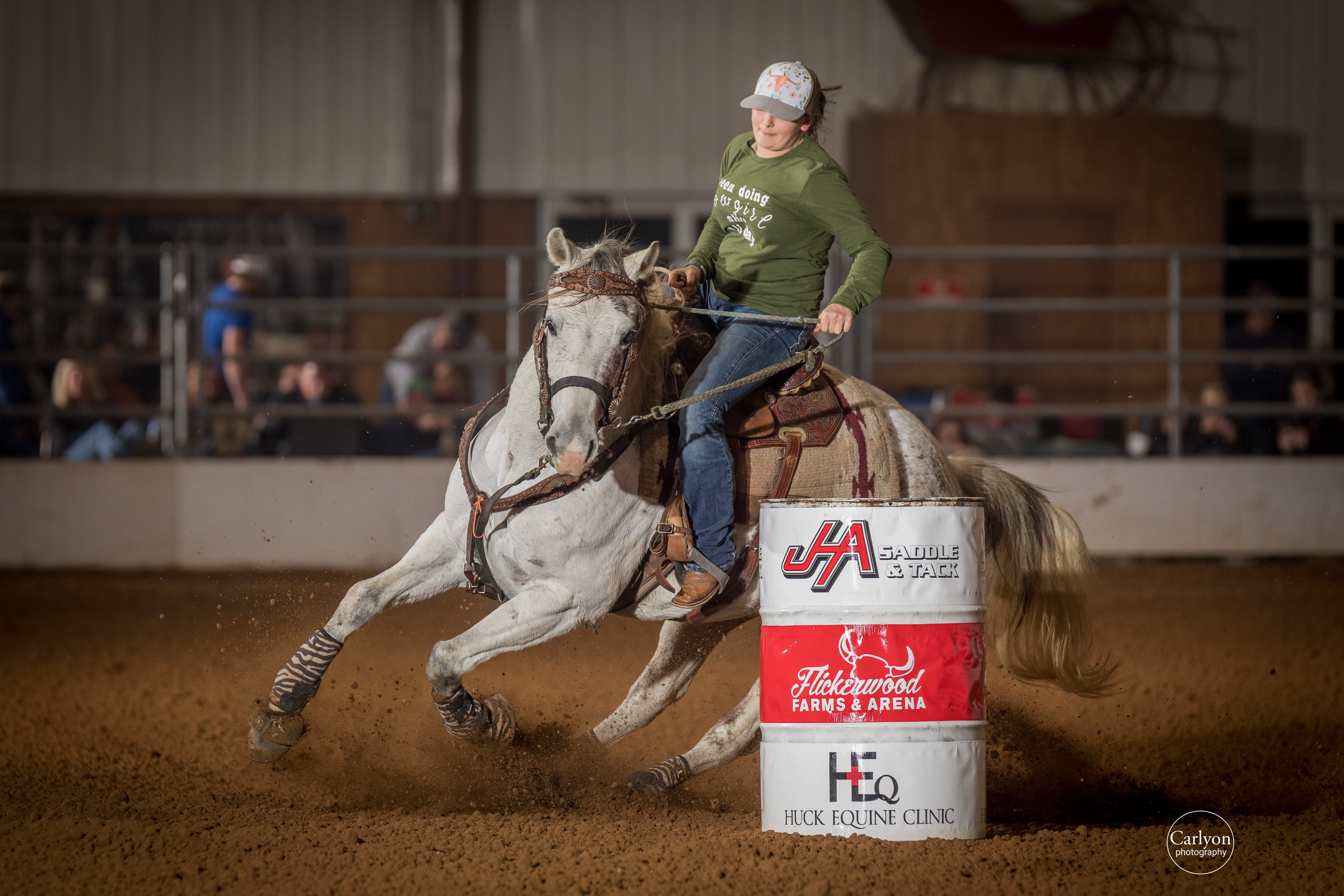
Writing can be related to more things in your daily life than you might expect. Writing looks different for everyone.  My writing process is very similar to my training process. I ride horses, barrel horses to be exact. I compete at local shows and occasionally a few rodeos. For those reading this that don’t know what barrel racing is, it’s a timed equine event in which a rider takes their horse through a clover leaf pattern around three 55-gallon barrels as fast as they can. I know what you’re thinking, there is no way this can relate to writing, but it really can.

I have learned many lessons and grown so much as a person from being in the barrel racing world. A few of the key things I’ve learned that have in turn helped me in writing are both humility and confidence.

Humility is something that can be hard for a lot of people. Admitting you are wrong is never fun, but the important thing to remember is when you can accept that you need to ask for help you are always going to come out the better person. A friend of mine has a saying, “if you’re scared say you’re scared” and I think this applies here. If you need help, ask for help! Yes, it sucks saying I’ve tried my way, now I need to hear from someone else. Opening yourself up for critique is hard, but once you learn to take the constructive criticism it will only make you better at what you are trying to accomplish, whether that is win a belt buckle or write an ‘A’ paper.

I’ve consulted many different people just in the last year on how to better myself as a rider just as I have continually asked for feedback from friends and colleagues with my writing throughout the semester. I did not become a better barrel racer by only ever riding my way, I got better by asking my friends and competitors questions. You cannot become a better writer holed up in a dark room holding onto that draft just waiting for the answers to come for you. You have to go find the answers. Writing can be social. Writing is social. So have the humility to venture away from the desk, seek feedback, and ask questions.

Kelby horse
Kelby Gibson barrel racing!

Confidence is needed when you’re on the back of a 1200-pound animal that’s running at roughly 40 miles per hour and turning on your command by a few light hand and foot movements. There are certain pressures behind writing that are similar to trying to beat a clock with money on the line. Maybe you’re applying to your dream graduate program, working on your senior thesis, or writing the final paper that determines your grade in class. Stress and pressure do funny things to us and can cause us to under-perform. When I’m at a race I like to try my best to focus on the positives.

While I don’t recall exactly who said it, there is a line from my favorite barrel racing podcast I like to keep in mind with all things in life, “You either win or you learn.” So maybe you try your hardest and your horse gives its all, but you don’t come in the pen and set the pace for the day. Similarly, you might spend hours upon hours on a paper that falls short in the eyes of its main audience. In either situation your initial reaction is to ask, what went wrong? If you pursue that question you will surely get an answer whether it be from yourself or someone else and once you have that answer you can learn how to do better next time.

Not every run is going to be your fastest and not every piece you write will be well received, but as long as you are trying your hardest and putting forth a good faith effort you will succeed or you will learn how to increase your chances of succeeding the next time. Have confidence in yourself. When you’re writing that paper don’t allow the thoughts of what might happen bog you down, clear your head and give it your best shot. As long as you’re trying, what is the worst that could happen?

These two things are just a few of the many ways barrel racing has enriched my life and my willingness to learn. My training process and writing process mirror each other in many aspects and because of that I continue to improve as both a jockey and a writer. What I admire most about this sport is that even the best of the best will tell you that you can never stop learning and finding ways to improve yourself and the same can be said for writing.

What I Learned About Writing from My Favorite Protagonist

Tristan DeWitt, Writing Consultant

I can’t say that writing is always enjoyable for me. Sometimes I even hate it.  I’ve spent countless hours sitting in front of a blank word document having no clue what to say – regretting the choices I have made that led me to writing another paper. I know it sounds dramatic (and I don’t by any means actually hate writing) but sometimes I feel so overwhelmed thinking about my audience and if they will find it good enough, that I don’t even want to complete the assignment at all.

In this situation, it helps me when I think about one of my favorite protagonist in literature, Mary Beton, from Virginia Woolf’s A Room of One’s Own. Throughout the book, Mary finds herself denied the opportunity to partake in much of the academic culture of the university. In a search for answers to her experiences, Mary finds that little literature is written with attention to the actual experiences of women, both by male and female writers. Woolf herself concludes the novel by telling women that they need is a room of their own in which to write.

I believe that Mary’s experience highlights something about writing that many of us within the university community take for granted. When given an assignment that we don’t really want to do, we see it as something that is being forced upon us. I am guilty of this as well, but thinking of Mary makes me realize how remarkable each opportunity to write actually is. Not everywhere are we given the chance to write what we think and have an audience that will listen.

Even in our least favorite assignment we have the privilege to evaluate our thoughts and make something our own. We no longer need a room of our own to write. Within the university, we have a unique opportunity where we are expected to share our experiences and insights, be it with a text or with research.

Working in the Writing Center, people sometimes think that words or ideas just come to me naturally, since writing is what I like to do. However, the truth is that rarely do words just come to me. There is always revising, editing, and what seems to be an unending amount of time spent on rewriting just one sentence. Even when I get frustrated with an assignment, I have to remind myself that this is my work and that only I can say what I am thinking – which makes the laborious process of writing worth it to me.

Mary’s experience applies to us all. We all have had the moment when we question our thoughts or experiences. Next time you find yourself in this situation, where you feel frustrated with an assignment, I challenge you to see writing as the unique opportunity that it is. Not everywhere in life will you be asked what you think, so take this opportunity in college to own your writing.

Writing as Self-Reflection: A Personal Writing Process

Josh Christian, Writing Consultant

When most people write, they do so with a goal in mind. Employees and employers write emails to communicate dates and quotas. Josh ChristianFamilies write texts to make dinner plans. Journalists write to meet a deadline. And students write to meet the requirements of their assignments.

Rarely is any form of writing done without some sort of purpose, to achieve or gain something. This is why not all forms of writing are valued equally by all people. If writing as an employer of a company or a journalist of some big-name paper, your writing will be valued over the student, who is only writing for a grade. What about writing that seems to have even less of a purpose, that isn’t done for a grade or paycheck?

Journaling is a perfect example. It is a form of writing that seems to have no purpose at all. It doesn’t exist to be seen or shared with anyone outside of the writer. So why do it? Here, I would argue that while journaling doesn’t seem to be accomplishing anything, it very much is. And the product of journaling is of endless value. If this is true, a personal writing practice adds to one’s life.

So why journal? Most think journaling is for the dreamy school-girl or angst-filled teen. However, these people don’t consider the benefits of journaling. When journaling, a person is choosing to reflect on a moment, maybe traumatic or joyous; they reflect on their day or the possibilities of a decision they have to make. Journaling is then a form of self-reflection, which is defined by google as “meditation or serious thought about one’s character, actions, or motives.” Self-reflection can be found in most religious faiths, as they promote meditation as a religious practice.

The value of self-reflection has even been noted by major cooperations and business conglomerates, as they have integrated it into their various training programs to insure the making of responsible and effective leaders capable of learning and growing from their mistakes. At a personal level, self-reflection enables one to think over their past choices, words said and actions taken, becoming aware of how their actions or words affected others. Past decisions that caused broken relationships could go unnoticed if not for self-reflection. Journaling enables this form of self-reflection, as it allows one to write about their day, often in a narrative form, which allows for the assessment that leads to personal growth.

Similarly, journaling about an impending decision one has to make enables this form of self-reflection. When a person needs to make a decision about their future, say attending a specific university or taking a job, journaling enables them to reflect on their own characteristics and assess whether they are or are not a good fit for the university or position. Not only does journaling help one process their thoughts, it also helps one cope with the anxiety of the decision.

Sometimes it can feel like so much is at stake in making a decision, the anxiety is paramount, making it impossible to sleep or think. Journaling helps relieve this tension. As one writes out their thoughts and feelings, they process this anxiety and get space from their feelings, enabling them to think objectively. Thus, even in moments where one has to make a difficult decision, it is easy to feel overwhelmed with the many possibilities and weighty pros and cons. Journaling makes this process a bit easier.

Thus, journaling is not useless. It enables self-reflection that generates tangible results for people in their everyday lives. So if you are one of those people who think writing is just about achieving something, either commercially or academically, think again. Begin to incorporate journaling practices into your everyday life and watch as the benefits of self-reflection manifest. It only makes sense that a regular, personal writing practice that incorporates journaling would multiply these benefits. So, journaling, as a personal writing practice, is for everyone. It isn’t only for the journalist, novelist, student or businessmen. And writing does more than make profit. It adds infinite value to your life.

So, if you are thinking about beginning a personal writing practice, here are a few questions to get you started:

  • What did you say or do for someone to make their day better?
  • Did you say or do anything that could have hurt another person? If so, what?
  • What made you feel good, today? What made you feel bad?
  • Are you more anxious than usual? What is different that could be causing your anxiety?
  • How might you change something you have done or said today to have a more desired impact tomorrow, or in the coming days?