Tag: Creative Writing

How I Write: Austin Bunn — Creative Writer

Our “How I Write” series asks writers from the University of Louisville community and beyond to respond to five questions that provide insight into their writing processes and offer advice to other writers. Through this series, we promote the idea that learning to write is an ongoing, life-long process and that all writers, from first-year students to career professionals, benefit from discussing and collaborating on their work with thoughtful and respectful readers. The series will be featured every other Wednesday.

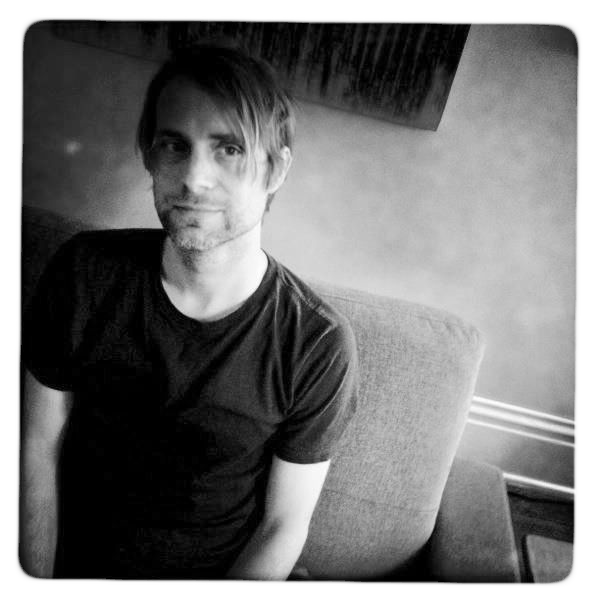
Austin Bunn’s writing has appeared in The Atlantic, The New York Times Magazine, The Best American Science and Nature Writing, The Pushcart Prize anthology, and elsewhere. His collection of short stories, The Brink, is forthcoming from Harper Perennial (2015). He wrote the screenplay to the film Kill Your Darlings (Sony Pictures Classics), with the film’s director John Krokidas, about the origins of the Beat generation writers, staring Daniel Radcliffe, Dane DeHaan, and Michael C. Hall. The film premiered at Sundance 2013, and screened at the Venice, Toronto, London, and Hampton’s Film Festivals. He teaches at Cornell University.Austin-Bunn_BW
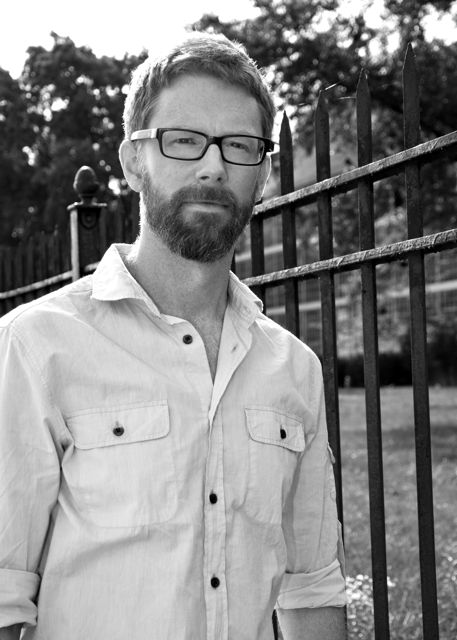
How I Write: Austin Bunn

Location: Ithaca, NY

Current project: Original screenplay, short documentary, devised play, and more fiction!

Currently reading: The Trip to Echo Spring by Olivia Laing and The Song Is You by Arthur Phillips.

  1. What type(s) of writing do you regularly engage in?

    These days, I find myself drawn to writing screenplays — I love the collaborative experience of making film, the most powerful art form of our time. Also, frankly, screenwriting is, for me, much much easier to produce than fiction. Great fiction demands close attention to the filigree of sentences, original perceptions rendered in fresh language, and consciousness on the page. When done well, there’s nothing like it, and the satisfaction of moving a reader through prose is a deep reward. But man, it’s work!

  2. When/where/how do you write?

    I have an office, with a good desk, nice classic chair, and a view of my front lawn. And I never use it. I end up going to a coffeeshop and parking myself for hours there – it keeps the distractions (email, phone calls, news) at bay. I tend to write for about 3-4 hours and then I’m done and I need other people.bunn_TheShop

  3. What are your writing necessities—tools, accessories, music, spaces?

    Foremost: music. If I forget my headphones when I head to the coffeeshop, I know I’m in for a difficult morning. When I start a new project, I start by shopping for a soundtrack: something to inspire, provoke, contextualize what I’m doing. For Kill Your Darlings, it included bebop jazz, period love songs (“You Only Hurt the One You Love”), and a lot of Sigor Ros and Jonsi. Then we were lucky enough to get all of them on the soundtrack!

  4. What is your best tip for getting started and/or for revision?

    Getting started has never been hard for me. The blank page is my friend, and I think you need to make friends with it. I give myself total permission to write poorly but I try to find the “voice” of the piece: is it edgy and dense? Funny? Searching and quiet? Those first days are exploratory. Revision is another matter entirely: I don’t love it. It requires the part of my brain that is a close-reader, that inches the bar higher and higher, that expects more from me than I thought I had. I also feel like I can revise sentences forever. Sam Lipsyte told me that if you find yourself revising a sentence once and then revising it BACK to the way you had it, you’re done. Move on.

  5. What is the best writing advice you’ve received?

    “Deeply imagine.” Ethan Canin.
    “There is no good part. It should all be the good part.” Sam Lipsyte.
    “Writing is about the inner experience of life; that is what writing can do that no other art form can.” Marilyn Robinson.
    “All actual life is encounter.” Martin Buber.
    “You are allowed shitty first drafts.” Anne Lamott

How I Write: Kyle Coma-Thompson — Novelist

Our “How I Write” series asks writers from the University of Louisville community and beyond to respond to five questions that provide insight into their writing processes and offer advice to other writers. Through this series, we promote the idea that learning to write is an ongoing, life-long process and that all writers, from first-year students to career professionals, benefit from discussing and collaborating on their work with thoughtful and respectful readers. The series will be featured every other Wednesday.

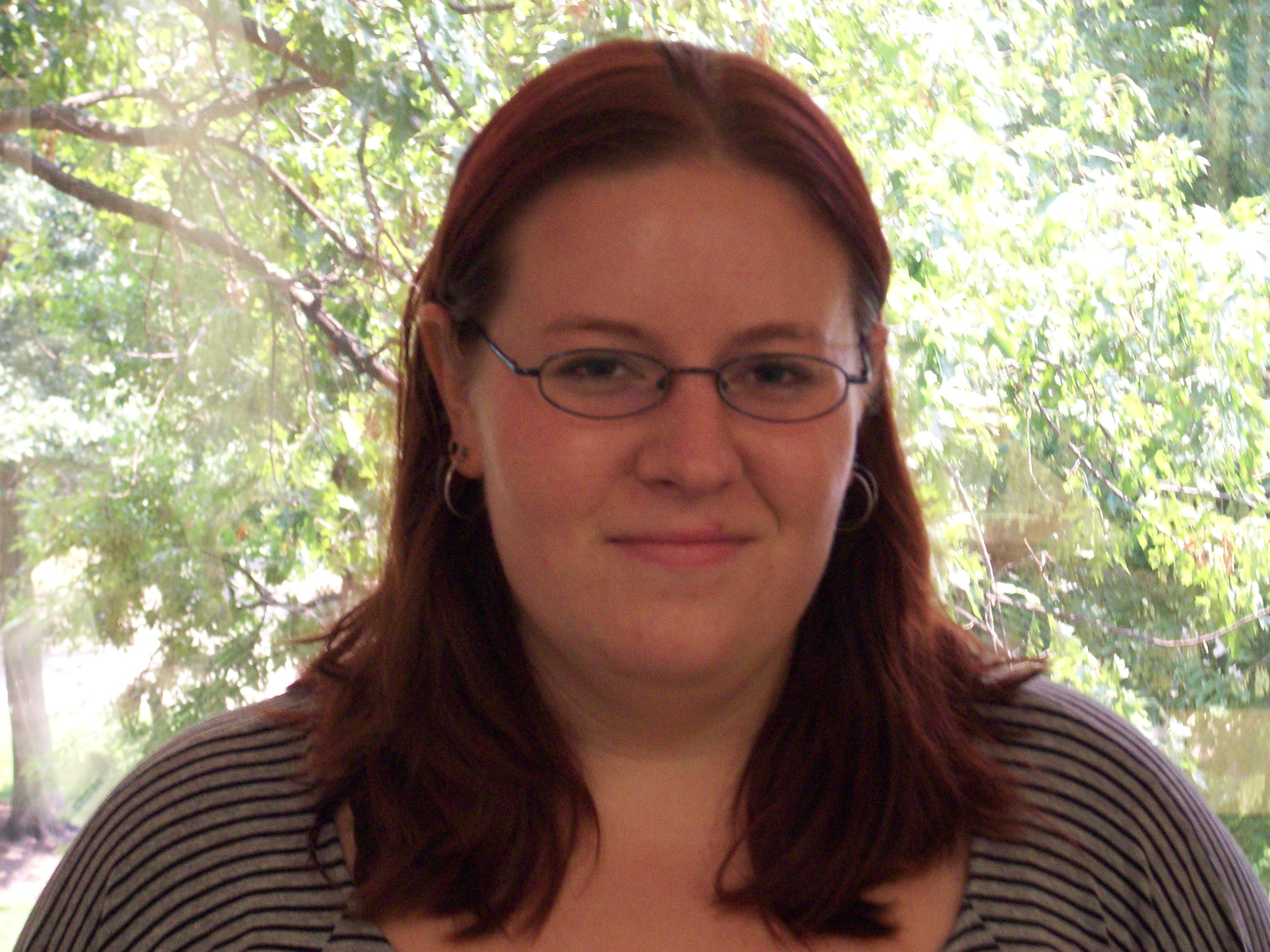
This week’s feature writer is novelist Kyle Coma-Thompson, whose most recent book is The Lucky Body (Dock Street Press, 2013). His work has appeared or is forthcoming in Boston Review, AGNI, The American Reader, New American Writing, Bat City Review and elsewhere. He has held fellowships as an Axton Fellow in Creative Writing at University of Louisville, a Bennett Fellow at Phillips Exeter Academy, and a Hoyns Fellow at the University of Virginia.

How I Write:
Kyle Comacoma-thompson-Thompson

Location: Louisville, KY

Current project(s):
A novel, a collection of short stories, a collection of poetry.

Currently reading:
Cemetery of Mind—Dambudzo Marechera;
To Each His Own—Leonardo Sciascia

  1.  What type(s) of writing do you regularly engage in?

    Fiction and poetry.

  2. When/where/how do you write?

    What I write during any given part of the day depends on how much time I have available. If I have a half-hour or hour block of time before my next commitment, I write poetry. If I have two or more hours, fiction. Often I’ll write poems before beginning on a short story, to loosen up.

  3. What are your writing necessities—tools, accessories, music, spaces?

    Whatever’s at hand, I’ll make use of. I keep a pocket notebook to write in while I’m walking, driving, at work, wherever. I keep a notebook for story ideas. Then groupings of notecards on which I sketch out the linear structure of events and details of those story ideas. Then I write drafts of stories or poems on a computer, either at home or at work.

  4. What is your best tip for getting started and/or for revision?

    Take joy in writing garbage. Forget about any needs or desires you may have to write well or to complete an accomplished piece of work. Just generate an overflow of kinetic slop, then sift through it—often the best ideas or stretches of writing come from uninhibited, unambitious play. In other circles, this is called “brainstorming”.

  5. What is the best writing advice you’ve received?

    Even before you even begin to think of writing, empathetic detachment should be a priority. Which means: in a piece of writing, avoid the temptation to address the reader using the first person plural.

How I Write: Greg Wrenn — Poet

Our “How I Write” series asks writers from the University of Louisville community and beyond to respond to five questions that provide insight into their writing processes and offer advice to other writers. Through this series, we promote the idea that learning to write is an ongoing, life-long process and that all writers, from first-year students to career professionals, benefit from discussing and collaborating on their work with thoughtful and respectful readers. The series will be featured every other Wednesday.

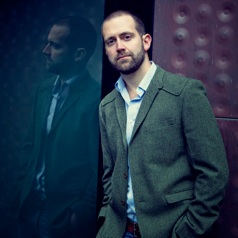
Greg Wrenn, photo by Pak Han

This week we feature poet Greg Wrenn. His first book of poems, Centaur, was awarded the 2013 Brittingham Prize and was published by the University of Wisconsin Press in Spring 2013.  His work has appeared or is forthcoming in New England Review, The American Poetry Review, The Southern Review, The Yale Review, and elsewhere.  A former Wallace Stegner Fellow and a recipient of the Lyric Poetry Award from the Poetry Society of America, he was born and raised in Jacksonville, Florida, and received a BA from Harvard University and an MFA from Washington University in St. Louis.

How I Write: Greg Wrenn

Location: Oakland, California

Current project: An untitled essay on artistic vision

Currently reading: Annie Dillard’s The Writing Life and the Book of Revelation

  1.  What type(s) of writing do you regularly engage in?

    I’ve been writing poetry for over twenty years, and my first book of poems, Centaur, came out in early 2013.  But now I’m hungering to be more direct in my writing, to make arguments and bold statements that feel unsuited to the genre of poetry as I understand it.  And to be much more autobiographical.  I suppose, too, that writing an essay on artistic vision is a way for me to step back from my usual lineated lyrics and ask myself why I write at all.

  2. When/where/how do you write?

    I write in a white leather chair that resembles Captain Picard’s on the Enterprise.  I face a large statue of the Buddha in the corner; a wooden windowsill lined with plantswrenn_writing studio and a ceramic snail, which reminds me to slow down; and a framed poster from the 1915 Panama-Pacific Expo of Hercules using his brute strength to create the Panama Canal, reminding me to exert effort.  I usually write in the late morning to the late afternoon, though I have been known to compose poems in my head while tipsy at a bar.

  3. What are your writing necessities—tools, accessories, music, spaces?

    I almost always begin by handwriting the draft with a mechanical pencil – I like that I can erase what I write, sharpening isn’t necessary, and the graphite marks are so thin and controllable.  I write on a piece of blank computer paper placed on a large art book.  I usually need to write in silence, at home.

  4. What is your best tip for getting started and/or for revision?

    To get started, write with your non-dominant hand.  Have it dialogue with your dominant hand.
    Revise in the bathtub.  It works.

  5. What is the best writing advice you’ve received?

    freedom is daily, prose-bound, routine
    remembering. Putting together, inch by inch
    the starry worlds. From all the lost collections.
    —Adrienne Rich, from “For Memory”

How I Write: Brian Leung — Novelist

Welcome back for the Spring 2014 semester! Our “How I Write” series asks writers from the University of Louisville community and beyond to respond to five questions that provide insight into their writing processes and offer advice to other writers. Through this series, we promote the idea that learning to write is an ongoing, life-long process and that all writers, from first-year students to career professionals, benefit from discussing and collaborating on their work with thoughtful and respectful readers. The series will be featured every other Wednesday.

To kick off the new semester, brianleung1local novelist Brian Leung offers us a little bit of insight into his writing process. Brian Leung is the author of the short story collection,  World Famous Love Acts (Sarabande), winner of the Mary McCarthy Award for short  fiction and The Asian American Literary Award for Fiction.  His novels are Lost  Men (Random House) and Take Me Home (Harper/Collins) which won the 2011 Willa  Award for Historical Fiction. You can read more about each of these here. His fiction, poetry, and creative nonfiction  appear in numerous magazines and journals. Leung is currently the Director of  Creative Writing at UofL and is a board member of the nonprofit organization,  Louisville Literary Arts.

How I Write: Brian Leung

Location: outdoors or next to a window (shame on me)

Current project: Novel and a short story collection

Currently reading: Zealot by Reza Aslan

  1.  What type(s) of writing do you regularly engage in?

    I confess to having a bias in responding to this question because, as a personal definition, I think of writing as the activity I engage in when I’m working on fiction, poetry, creative nonfiction, and the various small creative projects I’m invited to contribute to.  These categories get my attention on a daily basis, though it varies by deadline which I’ll be working on in a given moment.  For example, earlier this year I was asked write a brief review/essay, so I set aside my novel project to work on that.  In the past couple of weeks I’ve been working on poetry and hand editing my novel manuscript.  These activities generally take place in the morning.

    Now, back to the confession.  On any given day I probably write more words on emails, social media and on text messaging than I do in my creative work.  I call this part of my typing life, communicating, but not writing.  I don’t mean to disparage these activities, but they rarely capture my sustained attention in a way that makes me reflect deeply on the language being employed.  This may be a casualty of thinking of electronic communication as being fleeting and not permanent. We’ll find out if that’s true when the lights go out.

  2. When/where/how do you write?

    I recall Annie Dillard writing that she had to close the blinds and tape up a drawing of the view from her window just so she could concentrate  on writing.  I require the distraction of the occasional cardinal, of a rocking, late blooming yellow iris. It’s a refreshing tableau to watch a squirrel hop through snow and pause when she spies me spying her.  Because of this, most of my writing in the last seven or eight years has taken place outdoors or next to a window.

    I write in the mornings three to five times a week, and I write slowly. I read every sentence aloud.  Because of this, I get to keep a healthy percentage of my sentences.

  3. What are your writing necessities—tools, accessories, music, spaces*?

    Poetry I compose on paper, and I confess now to being entirely laptop dependent for prose.  I rarely listen to music, and I certainly can’t listen to music with lyrics leung_yardwhile I’m writing.  So, when I say that I have to write with nobody but myself and my cat in the house, I mean both without my boyfriend and without Lady Gaga or One Direction.

  4. What is your best tip for getting started and/or for revision?

    Getting started when? There’s the getting started after you’ve started, and there’s starting with a blank page.  In the case of the former, I think it’s wise to leave off at an incomplete thought or image so that when you return you have a definite piece of the puzzle to begin with.  “Cornfelder stopped at the door, then turned because he forgot. . . .”  I don’t have a character named Cornfelder, but I’d have fun tomorrow morning figuring out what he forgot and then I’d be off to the races. It’s the same for essay writing, I think.  In an essay about James Baldwin, one might come to a point where Mr. Baldwin might weigh in. But wait until tomorrow and pick that up.   This process only works if you’re not a procrastinator, and if you are, G(g)od(s) help you.

    Starting with a blank page? See the writing advice I got below. Why bother writing at all unless. . . .

  5. What is the best writing advice you’ve received?

    The best writing advice I ever received was unspoken.  A creative writing teacher had cut me off at the knees in one of my first undergraduate workshops when my fiction came up. I was so livid, I went home and spent the week reading her work and producing an angry imitation.  The next class I stomped into class and read it aloud uninvited, asking at the end, and angrily, “Is that what you want?” She looked at me calmly and said, “Yes.”  I understood instantly.  Her expression and tone told me not that she wanted me to imitate her writing, but that she wanted me to be passionate about my own.

How I Write: Jeffery Carter — Podcaster

Our “How I Write” series asks writers from the University of Louisville community and beyond to respond to five questions that provide insight into their writing processes and offer advice to other writers. Through this series, we promote the idea that learning to write is an ongoing, life-long process and that all writers, from first-year students to career professionals, benefit from discussing and collaborating on their work with thoughtful and respectful readers. The series will be featured every other Wednesday.

This week we feature our first writer from beyond the university community. Jeffery Carter lives and works in Louisville, KY. His hobbies include boxing, video gaming, reviewing video games and movies, and hosting his own podcast. In his podcast, Nerds Socialize, Carter discusses a range of topics from changing social contracts, to addictive tendencies, to the latest pop culture. With his podcast, he aims to spread the message that “interacting with others is a great thing, and can help you overcome great obstacles in life.”

How I Write: Jeffery Carter

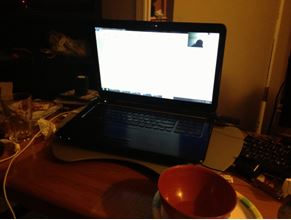
carter_workspaceLocation: Just about anywhere, but on the floor in my room is best (see the bowl? Yeah, I’m on the “poor bowl ‘o noodle” diet)

Current project: Unsung Knightmares (various short stories and eventually, and hopefully, a novel), and Game Reviews

Currently reading: This blog

  1. What type(s) of writing do you regularly engage in?

    I write a lot of short stories and create characters. I also like writing reviews for various types of media like video games and tv shows.

  2. When/where/how do you write?

    When Do I write? I write when I feel the mood. I usually write a little bit during most days, and if I’m not writing, I’m usually thinking up ideas or concepts for other stories, or existing ones. The best time for me to write is when I get a really good idea or concept that just makes me excited, cause then the words just seem to flow from me. I also write after I review games or shows, when they’re still fresh in my head.

    Where do I write? well… I’ll write just about anywhere. One of my recent writing habits is writing on my iphone using the “notes” app just about anywhere, espeically when I get cool ideas on the spot.

    How do I write? Well, in a review, I write heavily in my own voice and opinion. I tend to right my own voice as a bit hyper and eccentric at times. The reason for this is mainly due to the fact that when I review, I’m usually very very excited and hyper in general after wathcing or doing whatever is that I’m reviewing at that time. When I write for a story, I try my best to get into the character as much as I can, so I can think more like that character, and think up actions that said character would do in the situation they are in.

  3. What are your writing necessities—tools, accessories, music, spaces?

    A computer or an iphone. Thanks to technology, writing can be done pretty much anywhere at anytime. A perfect example of this is social media, and how often people tweet or post on twitter and facebook when they’re away from their houses… where all their stuff is… that everyone now knows is unguarded. So all I need is some kind of technology that has a word processor on it. now as for music, it is usually one or two songs on repeat. what those songs are just depend on my mood, or the “vibe” of what I’m writing. For intense fight scenes in my stories, I’ll listen to a lot of loud metal, or intense techno. The most frequent song is the Mortal Kombat theme music. And as for space, well, just about anywhere, BUT my preferred space is on my floor, computer on my coffee table, TV on (but on mute), music blaring with a drink of some sort near by.

  4. What is your best tip for getting started and/or for revision?

    If you’re writing a story, then just let it play out. Don’t second guess yourself, else your wrting becomes forced and un-natural. If you write a story that plays out how real life would, people can relate more to what’s going on.

  5. carterWhat is the best writing advice you’ve received?

    Be you. When you try to write how you think people want you to, then you’re not writing what you want anymore.

Critiquing Creative Writers for Those Who Are Not

Katelyn Wilkinson, Consultant

While we advertise help for any kind of writing, be it an essay, resume or co-op report, students often overlook the Writing Center as a place that offers creative feedback as well. Recently, I have noticed a surge of fiction and poetry, both assigned and not, in consultations. As a creative writer myself, these pieces have been both a joy and a challenge to provide feedback for. For some of my fellow consultants these sessions may offer more challenge than joy, however, as I have often overheard them recommending students make appointments with other consultants more creatively-inclined. I realize creative writing isn’t for everyone; still, it is not impossible for those who don’t consider themselves creative writers to offer feedback on such pieces.

As academic writers themselves, all consultants are familiar with reading and critiquing academic essays. However, not every consultant is a creative writer or familiar with giving feedback to one. Given how many different genres and styles of creative writer there are, it can be difficult for even those who term themselves “creative writers” to give feedback to pieces outside of their chosen genre. I have found this to be true as a poet trying to advise students who are writing longer works of fiction. I will be the first to admit that not every session has gone perfectly – some feel more like trial-by-error – but after working consecutively with several different students, I have identified two different things that should be kept in mind in order to get the most out of creative sessions. Since many of these works must be digested in a short period of time, I think these suggestions are helpful for not only consultants who are unfamiliar with reading creative work, but students who might find themselves in peer-response situations as well.

Establish the goals of the writer.
There are many different ways you can approach a creative piece; you might dive straight in to the text, or pause to talk to the author before the reading even begins. Since most of the consultations I’ve had have dealt with works in progress, I find myself doing the latter more often than not. I find this helpful because it allows me to ask the student what I consider the most important question about the piece – What are your goals? What are you trying to achieve with this work? This is especially important to establish with pieces that do not come with an assignment or prompt from a teacher. As a consultant or a peer-reviewer, I have found it just as helpful to go into a creative piece knowing what the author wants to achieve as it is to know the prompt for an academic paper. From there, it’s easier to discuss the nitty-gritty things such as character development, point of view, dialogue, and other sentence-level issues, as well as keep the session on track so the student can get the most out of their time.

Be conscious of how you’re critiquing.
Creative writing is an extremely personal endeavor, and for many students it’s hard to share such work let alone subject it to criticism. With creative pieces especially, the line between author and narrator is often blurred, so it’s important to not conflate the two; the thoughts and experiences of one don’t necessarily belong to the other. Keeping that in mind, anyone reading creative work should also be careful to balance negative and positive feedback while remaining honest as a reader. It helps to be specific about what works and what doesn’t in a piece, as well as what could be done to strengthen the work. For example, rather than saying “you need to work on your dialogue,” pull out a specific moment in the piece that seems weak and talk about different ways the student might strengthen that moment.

KatelynFinally, it is important to remember that your opinion as the reader is subjective, and critiquing creative writing isn’t as black and white as identifying a comma splice in an academic paper and showing a student how to fix it. In my creative writing sessions, I repeatedly remind students that everything I say is simply my opinion; I find this takes the pressure and frustration off of them to feel like they must make every change I suggest. Students should remember that they, as the author, always have the final word on their piece.