Category: Working in the Writing Center

“Good Writing” Policy: An Exploration of What It Means to “Get” Writing

Ben Bogart, Consultant

I’ve noticed a disheartening battle cry rippling through the Writing Center this summer, and it’s one that I worry might be chanted out in the world beyond our doors:  “I’m not very good at writing.”  Sometimes it’s translated as, “I’m not very good at English,” or the even more frustrated, “I just don’t get writing.”  It’s always offered with a smile, and maybe some nervous eyes fluttering around the room, as though the speaker has just confessed something shocking or controversial (I would expect the same body language from someone offering up, “I’m not really good at using my turn signal,” or “I don’t really like your Mom”).  And every time I cringe a bit.  But it’s not because of what the person has said so much as it is the feeling of defeat that they’re trying so hard to convey.  There seems to be a lot behind a statement like, “I’m not very good at writing,” and I’d like to take this opportunity to explore what I hear when each time that statement is uttered.
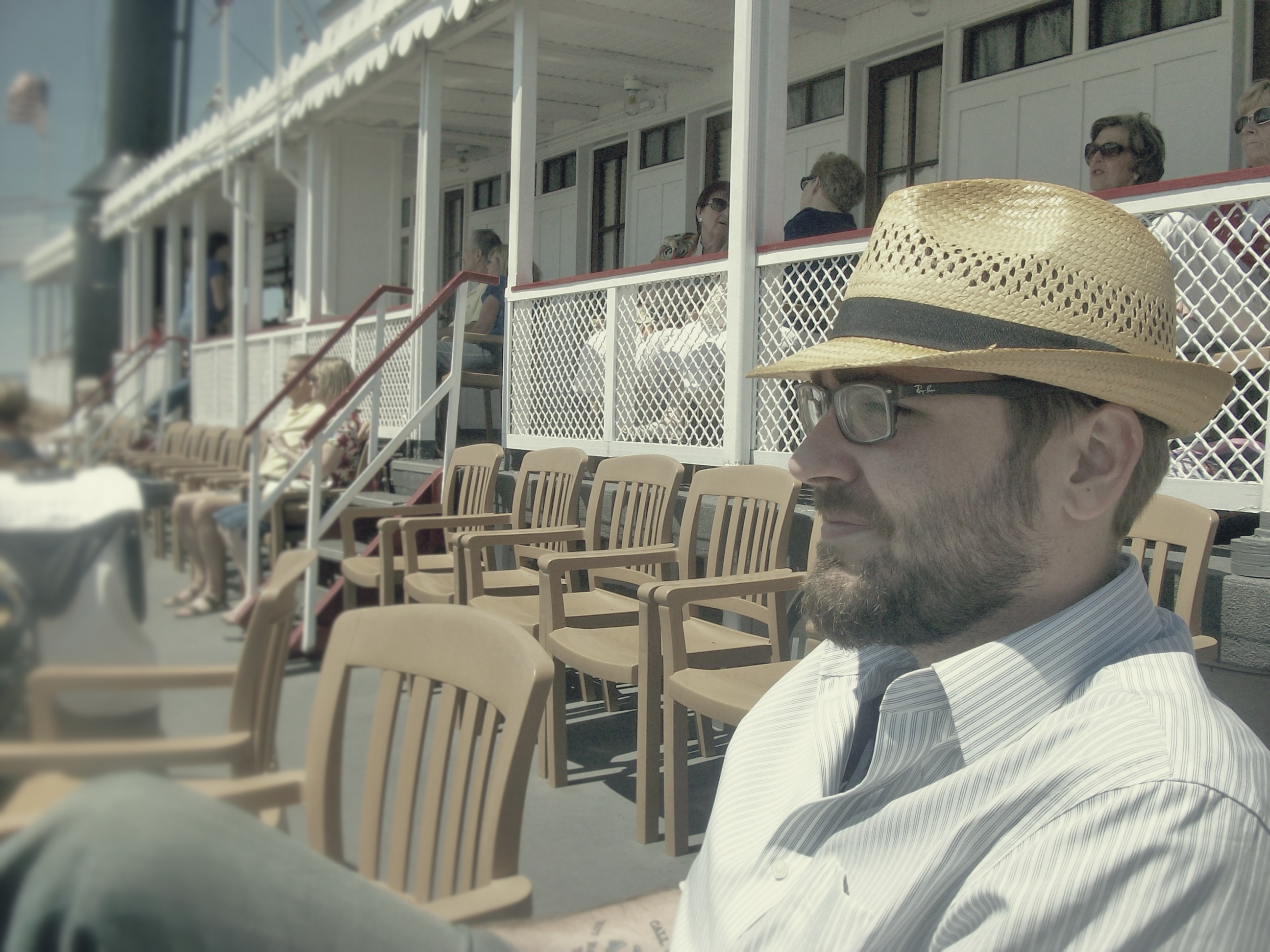
Bogart PictureYou just don’t get writing.  Okay, I suppose I understand.  There are a lot of things I don’t get—things like cooking and mathematics and computer programming and football.  We all have our natural talents, and if you’ve had enough life experience to warrant the claim that you simply don’t get writing, I’m guessing that it’s because you do get something else—something likely just as important.  People who tell me that they don’t get writing are usually quick to offer examples of past failures to prove to me that they really don’t get it, and so I know a fair amount of these statements are backed by solid evidence.  But more so than with any other talent that one may or may not “get,” what I generally hear when someone tells me that they don’t do well with writing is an echo of someone else telling them that they don’t do well with it.  And that bothers me.

Let me try to explain.  If you don’t have wild success in the cooking/baking world, you’re likely to know on your own:  you bake a cake, and it comes out flat and tasting of baking soda, and as you slide it forlornly into the trash you mutter to yourself, “I just don’t get baking.”  Fair enough.  That cake wasn’t your masterpiece, and if anybody wants to claim that you do get baking, you can just have them dig out a sample from the trash can and see for themselves.  Consider the opposite end of the spectrum:  you bake a cake and it’s just delicious.  You couldn’t stop licking the spoon you used to mix the batter, you had pictures up on Facebook before you’d even set the timer, and now that it’s done, you’re thinking that you might just eat the whole thing yourself.  A friend comes over and tries it, and spits it out immediately.  “Maybe you just don’t get baking,” she offers with a smile, hoping to lighten the blow.  Do you buy it?  I’m guessing (and really hoping) that the answer is, “no.”  You tasted that cake.  You fell in love with it before it was even fully done.  You know cake, and that cake, sir or m’am, that cake was good cake.  If you’re like my Aunt Sharon, you continue making that cake forever, trotting it out at birthday parties and anniversaries and holidays, and while everyone else politely folds your cake into their napkins when you’re not looking, you know deep down that that cake is pretty good cake.

And yet if we play this same scenario out with writing—particularly with scholarly writing—I don’t know that the same confidence generally plays out.  You write a paper that you love (couldn’t stop licking the spoon, posting pictures on Facebook, etc.), turn it in to a professor, and it comes back with a letter grade lower than you expected and some kind of plus/minus code that conveys to you nothing except that you “don’t get writing.”  This is where even Aunt Sharon, I believe, would falter.  She might still have confidence in the cake, but that paper that just came back to her has convinced her that she really doesn’t know what she’s doing when she tries to put words together on paper.  While she will certainly continue to bake with pride (and, ironically, to write about it on Facebook), she’s somehow been shut down as far as the writing goes.  And that’s not fair.

Before we go on, I’ll certainly admit the analogy isn’t quite perfect.  The cake respondent was just a casual friend, where the paper respondent was a professional.  Sure, you caught me.  The teacher that responded to the writing didn’t actually say Aunt Sharon didn’t “get” writing; only implied it.  Yeah, okay.  To further your point, I’ll confess that I don’t even have an aunt named Sharon.  But at a very basic level, I believe the comparison works to illuminate for us a couple of important thoughts about writing.

1.)     Most of us have more experience subjectively evaluating cake than writing.  It’s a simple fact.  There’s less at stake with a cake (this sounds like the beginning to a Wallace Stevens poem) than there might be with writing—it either tastes good or it doesn’t.  We learn very easily how to distinguish between the two.  But how do we distinguish between good writing and bad writing?  What is bad writing, even?  Anyone who’s ever been forced to read Shakespeare in high school and then try to explain why it’s so great to the teacher understands very well that taste in baking (though surely complex in its own right) is a bit easier to grasp than taste in writing.

2.)    Writing seems to be connected to our identity as people in a way that baking just isn’t.  If you bake a bad cake, you might just be impatient or distracted.  Maybe you spent more time licking the spoon than you did actually mixing the stuff.  You made a bad cake, and at the absolute worst, you have to go buy a cake from the grocery store and feel a temporary sense of failure.  But when you write a bad paper?  Well, you might as well look forward to a future of digging ditches or occupying various institutional buildings.  At best, you just don’t get writing.  At worst, you’re stupid, deficient, incapable—all words meant to designate that you don’t belong.  That’s pretty heavy for someone who just wanted to tell you about the themes they picked up in The Great Gatsby.  If we treated cakes in this way, a trip to the bakery would be the most nerve-wracking experience of one’s week.

3.)    Writing fulfills a multitude of purposes, and thus has a multitude of forms, in a way that cakes just can’t match.  I mean, I guess there are wedding cakes and birthday cakes.  You could have devil’s food or angel’s food or carrot cake or any of the other varieties that exist out there.  DQ has ice cream cake, and I’ve heard that in certain places you can even get “naughty cakes,” but at a very basic level, cake is cake, right?  The varied occasions that you can associate cake with are all very different, but usually the cake is fairly similar—just modified in color or flavoring or . . . well, shape.  But writing is way more varied than that.  There’s writing that tries to inspire, writing that tries to argue a point, writing that attempts to get people to laugh, writing that is requested by others, writing that hopes to free and entrap . . . the list goes on.  The occasions are certainly different as well:  there’s writing that is meant to be shared with close friends, writing that is meant to be shared with colleagues, writing that is directed at complete strangers, and every group in between.  And what’s important is that these forms are so wildly different that one can be quite good in one area, (say, poetry), and still have no clue what they’re doing when it comes to another (say, legal documents).  So if you get disparaging comments on your Shakespeare report, does that mean that your Facebook post from the previous night is also worthless?  No.  It really doesn’t.  What it means is simply that you have more experience reading and responding to Facebook than Shakespeare, and I believe that’s okay.

4.)    Professional opinions in writing, as in baking, are still purely subjective.  Bottom line: they’re all opinions.  As in, “Well, that’s like, your opinion, man.”  If a teacher tells you that your paper was crap, the odds are that there’s another teacher within that same area code that would disagree.  Moreover, maybe that teacher had just made the exact same comments on 15 papers before yours, and so when it got written on yours, it came out a little less than friendly.  Subjectivity, by definition, can be colored by all kinds of stimuli that you just can’t predict.  So in the same way that you should doubt the opinion of someone who just got dumped and decided to tell you your cake was bad, you should question the opinion of someone who tells you your writing is not that hot.  That person likely didn’t mean to label you for the rest of time.

I could go on and on about my great cake analogy, but I’ve probably made my case here.  The point is that, when you tell me that you’re “not very good at writing,” or that you “just don’t get English,” I’m hearing you say that you’re accepting the evaluation of someone who told you that.  They were probably older than you, and they probably said it in a really convincing way, and you just took it and decided to share it with me in the middle of the Writing Center.  And I hate that.  Because you’re not bad at writing, and even if you don’t happen to “get” it, it’s not like that’s a brand that needs to be burned into your forehead.

We all write, and increasingly because of the new media outlets that are out there (Facebook, Twitter, Reddit, Myspace, to say nothing of text messages), we write a lot.  It’s a tool that we use to communicate our thoughts, and we generally do it without much trouble.  It’s when we load writing up with all of our insecurities and past evaluations and uncertain expectations (commonly known as “writing for the academy”) that all of a sudden we start second-guessing ourselves and falling back on those old proclamations made by people who likely didn’t intend for them to become self-fulfilling prophecies.  And that’s too bad, because just like someone telling you that your cake was bad should be a thought that is easily swept away and forgotten, so too should someone telling you that you wrote a bad paper.

For all my Shakespeare and Gatsby references, it should be clear that I think this happens a lot in high school.  I’m sure it happens at the university as well.  I want to make it just as clear that I don’t think it’s any high school teacher’s intention to do that.  Maybe you had a grumpy teacher.  Or, more likely, maybe you just had a teacher you thought was grumpy, and whose comments you read as a personal attack.  Consider all those cake advisors:  feel free to save all those things they told you about oxford commas and pronouns; certainly save the uplifting and generous comments they gave you.  But please, just forget the sharp criticisms.  I hate to break this talk of naughty cakes and fictional aunts for some sappy cliché, but please keep in mind that you are the only one that can hold yourself back in life.  If you let yourself believe that your writing is bad, it may be that old, second-period English teacher whose voice you hear, but it’s you that has clung to it.

I’m declaring now, with absolutely no power to do so, that the Writing Center is only for good writers—that is, people who have the confidence to admit to themselves that they are good writers in some genre or are willing to work to be good writers.  If you’re feeling frustrated that you can’t get your thoughts out on paper in the way you planned, rest comfortably knowing that this is a feeling all “good writers” have.  I can point you to famous authors that are studied in upper-level literature courses who have felt the same way you did.  The only difference might be that they didn’t listen to those people who discouraged their ability, and you did.  You didn’t do so hot on that term paper?  Well, think about the song lyrics you wrote that one time that made you feel accomplished.  Or that report on your cat that you did in second grade—the one that got a smiley face sticker on it.  Or that Facebook post that blew up with 27 responses from your friends in just an hour.  And then try again.

What you probably mean when you say, “I’m not very good at writing” is, “I’m not comfortable with academic writing yet.”  That’s completely fine.  Your friendly neighborhood Writing Center consultant is here to help.  It takes practice, and we’ll work through it together.  It took us a long time to “get it” too.  But don’t say that you aren’t very good at writing.  Because we only take good writers here now.

Taking a Moment to Revel in Spring Success

Ashly Bender, Assistant Director

Ashly_Version_3It’s the last day of Spring 2013. We’ve made it! Well, in few hours we will have made it. If you’re like me, you’re already planning and getting anxious about what summer holds, thinking about how you’re going to balance play and work. As enticing as summer can be and as much as we may be anxious to move forward, the end of the semester is a good time to realize what we’ve accomplished in the past four months. Like many of the clients we see, the Writing Center staff have seen their hard work pay off this semester. We’ve seen our numbers rise across the board, we’ve enriched our outreach, and we’ve broadened the ways in which we can help people during sessions.

The Writing Center uses two main measurements to gather insight into our activity for the semester. First, after each session, clients receive a survey that aims to highlight what was helpful or not about the appointment, as well as giving their overall sense of the effectiveness of the Writing Center. We also calculate the number of appointments and clients we see each semester. The numbers this Spring are very positive. We haven’t calculated official counts for the combined Belknap campus, Health Sciences campus, and Virtual Writing Center, but just on the Belknap campus we have seen 770 students for approximately 1750 different appointments.  In addition, the Virtual Writing Center has been nearly full all semester, so we’re expecting even more impressive numbers. Further, our second Dissertation Writing Retreat—which we are very excited to offer again this year—had more than double the applicants as last year.

Our social media outreach has also broadened this semester. The number of visitors to our blog (thank you, readers!) has steadily grown—reaching over 500 in February and April. Similarly, our Facebook page has been active and well-received. Each of our posts are seen by about 50 people, sometimes reaching into the hundreds. Our Twitter, which we started this semester, has also been successful. We are very grateful for the support we’ve had in these spaces and look forward to growing success.

While I am especially proud of the social media numbers (that’s my project), perhaps one of the most exciting things we’ve done this semester is pushed ourselves to incorporate some non-traditional tools to help us and writers in appointments. Namely, the Writing Center purchased and began using iPads in some of our consultations, depending on their usefulness for the particular session. While we’ve written about our new iPads before, it has been exciting to have apps and web support at our finger tips rather than sitting at a large distracting computer or flipping through dictionary pages to find the spelling or precise meaning of a word. (Although, I’ll admit I advocate for the page-turning method myself.)

As we close our doors today on Spring 2013, these are just a handful of the successes the Writing Center has seen as a whole. In addition to these, our consultants have earned individual successes over the year, including completing their first year of the English Master’s program. We’re proud and grateful to have had them here for a little while, and we wish them luck (which they certainly don’t need) as they begin teaching in the Fall.

And, dear readers and clients, never fear—we return May 13th for Summer 2013! See you then.

Writing, Nerves, and Gaining a Sense of Being a “Writer”

Bronwyn Williams, Director

A student in a secondary school in a small town in England tells me that it gets harder to write when he knows there is a grade hanging over the assignment.

A graduate student at an English university, at work on her Ph.D., talks about how anxious she feels while waiting for a response on a dissertation chapter she has sent to her faculty director.

A faculty member, with many published books and journal articles, asks me to read a draft of a chapter for a new book she is writing, but admits that to do so makes her nervous.

??????????This semester I have been away from the University Writing Center, though issues of writing and supporting writers have not been very far from my mind. I am writing this from England where I am currently on a Fulbright Research Fellowship at the University of Sheffield. I’ve been visiting classrooms in colleges and secondary schools here, and talking with students and teachers about the challenges – and opportunities – they find in writing and reading. The fellowship has offered me the opportunity to spend the spring conducting research in a new setting, and the chance to meet and talk with new faculty and graduate student colleagues.

In all of these settings, one of the common things I have noticed about how people talk about reading and writing, is the anxiety that often emerges when it comes time for someone else to read what a writer has written. Regardless of how experienced, or how confident, these writers may be, there are always some circumstances that make them nervous about the way others are going to respond to their writing. Maybe the piece they are writing is going to count for a large part of a course grade. Or perhaps the writing is exploring new ideas or a new genre in the piece she is working on. Or maybe the writer has been told in the past that he is not a good writer and he has come to believe that judgment. For whatever reason, when we put our writing out for others to judge we understand that we are being judged on part of ourselves – our ideas, our identities. No wonder we feel nervous.

Visitors to the University Writing Center often talk to us about feeling similar anxieties. Some people feel they have to apologize for the quality of their writing before a session begins and we’ve even had a chance to read the draft. It’s no longer a surprise to me when I read the writing of someone who has told me that her writing isn’t very good, and find strengths in the writing which the student has begun to doubt are present. Then there are the writers who feel their struggles with writing are a confirmation of the negative judgments of past teachers, when, in fact, their problems are more about having to learn to write in a new genre or about unfamiliar content. At the Writing Center we are always honest about the issues a writer has to address to produce an effective piece of writing. Yet we are also honest about recognizing writing strengths that students may not believe they possess. One of the great pleasures of working in the Writing Center, is seeing our consultants not only help writers with their immediate concerns, but also give them a new perspective on their identities as writers

One of the insights that has become clearer to me through my research this spring is how important it is to have a self-perception of competence and agency in order to be a successful writer. While a set of skills is, of course, important, students – and faculty – who doubt those skills or question their power to demonstrate their abilities, often find themselves unable to complete writing projects successfully. Unfortunately, in our system of education where short-answer, high-stakes testing has become the dominant measure of competence, there is less and less room for thoughtful, nuanced writing, even at the university level. Part of what we provide at the Writing Center is a space where writers can receive honest, constructive response without high-stakes judgment. It is, in many ways, one of the purest learning environments on campus. In this learning space, we can often help writers both with their immediate writing projects, but also help them rethink their identities as competent, confident writers.

Does this mean that that we can make all of a writer’s anxieties disappear. No, I can’t promise that. (Full disclosure: I’m nervous in writing this and sending it off to my assistant director for her feedback and then publishing it online – and I’ve been writing professionally for more than thirty years. The nerves never completely go away.) What we can do, though, is offer strategies to help an individual handle new and unfamiliar writing situations effectively. And sometimes, in the course of offering these strategies, we also help students develop a more positive, and more productive, perception of themselves as “writers.”

The Importance of the Graduate Cohort

Alex Bohen, Consultant

AlexAs I began to brainstorm about what I wanted to discuss in my blog post I kept trying to remember what my first impression of the Writing Center was. I entered into the Writing Center for the first time in late August to take part in orientation. I remember seeing Dr. Bronwyn Williams, the director of the Writing Center, standing at the door welcoming everyone in and radiating an enthusiasm I was unaccustomed to at nine in the morning. Next, I saw Adam Robinson, assistant director, manning the coffee pot in a manner I would soon become familiar with. I continued to think back on that day and the next image that came to my mind was the myriad of strangers populating the rest of the room. These people were my new cohort and over the next several months they would become the greatest source of information and learning in my life. I have come to know that if I have a question my cohort is who to turn to for the answer. Having trouble helping a client? Ask the cohort. Wondering how clearly the thesis statement of your seminar paper reads? Ask the cohort. Not sure what classes to take next semester? Ask the cohort.

I want to focus on the cohort a little more closely. As a student and consultant in the Writing Center I can’t express how valuable my cohort has been to me. My only source of lament is that the cohort didn’t have more people in it. That is why I am incredibly happy to highlight and plug the Peer Mentoring program, headed up by two members of my cohort, Amy McCleese Nichols and Michelle Day. The program will pair new first year MAs with a second year MA who can function as the first building block for each student’s personal cohort. I think this is a great opportunity for all parties involved. New students will get an insider’s view on how to balance the stress of academic and personal life, as well as a familiar face at department social functions. Second year students get the opportunity to pass on all the helpful tips they have amassed after navigating one year of the program. I am excited to take part in this program and I hope that I can be as valuable to a new student as so many people have been to me during my first year at Louisville.

Helping Writers Be Specific, or Why “What Do You Mean Here” is an Important Question

Daniel Conrad, Consultant

DanielAs a writing center consultant, I regularly hear students attempting to explain why they feel the need to come to the writing center. When asked why they have scheduled a visit, regularly students explain that they are simply “not good at writing.” Obviously, it is almost never the case that a student is simply born without the innate inability to write well. These students, who seem to be under the impression that writing is either “good” or “bad” and it is produced by writers who are either “good” or “bad” at their craft, most often benefit from exercises in specificity. As it turns out, in most of these cases, the work needed to make difference between what students perceive as “good” or “bad” is as simple as asking “What do you mean here?”

Whenever a student is struggling with clarity, either on a structural or sentence level, it almost always seems helpful to begin by asking them to explain. “What do you mean?” offers the student a chance to explain themselves beyond the confines of the paper. It allows them to make several passes at what might be a difficult-to-articulate concept or thought, and often results in a much more satisfying explanation which can be worked into the piece. By examining a statement more intensely, a writer is able to see the multiplicity of a statement, and recognizing the presence of undesired meanings is the first step to eliminating them.

Frequently, problems of clarity can be solved by fixing specific language. One common temptation when writing papers is to beef up language by dipping into thesauruses. Occasionally, clients will have used thesaurus and synonym tools throughout their paper in an attempt to spruce up a paper, but don’t consider the weight of that particular word which results in an undesired connotative meaning or a confusing construction. This is easily avoided by carefully checking the denotation of a word before using it, and heavily considering the connotation relative to the thought being expressed in the sentence. Even easier to fix, a writer only needs to ask, “What do I mean by this word?” Only in certain specific situations should a writer need to go out of their way to define a term or phrase for a reader. If it seems that a better word might better carry the weight of your message, use it! Not all synonyms are created equal. In the same way that a painter would not use just any shade of a color to set a mood in a painting, a writer should be deliberate in their word choice so as to best convey the message they wish to convey.

Once in a while the question “What do you mean?” heralds shocking results. “I don’t know.” “I’m not sure.” “Uhhh…” This happens to the best writers, and while it is certainly acceptable to not know everything, it is encouraged that writers limit the contents of their papers to things they can explain. If a concept seems insurmountable to explain, or seems wholly irrelevant, it is sometimes best to just omit it. Like pruning away dead leaves from a plant, removing confusing, extraneous, or downright nonsensical sections of a paper will only emphasize the well-crafted and developed facets of the work.

Ultimately, students who fear “bad” writing should be more concerned about nonspecific writing. While the two things are not inherently related, students seem to very often conflate the two. Fears of being a poor writer regularly seem to be dispersed after arguments are filled out, language becomes more developed and specific, and the structures of arguments are more directly linked, all of which can emerge from simply asking one’s self and answering, “What do I mean here?”

High School and College Writing Conferencing: Some Similarities

Amy Nichols, Consultant

As I think about my experiences as a college-level writing tutor so far, it’s impossible not to compare it with one of my previous jobs. A few years ago, a rural Kentucky high school gave me the chance to be a part-time writing coach, working in partnership with teachers to give students more individualized writing instruction. I jumped in, all passion and no knowledge, and spent a year learning, breaking up the occasional fight, and teaching lessons in everything from how to write a complete sentence to how to best present oneself in a college admission essay.

At the University of Louisville Writing Center, things are a bit different. More of my sessions tend to focus on higher-order concerns, such as organization and the conventions of each discipline. I no longer regularly present students with prompts involving the inner politics of bull-riding or the finer points of vehicle maintenance to catch their interest, and I have not had to break up any fights so far. However, there has been some continuity in the lessons I have learned and am learning from both experiences.

Writers Need to Be Heard.

 At the high school level, this was something I learned very quickly. Students who complained that they “hated” writing often surprised me with their ability to articulate eloquent verbal arguments, even when they were unable to transition those thoughts onto paper. If I could shut off my own agenda long enough to hear their ideas, I could often use that eloquence of thought to help them create a writing strategy that would work for the individual, rather than always using something from my stock selection of handouts.

At the Writing Center, I’ve tried to keep this in mind, and have been surprised again, not by the fact that writers have amazing ideas, but that, when I really listen, it suddenly becomes easier to be creative in helping them articulate those ideas.

Expectations change.

I still hear students say, “I had a teacher/professor who told me *insert inflexible writing rule here*.” These sets of rules, these ‘do and do not’ lists for writing are truly valuable for the framework they give learning writers. A student cannot write a coherent argument about bull-riding if she or he does not know what it means to make an argument in writing in the first place.

 While these frameworks are beneficial, I’ve also learned that it’s important to know when to nuance these frameworks for writers who are ready to move on. Saying, “Well, your thesis doesn’t always have to come at the end of the introductory paragraph” can cause frustration if a student is still learning how to structure an essay. Given at the right moment, however, a student might suddenly understand not only why the rule was there, but also how and when to bend or break it.

Writing is Communal.

For many of my students at the high school, our sessions were the first time they had actually sat down individually to talk about their own writing process. For some of the writers coming to the Writing Center, the story is the same. When faced with a daunting assignment sheet, it is so easy to forget that writing is, at its heart, communication with a community.

I am still personally learning this lesson as I grow as a writer and consultant. The faculty and staff at the writing center and my fellow GTA’s are the strongest resources I have as I make my own transition into graduate studies and into helping writers at the college level. And perhaps this is the final lesson I feel like any writing center, wherever it is, at whatever level, is uniquely situated to teach: no one always has to write alone.

Writing Center 101: A Survey Course

Alex Bohen, Consultant

During my brief time working in the writing center, I have had the pleasure of working with many students from many different academic backgrounds. In my first few weeks of tutoring I saw a number of English 101 papers, all of which asking for an analysis of the rhetoric employed by visual ads. With this task I was given the opportunity to discuss the rhetorical building blocks of ethos, pathos, logos and kairos with students who were eager to learn and apply the topics. I was also given insight into potential uses of these rhetorical tools from the perspective of people who had not been influenced by in depth training, and this was eye opening. I have had the chance to read papers based on subject matter such as total mesenteric excision, functional groups in organic chemistry and learning based on cognitive psychological theory. Though I can’t say I am qualified to discuss these topics with due diligence, I am pleased by the fact that phrases that were once only jargon to me now made conversational sense. I have read papers arguing the merits of each of the stances held by candidates in the upcoming presidential election and because of that have in fact thought hard about political positions I held that I never before thought were up for debate. I have learned about societal ills like child and domestic abuse, as well as protocol for rectifying these ills, from papers written by students in the Kent School of social work. I have even gained insight into policing practices in Turkey.

While it is true that the writing center staff helps those people who attend sessions with various concerns, ultimately aiding in facilitating within them a more complete writing process, I find that I learn quite a bit every time I read through a paper. It is one of my favorite aspects of tutoring. Within the constraints of graduate school work, I find myself without much free time for independent intellectual exploration, and it has been incredibly interesting to read through papers on a spectrum of topics ranging from DNA coding and sequencing to The Secret Life of the American Teenager. To me, it has been as gratifying to tutor students as it has been to learn from them, and I look forward to expanding my knowledge as my work in the writing center continues. I have a group of physics students coming in for a session tomorrow; maybe they can explain string theory to me.

Comma, Comma, Comma Chameleon: The Musical and Often Muddled Nature of Punctuation in the Writing Center

Michelle Day, Writing Consultant

Like all good children born in the ‘80s, I sang along with Schoolhouse Rock to learn language mechanics in school. But I wish I would have known about this little gem  by L.L. Cool J, a song in which the rapper suspends his usual lyrics in favor of a minute-long exposition on punctuation. Amid flying periods, commas, questions marks, and exclamation points, the rapper declares, “When you see a punctuation mark, you have to know what to do.”

The content of the video is particularly relevant in light of the 9th annual “National Punctuation Day,” which was Monday. I’m as intrigued as the next person by flying punctuation that obeys L.L. Cool J’s every rhythmic command. However, his refrain, that “you have to know what to do” with punctuation, may mislead writers to think controlling punctuation is as intuitive as L.L. makes it seem. At the Writing Center, we see it differently.

Richard Nordquist, English scholar, professor and writer, writes that the origin of punctuation was for oral—not written—purposes. In ancient Greece and Rome, punctuation denoted how long a speaker should pause when reading out loud (the comma was the shortest mark, while the period was the longest). After the rise of printing, the importance of punctuation became less about speaking and more about writing and proper syntactical relationships. Writers like playwright Ben Jonson in the 17th century began to codify the use of punctuation, and today, there are countless style guides and witty-sounding books on grammar that teach often-competing punctuation conventions. (Read Nordquist’s full article here.)

This last point is particularly relevant to our work at the Writing Center. Our clients—even graduate students with strong writing skills—are often unclear on issues as seemingly simple as when to use a comma. Sometimes, it’s because they don’t quite understand tricks teachers have taught them (“put commas wherever you would pause when speaking” is one of the more commonly misapplied tricks). Sometimes, they’re confused by the competing rules they’ve heard from different instructors. Other times, they’ve never been told how to punctuate a quotation correctly or connect complete sentences without creating a run on (or perhaps they weren’t paying attention to such riveting topics).

Even the Writing Center consultants find punctuation rules a little fuzzy. We recently spent a considerable amount of time discussing when it was appropriate to use single quotation marks (“scare quotes”) rather than double quotation marks. There’s also an ongoing tension between those who love the Oxford/serial comma (the comma that comes before the last item in a list of three or more) and those who consider it superfluous. Some of us have even confessed to intentionally breaking punctuation rules. For example, I frequently place commas in the middle of long sentences where they don’t technically belong, just because it feels right.

It’s true that Writing Center consultants likely discuss punctuation more frequently and with more enthusiasm than the average student (we even have a handout titled “Dash-Dash-Revolution” that describes the dash as “exciting”). But we still empathize with our clients’ confusion concerning punctuation and realize as G. V. Carey did that punctuation is decided “two-thirds by rule and one-third by personal taste” (see Nordquist’s article). That’s why we keep stacks of handouts on common punctuation errors, why we sometimes take breaks from higher-order issues of content or organization to give clients some punctuation pointers. It’s why we attempt to be flexible about how clients’ use punctuation in their writing, and why we try not to judge if a students’ only experience using semicolons, parenthesis, and hyphens is typing emoticons.

Since the only way to avoid punctuating sentences is to never pause or stop a sentence, writers will always have to deal with the confusing or undecided aspects of proper punctuation. What are some of the “tricks” you were taught to remember correct punctuation?  Which were helpful, and which weren’t? What resources do you use now to help clients in session?

Remembering the First Semester of Consulting

Ashly Bender, Assistant Director

Last week in my post about what it’s like to be the observed tutor, I mentioned that our new cohort of writing center consultants also began their first semester of tutoring at U of L. Between the two weeks of observation and this first week of tutoring, there has been a lot of reminiscing about memorable tutoring sessions both from those of us mentoring in the Writing Center and from a number of our consultants who have tutored at other institutions. These stories have been useful in helping to explain tutoring strategies, but also in remembering what it’s like to be a consultant for the first time.

My first job as a writing center consultant was in the Texas State University Writing Center, where I started in the Spring of 2006. I was excited about this position not just because it sounded better than checking groceries but also because at the time I was studying to teach high school English. I figured writing consulting would be good training and experience. I certainly wasn’t wrong about that, my writing center work definitely shapes the kind of teacher I am, and vice versa. Still, that first semester of tutoring wasn’t quite smooth sailing like I thought it would be.

Many writing center consultants, I think, fall into this trap of thinking they already know how to consult or that it will be easy to pick up. Generally our writing has been praised by our teachers and we think of ourselves as good writers. We are certainly qualified then to help others with writing, right? What I quickly learned in working with students who were less confident in their writing was that being a good writer does not translate to being a good writing consultant. We might recognize why a sentence is “wrong” or sounds awkward, but explaining why that is the case can be a struggle. This can put the tutor in a frustrating position, feeling the pressure to help the student with their paper and their writing while also feeling the pressure of the ticking clock. Many times that semester I fought the impulse to “just fix it” for the student; thankfully that training was firmly rooted into my brain before I began any sessions.

To combat this feeling, I used two strategies. I couldn’t quite let go of the pencil yet, but I started holding it upside down. This way even if I briefly gave into the impulse to write on the paper, I would be instantly reminded that I shouldn’t. The second strategy was far more useful in the long-term, though. Our writing center had extensive and useful handouts about mechanics and grammar. After talking with a student about his concerns and/or reading through some of his paper, I would briefly excuse myself to grab some of the handouts. I would use the handout whenever I felt myself struggling to explain something. Using these handouts not only helped me deal with the various pressures of not knowing how to explain a concern, they also taught me some basic grammar rules and strategies for how to explain them. Many of the examples on those handouts (or at least that were on the handouts six years ago) are examples I still use today, probably word for word. We’re only into the fourth week of the schedule this semester, and I know I’ve already  showed at least two students and one consultant the FANBOYS mnemonic for remembering the common conjunctions (for, and, nor, but, or, yet, so).

I try to remember how stranded and nervous I felt in some sessions during that first semester. Sometimes I still feel that way when I’m working with a student. Remembering those early experiences though reminds me to call on the resources around me, including other tutors. It also helps me to imagine how the student might be feeling, unsure of how to talk about writing. Using those sessions of examples of how to work through those feelings and make them productive also helps me to work with new consultants.

In what ways have your early consulting sessions helped you to become a better consultant, both in working with students and in working with other consultants?

Reflections from the Observed Tutor

Ashly Bender, Assistant Director

In writing center training we often talk about how valuable observing is because it gives the consultant the opportunity to reflect on the multiple roles people can take up in a tutoring session, including the different perspectives and positions that both the consultant and the writer might embody. Importantly, as Paula Gillespie and Neal Lerner demonstrate with real tutor reflections, the observing process gives the consultant a chance to learn new approaches and also to reflect on what they might do in a similar session. It is with this understanding that our consultants have observed at least four—but often more—different sessions over the past two weeks. However, as we talk about and prepare consultants for the observing process, we tend to focus on the person who is doing the observing—how to do it, why it’s valuable, etc. We even spend time talking about making sure the writer is comfortable being observed. I’d like to think here, though, about the experience of being observed, because over the past two weeks, I’ve found there’s plenty to learn on that side of the situation as well.

First, I found there is just as much opportunity to learn new strategies when you’re the one being observed. We’re lucky to have experienced and reflective new tutors in the Writing Center this year. These tutors taught me new approaches and terms as we talked about the sessions we had just been a part of. In one session last week, one of the observing consultants and I stepped away from a student to let him work on revising and developing a new paragraph in his essay. During the session, I had been struggling to discover what the student wanted help with and how I could help him best for the paper and future papers. The observing consultant, Daniel, suggested that in addition to talking about paragraph development, we also show him the “3 by 5” structure for the whole paper. I had never heard of this term for what is basically the five paragraph model for essay writing. When we returned to the student, we looked over the paragraph he wrote, and then the observer talked to him about the “3 by 5” structure. The student knew exactly what he was talking about and saw how it could help him with his paper.

Similarly, even though I was at first nervous to be observed, I found that a number of the observing consultants were able to step in when I was having trouble explaining concepts to students. In one session, an observing consultant gave me more terminology so that we could help a student identify when to end his sentences. I was talking about “periods,” a term with which the writer was not familiar. The consultant observing, Brit, was able to simply offer the term “full stop.” This allowed the writer and me to understand one another and quickly address the concern in his writing. I had a similar but more complex experience while Scott was observing and he helped to explain the rules about the use of articles.

Perhaps one of the most valuable lessons for me over the past two weeks, though, has been simply the articulation of my tutoring strategies and practices. While our new consultants take a graduate course about tutoring practice, most of my writing center training has come from practice, instinct, and whatever I could transfer from my classroom teaching training. Talking to the new group of consultants about sessions and responding to their questions made me more conscious of the reasons behind the way I tutor. It gave me an explicit opportunity to consider my practices as well as the value of other practices. Also, because I was especially hoping to demonstrate a range of strategies while tutoring, I believe I’ve pushed myself to become a better tutor—one who is not as set in her ways and is more open to trying new things. More importantly, I push myself harder to listen to the student and think about what might be the best way to work with that particular student.

Thus, while I was initially anxious about being observed, I find that the experience has in fact been enjoyable and important to my theory of tutoring. I hope that as the consultants begin tutoring they are able to take similarly valuable lessons with them from these two weeks. Even when we have experience and even when we feel like we know what we’re doing, it’s sometimes nice and refreshing to be in the training position again.