Category: Process

Why Can’t I Write Like Derrida?

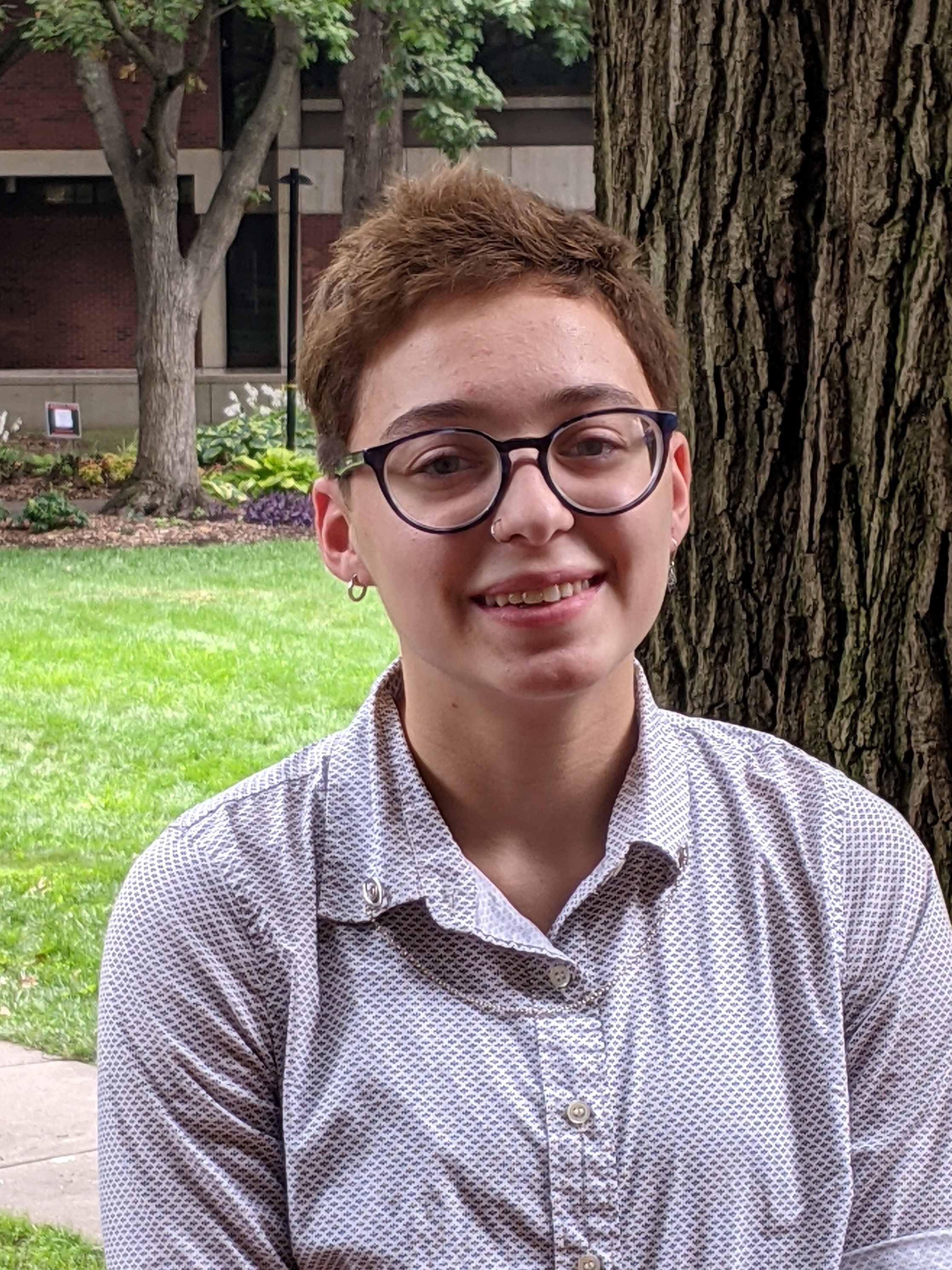
Yuan Zhao, Writing Consultant

The other day, I had a discussion with our acting director on what are the standards for good writing. As a graduate student, I have witnessed numerous writing styles published in academic journals. Some are written in straightforward plain English; some are less accessible to read, as those written by Derrida, Lacan, Spivak, and Homi Bhabha. Whenever I attempt to read these great thinkers, I would often find myself trying to single out the main arguments from their obscure styles—convoluted syntax, jargon with special connotations, and complicated sentence structures. I have heard people complain about these authors: “Their writings are too incomprehensible!” “Why can’t they write in a more reader-friendly way?” My discussion with the acting director on the standards of good English writing remained unresolved. We were uncertain whether it is appropriate for us to decide if these great thinkers compose good writings, but we agreed without any doubts that these authors are super intelligent.

Bearing in mind the question of what makes good writing, I started to read one of Barbara Johnson’s essays “Bad Writing.” In this short article, Johnson defends at least three types of “bad writings.”  One of these “bad” qualities lies in obscurity—that readers assume a text to be bad if it is difficult to read. “‘Don’t understand!’ becomes an accusation,” and readers blame the “incomprehensible writing” as “the cause of incomprehension” (Johnson 160). However, Johnson argues, it is unfair to critique authors simply because their works are difficult to read. Readers can at least suspend their judgment and reflect more on their own reading attitudes, skills and strategies (Johnson 160). Johnson notes, “[a]fter the theory revolution it is no longer possible so serenely to separate style from thinking, idea from language” (162). In other words, complex theoretical thoughts sometimes require convoluted expressions. Style and thoughts are in a unity. Reading thus becomes demanding. To appreciate such complexity needs a set of advanced reading skills that readers can hardly achieve unless they are properly trained. No other way out.

Therefore, obscure works are not a result of bad writings. They are just difficult to read, foreign to our established mindsets. To read them needs time and reflection. Johnson notes “[u]nderstanding the conceptual breakthrough … depends on pausing there long enough” (164). She also points out, “[t]hought as a break is different from thought as a chain” (165). Whenever we pause and attempt to comprehend the obscure writings, the fluency of reading is surely to be interrupted, but the breaks are also chances for our mindsets to welcome transitions. To digest new and complex knowledge cannot be an easy task. It needs time and effort.

Last semester, a course instructor criticized my writing style as convoluted and complex. She also mentioned that I failed to follow the spirit of Barbara Johnson who can express complicated arguments in a clear and accessible way. Such accusations made me feel so anxious to the extent that I started to deliberately avoid composing complex sentences. I was disappointed that she did not appreciate the designs I embedded in the selection of words and paragraph organizations that were intended to respond to the main arguments and to relate the resources I read. I understood that my reader-instructor expected a style of clarity. But what if my arguments are complicated and they need complex organizations? Does a student assignment have to be explicit direct and simple-minded? Does it mean a complicated student assignment can only be marked as a product of bad writing? After reading Johnson’s essay, I might challenge the instructor’s critique: why can’t the instructor follow the spirit of Barbara Johnson to read—to pause and reflect when reading a student’s assignment?

Should the instructor respond to me, she might say it is both impossible and unnecessary to invest so much time in reading a student’s assignment. If a student has complicated ideas, they have to be expressed in an explicitly direct manner so that instructors can comprehend them at first glance. I can understand this excuse. Nowadays, instructors are often so fully occupied with teaching duties, research tasks and administrative jobs that they can hardly spend more time than necessary on reading students’ assignments. Within the limited time, instructors don’t expect to encounter obscure works at the student level. Otherwise, they might tend to assume the convoluted writings are a product when students fail to try harder to express in a clearer way. However, in the meantime, we will find instructors tend to spend hours readings the obscure works of Derrida and Lacan. Why can’t they spare more time on the obscure students’ writings? The disparities in writers’ academic achievements and social status are another factor to affect instructors’ reading attitudes and expectations. As Johnson notes, most obscure works will keep being condemned by most readers until they enter into the canon, and only since then, readers can attempt to appreciate the poetic genius in the obscurity (160). As for students’ works, they are far from being recognized by academia, not to mention the canon. No wonder instructors tend to underestimate the possible significance and academic contributions in students’ writings. At the student level, writing styles are supposed to yield to the expectations of their readers.

Cruel reality, isn’t it? What can we do? Can we still write like Derrida if we have complicated thoughts to express? The strategy I propose is to keep writing. Keep writing the way colonized writers “write back” to colonizing powers in postcolonial studies. Like them, we can use writing to issue our subaltern voices when we practice complicated thoughts. Keep writing in the spirit of Derrida’s “as if.” Write as if we are complicated scholars, who always attempt to develop sharp arguments while balancing between complex ideas and the accessibility for readers. Keep writing with a consciousness to look for potential quality readers in academia—compose quality papers, send them to journals, respond to feedback from editors and reviewers, and try to get them published.

Now, we can repeat the question “Why can’t I write like Derrida?” in a plain tone, without agitation or anxiety. Repeat it as a rhetorical question because it no longer is an unsolved problem. I can write like Derrida, but sometimes, I choose not to. Now, I will consider the factors, such as context, reader and genre, before I make the decision whether it is necessary to write like Derrida.

Done is Better Than Perfect

Todd Richardson, Assistant Director and Writing Consultant

I have always expected too much of my writing. In high school, I wrote poetry that I was certain conjured magic on the page, only to find sheepish typos and garish rhyme schemes when I later reread it. I was surprised, embarrassed. After uncovering my own fallibility, I lost the confidence to show my writing to anyone save my closest confidants. The discovery that one draft of writing could come out feeling so perfect only to later realize that the same piece needed more work indicated some clear flaw in myself. How could one written thing sound so good today and then so horrid tomorrow? Clearly the issue was me. I needed some work, some practice, to push harder. Instead of fun, writing became painful, an exercise reaching for the unattainable. The pressure I placed on myself forced me to improve and justified my expectations, but it also led to bad habits: procrastination, negative self-talk, loss of perspective.

               This pattern continued in college. I required spectacular feats of my five paragraph essays. Introductions had to begin with perfect first lines, hooks that lured my professor sentence by sentence towards my thesis. Conclusions had to culminate by offering some sort of profound philosophical truth that I was certain riveted my composition instructor’s perceptions of time and space as they read through their biweekly stacks of essays. My word choices had to amount to pithy remarks and razor-sharp observations. I earned A’s, a few smiley faces, check marks. These academic at-a-boys further entrenched my devotion to the cult of perfection, and when I didn’t receive the happy face or check mark it only reinforced my insufficiency. I chased a high of perfection but mostly experienced self-doubt and disappointment. Still, I was convinced that this quest for success was the process of writing. Perfection served as my pie-in-the sky.

               Then I went to grad school. Whereas before I had the time to obsess over my writing, the demands of an advanced degree knocked me on my heels. I floundered through stacks of academic articles and whole books due in a week. Professors assigned essays double the length I was used to with only half as much time to complete them. Perfection slipped from my grasp. I turned in first drafts that I started the night before. I spent more time understanding my readings than on their corresponding assignments. I abandoned my perfect first lines for functional sentences, let my conclusions fall flat, and didn’t turn in a single essay that used the word “pithy.” I received feedback of triple red question marks next to phrases like “So what?” and “I’m lost.” When I lamented to one of my professors that I felt my writing had sunk to sub-par levels since starting the program, she cocked an eyebrow.

               “How so?” she asked.

               “I don’t spend the time I used,” I told her. “I just finish it and turn it in.”

               “Done is better than perfect.” She handed back my paper, which was covered in red pen and included the phrase “Interesting Insight.” I got a B+.

               I wish I could tell you that I followed her advice from then on. It took me several more years and another master’s degree and a baby until her advice stuck in my skull, and only then I learned it because I didn’t have another choice. Diapers and midnight feedings superseded my desire for perfection. I swapped simple, short sentences in exchange for fifteen more minutes of REM. And finally, one the day, I received praise for it. Mentors wrote me about how clean my work was, celebrated the fact that I stopped using the word “pithy.” All of my work came back with criticism. I read it while bouncing my daughter on my lap, did the best I could to internalize the advice, and moved on. Letting go of perfection provided me a new opportunity I did not anticipate: the freedom to write for myself.

               Many writers learn this lesson well before I did, but many do not. I see some of them in the Writing Center and the library, pining over sentence structure and flow and tone. Some of them are young freshman. Some of them are veteran PhD students well on their way into their doctorate. Having spent a good portion of my younger life stuck in the cult of perfection, I understand its draw, and sometimes I still get sucked in. But, if you can, remember that perfection is bupkis. Reading drafts from your younger self should give you the ick, just a smidge, not because you are a bad writer, but because you are a better writer today than you were yesterday. In writing, there is always room to grow, and that growth requires giving ourselves the grace that the pursuit of perfection denies.

Today, entering the third year of the corona-go-round, we need to remember grace now more than ever. Writing is hard, school is hard, and the pandemic makes it harder. We face pressures at work and school to meet expectations set when the world was normal. Yet, this is not normal, not yet. Write from a place of grace, not perfection. Perfection has its place, but keep in mind this piece of advice as you plug away at your assignments—done is better than perfect.

Writing Emotionally, or What I Learned This Semester

Kylee Auten, Writing Consultant

I’ve known I had to write this blog post since August 24th. My intention, when signing up for the last blog post of the semester, was to write about procrastination. I had a very specific reason for this: when I was writing my undergraduate thesis I told myself I would write over winter break, but never did. I wanted to write about my experience in case someone else might be feeling worried about writing (or procrastinating) over the break. But then my colleague wrote the first blog post of the semester about procrastination. Not wanting to feel like a copycat, I decided I would write about something else. My next idea, based on some readings and class discussion from our Writing Center Theory course, was to write about hospitality. I had planned to pose the question, “What did you learn this semester?” and try to prove that, even if you didn’t get the grades you wanted, there was always something to take away from your writing experiences. I started that blog post, but it felt flat and phony. My third idea was to write about writing processes and what to do when your process feels broken. I really vibed with this idea; I had the whole thing written out ready to be edited closer to the posting date. I decided, though, that it was personal in a non-universal way. I doubted anyone would want to read the ramblings of a random writing consultant worrying about their own writer’s block. Feeling lost, I tried to think of another idea that would tie all my thoughts together.

Our director at the University Writing Center, Bronwyn Williams, writes about emotions in chapter two of his book Literacy Practices and Perceptions of Agency: Composing Identities (2017). At the end of the chapter, he writes, “Our moment-to-moment experience of our emotions is like the weather—unremarkable until something unexpected or memorable happens. Yet when the weather changes, we notice” (Williams 35). When I reflected on this idea, I realized that emotions are what tied all my ideas together. I may have noticed emotional changes throughout this semester, but I didn’t really stop to think about the impacts they were having on my writing practices. I can see now how my motivation and approach to writing aligned with my emotional state. At the beginning of the semester, I was so thrilled to be starting a master’s program that I was eagerly awaiting the first writing assignment. That excitement soon faded into dread when I realized how rusty my writing skills had become; writing became more difficult the more worried I felt. Around midterms, my romantic relationship of five years ended, and the emotional aftermath made my mind wander every time I sat down to write. A feeling of fear and insecurity about my writing set in the closer it got to finals. As the weeks clipped along, writing didn’t become easier, it only became more necessary. As I sit here and type this post, I feel another emotion: concern. I feel concerned that I won’t be taken seriously because I’m a woman writing a blog post about ~feelings~ and how they get in the way of my writing process. I’m comparing myself to my colleagues and the blog posts they’ve written this semester, and all I can think is, “do I measure up?” More than anything, I feel frustrated that I haven’t been as productive as I would’ve liked, and that my emotions have gotten so in the way over the past 15 weeks.

I’m going to ask myself the question I said I wasn’t going to ask: what did you learn this semester, Kylee? I learned that emotions are going to affect my writing; every emotional change I’ve experienced this semester has altered my writing process, even if only for a few hours, which in turn led me to procrastination and the feeling that I wasn’t learning anything from my writing exercises. I learned that some emotions will make it really easy to write and others will make it really hard. I learned that writing recreationally, though it means taking a step back from my academic writing, is a good way to process emotions. And I learned that sometimes it’s okay to take a break from writing altogether because, as my colleague and trusty writing buddy would say, “I’m just not in a good headspace for this.” Most importantly, I learned that it’s okay to be emotional about writing because writing is inherently emotional.

Works Cited

Williams, Bronwyn. Literacy Practices and Perceptions of Agency: Composing Identities. Routledge Press, 2017.

Let It Simmer

Todd Richardson, Writing Consultant

“I have to get it done,” the student says. She sits across the long table from me in the university lounge where I hold office hours. I’m a writing professor at a small liberal arts school in Western Kentucky. Her hands hover over her laptop, shaking and white. Her mask pulses with her breath, the cloth sticking to her lips then puffing out like a balloon. Outside, the leaves are brilliant—gold, crimson, orange. The breeze is crisp, brisk, earthy. I suggest it’s time for a break, perhaps take a walk without our masks, peep some foliage.

“I have to get it done,” she says. I wait for her to ask questions, but she doesn’t speak. Instead, she stares at her screen. Her typing comes in bursts, first in words, then in rapid deletions. After a few minutes, she throws up her hands and sinks her face into her palms. “I can’t,” she says. She tells me she sleeps four hours a night. She wants to graduate in no more than four years, fewer if possible. That’s why she’s enrolled in seventeen hours for Fall of 2020. She wants to do well in college, like she did in high school. Even in the pandemic, she managed to keep her grades up through her senior year. Then, in college, where the institution decided to teach a hybrid in-person/asynchronous model to cope with covid, she floundered. “I work all the time,” she says. “I never get ahead.”

I look back out the window, watch the leaves sway in the air. They seem peaceful. They breathe and sway. I know that what I have to tell my student isn’t what she wants to hear. I know because it’s not what I wanted to hear when I lived through a similar experience in grad school. It’s the same advice I’m advocating for here, and it’s counterintuitive to everything on your syllabus, everything your guidance counselor told you, every shred of the individualistic, pull-yourself-up-by-your-bootstraps culture that you internalized from your parents or the news or however it made its way under your skin. Admittedly, it’s advice that I still struggle to follow to this day.

“Maybe you need a break,” I say to her. She shakes her head.

“I can’t.”

“You think you can keep writing?” She pauses, doesn’t answer. Then she shakes her head, rises, and shuffles out the door. I don’t know if my advice landed or if she’s just too tired to sit here anymore. As I watch her gather her things, a pang of empathy tightens in my stomach. I was just like her as a student. I wish I’d taken it easier on myself.

In graduate school, I worked at a similar pace to my student sitting across from me—always writing, reading, stressing, obsessing, striving for some academic, pie in the sky, attaboy. I kept articles and books stacked high on my nightstand and in piles next to my bed. I slept in fits—an hour and thirty minutes here, a toss and turn there. Eventually I gave up on the REM cycle and woke up to write the next term paper, the next prospectus, the next page or paragraph or chapter of my thesis. I managed—thrived actually—in the first year. I’m fine, I told people who commented on the dark circles under my eyes. I’ll sleep when I’m dead.

Then, as time passed, a mental sluggishness set in. It started as spacing out in class discussion. You’d find my body in its seat, but my mind had left orbit some time ago. I forgot what I was saying in the middle of a sentence. Then the fog spread to reading. My eyes would scan articles but would not absorb their meaning, as if my vision would bounce off the text. I became irritable with my friends, parents, and wife. Then the haze came for my writing. I stared at the blank, white snowdrift of my word processor, the cursor blinking on and off like a flickering synapse in my skull. Words would not come. Thoughts ran together in long, incomprehensible sentences. Quotes went without citations. Phrases repeated themselves without my awareness.

Eventually, panic set in. It started with feedback on an essay that read, “Todd, not your best work. Better luck next time.” After that, I entered every class with icy fingers and a tightening chest. It was all I could do to breathe, to lift my gaze to meet my instructors’. I felt the control over my own body seeping away and I was helpless to stop it. One night I got an email from my thesis advisor. The subject heading read: Todd—Chapter 3 Draft, Revision Needed. I didn’t get a chance to open the message. The edges of my vision darkened. I inhaled sharp sips of air. My knees buckled. I thought I was dying. My wife and my brother-in-law (he happened to be spending the night at our house) carried me to the bed. I regained consciousness in time to stop my wife from dialing 911. I had experienced my first full-fledged anxiety attack.

I wonder now what would have happened had I known the importance of taking a break. Not just because it’s good for your mental health—it’s good for your brain and productivity, too.

First, in order to be efficient, your brain needs time to be inefficient. What “inefficient” looks different depending on your personality, but a good suggestion for anyone in school—especially those of us in the middle of the second year of pandemical education—is to move around. Go for a walk. Dance. Kickbox. Or get all woo-woo and meditate, get a vinyasa flow in before hitting the draft again and take ten deep breaths. When you have more time, like right after you’ve submitted your paper or are just plain ol’ done for the night, do something that refills your mental gas tank. Video games, LARP, play a board game—whatever floats your raft down the river. Don’t take a break forever; we have deadlines and GPAs and life to keep up with. Set a timer for twenty minutes to write and twenty minutes of breaktime and stick to it. There will be times when you can’t take a break (life has a way of lobbing emergencies at us in the middle of finals), but make sure that you set aside time to let your mind wander wherever it needs to go.

Second, walking away from the keyboard is actually good for writing (and let’s go ahead and extend this to proofs, algorithms, presentations, and the like). Again, don’t walk away forever—I’m not saying that your term paper will write itself while you Fortnight the afternoon away. What I’m getting at is, let your writing simmer. Even if all you have is ten minutes, it’s good to set your draft aside and let it stew. Pounding your fingers against the keyboard until they bleed leads to a law of diminishing returns; over time, you will earn fewer rewards than the amount of energy you invest. Trust your subconscious to mull over your topic for a bit. You might find that your mind approaches your draft with fresh ideas, newfound energy, and a special zazz that makes your writing come to life.

Finally, taking a break is good for you. You have experienced what no other generation in the last one hundred years underwent; a global pandemic and one of the most prolonged disruptions to everyday life in recent American history. There’s nothing wrong with deciding to take a breath, to take time to feel the grass beneath your feet, to finding the peace in the reddening of the leaves. You are worth the decision to walk away.

This fall, you might hit a wall. That moment when your vision goes bleary and your eyes scan the article, you’re supposed to read but you can’t remember for the life of you what the words mean, when you’re staring at the blinking cursor on the blank page and your thought faucet feels clogged, take a break. Get woo-woo. Go for a walk. Let whatever you’re working on simmer on the back burner for as long as you can. Your brain will thank you for it.

A Sisyphean Task

Zoë Donovan, Writing Consultant

There is a quote from the Tenth Anniversary Edition of American Gods by Neil Gaiman in the introduction that at the time I first read it in 2016 seemed trivial, unimportant and just a bit pretentious.

“I remember when it [American Gods] was all done in first draft telling Gene Wolfe, who is the wisest writer I know and has written more excellent novels than any man I’ve met, that I thought I had now learned how to write a novel. Gene looked at me, and smiled kindly. “You never learn how to write a novel,” he told me. “You only learn to write the novel you’re on.”He was right. I’d learned to write the novel I was writing, and nothing more.” – Neil Gaiman American Gods (Tenth Anniversary Edition)

Since reading those words I have written an innumerable amount of novellas, short stories, poems, audio dramas, plays, and of course essays. Looking back, I’ve found that in every piece of writing, no matter how similar the subject material it may be to other previous works, this statement stands true.

                And yet, every time I finished a project I would find myself in the same line of thinking that Gaiman had at the end of the first draft. “I’ve finally figured out how to write!” And yet, every time I’d start a new project I would crumple into an agonizing state of imposter syndrome. Suddenly, it’s hard again and the words don’t fit right, the flow is off, my characters are stock image facsimiles of how I imagined, the page is blank, erased over and over again or scratched out ,and I can’t shut off the never ending rant telling me I’ve been deluding myself the entire time. I would find myself asking, how can I even consider myself a writer if it’s always this difficult for me.

                Since then, I have come to believe that it is a myth that someone can be a good writer or a bad writer. Throughout my experience I have found that Gaiman and Wolfe, in true fashion of their profession, stated something fundamental to the writing process. I only really grasped the weight of what this meant to me as a writer upon a reread of the book in 2020. We learn to write the things that we are working on. We learn to hone it into something that the intended audience will understand. No project will ever be the same, and you don’t ever really learn how to “Write”.

 Writing is a Sisyphean task. It is a grueling process that can at times be quite enjoyable, but at other times can feel like walking across broken glass. With the start of every new project, the boulder has rolled back down the hill and you find yourself cursing the writing gods for your own hubris. I say it’s a myth to be a good writer but a caveat is needed. The only thing that I believe separates a good writer and a bad writer is perseverance. Whether that perseverance looks like 100 words a day or 5,000 words a day, putting pen to paper is what matters, whether a project takes you ten hours or ten years, when it is finished you will have learned how to write that piece. No project will ever be the same as the last. You can bring in existing knowledge and skills, but at the end of the day you won’t know how to write that paper until you’ve already written it. 

                You will never know where to begin, where to end, and what exactly happens in between until you actually the piece. There will be tears, frustration and so much revision. But these stages help you, and you take something onto the next project that you didn’t know before, though as writers we are always growing, and it will never be exactly the same process.

“Tomorrow is the day”: Thoughts on Writer’s Block and Procrastination

Derrick Neese, Writing Consultant

I am going to write tomorrow. I mean it. Tomorrow is the day I’m starting my next big story and there is nothing that can stop me. And it will be the best story I’ve written—knock your socks off good—but, you know, tomorrow. Why not today? Because I’m a little tired right now, and there is a baseball game starting in an hour, and, well, tomorrow is the day I said I’d start. Tomorrow it is.

            My personal best streak of “tomorrow is the day” was a year. A year of guilt, anxiety, and frustration renewed each afternoon, starting the moment I told myself tomorrow is the day, a cycle of hopelessness that paralyzed my fingertips. Right before my monumental run, I’d set the goal of writing 2,000 words a day—even achieving it once or twice. Then I failed a few times and moved the goal post when stress replaced joy, shifting down to 1k, then a page, and finally, after all the satisfaction was sucked out, a year of nothing. But here I am today, writing in my office on a bit of a hot streak. So what changed?

All it took was writing one minute a day. This isn’t a gotcha moment. I’ve talked to a lot of writers, from teens who write fanfic on internet forums to famous authors with seven-figure book deals. The one thing I’ve noticed that we all share is anxiety for the next draft. This feeling is insidious, stomping out creativity for sport, chasing down the characters and storylines we have imagined and hiding them from our creative selves. We stop ourselves before we even start. To be a writer, you have to write, it’s as simple as that. Each morning I make my coffee, sit down at my desk with my phone far away in a distant land, and write for one minute. What happens is this: I never write for one minute, it’s the biggest lie I’ve ever told myself. Sometimes I end up with a few pages, others, a few sentences. The real magic comes from a lack. Lack of guilt, lack of fear, lack of writer’s block. All (mostly) gone. I am free to tell my stories now, to write my research papers, and above all, to just write.

            But the war for creativity doesn’t simply stop when I sit down, because the next clash starts during the drafting process. My creative and editorial brains are mortal enemies in my head, each fighting to have the lead role in my next story until tomorrow comes. So, I make a deal with my internal editor. Let me write today until all the words are down, I beg them. And then it’s all yours. I grant my creative self the opportunity to write freely in this moment, without judgment or fear, allowing the draft to be as bad as it can be. Often, it is really, really bad. And that’s okay. When I finish, I put it away until the characters call my name again, and then I hand over control to my editorial brain. They have been patiently waiting for this moment after all. I give them permission to revise critically (as opposed to judgmentally, which lends itself to a finality that does not exist in our drafts) until each sentence, word, and comma are where they want them to be. This is where craft meets creative. In this way, I stifle the battle between creator and editor, giving each the freedom they crave.

As writers, we must fight the good fight against tomorrow. We do this in the name of creativity and craft. Without them, we are lost before we begin, and therefore defending them is our primary focus. This is an unseen battle that permeates through the deepest crevices of our writerly minds. We must protect both creator and editor at all costs. Otherwise, we are doomed to repeat the mistakes of tomorrow.

So, write for one minute a day, today.

On Words and Images

Amanda Dolan, Writing Consultant

When re-curating the bookcase visible to my webcam, I initially hid all comics and graphic narratives behind horizontal stacks of traditional novels. Considering how generally beautiful the spines of graphic novels are, I don’t think this layering was a result of an aesthetic instinct. I was almost definitely conceding to the idea that stories with images are fluffy. And though I enjoy similarly described pets appearing in other Zoom backgrounds, I didn’t feel totally comfortable featuring reads perceived that way in my own. 

Now, nearly a year later, these books can be seen bowing a middle shelf, and I can be seen, metaphorically, going to bat for them this baseball season. I have the writing center to thank for this. Both the UWC staff and writers have taught me the extent to which language transcends words, and the value of, I guess, communicative syncretism. Writers or colleagues and I will talk about things like the weather or even planetary energies not out of awkwardness or eccentricity but because such topics are strangely good starting points for thinking and communicating. Basically, it’s very natural for people to reach to make concepts work together so they can communicate a little more clearly (think emojis and storytelling). And writing center pedagogy, as a technique focused on communication, embraces that type of syncretism by defining and upholding the center as an inherently social space where writers and consultants bring their own unique knowledge and life experiences. 

Embracing this pedagogy alongside the fact that a lot of sighted people experience the world by contextualizing words and images together has me not only defending comics as literature, but also advocating for drawing as a natural extension of the writing process. It’s common, accessible, and effective to make meaning and record our worlds through visuals, and I personally started drawing pictures in my essay and class notes to combat lockdown-created memory issues. Whenever my brain has a flicker of an idea but is reluctant to fully enter analysis mode, I either make a quick semiotic square or caption a small drawing to revisit when I have the patience and mental capacity to puzzle out my thoughts. If you are interested in trying to use image as an avenue for developing scholarly written communication, consider starting with a semiotic square or a map —or even try drawing items that stand out from a text you need to analyze. I’ve also found that quickly drawing items or settings can be beneficial for immersing myself in a piece of creative writing. This method shouldn’t become fraught or have anything to do with how well you think you can or cannot draw —it is just another way to engage with complex ideas before tackling them through words. 

Letters to My Soulmate

Maddy Decker, Writing Consultant

Call me someone who’s watched Aquamarine 17 times too many, but I believe in soulmates. I believe that each person has multiple soulmates and that not every soulmate is meant to be a romantic match: some are just friends that you connect with on another level. 

In 2018, sick of my anxiety controlling me, I threw myself on a plane to Ireland to study abroad for the summer. I met one of my soulmates, Becky, in our hostel the day before we started our program. Despite how shy I usually am, we were discussing everything from grief to spirituality to mutually enjoyed YouTube videos within a day of knowing each other. She bunked above me in the room we shared with the other girls, and we spent nearly every moment of the next 6 weeks together laughing and continuing our deep discussions. We returned to the program the next summer to share another 4 weeks, but the pandemic prevented us from meeting up in person again. The problem: Becky lives in Minnesota, a 10-hour drive away from Louisville. We vowed to keep in touch but quickly realized that neither of us particularly enjoy holding our conversations over text or SnapChat messages.

            I don’t remember who sent the first letter or if it was a mutual decision we made; regardless, writing to each other has helped us maintain our friendship and communication at a pace and level that we both seem comfortable with. When I receive a letter from Minnesota, I know I’m in for a treat. Our letters usually end up being 5-7 handwritten pages, depending on how we feel when we write them, and we talk about whatever comes to mind. Sometimes our letters are funny, and sometimes they’re more serious in tone (they’re usually a combination of both). I tell Becky how school is going, what shows I’ve been bingeing, and that I’m not entirely sure what my future plans are after the next few years. She tells me about her family, boyfriend, and work, and she shares that she’s facing similar uncertainties. We serve as each other’s friends and confidantes through our letters.

            The pace of our exchanges contributes to the success of our letter writing, I believe. Due to the unfortunate truth that being an adult means not spending every second with or talking to your best friends, we each keep fairly busy. We write a few times a year, always making sure to send a letter near the winter holidays, sometimes with a small gift attached. Somehow, we do manage to maintain conversations even with the large gaps between our letters. We ask each other questions and answer them, knowing that each letter will continue to layer and build with our past queries and our present news. It’s like catching up over a long lunch, or even a weekend trip, depending on how long it takes me to read and respond to her, and I treasure our letters. 

            I’ve seen letter writing pop up as a fun hobby to try, and I cannot recommend it enough. Becky and I continue to write to each other, and I’ve recently started sending shorter letters to some of my other friends, including a friend I usually see at least once a month. If you don’t have the kind of relationship that enables a regular exchange, you might consider looking online to find a pen pal or writing to someone you know who isn’t expecting mail (or, at least, ‘fun’ mail). 

It’s always exciting to receive a letter, and it can be so enjoyable to write one. Try choosing some decorative stationary that calls out to you (although there’s nothing wrong with notebook paper)! Use a pen in a color you like, and cover your letter in stickers, stamps, tape, sketches, and whatever else makes you happy. Tell someone a secret, tell them something funny, or just tell them about your day (and if you’d like some more tips or inspiration, you should scroll back to an earlier post from Andrew Hutto: “You Should Send a Holiday Card This Year – and Here’s How!”). You might not be writing to your soulmate, but you could find that you enjoy picking up this new hobby!    

Writer’s Block in the Time of Covid

Spenser Secrest, Writing Consultant

            One feeling that I deal with frequently during the ongoing pandemic is one of stasis.  While there is certainly some optimism during this time, as COVID-19 vaccines continue to be distributed, there is still, for me, an overwhelming feeling of being stuck in one place, despite the fact that I am taking graduate courses and progressing through UofL’s English M.A. program.  To be clear, I understand that being on lockdown and the precautions that are in place are for everyone’s good, including my own, but this does not mean that these preventive measures make life easy.  For me, it feels as though life has been perpetually on hold.  On the worst days, this static feeling can make it hard to do anything, whether it be schoolwork or something to relax, even something as simple as streaming something online.  Needless to say, this feeling of stasis has led to writer’s block, both for my academic writing assignments, as well as for my own creative writing.  As counterintuitive as it may seem, having little to do because of the pandemic has actually led to me having a reluctance to start academic assignments and any creative projects. 

            When people discuss writing, of any kind, you often hear phrases about only writing “when inspired.”  For me, this has never been my own approach to writing.  I’ve often found that actually starting the writing process leads to inspiration.  However, with the feeling of stasis, it is easy to want to do nothing, rather than intellectually exert oneself by writing, whether that writing is for an academic assignment or for leisure.  I’ve even found getting motivated to brainstorm ideas for a paper to be difficult, despite the fact that this phase of the writing process does not involve any actual writing. 

            I often reflect on, or else in some way, incorporate past experiences in my own creative writing.  However, the pandemic has led, to me, to there being almost nothing that I would want to write about or include in my writing.  I’ve found that I write best when I have reflected on something after it has happened, as events are often too difficult to process when they are actually happening.  For me, it makes more sense to think about and analyze something thoroughly before writing before writing about it, as opposed to writing about something with your gut reaction immediately after something has happened.  However, as the pandemic is still ongoing, any insight that can be found by reflecting on it is limited. 

            In terms of my writing for classes, this is something that will, obviously, have to get done, eventually. However, due to the pandemic, I’ve found myself procrastinating more than usual and not enjoying the writing process nearly as much as I had in the past. While every semester brings papers that are not enjoyable to write and that may make one more susceptible to procrastination, it seems as if every paper, even minor papers that are not graded as rigorously, take as long to begin writing as the more difficult and less enjoyable papers. I’m inclined to attribute this to the fact that the pandemic has led to there being less sense of accomplishment after writing something. For example, whether I finish writing one of the most difficult papers of the semester or the last minor assignment for the week, there will be little that I can do in my personal life afterwards, due to the pandemic limiting all of our usual activities. 

Although the precautions that are in place, due to the pandemic, are for everyone’s health, they have not contributed to productivity, at least for me. While both academic and creative writing can be difficult to begin, it is worth noting that writing can be easy once the process has been started.  While it can especially difficult to get motivated to brainstorm ideas for a paper, as there is no visible product after doing so.  However, this part of process should not be discounted, as it may lead to enthusiasm for the writing project. Finally, if the outbreak of COVID-19 has led to other people experiencing writer’s block, perhaps there will be a plethora of written material produced once the pandemic ends, as going back to normal and the optimism that will come may inspire people to write. 

How We Talk to Write: Reflecting on the Speaking/Writing Connection

Nicole Dugan, Assistant Director

For the last several years, I’ve spent most of my days talking about writing. I’m often speaking with writers in writing center sessions or with students in my first-year composition classes, but sometimes I’m talking to myself. While working on this post, I spent the first hour or so talking through my ideas as I mapped them on paper and reading aloud sentences as I drafted them. Without all of this speaking, the writing process often feels like slogging through wet cement for me. Lately, I’ve been fixated on this connection between the written and verbal. Writing and speaking are irrevocably intertwined for me and for all of us. 

Writing cannot happen without speaking. Language is expressed through the modes of speaking and writing, and these modes “are mutually informing” (Sperling 53). This connection isn’t always underscored in the teaching of writing, and often we develop resistance towards writing because we see these two modes as disconnected from one another. Most of us do not speak in perfect Standard American English, and our dialects reflect our rich, diverse cultures and backgrounds, not the uniform language we read in scholarship. As we enter academia and professional spheres, we are often told we cannot write like we speak. This repeated maxim–which tells us we must learn to write in a way that is not of ourselves–introduces anxieties and tensions into the writing process, leaving writers of all backgrounds feeling conflicted and overwhelmed. Our languages are so closely tied to our identities that writing can sometimes feel like a challenge to our self-expressions, especially in an academic setting. 

I often turn to speaking when writing is challenging. Sometimes it’s because of a deadline or assignment or maybe writer’s block, but regardless of cause, talking helps me gain insight and inspiration. I often see writers experience this, too, as we work together in sessions. While talking about writing is a cornerstone in the writing center’s mission and work, we don’t always make this connection explicit in sessions or in our own writing processes. Traditional face-to-face sessions and live video chats rely on the verbal in order to develop the written. (Even asynchronous written feedback takes on a conversational tone.) Writers are encouraged to talk through the assignment, their progress, their concerns, and how they feel about the writing. Even though the goal is to improve writing skills and the text at hand, we leave the page behind to just talk first. We read drafts aloud during sessions to create a space of aural collaboration in discussion and revision. All of this talking helps to build, clarify, and revise ideas and communication. Deemphasizing the physical text allows us to bring attention to speaking’s role in the writing process. This invites writers to explore and discuss their writing verbally without the anxieties and tensions of writing “correctly” or even accurately. 

When we embrace the connection of writing and speaking, we begin to feel more liberated in our writing and the writing process. If we set aside the (un)spoken conventions and expectations we’ve picked up over years of writing instruction, we may find that inspiration, ideas, and understanding are not as lacking as we once believed. One way I do this in my own process is by talking out loud about my writing projects and recording these one-way conversations. There is no blank document and blinking cursor taunting me, and most importantly, this method helps me forget about the rules. I’m not slowed down by an inner critic telling me I can’t start sentences with conjunctions, cringing at misspellings or missing words, or asking me if what I’m talking about accomplishes the goal. Instead, I’m able to ramble and explore to my heart’s content. Currently, there are at least ten voice recordings on my phone pertaining to various undrafted and unfinished writing projects from the last several months. There are essay topics, outlines of research projects, and snapshots of creative writing sparked while driving home. I can listen to myself speak in colloquialisms, contractions, and fragments. Some of them are great, and some of them aren’t so great, just like with my written outlines and drafts. These recordings and their content sound like me though, unfiltered by the constraints of academic prose and audiences. Academic writing can feel defamiliarizing, as it often asks us to take on a different voice for the sake of a text and its message. Listening and talking to ourselves and others about writing helps to center our voices and can remind us that our words and ideas are always ours, no matter the context or guidelines. 

Sperling, Melanie. “Revisiting the Writing-Speaking Connection: Challenges for Research on Writing and Writing Instruction.” Review of Educational Research, vol. 66, no. 1, 1996, pp. 53-86.