Category: How I Write

How I Write: Greg Wrenn — Poet

Our “How I Write” series asks writers from the University of Louisville community and beyond to respond to five questions that provide insight into their writing processes and offer advice to other writers. Through this series, we promote the idea that learning to write is an ongoing, life-long process and that all writers, from first-year students to career professionals, benefit from discussing and collaborating on their work with thoughtful and respectful readers. The series will be featured every other Wednesday.
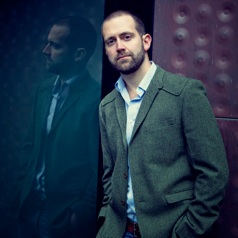
Greg Wrenn, photo by Pak Han

This week we feature poet Greg Wrenn. His first book of poems, Centaur, was awarded the 2013 Brittingham Prize and was published by the University of Wisconsin Press in Spring 2013.  His work has appeared or is forthcoming in New England Review, The American Poetry Review, The Southern Review, The Yale Review, and elsewhere.  A former Wallace Stegner Fellow and a recipient of the Lyric Poetry Award from the Poetry Society of America, he was born and raised in Jacksonville, Florida, and received a BA from Harvard University and an MFA from Washington University in St. Louis.

How I Write: Greg Wrenn

Location: Oakland, California

Current project: An untitled essay on artistic vision

Currently reading: Annie Dillard’s The Writing Life and the Book of Revelation

  1.  What type(s) of writing do you regularly engage in?

    I’ve been writing poetry for over twenty years, and my first book of poems, Centaur, came out in early 2013.  But now I’m hungering to be more direct in my writing, to make arguments and bold statements that feel unsuited to the genre of poetry as I understand it.  And to be much more autobiographical.  I suppose, too, that writing an essay on artistic vision is a way for me to step back from my usual lineated lyrics and ask myself why I write at all.

  2. When/where/how do you write?

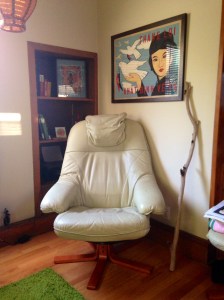
    I write in a white leather chair that resembles Captain Picard’s on the Enterprise.  I face a large statue of the Buddha in the corner; a wooden windowsill lined with plantswrenn_writing studio and a ceramic snail, which reminds me to slow down; and a framed poster from the 1915 Panama-Pacific Expo of Hercules using his brute strength to create the Panama Canal, reminding me to exert effort.  I usually write in the late morning to the late afternoon, though I have been known to compose poems in my head while tipsy at a bar.

  3. What are your writing necessities—tools, accessories, music, spaces?

    I almost always begin by handwriting the draft with a mechanical pencil – I like that I can erase what I write, sharpening isn’t necessary, and the graphite marks are so thin and controllable.  I write on a piece of blank computer paper placed on a large art book.  I usually need to write in silence, at home.

  4. What is your best tip for getting started and/or for revision?

    To get started, write with your non-dominant hand.  Have it dialogue with your dominant hand.
    Revise in the bathtub.  It works.

  5. What is the best writing advice you’ve received?

    freedom is daily, prose-bound, routine
    remembering. Putting together, inch by inch
    the starry worlds. From all the lost collections.
    —Adrienne Rich, from “For Memory”

How I Write: Brian Leung — Novelist

Welcome back for the Spring 2014 semester! Our “How I Write” series asks writers from the University of Louisville community and beyond to respond to five questions that provide insight into their writing processes and offer advice to other writers. Through this series, we promote the idea that learning to write is an ongoing, life-long process and that all writers, from first-year students to career professionals, benefit from discussing and collaborating on their work with thoughtful and respectful readers. The series will be featured every other Wednesday.

To kick off the new semester, brianleung1local novelist Brian Leung offers us a little bit of insight into his writing process. Brian Leung is the author of the short story collection,  World Famous Love Acts (Sarabande), winner of the Mary McCarthy Award for short  fiction and The Asian American Literary Award for Fiction.  His novels are Lost  Men (Random House) and Take Me Home (Harper/Collins) which won the 2011 Willa  Award for Historical Fiction. You can read more about each of these here. His fiction, poetry, and creative nonfiction  appear in numerous magazines and journals. Leung is currently the Director of  Creative Writing at UofL and is a board member of the nonprofit organization,  Louisville Literary Arts.

How I Write: Brian Leung

Location: outdoors or next to a window (shame on me)

Current project: Novel and a short story collection

Currently reading: Zealot by Reza Aslan

  1.  What type(s) of writing do you regularly engage in?

    I confess to having a bias in responding to this question because, as a personal definition, I think of writing as the activity I engage in when I’m working on fiction, poetry, creative nonfiction, and the various small creative projects I’m invited to contribute to.  These categories get my attention on a daily basis, though it varies by deadline which I’ll be working on in a given moment.  For example, earlier this year I was asked write a brief review/essay, so I set aside my novel project to work on that.  In the past couple of weeks I’ve been working on poetry and hand editing my novel manuscript.  These activities generally take place in the morning.

    Now, back to the confession.  On any given day I probably write more words on emails, social media and on text messaging than I do in my creative work.  I call this part of my typing life, communicating, but not writing.  I don’t mean to disparage these activities, but they rarely capture my sustained attention in a way that makes me reflect deeply on the language being employed.  This may be a casualty of thinking of electronic communication as being fleeting and not permanent. We’ll find out if that’s true when the lights go out.

  2. When/where/how do you write?

    I recall Annie Dillard writing that she had to close the blinds and tape up a drawing of the view from her window just so she could concentrate  on writing.  I require the distraction of the occasional cardinal, of a rocking, late blooming yellow iris. It’s a refreshing tableau to watch a squirrel hop through snow and pause when she spies me spying her.  Because of this, most of my writing in the last seven or eight years has taken place outdoors or next to a window.

    I write in the mornings three to five times a week, and I write slowly. I read every sentence aloud.  Because of this, I get to keep a healthy percentage of my sentences.

  3. What are your writing necessities—tools, accessories, music, spaces*?

    Poetry I compose on paper, and I confess now to being entirely laptop dependent for prose.  I rarely listen to music, and I certainly can’t listen to music with lyrics leung_yardwhile I’m writing.  So, when I say that I have to write with nobody but myself and my cat in the house, I mean both without my boyfriend and without Lady Gaga or One Direction.

  4. What is your best tip for getting started and/or for revision?

    Getting started when? There’s the getting started after you’ve started, and there’s starting with a blank page.  In the case of the former, I think it’s wise to leave off at an incomplete thought or image so that when you return you have a definite piece of the puzzle to begin with.  “Cornfelder stopped at the door, then turned because he forgot. . . .”  I don’t have a character named Cornfelder, but I’d have fun tomorrow morning figuring out what he forgot and then I’d be off to the races. It’s the same for essay writing, I think.  In an essay about James Baldwin, one might come to a point where Mr. Baldwin might weigh in. But wait until tomorrow and pick that up.   This process only works if you’re not a procrastinator, and if you are, G(g)od(s) help you.

    Starting with a blank page? See the writing advice I got below. Why bother writing at all unless. . . .

  5. What is the best writing advice you’ve received?

    The best writing advice I ever received was unspoken.  A creative writing teacher had cut me off at the knees in one of my first undergraduate workshops when my fiction came up. I was so livid, I went home and spent the week reading her work and producing an angry imitation.  The next class I stomped into class and read it aloud uninvited, asking at the end, and angrily, “Is that what you want?” She looked at me calmly and said, “Yes.”  I understood instantly.  Her expression and tone told me not that she wanted me to imitate her writing, but that she wanted me to be passionate about my own.

How I Write: Jeffery Carter — Podcaster

Our “How I Write” series asks writers from the University of Louisville community and beyond to respond to five questions that provide insight into their writing processes and offer advice to other writers. Through this series, we promote the idea that learning to write is an ongoing, life-long process and that all writers, from first-year students to career professionals, benefit from discussing and collaborating on their work with thoughtful and respectful readers. The series will be featured every other Wednesday.

This week we feature our first writer from beyond the university community. Jeffery Carter lives and works in Louisville, KY. His hobbies include boxing, video gaming, reviewing video games and movies, and hosting his own podcast. In his podcast, Nerds Socialize, Carter discusses a range of topics from changing social contracts, to addictive tendencies, to the latest pop culture. With his podcast, he aims to spread the message that “interacting with others is a great thing, and can help you overcome great obstacles in life.”

How I Write: Jeffery Carter

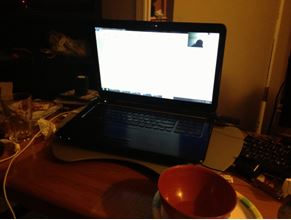
carter_workspaceLocation: Just about anywhere, but on the floor in my room is best (see the bowl? Yeah, I’m on the “poor bowl ‘o noodle” diet)

Current project: Unsung Knightmares (various short stories and eventually, and hopefully, a novel), and Game Reviews

Currently reading: This blog

  1. What type(s) of writing do you regularly engage in?

    I write a lot of short stories and create characters. I also like writing reviews for various types of media like video games and tv shows.

  2. When/where/how do you write?

    When Do I write? I write when I feel the mood. I usually write a little bit during most days, and if I’m not writing, I’m usually thinking up ideas or concepts for other stories, or existing ones. The best time for me to write is when I get a really good idea or concept that just makes me excited, cause then the words just seem to flow from me. I also write after I review games or shows, when they’re still fresh in my head.

    Where do I write? well… I’ll write just about anywhere. One of my recent writing habits is writing on my iphone using the “notes” app just about anywhere, espeically when I get cool ideas on the spot.

    How do I write? Well, in a review, I write heavily in my own voice and opinion. I tend to right my own voice as a bit hyper and eccentric at times. The reason for this is mainly due to the fact that when I review, I’m usually very very excited and hyper in general after wathcing or doing whatever is that I’m reviewing at that time. When I write for a story, I try my best to get into the character as much as I can, so I can think more like that character, and think up actions that said character would do in the situation they are in.

  3. What are your writing necessities—tools, accessories, music, spaces?

    A computer or an iphone. Thanks to technology, writing can be done pretty much anywhere at anytime. A perfect example of this is social media, and how often people tweet or post on twitter and facebook when they’re away from their houses… where all their stuff is… that everyone now knows is unguarded. So all I need is some kind of technology that has a word processor on it. now as for music, it is usually one or two songs on repeat. what those songs are just depend on my mood, or the “vibe” of what I’m writing. For intense fight scenes in my stories, I’ll listen to a lot of loud metal, or intense techno. The most frequent song is the Mortal Kombat theme music. And as for space, well, just about anywhere, BUT my preferred space is on my floor, computer on my coffee table, TV on (but on mute), music blaring with a drink of some sort near by.

  4. What is your best tip for getting started and/or for revision?

    If you’re writing a story, then just let it play out. Don’t second guess yourself, else your wrting becomes forced and un-natural. If you write a story that plays out how real life would, people can relate more to what’s going on.

  5. carterWhat is the best writing advice you’ve received?

    Be you. When you try to write how you think people want you to, then you’re not writing what you want anymore.

How I Write: Jeffery L. Hieb — Engineering Professor

Our “How I Write” series asks writers from the University of Louisville community and beyond to respond to five questions that provide insight into their writing processes and offer advice to other writers. Through this series, we promote the idea that learning to write is an ongoing, life-long process and that all writers, from first-year students to career professionals, benefit from discussing and collaborating on their work with thoughtful and respectful readers. The series will be featured every other Wednesday.

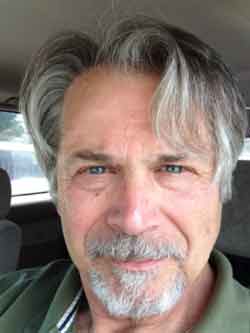
hiebOur featured writer this week is Professor Jeffery L. Hieb. Dr. Hieb teaches in the Engineering Fundamentals and Computer Engineering and Computer Science departments in the J. B. Speed School of Engineering at the University of Louisville. Although he has a range of research interests, one area of specialty for Dr. Hieb is information assurance and security.

How I Write: Jeffery L. Hieb

Location: In my office or my office at home

Current project: A technical report on the availability and effectiveness of currently available industrial control system cyber-security technology for the Dams Sector.

Currently reading: What the Best College Professors Do, Collaborative Learning Techniques: A Handbook for College Faculty, and The Immortal Life of Henrietta Lacks

  1. What type(s) of writing do you regularly engage in?

    a. Conference and journal papers
    b. Technical reports
    c. Letters of recommendation
    d. Grant and research proposals

  2. When/where/how do you write?

    a. In my office or in my office at home.
    b. Almost any chance I get

  3. What are your writing necessities—tools, accessories, music, spaces?

    a. I write on my notebook computer, and since I have it with me most of the time I can write almost anywhere.  I usually like to have a cup of coffee next to me when I write.

  4. What is your best tip for getting started and/or for revision?

    a. When I have trouble getting started I like to stand up and talk about the subject matter to an imaginary audience.  Usually after 10 to 15 minutes I want to start writing down something I have said.

  5. What is the best writing advice you’ve received?

    a. The best advice I ever received was from Dr. David Shaner, my philosophy professor when I was an undergraduate.  He once told me: “Just throw up on the page, you can clean it up later”.  I have always found that helpful when starting to write something, it takes away the pressure of getting it right at the beginning, and acknowledges that rewriting/revising is part of the writing process, not what you do to fix or correct something you got wrong initially.

How I Write: Judith Fischer — Legal Scholar

Our “How I Write” series asks writers from the University of Louisville community and beyond to respond to five questions that provide insight into their writing processes and offer advice to other writers. Through this series, we promote the idea that learning to write is an ongoing, life-long process and that all writers, from first-year students to career professionals, benefit from discussing and collaborating on their work with thoughtful and respectful readers. The series will be featured every other Wednesday.

This week we hear from University of Louisville Law professor Judith Fischer. Professor Fischer teaches legal writing and women and the law, and her scholarship includes articles on legal writing, advocacy, women and the law, and law school teaching. Her book Pleasing the Court: Writing Ethical and Effective Briefs examines professionalism in legal writing through numerous examples of judges’ reactions to lawyers’ errors.fischer

How I Write: Judith Fischer

Location:     Law school

Current project: Article on brief writing

Currently reading:  Student papers!

  1.  What type(s) of writing do you regularly engage in?
    For work, I write scholarly writing for books or law review articles and less formal articles for newsletters or bar journals. I also do other miscellaneous kind of writing, such as commenting on student papers and writing emails and letters of recommendation.And of course I also do personal writing, such as emails and thank-you notes in hard copy.
  2. When/where/how do you write?
    For work, I often write during the standard work day, and sometimes I write well into the evening. I write with a computer at a table or desk.
  3. What are your writing necessities—tools, accessories, music, spaces?
    Computer—pencils—pens—paper for printing numerous drafts—whatever sources I need for the project. For my last scholarly article, that included a stack of relevant books.
  4. What is your best tip for getting started and/or for revision?
    To start: Decide when you need to get started and then just start. For example, if I need to have a scholarly article finished by August 15, I know I need to start researching by May and start writing by the end of June.  So I do that.For revision: Read the document aloud while imagining an audience. For example, read the document to an imaginary critical colleague.
  5. What is the best writing advice you’ve received?
    The way to write an article is to start by taking off your shoes. Get down underneath your desk and nail your shoes to the floor. Then get back in your chair, put your feet in your shoes, and write.

How I Write: Jeffery Skinner — Poet

This semester we are beginning a new series for our blog called “How I Write.” This series asks writers to respond to five questions that provide insight into their writing processes and offer advice to other writers. We’ll be featuring writers from the University of Louisville community, but also those from beyond the university who compose in a variety of personal and professional contexts. Through this series, we promote the idea that learning to write is an ongoing, life-long process and that all writers, from first-year students to career professionals, benefit from discussing and collaborating on their work with thoughtful and respectful readers. The series will be featured every other Wednesday.skinner

We begin our series with University of Louisville’s own Jeffery Skinner who describes himself on his website (jeffreyskinner.net/) as a “poet. playwright. professor.” His most recent collection of poems Glaciology, which won the 2012 Crab Orchard Open Poetry Competition, was just published by Southern Illinois Press. You can hear Jeffery Skinner read with Kiki Petrosino on November 7th at 4:30 pm in the Chao Auditorium in UofL’s Ekstrom Library.

How I Write: Jeffery Skinner

Location: Anywhere fairly quiet

Current project: New book of poems

Currently reading: Mark Richard’s memoir, David Jones poems

  1.  What type(s) of writing do you regularly engage in?
    Poetry, and prose of various types: recommendation letters, essays, prose poems, memos, grant applications, etc.
  2. When/where/how do you write?
    During summers I bear down heavily; during teaching time I snatch whatever odd moment that becomes available.
  3. What are your writing necessities—tools, accessories, music, spaces?
    Pen and paper for poems; laptop for prose. I’m fond of parking myself in a coffee shop, and plugging into postclassical, techno, electronica (no human voices).
  4. What is your best tip for getting started and/or for revision?
    a. decide to write with your own voice b. lower your expectations c. don’t stop till you’ve written a predetermined amount (which doesn’t have to be “good”–just done)
  5. What is the best writing advice you’ve received?
    “Writing is easy: you just sit there until drops of blood appear on your forehead.”

Again, we want to thank Professor Skinner for his insightful responses and encourage our readers to attend his upcoming reading. On November 6th, we will post our next entry featuring University of Louisville Law professor Judith Fischer.