Category: Creative Writing

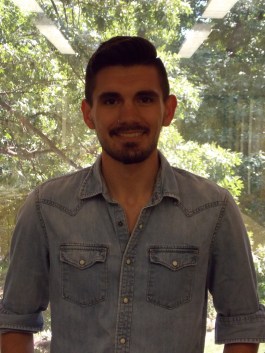
A Conversation with Recent MFA Graduate Martin Jennings About the Low-Residency MFA Experience

kevin-bKevin Bailey, Consultant

Have you ever considered pursuing a graduate-level degree in creative writing?  If so, you’ve perhaps heard of MFA programs (Master of Fine Arts in Writing).  An MFA in Creative Writing is a terminal degree (i.e. the furthest one can go in the field).  There are two main styles of MFA programs: high- and low-residency.  Despite this, information sessions on MFA programs tend to focus mostly, if not entirely, on the more traditional, high-residency programs.  I interviewed recent Spalding MFA graduate and writer Martin Jennings in order to get some insight into the less-frequently-discussed low-residency MFA experience and, thereby, open up new opportunities to creative writers seeking graduate study.   As a side note, writers can also achieve a terminal degree in creative writing by completing a PhD.  The following interview, however, is specifically about the MFA process with a special focus on low-residency schools.  Bear in mind that not all low-residency MFA programs are the same.


First off, why don’t you let us know what the difference is between a low-residency MFA program, like the one you recently attended at Spalding, and a high-residency program?

Sure.  There are some key differences.  The main one is that while you’re in a low-residency program, you do not stay on campus for two years and live in that area, as you would in a high-residency.   For low-residency, you do most of your work from home, while staying in touch with your professors and regularly turning in packets of new and revised work.  During the residency period, you have your lectures and workshops the same as you would at a high-residency program, except it occurs over a ten-day span, so it’s very intensive.

Early on into your MFA program, I remember you telling me that Spalding had helped you develop your own voice as a writer.  Do you still feel that way, and if so can you explain that in a little more depth?

Yes, I do still feel that Spalding helped develop my voice.  They were very encouraging in my low-residency MFA.   The instructors were particularly interested in seeing students experiment and try out different styles, themes, and perspectives in their stories.  And I was lucky enough to have had mentors who were very knowledgeable and able to point out new (to me) writers and books.  One writer whose work I was introduced to was Nicholson Baker.  He was recommended to me in my last semester at Spalding.  I remember thinking, “How haven’t I heard of him before?”  I saw my own voice, though much less refined, in his writing.  My mentors were very perceptive and able to take what I had written, show me my strengths about my particular style, and also instruct me about things I could do better, so as to make my work more cohesive.

Were there any other changes that occurred in your writing style/lifestyle while getting your MFA?

Yes, there were quite a few changes on both fronts.  As far as my writing style goes, I did a fair bit of experimenting with different types of stories and different narrators, subject matter, varying lengths (including a lot of flash fiction and longer stories) – just to get a feel for how you go about writing each type, what the differences were with each, and what they had in common.  I found myself somewhat favoring the smaller, more concise stories.

And as far as the lifestyle changes go, since I was responsible for turning in 35 to 50 pages of work each month, comprised of both new and revised work, I had to find a new way to incorporate writing into my everyday life.  And this was in addition to working a full time job and managing other responsibilities.  So writing became more a part of everyday life.

How did the low-residency program work for you in ways that a high-residency program might not have?  By contrast, is there anything offered by a high-residency program you feel you may have missed out on?

The volume of work that I produced in my low-residency program, based on what I hear from people who have done the high-residency, was much greater.  You get more specialized attention on your writing in a low-res program, and you’re producing so much material, you get into the habit of writing on a regular basis.  Spalding did offer experience in academic writing, but that was not the main focus – rather the creative writing work was.   I think you could say that low-residency MFA programs are designed for people who want to become better writers, as opposed to people who want to have careers in the teaching or in the academic world.  Generally speaking, high-residency programs seem to have greater teaching experience options – there seems to be more opportunity for it.  This can provide you with job experience.  There were workshops in low-residency that focused on creative writing pedagogy, but again, this was not the primary focus of the program.  And I would be remiss not to point out that low-residency programs are generally not as well funded, which means you often have to take out loans or pay out of pocket.  And it isn’t cheap!

What were some preconceptions you had about getting an MFA that didn’t pan out?

That I would graduate with sort of a collection of short stories that were ready to be published as such.  That by the time I finished – after two years – surely I would have enough pieces to flesh out a full collection and achieve great critical and financial success.  This wasn’t the case.  I did graduate with a lot of strong pieces that have gone on to be published, but it is a much more intense and lengthy process than you imagine going in.

I also had a fear that I would come out with cookie-cutter pieces of writing after having been exposed to a specific program and set way of doing things.  Fortunately, that didn’t come through at all, and I was allowed to experiment and find my own style of telling stories.

Finally, any cautionary words/suggestions for writers considering a low-residency MFA?

I do have some.  I would caution writers to make sure that what they want out of their program is to become a better writer, not to secure a set of marketable job skills.  The low-res program will teach you to be a better writer, and while it may offer some positive job-related skills, producing better writers is the primary goal of a low-residency program.  The focus is always on the writing, not on securing you a job.

Martin Jennings graduated from Spalding in the Fall of 2015.  His work has been featured in multiple publications since his graduation, most recently his story “Bodies of Water” in Sick Lit Magazine and “Hammer Space” in Under the Bed Magazine.  Martin writes, works, and lives in Louisville.


Write About an Experience While in Transit: A Creative Writing Prompt

Ashley TAshley Taylor, Consultant

Transportation scenes are my favorite in any genre or medium. Airplane, train, automobile, boat, ferry, bus, elevators, even bridges and stations. Vehicles can function as devices in liminal spaces, transporting characters and audience between places, worlds, states of being, and can even reflect on social change. They speak volumes when a character is encountering, contemplating, or considering a change on any scale. Because traveling often involves observing or interacting with strangers, using vehicles or stations are common maneuvers for reflecting on the human condition. Transportation scenes augment the symbolism of story, allowing objects and action to serve multiple functions, enhancing the power and meaning of the text.

Think about the function of the Hogwarts Express in JK Rowling’s Harry Potter series or multiple plane rides in Neil Gaiman’s American Gods or even falling down the rabbit hole in Lewis Carrol’s Alice in Wonderland. These vehicles, stations, and modes of transportation serve as links between worlds that play to the larger themes of each work: the tension of being between those two worlds. If we narrow the scale from book series and novels to shorter works like flash fiction and poetry, transportation scenes communicate certain codes about what’s going on beneath the surface and in between the lines.

In Hemingway’s Hills Like White Elephants, two characters are sitting at a bar that lies between two train paths, one side of the tracks with lush and fertile land, the other side dry and barren. Hemingway doesn’t explicitly reveal the direction of either path or even the resolution for the tension. The emphasis is placed on the liminal space and pressure the characters feel while interacting between the two contrasting sides.

I encourage you to imagine or reflect on a time in transit or stuck between two places. Whether departing or arriving, explain the condition of the vehicle and/or station. Explore the sensory details, reveal the two worlds, and exploit the tension between them.

Examples:

Hills Like White Elephants by Ernest Hemingway

Pdf:https://www.massey.ac.nz/massey/fms/Colleges/College%20of%20Humanities%20and%20Social%20Sciences/EMS/Readings/139.105/Additional/Hills%20Like%20White%20Elephants%20-%20Ernest%20Hemingway.pdf

You Tube link that examines an interpretation with visuals:

https://youtu.be/Jc8YDIxwnKQ

The Descent of Alette by Alice Notley

Pdf: https://everydayliferhetoric.files.wordpress.com/2014/09/alice-notley-the-descent-of-alette.pdf

Review: http://www.publishersweekly.com/978-0-14-058764-7

From a Railway Carriage by Robert Louis Stevenson

http://www.bartleby.com/188/138.html

Riding Backwards on a Train by James Hoch

http://anotherhand.livejournal.com/220418.html

The Whitsun Weddings by Philip Larkin

https://www.poetryfoundation.org/resources/learning/core-poems/detail/48411#poem


How I Write: Amy M. Miller

Our “How I Write” series asks writers from the University of Louisville community and beyond to respond to five questions that provide insights into their writing processes and offer advice to other writers. Through this series, we promote the idea that learning to write is an ongoing, life-long process and that all writers, from first-year students to career professionals, benefit from discussing and collaborating on their work with thoughtful and respectful readers.

Amy M. Miller is a writer and Administrative Coordinator for the nonprofit organization, Louisville Literary Arts. Amy’s essays have appeared in Salon, Hippocampus Magazine, [PANK], The Louisville Review, MOTIF, and Under The Gum Tree. She is a graduate of the Amy MillerSpalding University MFA in Writing program and holds an M.A. in English from University of Louisville. Currently, Amy is working on her first collection of essays as well as several children’s picture books. Amy lives in Louisville, Kentucky with her husband and two children.

Location: Louisville, KY

Current project:

I am drafting and revising two essays and one picture book, while simultaneously seeking representation for two other picture books. Lots of plates, constantly spinning.

Currently reading:

I’m finishing a guilty summer read, Sue Perkin’s Spectacles, a memoir from the host of The Great British Bake Off (I’m addicted). I also have a toe in Dear Mister Essay Writer Guy, by Dinty Moore, Beyond the Beautiful Forevers, by Katherine Boo, and Small Fires, by Julie Marie Wade. I’m a nonfiction writer and reader. All of the nonfiction I read informs what and how I write. That said, I love a good, engrossing novel and next up for me is Lauren Groff’s Fates and Furies and a kids’ middle grade novel my son is reading for school, Wonder, by R. J. Palacio.

1. What type(s) of writing do you regularly engage in?

Well, I’m a multi-tasker (which is a kind way to say I’m distracted). I love many different genres of literature and that is true for my writing, too. I began my MFA work in creative nonfiction, which is still my first love; however, after four years of writing personal and introspective essays, I needed to explore topics that were not about ME. I have always enjoyed the whimsical and hilarious prose of children’s picture books and have collected picture books even before I had kids of my own, so I joined the Society of Children’s Book Writers and Illustrators and have been writing books for 3-7 year-olds. It’s very freeing to write outside of my first genre, and loads of fun, too. Aside from creative writing, I work on public relations work (web content, press releases, social media campaigns), as well as contract grant writing.

2. When/where/how do you write?

I don’t have a specific time when I write because I have kids who constantly require feeding, chauffeuring, and all manner of attention, plus I work part-time. I write when I can — when my kids are in school, my workload is light, and the house is quiet. My writing spot has moved around the house. I used to make a home at the dining room table, but grew tired of moving my papers and iPad on and off the placemat. Most days, I’m parked at my desk in front of a giant screen in my hard swivel chair. When I’m brainstorming or revising, I might take the iPad or a notebook to the couch, where I sit next to my dogs. Invariably, all of my writing happens in the morning or afternoon. If I write at night, I’ll have too many ideas buzzing around my head to sleep.

3. What are your writing necessities—tools, accessories, music, spaces?

I love accessorizing — at least for writing. You cannot beat a good spiral bound notebook for notes — something that can lie flat or be folded over. For writing implements, I prefer a roller ball pen because the fluidity of ink allows me to continue writing without pause and doesn’t leave imprints in the paper. We writers are weird about our instruments. I also like odd colors of pens: purples, oranges, greens. But to be perfectly honest, I spend most of my writing time perched in front of the desktop computer, mostly because it is the most reliable device I own and I can save my work on the cloud and desktop. I also use Google Drive to share writing with critique partners. Over the years, I have moved away from listening to music while I write and prefer silence, but I always have a hot cuppa coffee and a bottle of water next to me.

4. What is your best tip for getting started and/or for revision?

I begin a piece in a variety of ways. Sometimes I have an idea while walking the dogs or sitting in carpool or taking a shower. I try to keep a small notebook in my purse or in the car, or at the least, a scrap of paper and pen nearby. Other times, I just sit at the computer and start free writing. I almost never write the full draft in one sitting. On complicated essays, in which I play with structure, I often need to break away from the writing and map out the essay as an outline. I highly recommend reverse outlining for revision. Start with your draft and outline what is on the page. Does it flow from one idea to the next? If not, move the pieces around and use the outline to direct how and where you will make changes. It feels less scary to cut and paste an outline and it’s a great way to look at the piece more objectively and holistically. Another invaluable word of advice: Always find an impartial reader who you trust to give you constructive feedback! My critique partners always see connections and glitches that I am unable to because I am too close to the piece. Lastly, read your work aloud. This is a foolproof way to find where a piece needs work.

5. What is the best writing advice you’ve received?

Be concise, cut your modifiers, and don’t hold your readers at arm’s length — invite your readers to see all of the ugly, messy truth. Readers respond to flawed narrators and non-fiction writers have a responsibility to the truth, no matter how uncomfortable that truth might be.

Creative Writers Welcome

Creative Writers Welcome

Cassie Book, Associate Director 

Since we moved to the first floor of Ekstrom Library last October, we’ve hosted an open house/art exhibition, an evening of bad love poetry, a dissertation writing retreat, and graduate student and faculty writing groups. This academic year, our first complete one in our new space, we intend to continue growing our list of events and activities! For instance, during first-year orientation, we opened our doors for Kickback in the Stacks. Students dropped by to take a break from the controlled chaos in the library to play Story Cubes or Hangman. We like Kickback because it gives us the opportunity to talk to writers without the (often) added stress of a deadline or impending project. We also got a chance to plug some of our upcoming events and activities. When talking with students, I discovered that many were excited to hear that we’re starting a Creative Writing Group.

Tuesday, August 30 kicks off our new Creative Writing Group, led by Jessica Newman, an Assistant Director of the Writing Center. Though we’ve hosted graduate student and faculty writing groups before, a Creative Writing Group is a new adventure for us. We envision a diverse group of students, faculty, and staff meeting monthly to share writing, give and receive feedback, exchange ups and downs, and, of course, have fun. Anyone in the UofL community who enjoys creative writing is welcome—amount experience or investment doesn’t matter. At the kickoff on Tuesday, Jessica will facilitate discussions about writing, a few collaborative writing activities—poe-e-tree and prose—and ask for feedback about what participants want to get out of the Creative Writing Group. If you’re interested in creative writing, join us on Tuesday!

What: Creative Writing Group Kick Off
When: Tuesday, August 30, 5:00-7:00 p.m.
Where: University Writing Center, First Floor, Ekstrom Library
Who: UofL students, faculty, and staff are welcome

Questions? Contact Jessica Newman or call the Writing Center at 502-852-2173


Kill Your Darlings: Four Steps to Making Difficult Revisions

Anthony Gross, Consultant

anthonygross

“In Writing, you must kill your darlings.” This somewhat morbid advice from the celebrated author William Faulkner is telling of what it feels like for writers to omit—or “kill”—pieces of writing they have grown to love. The phrase “kill your darlings” is often interpreted as the need for fiction writers to kill off major characters, but it is more broadly applicable to entire sections of writing within any genre. Whether you define yourself as a writer and tend to become deeply attached to your writing or as a student hoping simply to finish a paper with a good grade, killing parts of your writing, no matter how much you love them or how much they contribute to your word count, is an essential part of the revision process. To help you manage the brutal task of murdering your compositional babies, I offer the following advice:

Don’t become too attached.

It’s good to get something down on the page, but don’t become too attached to your original writing. When you’re struggling to come up with ideas and you’re struck by a sudden pang of inspiration, what you produce at the beginning of your draft may not coincide with your concluding thoughts. Especially when you’re crunched for time on an assignment, it’s tempting to skip revising and go straight to editing—that is, skip major structural and ideological changes and target lower order concerns. Your goals will vary depending on the type of writing you are doing, but whether you are producing an argumentative essay, a short story, or an application letter, you should aim to make the individual parts of your writing add up to a cohesive whole. In making sure every aspect of your writing conveys your overall purpose for writing, cutting those pieces that don’t, your reader will be better equipped to understand your ideas.

Give yourself time.

Have you ever looked back at a piece of writing you hurriedly composed for a class during a previous semester and thought, “Oh my goodness; why didn’t anyone tell me how bad this is?” As time lapses, we gain perspective, and we’re able to view our past selves, including those constructed through our writing, more objectively. With this in mind, it’s a good idea to let your work sit for a period of time before committing to the self you’ve constructed in your writing. If you find that you’re still pleased with what you’ve produced a few days, weeks, months, or even years ago, great. But if you’re anything like me and countless other writers, I bet you’ll find something that needs to be killed. It’s also good to note that major revisions should come before minor editing because the small things that you’ll find yourself editing— from spelling to grammar—may be axed from the final project.

Eliminate the unnecessary

Killing your darlings is really about eliminating unnecessary sections of your writing despite how much you love them. This isn’t to say that you have to nix your creative voice, but you must balance creativity with utility to ensure that every aspect of what you’ve written contributes to your purpose for writing. You should read for obscurity, redundancy, and argumentative support. If you find that what you’ve written might confuse your readers, even if it makes good sense to you, clarify or cut it. If you find that a section of your writing repeats an already stated idea to no useful effect, cut it. And if you find yourself including superfluous details, whether they are plot points that aren’t meaningful to your story or argumentative details that don’t progress your thesis, cut them. If deleting these sections permanently is too stressful, create a separate word document where you can paste them in case you change your mind. Remember, you may have spent a lot of time producing your draft, but if what you’ve written doesn’t help your readers discover your purpose, you haven’t met your ultimate goal.

Collaborate

Killing aspects of your writing that you’ve become attached to can be really difficult, especially if you’re so blinded by that attachment that you can’t differentiate purposeful from superfluous details. If you find that you can’t revise on your own, get some outside help. This could be as simple as asking a family member or friend for their opinion, but talking to someone familiar with the genre in which you are writing might be more helpful. University writing centers are a great place to work with other writers who can help identify what they, as a reader, see as essential or non-essential to your draft at any point in your composition process.

Killing your darlings can be difficult, but it is an important step in ensuring you produce your best work possible.

What Justin Bieber Can Teach You about Genre

Jessica Good, Consultant

biebergenreJustin Bieber’s new single, “Sorry,” blends related genres— the rhythmic pulse of electropop, the warm notes of tropical house, and the verse-chorus structure of pop—to create a danceable plea for forgiveness. While we typically discuss artists in the context of music, Bieber’s lyrics cross into a genre of writing: the public apology.

Genres in writing categorize recognizable patterns of organization, tone, and style. We can recognize Bieber’s song as a public apology because it conforms to a pattern established by politicians and celebrities before him. Effective public apologies (like private ones, let’s be real) are organized around a series of rhetorical moves:

  • Initiate communication with desired audience
  • Admit to making a mistake
  • Acknowledge the consequences of that mistake
  • Explain perspective of the situation (if appropriate)
  • Express remorse
  • Ask for forgiveness

Additionally, the tone is penitential, while the style is appropriately descriptive. Apologies tactfully allude to what was done without delving into the nuances of the initial conflict. The primary differences between our private apologies and Bieber’s public one are those of audience and context. We address individuals to mend relationships, while, in “Sorry,” Bieber moves to redeem his reputation to an anonymous ex who represents the listening public as a whole.

DSCN3626Although we often reserve the labels of genre for public texts, we routinely communicate in different genres. Those emails you send to your instructors? There’s a genre for that: professional communication. Did you send your aunt a card expressing how excited you are about the concert tickets she sent for your birthday? That’s the thank-you-note genre, one you probably learned all too well after your high school graduation. In both of these cases, like in the instance of an apology, a rhetorical context prompts you to enter into certain conventions of organization, style, and tone. Abiding by those conventions enables you to effectively communicate your purpose to your audience.

While genre is certainly a label that we can apply to published writing, it can also act as a guide to forming texts as we write. When you approach your next writing project, consider asking yourself:

What is the context?

Context refers to the broader situation undergirding the occasion of writing. As a student, your context is often academic. Your instructor issues an assignment, usually by handing you a prompt and a rubric, and expects to receive a final draft on a specified date. In this case, your broad situation will include the texts you’ve read and the discussions you’ve had in class; the occasion for your writing is the assignment. You can pull from the knowledge gained through your situation as a class participant to effectively manage that assignment.

We often assess context unconsciously, but pausing to identify it will help lead you to the appropriate genre.

Who is your audience?

Part of the context of any writing situation will include your audience, or who you’re writing to. Since your audience most likely includes your instructor, keep in mind any expectations (s)he may have. Look at your prompt: what is emphasized? How is the assignment structured? Does it call for outside research, or is it primarily textual analysis?

Try to remember that even though your instructor may be your most prominent audience member, the act of academic writing propels you into the past and current research surrounding your topic. Consider if you need to include information showing how your argument enters into or even advances that larger conversation.

What are the conventions?

Conventions are rules of organization, style, and tone. You’ll approach a 4-5 page rhetorical analysis differently from an abstract of a lab report for your chemistry class because of the different standards associated with each of them. When writing in the rhetorical analysis genre, you’ll construct a thesis; emphasize active voice and an objective tone; and provide in-text citations in MLA format. In contrast, you may adopt passive voice in your abstract to emphasize the results rather than your presence as the scientist. Your citations may be in APA or another style to emphasize the timeline of work by previous researchers.

Knowing the conventions of your chosen genre will enable you to effectively communicate your intended meaning to your audience.

(Not to blow your mind, but knowing conventions also gives you the power to break them for rhetorical effect. Read more here!)

What is your purpose?

Finally, but most importantly, remember your purpose. Conventions are only a frame through which you make your argument. Focus on the point you want to communicate. Your audience should come away aware of your thesis rather than your chosen style or the tone with which you engaged sources.

So, what can Justin Bieber teach you about genre? Besides pitting your friends who like his music against those who don’t, he shows us that genre is common to communication, not just libraries and bookstores. No text is produced in isolation; there is always a rhetorical context informing its construction and reception. As a result, every text you create abides by the conventions of a genre to effectively advance your purpose.

Genre can be a powerful tool—if the Biebs can use it, you can too.

The Scientific Method of Writing

Copy of DSCN3660Jenny Kiefer, Consultant

If your middle school experience was anything like mine, the words “science fair” conjure images of a loud gymnasium, colorful tri-fold cardboard displays, and perhaps even small aquariums with animals or displays to touch and hold. It was during these science fairs that I was first introduced, as I’m sure you may have been as well, to the scientific method.

Why am I talking about the scientific method on a writing center blog? Believe it or not, the scientific method is very much related to writing. The same six steps which may have led you to performing an experiment about whose nose was better between a dog and a human are the same six steps which can help you with your next writing project.

Question

Every piece of writing starts with some spark of interest. Whether you are delving into your own experiences for a personal narrative, dissecting a novel for analysis, or beginning a long research project, your writing and research should begin with a question that interests you and makes you want to uncover the answer. What was a moment in which I felt like an outsider? Why do butterfly wings develop spots that look like eyes? What would happen if aliens landed on earth? The more passionate you are about your question, the more fun you will have researching and writing.

Research

Once you have your question, you’ll need to do some research to give you some background to use in order to answer your question. This research could include journal articles, prior experiment reports, or primary texts like a poem, novel, or even a film. If you are writing a creative piece, your research might include interviewing family for more information to include in a personal narrative or looking up the proper procedures for an EMS responder for a short story.

Hypothesis

Once you have done your background research, you can formulate your “hypothesis” – your argument for your writing. The “hypothesis” may be, in many cases, your thesis statement. It is the answer to your original question and the main point or set of points that you will claim to be true. Just like in your grade school’s science fair, your hypothesis should be based on your research findings.

Analysis

Once you’ve done your research and formulated your thesis, you’ll need to create an analysis. You’ve told your reader what you have found to be true – whether it is that butterflies developed “eyes” to ward off predators or that Antigone is a true representation of tragedy – and now you need to convince the reader that your findings are, indeed, accurate. While you may not be hosting an experiment with control groups for your writing, you will need to provide evidence of your claims, just as you would when presenting scientific fact. Often the best evidence is quotations from a primary source (which may be a novel or relevant book) and secondary sources (journal articles, prior experiments or case studies) which provide support to your argument. If you are trying to convince your reader that the society in The Great Gatsby was shallow, you might quote Daisy’s famous line regarding her daughter to support your argument: “I hope she’ll be a fool—that’s the best thing a girl can be in this world, a beautiful little fool.”

In creative writing, this evidence is often called “showing instead of telling.” While you may not be attempting to persuade your reader of a certain belief or conclusion in a poem or work of fiction like you may be in other types of writing, you are trying to convince the reader of other things, such as emotions or motives. The best way to do this is to show these things to your reader, by describing things like body language, dialogue, setting, and mood. Instead of simply telling your reader that your character is sad, you’d instead show this by the tears in his eyes, the jeans he’s been wearing for several days, and the frown on his face.

Results

Just like a scientific report, in the conclusion of your writing, you will provide the results of your research and thesis. Your results are the culmination of all of the previous steps of your writing project. Instead of using your conclusion to merely summarize what you’ve already said, you can model even this section after a scientific report: what is the importance and significance of what you’ve written? How does it advance the understanding of your original question? You’ve given your argument and you’ve given your evidence to support your argument; your conclusion is where you further express the implication of what you’ve written.

Writing is definitely more of an art than a science; however, thinking about writing and the writing process in different ways can often aid with writer’s block through the various stages, especially getting started. The next time you begin a writing project, imagine a flashback sequence to the sixth grade science fair and think of the scientific method.

How I Write: David Bell

Our “How I Write” series asks writers from the University of Louisville community and beyond to respond to five questions that provide insight into their writing processes and offer advice to other writers. Through this series, we promote the idea that learning to write is an ongoing, life-long process and that all writers, from first-year students to career professionals, benefit from discussing and collaborating on their work with thoughtful and respectful readers. Thanks to writing center consultant Jenny Kiefer for this week’s post.

Our featured writer this week is Dr. David Bell. Dr. Bell is the fiction professor at Western Kentucky University, where he has helped lead a new MFA program. An award-winning author of several horror/suspense novels, his most recent work is titled Somebody I Used to Know. Dr. Bell received his MA from Miami University in Oxford, Ohio and his PhD from the University of Cincinnati.

Dr. Bell will be hosting a discussion and book signing for Somebody I Used to Know this Saturday, September 12, at Barnes and Noble, located at 801 S. Hurstbourne Parkway. The discussion will begin at 1 P.M. and the book signing will begin at 2 P.M.

Location: Bowling Green, KYDavidBellphoto-2

Current projectSomebody I Used to Know

Currently reading: Cabal by Clive Barker

1. What type(s) of writing do you regularly engage in? I pretty much only write fiction. Novels and novellas. Unless you count Facebook posts and Tweets. Those are usually non-fiction.

2. When/where/how do you write?

I have to use a computer. My handwriting is so bad even I can’t read it. I mostly write at home, either at my desk or out on my back patio when the weather is nice.

3. What are your writing necessities—tools, accessories, music, spaces?

I can write in a lot of different places. In the summer and during the holidays I visit family so I write in their houses. I write in my office on campus. If there’s a deadline–and there usually is–I can work anywhere. I really can’t listen to music when I write because tSomebodyIUsedToKnow_18.7_redhe music distracts me.

4. What is your best tip for getting started and/or for revision?

Don’t worry about how bad the first draft is. Revision can save a bad first draft. Just get it down and then figure out the problems later. No one has ever written a perfect book or story, so you don’t have to try to either.

5. What is the best writing advice you’ve received?

Write the kind of book you would like to read.

What can Shel Silverstein’s “Writer Waiting” teach us about writing?

Haley Petcher, Consultant 

I first read Shel Silverstein’s poetry when I was in elementary school. I loved his doodles, and I loved his rhymes. When I got older, I loved his cleverness. Silverstein could tell a good story in only a few words and could capture the minds and hearts of children and adults alike while doing so.

Maybe you’ve heard that Silverstein’s writing is childish or not up to par with the poetry greats, like Yeats or Shakespeare, but I’m here to show you that he can actually tell us quite a bit about writing. Let’s start by looking at one of his poems about a writer.

Writer Waiting Silverstein

The poem, paired with a sketch of a young child staring at his computer screen and waiting for something to happen, is very clearly about computers and writing. I don’t know about you, but often when I write, this is a pretty accurate representation of me. Even though I’m in grad school, I feel like a kid who has no idea what she’s doing, and sometimes I stare at the screen, hoping for a miracle.

We could go down many rabbit holes about using or not using “standard English” or about all of the rhetorical choices Silverstein makes in his argument that computers are actually not the key to writing, but this time we’re going to focus on the following:

  • What computers can and can’t do
  • Creative license in syntax
  • What the writing center can help you accomplish

The narrator says that he doesn’t “need no writin’ tutor” because the computer can do it all. It can check spelling by showing you the ominous red squiggly line and grammar by showing you the questioning green squiggly line. Sometimes these lines are useful and alert you of typos or sentence fragments. But other times they’re wrong. And sometimes they don’t catch the mistakes. For example, my computer did not use a green squiggly line for my previous two sentences, even though they are technically fragments. Those sentences are examples of using your “creative license” to make a point by putting more emphasis on the sentence.

Silverstein uses his creative license in most of his poetry. A few examples in his poem are, “It can sort and it can spell,/It can punctuate as well,” which the computer doesn’t mark but is a run-on sentence, and “(Just as soon as it can think of what to write),” which the computer does mark as a fragment. Both of these examples rely on their syntax to create the rhythm of the poem, or how we hear and read it. Try reading it aloud while paying close attention to the syntax. (Remember to use longer pauses for periods than for commas.) If Silverstein paid too much attention to the computer, he wouldn’t have been able to create this rhythm or achieve his meaning.

My favorite part of “Writer Waiting” is my second example of Silverstein’s use of creative license. It is the last line, which is in parentheses as if it’s an afterthought or something the narrator doesn’t want to admit. It reads, “(Just as soon as it can think of what to write).” Two words in this line are key: “it” and “what.” “It” puts an emphasis on the computer, while “what” brings our attention to the content of the paper, though the poem mostly focused on the mechanics, like punctuating and spelling. The computer, of course, cannot create the content for us, even though we want it to. Writing is not just about the tools you use; it is about you and your thoughts.

Writing also does not have to be a solitary act. In fact, I think writing is more fun when you talk to other people about it. Here at the University Writing Center, we can help you decide if the squiggly lines offer the best choice, if you should deviate from the computer’s options, and if it’s the best time and place for you to use your creative license in writing to make your point. Most importantly, we can discuss your ideas for your paper. The writing center is here to help you not look and feel like the kid in Silverstein’s drawing.

Using the Thesis Statement to Your Advantage

Bobby Rich, Consultant

The thesis statement is the keystone of a paper: a solid thesis statement holds everything together, but without one, your paper can fall apart pretty easily. Because of this, developing a strong thesis statement is of high importance, and, as I’m sure many students are aware, the phrase “strong thesis statement” often appears at the top of many grading rubrics. So, you know it is a necessary thing, but…

??????????

What is it thesis statement, anyway?

The thesis statement can be an intimidating thing for many writers. At its most basic, a thesis statement is an explicit statement of argument. The majority of papers written in college are not simply restating information, they are assessing information, analyzing it, and making an argument about what the information means. A thesis is not a statement of raw opinion, rather, it is a strong assertion about how something should be interpreted, intended to apply to the general understanding of that thing, not just your own. Yes, to a degree the thesis statement is personal, but it is not a statement of simply individual taste or feeling; it is a statement of educated interpretation, based on the research you have done, and the knowledge base you are pulling from, stemming from critical thinking. If I’m having a conversation with a friend, and I say, “Marvel comics are the best,” they might as “Why?” and I might respond, “Because they’re the best!” That, unfortunately, is just pure opinion, and won’t do much to convince my friend of that point. In fact, that claim really isn’t arguing anything, it is just a flat statement. If I want to convince them, I need to argue; I need to present an argument in a way that will then allow me to readily back it up with facts, like: “I argue that Marvel is currently producing the best comic books on the market, because they exhibit a clear sense of social awareness and dedication to incorporating diversity in their publications.” From there, I can begin to elaborate on my points. Not only does that set me up to make my argument, but it makes discussion possible, which is necessary to a good argument. If I just state my raw opinion, there is no room for discussion; my friend would only be able to agree or disagree.

Alright, but why do I need one?

Organization, for both the reader and the writer. I like to think of the thesis statement as a kind of organizational tool or outline, built into the paper I’m writing. For the reader, it serves the purpose of saying, “Here is what I am going to tell you in this paper, here is how all the evidence I present is tied together, and here is what I want you to be paying attention to.” Without that sort of statement, the evidence you provide can seem random and disconnected, which can confuse the reader. The thesis statement should create a sort of focal point for the reader, and a sense of perspective to put the evidence against; it should guide them through the paper. For you, the writer, a strong thesis statement will have a similar effect, and will help you keep track of what you’re doing. As you go through your paper, you can refer back to your thesis statement and think “Okay, so, is it clear how the point I just made relates back to my thesis? Will the reader get the connection? Have I made the connection?” This will help you keep your paper from becoming jumbled or disorganized, which is definitely a good thing.

How do I develop one?

Again, think of it as an organizational tool. Ask yourself questions like, “What problem do I perceive in this evidence? What do I see connecting the evidence? What kind of solution can I provide?” That will get you started. Then you want to think about where you can take the argument, what sort of order you need for your evidence, and what the most central point is. Your thesis statement doesn’t need to say every single thing you will do in your paper; it needs to provide a jumping off point for your writing to follow from, and you want it to be easily linkable to the points you make in your paper at any given time.

When do I develop one?

This will depend, more or less, on your discipline of study. For example, in English, if you are writing about literature, your thesis can kind of shift and change as you work through your piece. It may not be finalized and solid until after your first draft; on the other hand, in philosophy, you might find it necessary to have your thesis statement more strongly developed from the beginning, in order to prevent confusion or contradiction as you work through your argument. Regardless, it is best to begin thinking about and attempting to formulate your thesis as you research your topic; doing so will, as above, allow you to keep everything organized better as you go through the writing process, which will not only make for a stronger paper, but will make it easier on you as you write. Try keeping a log of your reactions to the sources you read. Your reactions do not have to be fully hashed-out, but keep notes of problems you perceive, questions you have, and potential solutions. Thinking about your thesis up front will save you work later.

Whatever discipline you may be writing in, the next time you have a paper due, try thinking of your thesis statement as an organizational tool, and develop it along those lines: for ease of use. It could just make the writing process an overall smoother, more confident experience.