Month: April 2023

With Writing Always at the Center (Part II): Reflections on A Dozen Years as Director

Bronwyn T. Williams, Director

Here’s the thing about writing, it is a distinctive medium not just for communicating across space and time, but for connecting human consciousness. When we write, we lay out our thoughts in a way so that someone across the world, or across centuries, can understand our perspectives, our interpretations, our desires. Writing allows us to convey not only the surfaces we can see, but the thoughts and emotions that we hold most central to our lives and identities. Though not everything we write is of equal intensity and meaning, writing is always available to us to make these essential connections. The fact that AI platforms may be able to mimic broadly some writing is beside the point. When we want, when we need, to connect our minds to the minds of others, writing will continue to be there for us, and to matter deeply.

It is this ability to connect human thought, to make meaning, that makes writing the intellectual center of life in the university. Writing that truly asks people to solve problems, create, synthesize, critique, resist, advocate, and connect is writing that makes knowledge. Because humans are meaning-making creatures, we will continue to try to figure out the world around us, and our lives within, and good, thoughtful writing, will continue to be central to that endeavor. All of this is why the University Writing Center, overlooked, underfunded, and often misunderstood, matters so much. For the past twelve years it has been my privilege to serve as director of the University Writing Center. After this spring, however, I will be stepping aside as director and, before I do, I want to take a moment to reflect on why I think the work of the University Writing Center is so important, as well thank the people with whom I have shared in this work.

The Purest Teaching On Campus

The meaningful work in the University Writing Center is grounded in the talent and commitment of its amazing consultants. Though they come here from different backgrounds, and may use a variety of approaches to teaching, it is their commitment to individual, dialogic, and collaborative teaching that has made the Writing Center such rewarding and distinctive place to work. Many writers come to the University Writing Center thinking, or worrying, that what we will do is simply correct mistakes, because far too many faculty and administrators on campus mistake surface correctness for strong writing. Yet, when writers get here, what they find are collaborative conversations with our consultants where they work together to find out what it is the writers truly want to say in their own words, and in the most engaging and persuasive way possible. The approach we use, where we take our time, start with the writer’s concerns first, ask questions, — and don’t grade — makes this some of the purest teaching on campus. When writers leave after an appointment, they leave not only with new strategies for writing, but often with a greater sense of confidence as writers and students. We see these changes in writers’ identities reflected in our exit surveys and hear it in comments as people leave. People who know me have heard me talk about these ideas and experiences before, yet it is the changes in confidence, perceptions of agency, and in true learning that writers find here, that have meant so much to me over the past twelve years.

University Writing Center

The other aspect of the work here that I appreciated in our consultants has been the ethos, the disposition they worked hard to take into each appointment. What they did, in appointment after appointment with writers from every college and discipline, and with most kinds of writing on campus, was listen carefully, and respond with respect and care. In short, they treated each writer as a writer, and not simply as a draft to be corrected. They also never lost sight of the fact that writing is deeply connected to issues of identity and power and to teach in a recognition of and response to issues of social justice. It has meant so much to me to work in a setting where the teaching is grounded in theories and practices of hospitality, reciprocity, inclusiveness, and equity. We learned from writers and they learned from us. Too much of education is based in rigid standards and punitive assessments and we have worked not only to provide a different model for teaching and learning here, but to to try to use it when we can as a model for change in the University (And I just published an article about those efforts, if you’re interested). Teaching is an ethical and political project and I’m glad to have been part of what we have been doing here over the years to work to build on student knowledge and for intellectual exploration and knowledge building.

When I started thinking about this blog post I started thinking through some of the numbers that marked the past twelve years. There have been more than 55,000 appointments, more than 150 consultants and staff members who have worked here, more than 120,000 views of our online resources and videos, hundreds of workshops on writing issues, 15 dissertation writing retreats – and this is blog post number 425. Yet what those number really represent to me, what really makes me smile, is all the words, the ideas, the connections, that were started and sustained, because of work through the University Writing Center. It has been impressive, and often moving, to watch and I respect all the work the consultants and the writers have done together

A Place of Collaborative Accomplishments

There are programs and changes that have taken place in the last twelve years that I have helped facilitate and in which I do take some pride. We connected to graduate students, both in appointments and in workshops and dissertation writing retreats in new ways and greatly increased our presence in support of graduate student writing. We started an office down at the Health Sciences Campus and did both tutoring and workshops over the years. We created online resources from Writing FAQs, to videos and to handouts, to oral histories, for UofL writers but available to any writers looking for help. We helped design and move into a new space on the first floor of Ekstrom Library, to a larger, more flexible space that made us much more visible to the University community. And we did our best to try to find ways, despite increasingly shrinking funding, to nurture and support writing on campus and in our community through our writing groups, events such as International Mother Language Day and Open Mic Nights, and our community partnerships with the Western Branch Library and with Family Scholar House. We did our best to try to be a center for all writers
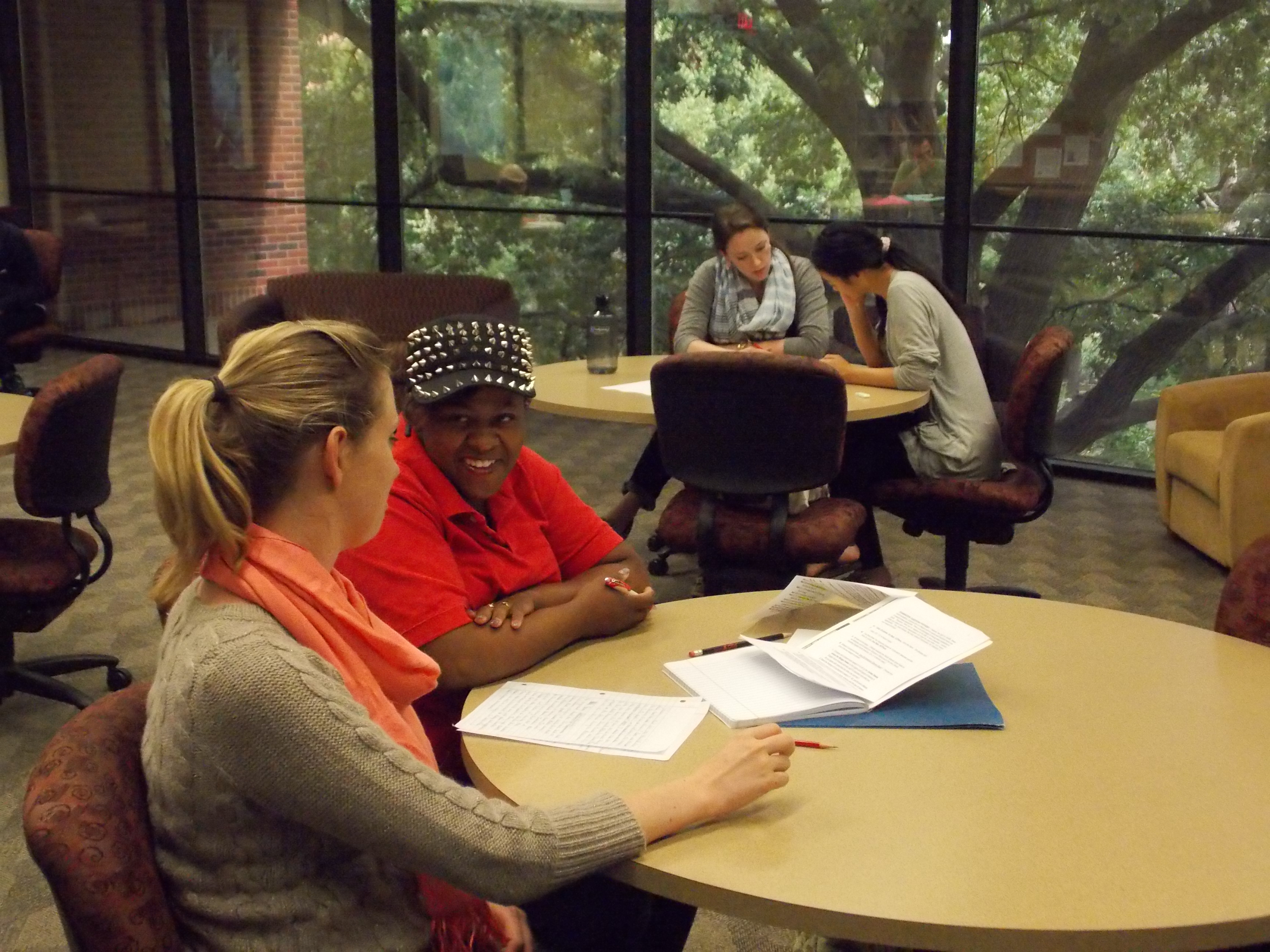
Our Old University Writing Center Space on the Third Floor of Ektrom Library

 All those accomplishments I frame with “we” because all the work that has taken place at the University Writing Center has been a collaborative project. It has been my deep good fortune to work with people who committed themselves to this collaborative vision of work, both with writers and with each other. So many people over the years came up with new ideas or showed me new ways to do things. They kept my thinking fresh, challenging it when it needed challenging. And, just as important as anything, they kept their sense of humor and warmth. It made this a fun place to work.

 I can’t list all the people who have worked here by name, but know that I am grateful to all of you, learned from all of you. But it is important to thank individually the permanent staff I’ve worked with. At the front desk and running the office, Robin Blackett, Amber Yocum, and Maddy Decker were the calm, friendly, and resourceful people at the front desk who set the tone for everyone who walked through our doors and reassured both anxious writers and weary staff. Also, I have worked with three associate directors, but that title is so misleading. I have enjoyed the great opportunity to have true working partnerships with these good and wise friends, Adam Robinson, Cassie Book, and Annmarie Steffes. All three of them provided the stability and professionalism to keep everything running. There was much more than that, however. They were always coming up with new and important ideas – and kept me from coming up with bad ones – and they were instrumental in shaping the positive and constructive emotional ethos among the consultants on staff. I once said we were co-pilots in all things Writing Center and it has always been true. I owe you all more than I can say.

Moving On and Changing Lives

In my years as director, people often have asked me how work was going. I would tell them that, even though I might be wearying of wading through administrative budget cuts and assorted other drudge, I still looked forward to coming to work each day. When I looked around me in the Writing Center, I would tell them, I see a group of people with a strong sense of community, doing the kind of teaching, learning, and caring that I wish were the model for the whole university. I will miss all of that when the next year comes around. I will miss working with the new group of consultants in the fall. I will miss the moment of a student writer stopping in my office to say that, in her mind, the writing center would be standing next to her when she received her diploma at graduation.

Still, it is healthy for institutions to have different people with different ideas and approaches in charge and the University Writing Center is positioned to have exciting times ahead under the leadership of Tim Johnson and Annmarie Steffes. As for me, I will be continuing to teach and to research and write about students’ experiences of the pandemic, climate change education, and participatory community writing projects. I’ll be around.

At the start of each academic year, when I talk to the new group of writing consultants at our orientation, I tell them about the writers who come to the University Writing Center, often anxious and uncertain, but leave both learning about writing, and feeling a stronger sense of agency and confidence. “Quite often,” I say, “We do change lives.” Certainly my time in the University Writing Center has changed mine. Thank you all. 

With Writing Always at the Center: Reflecting on a Year of University Writing Center Accomplishments

Bronwyn T. Williams, Director

Each year at the University Writing Center, in the sweltering last days of August, we welcome a new staff of consultants. And each year each staff has its own personality. Temperaments, personalities, areas of expertise, senses of humor, are individually and delightfully varied from one year to the next. The new consultants arrive at the end of summer with much to learn about teaching writing in a writing center, and with much to teach us through their new ideas and new approaches.

University Writing Center Staff 2022-23

Now, as the dogwood and redbud trees start to light up with blossoms, and the season turns toward the closing of the academic year, it’s always a time at the University Writing Center of wrapping up and reflecting. We’re having our last consultations, finishing our own projects, and talking of plans for the summer. I’ve been watching these cycles as director of the University Writing Center for twelve years now and this time of year once again brings with it a mixture of gratitude, satisfaction, and a touch of weary wistfulness. This year will be the last time these cycles at the University Writing Center will include me as I will be stepping down as director after July (more on that later). Still, the cycles go on and it is indeed time for wrapping up and reflecting.

Our Ongoing Work in the Writing Center

For all the differences in personality among various University Writing Center staffs from year to year, what is more important is the consistency. What did not change this year was that the consultants in the University Writing Center engaged in the most interdisciplinary, wide-ranging teaching on campus, working with writers from every grade level, every college and from more than 50 different majors.

Whether working with first-year students or doctoral student writers, our writing consultants helped people at every possible stage of their writing processes – from the brainstorming at the start to the polishing at the end. Our consultants are exceptional teachers who never lose sight of the fact that they are working with individual writers, not just responding to the words on a page. Through their work, consultants help writers feel more confident, not just for the moment, but in navigating unfamiliar writing situations in the future. Such work requires that our consultants be good listeners and resourceful teachers. Working collaboratively, patiently, and focusing on learning, not grading, takes time and energy, but such approaches made significant differences in the lives of thousands of UofL writers this year. From our perspective, this individualized, personal teaching is the best way learning happens and it all depends on the talent and commitment of our consultants. I’m so proud of the work they do, every day and every year.

Collaborative, reciprocal learning also requires the contributions and commitments of writers and we are also grateful for the trust placed in us by the writers who bring their work to the University Writing Center. We are always learning from them as they learn from us. I also thank all the faculty and staff who supported our work by recommending us to their students.

This is my last semester as director and I will be writing more about that on this blog next week week. Today, however, I want to focus on this year’s amazing staff and what they’ve accomplished.

Transitions at the University Writing Center

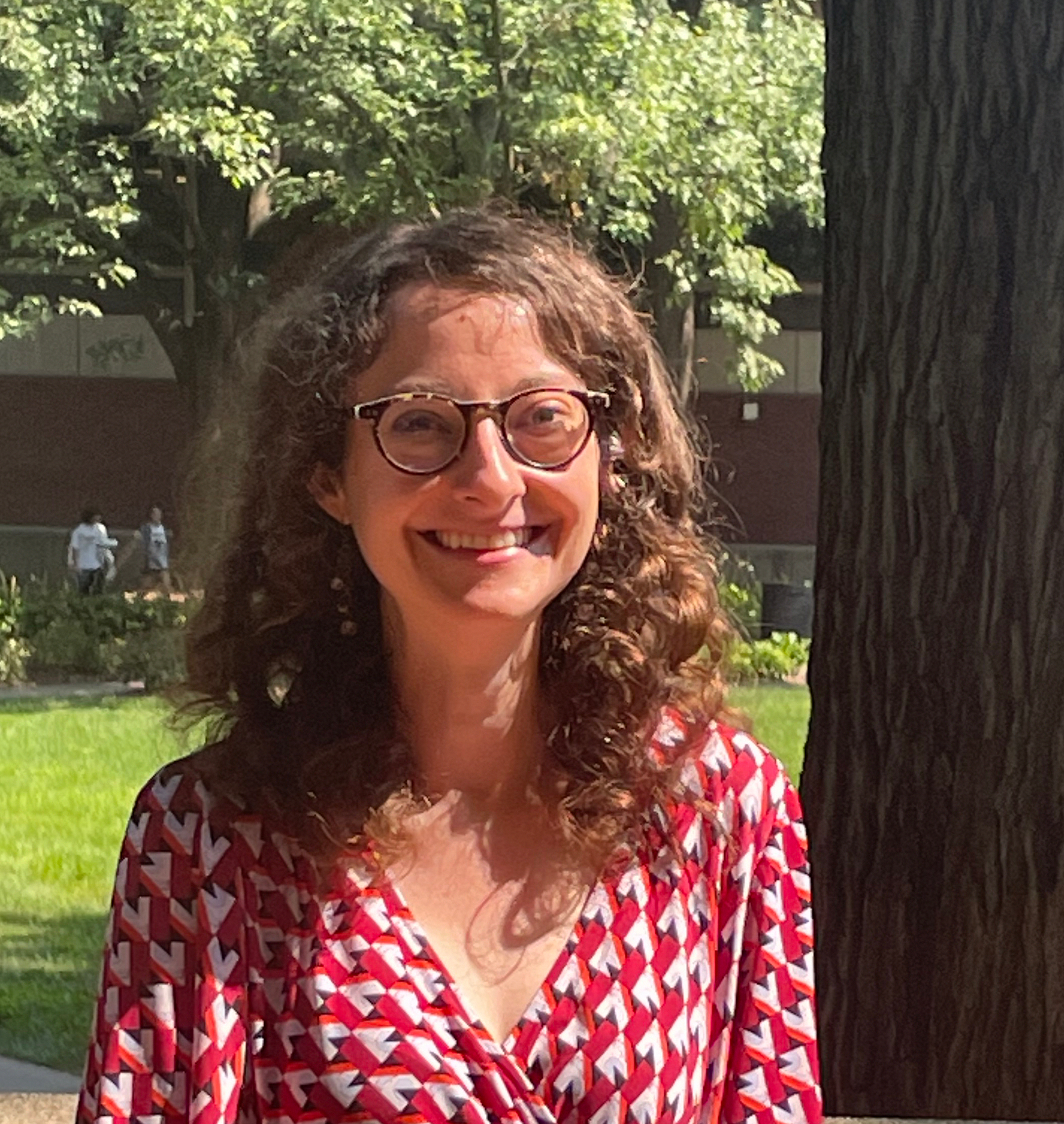
Annmarie Steffes

The most important transition at the University Writing Center this year was the arrival of Dr. Annmarie Steffes to the position of Associate Director. In this full-time position she provides the intellectual core and ethical heart of our work. Annmarie came here from a faculty position at the University of Saint Francis in Fort Wayne where she had developed a writing center and made huge contributions to our daily work and long-term planning as soon as she arrived. Annmarie brings to the position energy and innovative ideas that will help move the University Writing Center forward in vital and exciting ways. For example, just since starting her position in September, she has developed a series of workshops for faculty about teaching writing and has many more ideas ahead for how to improve our work as a center of writing on campus.

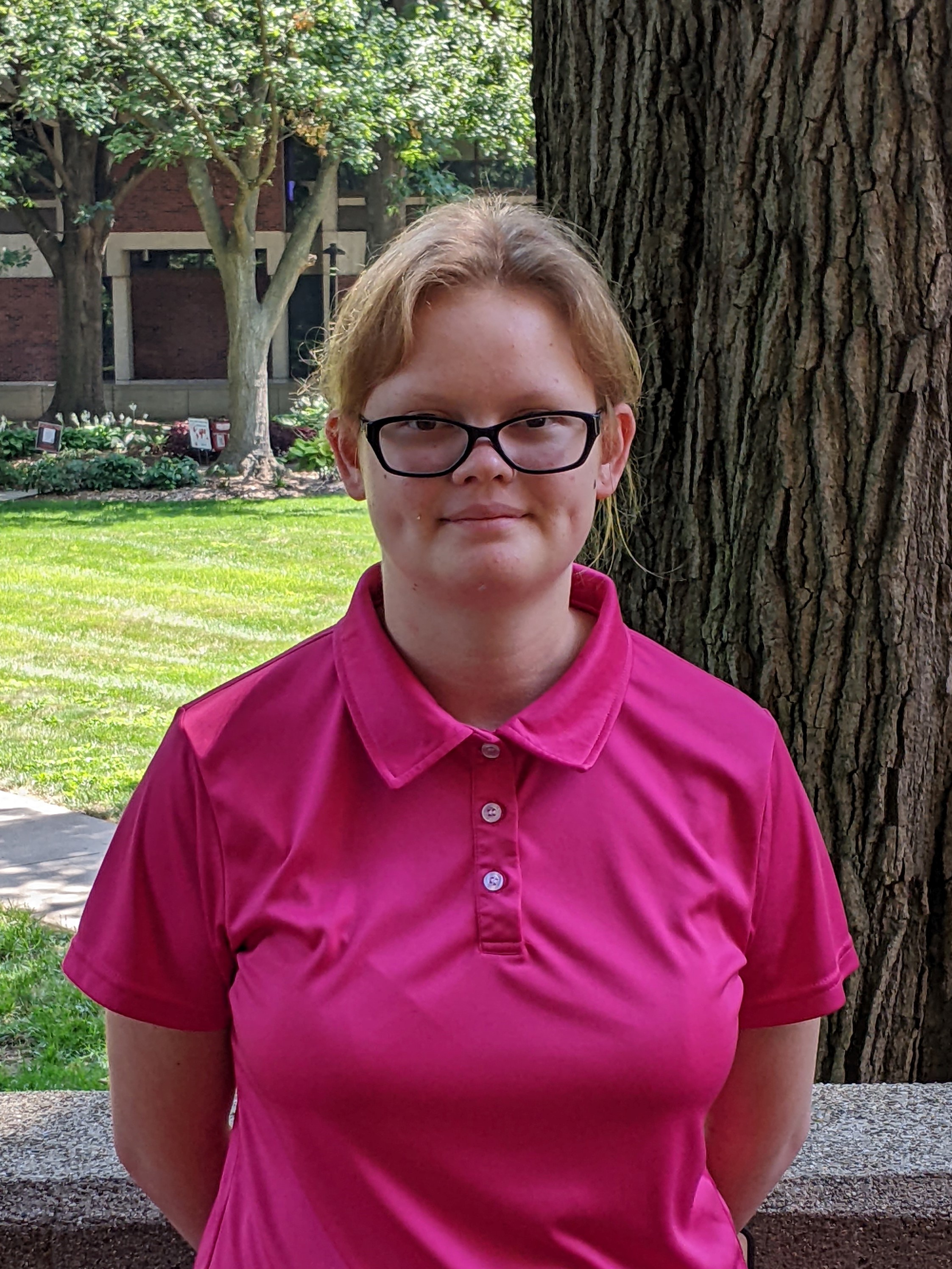
Tim Johnson

Dr. Tim Johnson, associate professor of English, will become director starting in July. Tim has exceptional insights into approaches for teaching writing across disciplines and in professions. He’s an exceptional teacher and and insightful researcher. He’s friendly and warm and will help energize and inspire both staff and writers in the years to come.

I am excited to see what innovations and new strategies Annmarie and Tim will bring to the University Writing Center in the future. Writing support and teaching at UofL is in excellent hands.

The Best Writing Center Staff Around

It is also essential to thank the fantastic administrative staff who carried us through this year with calm creativity and good humor. In addition to Annmarie, Maddy Decker, handled the front desk and office managing responsibilities flawlessly and was supported in this work by our undergraduate student workers Katelin Wilkinson and Tera Hathcock. Maddy also coordinated our social media, including this blog, with imagination and wit.

The assistant directors were also indispensable this year. Liz Soule, as Assistant Director for the Writing Center, helped both with mentoring new consultants, but also researched and held workshops to respond to the many questions we received about AI in writing, such as ChatGPT. And Kendyl Harmeling, the Assistant Director for Graduate Student Writing, both facilitated the Faculty and Graduate Student Writing Group and engaged in outreach at the Health Sciences Campus.

All of these people make the Writing Center work, day in and day out, and make it a positive, inclusive, and productive place for the UofL community.

Writing at the Center – Community Writing, Workshops, Writing Groups, and More

Community Writing and the Cotter Cup: Our commitment to writing is not limited to the UofL Campus. Once again we worked closely this year with Western Branch of the Louisville Free Public Library (LFPL). This participatory and collaborative partnership, under the coordination of Assistant Director Liz Soule, is an important part of how we understand writing as transcending communities and boundaries. You can find out more about these community writing projects, including how to get involved with them, on our website. We worked with Western Branch to provide workshops and mentoring. But our primary project for the year was the third annual Cotter Cup  K-12 poetry contest. This is the third year we have partnered with restoring the 100-year old tradition of this contest. University Writing Center volunteers met at the Western Branch Library with K-12 writers to brainstorm, draft and revise their poems for the contest. We worked with 30 student writers and the contest winners will be announced later this spring. We’re grateful to the contributions of our volunteers: Liz Soule, Jessica Gottbrath, Clay Arvin, Cassidy Witt, and Dylan Williams.

Writing Groups: We continued our commitment to provide UofL writer with safe, supportive communities where they can write and talk about writing. We continued to facilitate our LGBTQ+, Faculty and Graduate Student, and Creative Writing writing groups. We have always believed that writing, and the confidence to explore new ideas in writing, is a social activity as much as a solitary one. Through our writing groups we want people to be able to gather and learn more about the craft of writing, but also build the confidence that comes from writing in a supportive community.

International Mother Language Day, 2023

Writing Events: Once again we hosted or took part in a range of writing-related events, including our Halloween Scary Stories Open Mic Night and a Valentine’s Day Open Mic, both hosted with the Miracle Monocle Literary Magazine. Annmarie also organized our annual celebration of International Mother Language Day. We’re always delighted to celebrate writing of all varieties and hope to continue with more such events in the future.

Dissertation Writing Retreat: In May we will hold our 12th annual Dissertation Writing Retreat. During the retreat, 14 doctoral writers, from 10 different disciplines, will spend a week writing, talking about dissertation writing strategies, and having daily consultations about their writing. This event is the capstone to each academic year and an important moment for us.

Workshops: This year, Annmarie planned and facilitated a series of workshops for faculty both on issues of using writing effectively in their courses, and also on thoughtful and creative ways to respond to the development and use of more sophisticated AI in writing. We also held our regular workshops on issues of graduate student writing, organized through the Graduate School.

Writing Center Staff Achievements

The University Writing Center is also an active, ongoing site of scholarship about the teaching of writing. Staff from the University Writing Center were engaged in a number of scholarly and creative projects during the past year in rhetoric and composition, literature, and creative writing.

Bronwyn Williams, Director. In terms of writing-center focused research, my article, “Writing Centers, Enclaves, and Creating Spaces of Change Within Universities” has been published in Writing Center Journal

Annmarie Steffes, Associate Director, presented ““Instructor Autonomy: Exploring the Role of OER in Composition Classrooms” at the Conference on College Composition and Communication.

Liz Soule, Assistant Director, will be the Assistant Director of Writing in the College of Business next year. She also held two workshops this spring on ChatGPT and writing and also completed her doctoral exams and will be moving on to writing her dissertation.

Kendyl Harmeling, Assistant Director for Graduate Student Writing, had a book review published in Rhetoric Society Quarterly (in press): “Writing Their Bodies: Restoring Rhetorical Relations at the Carlisle Indian School” By Sarah Klotz. She will be the Assistant Director for the Writing Center next year.

Christina Davidson, presented a digital humanities project at the UofL Graduate Student Regional Research Conference (GSRRC). Next year she will be an Assistant Director in the Composition Program.

Braydon Dungan, presented on “American Dreams, Desires, and Deception: Nationalistic Pride and Toxic Heteronormativity in Theodore Roosevelt’s ‘The Strenuous Life'”  at the Community in Peril: From Individual Identities to Global Citizenship Conference in Brno, Czech Republic. He also visited Longbranch Elementary School to exemplify how public educators can apply Writing Center techniques to elementary composition curriculum and pedagogy. And he self-published a book of poetry titled Songs for the Public from a Poet Who Can’t Sing.  

Katie Fritsche, presented at two conferences, on “Princess Mononoke: Animated Solutions for the Global Climate Crisis”, at The 16th Annual Graduate Student Conference, University of Ottawa, and on “Colliding Forms in Fitzgerald’s The Great Gatsby and Collin’s The Hunger Games” at The Louisville Conference on Literature & Culture. She also published an article in the St. John’s University Humanities Review titled, “A Freudian Interpretation of Familial Dreams in the Demon Slayer Anime.”

Mahde Hassan served as a Scholastic Awards Juror at SUNY Oneonta for Leatherstocking Writing Project, which is writing contest for secondary students. He also worked as a volunteer with facilitating the Louisville Conference on Literature and Culture

Wendell Hixson chaired a panel at the Louisville Conference on Literature and Culture.

Andrew Messer will be the Assistant Director Creative Writing in the English Department next year.

Elizabeth Pope will have the poem “Coal Camp” published in North Dakota Quarterly. She was also awarded  The Annette Allen Poetry Prize sponsored by the UofL Humanities Department and read her work at the Louisville Conference on Literature and Culture.

Charlie Ward, presented “Exploring Gender in Tommy Orange’s There There” at the Louisville Conference on Literature and Culture and “Black Identity and Performance in ‘Sonny’s Blues'” at the Coast-to-Coast 2023 Conference. They also have two poems accepted for publication, “nightmare.” in Printed Zine and “fire” in Louisville Zine.

Yuan Zhao presented at the 2022 International Conference on Romanticism and the16th Graduate Student Regional Research Conference (GSRRC) at University of Louisville. Yuan also completed his MA Culminating Project titled, “Formulaic Writing and Technology in TOEFL: Algorithm in e-rater and White Supremacist Desire.” Yuan will be joining the UofL Rhetoric and Composition PhD program next year.

On behalf of all the University Writing Center staff, thank you again for another fulfilling and exceptional year. We hope to see you back this summer or in the fall.

Capability and Procrastination: De-stigmatizing How We Labor

Kendyl Harmeling, Assistant Director for Graduate Student Writing

I had a lot of small, unformed ideas on what to write this blog post about. Knowing I had this task in advance, I spent the last few weeks musing over what I could spend the couple hundred words in this space discussing. My guiding question in these considerations was: what about writing, writing centers, process, or the UofL community feels most relevant and useful to reflect on here and now? I thought about potentially discussing campus trends toward the virtual and multimodal; or about the importance of both in-person and virtual writing communities; or exploring digital sustainability in debates on waste and AI. But amid all these thoughts on what to write – on how to use this space – I’ve been struggling in a combination of family-related emergencies and bodily/mental exhaustion. And now that it’s writing time, deadline day, I’m here with a few drafted-and-deleted ideas. In line with Andrew’s recent post on writer’s block, I offer here a play-by-play of my writer’s block, how I am processing it, and considerations on combating both internal and external stigma on “procrastination.”

A Mid-Morning Scene: As I write this, it is 12:48pm. I opened this document at 10:00am. I’ve played with the formatting, bolding and un-bolding potential titles, changing font sizes and adding page numbers to re-format them. A few times, I’ve gotten so lucky as to get a sentence or two on the page. But shortly after they appear, I revoke them. And I’m left with a blank page again. I read and re-read the UWC blog posts from this semester to see if there’s anything I have to add that’s in line with what’s already been talked about, or if there’s anything new to cover. I return to my blank screen and write some key words. But I don’t feel connected to them. I delete them, like their earlier sentence-ancestors I deleted a half an hour ago. I close my eyes and try to conjure a topic, or a gripping scene I can narrate into a more writerly discussion.

It’s been stormy lately – is there anything to that? Can I use the tornado sirens as a metaphor? Do I have anything to say? More times passes, and I un-bold and delete the placeholder word “title” from the top left corner. I take a short break to get water. I return to a still blank page because, shockingly, a ghost hasn’t appeared and begun to type for me while I was in the kitchen. The more time passes, the more anxiety I can feel in my fingertips and behind my ears. It manifests in the form of my heartbeat. Shame and embarrassment start to bubble up – others got their blog posts done, probably way more on time than me – why can’t I do this? END SCENE.

            When I was in undergrad, I used to plan to write my assignments just before the deadline to combat this feeling. If I had the most urgent pressure – less than 48 hours to produce a document – I could get my work done. And, though it wasn’t all the time, it was normally work that I was proud of once I had done it. I knew that my friends didn’t work like this, that their time management was better than mine by light years. Someone I worked with once shamed me for this, saying that it was not only my own personal failure to rise to the level of productivity that college work required but also it was a general issue of people my age. This has stuck with me for years, now in a PhD program and still unable to regularly and routinely get my work done “productively.” Notwithstanding discussions of neurodivergence, disability and ableism, and how these affect labor and capitalism’s expectations for productivity, this line of thought is toxic to hold yourself to and to hold others to more generally. It’s damaging, and even as I write this, I feel the echoes of that stigma attempting to shame me for writing this when I am able to – and not when a system or a social norm excepts me to.

            Not only are breaks important to take in academia and in any work environment, as Charlie’s January blog post implores, but too it’s essential to validate your work processes. I work how I work – and I get the work I need to do done in a manner that works for me. It is not a failure of my productivity to use what resources I have to complete a task. It is especially not a failure to use resources that social norms and capitalistic expectation stigmatize the use of. If you need to use time as a resource, it shouldn’t only be valid to use it in extension; tactically using deadlines to complete labor is just as useful to the person it benefits as planning labor out months in advance for someone else.

            In medical ethics and philosophy, there’s a concept called “the capabilities approach,” which is used to evaluate the equity and justice of medical access. The capability to access medical services is one step, but the functional ability to use them is another. This outlook on justice isn’t located solely in medicine – it affects every aspect of life. Take, for example, a wheelchair-user who needs to take the bus to get to the grocery store after a snowstorm. The city doesn’t shovel sidewalks, and though the bus is wheelchair accessible and there is a sidewalk for the individual to use to get to the bus, the city’s inability to shovel the snow and ice hinders this person’s functional ability to use the bus – despite the capability to do so that the bus lift and sidewalk offer them. The capabilities approach applies much the same to writing or work-related labor. Having the capability to write is one thing – and is expected of us as college students and workers. But having the functional ability, whether due to inaccessible processes or internal challenges, varies for each of us even down to the day. And, if we feel functionally unable to meet our capability, shame sets in. We must all work to validate, and not stigmatize, the ways we need to function in order to meet our capabilities – if that is what we want to do.

Abiding by someone else’s metric for function, for ability, for productivity and correct process is not a restorative approach to your own bodily and mental well-being. Further, holding others to your metric for function and productivity is ableist atop being reductive and stigmatizing. It also reinforces the harmful systems which already marginalize, disable, and exclude, let alone harms your relationships with those you’re not allowing to work in the ways that they need to. Everyone benefits when we are all not only allowed but encouraged to be “productive” in ways that we individually and communally make meaningful, despite the overarching capitalist social norm. We are not sustainable resources – we do not have endless wells of energy inside us, and we must tend to what we have with nurturing care. Do not burn out for this system, but work through it tactically. Be mindful of how your body and mind speak to you about your energy – and work how it feels most useful and helpful to you. I need to work close to deadlines – regardless of how many have and will tell me that’s wrong. I know my process and my work better than anyone, and you know yourself. Respect that process, restore your energy, and relax. Most importantly, know that however you labor is valid.

Using Your Voice: Why you Should Take a Risk and Write

Katie Fritsche, Writing Consultant

I know a lot of us sometimes think we don’t have a voice that matters to the world of writing. In fact, as human beings, we are sometimes so terrified of others finding out what we think, that we hide our poetry, our greatest work in the notebooks under our pillows and in our desk drawers, trying to work up the courage to share our voice but never really doing so because of what happens if people learn about the deepest part of ourselves: our thoughts.

In fact, you might be surprised to find that writing way back in the old days of Socrates, was not encouraged. Socrates once said that “When it has once been written down, every discourse roams about everywhere, reaching indiscriminately those with understanding no less than those who have no business with it, and it doesn’t know to whom it should speak and to whom it should not. And when it is faulted and attacked unfairly, it always needs its father’s support; alone, it can neither defend itself nor come to its own support” (Kalantzis & Scope 1).  Socrates even himself criticized writing, and that there were dangers of lending our own voice to such a discourse, because after all, once it’s been written down, how can we undo it? How can we undo our voice that has been written out in such bold letters? Do we want to? Many critics might ask the question: it worth it for us to write, because isn’t there a danger that comes with putting our voice into something?

I would answer differently. I would answer that using our voice in writing, taking that risk, is important because we get to share the deepest parts of our lives with the world. To write with our voice is to help us feel human. To share our story is to become vulnerable, but it also inspires this creativity that drives us to become better through a written understanding of the world. Writing with one’s voice and sharing it seems like a big leap, but at the same time, I think it can be completely, truly said that if we don’t try, then we will never know. Such power exists from writing down our thoughts for the world to hear, it inspires healing for other people, it creates changes for us to network with others, and writing with our voice can even create future career opportunity that value the fact that we can think independently. I think that when we write, when we take that risk, whilst we may be opening up the doors to a lot of consequence, we are also opening up the doors to our future, because in this day and  age, we need people who aren’t afraid to be outspoken, to speak their minds, because writing is admitting we have the right to express who we are.

And so, I say write, write with your own unique voice, open those drawers, take the book of notes and pen you have hidden, and make an attempt to share that voice with the world. Be it through publishing peer review, writing groups, or simply scheduling a writing center appointment in person to talk about your writing, I encourage you to share yourself with this world. Socrates is wrong: writing does have value! Take your voice, let it fly, and write yourself into the future.

Works Cited:

Socrates on the Forgetfulness That Comes with Writing. Kalantziz & Scope, https://newlearningonline.com/literacies/chapter-1/socrates-on-the-forgetfulness-that-comes-with-writing.