Month: March 2022

Theory Writing/Writing Theory

Ben Poe, Writing Consultant

“The task of critical reflection is not merely to understand the various facts in their historical development (…) but also to see through the notion of fact itself, in its development and therefore in its relativity.”
― Max Horkheimer, 
Eclipse of Reason

Theory provides a critical language, argumentative framework, and stylistic approach to writing. Working in the field of critical theory—a genre of writing developed by thinkers like Frederic Jameson, Jacques Derrida, Judith Butler, and the academics of the Frankfurt School—blends critical analysis with artistic inquiry. Critical theory combines the creative and critical by capturing abstract ideas in linguistic concepts, while also depending on intertextual reference to convey is meaning—making a unique academic form for writers. Moreover, the dialectical foundation of theory enables clearly delineated rhetorical structures that depicts the associations between seemingly separate ideas. Thus, theory’s creatively critical genre asks for a writing style that questions exactly what style is—illustrating its unique position between the margins of academic objective analysis and creative expression.

Critical theory offers a specialized language that blends objective criticism with creative intertextuality. Language is obviously an essential characteristic of writing: the unique language of theory not only conceptualizes abstract ideas that help writers articulate difficult thoughts, but the concepts of critical theory also depend on an intertextual history—intertextuality being an artistic device closely related to parody or satire that means to use a word, name, or image in an artistic creation that refers back to a previously created artistic form, generating a new meaning in the reference (like when Anthony Hopkins quotes Shakespeare in HBO’s Westworld)—of cultural criticism that pluralizes the meaning of its concepts, making theory resemble an art form like poetry that requires close attention a multitude of literary devices. Indeed, a term like “logocentrism,” a word coined by Jacques Derrida to illustrate the hierarchy of speech over writing, exemplifies a concept that contains a radically abstract idea that allows academic writers to articulate specificity in their argument. However, feminist and queer scholars developed a special interest in the term (also coined by Derrida) “phallogocentrism,” which indicates the patriarchal occupation of spoken language. By adapting “logocentrism” to a feminist and queer focused analysis, scholars have pluralized the meaning of the term by multiplying its reference points: the definition of the term “phallogocentrism” not only refers to the research of the feminist and queer thinkers who developed it, but also to Derrida’s philosophical work. The adaption of the terms illustrates the intertextual dependence of critical theory concepts, making the genre of theory a unique field of academic criticism and artistic creation. Thus, theory’s combination of objective analysis with poetic intertextuality to interrogate language and convey ideas that simple denotation cannot express illustrates a unique writing style that makes theory critical and creative. The style of theory writing transforms academic research into a version of artistic commentary that expresses profound ideas in a creative form. 

The dialectical foundation of critical theory enables abstract associations to be formulated in an understandable written organization. Dialectical argumentation has been performed for thousands of years—Aristotle was one of the first philosophers to advocate dialectical techniques in rhetorical analyses. It was Frederick Hegel and Karl Marx who developed the dialectical model to a critique of culture, then carried on by Jameson, the Frankfurt School, and Derrida as a core characteristic of their philosophies. The most basic dialectical model is the thesis, antithesis, synthesis structure, which takes one phenomenon (like the content of a story) and compares it with another seemingly different phenomenon (like the form or medium of a story) to show that the meaning of an artwork depends on a relationship between its content and form. In argumentative writing, dialectics works by comparing one claim to its opposite in order to (synthesize) illustrate the similarity between the two ideas. If someone wants to claim that wealthier individuals should pay higher taxes, a dialectical argument will point out the benefits of the claim, but also the (antithetical) claims supporting the opposing side who believes taxes should be lower. The dialectical synthesis, therefore, combines the two ideas to illustrate how the original claim supplements the arguments of the opposing side—not simply how one side is better, but how both sides combine to create a new understanding of the problem. Thus, structuring essays dialectically creates a roadmap for nuanced analysis, as well as a consciousness for how the meaning of a written work is conditioned by its presentation in a particular form. The dialectical model illustrates the creative and the critical aspects of the theory genre because it asks writers to be aware of the metaphysical aspects that inform interpretations of their work, while also acting as a structure for argumentative analysis.                                                     

Theory lives on the margins of objective analysis and creative inquiry, making it a unique style of academic writing. Critical theory twists the supposed difference between academic criticism and creative production because it is a writing style that blurs categories. Theory blends the poetic with the positional, which creates a distinctive style of academic writing that questions the separation of objective analysis and subjective understanding. Critical theory is creative because it steeps in the ambiguity of language and relies on pluralized, intertextual association to convey the meanings of its ideas. It remains critical, however, because the subject of its inquiry is cultural conditions and phenomena. Thus, theory writing embodies a unique writing practice—conveying truths in a decentered form.      
Taking Stock of Your Revisions

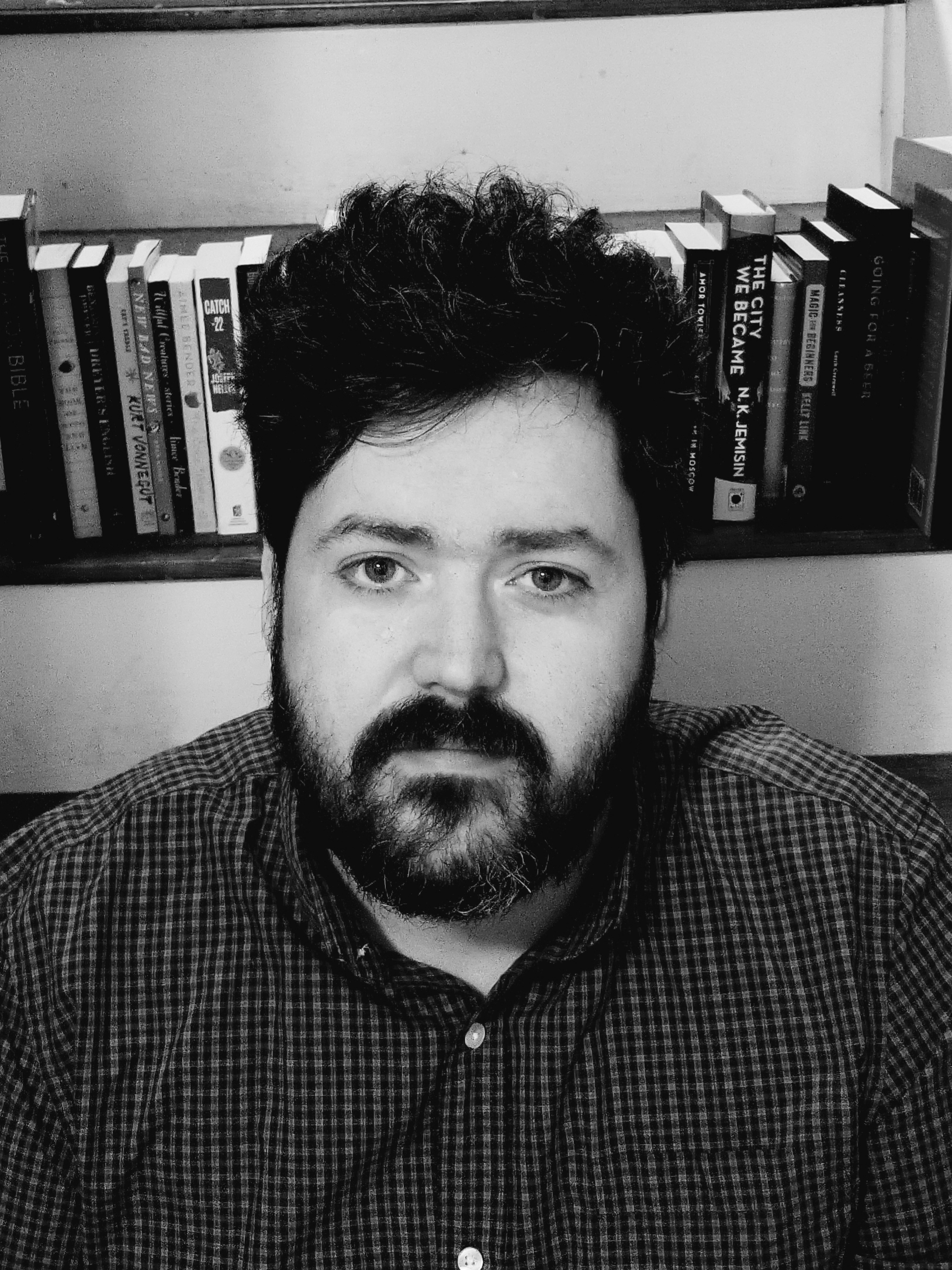
Derrick Neese, Writing Consultant

I have made chicken stock more times than I can count. Four times a week over the course of a fifteen-year culinary career really adds up. There is a large pot of stock simmering on my stove as I write this, a weekly ritual I cannot abandon despite trading my chef knife for a pen four years ago. And while I want to talk about a few generalizable revision tips today, I am reminded how all those years of cooking have informed my writing process, so let’s start by discussing the perfect batch of broth.

            I started making stock eighteen year ago. Back then, I aimed for excellence, mirroring my mentor’s movements, seeing how he chopped the culinary trinity of mirepoix—two parts onion, one part carrot, and one part celery—breathing in the aromatic cauldron of rosemary and thyme while I learned from the best. The six-hour repetition of producing liquid gold became my obsession, and by the hundredth pot I foolishly thought I had attained a mastery. After five hundred, I realized I was only scratching the surface. Like with any craft, there was a wealth of nuance and depth I’d never even considered. I began reevaluating details, trying to notice every modifiable aspect of the process. Was I roasting the bones too long or not long enough? Should I have blanched them? Why did I put the parsley in so early? I also started reading books by great chefs like Escoffier, Child, and Keller, taking in the identical elements of their methods and blending them with my own. Each subsequent attempt became a chance to learn and improve, with every minor modification written down. The herb infused pot bubbling in my kitchen is a result of those efforts. Is it the perfect batch? No. After all that effort, I learned perfection isn’t the point. Discovering my own process is what has mattered most.

            I started writing stories the week I turned thirty. While it was a tough transition at first, the more I wrote and revised, the more I realized those culinary lessons could translate to my writing. Just like with my stock, it was all about figuring out my own style. I found that I write my best stories in the morning, and that if I’m excited about an idea, the story tells itself. I trained my creativity by reading greats like Baldwin, Bradbury, and Vonnegut, taking the best ingredients from their styles and whisking them into my own. But most of all, like with the daily process of improvement I had picked up in the kitchen, I figured out how my writing ticked from the iterative act of revision.

            One of the biggest questions I get when consulting with creative writers in the UofL Writing Center is: How do I know if I’m going in the right direction? The only answer I’ve found, as simple as it sounds, is that we all learn best through thorough revision. And although every writer is different, here are some basic revision principles to help any writer find what works for them, my own culinary trinity of noticing, asking why, and putting it away.

            #1 Notice: A critical aspect of revision, from beginning to end, is noticing the choices we make and turning them into a list. I mean this in the simplest of terms: Read your draft and mark down any line and or that doesn’t feel quite right. Try rereading the piece faster and see what happens. Does the feeling go away? If it doesn’t, you have isolated a concern. The key to finding successful revision strategies comes from learning to notice the peculiar aspects of your own writing, turning those thoughts into a list, and adding to the list when you see something new. Sound simple? That’s because it is. The repetition of noticing is one of the most essential tools in a writer’s kit.

            # 2 Ask why: To make the best stock I could, I questioned every aspect of the process, from how large I cut my vegetables, down to what kind of strainer I used to obtain the final product. The same goes for my writing. Why did I start with a long sentence in the second paragraph of this blog? What’s with the whole ‘culinary trinity’ thing? Is it cheesy? Probably. With your newfound noticed list in hand, critically question your own process. Write those questions down as they appear and keep reading. Oftentimes, an answer will arrive unannounced moments later and resolve an entire paragraph of concerns. Even when you think you have found that magical solution, ask why and when and where. Never stop questioning, because the more you do, the more you will notice about your process, resulting in a deliberate approach.

            #3 Put it away. After reading a draft a dozen times, you might start feeling stuck. Put the piece away and let your thoughts simmer. I’ve struggled with individual scenes from a story for weeks, eventually tossing the draft aside in frustration, only to stew on the idea and find a fully cooked solution when I least expected it. You never know when an idea will appear, but it is vital to trust that it will. This also goes for unused scraps. If you notice a sentence or paragraph isn’t working, paste it to a new document or scrap of paper and forget about it. I’ve had scraps from one story save a scene in another after weeks of failed solutions. Those opportunities disappear when you delete bad lines. So put it away for a while and know that the answer will come, even if it doesn’t happen today.

            The toughest part of writing is figuring out the fine details of our process. There are no quick workarounds to that. To find those answers, we must become vigilant noticers, examining every aspect of our writing, and organizing strategies around what we consistently see. There will never be a perfect recipe for chicken stock or immaculate revision strategy, but by surrounding our processes with attention, we have the chance to make them wonderfully ours.

Titles: Topics and Subjects at the Top of the Page

Curtis Ehrich, Writing Consultant

If you couldn’t already tell, this blog post is all about titles. How to make ‘em, what to do with ‘em, and what they are for. Ever since high school, titles have been one of the most effective ways I get myself to care about my writing. In undergrad, I would come up with all sorts of fun titles, usually a pun or pop culture reference, just to get my creative juices going, and to get myself thinking critically about the material. It was one of the ways I made academic writing—which I hate—more interesting and (frankly) more bearable. Some of my favorite’s included references to Star Wars’ terrible dialogue writing (“Now this is podracing”) when I wrote a paper for a film study course analyzing the podracing scene from The Phantom Menace, and a reference to The Princess Bride’s RUSes in a paper for my Linguistics course all about agglutinative languages (languages that make new words by tacking on more and more suffixes and prefixes), that I cleverly titled “Words of Unusual Size.” While making fun titles is a great way to get the gears turning creatively, it doesn’t always do much to describe your paper to your reader, especially if you are like me and are in grad school and don’t get to have fun anymore.

The University of Michigan has a great resource for how to create compelling academic paper titles. The academic title consists of three parts: the hook, key terms, and a location. The hook is the part of your title that will give you the most creative freedom. It is the element of your title that draws in your reader, what makes them want to read your paper in the first place. Try to pick out the most interesting part of your paper or try to distill your paper down into one or two words to help guide your hook. I wrote a paper last semester about Moll Cutpurse, a fascinating character from Renaissance England. The paper was all about how Cutpurse represented gender presentation that was inherently transgressive in just about every way imaginable. For my hook I chose “Transgressive Sexuality.” Key terms are helpful for describing what your paper is about to your reader. They are usually terms essential to the topic of your paper, and if you are looking to publish, using key terms in your title will make your paper easier to find in a database. Think of your title as a sort of logline of your paper, the briefest of elevator pitches. They should give your reader an immediate understanding of what the purpose of your essay is, and the concepts you will be discussing in your paper. These are very rarely interesting, and typically very literal describers of the contents of your paper. For example, returning to my Moll Cutpurse example, for my key terms, I chose “Cross-dressing and Transvestitism.” The location gives context for the concepts being discussed and the scope of the paper all at once. What you use as your location will vary depending on what you are writing about, the genre you are writing in, and the discipline you are writing from. For an English paper, this might look like the time period in which a text was written, or if you’re taking a New Critical approach, it might just be a character’s name and the title of the text in which they appear. If you are writing a more scientific paper, it will probably look more like the data sample you are studying. For my Moll Cutpurse paper, my location was “Jacobean London”

As an example, a full title might look something like “The Imperialist Adventure of a Lifetime: Robinson Crusoe and Postcolonialism in the Context of Defoe’s Puritanism.” Something like that, if you were to write a paper on Robinson Crusoe. Of course, my full Moll Cutpurse title was “Transgressive Sexuality: Cross Dressing and Transvestitism in Jacobean London.” Or, if I were to draft a scientific paper, it might look something like “AI Doctors: Cancer Screening and Machine Learning in Patients 65 and Up.” In the first example, “The Imperialist Adventure of a Lifetime” acts as our hook, describing the basic premise of the paper in an interesting way. “Robinson Crusoe and Postcolonialism” are obviously our key terms, and “Defoe’s Puritanism” is the location, giving us all the context, the reader needs to understand exactly what this paper is going to be talking about. In the second example, the locations of the hook, key terms, and location are in the same place, performing all the same jobs.

This method of academic title creation is clearly a versatile and useful tool to keep in your back pocket if you ever get stuck. I’ll be using it myself on my final papers this semester. But don’t let this method stifle your creativity! This method is just one of the many ways to create a title, and it is by no means the “best” way. There’s an adage in writing pedagogy that says, “the best way to learn to write is to read.” That be made even more specific for titles: “the best way to write titles is to read titles.”  But sometimes, if you just need to get yourself interested in writing, just coming up with a creative, fun title does the trick.


Works Cited

Writing, Sweetland Center of. “How Do I Write a Great Title.” University of Michigan https://lsa.umich.edu/sweetland/undergraduates/writing-guides/how-do-i-write-a-great-title-.html. Accessed 10 March 2022.

Wait, How Can I Make the Most of My Group Writing Experience?: Co-Writing About Co-Writing Part 2

This post is the second in a two-part series on co-authorship from different perspectives. In this second post, we’ll discuss ways to use writing center sessions as a model for negotiating the co-writing process and reflect on the experience of co-writing this blog. The first part addressed key cognitive and pedagogical considerations in co-writing projects.

Left: Brice Montgomery, Writing Consultant; Right: Kylee Auten, Writing Consultant

Group writing is present in all levels of the academic community. There are informal co-writing opportunities, like a group chat that helps you better understand your discussion board post, but there are also the formal, much more nerve-wracking co-writing projects that, as we discussed last week, cause frustration and anger despite their benefits. Perhaps establishing productive group dynamics is the most harrowing aspect of a co-written project. Each participant will have to put forth their contributions and then, together, the group will have to decide in which direction they will take the piece. Both before the project begins and throughout the duration of the writing process, collaborators will have to manage and negotiate workloads and responsibilities that allow each party to reach their goals. A writing center appointment is kind of like that, too, in that the writer and the consultant have to balance their contributions in order to meet their goals. There is (hopefully) mutual effort and negotiation in every writing center appointment. In this post, we are going to explore facets of writing center practices that correlate to group writing. To do so, we’ll reflect on our own experience writing this series of blog posts. 

Negotiating Boundaries

            One thing that has to be negotiated in every writing center consultation, whether overtly or not, is the role each person will play in the consultation. The writer and the consultant must work together to determine who is responsible for what during the appointment. This is rarely an explicit process, but it will become clear throughout the session that each person takes on certain tasks. Likewise, co-authors must agree on their responsibilities regarding their project, but these roles do not always have to be as clearly defined as they are in a writing center session. For example, when writing this blog series, we did not set strict tasks other than taking on the main responsibility for one post and providing in-depth feedback and revisions for the other post. Other than that, we wanted to remain flexible when it came to “assigning” roles. For instance, one role co-writers might want to establish is a dedicated note taker, but we found it more productive to both take notes since we tended to pick up on different ideas during our meetings. Additionally, we both performed research related to the project, and we both had an active role in developing the outline and structure for the blog posts. This fluidity and casualness that we established may not be possible for every group writing project (for sure, I’m almost certain these blurred boundaries could complicate an actual writing center session), but as long as the boundaries, or lack of boundaries, are negotiated and agreed upon by all parties, then the work should be smooth sailing.

Maintaining Ownership

            Ownership is a tricky thing in a collaborative writing project. In writing center appointments, consultants always aim to provide helpful feedback without pushing the writer to make unwanted changes–we want to ensure writers maintain ownership of their document. A co-authored project, however, does not have the same clean break between who is in charge of the piece. Each person contributing to the project should have a vested interest in the process, content, and product. Yet, even when all parties are invested in the project, there can still be some tension, or at least misunderstanding. For this project, ownership became tricky when we were dividing the workload. Together, we separated our content into two complementary posts, but then we had to decide who would write the first draft of each post. When Brice suggested we each “write a draft,” Kylee thought he meant we would each write a draft of both posts, but that’s because she worked under the assumption that we held dual ownership over the whole project. Brice, on the other hand, had perceived that we were individually taking ownership over one half of the project. Besides this breakdown in communication, we did feel like we had equal control over the project when it came to making suggestions or revisions to the other person’s writing. Without this shared sense of ownership, we would not have learned as much from this writing process. 

Instruction and Feedback

            As co-authors, you have to be willing to learn from each other. John Hedgecock, in his book chapter “Reflections of Coauthorship and the Professional Dialogue: Risks and Rewards,” encourages those interested in co-authoring to partner with someone whose skills will balance and complement your own (114). This is true, as well, of writing center appointments, because successful sessions also rely on complementary skills and knowledge. For instance, consultants should know the mechanics for how to write an argumentative essay, but they rely on writers to bring the content knowledge needed to successfully make their argument. So, in a way, there is mutual instruction and feedback happening in every appointment; the consultant instructs the writer on writing practices while the writer instructs the consultant on content. In co-authorship, there may be less instruction on practical writing topics, but each person is going to have different knowledge to add to the project, which they will inevitably have to teach to their partner. We each had two different takeaways regarding what we had learned from each other. For Brice, he learned about accountability from Kylee, as she regularly reached out to make sure the project was still moving forward. Kylee, having no experience with co-writing, though, gained practical knowledge from Brice about the best way to approach our drafting phase. 

Establishing Trust

Trust may be the toughest thing to manage in both writing center appointments and co-writing projects. In a writing center consultation, writers have to trust the consultants are giving them accurate, helpful information that will make their writing and their writing process better. Consultants, on the other hand, have to trust writers are engaged with the project and are invested in implementing the strategies discussed during the session. A writing partnership, likewise, must be formed by people who trust their co-author’s advice and know they are both equally interested and invested in the project For us, we felt confident taking on a co-authored project because we had multiple, informal and formal opportunities to work with each other’s individual writing assignments. Additionally, we had previously met for a writing center appointment over one of Kylee’s class assignments, so we were familiar with how our dynamic would play out. We knew, through experience, that we could trust the other to provide honest, productive feedback, even when it meant taking our ideas in a new, unexpected direction. 

Conclusion

            Like we said last week, group projects probably aren’t going away anytime soon. We hope, though, that this two-part blog series has provided tools and frameworks to help make future co-writing experiences more fulfilling and productive. Focus on what can be gained from the process, not just the project. Chances are, each member in a co-writing project might feel some hesitancy or discomfort, but rely on establishing healthy boundaries, take ownership of the project, delight in the new information being learned, and find trustworthy people to collaborate with.


Works Cited

Hedgecock, John. “Reflections of Coauthorship and the Professional Dialogue: Risks and Rewards.” Writing for Scholarly Publication: Behind the Scenes in Language Education, edited by Christine Pearson Casanave and Stephanie Vandrick, Lawrence Erlbaum Associates, 2003, pp. 113-127.