Tag: How I Write

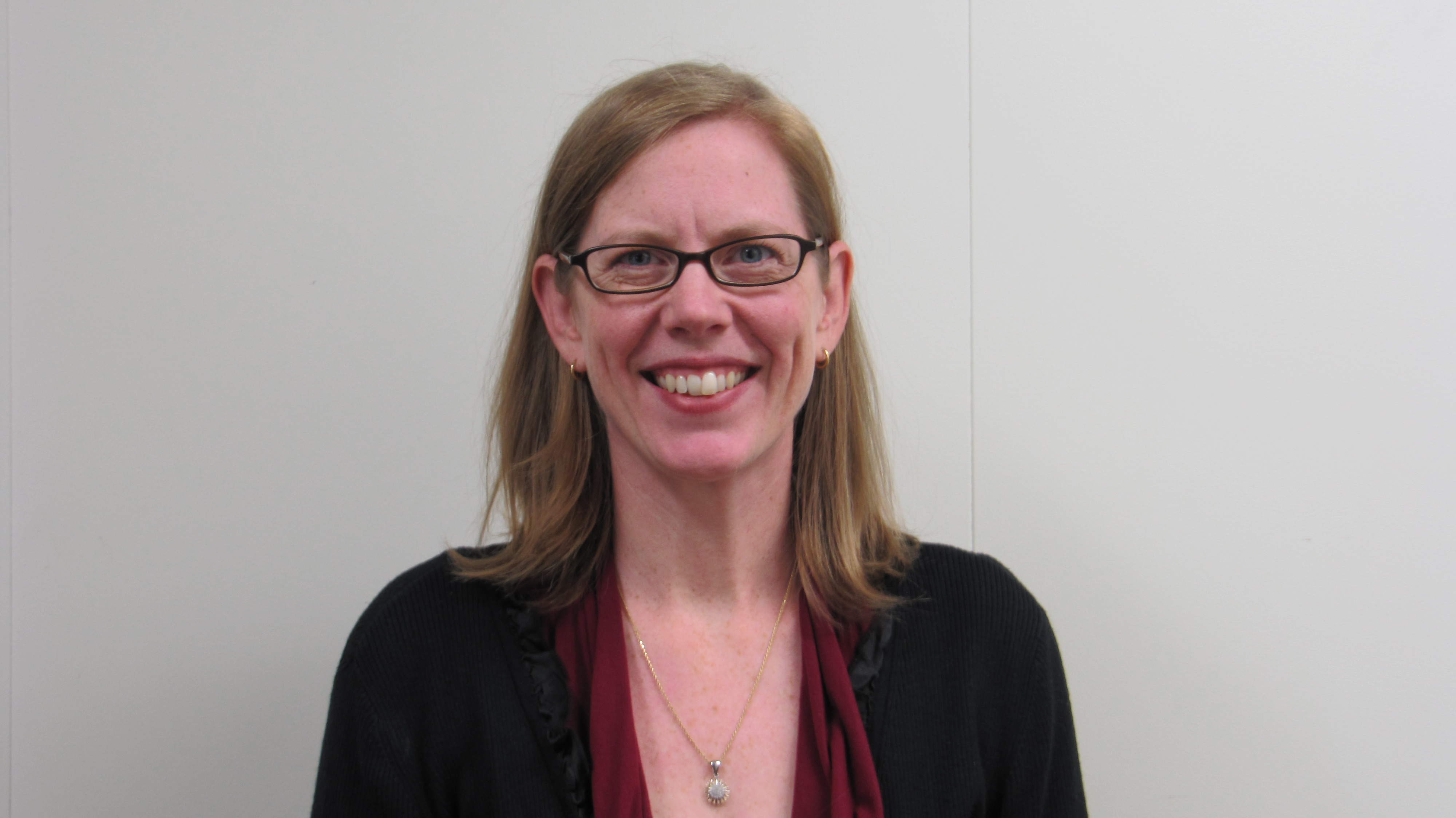
How I Write: Jennie E. Burnet – Professor of Anthropology

Our “How I Write” series asks writers from the University of Louisville community and beyond to respond to five questions that provide insight into their writing processes and offer advice to other writers. Through this series, we promote the idea that learning to write is an ongoing, life-long process and that all writers, from first-year students to career professionals, benefit from discussing and collaborating on their work with thoughtful and respectful readers. The series will be featured every other Wednesday.

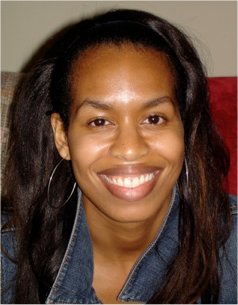
Our featured writer this week is Professor Jennie E. Burnet. Dr. Burnet teaches in the Department of Anthropology at the University of Louisville, and her scholarship includes articles on war, gender, identity, and genocide in Rwanda. 
Location: Louisville, Kentucky

Current project: Book about rescuers during the 1994 Genocide in Rwanda, peer-reviewed journal articles, book reviews, and the email never stops.

Currently reading: I’ve been reading my kids’ summer readings list so I’m most of the way through The Watsons Go to Birmingham—1963 by Christopher Paul Curtis. Next up on my Kindle are The Interestings: A Novel by Meg Wolitzer and A Tale for the Time Being: A Novel by Ruth Ozeki.

1. What type(s) of writing do you regularly engage in?

Virtually all of my writing is non-fiction, scholarly writing in socio-cultural anthropology, African studies, and women and gender studies. Over the past week, I’ve been working on a grant proposal and a public policy research report. I am currently working on several articles for peer-reviewed journals.

Jargon laden prose is still in fashion in my field, but I think that most useful ideas can be expressed in everyday language. My first book, Genocide Lives in Us: Women, Memory and Silence in Rwanda was published by a university press, but I tried to make it as accessible as possible. I did my best to write it so that an educated adult reader interested in Rwanda, genocide, or women could pick it up, read it, and hear these courageous women’s stories of survival. My next book, about people who risked their lives to save Tutsis during the 1994 Rwandan genocide, is percolating in the back of my mind. I finished the interviews for the project in May 2014. Soon I will begin outlining it and laying out the stories I will use to illustrate the key points. Truth be told, however, most of my day-to-day writing is email—professional correspondence, feedback to students, etc.

2. When/where/how do you write?

When, where, and how I write constantly changes. I’m a chronic procrastinator so I’m always finding new ways to trick myself into getting down to business. Lately, I’ve been doing most of my writing at my dining room table (I’m here right now!). Our dining room has large windows that let in a lot of indirect sunlight. Because the family eats dinner here every night, I’m forced to clear away my stuff daily so the space doesn’t become cluttered.

On days when I’m really stuck and not making progress, I’ll take a Gregg-lined steno pad and a pen to a coffeeshop, a public library, or other busy but quiet place. For some reason, writing with pen and paper seems less official so I can get a bunch of ideas on paper and worry about wrestling them into a logical progression or cohesive argument later. Paper and pen are my antidote for writer’s block.

In an ideal world, I write best first thing in the morning with my second cup of coffee. When I get started early, I don’t fall into my procrastination cycles. Unfortunately, life almost always gets in the way of this practice. At the moment, I’m trying to get into the habit of writing on my most pressing project when I first sit down to work. Beyond getting my behind in the seat, the key to success seems to be: Don’t open my email, Facebook, the newspaper, or any other electronic distraction.

3. What are your writing necessities—tools, accessories, music, spaces*?

Most often my writing necessities are my computer, good coffee, a chair I can sit up straight in, a clear work surface at the ergonomically correct height, and lots of indirect, natural light. Music distracts me too much, but background noise is OK. Occasionally, I need a change of scenery, a pen with fast flowing ink, and a steno pad.

4. What is your best tip for getting started and/or for revision?

Breaking the writing project down into very small tasks (outlining and making a list of every piece that needs to be done). With this strategy you can make progress everyday even if it’s only 10 minutes at a time. It also lowers the threshold to start and helps minimize procrastination. These strategies have resurrected my writing since I almost never have several, uninterrupted hours before me to write.

5. What is the best writing advice you’ve received?

I’ve gotten lots of amazing advice on writing over the years from mentors, colleagues, writing group members, and friends. It’s such great advice that I’ve integrated into my practice so thoroughly that I don’t remember who gave me which pieces.

Just keep writing—even when you’re certain it’s awful or makes no sense. I often give myself this advice in the voice of Ellen DeGeneres as Dory from Finding Nemo: https://www.youtube.com/watch?v=0Hkn-LSh7es.
How I Write: Austin Bunn — Creative Writer

Our “How I Write” series asks writers from the University of Louisville community and beyond to respond to five questions that provide insight into their writing processes and offer advice to other writers. Through this series, we promote the idea that learning to write is an ongoing, life-long process and that all writers, from first-year students to career professionals, benefit from discussing and collaborating on their work with thoughtful and respectful readers. The series will be featured every other Wednesday.

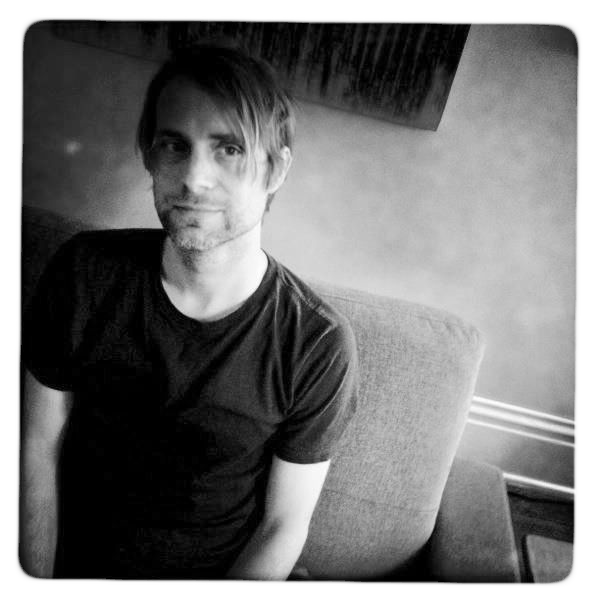
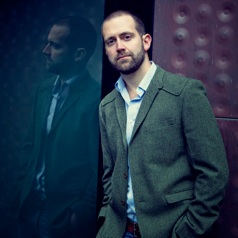
Austin Bunn’s writing has appeared in The Atlantic, The New York Times Magazine, The Best American Science and Nature Writing, The Pushcart Prize anthology, and elsewhere. His collection of short stories, The Brink, is forthcoming from Harper Perennial (2015). He wrote the screenplay to the film Kill Your Darlings (Sony Pictures Classics), with the film’s director John Krokidas, about the origins of the Beat generation writers, staring Daniel Radcliffe, Dane DeHaan, and Michael C. Hall. The film premiered at Sundance 2013, and screened at the Venice, Toronto, London, and Hampton’s Film Festivals. He teaches at Cornell University.Austin-Bunn_BW

How I Write: Austin Bunn

Location: Ithaca, NY

Current project: Original screenplay, short documentary, devised play, and more fiction!

Currently reading: The Trip to Echo Spring by Olivia Laing and The Song Is You by Arthur Phillips.

  1. What type(s) of writing do you regularly engage in?

    These days, I find myself drawn to writing screenplays — I love the collaborative experience of making film, the most powerful art form of our time. Also, frankly, screenwriting is, for me, much much easier to produce than fiction. Great fiction demands close attention to the filigree of sentences, original perceptions rendered in fresh language, and consciousness on the page. When done well, there’s nothing like it, and the satisfaction of moving a reader through prose is a deep reward. But man, it’s work!

  2. When/where/how do you write?

    I have an office, with a good desk, nice classic chair, and a view of my front lawn. And I never use it. I end up going to a coffeeshop and parking myself for hours there – it keeps the distractions (email, phone calls, news) at bay. I tend to write for about 3-4 hours and then I’m done and I need other people.bunn_TheShop

  3. What are your writing necessities—tools, accessories, music, spaces?

    Foremost: music. If I forget my headphones when I head to the coffeeshop, I know I’m in for a difficult morning. When I start a new project, I start by shopping for a soundtrack: something to inspire, provoke, contextualize what I’m doing. For Kill Your Darlings, it included bebop jazz, period love songs (“You Only Hurt the One You Love”), and a lot of Sigor Ros and Jonsi. Then we were lucky enough to get all of them on the soundtrack!

  4. What is your best tip for getting started and/or for revision?

    Getting started has never been hard for me. The blank page is my friend, and I think you need to make friends with it. I give myself total permission to write poorly but I try to find the “voice” of the piece: is it edgy and dense? Funny? Searching and quiet? Those first days are exploratory. Revision is another matter entirely: I don’t love it. It requires the part of my brain that is a close-reader, that inches the bar higher and higher, that expects more from me than I thought I had. I also feel like I can revise sentences forever. Sam Lipsyte told me that if you find yourself revising a sentence once and then revising it BACK to the way you had it, you’re done. Move on.

  5. What is the best writing advice you’ve received?

    “Deeply imagine.” Ethan Canin.
    “There is no good part. It should all be the good part.” Sam Lipsyte.
    “Writing is about the inner experience of life; that is what writing can do that no other art form can.” Marilyn Robinson.
    “All actual life is encounter.” Martin Buber.
    “You are allowed shitty first drafts.” Anne Lamott

How I Write: Christy Metzger — Student Services Director

Our “How I Write” series asks writers from the University of Louisville community and beyond to respond to five questions that provide insight into their writing processes and offer advice to other writers. Through this series, we promote the idea that learning to write is an ongoing, life-long process and that all writers, from first-year students to career professionals, benefit from discussing and collaborating on their work with thoughtful and respectful readers. The series will be featured every other Wednesday.

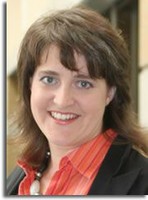
Christy Metzger is the director for the Office of First Year Initiatives at the University of Louisville. In August 2006 she began her work in this field when she was charged to undertake the university’s more coordinated first year experience efforts. Christy earned Bachelor of Arts degrees in Spanish and Psychology from Transylvania University and a Master of Arts in Higher Education Administration from the University of Louisville.

How I Write: Christy Metzger

Location: Belknap Campus (Strickler Hall 126)metzger

Current project: I’m working on my own This I Believe-style statement for Book-in-Common.

Currently reading: The Lowland by Jhumpa Lahiri and the Anne of Green Gables series by Lucy Maud Montgomery

  1.  What type(s) of writing do you regularly engage in?

    Since I finished my Master’s degree, the vast majority of my writing is business writing, which I undertake for my job. No matter what the task, it’s important that I’m mindful about how I craft my message; I do believe that attention to tone, language, clarity and a mistake-free end product makes a big difference in whether I’m successful in my work or not.

    Email consumes most of my writing time, as it does for many of my colleagues. I think it’s harder to persuade, clarify, inform, activate, etc. over email than it is with an in-person audience, so depending on the subject matter and recipient it may be a quick email or it might be one I really have to draft and revise. (I do a lot more drafting and revising than I do quick emails.)For executing our programs themselves, I’ve written things like facilitation guides and instruction manuals, reading guides and tips, and classroom materials.   And to promote and assess our programs, I will create program brochures, web content, requests for funding, surveys and annual reports.

  2. When/where/how do you write?

    Usually I’m writing in my office at work. However, if what I’m writing feels like a more difficult task I might take that home to work on – perhaps nestled into a comfortable chair or outside on my deck when it’s warm.

    When I was writing papers in graduate school, I found I was most productive at a coffee shop, where the ambient noise kept me alert but where I didn’t have the distractions (or beds) of home to sidetrack me.

  3. What are your writing necessities—tools, accessories, music, spaces?

    I type faster than I write by hand now, so I much prefer to write on a computer. I enjoy having a cup of coffee nearby, whatever notes I need, and some sort of music in the background (right now it’s afternoon decaf with peppermint mocha creamer and Don Williams crooning old country standards). If I’m at home, it’s certain that my sweet dog is nestled right up next to me.

  4. What is your best tip for getting started and/or for revision?

    My best advice is to first be clear about the key ideas you are trying to convey. That way, you can focus your writing product around that. When I started writing longer papers with open-ended topics and many different sources, I found that it helped me to begin to put my notes about each article in an outline form in a Word document. Along the way, I’ll pop in key points and thoughts I am having in response to the reading, as well as important quotes I might want to use later. The Word outline format lets me group similar ideas and move things around, and it’s from these notes that my papers grow. Sometimes whole paragraphs practically write themselves because I’ve already done a lot of the thinking along the way. When at all possible, I have someone else read and proof my writing.

  5. What is the best writing advice you’ve received?

    The best advice I received was about writing emails to my colleagues. I’m much more cognizant now that my main idea or request needs to be in the first few sentences of the email so that it’s quickly seen by the recipient. I have a tendency to want to provide a lot of context to help my reader understand why what I’m conveying is important. However, because of that my main thought or request often wound up at the bottom of a lot of writing, where it was perhaps overlooked. (I even moved my main idea up in this paragraph in case my reader lost interest to this point.) It’s a small point to make, but I do believe it can make a tremendous difference.

How I Write: Kyle Coma-Thompson — Novelist

Our “How I Write” series asks writers from the University of Louisville community and beyond to respond to five questions that provide insight into their writing processes and offer advice to other writers. Through this series, we promote the idea that learning to write is an ongoing, life-long process and that all writers, from first-year students to career professionals, benefit from discussing and collaborating on their work with thoughtful and respectful readers. The series will be featured every other Wednesday.

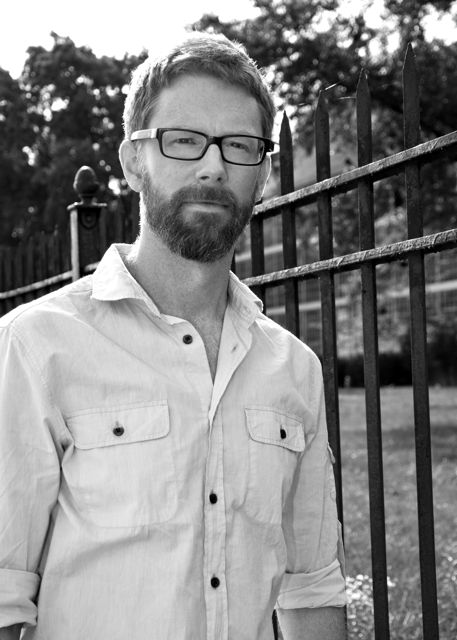
This week’s feature writer is novelist Kyle Coma-Thompson, whose most recent book is The Lucky Body (Dock Street Press, 2013). His work has appeared or is forthcoming in Boston Review, AGNI, The American Reader, New American Writing, Bat City Review and elsewhere. He has held fellowships as an Axton Fellow in Creative Writing at University of Louisville, a Bennett Fellow at Phillips Exeter Academy, and a Hoyns Fellow at the University of Virginia.

How I Write:
Kyle Comacoma-thompson-Thompson

Location: Louisville, KY

Current project(s):
A novel, a collection of short stories, a collection of poetry.

Currently reading:
Cemetery of Mind—Dambudzo Marechera;
To Each His Own—Leonardo Sciascia

  1.  What type(s) of writing do you regularly engage in?

    Fiction and poetry.

  2. When/where/how do you write?

    What I write during any given part of the day depends on how much time I have available. If I have a half-hour or hour block of time before my next commitment, I write poetry. If I have two or more hours, fiction. Often I’ll write poems before beginning on a short story, to loosen up.

  3. What are your writing necessities—tools, accessories, music, spaces?

    Whatever’s at hand, I’ll make use of. I keep a pocket notebook to write in while I’m walking, driving, at work, wherever. I keep a notebook for story ideas. Then groupings of notecards on which I sketch out the linear structure of events and details of those story ideas. Then I write drafts of stories or poems on a computer, either at home or at work.

  4. What is your best tip for getting started and/or for revision?

    Take joy in writing garbage. Forget about any needs or desires you may have to write well or to complete an accomplished piece of work. Just generate an overflow of kinetic slop, then sift through it—often the best ideas or stretches of writing come from uninhibited, unambitious play. In other circles, this is called “brainstorming”.

  5. What is the best writing advice you’ve received?

    Even before you even begin to think of writing, empathetic detachment should be a priority. Which means: in a piece of writing, avoid the temptation to address the reader using the first person plural.

How I Write: Thomas Geoghegan — Graduate Dean

Our “How I Write” series asks writers from the University of Louisville community and beyond to respond to five questions that provide insight into their writing processes and offer advice to other writers. Through this series, we promote the idea that learning to write is an ongoing, life-long process and that all writers, from first-year students to career professionals, benefit from discussing and collaborating on their work with thoughtful and respectful readers. The series will be featured every other Wednesday.

This week the “How I Write”geoghegan headshot series features Thomas Geoghegan, the current Associate Dean for Graduate and Postdoctoral Studies at the School of Medicine, as well as a faculty member in Biochemistry and Molecular Biology. He recived his BS degree in Biology from the University of Massachusetts/Boston, and PhD in Biological Chemistry from the M.S. Hershey Medical School associated with Penn State.  Thomas Geoghegan  joined the faculty at UofL in the Department of Biochemistry in the School of Medicine in 1979.

How I Write: Thomas Geoghegan

Location: UofL School of Medicine

Current project: Associate Dean for Graduate and Postdoctoral Studies

Currently reading:  David and Goliath: Underdogs, Misfits, and the Art of Battling Giants by Malcolm Gladwell

  1.  What type(s) of writing do you regularly engage in?

    I began my career as a bench scientist (molecular biologist) writing papers and grant applications (not always successfully I might add).  I also teach and of course needed to write lecture notes, study guides and test questions (again not always successfully).  I no longer write scientific grants and manuscripts. I do however continue to teach and write reports of activities of our office.  For a short time I also wrote a blog on graduate education (once again not always successfully).

  2. When/where/how do you write?

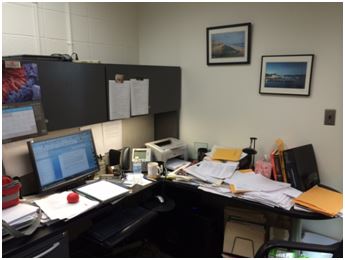
    I mostly write in my small, cramped, and overly cluttered office. geoghegan office

  3. What are your writing necessities—tools, accessories, music, spaces?

    For the most part a pad and paper, and computer.

  4. What is your best tip for getting started and/or for revision?

    Tip for getting started – get started; no really get started.  People write differently but everyone has to get started.  I’m big on getting something down on paper and editing the hell out of it.  In fact I’ll spend 5-10 times more time editing than writing.

    My best tip is to post a bullet list with principles of writing right in front of you.  When you’re stuck (and everyone gets stuck) it refreshes your memory and get’s you started again.

    One caveat; my son is a journalist/writer.  He sits down to write and most of the time it comes out perfect, with few revisions.  Proving that much to my dismay as a molecular biologist , it’s not all genetics (because I can never do that).

  5. What is the best writing advice you’ve received?

    Most of my serious writing is (or was) scientific.  And the best advice I got was to “keep it simple stupid”.  The more you try and elaborate, the more complex and less understandable your arguments are.

How I Write: John Cumbler– Historian

Our “How I Write” series asks writers from the University of Louisville community and beyond to respond to five questions that provide insight into their writing processes and offer advice to other writers. Through this series, we promote the idea that learning to write is an ongoing, life-long process and that all writers, from first-year students to career professionals, benefit from discussing and collaborating on their work with thoughtful and respectful readers. The series will be featured every other Wednesday.

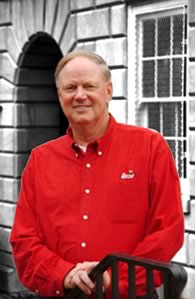
This week’s featured write is John Cumbler, cumblera professor of history at the University of Louisville who is also in phased retirement. He has published 6 books on social, economic and environmental history. His seventh book From Abolition to Equal Rights for All is now in press and should be out this fall. John Cumbler has also published a couple dozen articles but says he enjoys writing books more. He enjoys research and writing, although teaching is his real passion.

How I Write: John Cumbler

Location: Gottschalk Hall, University of Louisville

Current project: I just finished my last book project- an environmental history of a fragile eco-system. I have a couple short pieces on which I am working, but I am taking a break before I launch into a new book length project.

Currently reading: Mysteries and Game of Thrones

  1.  What type(s) of writing do you regularly engage in?

    History pieces, either articles or book length projects. I also write advocacy pieces for popular media.

  2. When/where/how do you write?

    I write away from other people. I usually write at home when I am alone. I mostly write in the late morning and early afternoon, but if I am caught up in something I can write into the night.

  3. What are your writing necessities—tools, accessories, music, spaces?

    I began my writing career with a pencil and paper and then I would type up what I had written. By the time I was working on my second book I was working directly on the typewriter. My third and fourth books were a combination of paper and pencil and personal computer. By the time I was working on my fifth and sixth book I worked solely on the computer. Being alone is key for me.

  4. What is your best tip for getting started and/or for revision?

    Do what works for you! I find it helps best to put down as much as you can on the first go. I work as long as the ideas seem to be fitting together. When they stop fitting together I take a break. I start up again either later in the day or the next day. Some people work best by disciplining themselves to work for a set period of time. That does not work for me. I work when it works for me to do so. When it doesn’t I take a break. Ideas push my writing. Getting started is hard, but putting down something helps move you along.

  5. What is the best writing advice you’ve received?

    Pick up the pencil and start writing. There are always reasons to put off writing, but eventually you have to begin. Better to begin early and fill in the blanks than to keep stalling until you have everything. Everything is a high bar to get over. My advice to all my students is do what works for you.

How I Write: Mike Rutherford — Sports Writer

Our “How I Write” series asks writers from the University of Louisville community and beyond to respond to five questions that provide insight into their writing processes and offer advice to other writers. Through this series, we promote the idea that learning to write is an ongoing, life-long process and that all writers, from first-year students to career professionals, benefit from discussing and collaborating on their work with thoughtful and respectful readers. The series will be featured every other Wednesday.

This week we hear from founder and author of CardChronicle.com, Mike Rutherford, who introduces himself as follows:

My name is Mike Rutherfordrutherford_trophy and I think the first season of Laguna Beach is as good as television is ever going to get. More? All right, then.

I’m 29-years-old, I graduated from Trinity High School and Bellarmine University here in Louisville, and I also attended Brandeis Law School for a short period before accepting my current job. What could have possibly pulled me away from a life of writing that completely prohibits any hinting at the F word? Well, I am the college basketball editor for SBNation.com, which is very F bomb friendly, and am in the middle of my third season with that gig.

I’m also the founder and author of CardChronicle.com, a Louisville sports blog (although we’re not supposed to use that word anymore) that I started all the way back in 2007. Additionally, I co-host a weekly radio show on ESPN 680 and do a variety of other (legal) Internet things.

How I Write: Mike Rutherford

Location: Louisville, Ky

Current project: CardChronicle.com/General college basketball coverage insanity

Currently reading: A Fraction of the Whole by Steve Toltz

  1.  What type(s) of writing do you regularly engage in?

    I’m probably best known for writing blog posts – which I suppose is sort of an all-encompassing title for a number of different types of writing – for my website, CardChronicle.com. Most of the work requirements for my full-time gig revolve around editing, assigning and laying out, but I do write weekly features and occasionally standard news stories. I also write a weekly column for The Voice-Tribune here in town, and do freelance work for various online publications across the country.

  2. When/where/how do you write?

    The where is the easiest to answer, because it’s almost always from home, which I really like. If you’re reading something written by me before, say, 1 p.m. on a weekday, there’s a pretty strong chance that I wrote it topless and in pajama pants. Go ahead and store that image.

    As far as the when is concerned, the biggest drawback of always needing to know if something important is happening in the world of Louisville sports or general college basketball is that it prevents you from being able to dedicate yourself to more exhaustive pieces during the day. This being the case, it’s extremely rare that I write a feature anytime other than really late. Like really, really late. Like, I can tell you the last five anchors of “Up to the Minute,” the CBS news show that airs before the first morning local news (I’ll love you forever, Melissa McDermott).

    There are few things I’ve written over the past five years or so that I’m really proud of which weren’t formed at least partially between midnight and 7 a.m. If I’m being distracted by emails or if I’m worried that something is going to break on Twitter, then I’d just as soon not even attempt to pen something contemplative or overly insightful, because I know I’m going to look back and be disappointed. Plus, I think it’s been scientifically proven that your brain is at its creative peak when you’re the most tired. I can’t remember where I read that, so you’re just going to have to pretend I’m someone reputable and roll with it.

    How do I write? I’d say with reckless abandon and a complete disregard for any sense of dignity. No, but seriously, I do it with words.

  3. What are your writing necessities—tools, accessories, music, spaces?

    Music is out if I’m doing anything where I actually have to think, but I do like having it on for busy work. When I’m up really late, I like to have the television on but muted. I also like to try and find a live program, because otherwise I feel a little disconnected and depressed. It sounds weird, but it legitimately helps me when I have a visual reminder that there are other people in the world awake and accomplishing things while I’m working…I just don’t want to actually interact with them during the process.

    I don’t necessarily need to roam the house or a room, but I like working with the peace of mind that I can if I need to. If I’m in my room and there are people downstairs, or if I know my fiancé (see, you’re thinking this is all really weird, but it’s just normal enough that an incredibly beautiful woman agreed to put up with it for the rest of her life) might ask me for something, I’m totally unable to dive to deeply into anything.

    If it’s daytime work and I haven’t had coffee yet, then I need coffee. I try to save that until after the busy work of the morning and my 10 a.m. editorial call is over. Eating is always a special surprise.

  4. What is your best tip for getting started and/or for revision?

    Whenever you’re in the brainstorming stages of any piece of writing, there’s always one idea or one line that pops into your head and makes you think, “that’s really good.” Start there. Start with what you know is good, and then work backwards once you have a better sense of what your story is or what you’re trying to say.

    As for revisions, I think what works is different for everyone, but for me comfort is a huge factor. I can respect the hell out of a person and still not trust them (or myself) in a situation where I’m asking for their help. I’m extremely stubborn, but I’m also really passive in situations where I think my time might be wasted. So when I’m working with someone who I respect, but who I’m not really comfortable with, I’ll invariably spend the entire time pretending like I’m listening and wondering if they’re buying it. I have to work with someone who I know I can joke with, and who I know I can get into an argument with and not have it be a big deal.

    Also, if it’s a long-term project, make sure to take some time between finishing your first draft and beginning your first revision. I know that’s pretty standard advice, but I’ve ignored it multiple times and ended up digging myself into a huge hole that could have been easily avoided.

  5. What is the best writing advice you’ve received?

    Keep reading things outside of your genre. From November-March, it’s really hard for me to find time to read things outside of game recaps and player profiles, and I think my writing really suffers as a result. I’ve forced myself to avoid that trend as much as possible this year, and I think it’s had a positive effect. Spending time with writing that’s so dissimilar to the type you immerse yourself in for most of the day helps you access an area that would otherwise stay neglected. It’s been a huge help for me in keeping things fresh and distinctive.

How I Write: James Ramsey — University President

Our “How I Write” series asks writers from the University of Louisville community and beyond to respond to five questions that provide insight into their writing processes and offer advice to other writers. Through this series, we promote the idea that learning to write is an ongoing, life-long process and that all writers, from first-year students to career professionals, benefit from discussing and collaborating on their work with thoughtful and respectful readers. The series will be featured every other Wednesday.

This week we are pleased to featureramsey-portrait James Ramsey, president of the University of Louisville. Before assuming UofL’s top post, he served as senior policy adviser and state budget director for Kentucky and senior professor of economics and public policy at UofL. He has served as vice chancellor for finance and administration at both the University of North Carolina at Chapel Hill and Western Kentucky University. He has been associate dean, assistant dean and director of public administration in the College of Business Administration at Loyola University and research associate for the University of Kentucky’s Center for Public Affairs. Dr. Ramsey is a tenured professor of economics.

A frequent national speaker and writer on economic issues in the public sector, Ramsey has  received a number of honors and awards including the Boy Scouts of America Silver Beaver Award in 2012, Greater Louisville Inc.’s Silver Fleur-De-Lis Award in 2011, Louisville Advertising Federation’s Louisvillian of the Year Award in 2010, Western Kentucky University Distinguish Alumni Hall of Fame in 2010, Louisville Defender Outstanding Community Service Award in 2010, Business First Business Leader of the Year in 2007, University of Kentucky College of Business and Economics Alumni Hall of Fame in 2004, the Governor’s Association’s Outstanding Public Service Award in 2001, Kentucky’s Distinguished Economist of the Year in 1999 and the Fern Creek High School Hall of Fame in 1998.

How I Write: James Ramsey

  1. What type(s) of writing do you regularly engage in?


    At this point in my professional career, most of my writing is of a professional nature:
    a. Communications to various members of the university family including Board of Trustees, Board of Overseers, University of Louisville Foundation, Alumni,  etc.;
     Legislators and public policy makers; Donors;

    b. Policy papers;

    c. I still try to do a bi-monthly newsletter to several different groups, both university and non-university, on the state economy and the state’s economic outlook. 

  2. When/where/how do you write?

    I need silence to write.  While I can close the door to my office, there are always interruptions, either in person or telephone.  Also, there is the constant allure of checking the latest e-mails, etc. I do most of my writing in the car.  At an earlier point in my life, my family and I lived 2-1/2 hours from my place of work.  While I would generally leave home early on a Monday morning, I would try to come back one or two nights during the week for our kids’ school events and then home on the weekend.  The point is, I had a lot of time in the car and I became accustomed to dictating all kinds of communications from responses to e-mails, letters, and in some cases professional economics papers.  I continue that practice.  My home is 20 or so miles from the office so I can often dictate 15 or 20 minutes coming in to work – I’m actually dictating my answers to these questions now as I am on a trip out of town and will be in the car for 3 hours.

    My best time to write is early in the morning – fresh, brain working (late afternoon/evening – brain dead).

  3. What are your writing necessities—tools, accessories, music, spaces?

    When I am writing and not dictating I need a yellow pad and a number of pencils with erasers.  I rarely type other than short cryptic answers – not very proficient at typing.

  4. What is your best tip for getting started and/or for revision?

    It depends to some degree on the type of communication but generally I will first think through key messages to convey or points I want to make.  I jot those down and identify data sources or research needed to support the points to make.  I generally have an outline, very topical but from beginning to end and I try to work through it to ensure that my writing has a logical consistency and flow.  Depending on the type of communication I frequently go through multiple revisions; I struggle over almost every word and go back and forth.   In fact, at some point I generally have to say enough is enough or, more realistically, I reach a deadline and the 18th draft, for example, becomes the final version.  I like to have others read my writing that will be presented or communicated to larger groups for a) typos, spelling, grammar; and b) logical consistency.

  5. What is the best writing advice you’ve received:

    a.       Try not to use any words that are not needed;
    b.      Have others proofread;
    c.       Develop an outline with themes that you are trying to communicate.

Finally, I would love to write a book sometime – not about my profession of economics or higher education administration (I’ve done special chapters for books, etc.) but rather a book that deals with real world experiences.  On two different occasions I have started dictating ideas – one was based on a dog we had for 15 years, telling our family story from her perspective.  The last several years of the dog’s life she was deaf so I thought I’d call it, “I Saw It All … And Heard Some Of It.”  There wasn’t anything particularly amazing that happened in our lives and that’s why I probably never pursued the project – rather the dog would relate family experiences, especially difficult situations like death, tragedy, etc. but from the dog’s perspective.  At one time I thought I would have someone transcribe all this to see how bad it was but …

How I Write: Siobhan E. Smith — Media Scholar

Our “How I Write” series asks writers from the University of Louisville community and beyond to respond to five questions that provide insight into their writing processes and offer advice to other writers. Through this series, we promote the idea that learning to write is an ongoing, life-long process and that all writers, from first-year students to career professionals, benefit from discussing and collaborating on their work with thoughtful and respectful readers. The series will be featured every other Wednesday.

Dr. Siobhan E. Smith is an Assistant Professor in the Department of Communication at the University of Louisville. Her research interests involve minority matters in the media, and her single-authored projects explore portrayals of race and gender in reality television. She teaches Introduction to Mass Communication, African Americans in the Media, Television Criticism, and Reality TV. She is a proud graduate of Xavier University of Louisiana, Louisiana State University, and the University of Missouri. Siobhan enjoys watching trashy reality TV and reading.

How I Write: Siobhan E. Smithsmith

Location: Now? At my sister and brother-in-law’s house in Collierville, Tennessee.  For my writing? Usually, on my couch, with trashy talk/reality/court TV on in the background. I have found Snapped marathons on Oxygen and Law and Order: SVU marathons on USA to be very stimulating background fodder.

Current project: Here’s just a few (!): I am very blessed to collaborate with several of my colleagues on very intriguing research. I am still working with my friends in Communication, Pan African Studies, Sociology, and Anthropology on our NIH-funded project, which explores healthy food habits in Louisville and Hopkinsville. I’m also revising a manuscript with my mentee that is an analysis of MTV’s The Shop, revising another with two awesome colleagues from Social Work and Sociology that explores Black men’s use of popular culture to make sense of their romantic relationships, and putting the finishing touches on yet another with my Communication colleagues which will hopefully go out before school starts. In my head, I’m kicking around some individual projects, but they are in their beginning stages and I’m too shy to share those just yet. 😉

Currently reading: Club Monstrosity by Jesse Petersen. It’s a funny and quirky read about modern day monsters (e.g., The Mummy, Dracula, Frankenstein’s Monster) who have a support group, and then they start being murdered. Whodunnit?!

  1. What type(s) of writing do you regularly engage in?

    As you can see from above, usually collaborative research projects. I will do my homework when I work with my friends because I don’t want to let them down. UofL is an AWESOME place for building relationships and friendships. I’m working on being as diligent for myself.

  2. When/where/how do you write*?

    I try to write a little bit every day. But I’ve gotten away from the idea of filling up a blank space with words every single day. Although, if you want to publish, that is a necessity sooner than later. I count meetings, discussions, etc. as time toward my writing. Anything that helps me get closer to that pub counts. Revising a manuscript, looking for literature, etc. When I answered “Location” above, I mentioned my love of my TV and my couch. While not good for my neck or my back, I’m too lazy to drive 20 minutes to campus to work in my office, and apparently too lazy to clean up the “office” in my apartment.

    On a good day, if I don’t have any distractions (the TV doesn’t count b/c it’s my friend), I can literally write for hours (eight or more), from early afternoon to early in the morning. I’ve read that this “binge” writing isn’t good, but I feel a supreme sense of satisfaction when I can see what I have accomplished – whether it’s several new pages of manuscript, many freshly read articles, etc. I admit to being frustrated when I get hungry or need a bathroom break, b/c I get into a groove and don’t want to stop until I get to a good stopping place.

  3. What are your writing necessities—tools, accessories, music, spaces?

    My TV, my laptop, articles annotated and ready to go, and excitement for where a project might take me!!! Sometimes, if I get frustrated w/ a particular section or idea, I’ll write it out and then type it up.

  4. What is your best tip for getting started and/or for revision?

    As one of my professors at Mizzou told me about getting started: Just start! Write a paragraph of the intro, do an outline, start reading the literature. Do it! Then you just have to finish it.

    For revision: Work on one section at a time and give yourself rewards before you go to the next. You can cat-nap, check your e-mail, call your friends, etc. Don’t get beside yourself w/ those rewards, however. Time them (15 minutes is probably enough).

    Give your manuscript to someone you trust. I have a few people I can do this with. It’s great to have another pair of eyes help you see things you couldn’t and help you think through things that were driving you insane.In general, set reasonable goals.

    And remember, whatever you’re doing ALWAYS takes longer than what you originally planned.

  5. What is the best writing advice you’ve received?

    HA- I think ALL of these things I’ve mentioned came from someone else. For those needing to publish research, Belcher’s book (Writing Your Journal Article in Twelve Weeks) is a dream. But I would say, figure out what works best for YOU, and do that. If you like to work in a coffee shop every day, great. If you have to work quietly in a locked room, fine. Do you! Schedule time for your writing, and be good to yourself when you accomplish your goals.

    Best of luck to you in your writing endeavors! Don’t forget the little people when you strike writing gold…

How I Write: Greg Wrenn — Poet

Our “How I Write” series asks writers from the University of Louisville community and beyond to respond to five questions that provide insight into their writing processes and offer advice to other writers. Through this series, we promote the idea that learning to write is an ongoing, life-long process and that all writers, from first-year students to career professionals, benefit from discussing and collaborating on their work with thoughtful and respectful readers. The series will be featured every other Wednesday.

Greg Wrenn, photo by Pak Han

This week we feature poet Greg Wrenn. His first book of poems, Centaur, was awarded the 2013 Brittingham Prize and was published by the University of Wisconsin Press in Spring 2013.  His work has appeared or is forthcoming in New England Review, The American Poetry Review, The Southern Review, The Yale Review, and elsewhere.  A former Wallace Stegner Fellow and a recipient of the Lyric Poetry Award from the Poetry Society of America, he was born and raised in Jacksonville, Florida, and received a BA from Harvard University and an MFA from Washington University in St. Louis.

How I Write: Greg Wrenn

Location: Oakland, California

Current project: An untitled essay on artistic vision

Currently reading: Annie Dillard’s The Writing Life and the Book of Revelation

  1.  What type(s) of writing do you regularly engage in?

    I’ve been writing poetry for over twenty years, and my first book of poems, Centaur, came out in early 2013.  But now I’m hungering to be more direct in my writing, to make arguments and bold statements that feel unsuited to the genre of poetry as I understand it.  And to be much more autobiographical.  I suppose, too, that writing an essay on artistic vision is a way for me to step back from my usual lineated lyrics and ask myself why I write at all.

  2. When/where/how do you write?

    I write in a white leather chair that resembles Captain Picard’s on the Enterprise.  I face a large statue of the Buddha in the corner; a wooden windowsill lined with plantswrenn_writing studio and a ceramic snail, which reminds me to slow down; and a framed poster from the 1915 Panama-Pacific Expo of Hercules using his brute strength to create the Panama Canal, reminding me to exert effort.  I usually write in the late morning to the late afternoon, though I have been known to compose poems in my head while tipsy at a bar.

  3. What are your writing necessities—tools, accessories, music, spaces?

    I almost always begin by handwriting the draft with a mechanical pencil – I like that I can erase what I write, sharpening isn’t necessary, and the graphite marks are so thin and controllable.  I write on a piece of blank computer paper placed on a large art book.  I usually need to write in silence, at home.

  4. What is your best tip for getting started and/or for revision?

    To get started, write with your non-dominant hand.  Have it dialogue with your dominant hand.
    Revise in the bathtub.  It works.

  5. What is the best writing advice you’ve received?

    freedom is daily, prose-bound, routine
    remembering. Putting together, inch by inch
    the starry worlds. From all the lost collections.
    —Adrienne Rich, from “For Memory”