Category: Writing in the Disciplines (WID)

How I Write: Jennie E. Burnet – Professor of Anthropology

Our “How I Write” series asks writers from the University of Louisville community and beyond to respond to five questions that provide insight into their writing processes and offer advice to other writers. Through this series, we promote the idea that learning to write is an ongoing, life-long process and that all writers, from first-year students to career professionals, benefit from discussing and collaborating on their work with thoughtful and respectful readers. The series will be featured every other Wednesday.

Our featured writer this week is Professor Jennie E. Burnet. Dr. Burnet teaches in the Department of Anthropology at the University of Louisville, and her scholarship includes articles on war, gender, identity, and genocide in Rwanda. 

Location: Louisville, Kentucky

Current project: Book about rescuers during the 1994 Genocide in Rwanda, peer-reviewed journal articles, book reviews, and the email never stops.

Currently reading: I’ve been reading my kids’ summer readings list so I’m most of the way through The Watsons Go to Birmingham—1963 by Christopher Paul Curtis. Next up on my Kindle are The Interestings: A Novel by Meg Wolitzer and A Tale for the Time Being: A Novel by Ruth Ozeki.

1. What type(s) of writing do you regularly engage in?

Virtually all of my writing is non-fiction, scholarly writing in socio-cultural anthropology, African studies, and women and gender studies. Over the past week, I’ve been working on a grant proposal and a public policy research report. I am currently working on several articles for peer-reviewed journals.

Jargon laden prose is still in fashion in my field, but I think that most useful ideas can be expressed in everyday language. My first book, Genocide Lives in Us: Women, Memory and Silence in Rwanda was published by a university press, but I tried to make it as accessible as possible. I did my best to write it so that an educated adult reader interested in Rwanda, genocide, or women could pick it up, read it, and hear these courageous women’s stories of survival. My next book, about people who risked their lives to save Tutsis during the 1994 Rwandan genocide, is percolating in the back of my mind. I finished the interviews for the project in May 2014. Soon I will begin outlining it and laying out the stories I will use to illustrate the key points. Truth be told, however, most of my day-to-day writing is email—professional correspondence, feedback to students, etc.

2. When/where/how do you write?

When, where, and how I write constantly changes. I’m a chronic procrastinator so I’m always finding new ways to trick myself into getting down to business. Lately, I’ve been doing most of my writing at my dining room table (I’m here right now!). Our dining room has large windows that let in a lot of indirect sunlight. Because the family eats dinner here every night, I’m forced to clear away my stuff daily so the space doesn’t become cluttered.

On days when I’m really stuck and not making progress, I’ll take a Gregg-lined steno pad and a pen to a coffeeshop, a public library, or other busy but quiet place. For some reason, writing with pen and paper seems less official so I can get a bunch of ideas on paper and worry about wrestling them into a logical progression or cohesive argument later. Paper and pen are my antidote for writer’s block.

In an ideal world, I write best first thing in the morning with my second cup of coffee. When I get started early, I don’t fall into my procrastination cycles. Unfortunately, life almost always gets in the way of this practice. At the moment, I’m trying to get into the habit of writing on my most pressing project when I first sit down to work. Beyond getting my behind in the seat, the key to success seems to be: Don’t open my email, Facebook, the newspaper, or any other electronic distraction.

3. What are your writing necessities—tools, accessories, music, spaces*?

Most often my writing necessities are my computer, good coffee, a chair I can sit up straight in, a clear work surface at the ergonomically correct height, and lots of indirect, natural light. Music distracts me too much, but background noise is OK. Occasionally, I need a change of scenery, a pen with fast flowing ink, and a steno pad.

4. What is your best tip for getting started and/or for revision?

Breaking the writing project down into very small tasks (outlining and making a list of every piece that needs to be done). With this strategy you can make progress everyday even if it’s only 10 minutes at a time. It also lowers the threshold to start and helps minimize procrastination. These strategies have resurrected my writing since I almost never have several, uninterrupted hours before me to write.

5. What is the best writing advice you’ve received?

I’ve gotten lots of amazing advice on writing over the years from mentors, colleagues, writing group members, and friends. It’s such great advice that I’ve integrated into my practice so thoroughly that I don’t remember who gave me which pieces.

Just keep writing—even when you’re certain it’s awful or makes no sense. I often give myself this advice in the voice of Ellen DeGeneres as Dory from Finding Nemo: https://www.youtube.com/watch?v=0Hkn-LSh7es.

Writing in the World – New Ways of Imagining Literacy and Language

Bronwyn T. Williams, Director

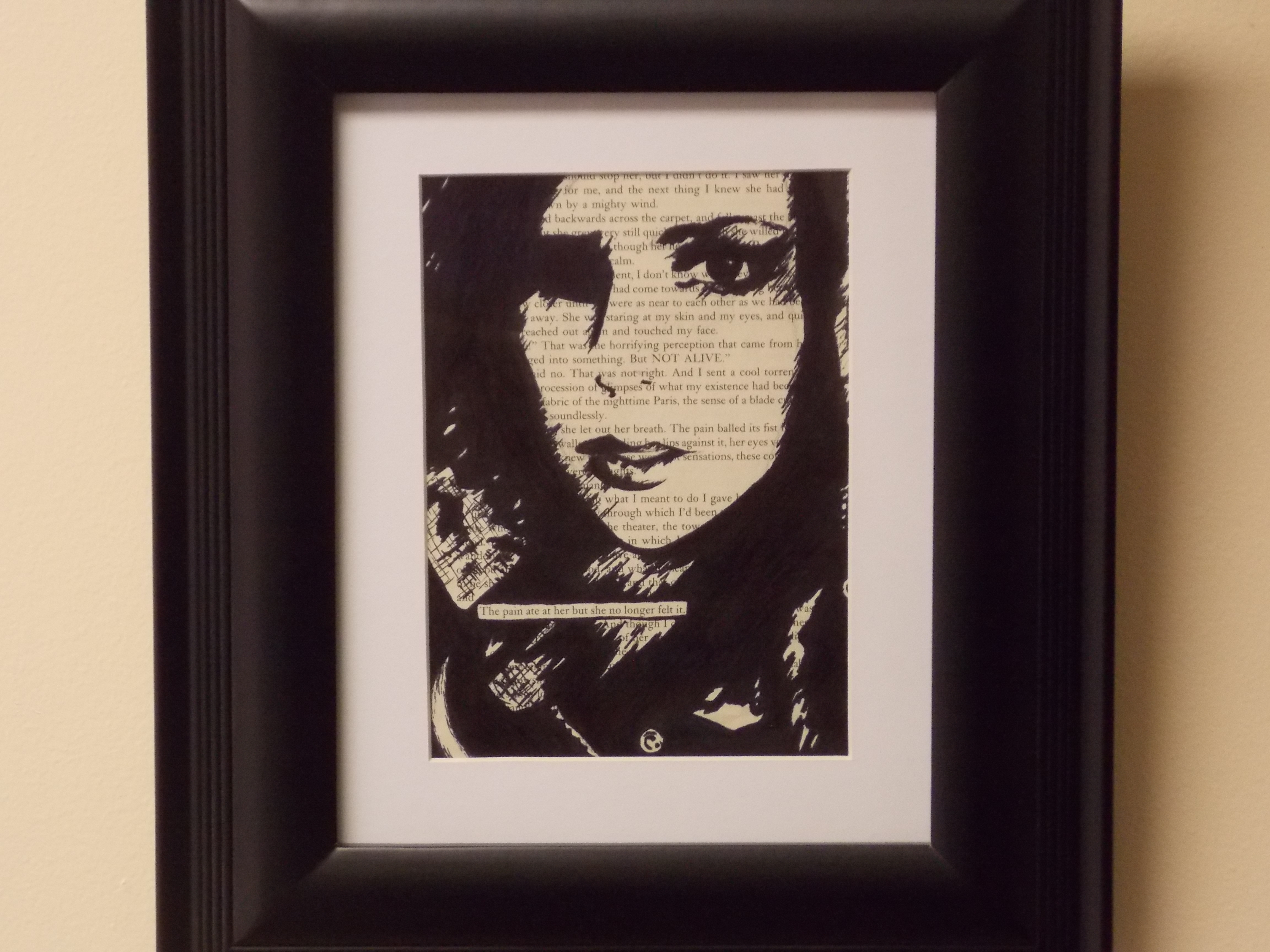
People sometimes think that, on a university campus, you spend all your days with print books and paper – even more so when you work in the University Writing Center. Yet, it doesn’t take long to look around and see that the university is filled with communication happening in so many different modes and media, from words to images to video to sound. This week we had an exciting reminder of how art works as composition and communication with the opening at the Art ShowWriting Center of the student art show titled “Writing in the World.” We had a dozen works from UofL students, all on the theme of “Writing in the World” The theme asked students to represent, through their artwork, how they encountered writing and how writing worked in their daily lives, both on and off campus. The show opened Wednesday to complement the UofL Composition Program’s Symposium of Student Writing and will remain in the Writing Center through the end of the semester.

Some artists, like Peri Crush, worked with the material artifacts of literacy, as seen in her sculpture “Break Through”

“Break Through” by Peri Crush

created from the pages of a book. Other artists drew on the visual representation of words, whether in graffiti as in  Irene Tran’s untitled photograph or Gwen Snow’s dress titled “Egwengwen Ritual Costume.” Some artists made connections to works of literature, such as Katlyn Brumfield’s still life “Poe” and still others played with the slippery nature of language itself, as in the video “Have You Seen the Dog?” a collaboration by ten students.

All the works reminded me  that literacy is simultaneously material and immaterial.

“Egwengwen Ritual Costume” by Gwen Snow

Without the material artifacts of books and pens and paper and computers, we have no reading and writing. Literacy isn’t possible until we create a work that can be interpreted though the sign systems of writing or images. At the same time, literacy is an immaterial concept that requires interpretation and connection, to other life experiences and other texts. Perhaps what the artwork demonstrated most vividly is that literacy is visual. We can not only read written words, but we can also to step back from them to understand how they work aesthetically as form and design.

It was exciting to have so many visitors drawn to the Writing Center to see the artwork, and to vote for their favorite choices. Throughout the day people were talking about the art, and talking about the themes of the show. We presented three awards. The Directors’ Award went to Alexa Helton’s  untitled drawing. The Writing Center Staff Award went to Peri Crush’s “Break Out.” And the People’s Choice award – voted by the people visiting the show — went to “Have You Seen the Dog?”

Our thanks go to Gabrielle Mayer, associate professor of Fine Arts, who organized the show and collaborated with us on the theme, and to all the student artists who contributed work, and whose names are listed at the end of the post.

“Untitled” by Alexa Hilton

At the University Writing Center we are committed to engaging writing and composing in all modes and media and we hope this kind of art and writing show will become an annual event.

If you haven’t seen the art already, do come to the Writing Center, on the third floor of Ekstrom Library, and take a look.

Artists participating in “Writing in the World.”

Yeva Sshurova

Colin Beach

Katlyn Brumfield

“Have You Seen the Dog?”

Brynn Gordon

Kathryn Harrington

Alexa Helton

Beth Heutis

Robyn Kaufman

Colton Kays

Amber Kleitz

Keegan Kruse

Irene Mudd

Renae Osman

Mikayla Powell

Brittani Rosier

Gwen Snow

Irene Tran

How I Write: Mike Rutherford — Sports Writer

Our “How I Write” series asks writers from the University of Louisville community and beyond to respond to five questions that provide insight into their writing processes and offer advice to other writers. Through this series, we promote the idea that learning to write is an ongoing, life-long process and that all writers, from first-year students to career professionals, benefit from discussing and collaborating on their work with thoughtful and respectful readers. The series will be featured every other Wednesday.

This week we hear from founder and author of CardChronicle.com, Mike Rutherford, who introduces himself as follows:

My name is Mike Rutherfordrutherford_trophy and I think the first season of Laguna Beach is as good as television is ever going to get. More? All right, then.

I’m 29-years-old, I graduated from Trinity High School and Bellarmine University here in Louisville, and I also attended Brandeis Law School for a short period before accepting my current job. What could have possibly pulled me away from a life of writing that completely prohibits any hinting at the F word? Well, I am the college basketball editor for SBNation.com, which is very F bomb friendly, and am in the middle of my third season with that gig.

I’m also the founder and author of CardChronicle.com, a Louisville sports blog (although we’re not supposed to use that word anymore) that I started all the way back in 2007. Additionally, I co-host a weekly radio show on ESPN 680 and do a variety of other (legal) Internet things.

How I Write: Mike Rutherford

Location: Louisville, Ky

Current project: CardChronicle.com/General college basketball coverage insanity

Currently reading: A Fraction of the Whole by Steve Toltz

  1.  What type(s) of writing do you regularly engage in?

    I’m probably best known for writing blog posts – which I suppose is sort of an all-encompassing title for a number of different types of writing – for my website, CardChronicle.com. Most of the work requirements for my full-time gig revolve around editing, assigning and laying out, but I do write weekly features and occasionally standard news stories. I also write a weekly column for The Voice-Tribune here in town, and do freelance work for various online publications across the country.

  2. When/where/how do you write?

    The where is the easiest to answer, because it’s almost always from home, which I really like. If you’re reading something written by me before, say, 1 p.m. on a weekday, there’s a pretty strong chance that I wrote it topless and in pajama pants. Go ahead and store that image.

    As far as the when is concerned, the biggest drawback of always needing to know if something important is happening in the world of Louisville sports or general college basketball is that it prevents you from being able to dedicate yourself to more exhaustive pieces during the day. This being the case, it’s extremely rare that I write a feature anytime other than really late. Like really, really late. Like, I can tell you the last five anchors of “Up to the Minute,” the CBS news show that airs before the first morning local news (I’ll love you forever, Melissa McDermott).

    There are few things I’ve written over the past five years or so that I’m really proud of which weren’t formed at least partially between midnight and 7 a.m. If I’m being distracted by emails or if I’m worried that something is going to break on Twitter, then I’d just as soon not even attempt to pen something contemplative or overly insightful, because I know I’m going to look back and be disappointed. Plus, I think it’s been scientifically proven that your brain is at its creative peak when you’re the most tired. I can’t remember where I read that, so you’re just going to have to pretend I’m someone reputable and roll with it.

    How do I write? I’d say with reckless abandon and a complete disregard for any sense of dignity. No, but seriously, I do it with words.

  3. What are your writing necessities—tools, accessories, music, spaces?

    Music is out if I’m doing anything where I actually have to think, but I do like having it on for busy work. When I’m up really late, I like to have the television on but muted. I also like to try and find a live program, because otherwise I feel a little disconnected and depressed. It sounds weird, but it legitimately helps me when I have a visual reminder that there are other people in the world awake and accomplishing things while I’m working…I just don’t want to actually interact with them during the process.

    I don’t necessarily need to roam the house or a room, but I like working with the peace of mind that I can if I need to. If I’m in my room and there are people downstairs, or if I know my fiancé (see, you’re thinking this is all really weird, but it’s just normal enough that an incredibly beautiful woman agreed to put up with it for the rest of her life) might ask me for something, I’m totally unable to dive to deeply into anything.

    If it’s daytime work and I haven’t had coffee yet, then I need coffee. I try to save that until after the busy work of the morning and my 10 a.m. editorial call is over. Eating is always a special surprise.

  4. What is your best tip for getting started and/or for revision?

    Whenever you’re in the brainstorming stages of any piece of writing, there’s always one idea or one line that pops into your head and makes you think, “that’s really good.” Start there. Start with what you know is good, and then work backwards once you have a better sense of what your story is or what you’re trying to say.

    As for revisions, I think what works is different for everyone, but for me comfort is a huge factor. I can respect the hell out of a person and still not trust them (or myself) in a situation where I’m asking for their help. I’m extremely stubborn, but I’m also really passive in situations where I think my time might be wasted. So when I’m working with someone who I respect, but who I’m not really comfortable with, I’ll invariably spend the entire time pretending like I’m listening and wondering if they’re buying it. I have to work with someone who I know I can joke with, and who I know I can get into an argument with and not have it be a big deal.

    Also, if it’s a long-term project, make sure to take some time between finishing your first draft and beginning your first revision. I know that’s pretty standard advice, but I’ve ignored it multiple times and ended up digging myself into a huge hole that could have been easily avoided.

  5. What is the best writing advice you’ve received?

    Keep reading things outside of your genre. From November-March, it’s really hard for me to find time to read things outside of game recaps and player profiles, and I think my writing really suffers as a result. I’ve forced myself to avoid that trend as much as possible this year, and I think it’s had a positive effect. Spending time with writing that’s so dissimilar to the type you immerse yourself in for most of the day helps you access an area that would otherwise stay neglected. It’s been a huge help for me in keeping things fresh and distinctive.

How I Write: Jeffery L. Hieb — Engineering Professor

Our “How I Write” series asks writers from the University of Louisville community and beyond to respond to five questions that provide insight into their writing processes and offer advice to other writers. Through this series, we promote the idea that learning to write is an ongoing, life-long process and that all writers, from first-year students to career professionals, benefit from discussing and collaborating on their work with thoughtful and respectful readers. The series will be featured every other Wednesday.

hiebOur featured writer this week is Professor Jeffery L. Hieb. Dr. Hieb teaches in the Engineering Fundamentals and Computer Engineering and Computer Science departments in the J. B. Speed School of Engineering at the University of Louisville. Although he has a range of research interests, one area of specialty for Dr. Hieb is information assurance and security.

How I Write: Jeffery L. Hieb

Location: In my office or my office at home

Current project: A technical report on the availability and effectiveness of currently available industrial control system cyber-security technology for the Dams Sector.

Currently reading: What the Best College Professors Do, Collaborative Learning Techniques: A Handbook for College Faculty, and The Immortal Life of Henrietta Lacks

  1. What type(s) of writing do you regularly engage in?

    a. Conference and journal papers
    b. Technical reports
    c. Letters of recommendation
    d. Grant and research proposals

  2. When/where/how do you write?

    a. In my office or in my office at home.
    b. Almost any chance I get

  3. What are your writing necessities—tools, accessories, music, spaces?

    a. I write on my notebook computer, and since I have it with me most of the time I can write almost anywhere.  I usually like to have a cup of coffee next to me when I write.

  4. What is your best tip for getting started and/or for revision?

    a. When I have trouble getting started I like to stand up and talk about the subject matter to an imaginary audience.  Usually after 10 to 15 minutes I want to start writing down something I have said.

  5. What is the best writing advice you’ve received?

    a. The best advice I ever received was from Dr. David Shaner, my philosophy professor when I was an undergraduate.  He once told me: “Just throw up on the page, you can clean it up later”.  I have always found that helpful when starting to write something, it takes away the pressure of getting it right at the beginning, and acknowledges that rewriting/revising is part of the writing process, not what you do to fix or correct something you got wrong initially.

How I Write: Judith Fischer — Legal Scholar

Our “How I Write” series asks writers from the University of Louisville community and beyond to respond to five questions that provide insight into their writing processes and offer advice to other writers. Through this series, we promote the idea that learning to write is an ongoing, life-long process and that all writers, from first-year students to career professionals, benefit from discussing and collaborating on their work with thoughtful and respectful readers. The series will be featured every other Wednesday.

This week we hear from University of Louisville Law professor Judith Fischer. Professor Fischer teaches legal writing and women and the law, and her scholarship includes articles on legal writing, advocacy, women and the law, and law school teaching. Her book Pleasing the Court: Writing Ethical and Effective Briefs examines professionalism in legal writing through numerous examples of judges’ reactions to lawyers’ errors.fischer

How I Write: Judith Fischer

Location:     Law school

Current project: Article on brief writing

Currently reading:  Student papers!

  1.  What type(s) of writing do you regularly engage in?
    For work, I write scholarly writing for books or law review articles and less formal articles for newsletters or bar journals. I also do other miscellaneous kind of writing, such as commenting on student papers and writing emails and letters of recommendation.And of course I also do personal writing, such as emails and thank-you notes in hard copy.
  2. When/where/how do you write?
    For work, I often write during the standard work day, and sometimes I write well into the evening. I write with a computer at a table or desk.
  3. What are your writing necessities—tools, accessories, music, spaces?
    Computer—pencils—pens—paper for printing numerous drafts—whatever sources I need for the project. For my last scholarly article, that included a stack of relevant books.
  4. What is your best tip for getting started and/or for revision?
    To start: Decide when you need to get started and then just start. For example, if I need to have a scholarly article finished by August 15, I know I need to start researching by May and start writing by the end of June.  So I do that.For revision: Read the document aloud while imagining an audience. For example, read the document to an imaginary critical colleague.
  5. What is the best writing advice you’ve received?
    The way to write an article is to start by taking off your shoes. Get down underneath your desk and nail your shoes to the floor. Then get back in your chair, put your feet in your shoes, and write.

What I Learned about Writing a Dissertation through the Retreat

Laura Detmering

I would like to begin this post by echoing what Barrie says in her post. Like Barrie, I have worked as an Assistant Director in U of L’s Writing Center since the fall of 2010, and I am sad to leave this space for many reasons, most of which is the community of people who have supported me as I work on my own dissertation. This community includes not only the incredible staff of the Writing Center, but also the various individuals I have worked with as a consultant, all of whom have taught me a great deal about writing. It has been a pleasure to be a part of this Writing Center, and I could not choose a better way to end my experience as an Assistant Director than by working at the Dissertation Writing Retreat.

Every day last week, I watched a group of ten dedicated Ph.D. candidates enter the Writing Center, select a table or other writing space and write for several hours, taking few breaks and simply committing to the process. Participating in this retreat taught me a lot about writing a dissertation, and it also reinforced much of what I already knew. First, and probably most obvious, the retreat reminded me that no two people approach the process in the same way, so it is important to measure your success only against yourself and not others. For one person, success might be drafting a solid paragraph in a day, whereas for another, success might mean drafting four to six pages in a day. Of course, no one can write an entire dissertation in a week, and, fortunately, no one tried. Instead, each individual participating in the retreat set realistic, achievable goals, and I think most people met them (and I met my own goals, sitting in my office, writing while the participants were writing).

Probably the most important thing I learned during the retreat, though, is the importance of having a community of people to write your dissertation alongside. This community can be fairly diverse. For instance, I consulted with a Ph.D. candidate in Mechanical Engineering and a Ph.D. candidate in the Humanities. Because both of these individuals are in different fields from one another and from me, much of our time was spent discussing their individual projects, with each of them explaining to one another and to me what kind of research they are doing, how dissertations are constructed in their fields, and how they as writers were approaching the process. On Thursday, I led a workshop on overcoming obstacles to writing a dissertation, and as a group, everyone participating in the retreat discussed some obstacles that were arising and how to approach them. One of the suggestions I made at that time, which I personally have found beneficial in writing my own dissertation, is to try to explain your project to a person outside your field of study. By doing this, we are forced to think very carefully about what we are trying to do and how best to articulate our ideas to others. Thus, this community of people to write your dissertation alongside does not necessarily have to be just other Ph.D. candidates, but it can include anyone in your life—a parent, a child, a spouse, a sibling, a friend, etc.

For me, personally, watching a group of ten people sit and write or discuss their dissertations for eight hours a day pushed me to work on my own dissertation. Having a community of people who are also writing dissertations to meet with and discuss your work is also beneficial, then. I would encourage anyone who is writing a dissertation or a thesis or really any piece of writing to develop a similar community, a group of people who make you feel accountable to them, as well as to yourself. Seeing other people writing (and struggling) along with you is powerful and motivating in a way that writing in isolation cannot be. Certainly, there are times when we have to find space by ourselves to write, and doing so has a value of its own, but having a community of people to engage with, even if that engagement is silent, while writing a dissertation, is important.