
Tika Lamsal, Assistant Director of Graduate Student Writing
Working at the writing center with a wide range of writers from domestic to international students (whom I call world majority students, 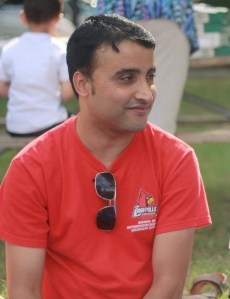 following Fox, 1994 – see Listening to the World for details), I have had an opportunity to broaden my tutoring experiences in a different way than by teaching various English courses. A face-to-face consultation with writers, although similar to other conferences and peer review sessions with students in class, has provided me with more confident communicative moments I share with other writers. Having to understand writers’ concerns and prioritize agendas based on their interests and needs seems more meaningful than doing guesswork on my part for their writing. More meaningful than these, however, are the learning moments from the writing of students that hail mostly from different rhetorical traditions, language and cultural backgrounds. Writing traditions vary and differ in various cultures; writings don’t get less sophisticated or more advanced depending on which part of the globe they originate from; writing styles simply are different and have different rhetorical values. These ideas have reinforced as I continue to work with more world majority students at the writing center.
An international graduate student, for example, couldn’t understand why she had to avoid the lengthy background she had provided before she even touched on the key issue or idea in her article. She also seemed surprised when I suggested during a consultation that it was okay to use “I”, and active voice structures in her paper, although it was a formal research project. We first had to talk about different rhetorical choices used in the context of her home country before moving to the nuts and bolts of academic writing in US universities. Similarly, another world majority writer found a natural way of communicating and “adding flavor” to her academic writing by peppering her words and even sentence structures occasionally with her native language expressions.
These are only two of the scores of other examples in daily tutoring situations when we encounter different ways of writing, especially through the works of world majority students. Initiating a dialogue during writing consultation, I have found most of the world majority students well prepared to share their past cultural and academic experiences, which communicate to us a useful conceptualization about the ways they write or the rhetorical styles they choose. What they need for such a dialogic initiation is our attention or care to their experiences. For instance, when I open the conversation with my own experiences of working with differences in writing, the writers seem very intent on bringing in their own experiences in a suggestive and helpful way for me to devise my tutoring strategies. Once they get to know the differences, the world majority students are more likely than before to understand and work towards changing their writing style in order to meet their assignment expectations, despite the difficulty they face in the beginning to adopt new academic conventions. This interactive way of consulting has helped me not only learn about different rhetorical strategies underlying the writing of world majority students but also refine and solidify my own tutoring practices. Meanwhile, majority of the issues writers want to work on during most of the sessions happen to be similar ones, irrespective of writers’ positions as domestic or world majority students. When working with graduate students in both HSC and Belknap, for example, I come across similar concerns or issues of academic writing, such as grammar, nuances of research writing, transition, consistency of verb tenses, etc., that students ask for help.
However, while most of the writing issues may be commonly resolvable and negotiable when working with both domestic and world majority writers depending on the nature of writing, cultural and language contexts inevitably trickle in the writing of the latter as we deal with global level concerns. Since it seems unimaginable to generalize students’ writing strategies based on the regions or countries of origin, it becomes viable to start with a general conversation about how the students are accustomed to writing, what course expectations they have for the assignment, and how the students can work towards meeting those expectations. Being attentive to their specific cultural and academic contexts, we can work together with world majority students to help them produce meaningful writing and academically succeed in the university. With their understanding of how variety of languages and cultures can influence their writing styles, most of the world majority students seem to be more than willing to learn new writing conventions in order to both gain knowledge and succeed in their programs. I continue to learn from those teachable moments in the writing center.


 University of Louisville Writing Center