Author: UofL University Writing Center

Getting Started with Revising

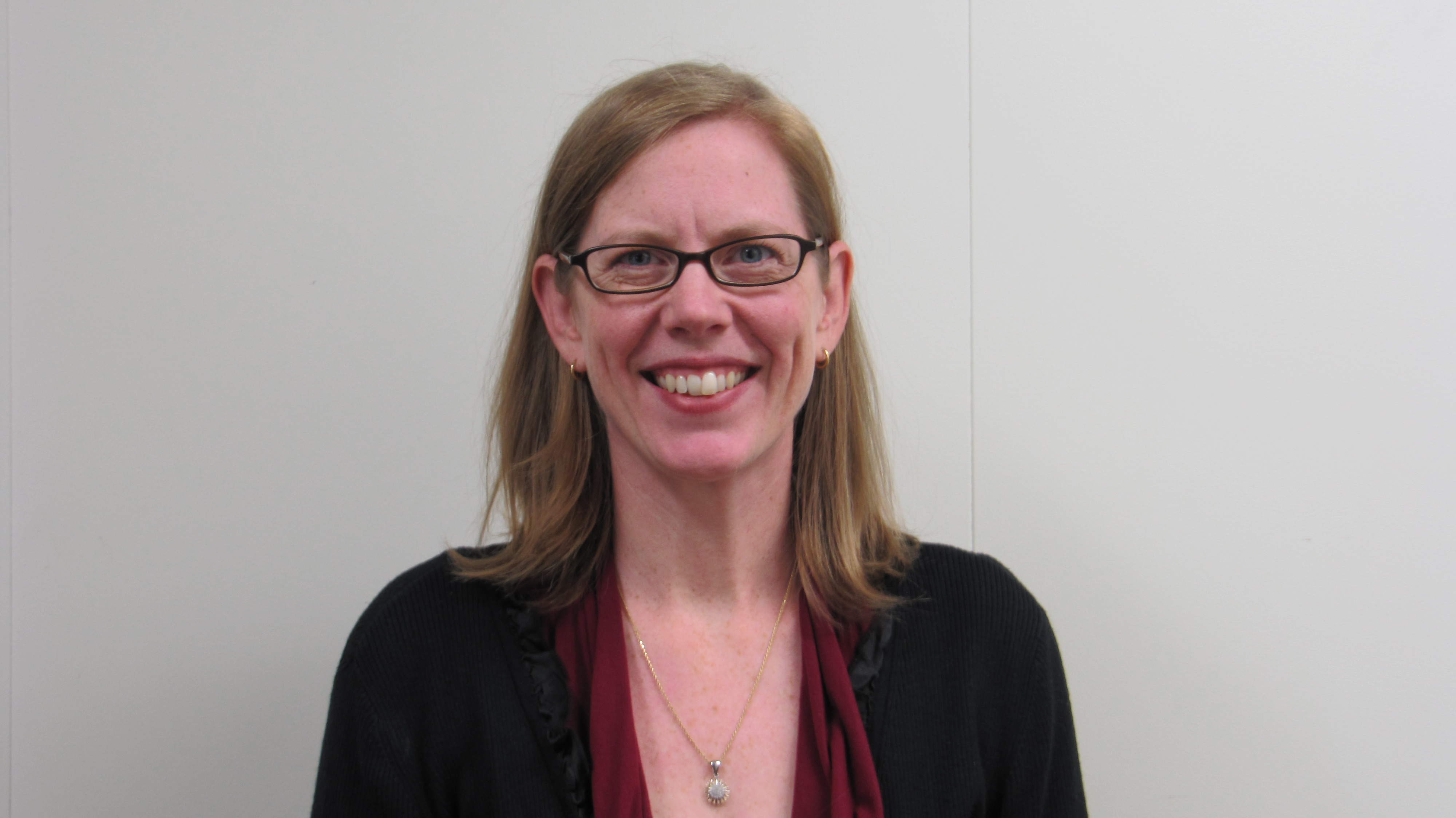
Adam Robinson, Associate Director

With a week left to go in the semester, I imagine that many of you are finishing up final revisions.  I have some advice about how you might start the revision process.

AdamFirst, I recommend that you think about revising and editing as two different processes.  Revising is connected to rethinking your argument, reorganizing parts of your paper, rewriting paragraphs, adding new sources, taking out paragraphs that don’t seem to fit in the paper.  Editing focuses more on proofreading your grammar and punctuation errors, checking your citations, rephrasing sentences that may confuse readers.  Revising and editing are equally important, but as you probably know through experience, revision takes a lot more time.

It’s useful to make this distinction between revising and editing for a few reasons, but one in particular comes to mind.  If your professor asks you to revise, then you know based on the distinction you have made between revising and editing, that she or he wants you to make some significant changes to your paper—to restate your thesis—to rewrite a section of the paper—to add new sources that strengthen your argument.  Your professor does want you to edit your work too—but editing doesn’t do the work of revision.

Okay…so you have in your mind the differences between the two.  What next?

I’d reread your paper.  Odds are you haven’t read your paper in a while, so it’s very likely you will have a new perspective when you do so.  Hopefully, you’ll notice places where you can add more analysis or you’ll notice a paragraph doesn’t have as much substance or insight as some of the others in your paper.   Hopefully, you’ll notice some parts of your paper you really like too.  You may decide to focus your revision on what you feel you are doing well.  That’s an important thing to note.  Oftentimes, a writer will view the “good parts” of her or his paper as the parts that can be left alone when revising and editing.  But sometimes the opposite should happen.  Sometimes the best section of a paper needs to be more than a section of the paper—it needs to be the whole paper!   The big point here is that a big part of revision has little to do with actual writing—thinking or rethinking is equally important.

After you’ve reread the paper and started to come up with things to work on, check again on what you were asked to do with the assignment.  This starts with taking another look at the assignment sheet as it usually will have some clues about how you can approach your revision.  Not only do assignment sheets have lists of requirements (this many sources, this many pages, etc.), but often they have insight into why your professor asked you to do the assignment to begin with.  This seems obvious I know, but it’s easy to miss assignment details when you write your first draft.  Writers are often just eager to get thoughts down on the page with early drafts, so details can get skimmed over.

Look at professor comments if you have them.  Read those comments as soon as possible to be sure you understand what you’re professor has written—you may need clarification.   And I recommend drawing a diagram—or some kind of chart—where you organize the comments your professor gave you.  What comments ask you to revise?  What comments ask you to edit?  If you take anything away from reading this blog, it may be the following the point: Be sure to address those revision comments.  It’s easy to fix commas and misspelled words (the editing stuff)—it’s harder, for example, to strengthen your paper by reworking your introduction so it frames your paper more effectively or by rewriting a paragraph so it connects better to your argument.

Finally, this comment relates to any paper that requires you to use sources or requires you to analyze a book, film, etc.—which is a lot of papers in college.  Before you go and track down more sources, go back to the sources you already have.  For example, you may be citing a scholarly source or analyzing a novel.  Scholarly sources and novels can be pretty dense; you usually need to read them more than once to really get everything the writer is trying to say.  So rereading all or part of that source again may allow you to draw on some more material.  And also go back to your paper, to the places where you use sources.  Are you getting everything you can out of the source?  When you quote, do you take time to discuss the quote and really flesh out for the reader what you see when you read the quote?  Basically, what I mean to get across here is that you may have all the material you need right in front of you.  Or you may not!  You may need to read some more.  You may need to change the direction of your paper.  But at least doing some of this preliminary work can help you figure out what you will need to do to successfully revise.

Before I end this blog, I have to credit Alex Clifton (a consultant in the University Writing Center) who  created a wonderful handout about revision strategies.  Check out Alex’s handout, along with all of our other newly revised handouts, all of which, are located on our new website.

Good luck revising!

Adam
5 Pieces of Writing Advice to Reconsider

Jacob Robbins, Consultant

Giving writing advice, by its very nature, is a difficult minefield to navigate. It is often handed down in what appear to be timeless platitudes, as if only recently and begrudgingly translated from the Latin. While they are situationally applicable, the following instances of (mis)guidance suffer from their often indiscriminate use:

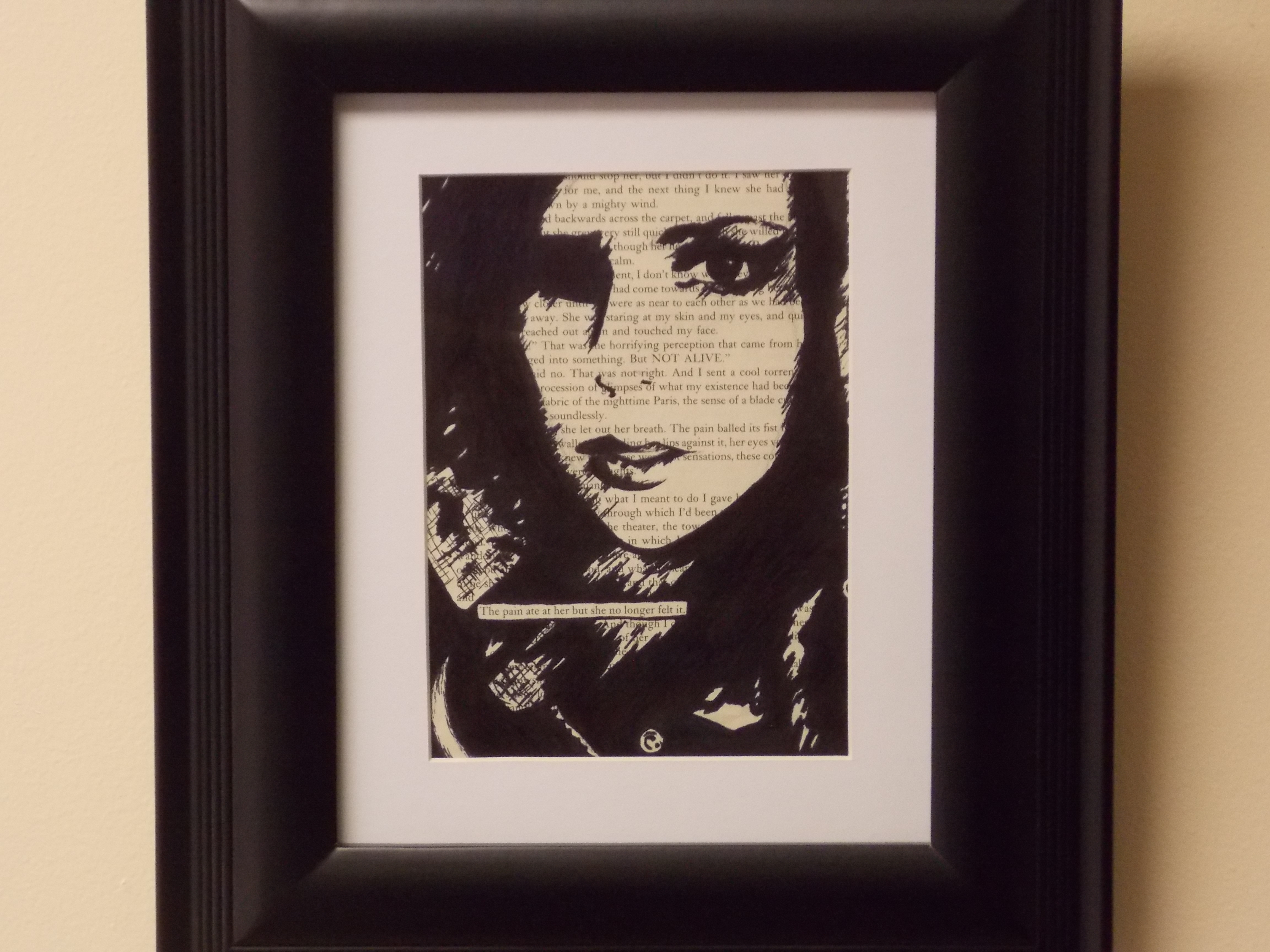
“Show don’t tell”DSCN1622

In many cases, this is actually excellent advice. There is no easier way to guarantee that one’s personal statement is dull than by turning a riveting personal anecdote into a grocery list or instruction manual. Vivid details ensnare the reader, and can ensure persistent attention. However, continuing to do so with no reprieve is not only exhausting, but also tends to dilute the descriptions with increased use. Showing often draws its power from poignant use, so blanketly following this rule can actually have the opposite intended effect.

“Clichés are bad”

This one may be the hardest to put a half-hearted defense for. If you just use the same old, same old tired phrases, you’ll just end up beating a dead horse. Also, the individual meanings you intend to impart upon your utterances may be lost in the process. That being said, if you are attempting to win the The Bulwer-Lytton Writing Contest, clichés are right on the money.

“Edit as you go”

One should absoltutely edit as they go, because that indicates attention to the minutiae of the paper. However, it seems as if this statement excludes the possibility of (or diminishes the importance of) editing on a largger, more global level. In other words, this maxim only covers hald the equation. Editing is a constant process that requires attention to meticulous details as well as the big picture, rather than one to the exclusion of the other.

“Only use said”

There is no denying that “said” is the most direct way to indicate speaking attribution. However, the monotony of using it exclusively can quickly develop a white-washing effect similar to that which is created by the overapplication of the other “rules” found on this list. “People say things in a variety of ways that can be reflected in language; it would be a shame to unnecessarily limit our capacity to describe that variation,” mused Jacob.

“Write what you know”

This is by far the worst offender of the bunch. Depending on one’s perspective (or philosophical stance), the argument can easily be made that knowing itself is a tenuous and perhaps impossible goal. Conversely, writing what you know may be the only possible option. Read generously, this statement warns against fabrication. Hopefully this is not something we need remind ourselves constantly as we write.

At points, I was perhaps too critical or too ungenerous in assessing the value of these time-honored directives. However, I believe that negative experiences or habits connected to the constant overapplication of these phrases can be put in perspective when viewed through this critical lens. As in most (if not all) things, these expressions are best used in moderation, rather than generally.

How I Write: Christy Metzger — Student Services Director

Our “How I Write” series asks writers from the University of Louisville community and beyond to respond to five questions that provide insight into their writing processes and offer advice to other writers. Through this series, we promote the idea that learning to write is an ongoing, life-long process and that all writers, from first-year students to career professionals, benefit from discussing and collaborating on their work with thoughtful and respectful readers. The series will be featured every other Wednesday.

Christy Metzger is the director for the Office of First Year Initiatives at the University of Louisville. In August 2006 she began her work in this field when she was charged to undertake the university’s more coordinated first year experience efforts. Christy earned Bachelor of Arts degrees in Spanish and Psychology from Transylvania University and a Master of Arts in Higher Education Administration from the University of Louisville.

How I Write: Christy Metzger

Location: Belknap Campus (Strickler Hall 126)metzger

Current project: I’m working on my own This I Believe-style statement for Book-in-Common.

Currently reading: The Lowland by Jhumpa Lahiri and the Anne of Green Gables series by Lucy Maud Montgomery

  1.  What type(s) of writing do you regularly engage in?

    Since I finished my Master’s degree, the vast majority of my writing is business writing, which I undertake for my job. No matter what the task, it’s important that I’m mindful about how I craft my message; I do believe that attention to tone, language, clarity and a mistake-free end product makes a big difference in whether I’m successful in my work or not.

    Email consumes most of my writing time, as it does for many of my colleagues. I think it’s harder to persuade, clarify, inform, activate, etc. over email than it is with an in-person audience, so depending on the subject matter and recipient it may be a quick email or it might be one I really have to draft and revise. (I do a lot more drafting and revising than I do quick emails.)For executing our programs themselves, I’ve written things like facilitation guides and instruction manuals, reading guides and tips, and classroom materials.   And to promote and assess our programs, I will create program brochures, web content, requests for funding, surveys and annual reports.

  2. When/where/how do you write?

    Usually I’m writing in my office at work. However, if what I’m writing feels like a more difficult task I might take that home to work on – perhaps nestled into a comfortable chair or outside on my deck when it’s warm.

    When I was writing papers in graduate school, I found I was most productive at a coffee shop, where the ambient noise kept me alert but where I didn’t have the distractions (or beds) of home to sidetrack me.

  3. What are your writing necessities—tools, accessories, music, spaces?

    I type faster than I write by hand now, so I much prefer to write on a computer. I enjoy having a cup of coffee nearby, whatever notes I need, and some sort of music in the background (right now it’s afternoon decaf with peppermint mocha creamer and Don Williams crooning old country standards). If I’m at home, it’s certain that my sweet dog is nestled right up next to me.

  4. What is your best tip for getting started and/or for revision?

    My best advice is to first be clear about the key ideas you are trying to convey. That way, you can focus your writing product around that. When I started writing longer papers with open-ended topics and many different sources, I found that it helped me to begin to put my notes about each article in an outline form in a Word document. Along the way, I’ll pop in key points and thoughts I am having in response to the reading, as well as important quotes I might want to use later. The Word outline format lets me group similar ideas and move things around, and it’s from these notes that my papers grow. Sometimes whole paragraphs practically write themselves because I’ve already done a lot of the thinking along the way. When at all possible, I have someone else read and proof my writing.

  5. What is the best writing advice you’ve received?

    The best advice I received was about writing emails to my colleagues. I’m much more cognizant now that my main idea or request needs to be in the first few sentences of the email so that it’s quickly seen by the recipient. I have a tendency to want to provide a lot of context to help my reader understand why what I’m conveying is important. However, because of that my main thought or request often wound up at the bottom of a lot of writing, where it was perhaps overlooked. (I even moved my main idea up in this paragraph in case my reader lost interest to this point.) It’s a small point to make, but I do believe it can make a tremendous difference.

The Last Stretch – Making it through Final Papers

Jamison Huebsch, Consultant
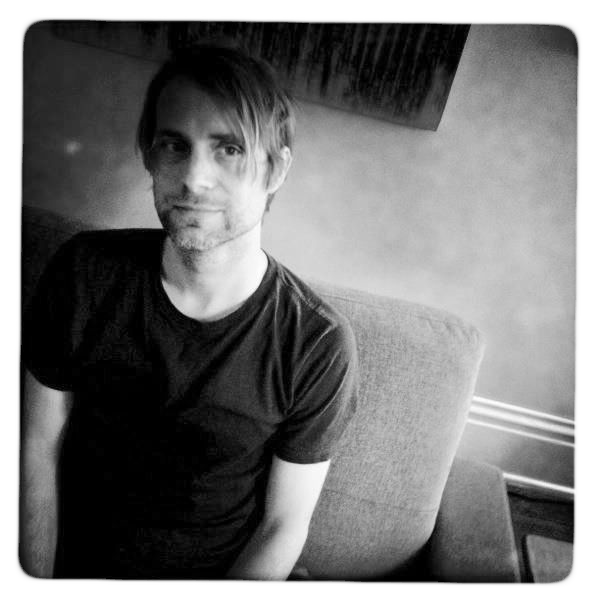
DSCN1642
It can be stressful near the end of the semester. You have final papers due, perhaps in most of your classes, and you’re often not sure if they will be finished in time and to your professor’s standards. At least I’m often worried about that. Perhaps you haven’t even started your final papers yet. If so, don’t panic because it happens to the best organized of us, but try not to let nerves stop you for working on your paper. After all, the night before its due will come not matter what, and it’s best if you’re not trying to pull an all-nighter cranking something out. To help out I’m going to offer some tips on getting your final paper across the semester finish line, so that you can enjoy your break with everyone else:
  1. Manage Your Stress! :Take note that I didn’t write “Don’t stress”. That is almost impossible, as people have been stressing out about finals since classes instituted them. Finals are a stressful time, so learn to manage it instead. Since you know you are going to be stressed (and maybe are already suffering from some), managing your stress so you can remain productive is very important. Some of the most helpful tips on dealing with finals stress can be found in an article by our own Carly Johnson here: (https://uoflwritingcenter.wordpress.com/2014/03/17/keep-calm-and-start-your-final-projects/).
  2. Getting started:If you haven’t started on your final papers yet, it’s time to brainstorm. Your professors will give your guidelines for what will be acceptable paper topics, but it can be hard to pick what you should write about sometimes.  Since almost every paper will be based on issues discussed in class, you might think about what have been the major themes in the class so far. Perhaps you had a favorite book or topic, and you can expand on that. Other times you wish something had been covered in class but it wasn’t, so you can explore it on your own. Regardless of what you pick, deciding as early as you can and getting to work on collecting your research and materials is crucial.  Bounce ideas off friends who haven’t gotten sick of you talking about school. Making an appointment with the Writing Center can also be helpful, even if you’ve gotten started late, as we can help you at any step of the way from brainstorming all the way to revision.
  3. Plan Your Work:Hopefully you already have an idea for your final paper. Review the guidelines your professors have given you for your final paper. You might work on an outline, or start your bibliography or reference list. Sometimes it can be helpful, if you have the time, to annotate your research sources as a form of pre-writing. I personally find it helpful to make a checklist of any major requirements the paper should have, in my own work this is often things like which sources I have to add to my literature review or which theories apply to the topic I’ve chosen. Your class may vary, but making up a list of important details to cover can help you to avoid missing anything important. It also gives a real sense of accomplishment as you tick off things from your list as you write them, and this can be very important on large projects when you might spend days writing. Completing small goals and recognizing it can help you stay motivated.
  4. Revision:Once you’ve a draft done of your final paper, you’re nearing the finish line already. However revision and polishing are important steps before the final draft stage, and can often make a big impact on your final grade. The first thing would be to review any feedback you have gotten from the professor on past work. Usually you’ve turned in some sort of preliminary assignments, giving you a chance to see what the teacher thought you did well or what you still needed work on. When you revise take the time to do multiple passes, each one focusing on a specific goal like improving your transitions or checking if you used passive voice. Try reading your paper aloud, to yourself or a friend, so that you can hear how it sounds (and this is a good technique for catching errors). Double check your thesis, and make sure that it agrees with your paper all the way through to your conclusion. This is another good time to consider coming to the Writing Center if you can.
  5. Relax!:To twist a meme: Summer is coming! Once you’re done with your paper, take some space from it. If it’s due tomorrow, then go celebrate being finished. If it’s not due for a while, then take a day (or two!) off before giving it one last once over for revision. It can be very helpful to get some distance from your own work when doing revision. Once that is done however, go turn it in! Summer awaits!Make sure you get plenty of rest, and enjoy what time off you have, if you are like me you will be back in class doing it all over again soon enough. As you near the end of your particular academic goal, You might even begin to miss the whole crazy cycle.

Writing in the World – New Ways of Imagining Literacy and Language

Bronwyn T. Williams, Director

People sometimes think that, on a university campus, you spend all your days with print books and paper – even more so when you work in the University Writing Center. Yet, it doesn’t take long to look around and see that the university is filled with communication happening in so many different modes and media, from words to images to video to sound. This week we had an exciting reminder of how art works as composition and communication with the opening at the Art ShowWriting Center of the student art show titled “Writing in the World.” We had a dozen works from UofL students, all on the theme of “Writing in the World” The theme asked students to represent, through their artwork, how they encountered writing and how writing worked in their daily lives, both on and off campus. The show opened Wednesday to complement the UofL Composition Program’s Symposium of Student Writing and will remain in the Writing Center through the end of the semester.

Some artists, like Peri Crush, worked with the material artifacts of literacy, as seen in her sculpture “Break Through”

“Break Through” by Peri Crush

created from the pages of a book. Other artists drew on the visual representation of words, whether in graffiti as in  Irene Tran’s untitled photograph or Gwen Snow’s dress titled “Egwengwen Ritual Costume.” Some artists made connections to works of literature, such as Katlyn Brumfield’s still life “Poe” and still others played with the slippery nature of language itself, as in the video “Have You Seen the Dog?” a collaboration by ten students.

All the works reminded me  that literacy is simultaneously material and immaterial.

“Egwengwen Ritual Costume” by Gwen Snow

Without the material artifacts of books and pens and paper and computers, we have no reading and writing. Literacy isn’t possible until we create a work that can be interpreted though the sign systems of writing or images. At the same time, literacy is an immaterial concept that requires interpretation and connection, to other life experiences and other texts. Perhaps what the artwork demonstrated most vividly is that literacy is visual. We can not only read written words, but we can also to step back from them to understand how they work aesthetically as form and design.

It was exciting to have so many visitors drawn to the Writing Center to see the artwork, and to vote for their favorite choices. Throughout the day people were talking about the art, and talking about the themes of the show. We presented three awards. The Directors’ Award went to Alexa Helton’s  untitled drawing. The Writing Center Staff Award went to Peri Crush’s “Break Out.” And the People’s Choice award – voted by the people visiting the show — went to “Have You Seen the Dog?”

Our thanks go to Gabrielle Mayer, associate professor of Fine Arts, who organized the show and collaborated with us on the theme, and to all the student artists who contributed work, and whose names are listed at the end of the post.

“Untitled” by Alexa Hilton

At the University Writing Center we are committed to engaging writing and composing in all modes and media and we hope this kind of art and writing show will become an annual event.

If you haven’t seen the art already, do come to the Writing Center, on the third floor of Ekstrom Library, and take a look.

Artists participating in “Writing in the World.”

Yeva Sshurova

Colin Beach

Katlyn Brumfield

“Have You Seen the Dog?”

Brynn Gordon

Kathryn Harrington

Alexa Helton

Beth Heutis

Robyn Kaufman

Colton Kays

Amber Kleitz

Keegan Kruse

Irene Mudd

Renae Osman

Mikayla Powell

Brittani Rosier

Gwen Snow

Irene Tran

How I Write: Kyle Coma-Thompson — Novelist

Our “How I Write” series asks writers from the University of Louisville community and beyond to respond to five questions that provide insight into their writing processes and offer advice to other writers. Through this series, we promote the idea that learning to write is an ongoing, life-long process and that all writers, from first-year students to career professionals, benefit from discussing and collaborating on their work with thoughtful and respectful readers. The series will be featured every other Wednesday.

This week’s feature writer is novelist Kyle Coma-Thompson, whose most recent book is The Lucky Body (Dock Street Press, 2013). His work has appeared or is forthcoming in Boston Review, AGNI, The American Reader, New American Writing, Bat City Review and elsewhere. He has held fellowships as an Axton Fellow in Creative Writing at University of Louisville, a Bennett Fellow at Phillips Exeter Academy, and a Hoyns Fellow at the University of Virginia.

How I Write:
Kyle Comacoma-thompson-Thompson

Location: Louisville, KY

Current project(s):
A novel, a collection of short stories, a collection of poetry.

Currently reading:
Cemetery of Mind—Dambudzo Marechera;
To Each His Own—Leonardo Sciascia

  1.  What type(s) of writing do you regularly engage in?

    Fiction and poetry.

  2. When/where/how do you write?

    What I write during any given part of the day depends on how much time I have available. If I have a half-hour or hour block of time before my next commitment, I write poetry. If I have two or more hours, fiction. Often I’ll write poems before beginning on a short story, to loosen up.

  3. What are your writing necessities—tools, accessories, music, spaces?

    Whatever’s at hand, I’ll make use of. I keep a pocket notebook to write in while I’m walking, driving, at work, wherever. I keep a notebook for story ideas. Then groupings of notecards on which I sketch out the linear structure of events and details of those story ideas. Then I write drafts of stories or poems on a computer, either at home or at work.

  4. What is your best tip for getting started and/or for revision?

    Take joy in writing garbage. Forget about any needs or desires you may have to write well or to complete an accomplished piece of work. Just generate an overflow of kinetic slop, then sift through it—often the best ideas or stretches of writing come from uninhibited, unambitious play. In other circles, this is called “brainstorming”.

  5. What is the best writing advice you’ve received?

    Even before you even begin to think of writing, empathetic detachment should be a priority. Which means: in a piece of writing, avoid the temptation to address the reader using the first person plural.

Making Your Writing Process Work for You

Layne Gordon, Consultant

In the Writing Center this semester, I have worked with several students who are either returning to formal writing after awhile, or are being asked to do formal writing for the first time. (By formal writing here, I’m referring to things like research papers or argumentative papers that typically require the use of outside sources.) Most of these students have expressed some form of anxiety over the writing process itself—the most common of these being an uncertainty over how to begin the paper.

It has long been established in the field of composition that the writing process is not as linear as past scholars used to believe. You know the old drill: brainstorm-draft-revise-edit-done, with some additional steps sometimes. Instead, it is more of a fluid process in which the various writing activities blend and can even occur simultaneously. layneFor example, I often edit while I’m drafting rather than after. And I frequently make an outline of my paper after writing an early draft rather than before. Contemporary scholars have taken note of these phenomenon and now understand that writing is a highly recursive activity. However, despite this progressive theoretical understanding, many students still have a very real concern over constructing a paper in the “right” way. In the Writing Center this semester, I have found this to be especially true of more formal academic assignments.

So for those students feeling such anxieties at this point in the semester, I offer this advice:

Create a writing process all your own. If you are struggling to write an introduction, skip it for now and work on a body paragraph. If you aren’t quite sure yet what you want your overall point to be, try skipping to the conclusion of your paper and writing about what you want to have proven by the end. In other words, don’t be afraid to try new things in your writing process. To give a personal example, for years I was really against incorporating free-writing into my writing process. But this semester, I decided to try something new and start several papers by simply writing whatever came to mind on the topic. It turned out this was a great way for me keep writing without getting stuck and it let me see how my thoughts were working out on the page rather than trying to sort through everything in my mind.

My point here is twofold:

  1. if you are struggling to write a paper because you are adhering to a process that somebody else told you was a good idea, then now might be a great time to try something new.
  2. if you have been sticking to the same process for some time, then it might be worth switching it up to see if you could improve on your personal process. No one way of writing will work for everyone, and taking the time to explore what works for you can not only make writing your term papers easier, but also more enjoyable.

Of course, you can always visit the Writing Center to get more help at any stage of the writing process and to get ideas and strategies for writing.

How I Write: Thomas Geoghegan — Graduate Dean

Our “How I Write” series asks writers from the University of Louisville community and beyond to respond to five questions that provide insight into their writing processes and offer advice to other writers. Through this series, we promote the idea that learning to write is an ongoing, life-long process and that all writers, from first-year students to career professionals, benefit from discussing and collaborating on their work with thoughtful and respectful readers. The series will be featured every other Wednesday.

This week the “How I Write”geoghegan headshot series features Thomas Geoghegan, the current Associate Dean for Graduate and Postdoctoral Studies at the School of Medicine, as well as a faculty member in Biochemistry and Molecular Biology. He recived his BS degree in Biology from the University of Massachusetts/Boston, and PhD in Biological Chemistry from the M.S. Hershey Medical School associated with Penn State.  Thomas Geoghegan  joined the faculty at UofL in the Department of Biochemistry in the School of Medicine in 1979.

How I Write: Thomas Geoghegan

Location: UofL School of Medicine

Current project: Associate Dean for Graduate and Postdoctoral Studies

Currently reading:  David and Goliath: Underdogs, Misfits, and the Art of Battling Giants by Malcolm Gladwell

  1.  What type(s) of writing do you regularly engage in?

    I began my career as a bench scientist (molecular biologist) writing papers and grant applications (not always successfully I might add).  I also teach and of course needed to write lecture notes, study guides and test questions (again not always successfully).  I no longer write scientific grants and manuscripts. I do however continue to teach and write reports of activities of our office.  For a short time I also wrote a blog on graduate education (once again not always successfully).

  2. When/where/how do you write?

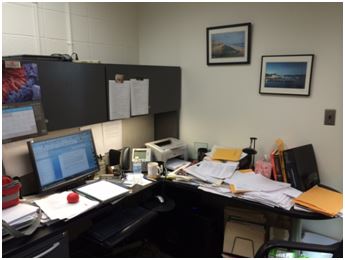
    I mostly write in my small, cramped, and overly cluttered office. geoghegan office

  3. What are your writing necessities—tools, accessories, music, spaces?

    For the most part a pad and paper, and computer.

  4. What is your best tip for getting started and/or for revision?

    Tip for getting started – get started; no really get started.  People write differently but everyone has to get started.  I’m big on getting something down on paper and editing the hell out of it.  In fact I’ll spend 5-10 times more time editing than writing.

    My best tip is to post a bullet list with principles of writing right in front of you.  When you’re stuck (and everyone gets stuck) it refreshes your memory and get’s you started again.

    One caveat; my son is a journalist/writer.  He sits down to write and most of the time it comes out perfect, with few revisions.  Proving that much to my dismay as a molecular biologist , it’s not all genetics (because I can never do that).

  5. What is the best writing advice you’ve received?

    Most of my serious writing is (or was) scientific.  And the best advice I got was to “keep it simple stupid”.  The more you try and elaborate, the more complex and less understandable your arguments are.

Keep Calm and Start Your Final Projects

Carly Johnson, Consultant

I hope you all had a relaxing spring break, full of sunshine and unassigned leisure reading. As we begin this countdown to finals (and Derby) carlyit is difficult to garner the motivation to begin your final projects. However, as someone who has spent many a tear-filled, coffee fueled night feverishly typing a final paper hours before it is due, I can tell you truthfully that it is better to start sooner rather than later. At this point you may be saying to yourself “yeah, but I work better under pressure” and I thought the same thing—until I embarked on what I call “Carly’s 5 fool-proof methods for staying focused and sane throughout finals week,” which I will share with you now:

  1. Take it one step at a time, and reward yourself along the way.I like to set up a schedule for myself prior to finals week that allows me to get a little bit   done each day. When I am on a roll achieving these tasks, I reward myself by watching Netflix for a couple of hours, or purchasing a fancy smoothie. This enables     me to stay on schedule while still allowing myself to have a little taste of the relaxation that awaits me over the summer.
  2. The solution to writer’s block is not avoidance.When I would get stuck on how to start a paper, I used to think that putting it away for    awhile was the answer…and then “awhile” ended up lasting three weeks, and suddenly it       was due. Don’t let yourself fall into this trap. If you’re stuck, ask for help, either from   your instructor, your peers, or by making an appointment with the writing center. Address           these small mental roadblocks before they become big issues.
  3. There is such a thing as too much coffee.During my late night writing sessions, I always thought the more coffee I drank, the          better my paper would become—but the fact is that too much coffee (or other caffeinated    beverage) will make you jittery and will cause your thoughts to race, which will end up making you feel more stressed than when you started. By staying on task with the        schedule mentioned in #1 above, you can avoid these all-nighters entirely.
  4. Feeling stressed? Go on a run.Even if you are someone like myself who only tends to run if there is an emergency, I       have found that physical exercise allows you to drain yourself of that excess negative   energy, and clears your mind so you are prepared to tackle those final projects. If      running isn’t your thing, check out some of the classes offered at the Student Rec Center     (I highly recommend the Zumba classes held on Tuesday and Wednesday nights).
  5. Reschedule social events for an after-finals celebration.If you struggle with turning down fun events with friend while you’re studying, plan an   event for after finals week that you can look forward to. That way, when you pass on plans for the evening you can invite them to your post-finals party, enabling you to     be social and productive simultaneously.

With these five methods, you can be sure to avoid the dark days of finals week, don your Derby hat and ease into your summer vacation knowing that you have overcome the pitfalls of procrastination. Good luck, stay focused, and remember that the writing center is always here to help!

UPDATE: Extended Submission Deadline for “Writing in the World” Student Art Exhibit

UPDATE: Submissions will now be accepted until Thursday, March 20th. See details below!

When you walk into our Writing Center, the first thing you will likely notice is UofL student art lining the hallway leading to our consulting area.  Along with the talented student artists who have created this work, we have Art Professor Gabrielle Mayer to thank for this display as she has provided us with this wonderful art for the last two years.

The people who visit and work in the Writing Center love to stop, look, and discuss the art.  Due to the success of our collaboration, Professor Mayer and the Writing Center have come up with a new collaboration.

On March 26th, from 10 AM to 5 PM, the University Writing Center will host a student art exhibition at its Ekstrom location.  The theme for the event is “Writing in the World.”  Any UofL student can submit a 2D, 3D, or video art project that addresses this theme.  This exhibition will be held while another event is going on in Ekstrom: The Symposium of Student Writing.

Since 2009, the Composition Program has put on this event, which is aimed at showcasing the writing projects students are composing in composition classes.  We hope that all UofL community members come by to support both events.

For students interested in submitting art to the exhibition here are the full details:

 Writing in the World:

A Student Exhibition Opportunity in Celebration of Writing

At the University Writing Center we work with all kinds of writing. Students bring their course assignments to us, but also bring their stories, job letters, and other writing that they engage in when they are off campus. We want to celebrate the diversity of writing in the lives of University of Louisville students through the theme of “Writing in the World”

Criteria

All artwork must be original, created by University of Louisville students, and in some manner be inspired by writing in the world.

“Signs guide us through the day, graffiti challenges our views of a city, and notes from friends soothe our pain or make us smile.  We are constantly putting words together to reach out to each other. We text, we tweet, we write research papers and poems. Whatever media we use, writing and reading connect our ideas, dreams, and passions to people in the world around us.”

Two-dimensional artwork must not exceed 26 inches in either dimension.  Works on paper must be framed and all 2D work must have wire on the back for hanging (no sawtooth hangers please).

Three-dimensional artwork must not exceed 30 pounds or 24 inches in any direction.

Video entries (DVD) are accepted but must be delivered (no email entries) to the University Writing Center with submission information -include student name, email address, phone #, artwork title(s), (specify #1 or #2)& length of video- by entry deadline. Please deliver in envelop labeled “Writing in the World Entry.”

Submissions (2D and 3D)

You may submit up to two artworks per student by emailing your submission to g.mayer@louisville.edu.

Submissions must have “Writing in the World entry” in subject line and include student name, email address, phone #, artwork title(s) (specify #1 or #2), medium, and dimensions, in body of email.  Attach artwork file(s) to email.  Artwork file(s) must be jpeg and have artist name and image number in file name.  File size should be no larger than 800 pixels in either direction.   File name example: BobSmith1.jpg

Exhibition Schedule

Entry deadline: 5pm, Monday, March 17 Thursday, March 20th

Notification of selected work: Thursday, March 20

Delivery of artwork: Monday, March 24, 9am – 5pm

Opening: Wednesday, March 26,10-5pm with reception from 12 to 2pm

Artwork pick-up: 9am-5pm, Thur, May 1