Month: February 2024

University and High School Writing Centers

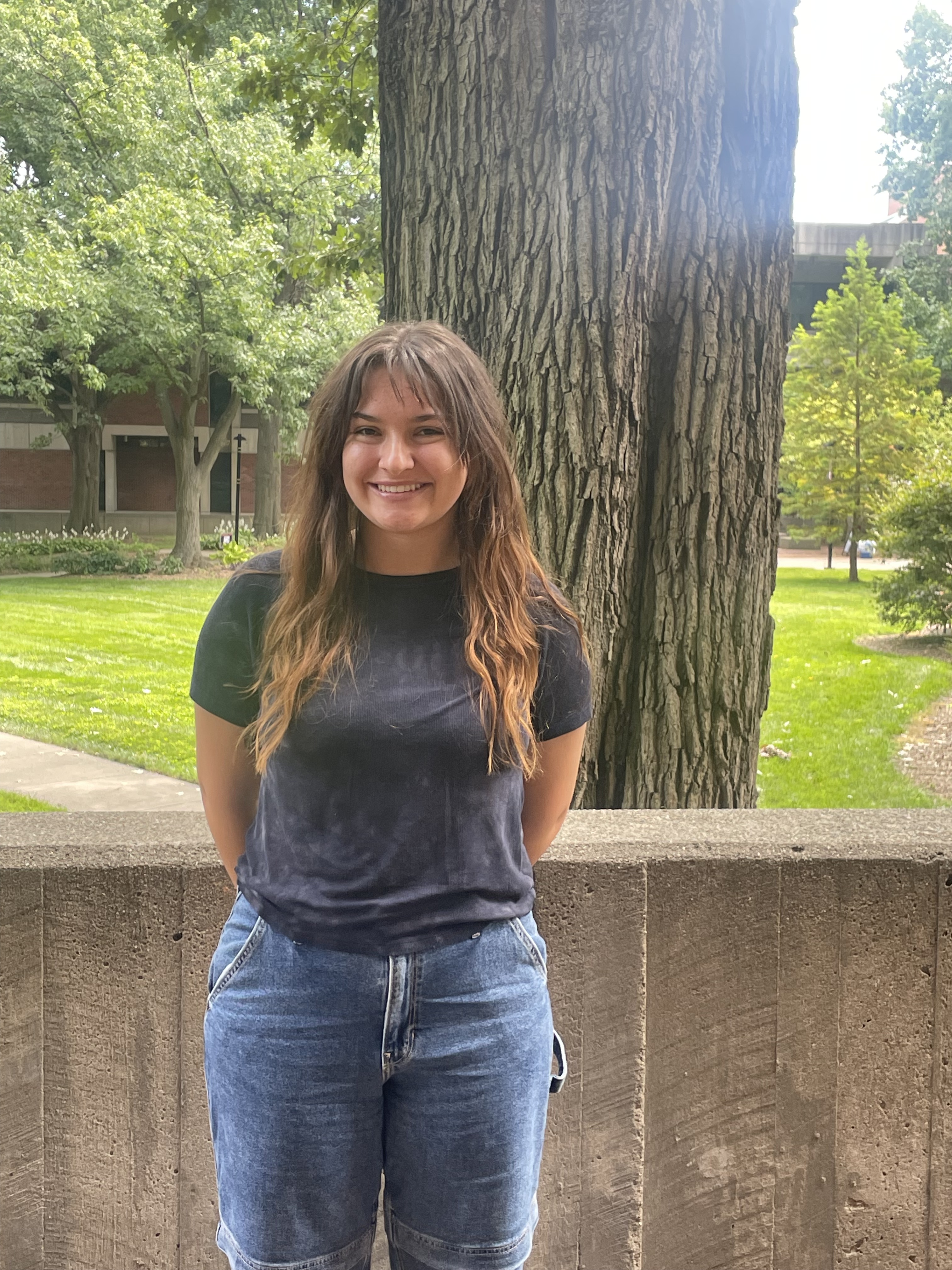
Shelby Cundiff, Writing Consultant

The University of Louisville has always been closely tied with its larger metro area. One of the immediate ways that this happens is through the many, many students who come to us from one Jefferson County’s twenty-four high schools. As we see an uptick in partnerships between university writing centers and high schools across the country, this week’s blog post is written by Shelby Cundiff as she considers what it might look like for the University Writing Center to partner with Jefferson County Public Schools to  provide equitable and effective writing center services throughout the county.

A lot of writing center consultants use their interests to go on and pursue many different careers. Since August of 2023, I have been grappling with what I want to do for the rest of my life. Upon realizing that I wanted to go into higher education, specifically as a high school principal, I began to look into high school writing centers. Last semester, I used my final project as the base of my research — I came up with different scenarios, conducted an interview, and read many articles. I read Ellen Brinkley’s “Secondary Writing Centers: Where There’s a Will, There’s a Way” (1988) and Amy Levin’s “Goals and Philosophies of High School Writing Centers” (1989) during my research, which both focused on what a high school writing center needs to be successful, and how they see a center needed to be ran. I also read through a blog post from the University of Wisconsin-Madison, “A New Collaboration: Welcoming a High School Writing Center to UW-Madison,” which highlights how they run their high school writing center. By collaborating with the high school administrators and teachers, the consultants and administrators are able to show how to best run a writing center in a high school setting, providing the resources necessary, both in person and on their online center.

Upon completing my final project, I decided to write this blog post based on different scenarios I have thought about in regards to creating a successful high school writing center, focusing specifically on my hometown of Louisville, Kentucky in regards to the University of Louisville, and our largest public school system, Jefferson County Public Schools (JCPS). Because UofL is a community engaged university and forty percent of our students come from JCPS, we have an obligation to provide the surrounding high schoolers with the resources necessary to be successful. My conclusions, in regards to why a high school writing center is necessary and beneficial, stem from the fact that, well, high schoolers need the extra support. With college applications requiring resumes and personal statements, it feels important to give high schoolers the opportunity to talk with those who have been in their shoes somewhat recently, and receive advice on the best formatting for a resume, or the best way to present themselves to colleges. Along with preparing high schoolers for college level writing, I believe a high school writing center opens up the door for the next year of college students to be more comfortable talking to older students, be vulnerable with their work, and be willing to take risks through their writing. Here are my early thoughts:

In a perfect world,the University of Louisville allows for our writing center to be opened up to all high school students within JCPS, regardless of high school. With this scenario, high schoolers are provided with easier access to the UofL writing center, regardless of which high school they attend. While right now, only the high schools with dual credit classes can make use of our writing center, I believe that we could open our center up to all high schools, as every high school in JCPS has, at minimum, one student who would make use of, and benefit from our resources. Moreover, high schoolers would be receiving advice from those who are trained in writing center practices, where we can help every student, regardless of writing experience or writing related questions. While this idea seems like a good one, it is probable that we run into problems with regards to funding, staffing, and hours. Our dream, as a writing center, would be to end up with the resources to keep us open long enough during the day or to employ enough people for the forty-two JCPS high schools. In this scenario, the first step would be to start researching grants and producing a statement of need.

Another idea, as the University of Louisville writing center, we create a model for a JCPS high school writing center that can be used, followed, and trusted for high school principals. This idea leaves the UofL writing center to create a simple, yet well-rounded model of how to run a writing center. These could be online modules that can be completed at one’s convenience, or we could do on site workshops. We would need to gather articles and research on current high school centers showcasing the positives of this resource, along with trainings on how to help students based on their needs, assignments, and writing experience. I also think this provides high schools with flexibility, as they will be able to create their own schedule, staff whoever is willing, and use whatever space they have in their own buildings.

The scenario that seems to be the most plausible is the University of Louisville creates and runs an all-online writing center for JCPS high school students where all they need is a login to access this resource. The UofL writing center already has an online writing center, and all JCPS students are given a Chromebook at the beginning of the school year, and are allowed to take their computer home with them for school use. All that UofL would need to do is broadcast the writing center as a resource, and provide each student with a UofL login. If we made the writing center available by our Live Chat or Written Feedback option for all JCPS high school students, I think this would give them a greater opportunity to use the writing center. I also think this could be something that students could use during school hours in a free period or study hall, ensuring that they have WiFi and a space to video chat. Of course, it is plausible that we run into issues like staffing here too, as there probably isn’t enough staff right now to help everyone on Louisville’s campus along with forty-two high schools worth of students.

So, my fellow writing center scholars, as someone who wants to be a high school principal and run a successful high school writing center one day, I leave you with some questions. If you have experience with a high school writing center, what has worked for you, or vice versa? If not, do you foresee any of these scenarios working for you?

How Time Affects a Writing Center Session

Jennings Collins, Writing Consultant

In our Writing Center, appointments last up to 50 minutes. This week’s blog post discusses the reasons for this time limit and how time impacts writing sessions!

Often during a writing center session, a writer will ask me how much time we have left. Sometimes this happens twenty minutes into a session, sometimes it happens forty-eight minutes into a session. While we try to do our due diligence in our scheduling process to give writers as much information as possible on how a session will go, some of that preparation before a session begins can get lost as a writer and their tutor get deeper into their conversation. Rarely, though, have I had someone ask me why our sessions are fifty minutes long.

Now, not every writing center session here takes up the full fifty minute time slot set aside for it, but many do. Often a fifty minute session comprises of introductions, questioning, reading, editing, and a final conversation about plans for continuing writing after the session is complete. Often the reading and editing fluctuates the most depending on the length of the individual piece, but you can just as easily get a fifty minute session out of a resume or cover letter as you can from a dissertation chapter or dense scientific report. It just depends on what the writer wants to focus on. But that still doesn’t answer our question, why fifty minutes? Why not thirty, forty or sixty?

Looking at it through simple logistics some things become clear. We’re a university-affiliated center. Most classes start or end at or near the top of an hour, so it’s easiest for people to be able to set aside a specific hour of the day for a session. That same logic can be applied to our own daily labor, as it becomes easier to keep track of a day’s work by looking at it all an hour at a time. And generally, we think it’s better to have longer sessions available to be more flexible in our methods and practices, more time for a session keeps writers and tutors from feeling rushed while working together. But is fifty minutes an ideal amount of time for a writing center session?

There’s not a lot of writing about the ideal length for a writing center session (I’m working on a larger piece looking to explore that idea myself), but it is one of the few things about the profession that I would consider rigid. As repetitive as some days can be, the flexible nature of the writing center session can often provide surprising conversations with student writers. The context of the location and student needs guided us toward fifty minutes as an ideal time for student writers to work with.

Our community writing centers see a bit of a different approach to time. This semester I started work at one of our community outreach locations: the Western Branch of the Louisville Free Public Library. While there I help students anywhere from first to twelfth grade with their writing, but we are only there for three hours a week. So, how do we make the best use of time we would normally set aside for three typical writing center sessions when any number of students could need help during that time frame? After some discussion among the team, we decided that it would be best to not limit any individual writers’ time with us. We would act more like teachers managing a classroom, something I already have experience doing, either floating throughout the space or creating a section of it where students could ask us questions about anything at any time, whether something needs a simple fix or a complex analysis.

Taking this more freeform approach to session length has its benefits and drawbacks. For one, the fifty minute limit on a writing center session is often made more efficient by the steps we take before a session begins. Writers fill out a form on WConline that gives us a lot of information about what they’re looking for from their session, which is helpful with the fixed amount of time we are given. We won’t have this kind of briefing with younger students at the library, a population whose needs can fluctuate much more often than a writer we might see more than once with the same project. So we need to spend more time building trust with students the same way you would build rapport in a classroom. Learning names, articulating who we are and what we do, and encouraging students to open up to us about their work and their concerns are all foundational parts of the conversation that take up the limited time we have in the library next week. Ironically, analyzing the nuances of this new setting has reinforced the notion for me that we’re doing the right thing with the fifty minute session for our university center.

The conclusion I’m currently arriving at is that we make the time work for us, not the other way around. The time we set aside for a session is something that needs to be decided on with all other environmental factors in mind. As writing centers design pedagogical approaches for university and/or community settings, it’s the job of the administration and the team to figure out what kind of time frame works best for the ideal session.

ESL Instruction in the University of Louisville Writing Center

Allie Degner, Writing Consultant

On a campus that is becoming increasingly more diverse every year, the University Writing Center is a crucial resource for helping students that come from backgrounds where English is not the first language they have learned. It can be difficult for these students to adjust to a classroom setting, and they may find themselves being unable to keep up because the time it takes these students to complete assignments is significantly longer than Native English Speakers (NES) who fully understand the language. While the University of Louisville is working on making more resources available to help English as a Second Language (ESL) students in their language acquisition process, the University Writing Center is in an ongoing process of working through how to best support these writers. This blog presents some of the early findings of this process in informing consultants about some of the best practices that can aid in sessions with ESL students.

How do I start a session with an ESL writer?

Understanding expectations can always be a little difficult for first-time visitors to the writing center, but this can particularly be the case with ESL writers. In order to avoid any miscommunications at the beginning of the session, it is best to start where the student has an opportunity to explain a little bit about their situation and the aspects of writing they are struggling with. The consultant can also take the time to explain that sessions can run the whole 50 minutes if need be, but there is also no pressure to stay the whole time. Along with this, the consultant should make it clear that the University Writing Center operates differently than a classroom and that a consultant operates differently than a professor does.

Similarly, it might be helpful for the consultant to get some basic information from the writer regarding their history with the language, so that the consultant can be informed on how much experience the writer has. Gleaning this background information does not have to be incredibly extensive but, in the case of the consultant and writer establishing that there will be future repeat visits, it would be best to obtain as much background experience as possible. Dudley W. Reynolds in One on One with Second Language Writers (21) provides questions that could be useful for consultants: How much reading have you done in English? What is the longest text you have ever read in English? Did you have a chance to speak English outside of the classroom? Where and how often?Asking questions like these will inform the consultant on best possible practices to use with ESL students based on their prior experiences with the language.

What if a student really needs proofreading and grammar strategies?

At our center, many of our consultants feel a tension between the advice to focus on “global” concerns and to avoid too much attention to sentence-level grammar instruction. However, there are occasions where ESL students will come to the writing center requesting assistance for grammar and proofreading, as it is sometimes a common belief by these students that by fixing these lower level concerns, they are fixing global concerns as well. Though this is not the case, we are learning to be more flexible about our general approach that involves beginning with sentence-level concerns and then working to move these to a more general recognition of meaning. Because the English language is full of complexities that ESL students may not have been fully taught in their home countries, the consultant should allow for these lower-level issues to be fixed if it is the student’s wish.

In my own experience, an ESL writer came in for a session and she solely wanted to focus on local concerns. As soon as I tried to move to global concerns, she was immediately lost, and I could tell she was beginning to get more confused the more I talked. Therefore, in order to help keep the session productive as opposed to it being frustrating for her, I realized that I needed to just focus on the local concerns because those were the ideas that she could grasp the easiest.

We are learning, as consultants, to realize that this is okay, and that meeting the writer where they are is the most important part of any consultation.

Should I attempt to engage in a nondirective approach with ESL writers?

Most typically seen in Writing Center ethos is the practice of using nondirective consulting, which prefers that the consultant take a more hands-off approach to a session and instead prompts writers to think on their own about their writing. However, according to Young-Kyung Min in “When ‘Editing’ Becomes ‘Educating’ in ESL Tutoring Sessions” (24), this is not the best strategy for working with ESL writers, as they require a more hands-on approach that can help their language acquisition and composition processes. The question then arises as to just how directive a consultant should be in a session, if being directive in the first place is the best course of action.

Consultants cannot make the assumption that writing practices here in the States are common to those in other countries that ESL writers may have come from, where they may be more used to having instructors be explicit in their guidance. When a consultant tries to take a nondirective approach to a session with an ESL writer, it could possibly cause frustration for the writer because it may be unfamiliar for them to engage in a writing practice where they are not directly told how what and how to do something. Taking this directive approach will hopefully allow for writers to acquire knowledge of the language in a way that is beneficial and educational. If the writer is feeling more confident towards the end of a session about the topics covered, the consultant could then try a nondirective approach, but it should not be the main practice of working with ESL writers.

Conclusion

The amount of scholarship on ESL instruction, especially ESL instruction in the Writing Center, can be overwhelming to search through for answers to specific questions that consultants may have, especially those that are serving in a writing center for the first time. The goal of this blog was to provide answers to these common questions consultants might ask and provide them with resources and methods for helping their ESL writer in the best possible way. Though some of these methods and resources might not work for every ESL writer, it can inform the practices that consultants use when working in a writing center that caters to an incredibly rich and diverse population of students. Through these practices and resources, the consultant can be equipped with certain tools that will allow these ESL writers to embrace their past linguistic experiences with those that will set them up for success in their writing, in the classroom, and in their future.

Mapping Emotional Labor in Our Writing Center

Here in the Writing Center, we try to combine our work supporting UofL’s students and faculty with our work as an active research site that tries to learn more about cultures of writing—including writing centers as workplaces. This week’s blog post comes from one of our consultants, Jolie Finley, who is beginning a project to explore emotional labor in our writing center.

The field of Writing Center Studies has recently introduced emotional labor as a topic of conversation in its scholarship. I was introduced to emotional labor, a term coined by sociologist Arlie Hochschild to define the act of workers masking their emotions to present an externally acceptable presentation, in my Writing Center Studies class. I immediately recognized emotional labor happening in our Center, as conversations of it (though not naming it as such) were frequent in our backroom. Emotional labor is a phenomenon that goes unnamed almost as often as it occurs in Writing Centers, and this implicitness seems to be the scholarship’s main concern.

My current project is to create a heuristic from this inventory based on Suhr-Sytsma and Brown in “Theory In/To Practice: Addressing the Everyday Language of Oppression in the Writing Center.” Through my research, I’ve determined that one of the better ways to account for emotional labor is to utilize a model that can be easily replicated across Centers: creating an inventory. Because emotional labor is a very personal phenomenon, attempting to study it from an outside perspective may prove problematic and overly complicated. Suhr-Sytsma and Brown deliver a “two-list heuristic” that demonstrates the often-subtle oppressive language that occurs in writing center spaces for readers to apply in their own Centers. They claim that the locality of their results is a strength, as they don’t claim to be an authoritative figure on the subject. I take inspiration from this model is a useful deliverable, but we hope to have the funds and time to conduct a larger-scale study. With a local inventory of our Center’s emotional labor patterns, I hope to be able to offer a number of possible trends and coping mechanisms to the field.

To get this process started, I recently created an open-ended survey to begin this process, and the data I’ve gathered so far attests to a need for further naming and studying of emotional labor. This has helped me to identify patterns that have been recognized in Writing Center scholarship, but also outliers that suggest we have more work to do.

The major patterns I’ve seen thus far include the importance of talking to other consultants as a coping mechanism and that the most emotionally charged labor is being performed in sessions with unresponsive or stressed writers. This indicates both the importance of our 50-minute sessions (to allow ten minutes to write a report and decompress), but also helps guide how future consultants might be prepared during our trainings to manage the emotional work of consulting with unresponsive writers.

Some of my findings aligned with existing emotional work. For example, our consultants tend to experience what one called “second-hand stress,” but must mask these feelings of anxiety for their writer in order to encourage them in the session. However, there were also some surprises. The most unique finding is that a consultant stated she performs emotional labor the most when she identifies with the writer to some degree, namely if they remind her of a loved one. This was a response I had not come across in my research, gesturing to the idea that there are countless reasons for performing emotional labor that are not yet named.

Many writing centers do not train consultants for the inevitable performance of emotional labor, ours included. This is what led me to begin this project to create a replicable inventory of emotional labor performance in our center. Creating inventories and heuristic models of emotional labor performance may be useful to you in your Writing Center because they can serve as the basis for various types of research. If there’s a pattern you feel happening in your specific writing center, maybe due to factors such as the staff’s gender or racial makeup, the size of your center, or any other special elements, an inventory would allow you to have information about emotional labor in your particular center that you may not see represented in Writing Center scholarship writ large.

Our hope is to use this inventory to provide more tailored training materials or a heuristic model that can be shared across hiring cycles. Ultimately, you can simply start an open dialogue about emotional labor among your consultants. They may already be talking about it without naming it as such, but by doing so, you validate those conversations as worthy of study and demonstrate care for the well-being of your staff.