Month: January 2023

The Importance of Breaks in Academia

Charlie Ward, Writing Consultant

At times, it may feel as though education is all consuming. As a student, your life — and, ultimately, your identity — becomes entrenched by course readings and research projects. For me, balancing the mental load of helping writers with their projects — while also trying to do my own writing projects — becomes a bit too much around the middle of the semester. I love helping people, but I often forget to help myself. The pressure I feel to be the perfect consultant, the perfect student, the perfect child, and the perfect partner all become too much to handle; the pressures of academia make me sick with anxiety. I know it’s okay to cry — and hopefully that’s a lesson you’re learning, too — but you need other coping methods. Sometimes, you need to take a break.

It may also feel as though you don’t have much time for anything beyond academics; the idea of taking time for yourself may cause you guilt and anxiety. The relentless “culture of productivity,” or, the social climate that reinforces overworking yourself, may make it difficult for you to feel like you can take a break. But you can — and I’m here to tell you that.

Here are some tips that may help you:

Force yourself to take a break.

Realistically, this is step one: humans need time to breathe, time to create, and time to be comforted. It’s easier said than done, but don’t let “productivity culture” make you feel like you can’t take a few minutes to yourself. Don’t let peers dissuade you, either. Painting a still life, going for a walk, listening to your favorite album, or even just looking outside are great ways to readjust mentally.

I know I’m kind of preaching to the choir here, but this time to destress is crucial. If you’re a planner, plan your break; if you’re spontaneous, stop your work early one evening. Time to relax will prevent an inevitable breakdown, whether it be the result of an overloaded schedule or other excruciating factors. This break time has helped me through hard times — I promise everything will sort itself out.

Keep work and home separate.

I’m not referring to physical space here, but rather the workload between work and home. I usually do the majority of my work for the upcoming week during my weekends; however, I only allow myself to work from 9 am – 5 pm. By giving myself the evening to relax, I’m able to get up the next morning more motivated to work. Try to find an hour where you stop working: a huge weight will be lifted off your shoulders.

Try not to talk too much about work when not at work. I know this is seemingly impossible — I definitely fall into ruts where I talk about nothing but my work — but you need to find something else to talk about. You can talk about the weather, you can talk about the new Netflix special you just watched, or you can commiserate on how much you hate the month of January — it just needs to be something not related to work. It will help give your brain a break from the constant stresses of academia.

Don’t be afraid to ask for help.

There comes a time where we need a bit more than a break: things can become too much, things can become too loud, and things can become impossible to do on your own. When this happens, it’s more than okay to ask for help.

The cultural stigma against mental health can make it difficult to ask for help; these situations are exacerbated by feelings of guilt and anxiety, whether they be the result of academia or other factors. Conversations around the importance of breaks and community are extremely important in promoting self-advocacy.


I understand the hesitation towards taking a break, especially for students and people who just need to get stuff done. On the other hand, I also understand what it looks like when you don’t take a break: I’ve had semesters where I stopped showing up to classes, semesters where I’ve dropped classes, semesters where I failed classes. I was too scared to ask for help, and I had dug myself into a rut — productivity had clouded my ability to think clearly, and ultimately, I felt the only way I could cope with the stress was to stop being me for a while. This sounds dark, but I just want to emphasize the importance of making time for yourself.

In graduate school, I made a pact with myself to always take time if I need it. I made a pact that I would always take an hour or two to do whatever I want, even when my workload seems endless. I’m not here to tell you that I’ve been entirely without anxiety, but I’ve been able to stay above water — and that’s okay!

This semester, remember to take a break. It doesn’t matter whether it’s five minutes or five hours: take time to understand who you are and what makes you happy. Try to bottle up that happiness — whether it be memories of your pets or how the sun makes you feel — and look back on it in moments of stress. You can always change your assignments or your research, but don’t let them change you.

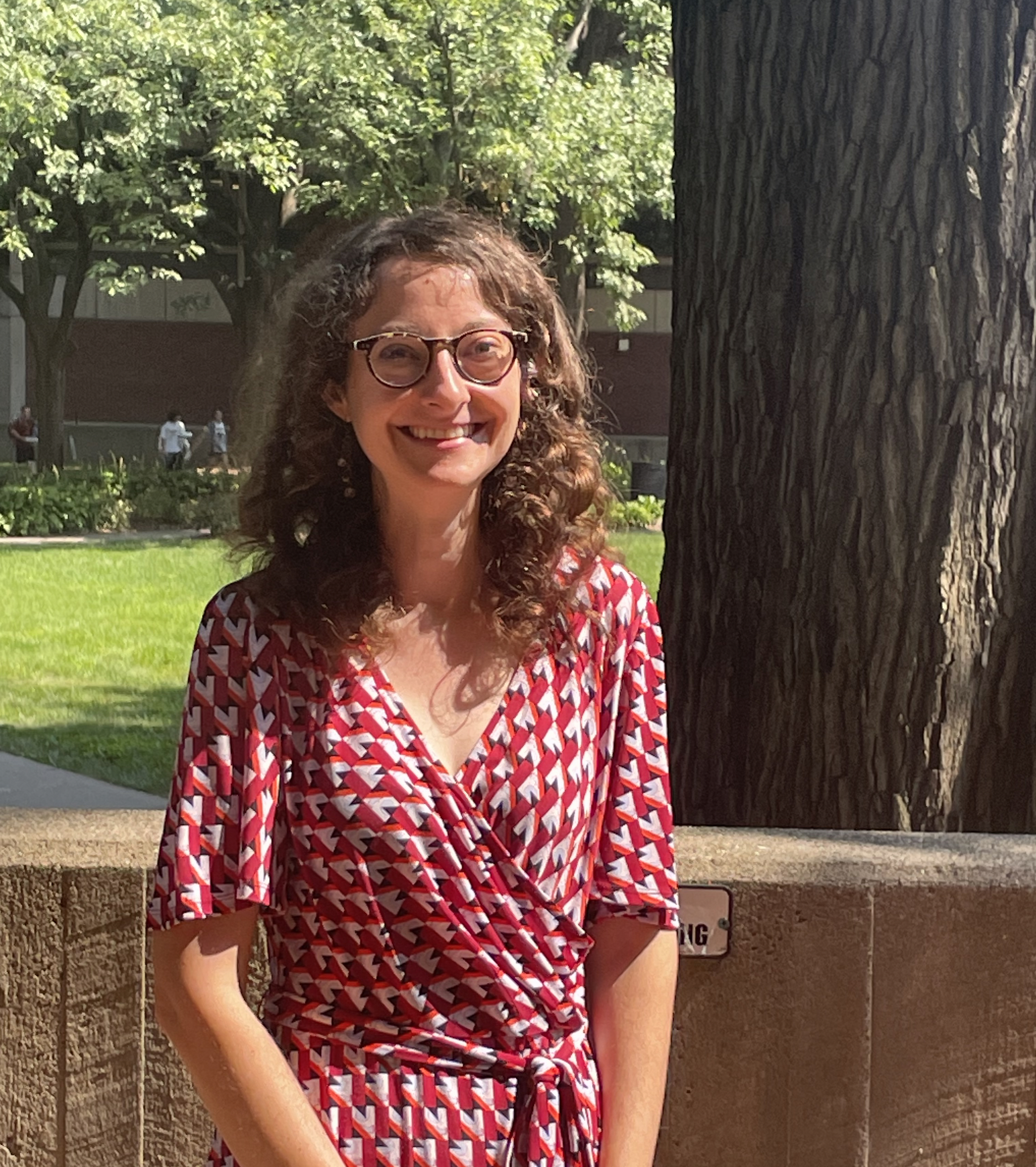
Writing Yourself into Your Future

Christina Davidson, Writing Consultant

The start of a new year lends itself to thoughts of beginnings. The gentle rhythms inspired by the calendar year can be wonderful reminders of work we intend to do in our own lives. I’d like to use this space to invite you to do a little deeper work than just forming a resolution to meet a few goals. I’d like to suggest the use of writing as a way to dig into discovering what you want out of your academic career, where you want to go, and how you intend to get there. I’d also like to ask you to consider how using your assigned writing tasks can accomplish these purposes, too.

First, try to think back to one of your earliest writing projects. For me, I immediately think of my very first course in research writing that I took my freshman year. I was excited to take this class since I had always loved to write. However, after the opening class session of the course, I found myself full of anxiety about how to create a proper research paper. I remember thinking to myself, “What is APA exactly? – and how in the world do I format in-text citations?” This is certainly hilarious to me now considering my current position on our campus, but it illustrates what I’d like you to think about today. Everything you choose to pursue in life will have a beginning. And writing is a great way to take yourself into a new identity you’ve never held before.

Our Program Assistant, Maddy, as well as our Assistant Director for Graduate Student Writing, Kendyl, explored these ideas in recent posts, asking us to fully accept the identity of a writer. Today, I’m asking you to think of the other identities your writing may ask you to accept. In my earlier example, I decided to claim “researcher” as a title. In other courses it may have been “poet” or “essayist”, or in this instance, the title of “blogger” becomes something I can write myself into.  Each new writing task can provide us with an opportunity to step into a new future.

I’d like to turn to my original example of “researcher” because I think it is of particular relevance in the spring term. Many college freshmen will be taking ENGL 102 this semester and developing a research project for the very first time. If this pertains to you, I ask you to consider how you can take your class assignment and make it meaningful for your future. What kind of research interests you most? Where do you see yourself headed in your academic and professional career? Many times, we may feel we will assume some kind of professional authority once we graduate or achieve the job we desire in our field. I have certainly felt this way in my own professional experience. But in truth, our voices are developing now. The research work one does in an ENGL 102 course can begin to “write into” a new field and a new professional identity. And if we fully adopt this idea, suddenly all our coursework can achieve a profound relevance into the development of our futures.

Once you have embraced the title of “researcher”, I would like to invite you to take it one step further and to share your discoveries with others. You might be amazed at how your learning will deepen once you make this critical move.  One wonderful opportunity to do this is at the UofL Undergraduate Arts and Research Showcase. I was fortunate enough to serve as a judge for this showcase in the spring of 2022. I was so impressed with the work presented by UofL students, as well as the collegial spirit in the room. If interested, your chance to get involved will arrive soon; abstracts are due by April 17, 2023.

The University Writing Center is a great place to obtain feedback on any research project. If you are considering becoming a part of the Arts and Research showcase, please come in and talk with a consultant. We can help you to review your project, plan out your poster presentation, and even help with writing the application.

The new year is a great time to reflect on the previous year and to focus upon what you would like to accomplish in the next. Give yourself time to think about how your own writing, be it assigned by an instructor or personal writing, can be a way to lead into your goals. Sometimes all it takes is a new perspective to make all the difference in how we view our writing. We can deepen the meaning in our assigned writing by considering how it fits into the larger picture of our future goals. At the writing center we look forward to working with all writers this semester as we aim toward our futures as writers, researchers, poets, essayists, bloggers – wherever writing may lead!

New Year, New You: Writing Resolutions for 2023

Annmarie Steffes, Associate Director

A few weeks into 2023, here at the University Writing Center, we are already abuzz with thrilling conversations about writing. I don’t know about you, but for me, the new year and the start of a new semester hold the wonderful promise of new beginnings. I daydream about being someone else, or at least a better version of myself: Annmarie 2.0. For instance, in 2022, I vowed to become chef Annmarie, whipping up unburnt baked goods weekly and, of course, using all the veggies in the fridge long before they wilt in despair.

If you wonder if I ever achieve these goals, the answer is no I do not. You probably saw that coming. Researchers could easily use me as one data point proving that New Year’s resolutions do not work.

But here’s the thing about creating these new identities: they do lead me to experiment with new habits. In my efforts to become a chef, I mustered the courage to roast a whole chicken, to make broth from the carcass, and then to concoct a soup (without a recipe no less). I could not have had the courage for those tasks if I had not first envisioned myself as a chef. The fantasy that I had of myself as a future Gordon Ramsey allowed me to take risks and venture into territory I would never have explored otherwise.

In the Writing Center, we often ask writers to imagine their audience for their text. Who are you writing to? What are the expectations of your audience? What background or experiences might they have and how does that influence their perspective? This sort of daydreaming has led me to write more compelling prose as I aim to foster a relationship with the person on the receiving end of my paper.

But, what if we as writers spent time imagining other identities for ourselves? In my appointments, I often hear people visiting us for the first time apologizing for being a “bad writer” or say, as Kendyl and Maddy said last year, that they are not writers at all. Believing that “bad writer” or “not a writer” is an unchangeable fact about us limits our writing strategies and narrows our ambitions.

And so, I encourage you to think about what new writing identity you might try adopting and performing this spring semester. You may not believe it yet but playing the part might prompt you to develop new habits, take more risks, and shift what you think is possible for yourself. Let’s say I am writing a research paper about climate change. How might my writing change when instead of seeing myself as an amateur determined to showcase all my knowledge to my professor, I imagine myself to be a climate change expert writing my action plan to a panel of key government and business leaders? I would state my views more assertively, treat sources as my peers rather than merely authority figures, and strive to make my proposal attractive to those in power. I approach my writing differently.

In addition to inspiring a dose of confidence, role playing writerly identities can help you understand other points of view, thereby cultivating a more empathetic attitude and writing more nuanced arguments. For instance: How might I write this essay if I positioned myself as an opponent of this social or political issue rather than an advocate for it? Or perhaps: What might I write if I imagined myself as a specific person in the debate or this one particular theorist? Everything we write does not have to be the end-all be-all of what we believe; we can embody different positions and attitudes, try them on for size, jump up and down, wiggle around in them, see how they fit.

Now, I do not advocate for inauthenticity, nor do I recommend never writing from you own embodied reality. What is considered formal or correct academic writing is often middle-class, standard white English and prizes certain evidence, experience, or support over other kinds. Higher education needs diversity of viewpoints and identities to challenge this hierarchy and offer important correctives. But reimagining your identity as an author can be a useful process to clarifying what your writing identity actually is, apart from what you believe your professor wants it to be.

As a teacher myself, I know that faculty play an important role in creating an educational environment that allows for students to play and explore who they might be as writers. In their 2015 book Hospitality and Authoring: An Essay for the English Profession, Richard and Janis Haswell challenge teachers to trust the student’s writing and imagine the singularity of the person behind it, reading the choices of text in a way that “seeks the conditions that might have understandably or humanely led to it” (92). When we see complicated and complex jargon, for instance, don’t assume that students cannot write; they are trying to embody the person of the chemist, the engineer, the humanities scholar using the examples given to them, and isn’t that what we want? Guide them on how to adopt that identity with more credibility or challenge them to write from a myriad of perspectives.

We might not be a Joan Didion, a Herman Melville, a James Baldwin, or an Isabel Allende yet—but we also might surprise ourselves.